Portable Power
Mango Power E Review: A Rolling Home Backup Power Station
A 3kW, 3.5kWh portable power station with wheels, a handle, LFP cells from CATL, fast charging, and expansion into a true whole-home setup.
Introduction
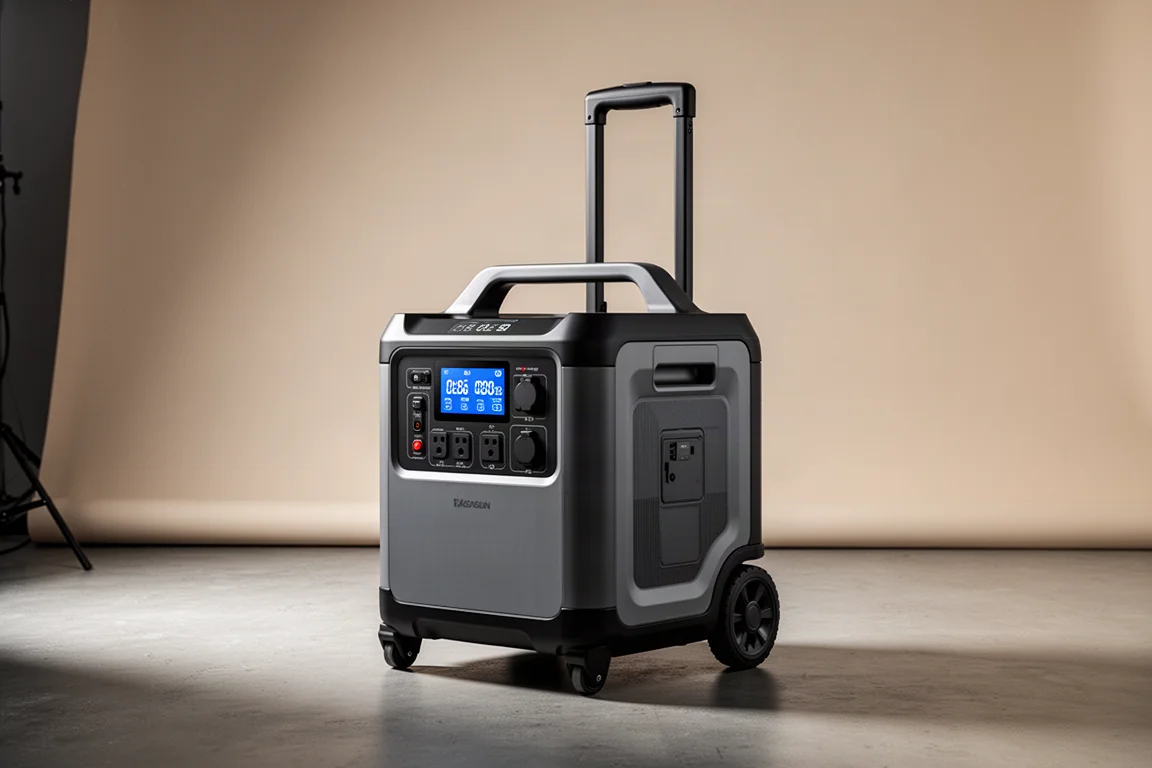
The Mango Power E is a new portable power station that arrives with a different sense of scale than most units we cover. It starts as a 3,000W system with 3.5kWh of storage, and it is built to expand into something that can genuinely run a home during an outage. It launched recently at a pre-order price of $3,099, down from an MSRP of around $4,000, and it brings a 5-year warranty along with it.
What makes it interesting is not just the capacity. It is the combination of mobility, fast charging, LFP battery chemistry from CATL, and a clear expansion path. This is a unit aimed at people who want serious off-grid or backup power without a permanent installation.
Design and Build: Wheels Change Everything
The first thing worth talking about is the form factor. The Mango Power E has an extending handle and built-in wheels, so instead of dead-lifting a heavy box, you pull the handle and roll it. Power stations this size are usually described as boat anchors, and this layout solves the single most annoying part of moving one. It is a feature that seems obvious once you have used it, and it is surprising it is not standard across the category.
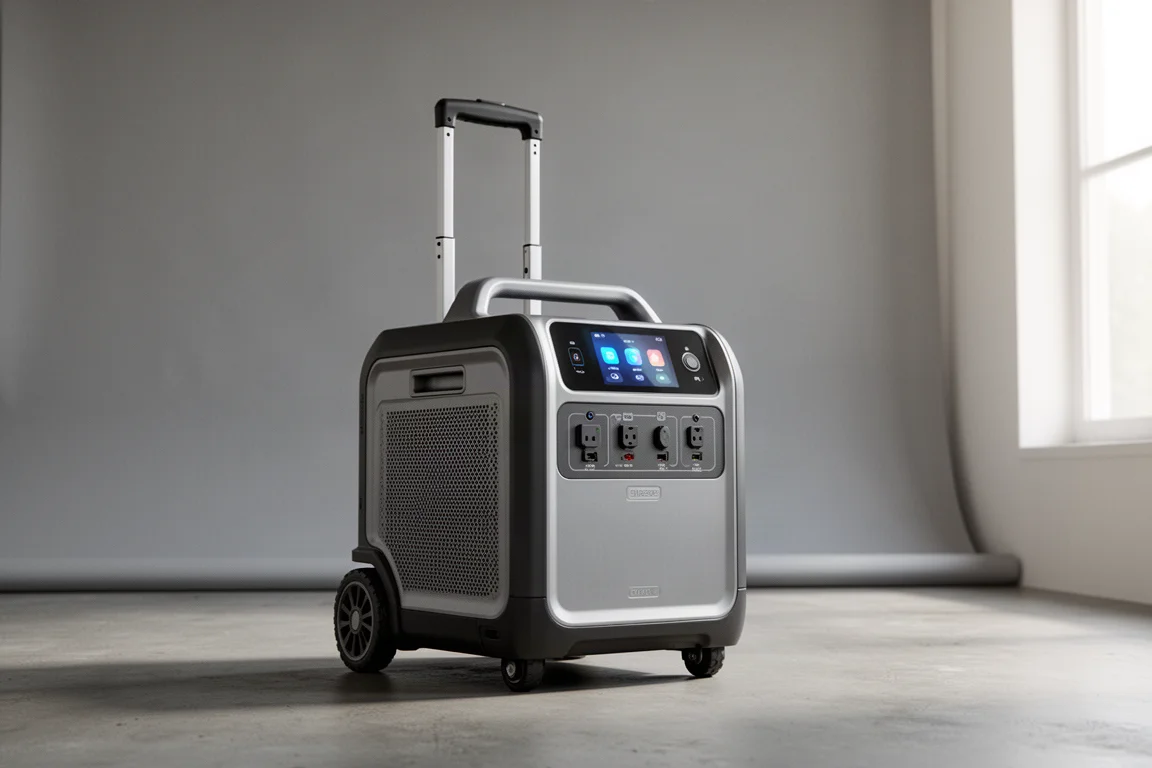
Up top there are large grab handles for the times you do need to lift it, and the overall build quality is impressive. The housing feels like a product from a company that listened to early customer feedback rather than a first attempt.
Battery Chemistry: LFP from CATL
Inside, the Mango Power E uses LFP (lithium iron phosphate) batteries, produced in cooperation with CATL, a major EV battery manufacturer. LFP cells are slightly larger than the lithium-ion cells found in power tools, but they last far longer in recharge cycles. Where typical lithium-ion might manage a few hundred cycles, LFP chemistry is rated for on the order of 1,000 to 2,000 or more.
For a unit intended for regular home charging, EV charging, and backup use, that cycle life is exactly the chemistry you want.
Display and Controls
The front touchscreen is a highlight. It stays readable in bright daylight, with strong contrast and a clear interface, and it is better than any display seen on comparable high-end units. Everything is controlled from the touch panel, including turning individual ports on and off.
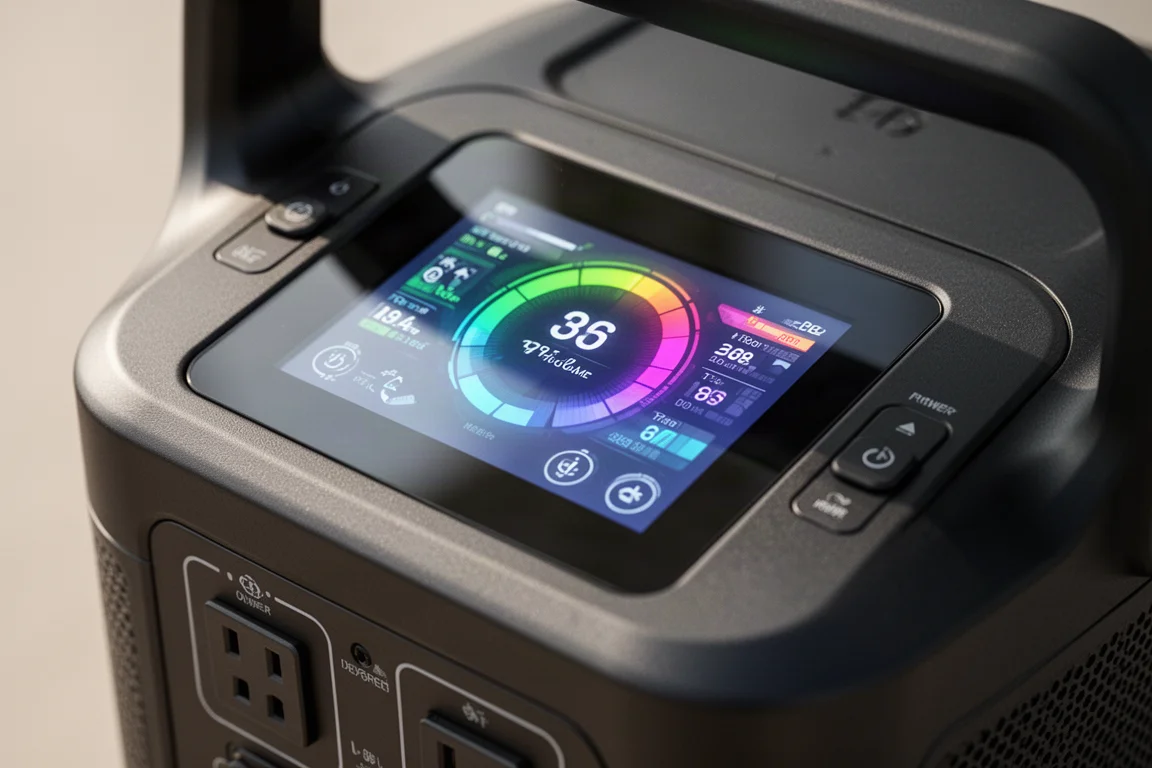
Port selection is generous:
- A 30A 110V RV port (TT-30 style)
- Four AC outlets
- A standard 12V car/cigarette lighter port
- Six USB-A quick-charge ports
- Two USB-C ports at up to 100W
- Barrel adapter outputs
On the input side you get grid AC input, solar input, and e-link/e-port connectors used for chaining units and expansions together.
Charging Speed and Options
Charging is where older power stations used to fall apart, sometimes taking a day or more to refill. The Mango Power E charges from dead to 80% in about one hour on wall power, and reaches a full charge in roughly 1.5 hours.
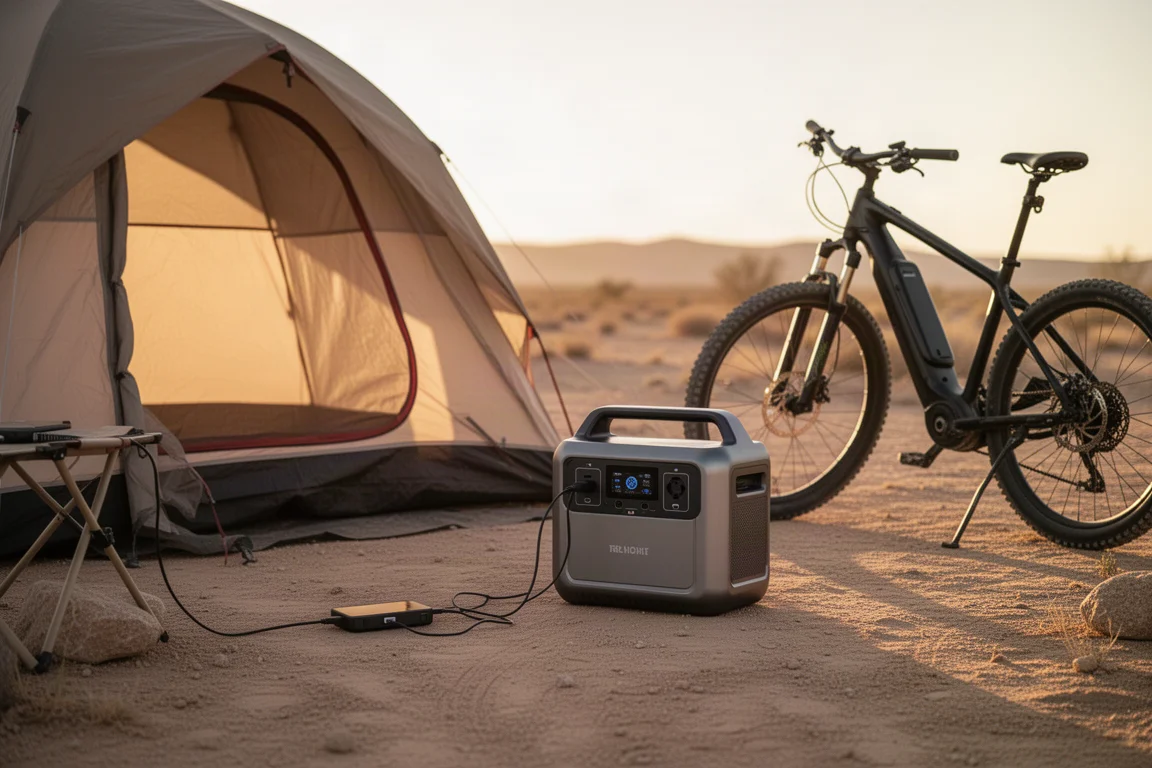
There are several ways to fill it:
- Wall charging: standard grid AC input, fastest everyday method.
- EV charging station: with an optional special EV plug, you can top up at a public EV charger, which is handy mid-trip.
- Solar: it accepts substantial solar input for off-grid replenishment, and Mango Power sells matching solar panels, from a four-panel set up to larger arrays.
- Generator: you can charge from a gas generator, useful where campgrounds allow generator use during the day but not at night. Charge by day, run your AC at night.
Real-World Use: RV, Camping, and Home Backup
With the 30A RV port, the entire unit can plug into an RV and run it. There is enough capacity here to power your own campsite and plenty to spare, running fridges, devices, e-bike chargers, and more. An e-bike charger and a 24V charger were run simultaneously during testing with no strain.
But this is designed to go beyond camping. Pair two Mango Power E units together with the included e-panel in the combo kit, and you get 240V split-phase power for heavy-duty household appliances. Configurations include:
- Base unit: 3,000W / 3.5kWh
- Base plus expansion battery on top: 7kWh, still at 3,000W
- Two base units (combo kit): 6,000W / 14kWh, enough for most homes
The units also function as a UPS. Plugged into the grid, they can take over the moment power drops, with a switchover so seamless you may only notice a small beep alerting you that you are now on battery.
Who Should Consider the Mango Power E
This is a plug-and-play home power system for people who want backup or off-grid capability without learning electrical DIY or committing to a permanent installation. You can plug appliances directly into the unit, or, better, have an electrician add a transfer setup so the box runs your whole house.
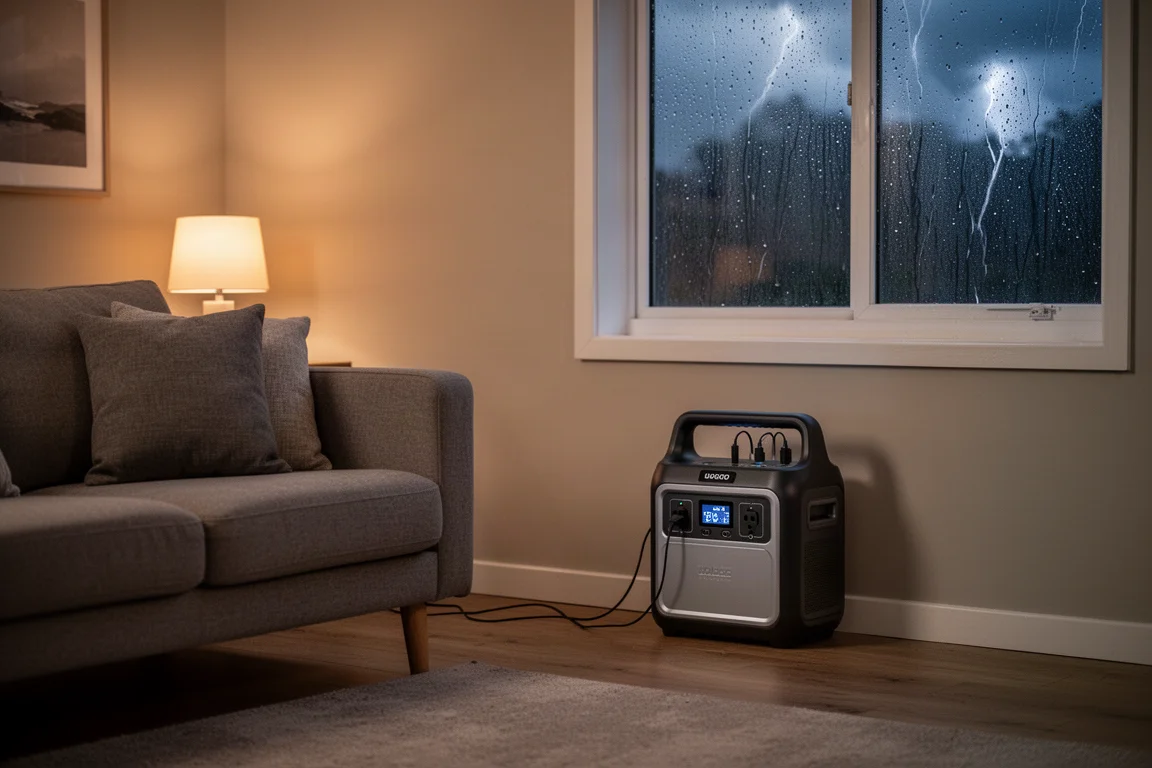
It also suits RV and van life, worksites, and anyone pairing it with solar panels for a genuine off-grid setup. Mango Power sells solar panel bundles, including a four-panel set around $1,200 (recently discounted to around $600) and larger multi-panel kits.
Pricing and Buying Advice
Current launch pricing:
- Base unit: $3,099 pre-order (MSRP around $4,000)
- With expansion battery: $5,398
- Two base units: $6,400
- Full combo kit with e-panel: around $10,600
Pre-ordering saves nearly $1,000 versus MSRP, but it also means buying into a newly launched product. One honest caveat: the companion app was not available for testing on the early unit, though it was promised at launch, and the unit itself can be firmware-updated via USB.
The Mango Power E is genuinely promising, with standout build quality, the best display in its class, and a rare wheels-and-handle design. It is the kind of product that deserves a long-term test of six months or more before a full recommendation, so early adopters take on some risk for a meaningful price saving.
Conclusion
The Mango Power E pushes portable power stations into home-backup territory. Rolling mobility, LFP cells from CATL, one-hour fast charging to 80%, an RV-ready 30A outlet, UPS switchover, and a clear path from 3.5kWh to 14kWh make it one of the most flexible systems in this space. If you want a serious power solution you can roll into place and plug in, it deserves a close look, ideally with an eye on long-term reliability results before committing.
Product link
View more details for Mango Power E Home Backup Portable Power Station
This product is mentioned in the review. Check the specifications, options, and compatibility before buying.
View more details for Mango Power E Home Backup Portable Power StationFurther reading
Related Reviews
Portable Power
Best Portable Power for Camping and Remote Work: Six Power Banks and Solar Panels Compared
A practical comparison of six portable power options, from a 500W solar generator for car camping to a one pound solar power bank built for backpacking.
Portable Power
Best Portable Power Stations 2026: Nine Models Compared for Real-World Use
We compared nine portable power stations across output, capacity, charging speed, noise, and UPS performance to find the best value and the best overall pick.
Portable Power
Best Portable Power Stations and Power Banks for Blackouts and Travel
Five portable power solutions compared: two EcoFlow power stations, a flight-friendly Zendure power bank, a see-through Shargeek, and the feature-packed Omni 20c+.