Insulated Jackets
Mammut Taiss Pro Insulated Belay Jacket Review: Serious Warmth at 578 g
A close look at the Mammut Taiss Pro Insulated Belay Jacket, from its 850 fill down and box wall construction to the sizing quirk worth knowing before you buy.
Introduction
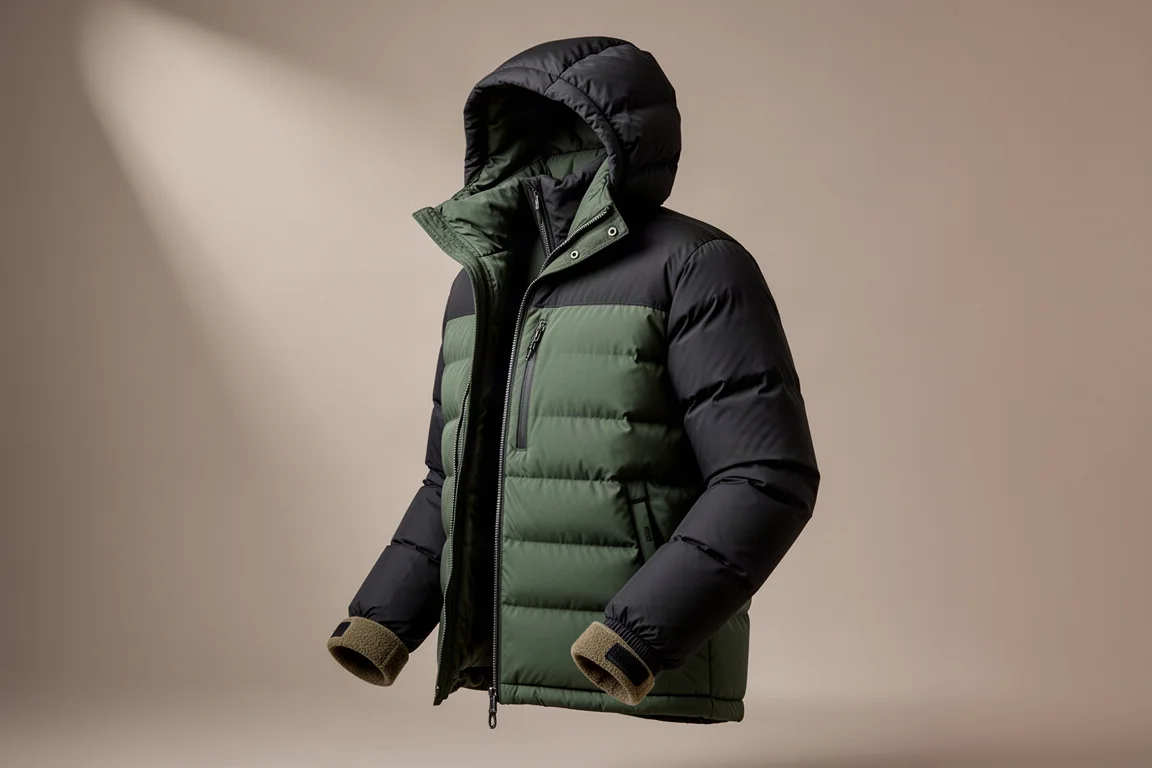
Mammut built the Taiss Pro Insulated Belay Jacket for mountaineering and alpine climbing, and the design brief shows in nearly every detail. It is very warm, genuinely light, and noticeably protective, which is the combination that matters most when you are standing still in cold, windy conditions waiting for a partner to finish a pitch.
The jacket pairs a high fill power down with a considered mix of fabrics, plus synthetic insulation in the zones that suffer most from moisture and compression. The result is a belay jacket that feels at home on a frosty morning as much as it does on a long alpine day.
Who this product is for
This is a jacket for people who spend time in genuinely cold conditions. Mountaineers, alpine climbers, and winter climbers are the obvious audience, but it also works well for cold weather bouldering, where staying warm between attempts matters as much as warmth on the move. It has also proven useful for simply sitting outside on a cold, windy evening.
Because the warmth on offer is substantial, it is best thought of as a static or low-output layer rather than something to wear on the approach.

If your cold weather use is mostly a short walk to the car, the Taiss Pro is more jacket than the job requires. If you regularly stand around in the cold waiting, it is exactly the right tool.
Main strengths
Warmth from 850 fill down and box wall construction
The Taiss Pro uses 850 fill power down, which sits near the top of the range without moving into the territory where down becomes disproportionately expensive. Higher fill power means fluffier, lighter feathers that loft more efficiently, so less material is needed to fill the same space.
The jacket carries around 200 g of that down, which is a serious amount of insulation. Mammut has also used a box wall construction rather than stitch-through baffles. Box wall builds a continuous layer of down without the stitching lines that create cold patches, so there are no gaps for wind to push through or warm air to escape. Visually it reads as a smooth, straight face rather than a stack of pronounced baffles.
Weather protection and the Pertex face fabric
The outer fabric combines two Pertex technologies to balance durability and weight. The darker panels use 10 denier Pertex Quantum Pro, a light and compressible material that is durable enough for the areas where it is used. The contrasting panels use Pertex Diamond Fuse, which is pulled very taut at a micro scale so there are no loose fibres for abrasion to catch on. That smooth surface also encourages water to bead and run off.
This does not make the jacket waterproof. There is no membrane in it, but the fabric and a PFAS free DWR treatment help it cope with light moisture. The down itself is treated as dry down, which means it holds performance better in damp or humid conditions than untreated down, and it recovers better if it gets wet inside a pack.
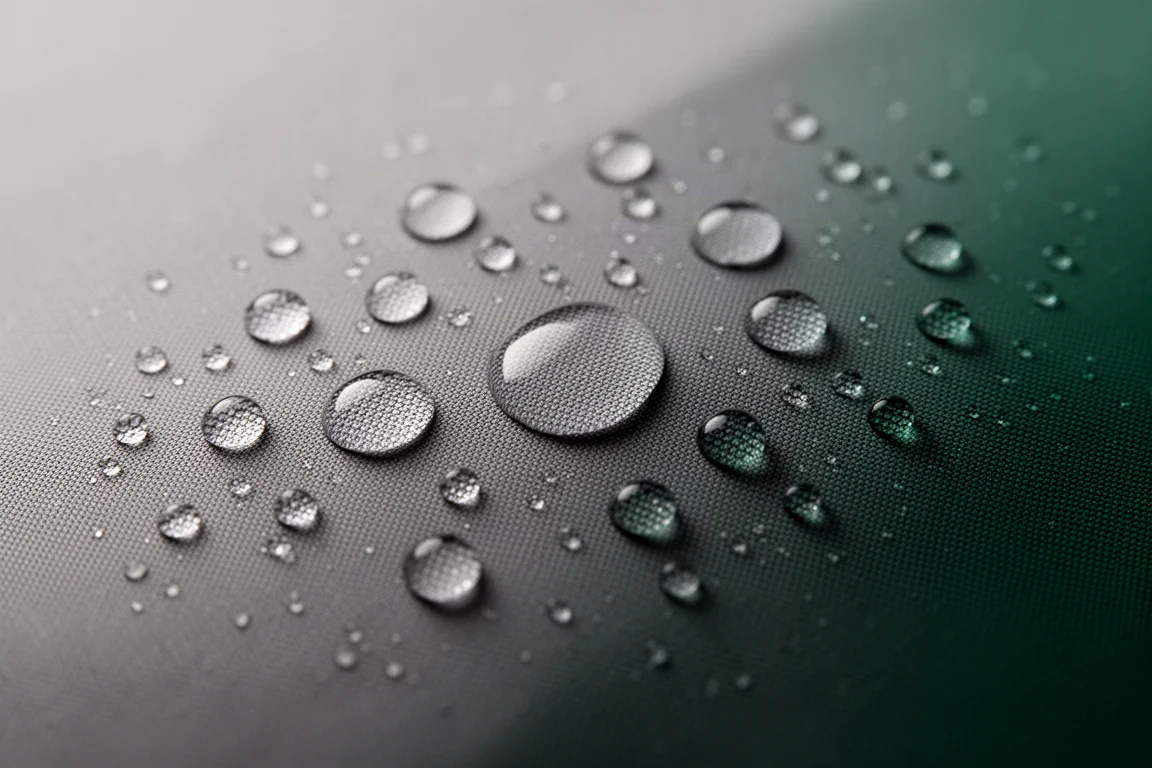
Between the fabric choice and the hydrophobic down treatment, the jacket is designed to stay usable through damp, changeable conditions rather than only in perfectly dry cold.
Synthetic insulation in the hardwearing zones
Down offers the best warmth to weight ratio available in this kind of product, but it is not at its best when it gets wet and compressed. Mammut addresses that by placing synthetic insulation in the areas that take the most abuse: the collar, the shoulders, and the cuffs. Those zones carry 120 g per square metre of synthetic fill, which is a substantial amount and contributes to how warm the jacket feels around the neck and shoulders.
Pockets, hood, and the two-way zip
Storage is generous. There is a large chest pocket and two warm hand pockets, with down positioned on the outside of the hands for comfort on a cold evening. Inside there are two large dump pockets, which suit water bottles on high altitude routes, spare gloves, or rock shoes kept warm between attempts.
The hood holds plenty of down, swallows a climbing helmet, and cinches down neatly when you are not wearing one. A two-way zip lets you feed a belay device out through the front of the jacket and clip in underneath without exposing your torso. The main zip runs smoothly and does not snag on the lightweight fabrics, even with bulky gloves on, and the elasticated cuffs are fleece lined on the inside.
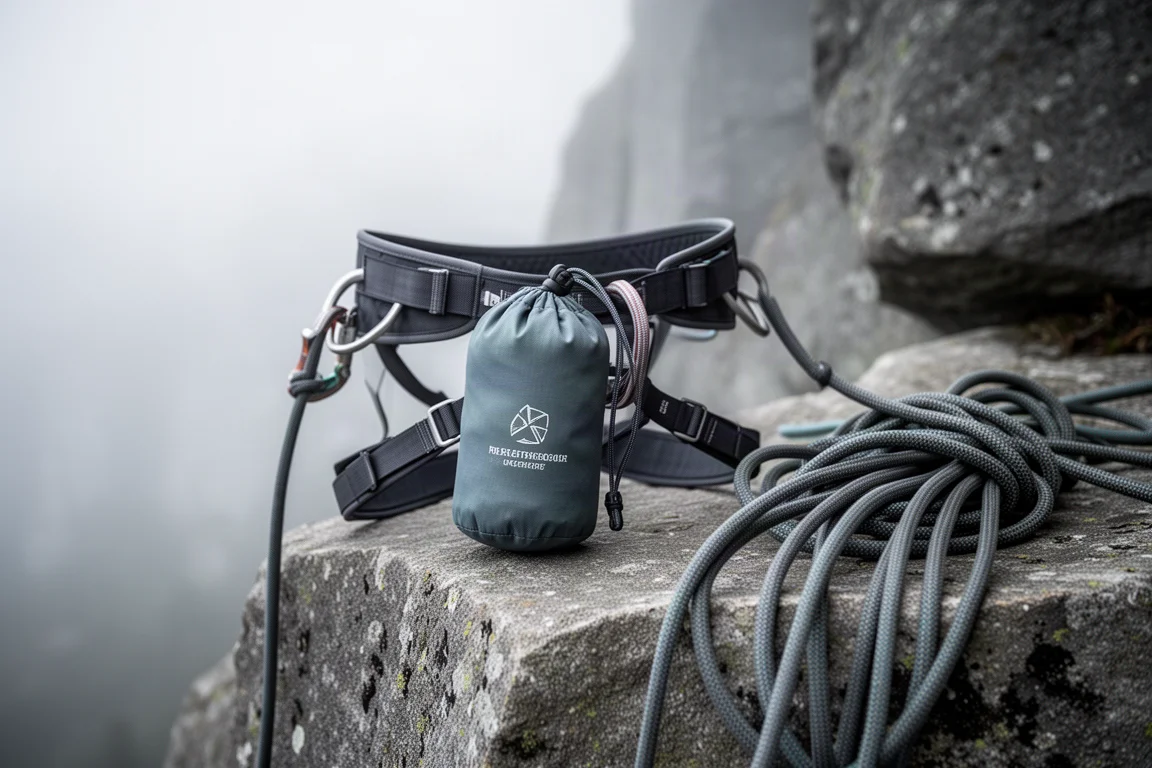
A simple stuff sack with a clip is included, so the jacket can be compressed and clipped to a harness. It also packs down small enough to disappear into a rucksack inside a dry bag.
Things to consider before buying
Sizing runs large
Sizing is the single most important thing to get right. The stated weight of 578 g refers to a medium, but that medium fits closer to a large in many other jackets. A medium has been the right size for someone well over six feet tall and over 90 kg, which is not a typical medium fit.
If you are comparing weights against other jackets, keep that in mind: the 578 g figure refers to a medium that is effectively a large elsewhere.
Down still needs care in wet conditions
Dry down and a DWR finish improve matters, but this remains a down jacket without a waterproof membrane. In sustained rain or very wet snow, it will eventually lose loft and warmth. For long, wet days it is best treated as a layer to keep in a pack until you stop, and paired with a shell if the weather turns.
The insulation level is high
Around 200 g of 850 fill down, plus synthetic fill in the collar, shoulders, and cuffs, adds up to a lot of warmth. That is the point of a belay jacket, but it does mean the Taiss Pro can feel like too much on milder days or during high-output climbing.
Buying advice
Choose the Taiss Pro if you want a warm, light, and protective layer for standing still in cold conditions, whether that is belaying on a winter route, bouldering on a frosty morning, or watching fireworks on a cold evening. The combination of 850 fill down, box wall construction, a durable Pertex face fabric, and synthetic insulation in the wettest and most compressed zones is a well reasoned package.
Get the sizing right before you order. Given how generously the jacket fits, consider a size down if you are between sizes or normally wear a large. If you prefer an understated look, it is also available in a full black version rather than the two-tone finish.
Conclusion
The Mammut Taiss Pro Insulated Belay Jacket does what a belay jacket should do: it delivers serious warmth at a weight that is easy to carry, with fabrics and insulation chosen for the places where down alone struggles. Its main quirks are the generous sizing and the fact that all that warmth is more than many casual cold-weather users need. For mountaineering, alpine climbing, and cold weather bouldering, it is a convincing choice.
Product link
View more details for Mammut Taiss Pro Insulated Belay Jacket
This product is mentioned in the review. Check the specifications, options, and compatibility before buying.
View more details for Mammut Taiss Pro Insulated Belay JacketFurther reading
Related Reviews
Insulated Jackets
Aerogel vs Down Insulation: Two Aerogel Jackets Compared
Aerogel is the lightest solid on record, but two aerogel jackets measured against a comparable down jacket tell a more complicated story about warmth.
Insulated Jackets
Arc'teryx Atom LT vs Decathlon Trek 50: Does the Premium Synthetic Jacket Earn Its Price?
A side-by-side look at two synthetic insulated jackets at very different prices, covering fit, weight, insulation, features, and warranty.
Insulated Jackets
Big Agnes Shovelhead Jacket Review: Does Treated Down Stay Warm When Wet?
A close look at the Big Agnes Shovelhead jacket and its bluesign approved, PFAS-free DownTek insulation, including what happened when it was soaked twice in near-freezing conditions.