Hi-Fi Audio
Malacoustic Platinum Review: A Premium Standmount Compared With the Q Acoustics Concept 300
A detailed look at the Malacoustic Platinum's aluminium cabinet, twin-port tuning and sound, plus how it compares with the Q Acoustics Concept 300.
Introduction
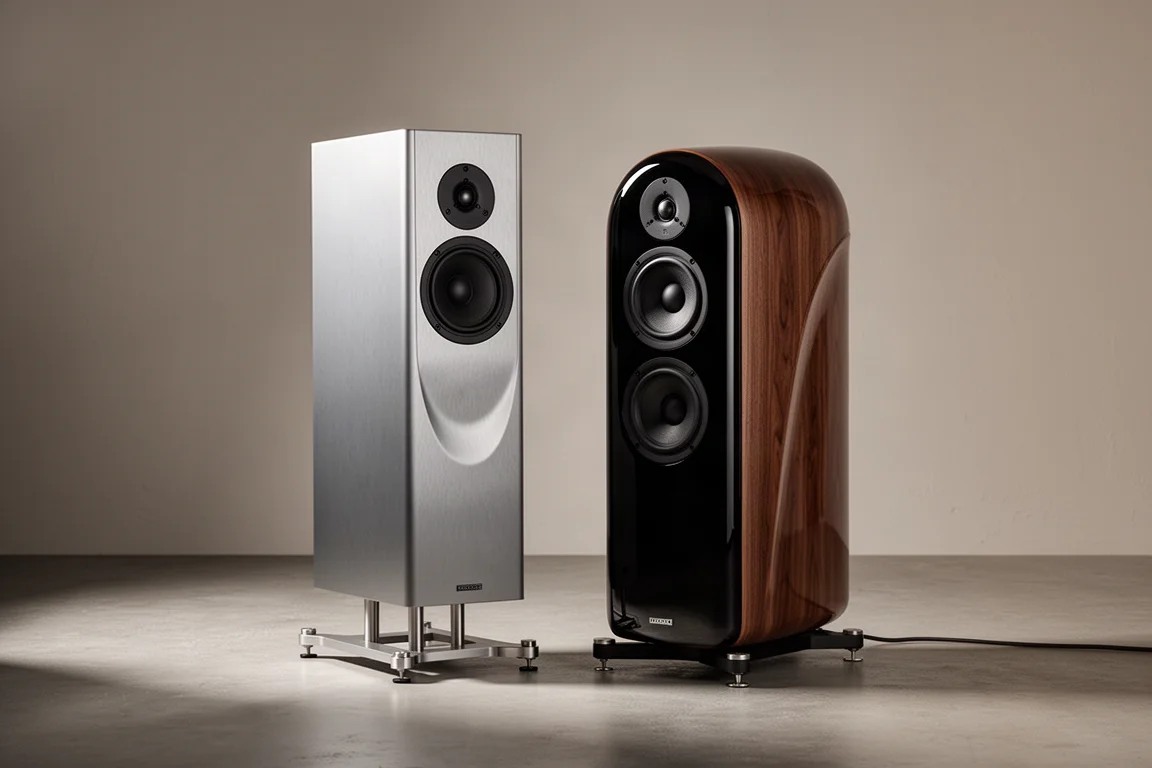
There is a particular kind of standmount speaker that asks for serious money and then earns it back in the way it disappears into the music. The Malacoustic Platinum is one of those designs. It is a passive two-way standmount with a machined aluminium cabinet, a driver array the brand describes as a virtual coaxial layout, and a level of engineering detail that is unusual even at its price.
At $6,500 per pair, the Platinum sits in the same territory as the Q Acoustics Concept 300, which arrives at about $5,000 with its stands. Both are premium standmounts, both are genuinely excellent, and they go about the job differently. This article walks through what the Platinum does, how it behaves in a real room, and where the Concept 300 might suit you better.
The Malacoustic Platinum at a Glance
The Platinum is a passive two-way standmount that sells for $6,500 per pair, with its dedicated stands included at that price. Malacoustic lists a frequency response of 53 Hz to 24 kHz. In-room measurement places the -3 dB point closer to 45 Hz, and with typical room gain the speaker can reach down to roughly 35 Hz, which is unusually deep for a cabinet of this size.
Sensitivity is rated at 91 dB, and although the nominal impedance is 4 ohms, the minimum stays around 3.6 to 3.7 ohms. That combination makes the Platinum far less demanding than the numbers might suggest and opens up a wide range of amplifiers.
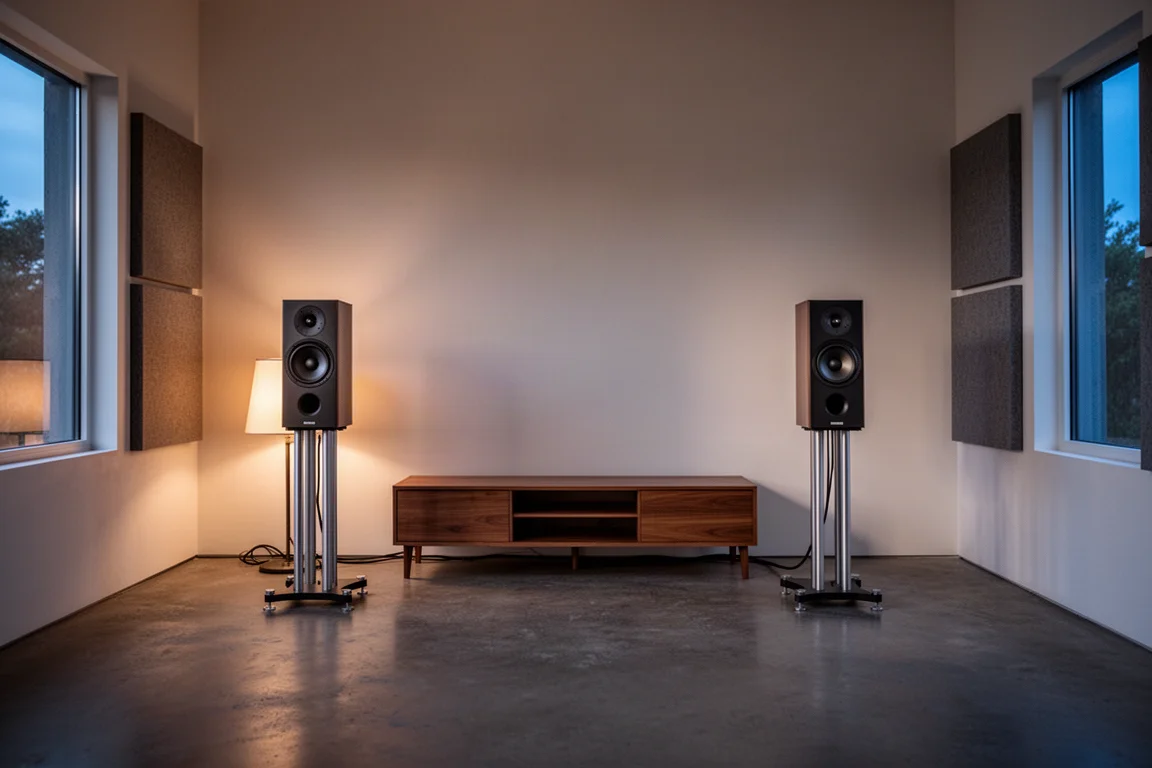
In practice, that means the Platinum can be driven by modest integrated amplifiers and still deliver its character. It also means the speaker rewards attention to placement more than it rewards raw power.
Cabinet and Baffle: Engineering Out Resonance
The cabinet is machined aluminium, a material that often brings a cold, analytical edge to the sound. The Platinum does not behave that way, and the reason is deliberate: the interior is packed with absorption materials, including leather selected for its behaviour around one kilohertz, along with other materials chosen after laboratory testing of their absorption capability.
The design has a clear origin story. An earlier Malacoustic speaker built from African Blackwood, also known as Pingo wood, delivered a sound the designer wanted to reproduce. The wood is now almost extinct, extremely expensive and difficult to source, so aluminium became the practical substitute. It got close but not close enough, which led to the internal damping work that removes the clinical behaviour normally associated with a metal chassis.
The result is a cabinet that keeps the benefits of aluminium, namely rigidity and freedom from box flex, without the resonance that usually comes with it. The speaker is heavy and rigid, and it does not add colouration to what you hear.
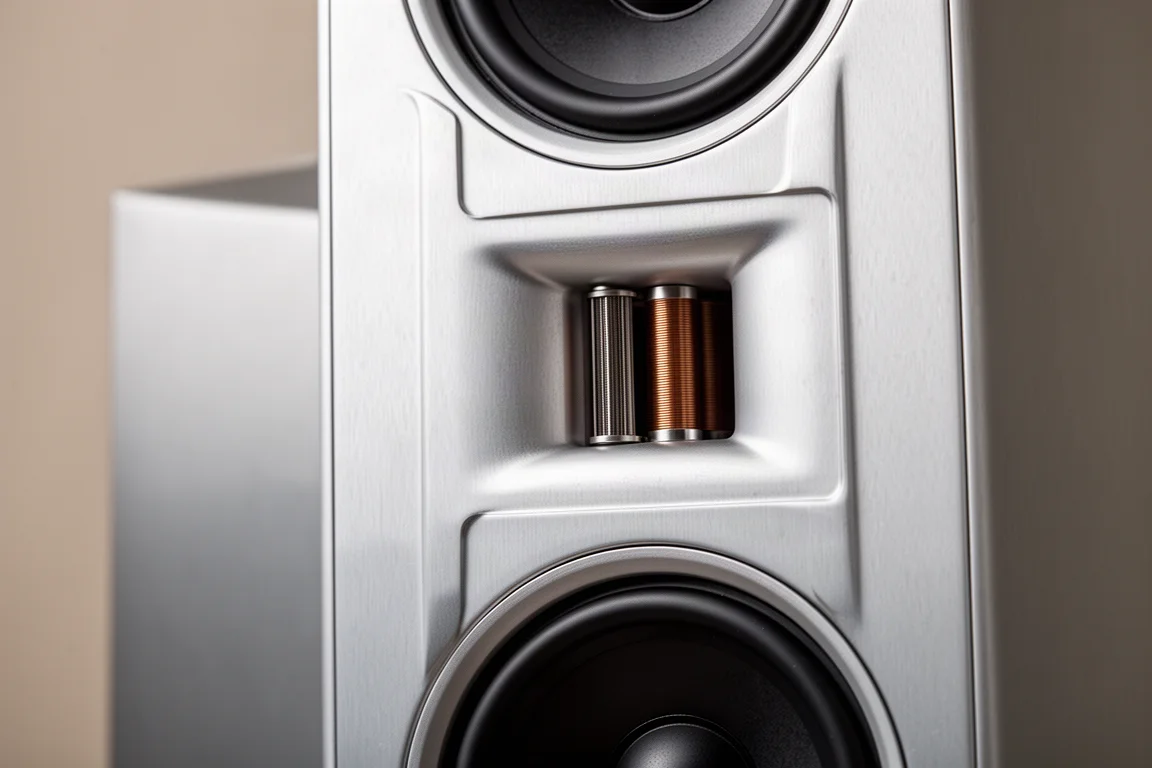
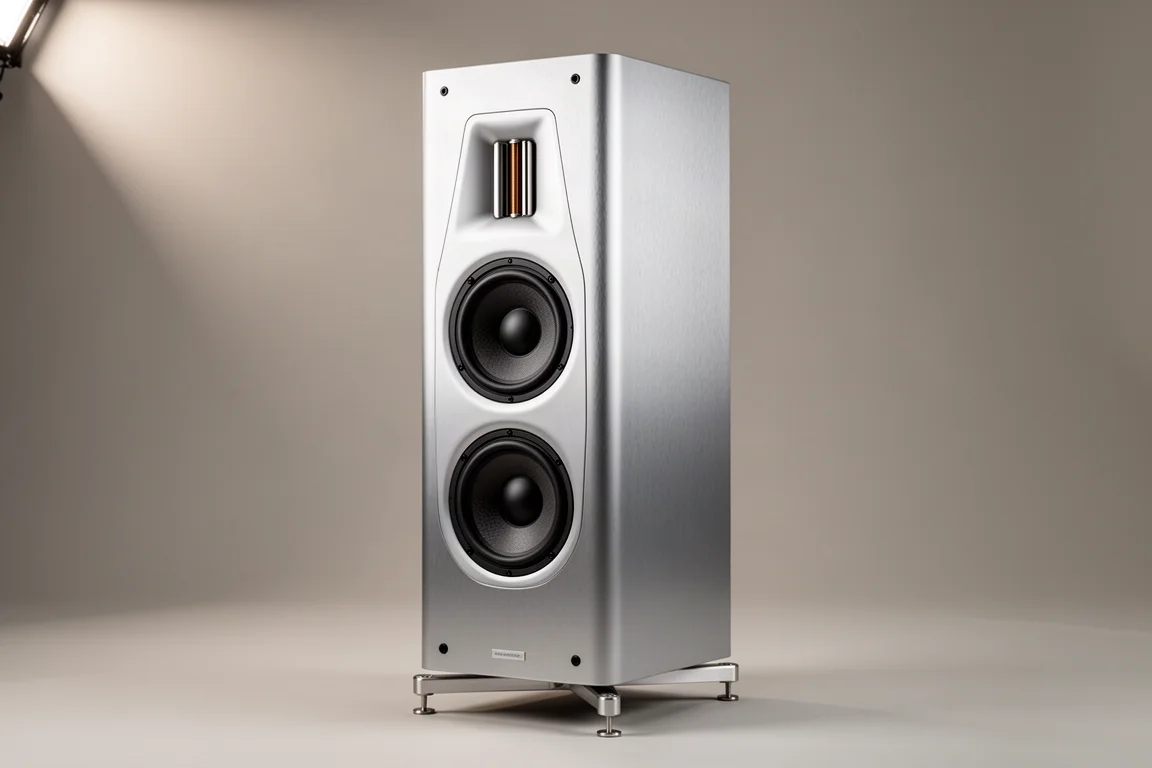
Up front, the baffle is milled with shaped cutouts that reduce diffraction, which sharpens imaging focus and detail. The baffle also forms a waveguide around the AMT tweeter, and that waveguide exists to control beaming, the narrowing of high frequencies that makes treble sound sharp and piercing. The drivers are mounted so that no screws are visible on the front face, which keeps the surface clean and removes another potential source of diffraction.
Ports, Left and Right Channels, and Imaging
The Platinum is a passive speaker, but it is not symmetrical. There is a left speaker and a right speaker, and they are not interchangeable.
Each cabinet has two rear ports. Both are tuned to the same 60 Hz, which is the woofer’s free-air resonance, but they are tuned for different air velocity. One port takes over from the woofer at that frequency while the second port, working at a different amplitude, shares the load. The intention is clean bass without port noise or lingering residue.
The second reason for the left and right distinction is imaging. Tuning each channel separately allows the speaker to place instruments with unusual precision. Swapping the two channels still produces a pleasant sound, but the sense of coherency collapses, which makes the correct assignment worth checking during setup.
Sound Quality: Bass, Midrange, and Treble
Bass is where the Platinum first makes its case. It is full and textured rather than clinical, with good extension and real impact, but it is never exaggerated. There is none of the extra mid-bass bloom that some designs use to fake warmth. Adding a subwoofer fills in the last octave and turns the system into something that behaves like a floorstander in scale and authority.
The midrange is clean without being cold. Micro-detail is the headline here: the smallest cues are audible and, more importantly, locatable. Layering and placement are precise enough that individual elements can be picked out within the stage rather than merely heard.
The treble is extended and airy, with a sparkle around high notes and a sense of space that keeps them from sounding flat. It is detailed without being bright or shrill, which is a difficult balance and one the waveguide clearly helps to strike.
Long listening sessions reveal the speaker’s only real caveat. After roughly four hours of continuous listening, the sheer density of detail can become tiring. That is detail fatigue rather than brightness fatigue, and it says more about how much information the speaker hands over than about any tonal hardness.
Genre coverage is broad. Classical material shows off the separation and speed of the speaker particularly well, and rock recordings hold together nicely. What is more surprising is that poorer recordings and modern productions, including rap and R&B tracks that often fall apart on clean, detailed systems, remain listenable and even enjoyable. The soundstage itself is both wide and deep, and the depth is convincing rather than distant.
Stands, Decoupling, and Internal Wiring
The Platinum ships with its own stands, and they do more than hold the speaker at the right height. Ball bearings sit between the cabinet and the stand, decoupling the two so that vibration does not travel from one to the other. Vibration that moves between a stand and a speaker muddies the frequency response and clouds the treble, so the decoupling is a functional part of the design rather than a styling flourish.
Internally, the Platinum is wired with a high-quality audio cable of the same type used in the reference system the speaker was demonstrated with, which fits the overall attention to detail.
Amplifier Matching, Sources, and Setup
At 91 dB sensitivity with a minimum impedance near 3.6 ohms, the Platinum is easy to drive. A hybrid tube integrated amplifier produced an airy, spacious, holographic presentation with punchy, dynamic bass and impressive scale. A Class D integrated with a tube preamplifier stage gave a more balanced result, with slightly less dynamic swing and microdynamic shading, but still a strong all-in-one solution.
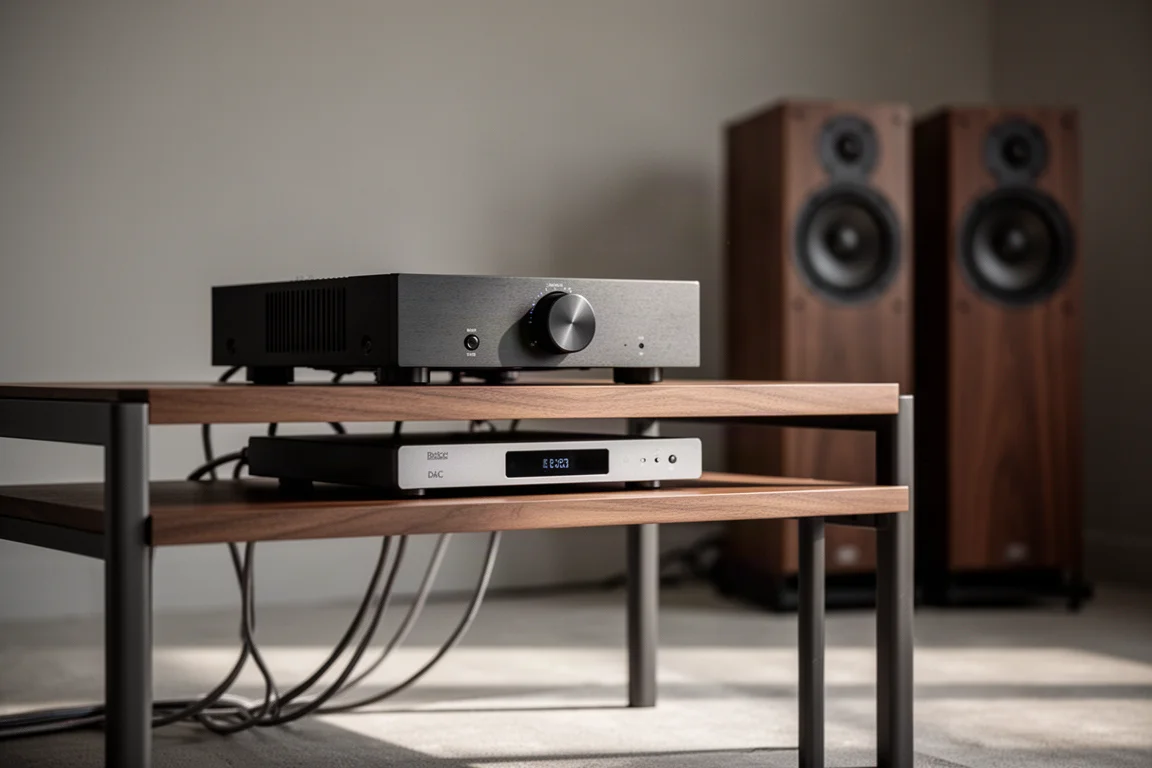
Source quality matters. Changing the DAC shifted the presentation noticeably: a modest tube DAC kept the sound relaxed and enjoyable, while a more analytical reference converter pushed detail to a level that could feel overwhelming, even though it never turned bright or piercing. For listeners who value a laid-back signature, the warmer source is the better match.
Placement needs a little patience. The speaker wants one to two feet of space behind it to develop its depth, and toe-in changes the character of the stage. Angling the speakers in tightly narrows the presentation; leaving them closer to straight ahead opens up a large, room-filling stage. Getting the left and right channels right is essential, as noted above.
Low-volume listening is a genuine strength. The Platinum keeps its bass weight, nuance and detail even at quiet levels, and it holds up at medium and high volumes as well.
How the Q Acoustics Concept 300 Compares
The Q Acoustics Concept 300 is the natural point of comparison because it occupies similar territory, at about $5,000 with its stands. The two speakers are both excellent and neither one is a compromise, but they lean in different directions.
The Concept 300 is the warmer, easier-going design overall. Its imaging is very good, among the best available, but the Platinum goes further: more detail, more high-frequency extension and a more spacious presentation. Where the Concept 300 invites you to relax into the music, the Platinum asks you to listen closely.
Choosing between them comes down to taste rather than quality. If a warm, forgiving balance matters most, the Concept 300 is the simpler recommendation. If you want the sharpest imaging and the most detail without brightness, the Platinum is the one.
Buying Advice
Both speakers are premium purchases, and both justify their price with engineering rather than branding. The Platinum’s aluminium cabinet, internal damping, twin-port tuning and channel-specific design are all measurable choices, and the speaker’s measured bass extension of roughly 45 Hz in room, reaching about 35 Hz with room gain, backs up what you hear.
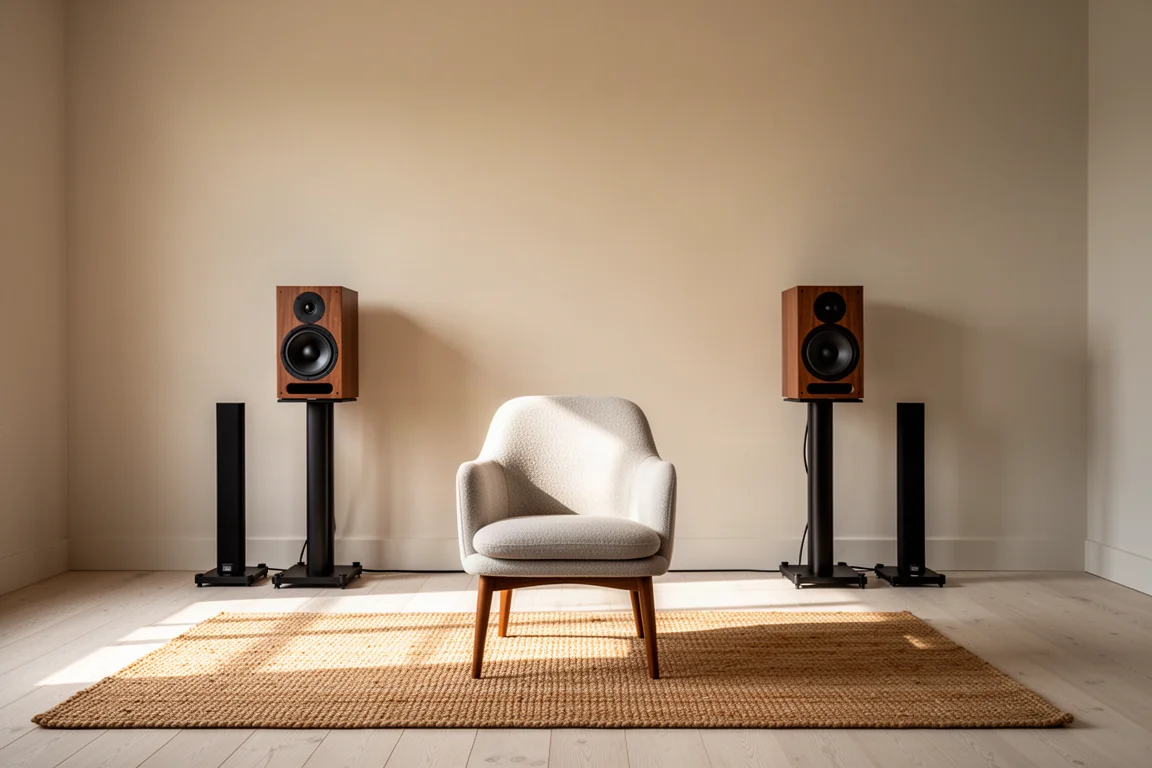
Before buying, think about the room. The Platinum needs one to two feet behind it to breathe, so a tight position against a wall will not let it show what it can do. It also rewards a source and amplifier that suit its revealing nature, since a warmer amplifier or DAC will smooth the edges of very detailed recordings.
If your priority is a forgiving, warm balance with excellent imaging, the Concept 300 is the better fit and costs less. If you want maximum transparency, pinpoint imaging and deep, clean bass from a standmount, the Platinum delivers it, and it does so at low volume as well as high.
Conclusion
The Malacoustic Platinum is one of those rare standmounts that seems to have no single weak area. Bass, midrange and treble all perform at a level that stands out, and the cabinet engineering removes the resonance that usually spoils an aluminium enclosure. It is detailed without being bright, warm in the bass without exaggeration, and precise in a way that makes the left and right channel distinction worth respecting.
The Q Acoustics Concept 300 remains a superb alternative with a warmer, more relaxed signature and a lower price with stands. Between the two, the decision is about character rather than quality, and either one will reward a careful setup and a source that matches its strengths.
Further reading
Related Reviews
Hi-Fi Audio
Accuphase C-57 vs Allnic H-7000V: Two High-End Phono Stages Compared
A fully balanced solid-state phono stage with a pitch-black noise floor meets a tube design built for well-loved records. Here is how to choose between them.
Hi-Fi Audio
Active vs Passive Hi-Fi: Five Components for a Modern System
Five components that define modern active and passive hi-fi systems, with the strengths, trade-offs and setup details worth weighing before you buy.
Hi-Fi Audio
Advance Paris A10 Apex Review: A Hybrid Integrated Amplifier That Covers a Lot of Ground
A French hybrid integrated amplifier with a class A tube preamp stage, analogue power meters, and an internal DAC and phono stage good enough to make extra boxes unnecessary.