Sleeping Pads
M-Tac Sleeping Pad Review: Single and Double Compared
A practical look at the M-Tac single and double sleeping pads, covering 40D ripstop nylon construction, packed size, real-world comfort, warmth limits, and value.
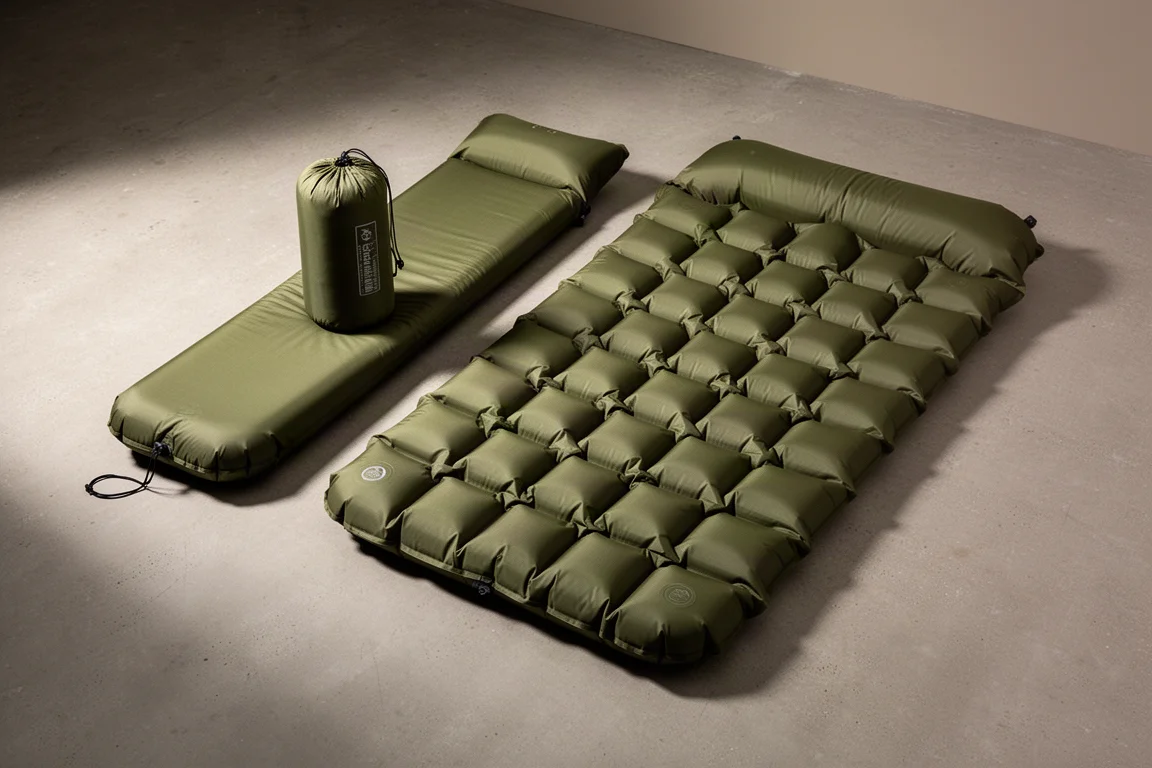
Introduction
M-Tac is a Ukrainian company founded around 2005. It started out making Airsoft products and moved into military gear after 2014, and it now runs a manufacturing facility in Kyiv alongside a broad catalog of tactical clothing, footwear, backpacks, sleeping bags, and sleeping pads. The name is sometimes confused with the similarly spelled Mil-Tec brand, but the two are separate companies.
The pads covered here are the single and double versions of the M-Tac Sleeping Pad. Both are military-issue designs, yet they weigh and pack down like civilian backpacking pads, which is unusual at their price point. Both sizes have been used across warm and cold conditions in car camping, truck camping, and tent setups, and the notes below reflect that experience.
Shared Design and Materials
Both pads use the same construction: 40D ripstop nylon coated with TPU, offered in a single OD Green colorway. Choosing nylon over polyester is a large part of why these pads are so light and so compressible, and it is not the material most buyers expect at this price.
The welds are clean and consistent, the cut is accurate, and the valves are seated properly. There have been no leaks, no seam failures, and no slow deflation overnight, which is the main thing you want to be able to say about an inflatable pad after months of use.
Each pad ships with a storage bag that has a grab handle, a drawstring closure at the top, and an elastic compression strap inside. The bags are generously sized, which matters more than it sounds. Getting a pad back into its sack after a trip is a common frustration, and it is not a problem here.
The valve uses an internal rubber stopper so air does not escape while you are inflating. That is a genuine benefit, but it also adds resistance, so inflation takes real lung effort. Deflation is the opposite: open the valve and the pad goes flat almost immediately.
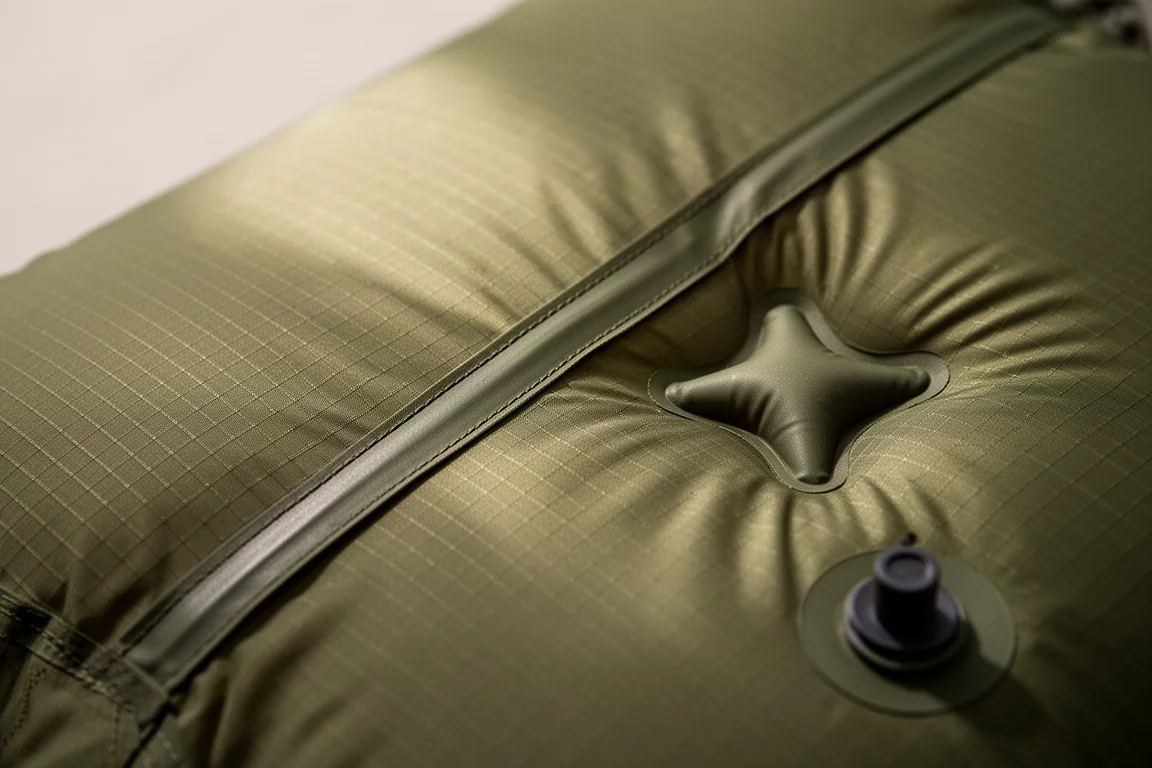
Both pads are intended for late spring, summer, and early fall. M-Tac lists some form of insulation, but no R-value is published for either pad, and the insulation is not easy to detect in use. Treat these as three-season pads rather than four-season ones.
M-Tac Sleeping Pad Single
The single is the lighter of the two at 17.1 oz, just over a pound. Packed, it measures about 8.5 x 4.5 inches. Fully inflated it is 78 inches long, 22 inches wide, and roughly 2 inches thick, and it takes about 15 breaths to fill.
At $27, the single is the standout value of the pair. A ripstop nylon pad at this weight, with this packed size, at this price is hard to match. Pads built from heavier polyester routinely sell for $80 to $100 without offering much more in return.
The dimensions reveal the design heritage. This is a military pad built to give a soldier enough comfort without adding much weight or bulk to a pack, so the width is deliberately modest and outright comfort was never the top priority.
M-Tac Sleeping Pad Double
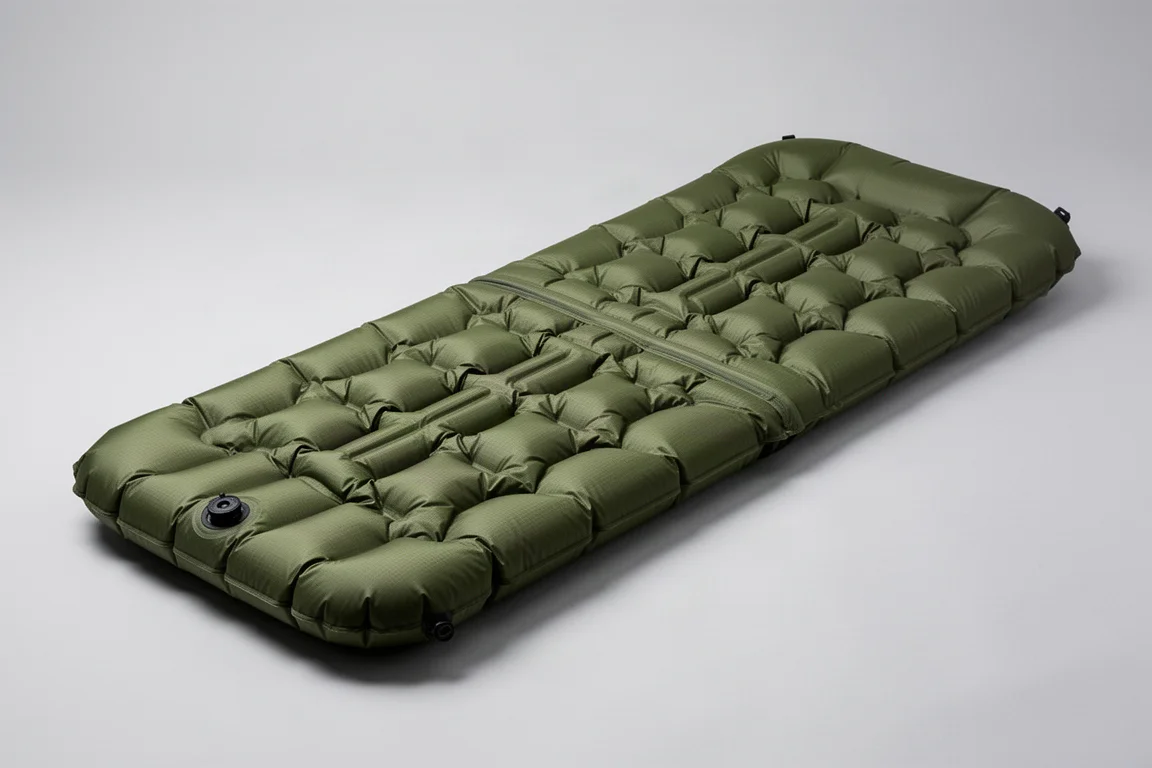
The double weighs 2.2 lb and packs to roughly 11.5 x 5 inches. Inflated, it measures 77 inches long, 47 inches wide, and 2 inches thick, and it takes about 30 breaths to fill. It also carries a second air valve, and both valves need to be closed before you start. With one valve left open, the pad simply will not inflate no matter how long you blow into it.
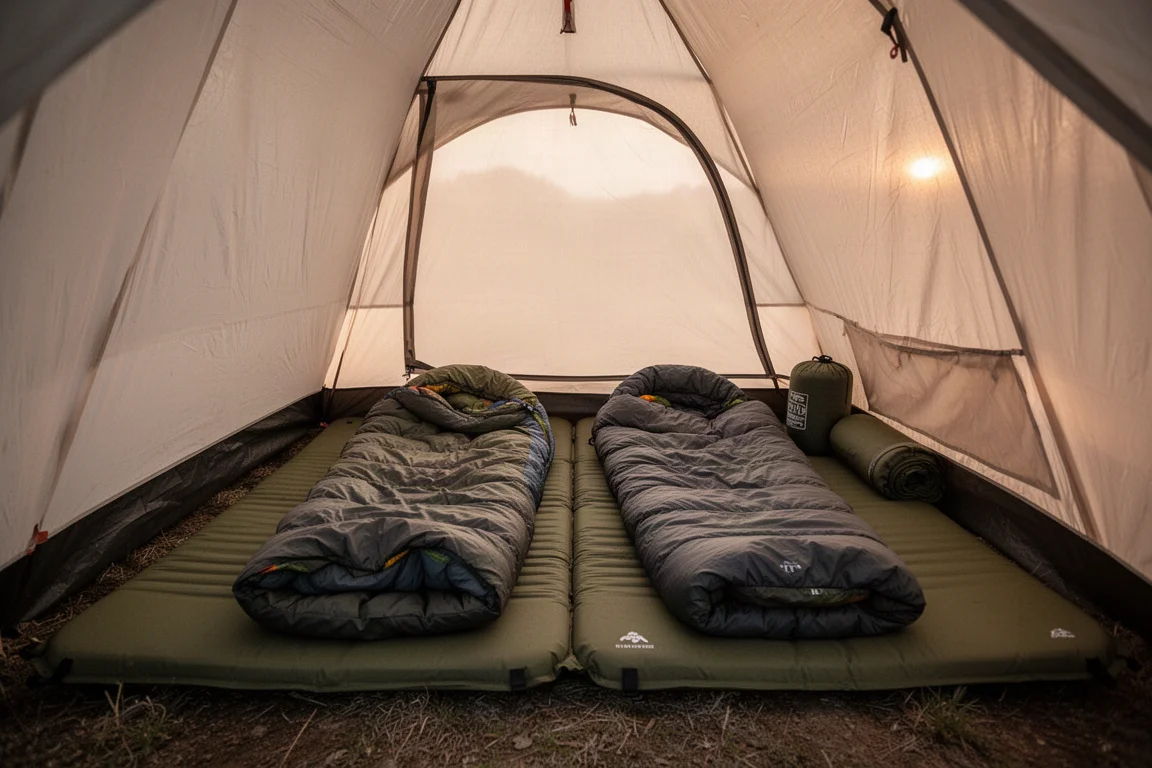
At $54, the double is a fair price for a two-person pad, though the sizing is the trade-off. The width is roughly double that of the single version, which is comfortable for one sleeper and workable for two smaller people. Two larger adults will likely find it tight.
If weight is the priority on a long-distance trip with a partner, the double earns its place. If you are loading a car and driving to a campsite, the same money buys a thicker, wider pad that will simply be more comfortable.
Comfort and Warmth in Real Use
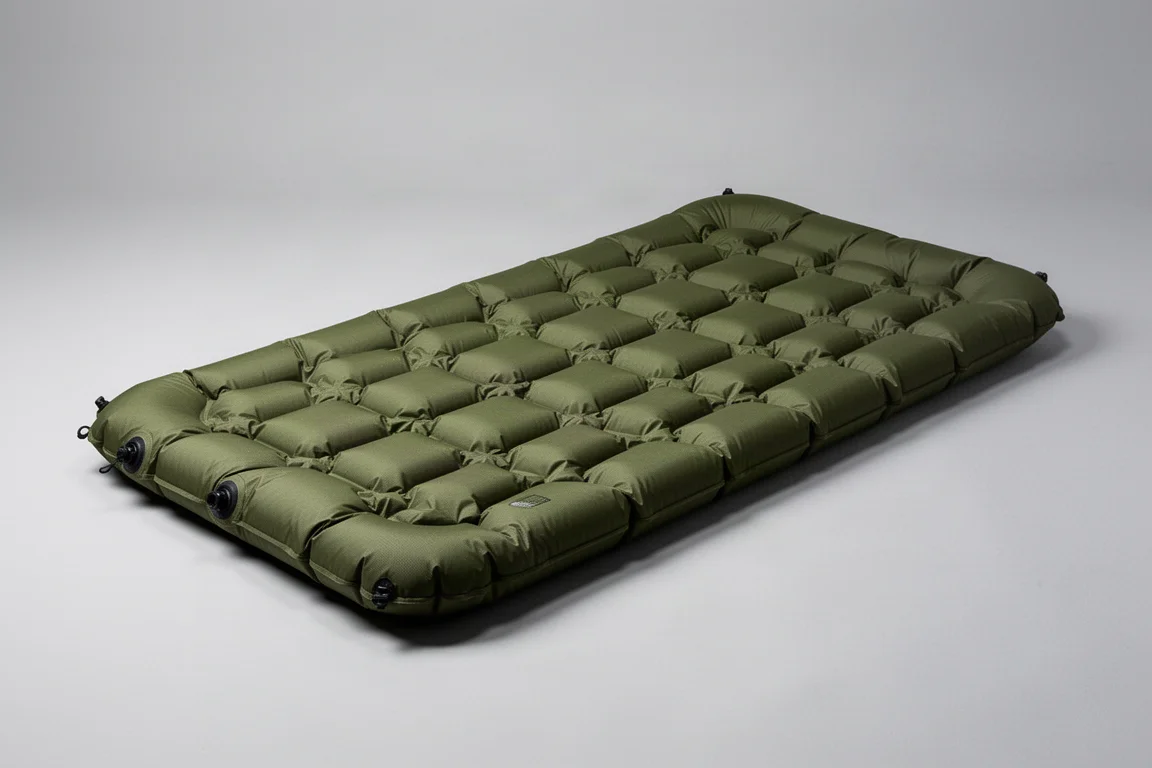
The sleeping surface is built from a pattern of squares and star-shaped air pockets separated by welded channels. Air sits in the pockets while the channels stay flat, which keeps the overall weight down and gives the pad its structure.
That structure behaves differently depending on how you are positioned. Lying down, you are lifted clear of the ground and the pad feels supportive. Sitting up, your weight concentrates in one spot and you go straight through to the ground. Rolling onto your side, you feel your hips pressing into the surface before the pad takes over again.
On a scale where 5 is adequate and 10 is exceptional, both pads land at about a 5. That is less a criticism than a description of what they are: comfortable enough to sleep on through the night, but not a plush bed. Sleeping well on them is entirely possible, as long as the expectations match the design.
Warmth is the other limiting factor. With a good sleep system, these pads can be pushed to around 40°F, but below that the cold comes through. Warm weather is where they perform best, and cold weather is where they stop making sense.
Sizing: Length, Width, and Body Type
Length is not the problem. Both pads suit sleepers up to about 6 ft 4 in. Width is where the compromises live. The single is narrow for most adults, which follows directly from its military brief: enough comfort to matter, without weight or pack volume that a soldier cannot afford to carry.
The double is roughly twice the width of the single, which is comfortable for one person and workable for two smaller sleepers. Two larger adults will probably find it cramped. It is worth measuring the pad against how you actually sleep, and against the people who will share it, before deciding.
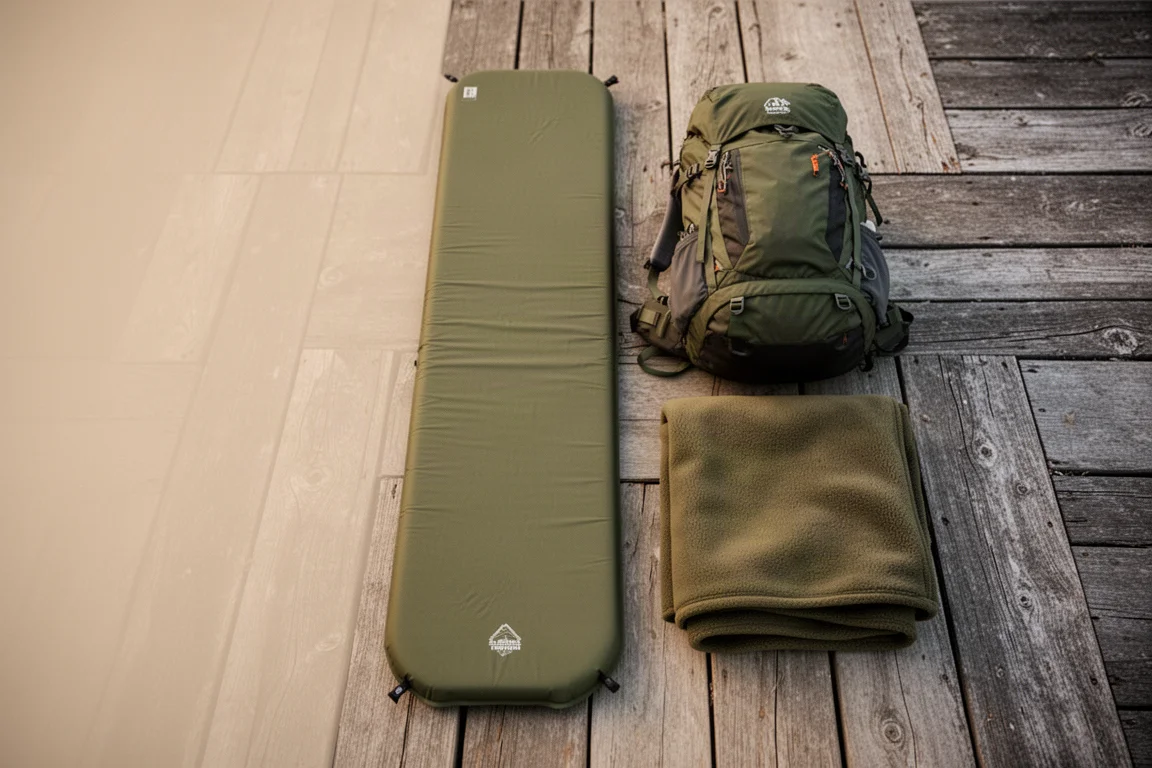
A useful test is to compare these figures with whatever pad you already own. If you have been sleeping on something wider and thicker, the change in width will be the first thing you notice, not the change in length.
Packability, Storage, and Inflation
Packed volume is the strongest argument for both pads. The single rolls down to about 8.5 x 4.5 inches and the double to about 11.5 x 5 inches, and the included storage bags are sized to swallow them without a fight. For a backpacking kit where space is tight, that small footprint is worth as much as the low weight.
Inflation is the one chore. The rubber stopper inside the valve stops air from leaking back out, but it also makes blowing harder work than on a simple open valve. Fifteen breaths for the single and thirty for the double is realistic, and the double needs both valves closed first.
Deflation is the opposite experience: open the valve and the pad collapses immediately, with no need to fold or roll air out of it.
Buying Advice
The value case is straightforward. For the single, $27 buys a ripstop nylon pad that weighs just over a pound and packs small. If weight is a priority, this is about as much return per dollar as you will find.
For the double at $54, the case is more situational. On a long backpacking trip where every ounce counts, it makes sense. For car camping, where weight and packed size are not constraints, a thicker and wider pad will be more comfortable for the same money or a little more.

Availability is worth planning around. M-Tac has a presence in the United States, and some of its clothing and gear can be found on Amazon, but these pads are frequently sold out through the brand’s own channels. They can also be found through Military Shop, a European tactical and military surplus retailer that ships to the United States quickly.
Conclusion
The M-Tac single and double sleeping pads are built around three priorities: low weight, small packed size, and low cost, with comfort coming after those. The 40D ripstop nylon construction, welded seams, and generous storage bags have held up well, and neither pad has leaked or failed during extended use.
If you understand what these pads are, they are easy to recommend. If ultimate comfort is the goal, look elsewhere and expect to pay more and carry more.
Further reading
Related Reviews
Sleeping Pads
Best Backpacking Sleeping Pads 2026: Nine Pads Rated on Price, Comfort, Warmth, and Weight
Nine backpacking sleeping pads compared on price, comfort, warmth, and weight, from a $65 summer pad to a year-round option rated at R-7.3.
Sleeping Pads
Best Backpacking Sleeping Pads: Comfort, Warmth, and Weight Compared
A practical comparison of the Nemo Quasar 3D, Therm-a-Rest NeoAir XTherm Max, and Big Agnes Rapide SL for backpackers choosing between comfort, warmth, and packed weight.
Sleeping Pads
Best Backpacking Sleeping Pads: Ultralight, Winter, Comfort and Budget Picks
A practical roundup of the sleeping pads that stand out for ultralight weight, winter warmth, pressure relief and value, plus three popular pads that fell short.