Streaming Amplifiers
Lyngdorf TDAI-1120 vs Cambridge Audio Evo 150 vs Naim Uniti Atom: Which Compact Streaming Amplifier Fits Your Room?
A practical comparison of three compact streaming amplifiers, covering all-digital amplification, room correction, subwoofer integration, sound character and price.

Introduction
Compact streaming amplifiers have quietly become the centre of a great many modern two-channel systems. They replace a separate streamer, DAC and integrated amplifier, they take up very little space, and they can be operated from a phone. Three models sit in the same conversation: the Lyngdorf TDAI-1120, the Cambridge Audio Evo 150 and the Naim Uniti Atom.
All three are compact, all three stream, and all three can be fitted into a rack unit. They are not the same product though. The Lyngdorf takes an all-digital signal path and builds room correction and subwoofer integration into the amplifier itself. The Cambridge Audio Evo 150 adds a front display and a larger sense of scale. The Naim Uniti Atom leans on dynamics and drive.
Price separates them as well. The Lyngdorf TDAI-1120 sells for around 2,000 euros, the Cambridge Audio Evo 150 for around 2,500 euros, and the Naim Uniti Atom for around 3,000 euros. That is a 1,000 euro gap between the cheapest and the most expensive of the three.
This guide looks at what each amplifier does well, where the compromises sit, and which one makes sense for a particular room and a particular pair of speakers.
What All Three Streaming Amplifiers Offer
Common ground first. Each of these three is a streaming amplifier in a compact chassis that can be slotted into a rack. Each one handles streaming, digital inputs and amplification in a single box, which keeps a system simple and keeps the cable count low.
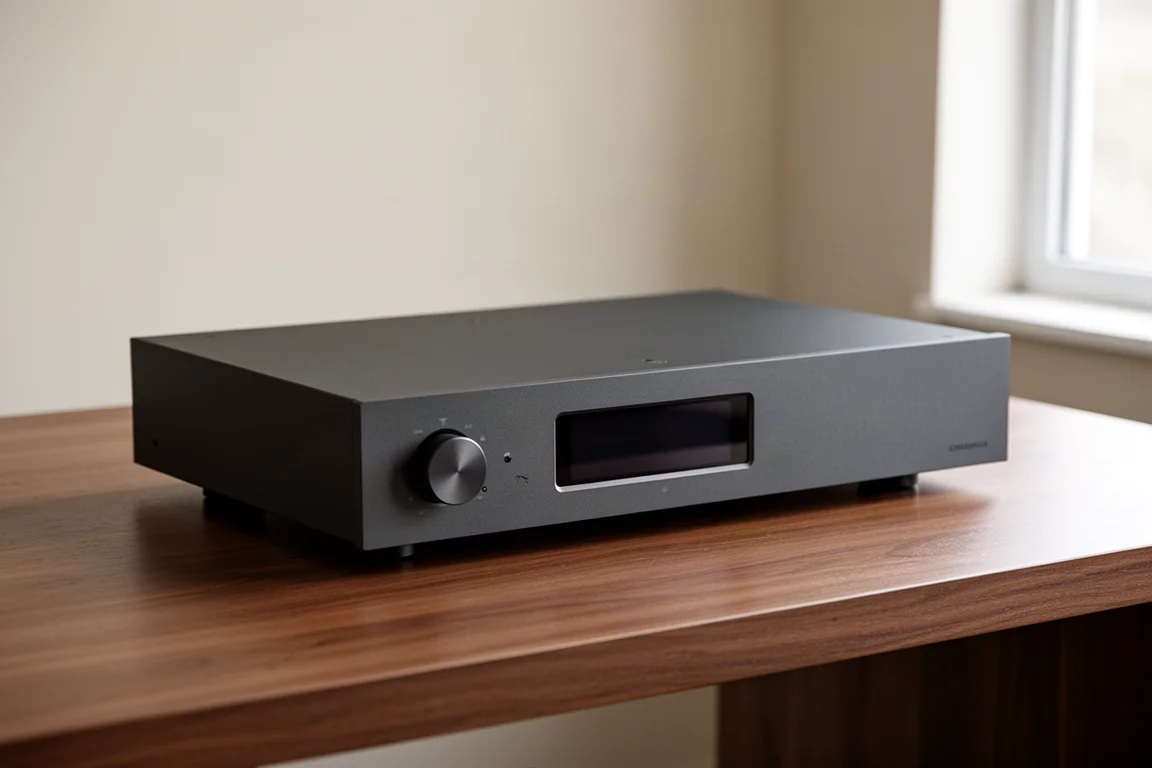
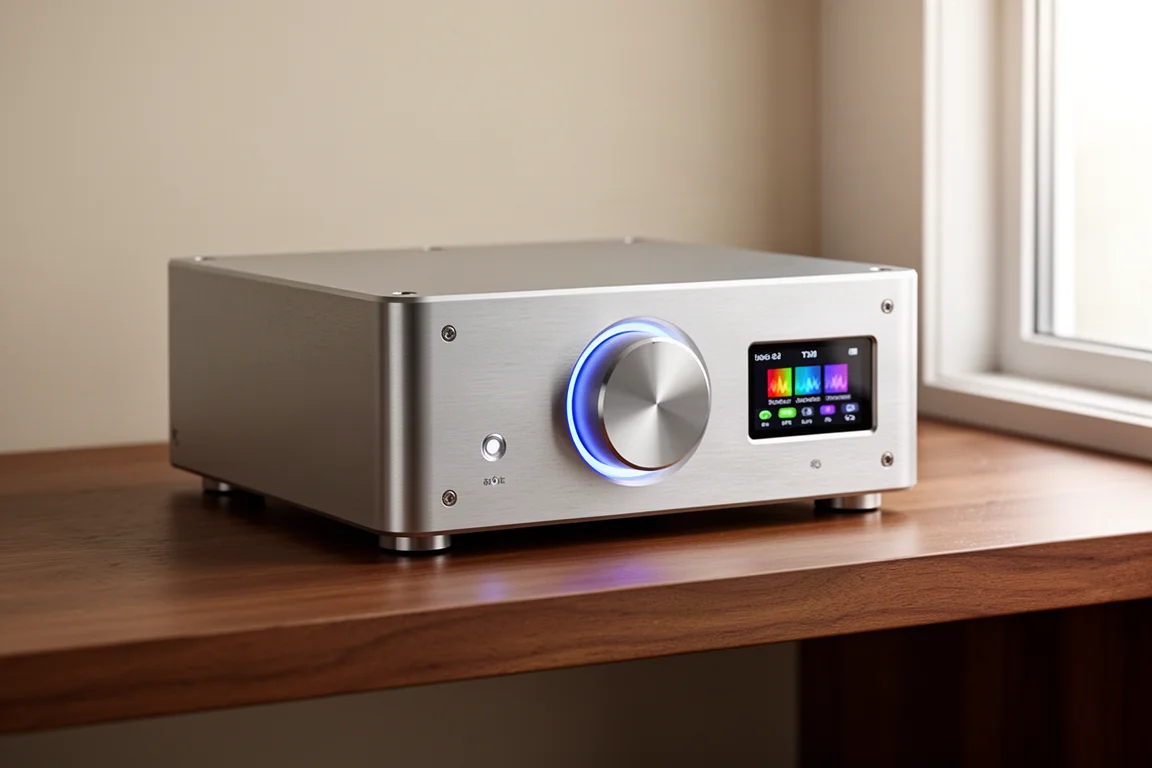
The differences show up on the front panel. The Cambridge Audio Evo 150 and the Naim Uniti Atom both give you a display showing what is playing. The Lyngdorf TDAI-1120 has no screen, no menu system and no cover art. Instead you get a volume control, a source selector and a discreet power button, with control handled through a smartphone app and a web interface.
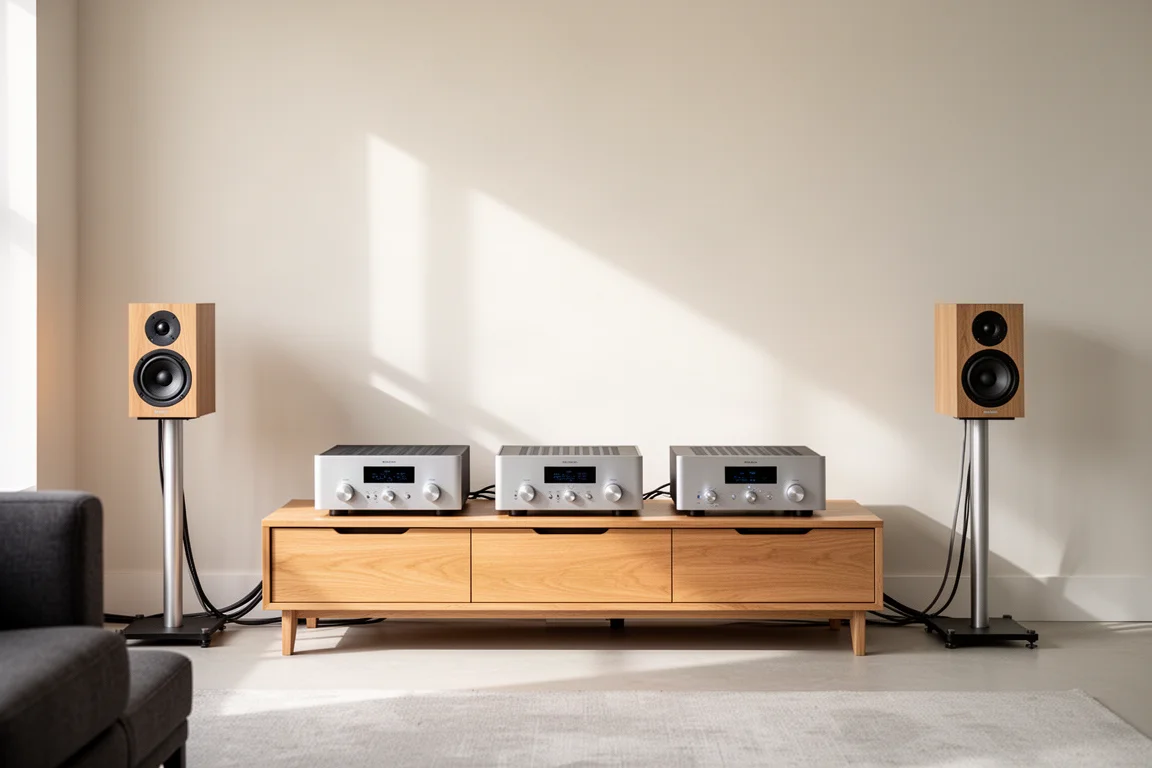
That understated approach is a deliberate design choice rather than a missing feature, and it is the first clue that the Lyngdorf is built around a different set of priorities. The second clue is the sound.
Across the three, the audible differences are real but not enormous. The Lyngdorf leans towards speed and purity of sound. The Cambridge Audio Evo 150 brings more soundstage width and height along with more body. The Naim Uniti Atom sounds the most muscular and the most groove laden of the three.
Lyngdorf TDAI-1120: An All-Digital Streaming Amplifier
The Lyngdorf TDAI-1120 is an all-digital amplifier rather than a class D design. The digital signal travels through the amplifier without an intervening DAC stage, and just before the output stage the PCM signal is converted to PWM, which then drives the output stage. The Cambridge Audio Evo 150 works differently: its signal is converted to analog first, and an analog stage sits in the chain before the output stage is switched.
On paper the Lyngdorf offers 60W per channel into 8 ohms, which is 20W per channel more than the Naim Uniti Atom. Side by side, that extra figure does not translate into a feeling of greater power. The Naim still sounds like the more dynamically punchy amplifier, with more in reserve. On the Lyngdorf you tend to get closer to full volume than you do on the Cambridge or the Naim, which points to headroom rather than outright muscle.
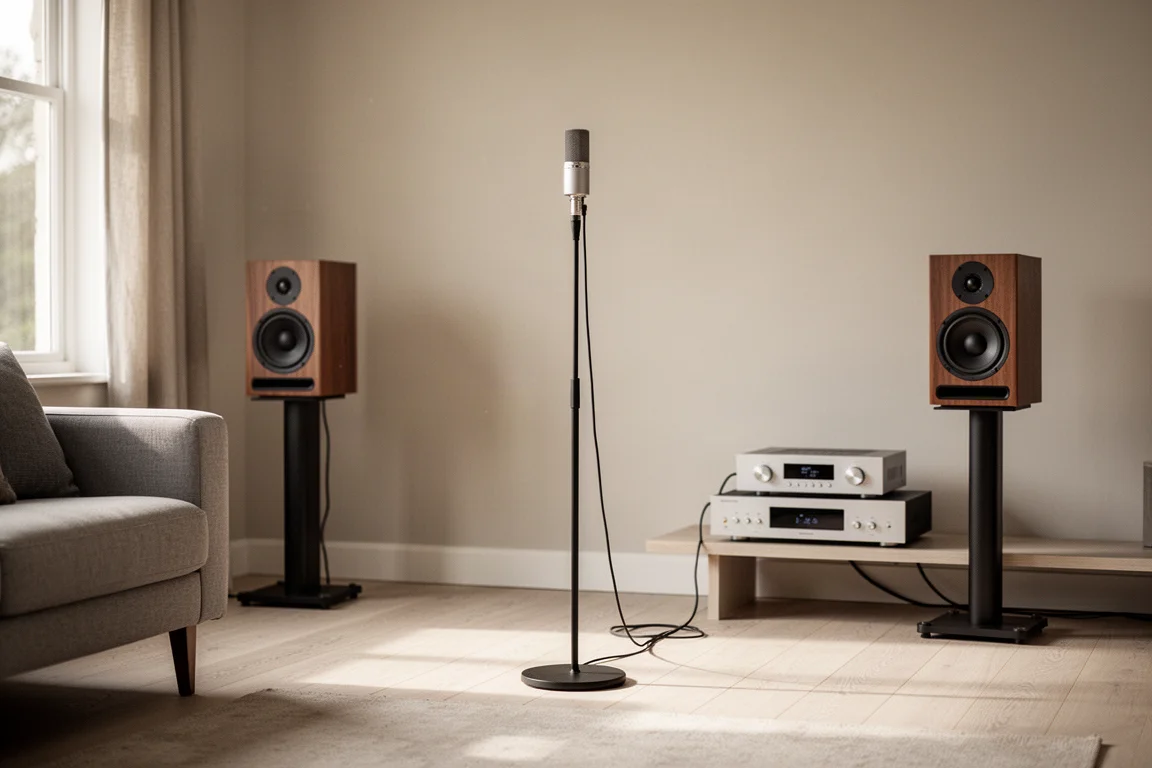
Streaming functionality covers Spotify Connect, AirPlay 2, Roon readiness and Chromecast built in. Hardwired inputs include two optical inputs, two coaxial inputs, HDMI ARC, one analog input and an MM phono stage. There is no USB input. Control comes from the remote smartphone app, with advanced settings exposed through a web interface that runs on almost any device. The infrared remote control is an optional extra rather than a boxed item, but a measurement microphone and a microphone stand are included.
RoomPerfect and Subwoofer Integration
At the heart of the TDAI-1120 is a DSP engine. Right away you get voicing options such as Music and Bass, and there are around 20 voicings in total, each with its own response curve that you can inspect in the web interface. You can customise them or create your own. Some of those curves look dramatic on a graph while sounding subtle in practice, which is a useful reminder that a small dip in a frequency response is not automatically a problem.
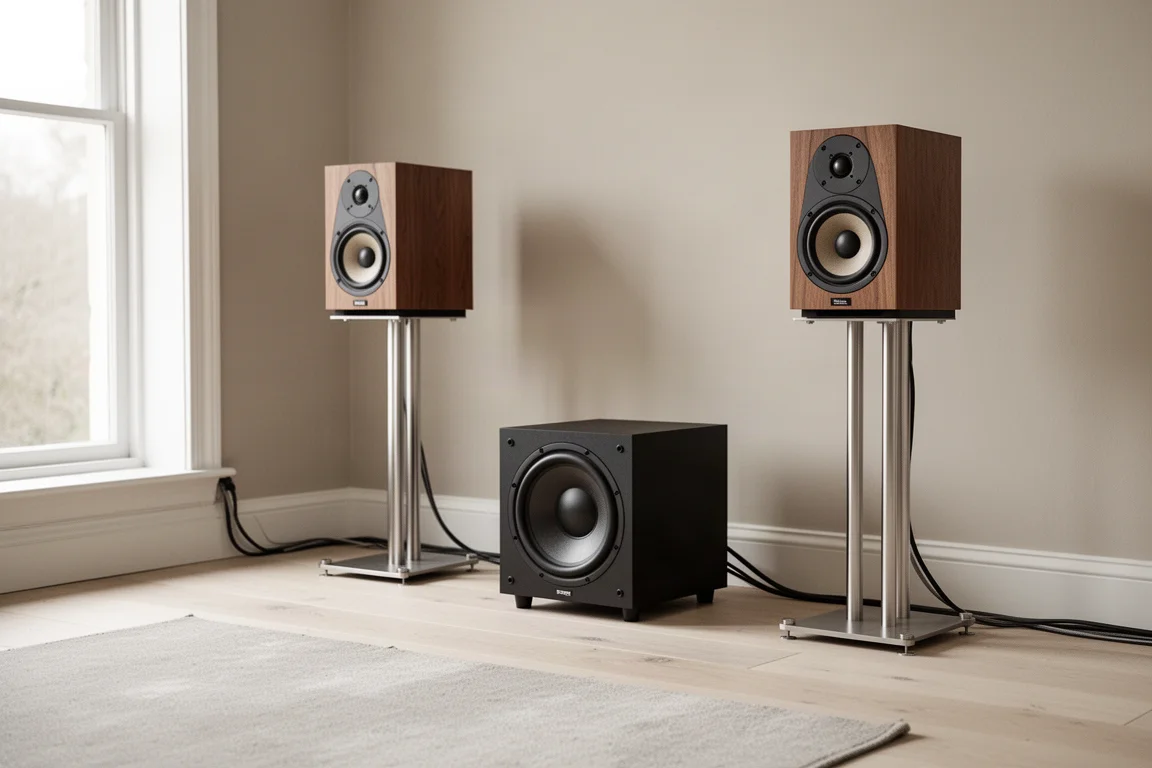
The bigger feature is RoomPerfect, a room correction process that also handles subwoofer integration. It treats the main speakers and the subwoofer as one system and applies correction to the combined result. By default the subwoofer is low pass filtered at 80Hz and the main speakers are high pass filtered at the same point, and both values can be changed if you know what you are doing.
That high pass filter matters more than it first appears. When the main speakers are rolled off at 80Hz, the amplifier is no longer asked to drive them through the lower bass region. Its 60W per channel rating therefore carries less weight, because the hardest work has been handed to the subwoofer.
Running the measurement is straightforward. The microphone connects to the amplifier through an XLR socket, and a wizard in the web interface walks through the process step by step. No computer needs to be connected to the back of the amplifier, and the wizard can be run from a phone or a laptop, even from another room. Five to seven measurements are usually enough, and you can stop once room knowledge reaches 95 percent. The whole process takes around 30 minutes.
The results preserve the character of your speakers. Running RoomPerfect with different speakers and the same subwoofer left each system sounding like itself rather than homogenising them, which matters if you spent a long time choosing your loudspeakers. The room compensation curve itself stays hidden, but the advanced settings still allow adjustments: you can enter measured distances from the listening position to each speaker and to the subwoofer, change the subwoofer gain, or delay the main outputs. Changes apply as you type them, so experimenting with something like a two millisecond delay on the mains is quick work.
Cambridge Audio Evo 150: Scale and a Front Display
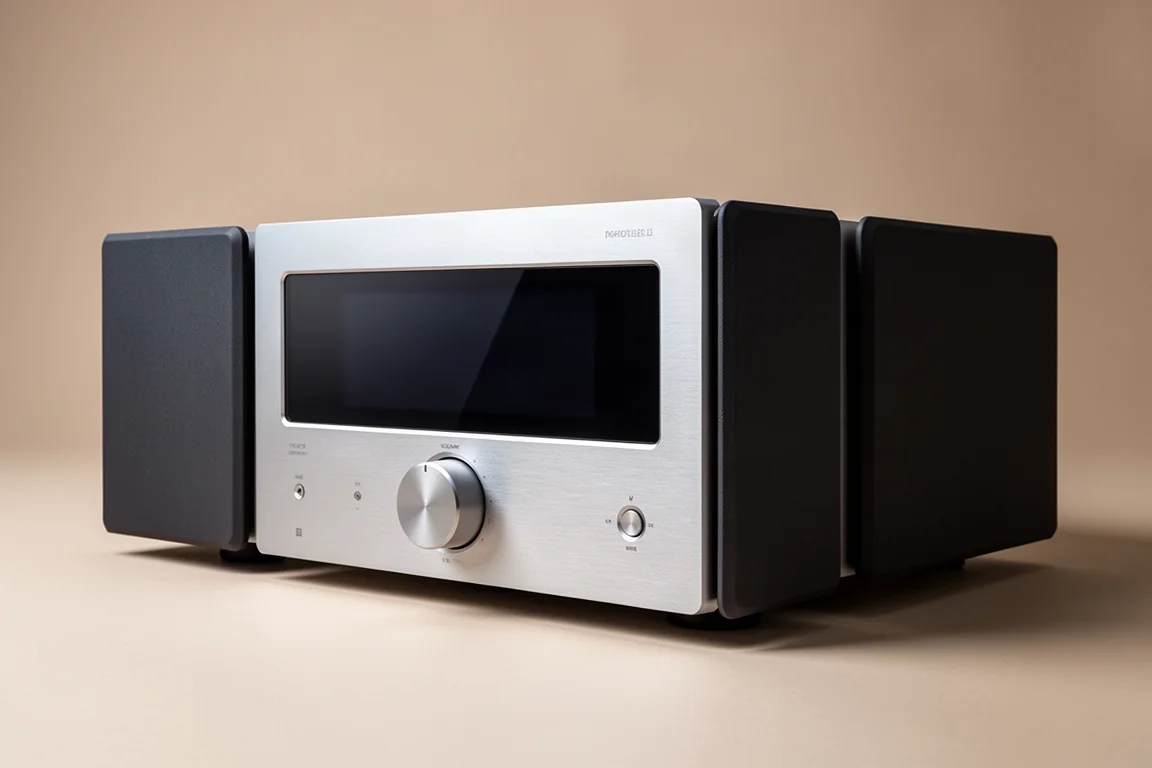
The Cambridge Audio Evo 150 is a class D design with a front display that shows what is playing, along with a menu system to navigate. It is the amplifier of the three that presents the largest sense of scale, with more soundstage width and height than the Lyngdorf, and more body and acoustic mass behind the sound.
That extra weight and scale makes it a comfortable match for speakers that need a bit of drive. With the Sonus Faber Lumina II it stayed composed and dynamic, where the Lyngdorf came across as dynamically constrained. At around 2,500 euros it sits between the other two on price.
Naim Uniti Atom: Punch and Groove
The Naim Uniti Atom is the most expensive of the three at around 3,000 euros, and it is the one that sounds the most powerful in use. Despite giving away 20W per channel to the Lyngdorf on paper, it comes across as more dynamically punchy, with more in reserve, more muscularity and a stronger sense of groove.
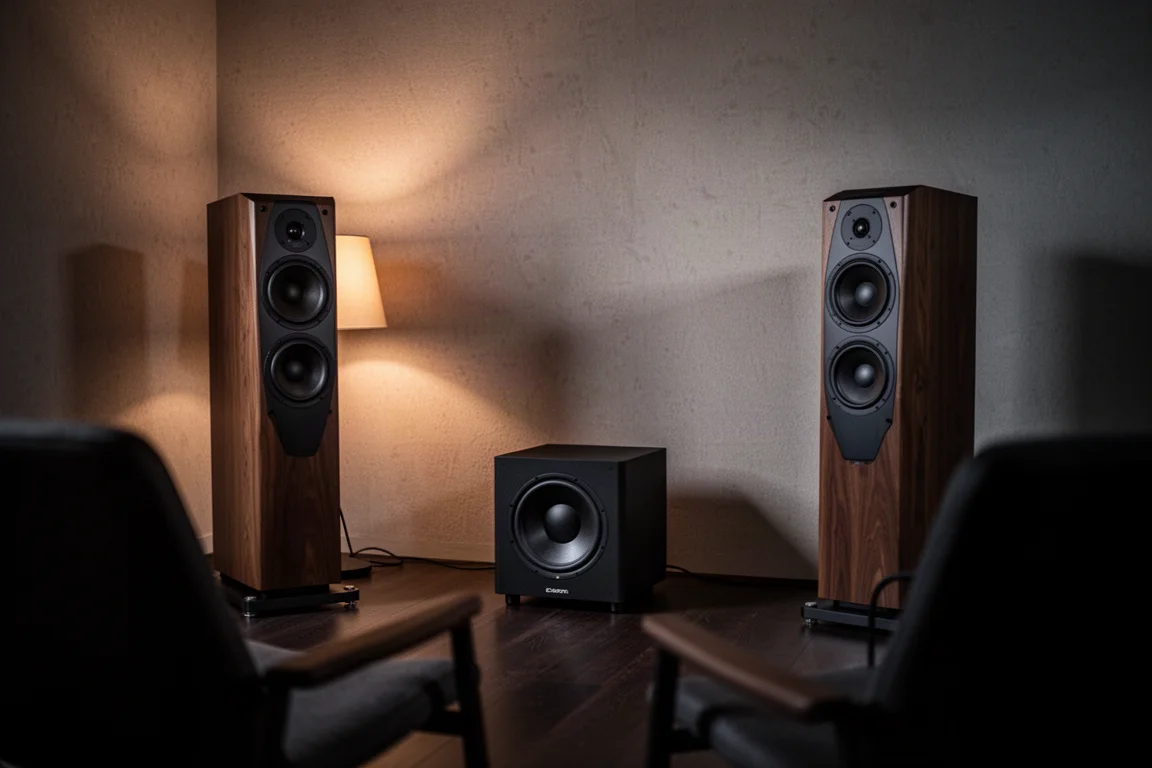
If your priority is the way a system drives a rhythm and delivers a sense of weight, the Naim makes that case most clearly. It is also the least concerned with correction and calibration of the three, which is precisely where the Lyngdorf pulls ahead.
What to Prioritise in a Two-Channel System
Before choosing between these three, it helps to be clear about the order of priorities in a two-channel system. The room has the largest influence on the sound. The speakers come next, then the subwoofer, then the amplifier and DAC, and finally the streamer.
That order explains why the Lyngdorf makes a particular kind of sense. If the room is difficult, or if you want to run a subwoofer alongside your main speakers, correcting for the room and integrating the sub well will do more for the sound than an upgrade further up the chain. It also explains why the choice is not simply a matter of which amplifier sounds best in isolation.
Which of the Three Should You Buy?
The decision comes down to two questions. Do you have a difficult room, and are you integrating a subwoofer? If the answer to either is yes, the Lyngdorf TDAI-1120 is the pick of the three, and it happens to be the least expensive at around 2,000 euros. RoomPerfect, the subwoofer integration and the high pass filter on the mains all work in its favour, and the trade off is the absence of a front display.
If you want a display, a menu system and the largest sense of scale, the Cambridge Audio Evo 150 is the natural choice at around 2,500 euros. If you want maximum punch and groove and you are not concerned with room correction, the Naim Uniti Atom delivers that character at the highest price of the three.
Conclusion
All three of these compact streaming amplifiers are credible ways to build a modern system, and the differences between them are a matter of character and priorities rather than quality. The Cambridge Audio Evo 150 offers scale and a screen. The Naim Uniti Atom offers punch and drive. The Lyngdorf TDAI-1120 offers all-digital amplification, RoomPerfect room correction and subwoofer integration for the lowest price of the three.
Match the amplifier to your room and your speakers, and any of the three will serve a system well for a long time.
Further reading
Related Reviews
Streaming Amplifiers
Best High-Performance Streaming Amplifiers: Seven Full-Size One-Box Picks
Seven full-size streaming integrated amplifiers for serious two-channel systems, each chosen for a different priority: room correction, power, minimalism, musicality, or reference build.
Streaming Amplifiers
Best Mid-Tier Streaming Amplifiers: NAD M10 V2 vs Naim Uniti Atom
Two compact all-in-one streaming amplifiers compared on interface, app experience, sound character, and connectivity.
Streaming Amplifiers
Bluesound Power Node N331 Review: A Streaming Amplifier Built for More Than Stereo
The Bluesound Power Node N331 keeps the compact chassis of its predecessor and adds a more powerful amplifier, a dedicated center channel output, and a THX AAA headphone stage.