Home Theater Speakers
Lyngdorf LCR 2 Review: A Shallow On-Wall Speaker Built for Matched Home Theater Systems
A close look at the Lyngdorf LCR 2, a sealed on-wall speaker that shares its drivers with the FR 2 and can serve as a center, left, right, or surround channel.
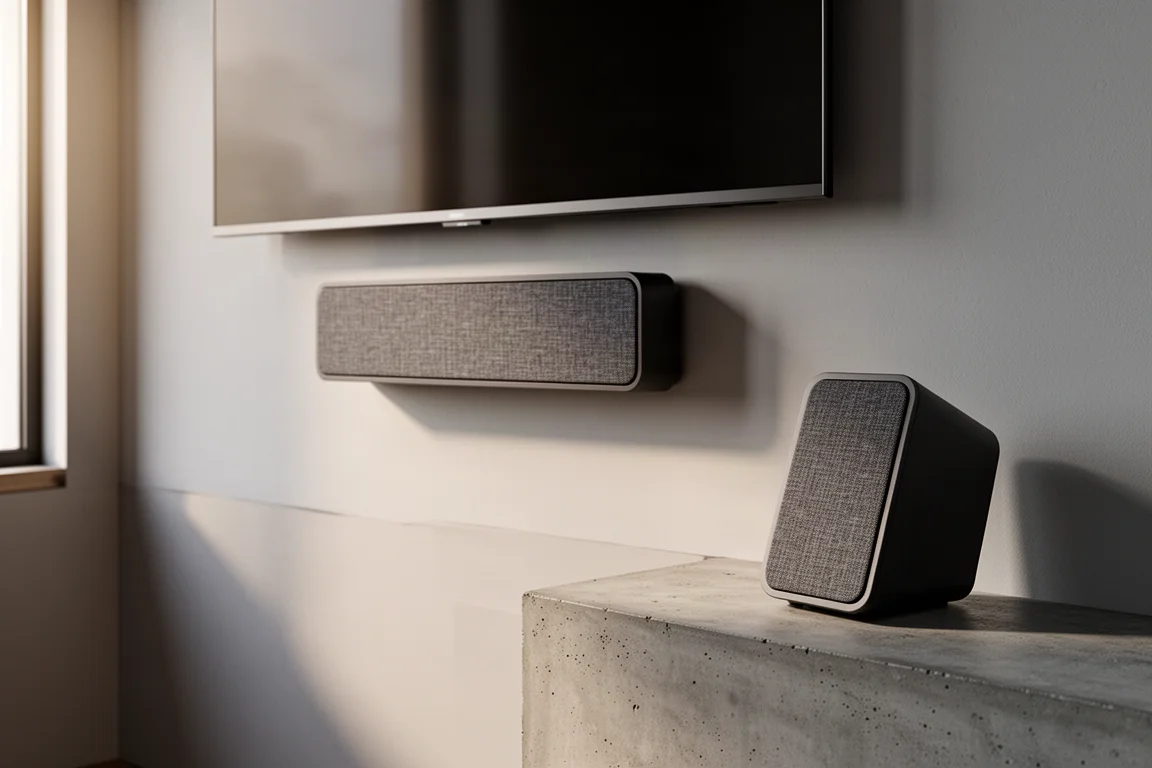
Introduction
Lyngdorf designed the LCR 2 as a direct answer to a question its own FR 2 floor stander raised: what do you use as a center channel that genuinely matches it? The LCR 2 is built as the companion piece, an on-wall speaker that shares the FR 2’s drivers, so the center of a home theater system does not sound like it came from a different speaker line entirely.
The name already tells you the speaker is not limited to that single job. LCR stands for left, center, right, and Lyngdorf built the LCR 2 to work in any of those three positions, with surround duty on the table as well. Every speaker in the range uses the same drivers and cabinet design, so a system can stay visually and tonally consistent from one channel to the next.
Who the Lyngdorf LCR 2 Is For
The LCR 2 makes the most sense in rooms where the television is mounted cleanly to the wall and the theater has to share space with daily life. Its shallow profile means left and right channels need no floor space, and the center channel does not have to look like an afterthought bolted beneath a screen.
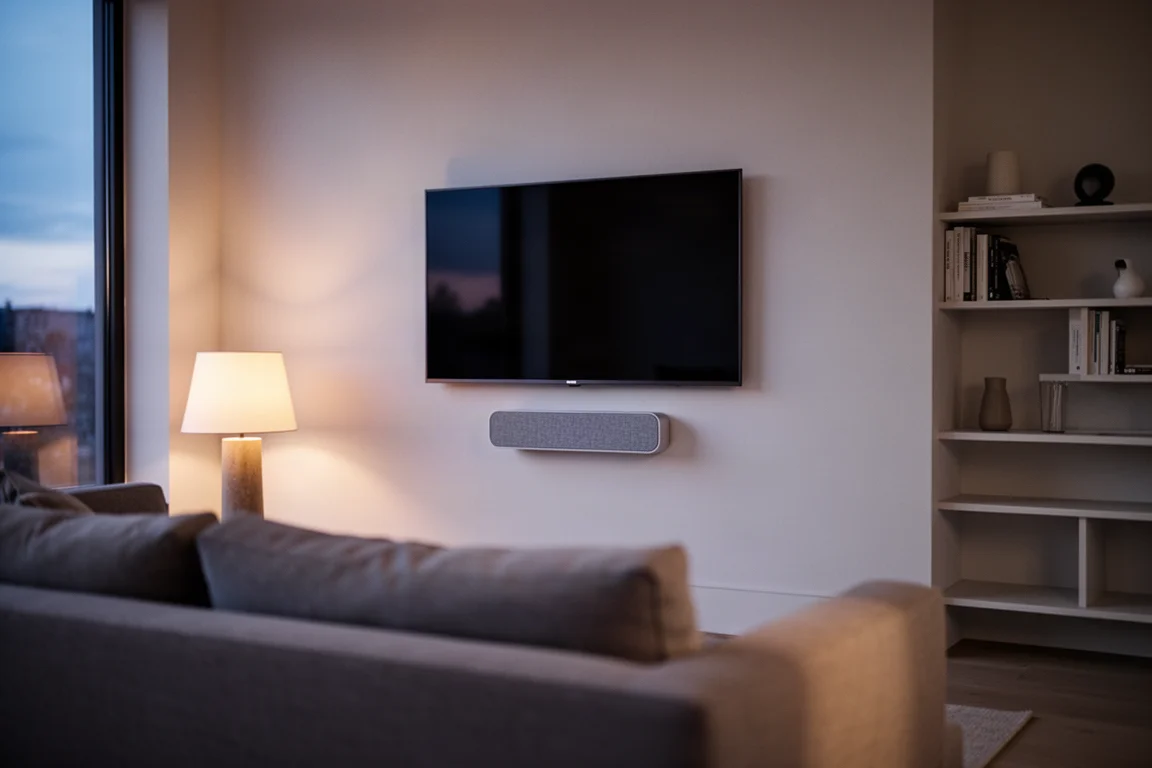
One LCR 2 beneath a TV works as a center channel alongside FR 2 floor standers. Three across the front wall create a completely matched left, center, and right system. Two can serve as a compact stereo pair, and additional units can be added around the room for surround duty. Because it is not an in-wall speaker, it can move with the television if the room is rearranged, with no cutting into drywall and no commitment to a single location.
That flexibility suits apartments and multi-purpose living rooms in particular, where floor-standing towers would feel too large or simply take up too much space.
Main Strengths
The case for the LCR 2 comes down to four things: driver matching, a cabinet that stays out of the room, output that belies its size, and integration with Lyngdorf’s room correction.
Matched Drivers Across Every Channel
Inside each LCR 2 are two 6.5-inch aluminum cone midrange woofers and a 1.1-inch fabric soft dome tweeter. The FR 2 uses the same drivers, so the center channel and the front left and right speakers are designed to sound closely matched through the midrange, which is where dialogue and most movie effects live.
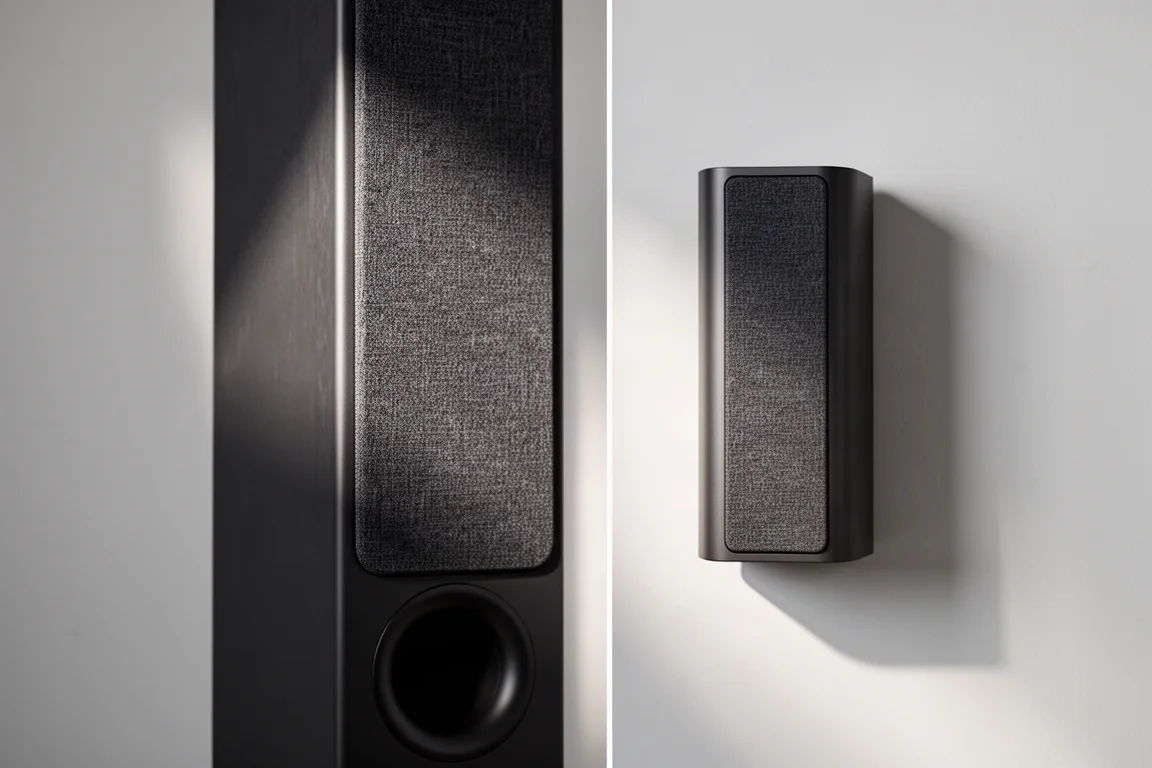
The FR 2’s larger ported cabinet reaches down to around 45 Hz, while the LCR 2’s sealed enclosure rolls off around 80 Hz. Through the midrange, the two are designed to sit together as one system rather than as separate speakers with noticeably different characters.
A Sealed Cabinet That Stays Close to the Wall
The cabinet is sealed rather than ported, which is a deliberate choice for a speaker that sits directly against a wall. There is no rear port to manage and no port output that changes with the distance between the speaker and the wall behind it.
That design keeps the cabinet shallow at only 4.33 inches deep and under 24 pounds. Mounted on the wall, it barely extends into the room, which is a cleaner option beneath a wall-mounted TV than a traditional center channel speaker that may extend 12, 14, or even 16 inches deep.
The trade-off is bass extension, and it is a predictable one rather than a hidden surprise.
Output and Scale From a Shallow Enclosure
The LCR 2 is rated at 92 dB of sensitivity, 250 watts of power handling, and up to 117 dB of peak output. Those are serious numbers for a cabinet this shallow.
Nominal impedance is 4 ohms, which pairs well with most amplifiers. A large theater or high-volume listening still benefits from amplification that can deliver clean current without straining.
RoomPerfect Brings the Room Into the Equation
Every room changes the sound of a speaker. Bass builds up near walls and corners, certain frequencies cancel at the listening position, and reflections off floors, windows, and furniture reduce clarity and imaging. That matters even more for a speaker mounted against a wall, and Lyngdorf designs both the LCR 2 and the FR 2 around close wall placement.
RoomPerfect starts with a measurement at the main seat and then takes additional readings at different locations and heights around the room, a process Lyngdorf calls a 3D map. From there it corrects what the space caused while preserving as much of the speaker’s original character as possible. It is not trying to make every speaker sound identical; it is trying to remove the room’s influence without removing what made you choose the speaker in the first place.
After calibration, listening modes can be switched on the fly. Focus prioritizes the main seat, Global aims for consistency across a wider area, and Bypass lets you hear the system with no correction at all.
With RoomPerfect bypassed, the system still sounds excellent, though bass can be a little fuller and a little less controlled, and the front soundstage does not feel quite as locked in. Focus tightens everything at the main listening position, with more defined bass notes and dialogue that feels firmly anchored to the screen. Global gives up some of that precision at the main seat but keeps tonal balance far more consistent as listeners move around the room, which matters when several people are watching together.
Design That Blends Into the Room
The front grille sits flush with the cabinet, there are no visible screws or driver baskets, and the shallow profile reads as more architectural than a conventional speaker box. Lyngdorf offers multiple cabinet and grille combinations, including interchangeable fabric covers from the Danish company Gabriel, so the look can change without replacing the speaker itself.
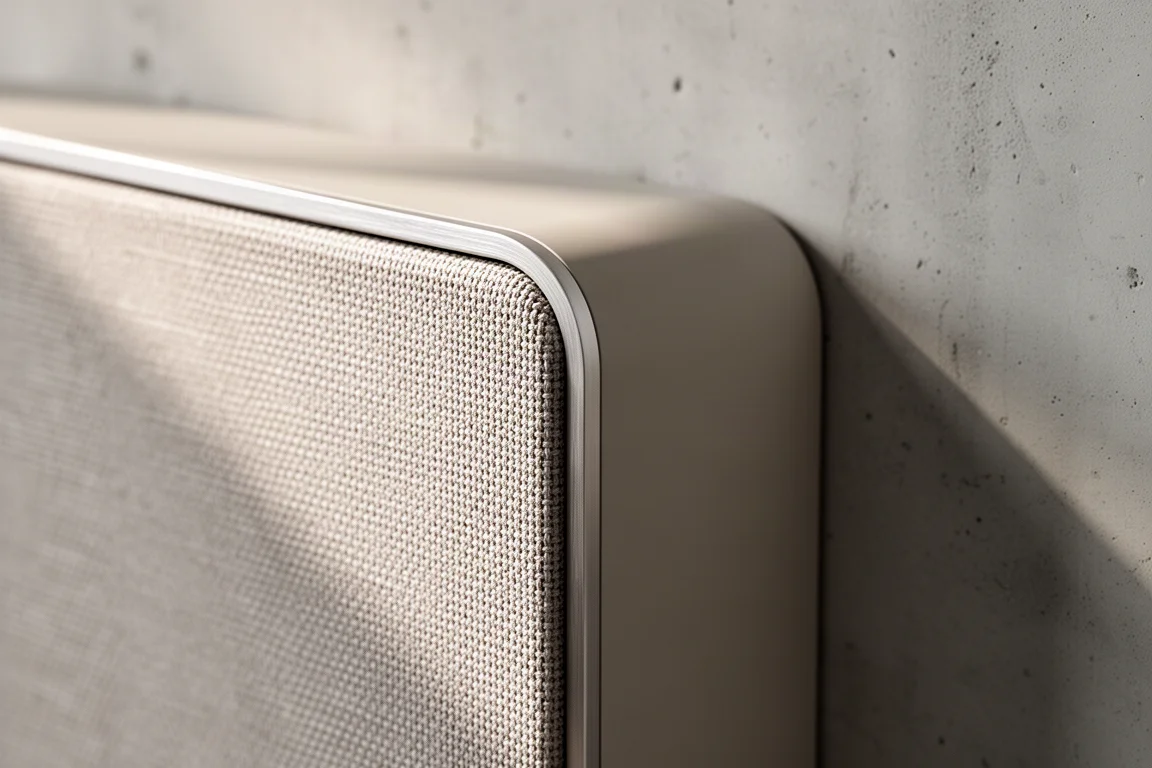
Construction is Danish, and the design intent is to blend into a room rather than dominate it. That combination of finish options and a wall-mounted footprint is a large part of what the LCR 2 is being sold on.
Things to Consider Before Buying
Bass extension is the clearest limitation. The LCR 2 rolls off around 80 Hz, which happens to be one of the most common crossover points in home theater, since most systems send the lowest frequencies to a subwoofer regardless. Lyngdorf’s own answer is its BW series of boundary woofers, built on the same against-the-wall philosophy as the FR 2. Where a conventional subwoofer sitting out in the room fights reflections bouncing back off the walls behind it, a boundary woofer uses that boundary to reinforce bass instead. The larger BW20 reaches from 20 Hz up to 500 Hz, wide enough to hand off cleanly from a crossover point such as the LCR 2’s 80 Hz without a gap in output anywhere in between.
Amplification is worth planning for. The 4-ohm nominal impedance pairs well with most amplifiers, but a large theater or high-volume listening asks for an amplifier that can supply clean current without strain.
The LCR 2 is also not the right choice for every system. Buyers are paying for a shallow cabinet, Danish construction, installation flexibility, and the ability to use one speaker model throughout an entire theater, rather than for raw driver size or bass extension. If there is space for large conventional speakers and their depth into the room is not a concern, there are plenty of options that play deeper without a subwoofer. Behind an acoustically transparent screen, in-wall or traditional cabinet speakers may make more sense.
Buying Advice
The right configuration depends on the room. A single LCR 2 as a center channel is the obvious starting point for anyone who already owns FR 2 floor standers, since the two share the same 6.5-inch midrange woofers and closely matched tweeters. Three across the front, mounted in a row under the screen or behind an acoustically transparent one, is arguably the more interesting setup for a lot of rooms: every channel is identical, so dialogue never comes from the smallest speaker in the system.
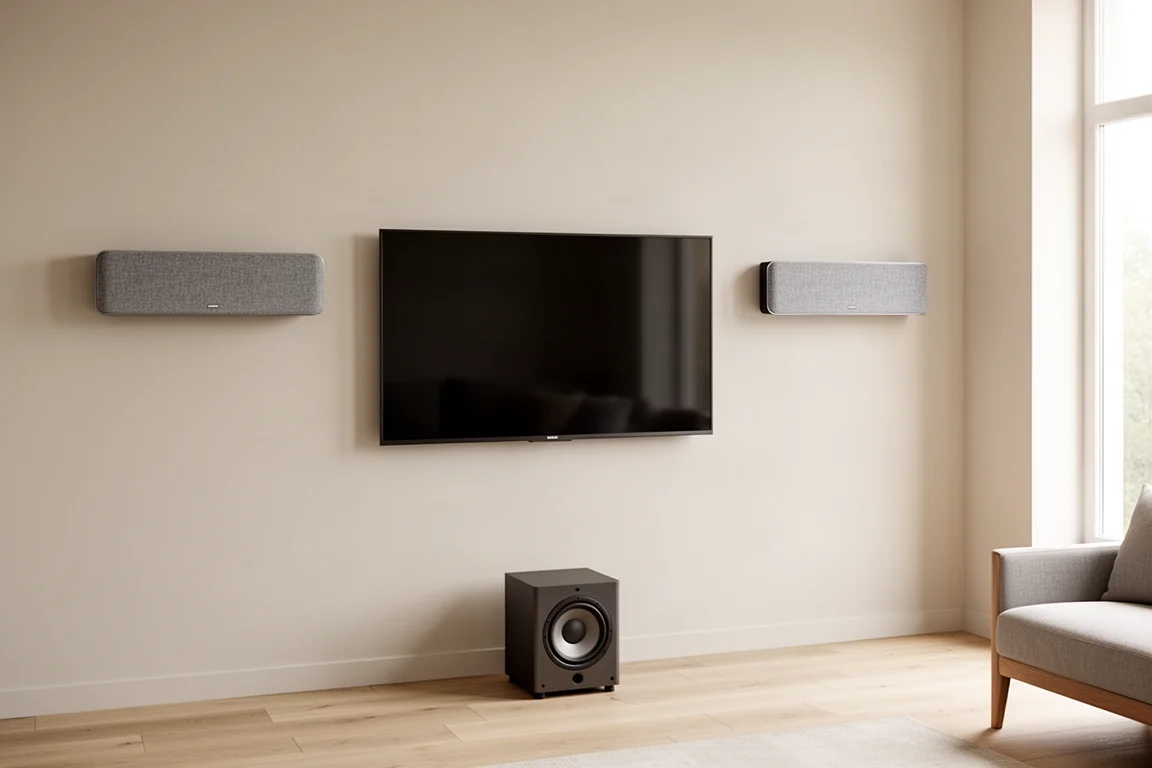
For a compact two-channel system, two LCR 2s can be mounted horizontally on either side of a TV with a subwoofer handling the low end. That approach gives up some bass extension compared with the FR 2, but a capable subwoofer fills in below the LCR 2’s roll-off, and almost no floor space is taken up.
Pairing the speakers with Lyngdorf electronics and RoomPerfect is the recommended path. The LCR 2 and FR 2 are already matched closely on their own, and room correction brings the entire system together in a real room, where walls and furniture shape the result.
Conclusion
The LCR 2 solves a genuine problem for anyone whose theater shares a room with everyday life: a center channel that does not look like an afterthought, left and right speakers that need no floor space, and a tonally matched system built around a room instead of a stand. One unit can serve as a center, three can run across the front, five or seven can wrap a room, or two can carry music. The same shallow speaker adapts to nearly any layout without forcing a choice between a clean-looking room and legitimate home theater performance.
Product link
View more details for Lyngdorf LCR 2
This product is mentioned in the review. Check the specifications, options, and compatibility before buying.
View more details for Lyngdorf LCR 2Further reading
Related Reviews
Home Theater Speakers
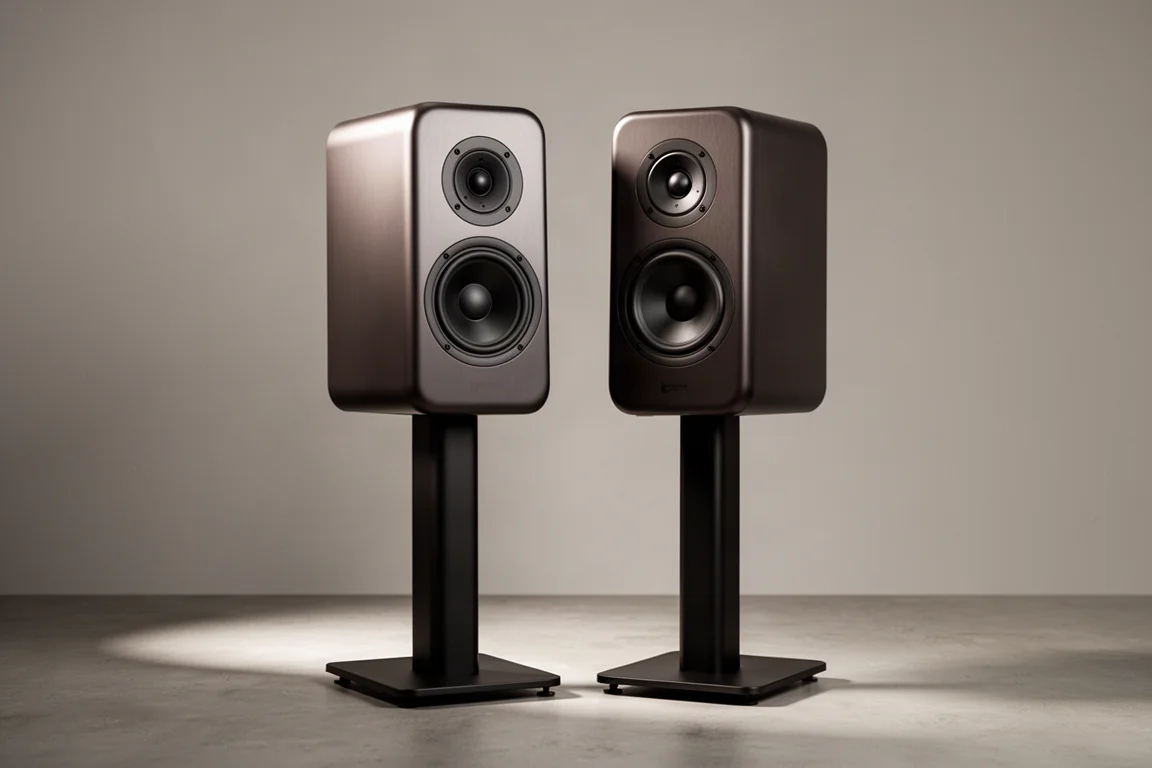
Arendal 1723 THX S Monitor vs 1723 THX Monitor: Which Two-Way Monitor Fits Your Room?
A practical comparison of the Arendal 1723 THX S Monitor and the larger 1723 THX Monitor, covering driver size, sensitivity, bass extension, and room fit.
Home Theater Speakers
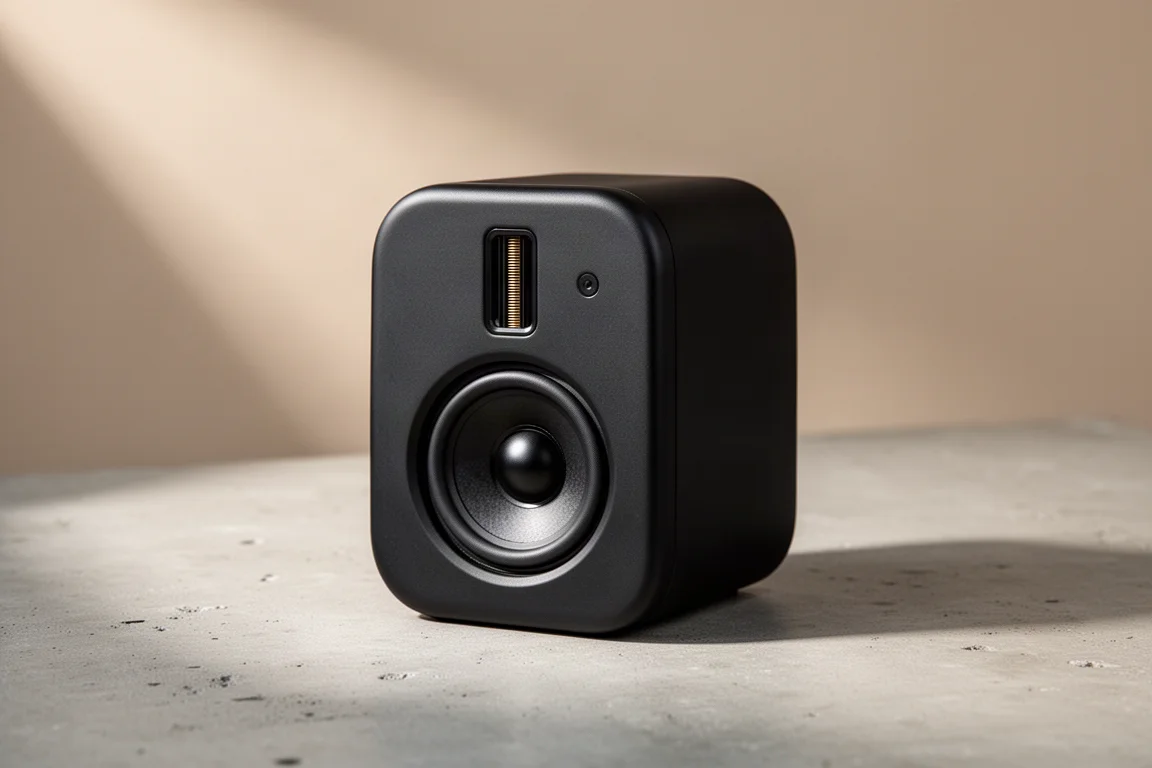
Emotiva A1 Review: A Small Speaker With Serious Surround Flexibility
A sealed two-way speaker built for Dolby Atmos, surround, and compact desktop duty at $179. Here is what it does well and what to check before buying.
Home Theater Speakers
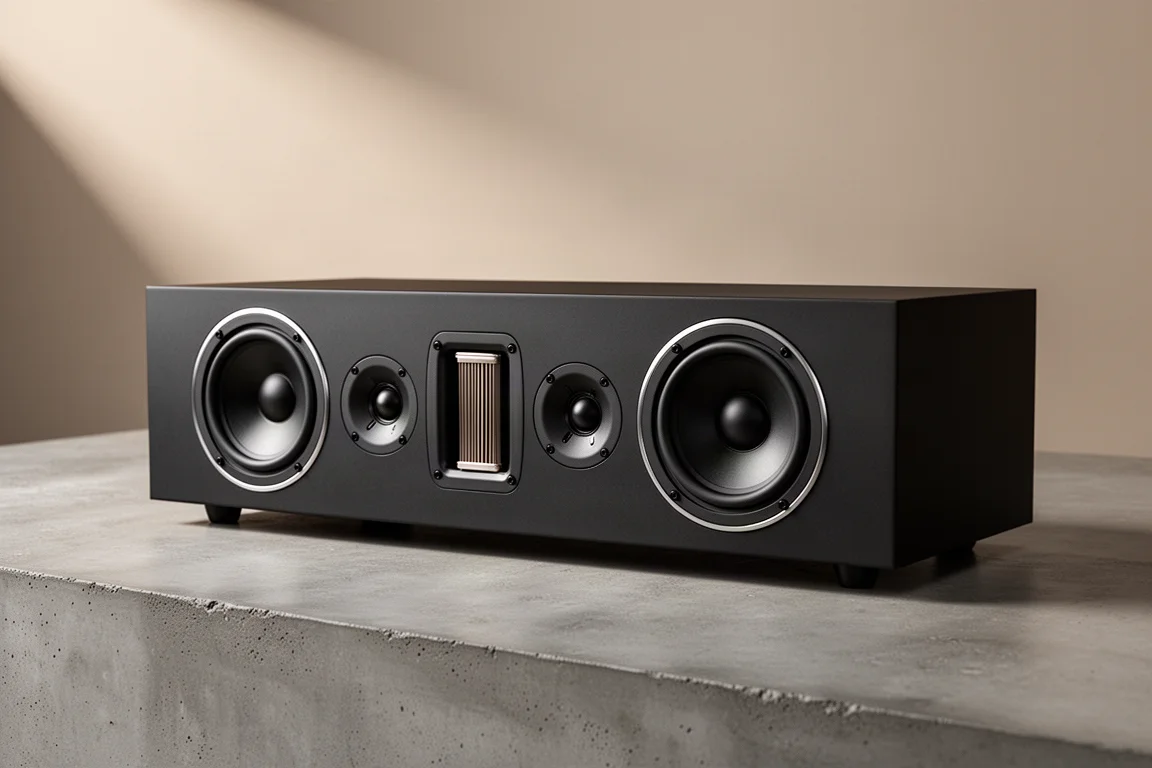
Emotiva C2+ Review: High Output Center Channel With a Narrow Sweet Spot
The Emotiva C2+ delivers serious output, deep bass for its size and high sensitivity, but its widely spaced midrange drivers create a horizontal sweet spot that rewards centered seating.