Hi-Fi Amplifiers
Luxman L505Z Review: A Premium Japanese Integrated Amplifier Built to Last
A close look at the Luxman L505Z, a 100 W per channel analogue integrated amplifier with LIFS and LECUA technology, plus what to weigh before buying.
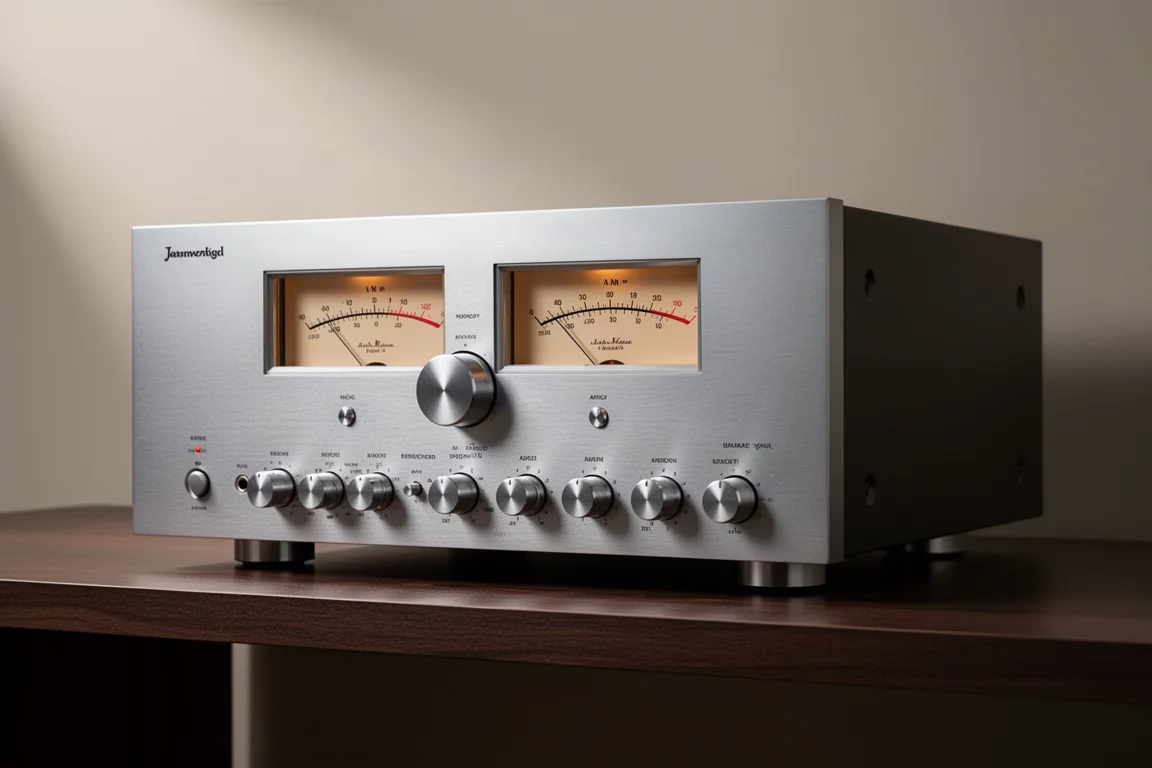
Introduction
Luxman has a reputation in high fidelity audio that rests on engineering and construction rather than constant model churn. The Japanese manufacturer is marking its 100th anniversary this year, having built audio equipment since the earliest days of radio broadcasting. It has been part of International Audio Group since 2009, alongside brands such as Wharfedale, Audiolab, Mission and Quad, but its products are still designed and built in Yokohama, Japan.
The company does not refresh its catalogue on a short cycle. Its previous X generation of electronics ran for 15 years, and the Z series exists because of a genuine, measurable improvement in the design. The L505Z is the most affordable entry in that series, and at £5,500 it is the model many listeners will consider first.
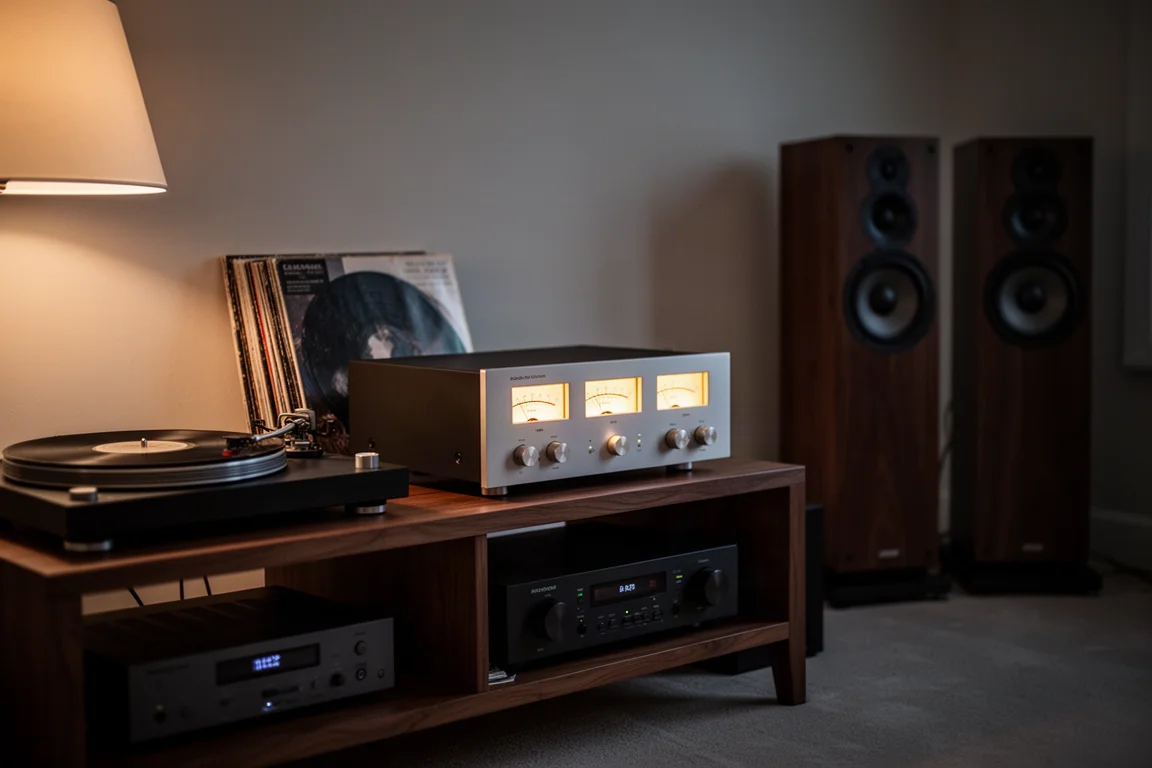
That price buys a substantial piece of equipment. The amplifier weighs 22.5 kg and measures 440 x 178 x 454 mm (49.6 lb and 17.3 x 7.0 x 17.9 in), and the analogue meters on the front panel are only the beginning of its visual appeal.
Who this product is for
The L505Z is a pure analogue integrated amplifier with no internal DAC, so it is aimed at listeners who already own a good external digital source or who mainly play vinyl. A phono stage handles both moving magnet and moving coil cartridges, and the rear panel provides a fixed volume line level input for direct access to the power amplifier section, an XLR balanced input, and four further line level inputs alongside the phono connections.
It also suits headphone listeners. Balanced 4.4 mm and standard 6.3 mm jacks are provided, and a separate button allows the pre-amplifier and power amplifier sections to be used independently, which opens the door to adding an external power amplifier or powered subwoofers later.
Main strengths
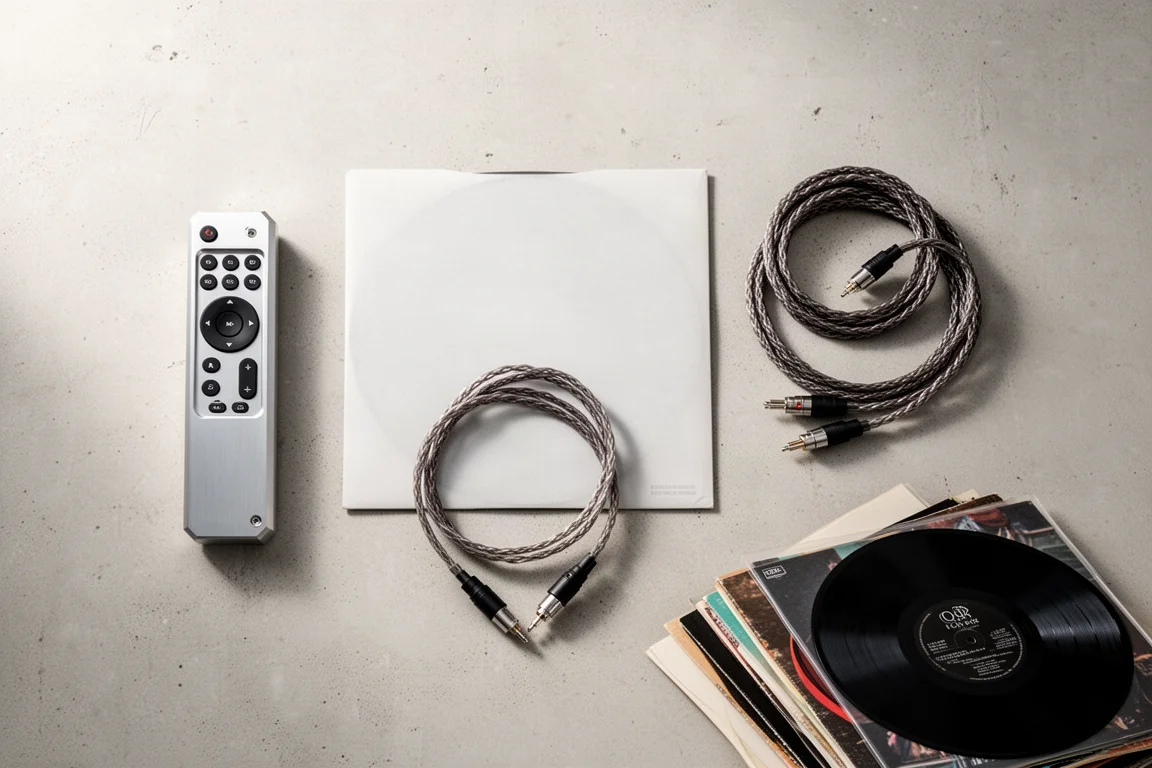
Everything about the unit feels top quality, and the details support that impression. The supplied remote control is a chunky aluminium piece, the aluminium buttons have a consistent finish, and the dials offer reassuring resistance when rotated. The front panel includes a standby button, a large rotary input selector, and four knobs below the meters for choosing between two speaker terminals and adjusting bass, treble and left-right channel balance. For listeners who prefer the shortest possible signal path, the tone controls can be taken out of the circuit entirely.
Volume is adjusted in 88 steps with the level shown between the meters, and that readout is the only external digital element on an otherwise analogue device. The rear panel adds two sets of speaker binding posts for bi-wiring or for running A and B speaker pairs, pre-amplifier outputs for an external power amp or powered subwoofers, and trigger and control connections for system integration.
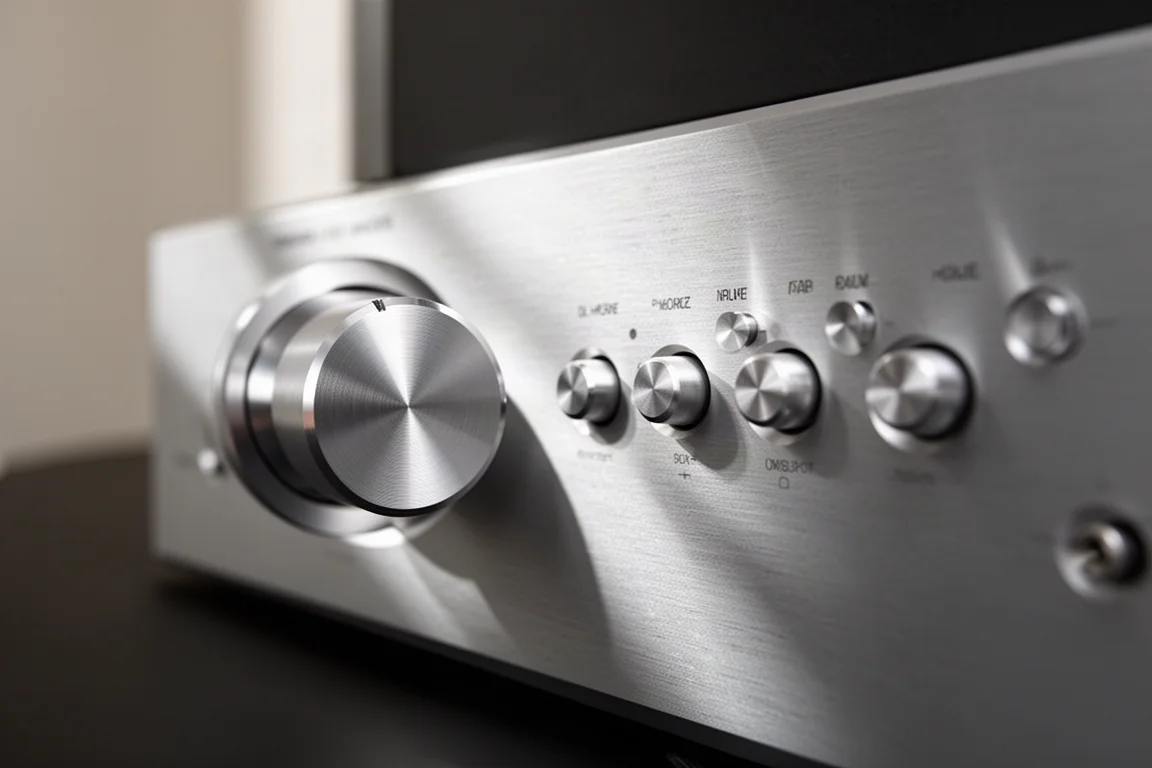
The performance matches the presentation. Bass has genuine weight and body, the mid-range is warm where warmth is needed and suitably sharp where it is not, and the highs preserve resolution and timing. The result is a wide, deep sound stage with precisely located performers, and a tonal balance that stays natural rather than coloured in any direction.
Key technologies inside the L505Z
Two technologies define the Z series. The first is LIFS, short for Luxman Integrated Feedback Engine System, a ground-up redesign of the earlier ODNF distortion reduction circuit. Luxman reduced the number of parallel components for a shorter signal path while cutting distortion to less than half of the previous figure. The LIFS power amplifier module is a fully discrete, through-hole design with four 1,000 microfarad capacitors mounted to the board and four output devices attached to the heatsink. The amplifier is a push-pull Class AB design rated at 100 watts per channel into 8 ohms and 150 watts per channel into 4 ohms.
The second is LECUA, an electronically controlled attenuator that switches between high quality fixed value resistors in 88 steps rather than relying on a conventional potentiometer. This approach delivers better linearity, closer channel matching and less signal degradation.
Inside, the power supply uses an EI type transformer rather than the toroidal type many manufacturers favour, a choice associated with long-term durability. Four custom filter capacitors rated at 10,000 microfarads each provide 40,000 microfarads in total, or 20,000 per side. The pre-amplifier board and the phono stage are also fully discrete, through-hole designs.
Things to consider before buying
This is an extremely revealing amplifier, and it makes demands of the rest of the system. Enabling the tone control circuit audibly reduces resolution, so the cleanest results come from running in line straight mode with the tone controls bypassed.
Power delivery is the other consideration. All amplifiers harden up when they run out of headroom, but the L505Z shows signs of strain earlier than some more powerful competitors, which is likely down to limited peak current capability when driven hard. As the volume dial approaches the minus 20 dB range, the sound stage shrinks, the bass loosens and the mid-range becomes grainier. How loud that is in practice depends on speaker sensitivity, room size and listening distance, but with low sensitivity speakers it can arrive at average listening levels above 80 dB.
Higher output designs stay more composed at those volumes, while sounding more coloured and less resolving than the Luxman at moderate levels. Source quality also matters: the amplifier rewards a capable streaming transport and DAC, and speakers need to be good enough to keep up.
Matching the L505Z to your system
The amplifier will make clear what a pair of speakers can and cannot do. With Monitor Audio Gold 106G speakers at around £3,000, their highly resolving character is fully revealed, along with a coolness in the mid-range that warmer amplification would offset. A pair of E50 speakers at roughly £4,000, slightly laid back but still detailed and dynamic, makes for an enjoyable pairing and a tonal balance most listeners will prefer. On a tighter budget, a pair around £1,800 with a more forward mid-range gets much of the way there for far less money.
Buying advice
Comparisons put the price into context. A discontinued Japanese rival that sold for £5,000 was built to similarly exacting standards but was not as resolving, with looser bass and a leaner mid-range. A well-built £3,899 amplifier that frequently sells for around £3,000 has a distinctly cool tonal balance and cannot match the Luxman for outright sonic ability. A pre-amplifier and monoblock package at £4,000 gets very close on information retrieval and natural presentation, but the L505Z offers more bass weight, more rhythmic drive and easier matching with a wide range of speakers. A pre and power combination priced just under £9,000 has a more robust power supply yet still sounds leaner in the bass.
Looking further afield, a £5,500 French integrated amplifier delivers a bigger, bolder presentation with strong dynamics and a harmonically rich mid-range, but extracts less micro detail. A £5,900 amplifier with greater power and a high damping factor plays cleaner at loud levels and matches the Luxman’s sound stage precision, yet sounds noticeably less nuanced and natural at low and moderate volumes. Only one amplifier has surpassed the L505Z overall, and that model offers a greater sense of scale and dynamic headroom for roughly £3,000 more.
For listeners whose priority is detail, natural tonality and build quality that should hold up over decades, the L505Z makes a strong case at its price. Those who regularly listen at high levels, or who need an internal DAC, should weigh the alternatives carefully.
Conclusion
The L505Z has the visual appeal and structural integrity that generate real pride of ownership, and it feels assembled to last for generations. Its bass articulation, nuanced mid-range and open, well-timed highs set a high standard at £5,500. More composure at high listening levels would be welcome, and that is presumably what the larger models in the Z series provide. For everything below those levels, this is a compelling integrated amplifier.
Product link
View more details for Luxman L505Z
This product is mentioned in the review. Check the specifications, options, and compatibility before buying.
View more details for Luxman L505ZFurther reading
Related Reviews
Hi-Fi Amplifiers
Accuphase E-280 Review: Entry-Level Accuphase With Flagship Attention to Detail
A close look at the Accuphase E-280 integrated amplifier, covering its champagne build, AAVA volume control, sound quality, and the speakers and sources that suit it best.
Hi-Fi Amplifiers
Advance Paris A10 Classic vs Yamaha A-S301: Two Integrated Amplifiers Compared
A practical comparison of a $350 integrated amplifier and a $2,500 reference model, covering the differences that matter and the ones that do not.
Hi-Fi Amplifiers
Affordable Chinese Amplifiers Worth Buying: Five Budget Hi-Fi Amps Compared
A practical look at five affordable amplifiers, what each one does well, and the trade-offs to weigh before you buy.