DACs
Linear Tube Audio Aero DAC Review: A Tube Output Stage That Moves Music Forward
A close look at the Linear Tube Audio Aero DAC, its balanced Class A tube output stage, its direct-to-consumer pricing, and the trade-offs worth weighing before buying.
Introduction
The Aero is the first DAC from Linear Tube Audio, and the company spent years developing the design before bringing it to market. That patience shows in the finished product: it sounds assured from the first note, with none of the tentativeness you might expect from a manufacturer entering a new category.
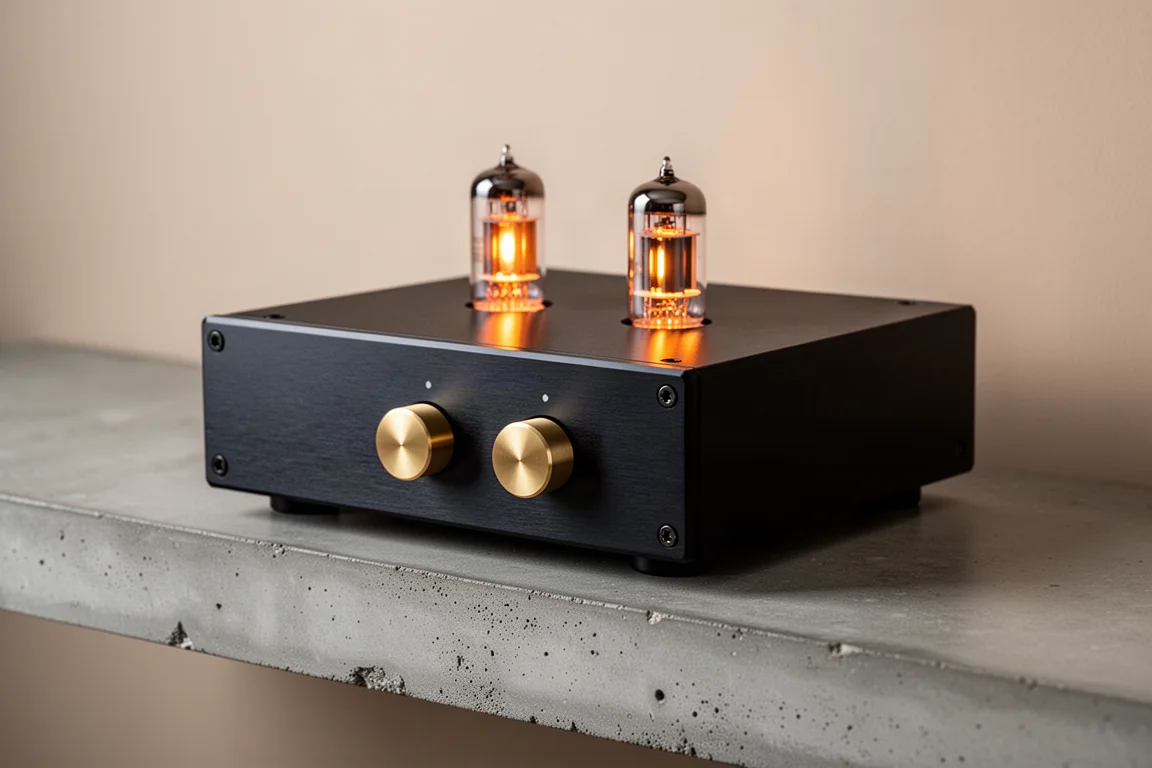
At $3,950, the Aero lands in a crowded part of the high-end converter market. What sets it apart is the analog output stage, a balanced, Class A, DC-coupled tube design with no capacitors in the signal path. The result is a converter built around tone, texture and musical momentum rather than around specification one-upmanship.
Who the LTA Aero DAC Is For
The Aero makes the most sense for listeners whose libraries are built on PCM. It accepts USB, coaxial and optical inputs and handles PCM up to 192kHz at 24-bit. There is no DSD support and no MQA decoding, so anyone with a substantial DSD collection or a streaming routine that leans on MQA should plan around those limits rather than hope for a firmware surprise.
It also suits buyers who prefer buying direct. Linear Tube Audio sells without dealers or distributors, which removes the margins those partners would normally add, and the same direct model applies to international buyers. A 14-day money-back guarantee covers the decision either way.
If your speakers are resolving enough to reveal what a good output stage contributes, or if you simply want a converter with a distinct tonal character, the Aero is aimed squarely at you. If your source chain depends on an I2S link or a balanced AES/EBU XLR input, it is not.
Main Strengths
Transparency and Tone
Compared directly with a reference converter priced at $13,500, the Aero gives up ground in a predictable direction. The costlier unit delivered more high-frequency air and space, a stronger sense of clarity, and more of the quiet detail that sits behind the main performance. It also portrayed the acoustics of a recording venue more explicitly, and its transient response on percussion, bells and metallic instruments was cleaner.
The Aero answers with weight and richness instead. Returning to it after time with the more expensive converter did not feel like a step down, and the immediate impression was of a fuller, slightly more humid rendering of the air in the recording space. On acoustic recordings captured in a live room, that character is easy to enjoy. Set against a lower-priced tube-based converter, the Aero came across as dramatically more transparent and pure.
Price context matters here. The reference converter costs nearly $10,000 more, which is a useful frame when weighing exactly what the Aero gives up and what it keeps.
Rhythm, Pace, and Forward Motion
Where the Aero pulls clearly ahead is drive. It communicates the forward motion of a performance with unusual force, and that quality held up even against the far more expensive converter, which did not match it on this particular point.
That trait changes how music feels. Loud, rhythmic material arrives with its energy and momentum intact, and acoustic tracks built on brass and a strong groove become hard to sit still through. Older recordings benefit just as much: a vintage vocal performance with a long, steadily building arrangement sounded remarkable, and the sense of a performance captured more than fifty years ago came through cleanly.
This is the Aero’s defining strength. It does not simply resolve detail, it makes the players sound like they are enjoying themselves, and that energy is what draws a listener in.
Tube Output Stage and Practical Design
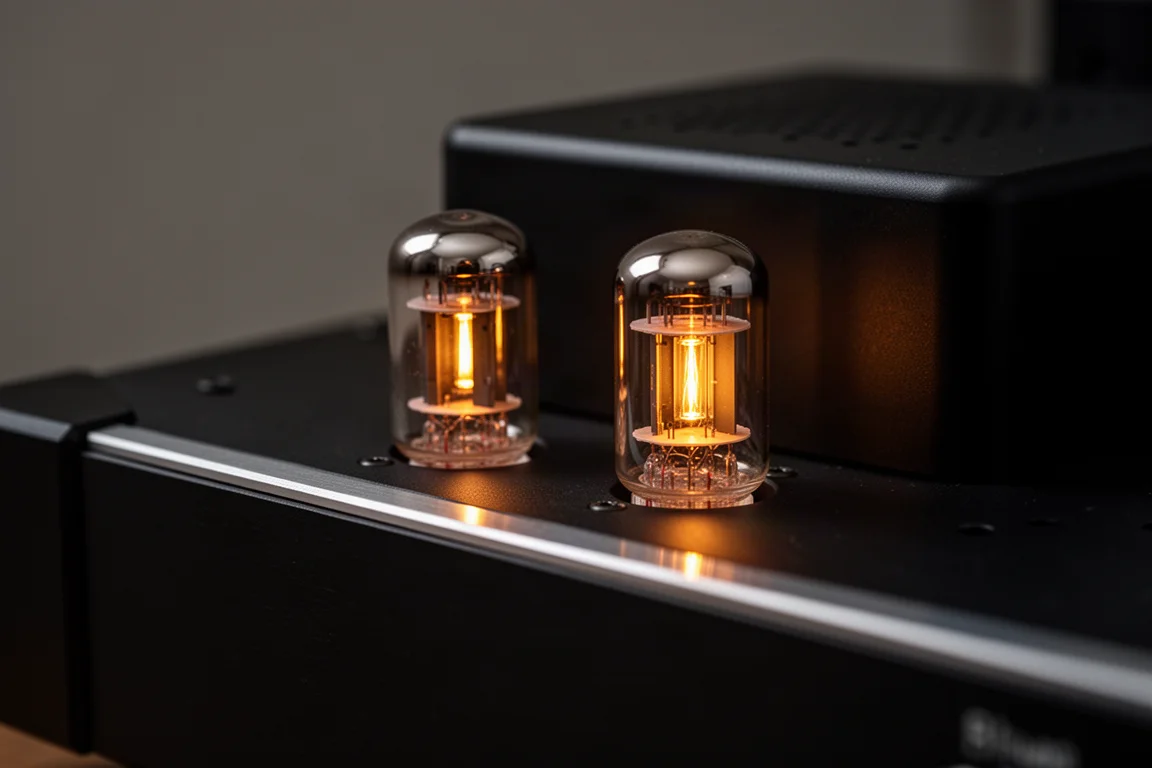
The tubes live in the analog output stage, and the topology is fully balanced, Class A and DC-coupled, with no capacitors in the signal path. Buyers can choose between 12SN7 and 6SN7 tubes, which are interchangeable, though a switch on the rear panel has to be moved when changing tube types. The stock tubes are new old stock GE 12SN7 units.
Ownership looks undemanding. The tubes are expected to last at least 10,000 hours, they run cool enough to touch comfortably, and the exposed design is not a burn risk in normal use. Around the front, two brass buttons handle power and input selection, and black is the only finish offered. The Aero is designed and built in Takoma Park, Maryland.
A wider input set would have made the case almost unanswerable at this price. As it stands, the Aero asks buyers to accept a focused feature set in exchange for a genuinely distinctive output stage.
Things to Consider Before Buying
The input set is the main compromise. USB, coaxial and optical are present, but there is no I2S input and no AES/EBU XLR input, both of which are common expectations at this price.
Format support is similarly focused. PCM runs to 192kHz at 24-bit, with no DSD and no MQA. Listeners who have built a library or a streaming habit around either format will need to decide whether that matters to them, because the Aero will not accommodate them.
Two smaller points round out the list. Black is the only finish, and because the company sells direct rather than through dealers, there is no local showroom demonstration to fall back on. The 14-day money-back guarantee is the practical substitute for that.
Buying Advice
At $3,950, the Aero earns its place on sound quality and on the way it handles rhythm. Buyers who want the last measure of high-frequency air and low-level detail should expect to pay considerably more elsewhere, since the reference converter used for comparison costs nearly $10,000 more. What the Aero offers instead is a richer tonal character, a strong sense of drive, and a tube output stage that does musical work rather than decorative work.
Because Linear Tube Audio sells direct worldwide, there is no distributor margin built into the price, and the 14-day money-back window gives buyers a chance to hear it in their own room and with their own speakers. That is a sensible way to approach a component whose character matters as much as its specification sheet.
The decision comes down to priorities. If your listening is PCM-based and your system rewards tone and momentum, the Aero is an easy candidate to try at home. If you need DSD, MQA, I2S or a balanced digital input, the feature list will rule it out before the sound ever gets a chance to make its case.
Conclusion
The Aero is a first effort that does not read like one. Its tube output stage, balanced Class A design and capacitor-free signal path give it a voice that favours richness and forward motion, and it stands up well next to a reference converter that costs nearly $10,000 more. The omissions are real: no I2S, no AES/EBU, no DSD, no MQA, and only a black finish. Buyers who can live with that list get a genuinely musical converter at a direct-to-consumer price.
Product link
View more details for Linear Tube Audio Aero DAC
This product is mentioned in the review. Check the specifications, options, and compatibility before buying.
View more details for Linear Tube Audio Aero DACFurther reading
Related Reviews
DACs
Denafrips Pontus II vs Ares II: Which R2R DAC Fits Your System?
A practical comparison of two Denafrips R2R converters: what the Pontus II adds over the Ares II, and which one makes more sense for a typical system.
DACs
Eversolo DAC-Z10 Review: A Feature-Packed DAC and Preamp in One Box
A close look at the Eversolo DAC-Z10, a $1,980 converter and preamp with a configurable touch display, a very wide input selection, and refined sound.
DACs
Geshelli Labs Torque DAC Review: A Modular Converter That Changes With Your System
A close look at the Geshelli Labs Torque, a US-made modular DAC that lets you swap converter boards and output modules instead of replacing the whole unit.