Audio Amplifiers
LSA Crescendo Chorus vs Schiit Aegir 2: Two Compact Power Amplifiers Compared
A compact GaN FET class D amplifier with a mono mode meets a warmer 30 watt per channel alternative. Here is how they differ, and who each one suits.
Introduction
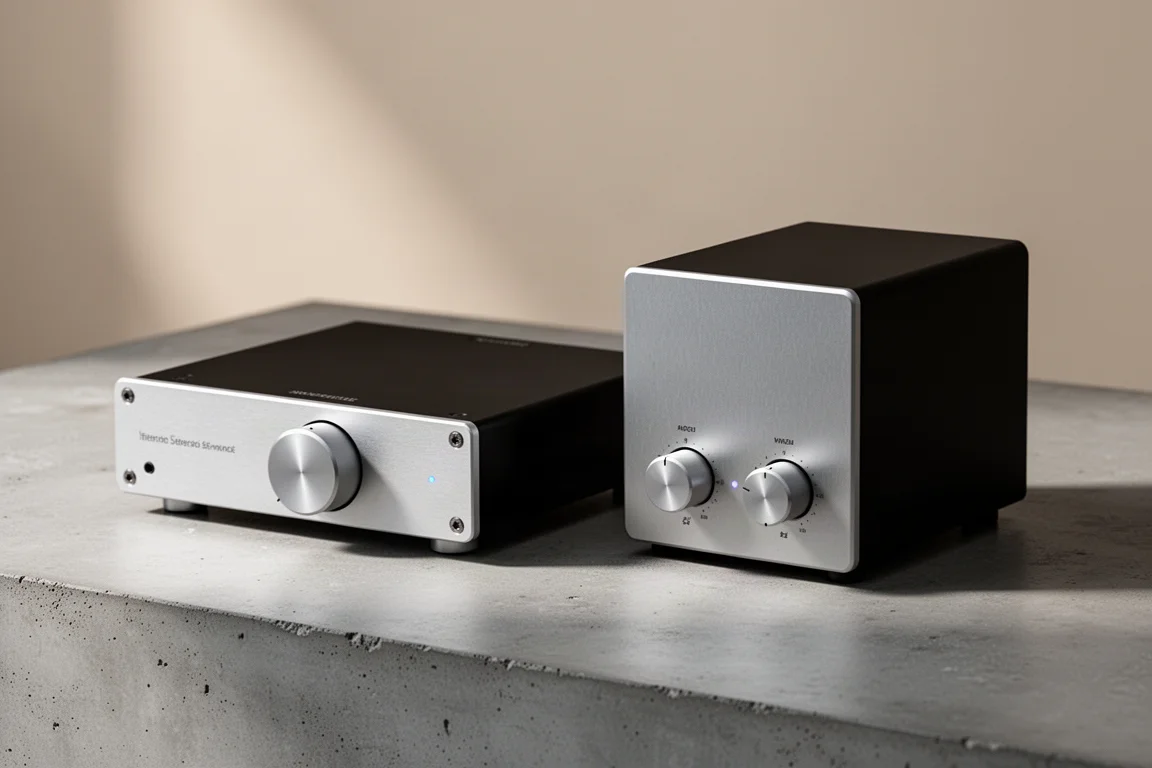
Compact power amplifiers have become genuinely interesting again, and two of the more compelling options take very different routes to the same destination. The LSA Crescendo Chorus is a class D design built around a GaN FET output stage, rated at 50 watts per channel in stereo and 120 watts per chassis when two units are run as monoblocks. The Schiit Aegir 2 is a 30 watt per channel amplifier that trades some resolution for a fuller, warmer tone.
Both are small enough to sit on a shelf without dominating a room, and both can drive speakers that would normally call for something larger. The differences show up in how they sound and in how you would build a system around them.
How These Two Amplifiers Compare
The two amplifiers share a similar footprint and a similar ambition, but the engineering behind them is not alike. The Crescendo Chorus uses a GaN FET output stage, a variation on class D that differs from the MOSFET output stages found in most class D amplifiers. The Aegir 2 is the lower-powered design at 30 watts per channel, and its character leans toward warmth rather than outright resolution.
Power ratings alone do not settle the question. Neither amplifier is likely to be pushed anywhere near its limit in a typical room, so the meaningful differences are tonal and spatial rather than a matter of raw headroom. The Crescendo Chorus emphasizes clarity, speed, and a wide soundstage. The Aegir 2 emphasizes body, richness, and a relaxed presentation.
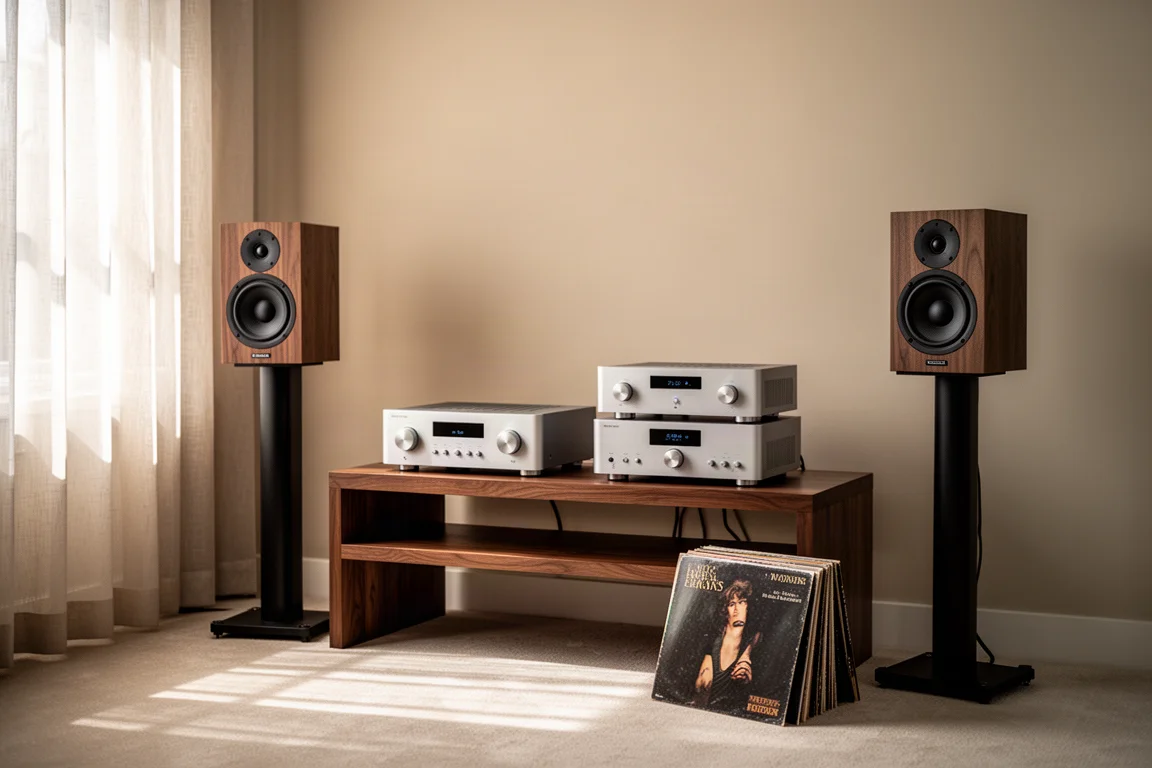
That split matters most when you choose speakers. A difficult load rewards an amplifier that stays composed, while an efficient speaker lets a lower-powered design shine without strain. The rest of this guide looks at each amplifier in turn, then at how to decide between them.
LSA Crescendo Chorus: Design, Power, and Practical Details
The Crescendo Chorus is a stereo power amplifier rated at 50 watts per channel into 8 ohms, and each chassis delivers 120 watts into 8 ohms when switched to mono. LSA does not publish a 4-ohm power figure, though the company states the amplifier can safely drive 4-ohm loads and easily handle 2 ohms.
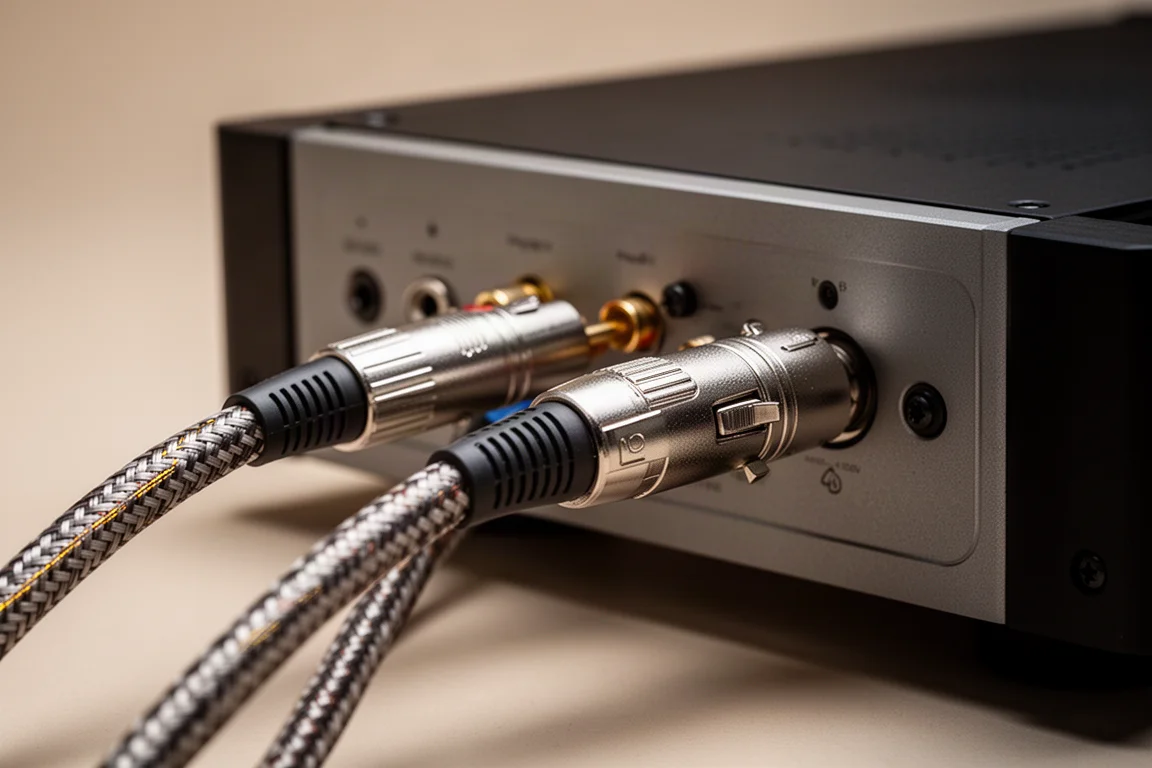
The rear panel carries RCA and XLR inputs alongside a three-position switch for stereo, RCA mono, and XLR mono operation, with the power switch on the upper left. When the amplifier is run balanced, it is fully differential from input to output, which is not true of every amplifier that offers an XLR input. Gain is unusually high at 34 dB through the RCA input in mono and 28 dB through the XLR input, which in practice means a lower volume setting for a given output level.
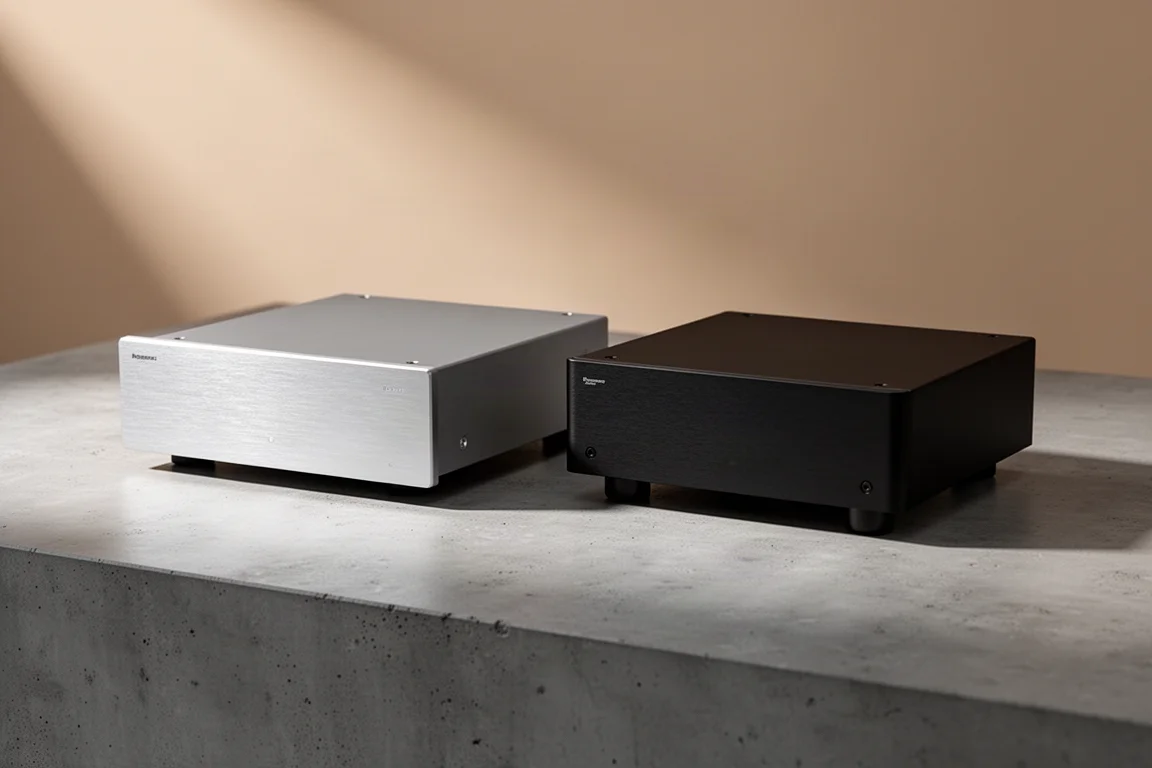
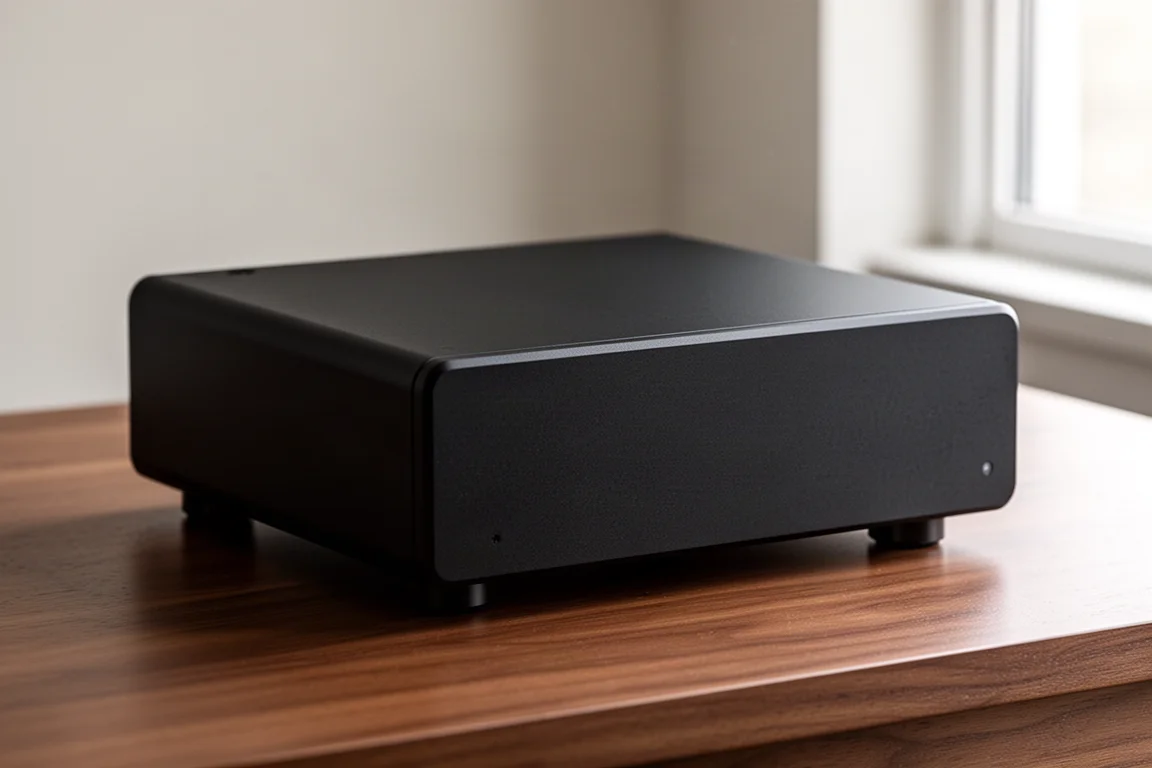
The chassis is compact enough to stack, and the amplifier is available in silver or black. Both finishes are priced at $994. Buyers in the United States receive units shipped directly from California, and purchasing two at once brings a 5% discount. The Crescendo Chorus carries a 2-year warranty that can be extended to 3 years after registering the product with LSA.
LSA Crescendo Chorus: Listening Notes Across Four Speakers
The amplifier was paired with four very different speakers: the KEF LS50 Meta, the Buchardt S400 Mark II, the Pure Audio Project Duet 15, and a 1986 pair of Magnepan SMG planar magnetic panels. The Magnepan was the toughest test of the group, since planar magnetic speakers are demanding loads.
With the KEF LS50 Meta, the presentation was quick, immediate, and very clear, with a soundstage that extended well beyond the physical positions of the speakers. Moving from a single stereo chassis to a pair running in mono added weight and filled out the sound, and the spaciousness of the image was the most striking change. The power increase was not the reason, since listening levels stayed well below 15 watts, so the improvement came from the mono configuration itself.
The Buchardt S400 Mark II and the Magnepan SMG both benefited from that added body, and the amplifier stayed composed with the planar panels even though they are difficult to drive. The Pure Audio Project Duet 15, a high-sensitivity open baffle design, was easy work and produced an energetic, satisfying result.
Context is worth keeping in mind. Against a 200 watt per channel class AB reference amplifier, the Crescendo Chorus gives up some vividness, clarity, depth, and bass definition. For its size and price, though, it covers more ground than its dimensions suggest.
LSA Crescendo Chorus: Mono Mode, Inputs, and System Fit
The clearest upgrade path with this amplifier is adding a second chassis. Comparing the RCA input with the balanced XLR input produced only a slight difference, with the balanced connection a touch more open. Going from one amplifier to two was a far bigger change, and the pair sounded bigger and more expansive in every meaningful way.
A pair does cost nearly double a single unit, so the sensible approach is to start with one, live with it for a while, and add the second later if the system calls for it. The small chassis makes stacking straightforward. LSA also offers a larger, monoblock-only GaN FET amplifier called the GaN M for listeners who want to move further up the range.
Schiit Aegir 2: A Warmer, More Relaxed Voice
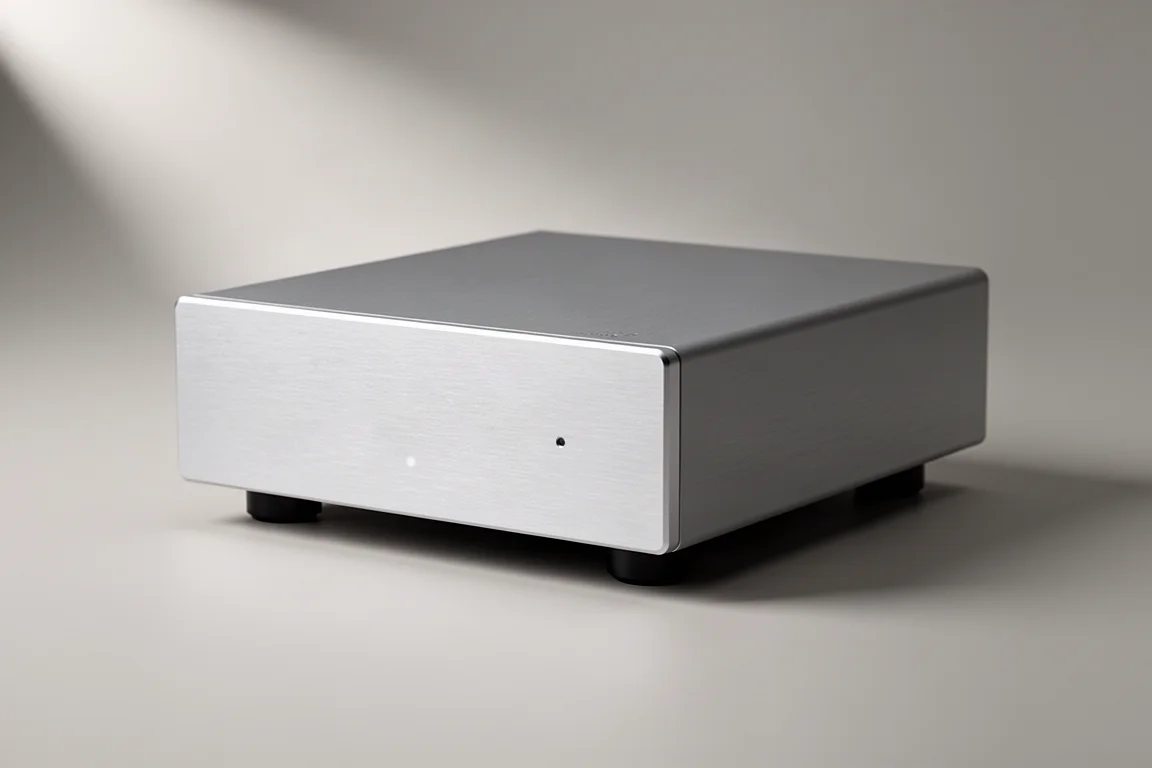
The Aegir 2 takes the opposite approach. At 30 watts per channel it is the lower-powered of the two, and its tonal balance is fuller and richer, with a more laid-back character. Where the Crescendo Chorus chases clarity and resolution, the Aegir 2 leans toward warmth and body.
That difference was obvious on a deep male vocal, where the Aegir 2 sounded fuller and more analog, but also less revealing of inner detail and low-level resolution. It is a trade rather than a shortfall, and which side of it you prefer depends on what you listen for.
The Aegir 2 also drove the 1986 Magnepan SMG panels beautifully, despite its modest power rating and despite what the numbers alone might suggest. Paired with those speakers, the presentation was open and easy to enjoy.
If your priority is tone and a relaxed listen, the Aegir 2 makes a strong case for itself. If you want maximum clarity and a wider image, the Crescendo Chorus is the more direct route.
Matching an Amplifier to Your Speakers
The decision comes down to speakers and priorities. Hard-to-drive loads, including planar magnetic and low-impedance designs, are the strongest argument for the Crescendo Chorus in mono, where the second chassis adds composure and weight. Efficient, high-sensitivity speakers are easier on both amplifiers, and they let the Aegir 2’s warmer character come through without strain.
Listeners who value resolution, speed, and a wide soundstage will gravitate toward the Crescendo Chorus. Listeners who want a fuller, more relaxed presentation and do not need high output will find the Aegir 2 more satisfying. Neither choice is wrong; they simply suit different rooms and different ears.
Buying Advice: Pricing, Warranty, and Value
The Crescendo Chorus is priced at $994 in either silver or black, with a 5% discount when two are purchased together and a 2-year warranty that extends to 3 years once the product is registered. United States buyers receive their amplifiers shipped directly from California. That combination makes the single-chassis entry point relatively accessible, and the mono upgrade a considered second step rather than a leap.
For the Aegir 2, the appeal is tonal rather than spec-driven. It is the amplifier to choose when warmth and body matter more than the last word in detail, and when the speakers in the system are efficient enough that 30 watts per channel is plenty.
Conclusion
Two compact amplifiers, two distinct philosophies. The LSA Crescendo Chorus delivers speed, clarity, and a wide image from a small chassis, and it becomes notably more capable when a second unit joins it in mono. The Schiit Aegir 2 answers with warmth, body, and an easy, relaxed character that pairs well with efficient speakers. Match either one to the speakers you already own, and you will know fairly quickly which philosophy fits your system.
Further reading
Related Reviews
Audio Amplifiers
AGD Audion Mark III Review: A Compact Class D Amplifier With Tube-Like Musicality
A gallium nitride Class D amplifier that delivers tube-like midrange warmth, serious bass grip, and a modular upgrade path in a very small chassis.
Audio Amplifiers
Best Class D Amplifiers Under $100: Douk Audio A5 vs Fosi Audio V3
Two sub-$100 Class D amplifiers built on the same 3255 chipset, compared on bass weight, midrange body, treble presence, and real-world speaker matching.
Audio Amplifiers
Best Power Amplifiers Under $500: Six Stereo Amplifiers From $74 to $579
A practical roundup of six stereo power amplifiers under $500, covering real-world power, connectivity, cooling, and which kind of system each one suits.