Desktop Audio
Loxjie D30 Review: A Desktop DAC and Headphone Amp That Does Triple Duty
A single-ended desktop DAC with a built-in headphone amp, Bluetooth, and a variable preamp output. Here is who it suits, what it does well, and what to weigh first.
Introduction
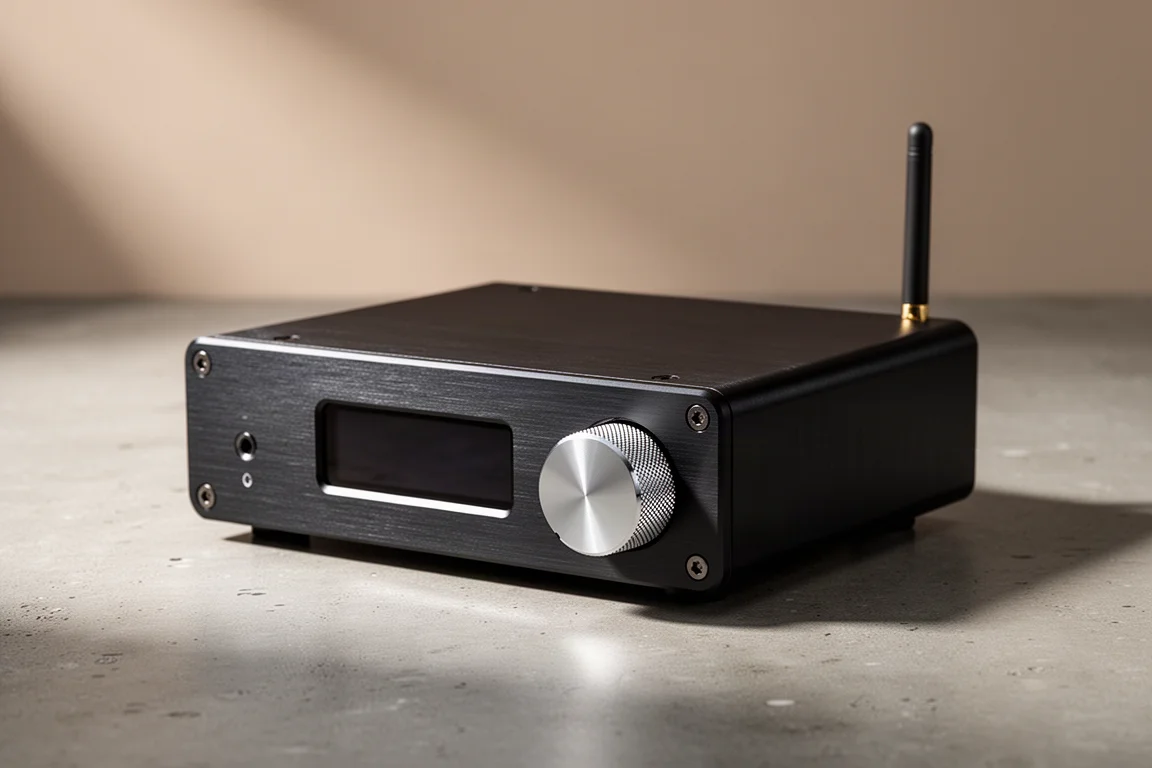
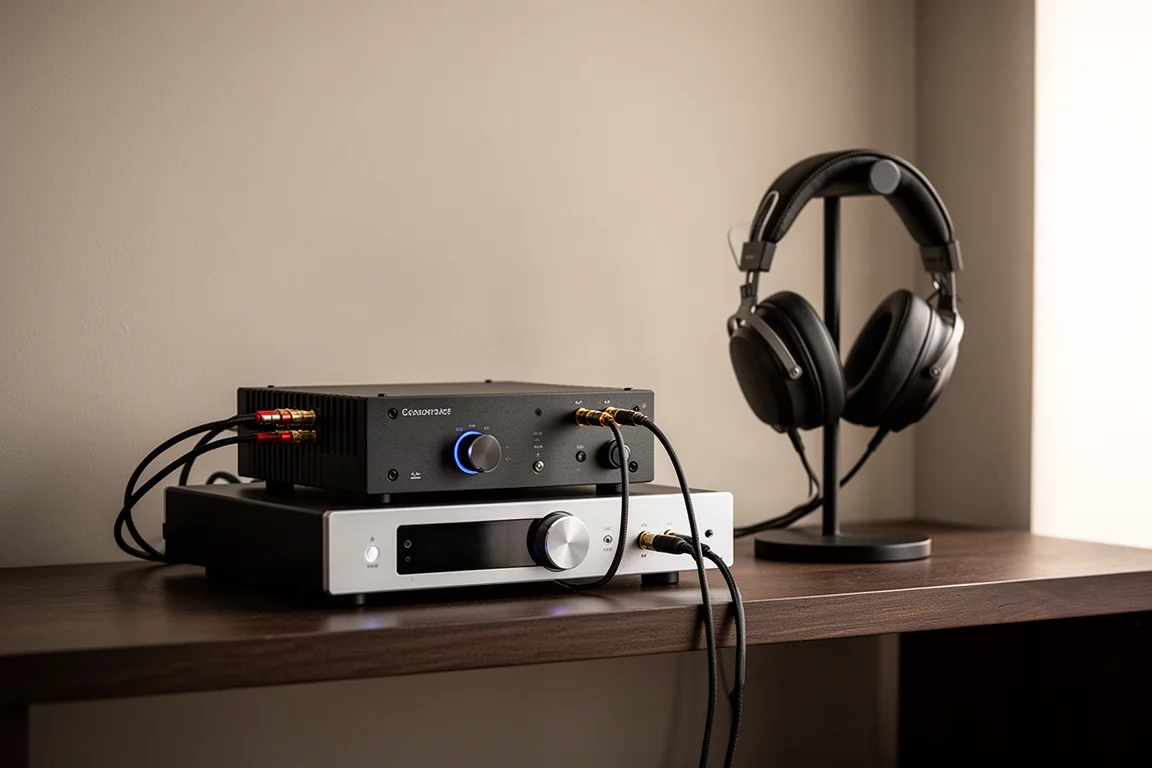
The Loxjie D30 is a desktop digital-to-analog converter with a headphone amplifier built into the same chassis. On the front panel there is a volume knob, which means the unit can act as the control point for a small system rather than sitting passively somewhere in the chain.
At around $250 it occupies a specific spot in the market: enough inputs and features to serve as the centre of a first proper desktop setup, without the cost of separate components. For listeners moving up from a computer’s built-in output or a basic dongle, that combination is the main appeal. One box handles the conversion, the volume control, and the headphone output.
Who This Product Is For
This is a sensible starting point for anyone assembling a first desktop headphone setup. It suits listeners who want a clean, neutral converter and a usable headphone output without buying two boxes to get there.
It also suits people who already own a speaker amplifier that lacks a remote control. Because the D30 offers variable output through its RCA connections, it can act as the volume control for the whole system.
Where it makes less sense is for listeners who have already invested in balanced headphones and balanced amplification. The D30 is single-ended only, so a balanced chain would leave part of that investment unused.
For most people starting out, though, single-ended operation is not a limitation in practice. The D30 is designed for straightforward setups: one source, one volume knob, and a pair of headphones. That simplicity is part of why it works as a first step.
Design and Connectivity
The rear panel covers the inputs most desktop listeners actually use: full-size optical, full-size coaxial, and full-size USB, plus a Bluetooth antenna. Nothing here requires an adapter, which is a small but genuinely useful detail.
Bluetooth support covers aptX HD, AAC, and SBC. aptX HD needs to be supported on both the sending device and the D30 to work, so it is worth checking before relying on it. AAC is the codec used by Apple devices, so iPhones and iPads can connect without extra hardware. SBC acts as the fallback that any Bluetooth device can use.
Inside, the D30 uses a Sabre ES9068AS converter chip paired with an XMOS USB input. The same chip appears in several considerably more expensive converters, which makes it a meaningful part of the value story here.
The menu system and display follow a layout familiar from other desktop DACs, with a small screen and a set of on-screen options. There are three roll-off modes for tailoring the output, though the audible differences between them are subtle.
Main Strengths
The strongest argument for the D30 is measured performance. It holds up well on the bench, and the sound it produces is clean, balanced, and detailed. It leans very slightly thin rather than warm, but it stays neutral enough that downstream gear shapes most of what you hear.
That neutrality is useful. Headphones and speakers with their own character come through clearly, and the converter itself does not add much of its own colour to the signal.
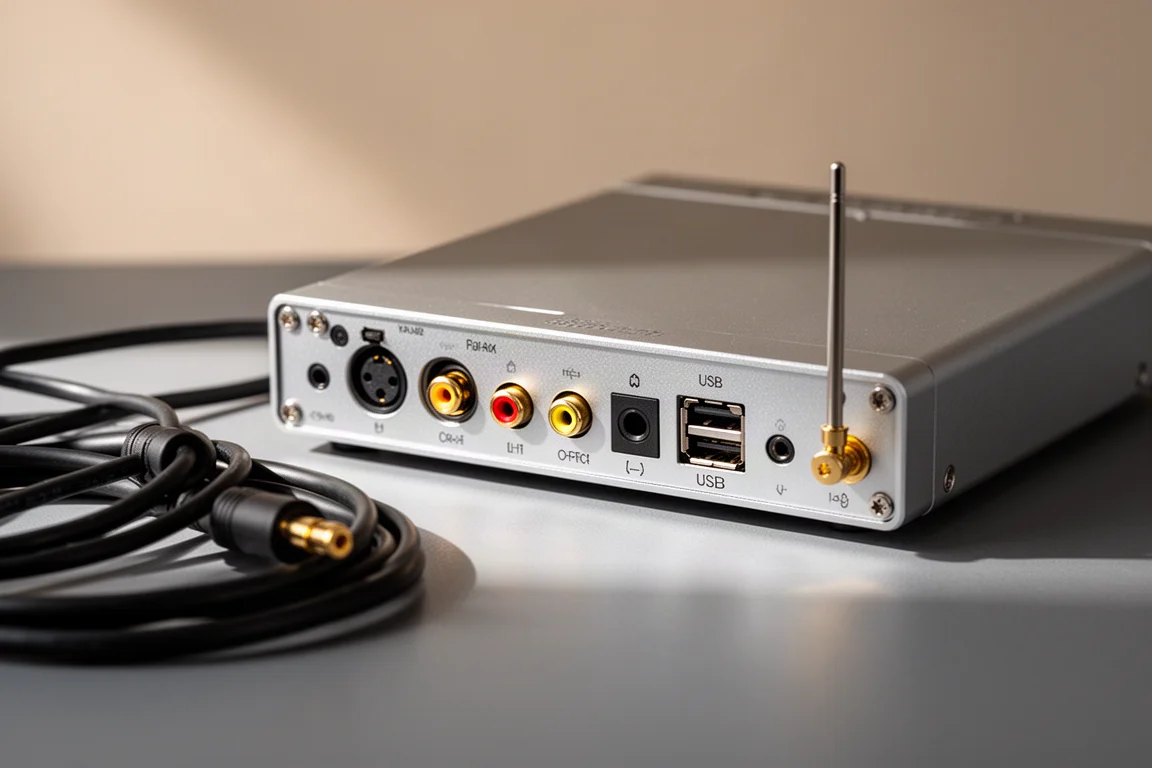
The input selection is another strength. Optical, coaxial, USB, and Bluetooth in one unit means a games console, a television, a computer, and a phone can all feed the same setup without a switch box in between.
The roll-off modes then give a small amount of tailoring for listeners who want to experiment, even if the differences are modest rather than dramatic.
Headphone Amp Performance
The built-in amplifier is rated at 110 mW into 32 ohms. That is not a large number, and the rating matters because headphone impedance changes how much power an amplifier needs to deliver.
In practice, the D30 drove a 300-ohm dynamic headphone to a satisfying volume, though it required turning the dial close to maximum. A 13-ohm closed-back planar needed more volume than lower-impedance models but remained comfortable, and several lower-impedance headphones caused no difficulty at all.
The pattern is worth noting: most headphones will work, but genuinely hard-to-drive models may push the amplifier to its limit. The headphone output is best understood as a convenience feature rather than the main event. The converter section is the priority, and the amplifier is there so you can listen immediately.
Triple Duty: DAC, Headphone Amp, and Preamp
What makes the D30 more flexible than a simple converter is that it can fill three roles. It works as a desktop DAC, as a headphone amplifier, and as a preamp with variable output through its RCA connections.
That third role is the one people often overlook. If you own a speaker amplifier without a remote control, you can set that amplifier to a fixed listening level and control volume from the D30 instead. The included remote then manages the whole system from the listening position.
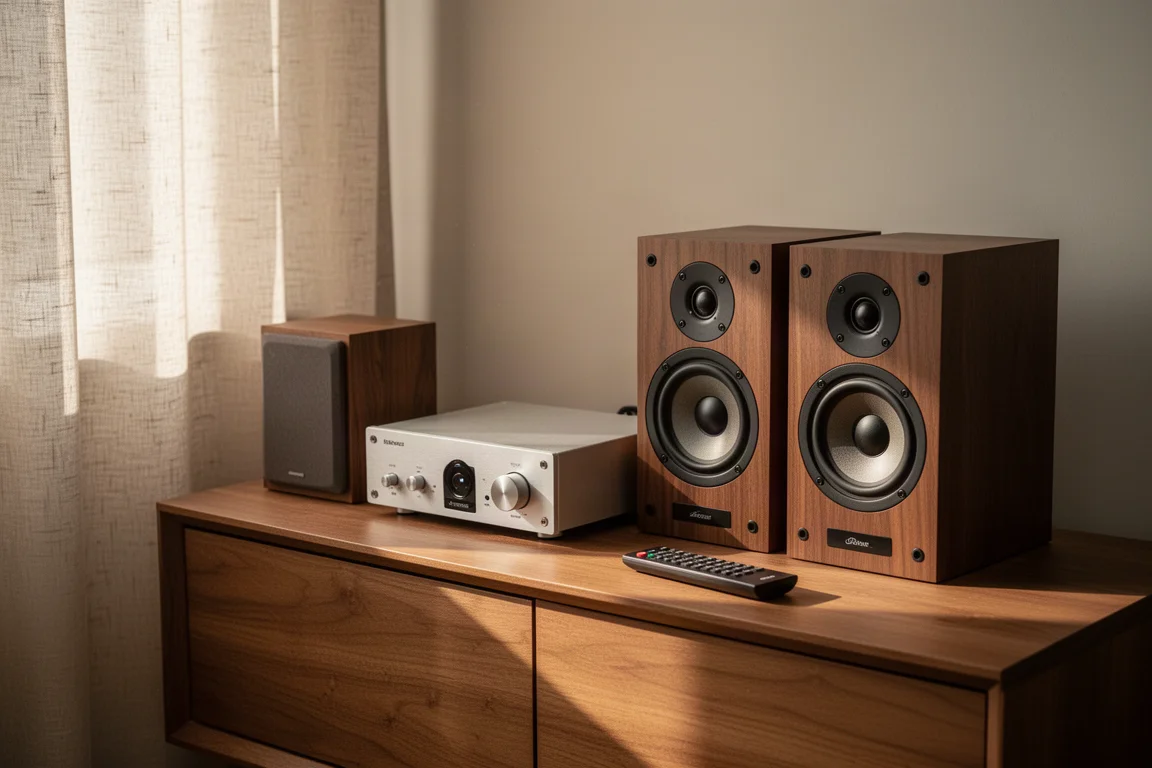
The upgrade path also works in the other direction. If you later add a more powerful dedicated headphone amplifier, the D30 can stay in the chain as the converter and preamp rather than being replaced outright.
That combination of roles is why the unit holds its value in a growing system. It does not become redundant the moment one part of the setup improves.
Things to Consider Before Buying
The most important limitation is the single-ended design. There are no balanced outputs and no balanced headphone connections. If you already own balanced headphones and a balanced amplifier, the D30 will not use them to their full potential, and a balanced converter would be the more logical choice.
The second consideration is amplifier power. The 110 mW rating is adequate for most headphones, but listeners with very demanding, high-impedance models should expect to run near the top of the volume range and may eventually want more headroom.
Third, the sound signature is neutral and clean rather than spacious. Converters that produce a noticeably more holographic, three-dimensional presentation generally cost considerably more, and many of them omit a headphone amplifier entirely. Expecting that kind of presentation from a $250 all-in-one is unrealistic.
Finally, the three roll-off modes are subtle. They are worth trying, but they are not a substitute for choosing headphones or speakers that suit your taste.
Buying Advice
For a first desktop DAC and headphone setup, the D30 is an easy recommendation at $250. The converter section measures well, the sound is neutral and detailed, and the feature set covers optical, coaxial, USB, and Bluetooth without adapters.
Buyers who have no balanced equipment should not feel pressured to spend more for balanced connections. A well-executed single-ended converter with a headphone amplifier included can serve the same role at a lower cost.
The practical advice is to buy it for the conversion and the flexibility, not for the headphone amplifier’s power. If your headphones are easy to drive, the built-in amplifier is all you need to get started. If they are not, plan for a dedicated amplifier later and treat the D30 as the converter and volume control at the centre of the system.
Conclusion
The Loxjie D30 succeeds because it does several jobs competently in one box. It converts digital audio cleanly, it drives most headphones to reasonable levels, and it can control a speaker system through its variable output and remote control.
Its limits are clear and predictable: single-ended only, and a modest headphone amplifier. Buyers who understand those limits get a well-rounded starting point at a price that leaves room for future upgrades.
Product link
View more details for Loxjie D30
This product is mentioned in the review. Check the specifications, options, and compatibility before buying.
View more details for Loxjie D30Further reading
Related Reviews
Desktop Audio
ADAM Audio D3V vs Kali Audio LP-UNF: Two $299 Desktop Monitors Compared
Two compact powered desktop monitors at the same price, compared on bass extension, linearity, placement settings, directivity, and realistic output limits.
Desktop Audio
Aiyima T9 Review: A Compact Tube Desktop Amplifier With a Built-In DAC
A budget desktop amplifier that pairs class D power with two tubes, a full DAC section, Bluetooth, tone controls, and a working VU meter.
Desktop Audio
Aune S9c Pro Review: A Weighty Desktop DAC and Headphone Amplifier With Real Power
A desktop DAC and headphone amplifier with a linear power supply, dual Sabre converters and five watts of balanced headphone output. Here is what to weigh before buying.