Sleeping Pads
Lost Horizon Self-Inflating Air Mattress Review: A Cot-Size Pad With a 13 R-Value
A practical look at the Lost Horizon self-inflating air mattress in cot size, from its 13 R-value and 4-inch thickness to the weight and packing trade-offs that come with it.
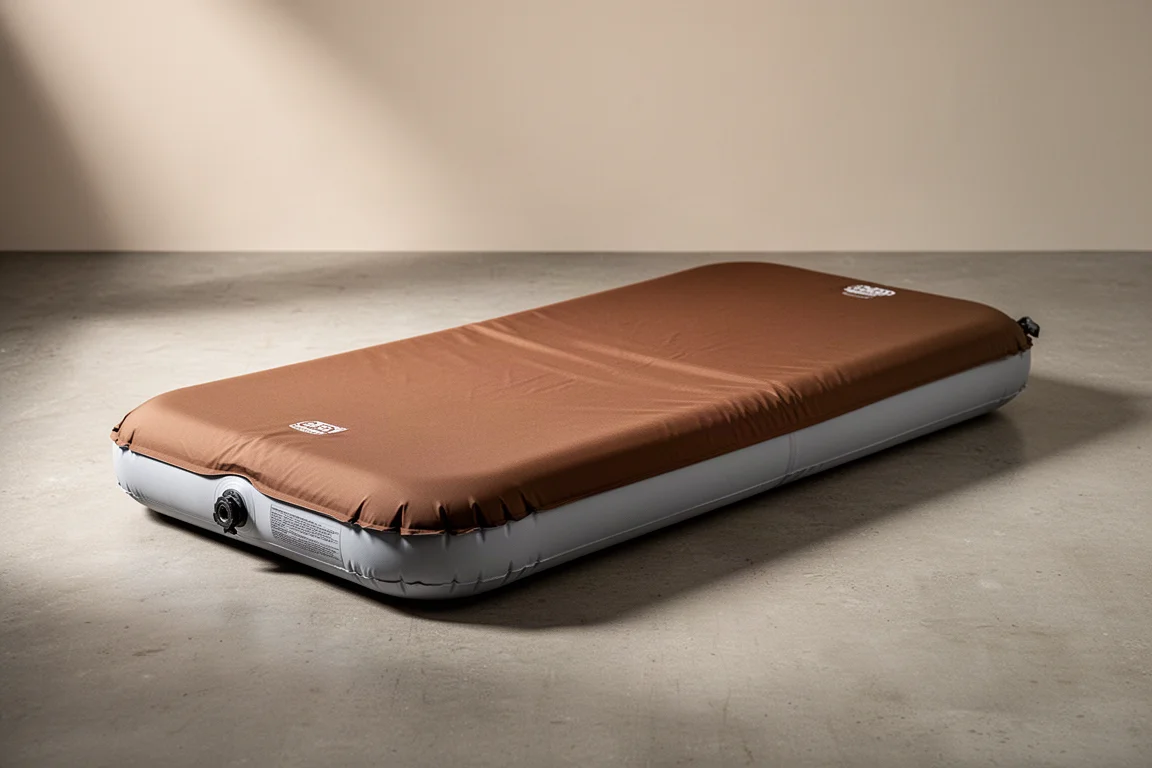
Introduction
Camping mattresses generally fall into two groups. There are thin, light pads that pack down small and ask you to accept a firmer night, and there are thicker self-inflating mats that trade pack size and weight for genuine comfort. The Lost Horizon self-inflating air mattress in cot size sits squarely in the second group. Inflated, it measures 75 inches long, 25 inches wide, and 4 inches thick, and it sells for around $110.
The cot-size format is the detail that makes this pad interesting. It is long and wide enough to use directly on the ground, yet narrow enough to sit properly on a standard camping cot, which gives it more use cases than a dedicated ground pad or a dedicated cot mat.

This review covers what the mattress is, who it suits, and the trade-offs worth understanding before ordering. It is worth saying up front that early testing covers a single night so far, so the long-term picture on durability and cold-weather performance is still being established.
Who This Product Is For
The clearest fit is anyone who sleeps on a cot. Cot mats have a reputation for being thin and unforgiving, and this pad is designed specifically for that setup, with enough thickness that side sleeping, back sleeping, and stomach sleeping all work without pressure points from the cot frame below.
It also suits campers who want a single pad that covers both scenarios: ground camping when the cot stays home, and cot camping when it does not. Car campers and cool-weather campers get the most from it, since the bulk and weight matter far less when the vehicle is nearby.
The stated weight limit is 220 lbs. Lost Horizon offers this mattress in a wide range of versions and sizes, including twin, full, queen, single, slim single, and cot size, and some versions ship with an air pump while others do not. Buyers who need a specific size or a pump should confirm exactly which version they are ordering.
Main Strengths
The standout specification is the R-value of 13. Most air mattresses land around an R-value of seven, so this is a substantial step above the norm. The likely reason is the interior: a thick, dense solid self-inflating foam, which is also the most plausible explanation for the pad’s weight. Whatever the cause, a higher R-value is meaningful for anyone camping in cool to cold conditions, because it describes how well the pad resists heat loss to the ground.
Comfort is the second strength. The 4-inch thickness gives enough depth to lie in any position without bones pressing through to the cot or the ground, and the top surface is smooth and soft against skin. The materials are also quiet. Tossing and turning produces very little noise, which matters in a shared tent.
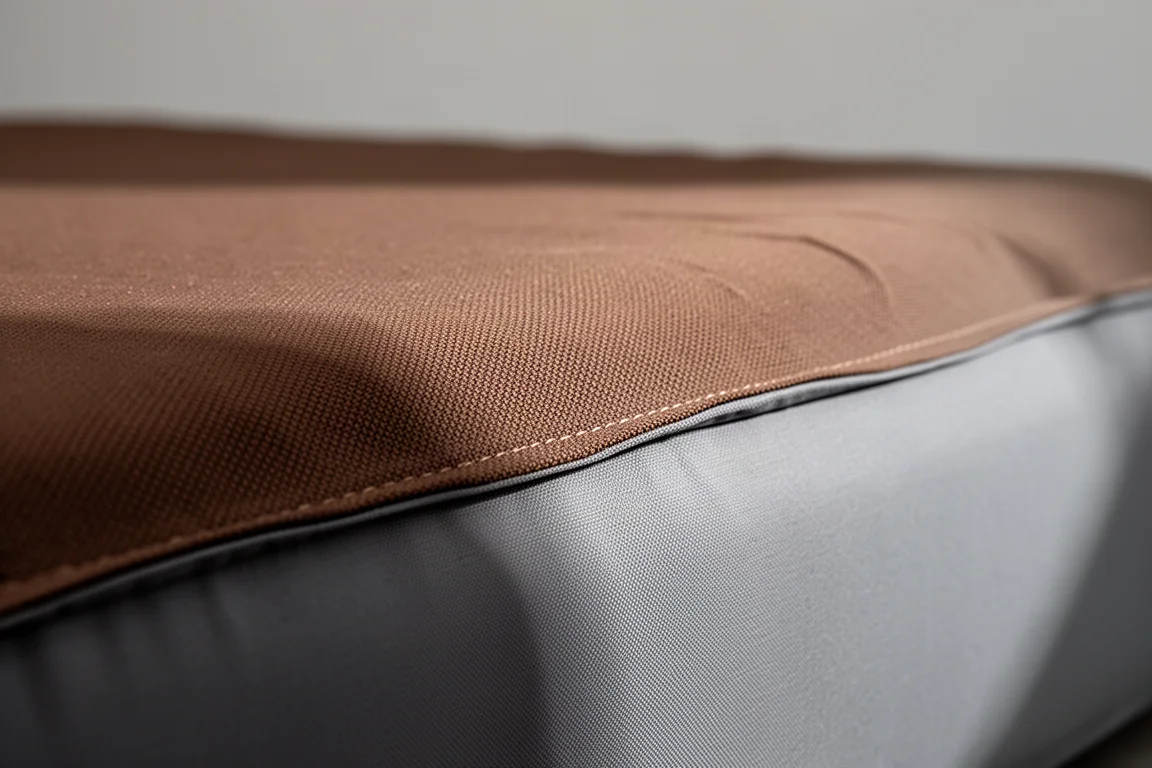
Build quality holds up to close inspection. The welding along the seams is clean, the materials show no fraying, and nothing about the finish suggests corners were cut. The shell appears to be a TPU-laminated polyester, which is the material most air mattresses use, paired with a solid self-inflating foam inside. Specific foam details are not published, so this is an area where the specification sheet is thinner than the performance.
Self-inflation is straightforward. The rotating valve at the head of the pad can be set to release air, to let air in while preventing it from escaping, or to seal completely, and the pad does the rest of the work on its own.
Things to Consider Before Buying
Weight is the main compromise. This cot-size pad weighs almost 8 lbs, where comparable air mattresses of a similar size typically come in around 4 lbs. That is a real difference for anyone carrying gear any distance, and it is the direct cost of the thicker foam and the higher R-value. Packed down, the mattress measures 25 inches by 13 inches, which is a reasonable footprint for a car-camping load but not a small one for a pack.
Rolling it back up takes effort, particularly when the pad is new. The foam resists being compressed at first, and the process becomes noticeably easier once the mattress has been rolled a few times. This is normal behaviour for self-inflating pads, but it is worth planning for on the first trip.
There are no anti-slip patches on the underside, so on a slick cot or a smooth tent floor the pad can shift slightly. The colour options are also limited to one combination: brown on top, gray on the sides, and gray underneath. It looks considered, but there is no alternative if you want a different finish.
One habit is genuinely important: always store the mattress with the compression strap attached. Over time the foam continues to expand even with the valve closed, and a pad left loose in its bag can swell enough to become very difficult to remove. The storage bag itself is well thought out, with a roll top, a grab handle, and an air valve that lets it double as a pump sack for topping the pad up by hand.
Setup, Inflation, and Storage
Inflating the mattress is a matter of opening the valve and letting it breathe. Self-inflation takes roughly 5 to 15 minutes depending on how tightly the pad was rolled and how long it has been stored. On a brand-new mattress, which arrives heavily compressed, the first full inflation can take as long as two hours. After that, the process speeds up considerably.
If you would rather not wait, the pad can be topped off by mouth or filled using the storage bag as a pump sack. Setting it up takes no real effort either way.
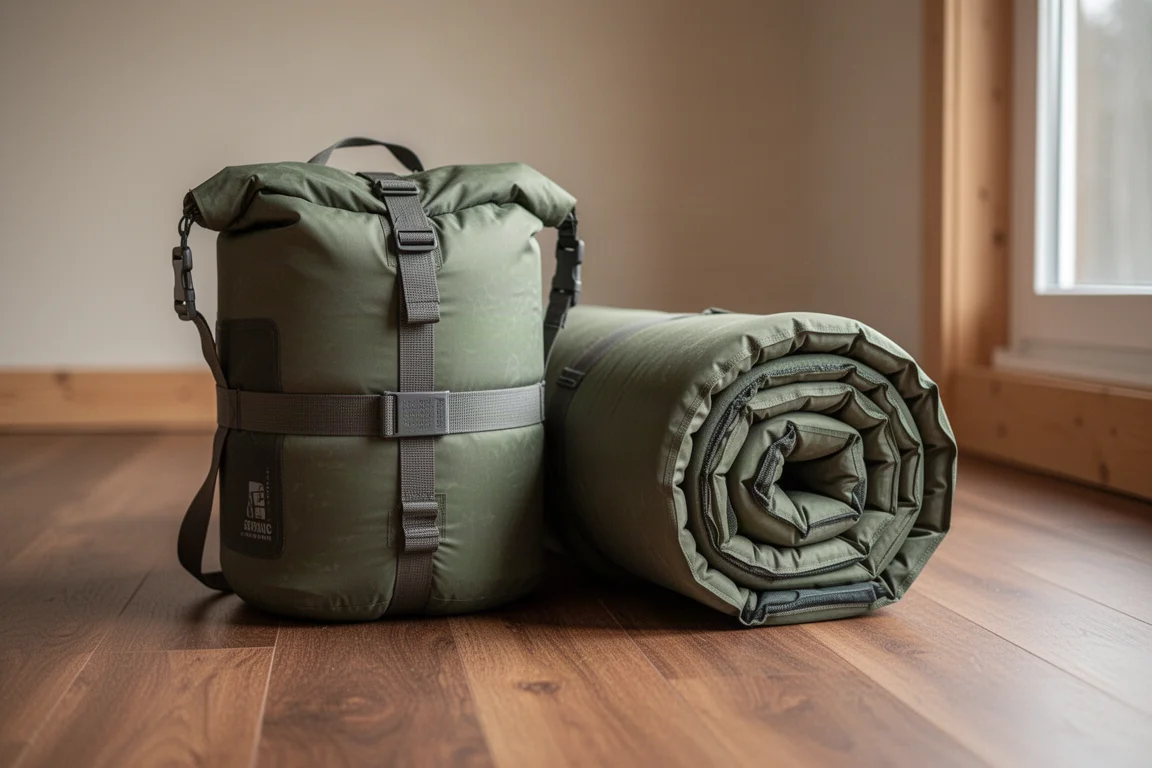
Deflating and packing takes more technique than inflating. Open the valve to release the air, start at the foot of the mattress, and roll while pressing down with your knees to help compress the foam. Working from the foot toward the head keeps the roll tight and even. Once the roll is complete, close the valve, fit the compression strap, and the mattress is ready for the bag. Skipping the strap is the mistake to avoid.
Cold-Weather Performance and Cot Fit
The R-value of 13 suggests this pad can be used on the ground on its own without an additional mat underneath, holding back the cold that would otherwise pass up through the mattress. That is a significant advantage for shoulder-season and winter camping, and it is the main reason the extra weight is worth accepting.
The cot-size dimensions are what make the pad so flexible. At 75 inches long and 25 inches wide, it is large enough to be a standalone ground mattress and small enough to sit on a cot without overhanging. For anyone who camps on a cot in cool conditions, that combination is unusual and genuinely useful, since most cot mats on the market are thin and offer little insulation.
Longer-term testing will confirm how the foam and the R-value hold up across repeated use, and whether the pad keeps its shape after a full season of packing and unpacking.
Buying Advice
At $110, this mattress makes a strong case on value. The comfort, the quiet materials, the clean construction, and the unusually high R-value all compare well against pads that cost considerably more, and the cot-size option fills a gap that few competitors address properly.

The decision comes down to how you camp. If you drive to your site, sleep on a cot, or camp in cold conditions, the nearly 8-pound weight is a fair price for the comfort and insulation on offer, and this pad is easy to recommend. If you carry your gear on your back over long distances, a lighter inflatable pad remains the more sensible choice.
When ordering, confirm the version carefully. The range includes several sizes and both pump and no-pump configurations, and the cot size is the one that offers the most flexibility between cot and ground use.
Conclusion
The Lost Horizon self-inflating air mattress in cot size is a well-built, genuinely comfortable pad with an R-value that stands out from the category norm. It is heavy and it takes some effort to roll away, but for cot camping, car camping, and cool-weather trips, those are reasonable trade-offs at $110. Readers who want a versatile, warm mattress for camp setups rather than long-distance backpacking will find a lot to like here.
Product link
View more details for Lost Horizon Self-Inflating Air Mattress (Cot Size)
This product is mentioned in the review. Check the specifications, options, and compatibility before buying.
View more details for Lost Horizon Self-Inflating Air Mattress (Cot Size)Further reading
Related Reviews
Sleeping Pads
Best Backpacking Sleeping Pads 2026: Nine Pads Rated on Price, Comfort, Warmth, and Weight
Nine backpacking sleeping pads compared on price, comfort, warmth, and weight, from a $65 summer pad to a year-round option rated at R-7.3.
Sleeping Pads
Best Backpacking Sleeping Pads: Comfort, Warmth, and Weight Compared
A practical comparison of the Nemo Quasar 3D, Therm-a-Rest NeoAir XTherm Max, and Big Agnes Rapide SL for backpackers choosing between comfort, warmth, and packed weight.
Sleeping Pads
Best Backpacking Sleeping Pads: Ultralight, Winter, Comfort and Budget Picks
A practical roundup of the sleeping pads that stand out for ultralight weight, winter warmth, pressure relief and value, plus three popular pads that fell short.