Camping Tents
Lone Rider Motorcycle Tent Review: Huge Space, Real Weather Protection
A double-wall motorcycle tent with two large awnings, standing height, and room for a bike inside. Here is how it holds up in cold, heavy rain and what the bulk costs you.
Introduction
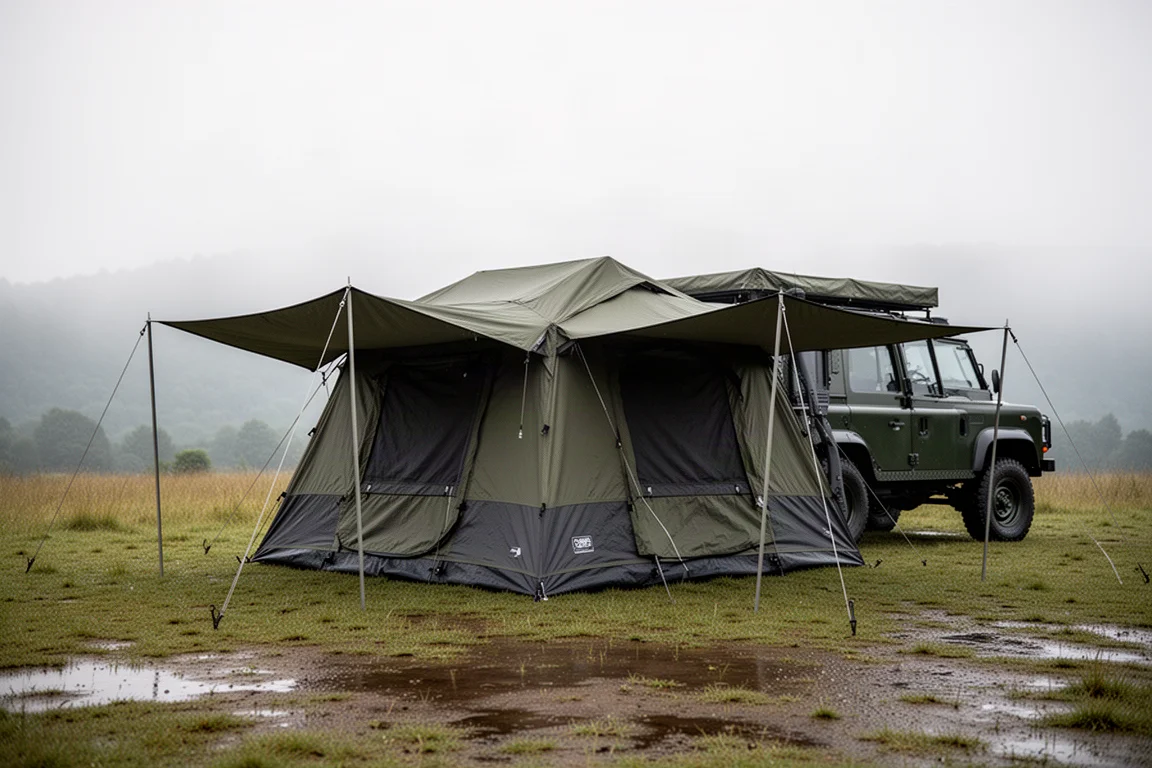
Motorcycle camping asks more of a shelter than almost any other kind of camping. A tent has to handle real weather, pack onto a bike, and still give you somewhere civilised to sleep at the end of a long day. The Lone Rider motorcycle tent takes a deliberately different approach. Instead of shrinking to the smallest possible package, it leans into space, with a double-wall build, two large awnings, and an interior wide enough to stand up in.
That trade-off is the whole story here. Pitched through an afternoon and a night of cold, steady rain, the tent kept its occupant dry and blocked the wind, while the pack size and weight stayed stubbornly large. For riders who value room and weather protection over minimal bulk, that may be exactly the right bargain.
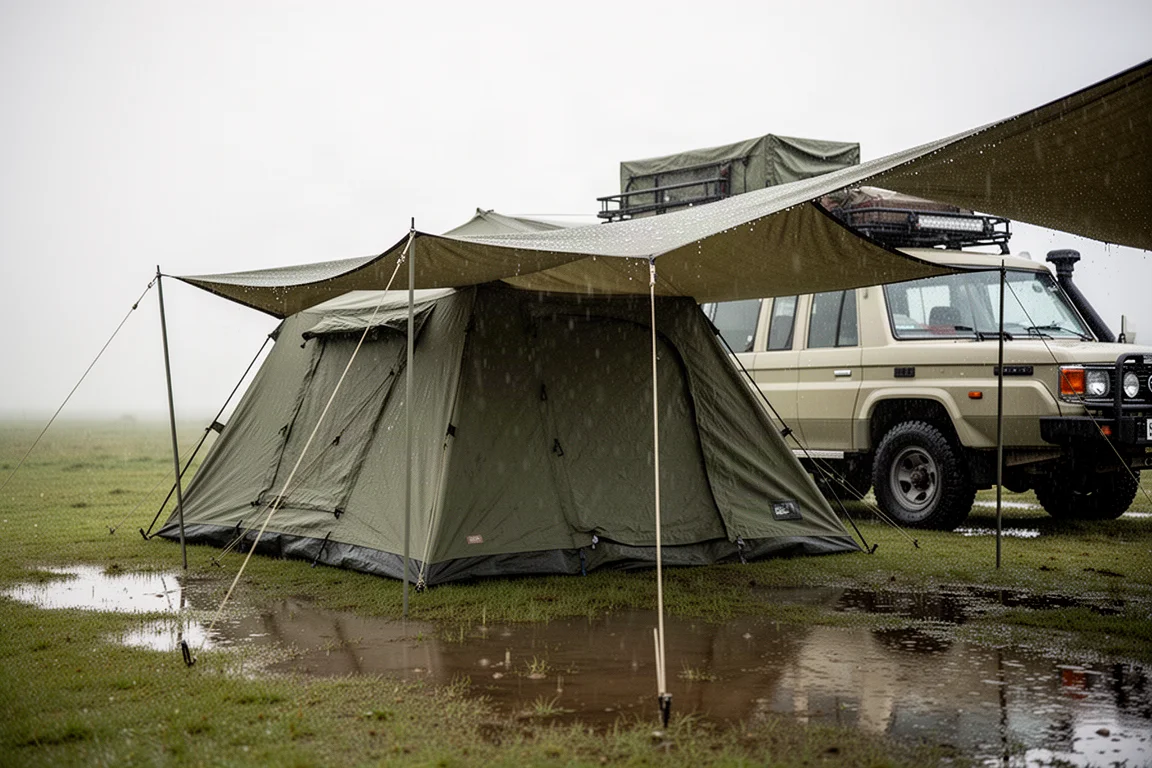
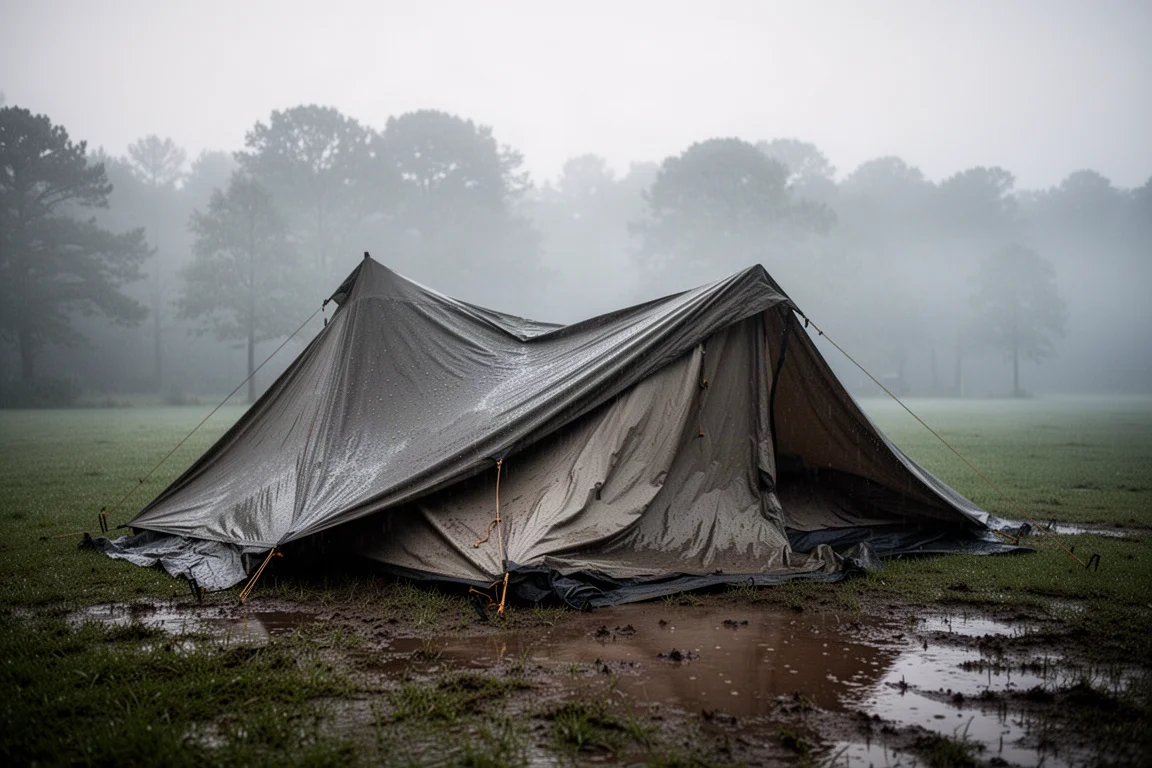
This tent was used for vehicle-based camping rather than pure motorcycle touring, which makes it easier to judge how it behaves when conditions turn genuinely unpleasant. Testing covered hours of heavy rain with temperatures sitting only a few degrees above freezing, including a long overnight downpour that turned the surrounding ground into running water.
Who This Tent Is For
The Lone Rider tent is aimed at riders who want a base camp rather than a bivvy. It suits motorcycle campers who plan to stay put for a night or more, and it works just as well for overlanding, car camping, and truck camping setups where the shelter does not have to be carried on your back.
Its most distinctive feature is the interior footprint, roughly seven feet wide, which is large enough to park a motorcycle inside and keep it out of the rain. That alone changes the calculation for anyone who tours on a bike they care about. It also makes the tent unusually comfortable for two people and a bit of gear, or generous for one person who likes to spread out.
If your priority is a shelter that disappears into a small pannier, this is not the tent for you. If your priority is standing up to change clothes, keeping your bike dry, and having somewhere to sit out a storm, the brief makes much more sense.
Main Strengths: Weather Protection and Interior Space
The headline strength is straightforward: it stayed dry. Through a night of heavy, sustained rain, the interior remained completely dry, with water running around the outside of the pitch rather than through it. The double-wall construction adds a layer of insulation against wind and condensation, and the tent stayed noticeably warmer inside than the conditions outside suggested.
Space is the second strength, and it is not a small one. With roughly seven feet of width and enough height to stand under, the tent behaves more like a small cabin than a camping tent. A compact portable heater used inside warmed the interior quickly and helped dry damp clothing, which is the kind of practical detail that matters on a cold, wet trip.
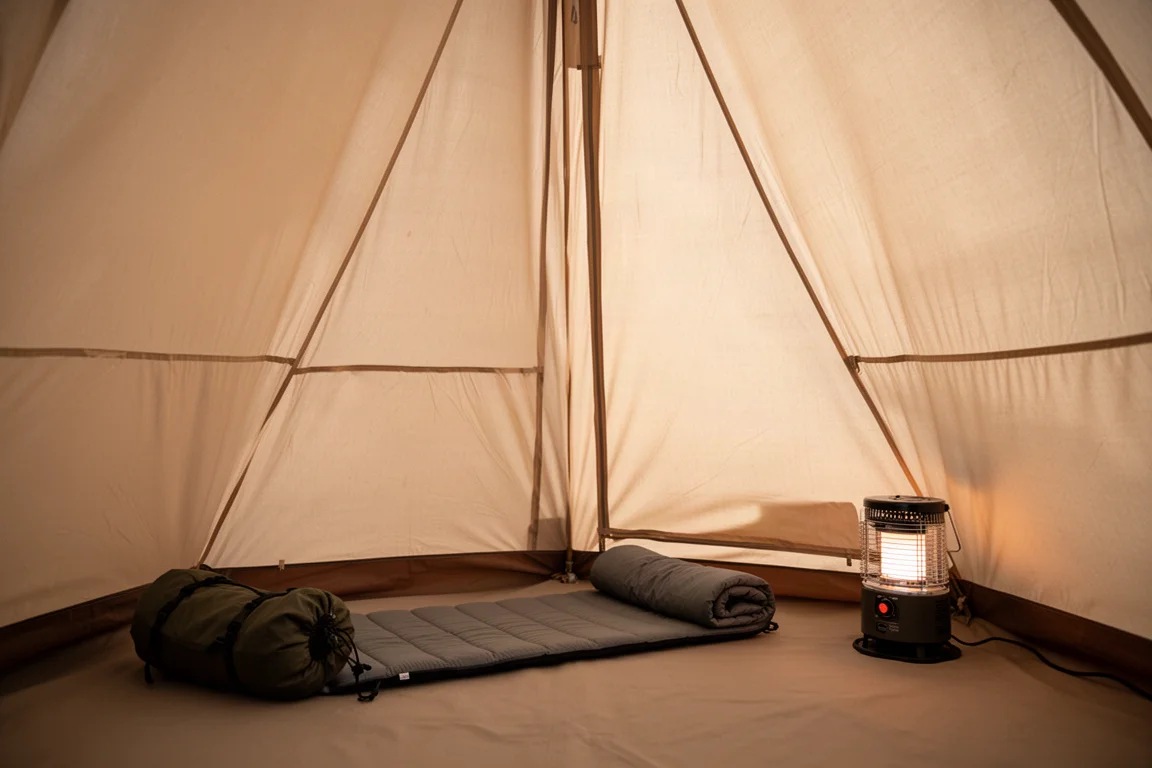
The double-wall design also means the inner layer stays protected from contact with the outer shell, which helps reduce the clammy feeling that single-wall tents can develop in cold rain. Add the wind blocking and the result is a shelter that feels calm inside even when the weather outside is doing its worst.
Entrances, Awnings, and Vehicle Attachment
There are two ways in. A main door on one side and a second access point at the back give the tent a genuinely useful layout, letting you enter from whichever side is sheltered and improving airflow when both are opened.
The two large awnings are the other standout feature. They create usable covered space outside the inner tent, and one of them can be attached directly to a vehicle using tarp hooks, forming a dry corridor between the car or truck and the tent. That makes loading and unloading in the rain far less miserable, since gear can move from vehicle to shelter without ever being exposed. The awning can also be lifted and angled so that water runs off rather than pooling on top of the fabric.
For anyone who has wrestled a duffel bag through sideways rain, this is the kind of design detail that justifies the tent’s size on its own.
Things to Consider Before Buying
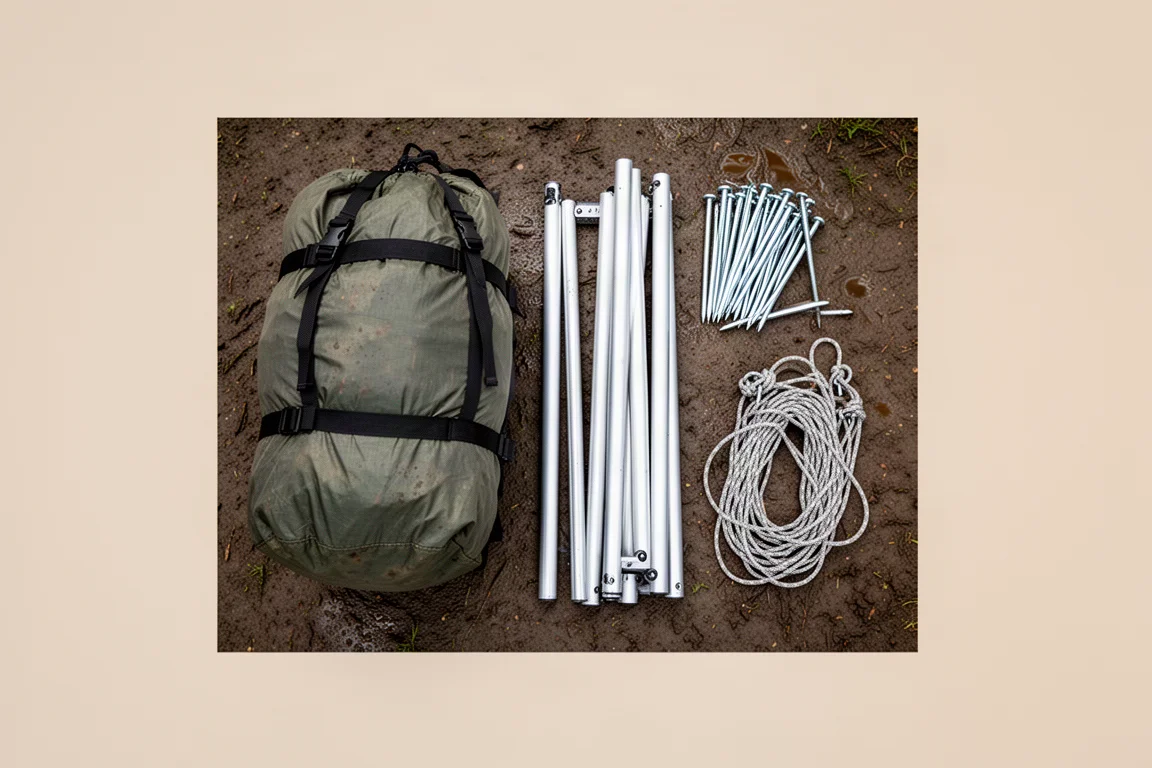
The main drawback is bulk. The packed size of this tent is genuinely large, and the weight sits somewhere around twelve pounds. On a motorcycle, the weight itself is less of a problem than the volume, because a big rolled bundle takes up space you may not have.
That is the honest trade-off. You are carrying a lot of fabric in exchange for standing height, two awnings, and room to park a bike inside. Whether that equation works depends entirely on how you travel and how much luggage capacity you have.
Cost is the second consideration. This is an expensive tent at full price, which puts it firmly in the premium bracket for camping shelters. It is the sort of purchase worth thinking through against how many nights you actually expect to spend in it each year.
Setup and Packing in Practice
Pitching the tent in the rain took real time, partly because of the size and partly because of the awnings and guy lines. That is not unusual for a tent of this scale, but it is worth planning around: arriving in daylight makes a noticeable difference.
Breaking camp in wet, muddy conditions is the slower half of the job. Packing everything down, wiping what could be wiped, and clearing the site took around forty-five minutes. Expect the tent to go home damp and to need a proper dry-out afterwards, which is standard practice for any tent that has spent a night in heavy rain.
None of this is a fault in the design so much as a consequence of the size. A large double-wall tent with two awnings simply takes longer to handle than a minimal solo shelter.
Buying Advice
At full price this tent sits around the six hundred mark, though seasonal sale pricing has brought it down considerably. If you are considering it, timing a purchase around a sale is a sensible way to soften the cost.
The more important question is whether the size suits your setup. Riders who travel with a vehicle and pitch a base camp will get the most from the space, the awnings, and the ability to keep a motorcycle under cover. Riders who move every day with minimal luggage should weigh the pack volume carefully before committing.
If you can answer that question honestly, the decision is fairly clear. The tent does what it claims to do in bad weather, and the features that make it heavy are the same features that make it comfortable. There is no version of this tent that is both this spacious and genuinely compact, so pick the priority that matches how you camp.
Conclusion
The Lone Rider motorcycle tent is a genuinely impressive shelter in the conditions that matter most. It stayed dry through heavy overnight rain, blocked the wind, and offered a level of interior space that few camping tents can match, including room to keep a motorcycle out of the weather.
Its weaknesses are inseparable from its strengths. The pack size is large, the weight is around twelve pounds, and the price at full retail is high. For riders and vehicle-based campers who want a roomy, weather-tight base camp with two awnings and a dry link to their vehicle, those costs are easy to justify. For anyone counting every litre of luggage space, they are not.
Buy it for the space and the weather protection. Accept the bulk as the price of both, and it is a tent that makes cold, wet trips considerably more pleasant.
Product link
View more details for Lone Rider Motorcycle Tent
This product is mentioned in the review. Check the specifications, options, and compatibility before buying.
View more details for Lone Rider Motorcycle TentFurther reading
Related Reviews
Camping Tents
3F UL Gear Taiji Two-Person Tent Review: Field Waterproofing Results and Buying Advice
The Taiji pairs an attached fly with a removable inner, but sustained rain exposed untaped vent seams that need sealing before this shelter can be trusted.
Camping Tents
3FUL Gear Lanshan 2 Pro 4-Season Review: A Sub-$200 Single-Wall Trekking Pole Tent
An early look at the 3FUL Gear Lanshan 2 Pro 4-Season, covering its straightforward pitch, generous interior space, and the condensation and seam-sealing questions that come with any single-wall shelter.
Camping Tents
Alps Mountaineering Lynx 1-Person Tent Review: Big Value in a Small Budget Tent
A close look at the Alps Mountaineering Lynx 1-Person Tent, covering real interior dimensions, materials, setup time, ventilation limits, and who should buy it.