Network Streamers
Logitech Squeezebox Touch vs Bluesound Node N130: Two Streaming Contenders Compared
A discontinued 2010 network streamer still holds its own against a modern affordable streamer. Here is what the Squeezebox Touch and the Bluesound Node N130 each bring to a listening room.
Introduction
Some audio hardware earns its reputation slowly. The Logitech Squeezebox Touch was introduced in 2010, discontinued in 2012, and more than a decade later it still streams local files, Spotify Connect, Tidal, Qobuz, Deezer and several internet radio services. That longevity says something useful for anyone shopping for a network streamer today: the software platform around a device often matters as much as the device itself.
The Squeezebox Touch is not the only sensible option. The Bluesound Node N130, a 2021 model, represents the kind of affordable modern streamer most buyers would consider first. This comparison looks at what each does well, where they genuinely differ, and what to check before spending money on either.
Logitech Squeezebox Touch: What It Still Does Well
The Squeezebox Touch arrived in 2010, four years after Logitech acquired Slim Devices, the company behind a long line of network audio streamers that included the Slim MP3, the original Squeezebox, the Squeezebox 2, the Squeezebox 3 later renamed the Classic, the Squeezebox Duet and the Transporter.
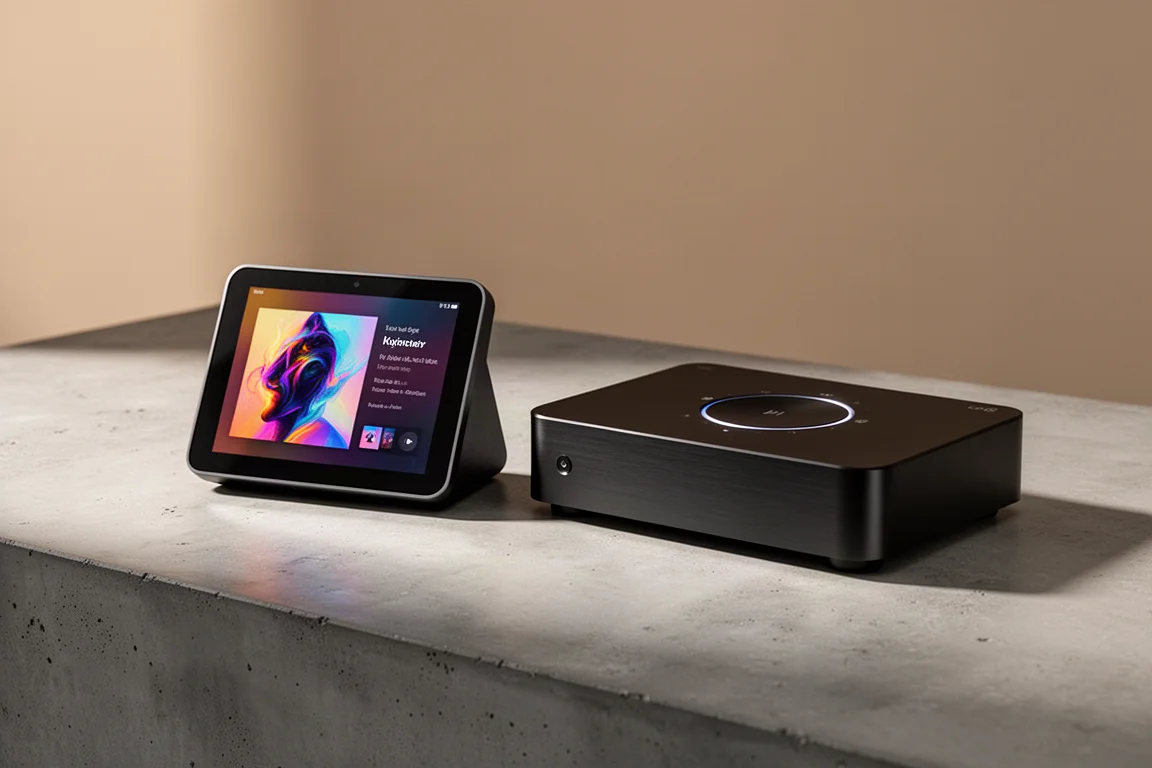
Its defining feature is a 4.3 inch colour touch screen. Resolution is modest, only a few hundred pixels on each side, so it is not especially sharp from across a room, but the viewing angle is wide, noticeably wider than the small touchscreen commonly paired with a Raspberry Pi. The screen shows cover art and artist information, and it can also display a spectrum analyzer or virtual VU meters. Cover art and the spectrum analyzer remain the most useful options today.
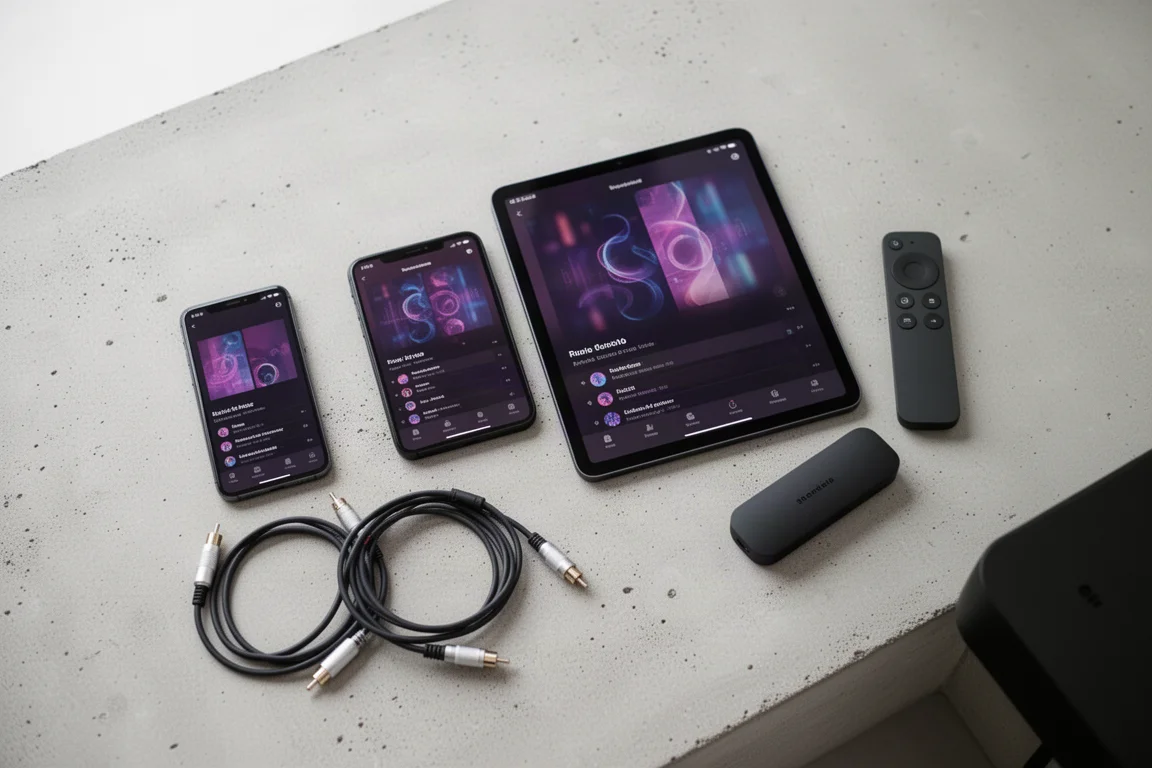
The screen also handles on-device menu navigation, although that can feel fiddly. Third-party smartphone apps are the easier route: iPeng on iPhone and iPad, and Orange Squeeze on Android. A web interface is available as well, and the community-built Material skin plugin modernizes it with faster library browsing, cleaner cover art display and a layout that collapses properly on smaller screens. It runs in a browser at the server address on port 9000.
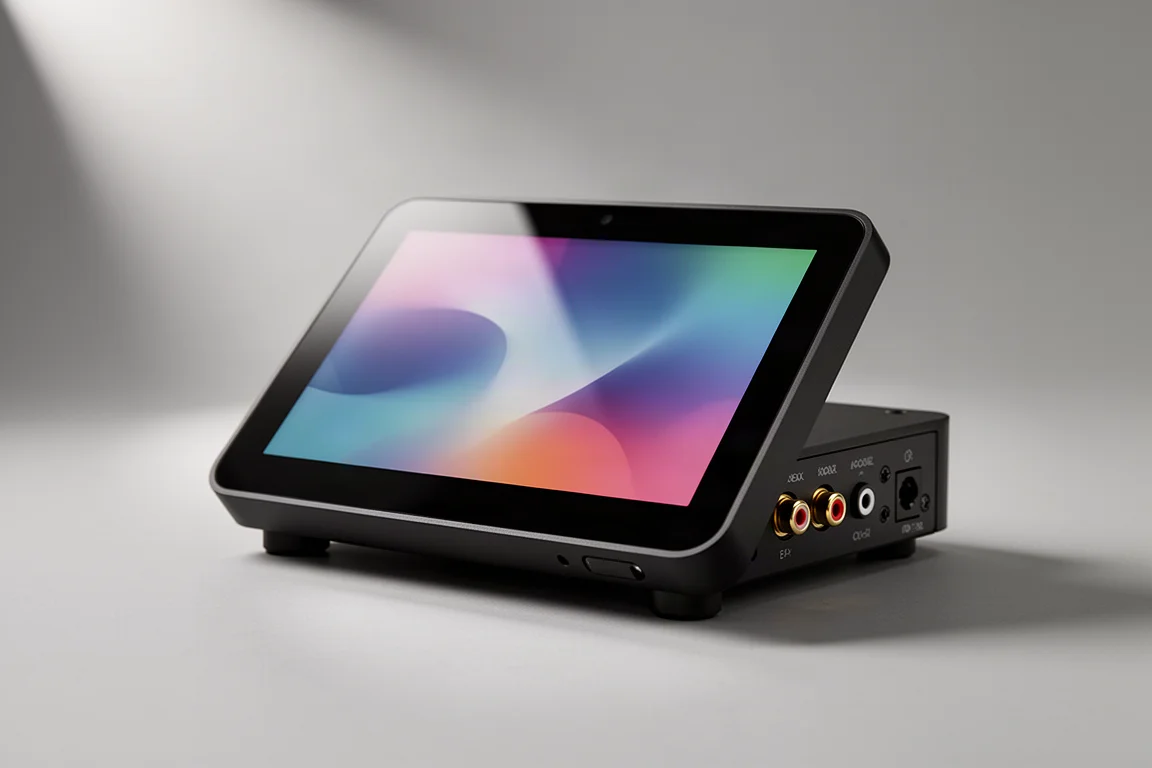
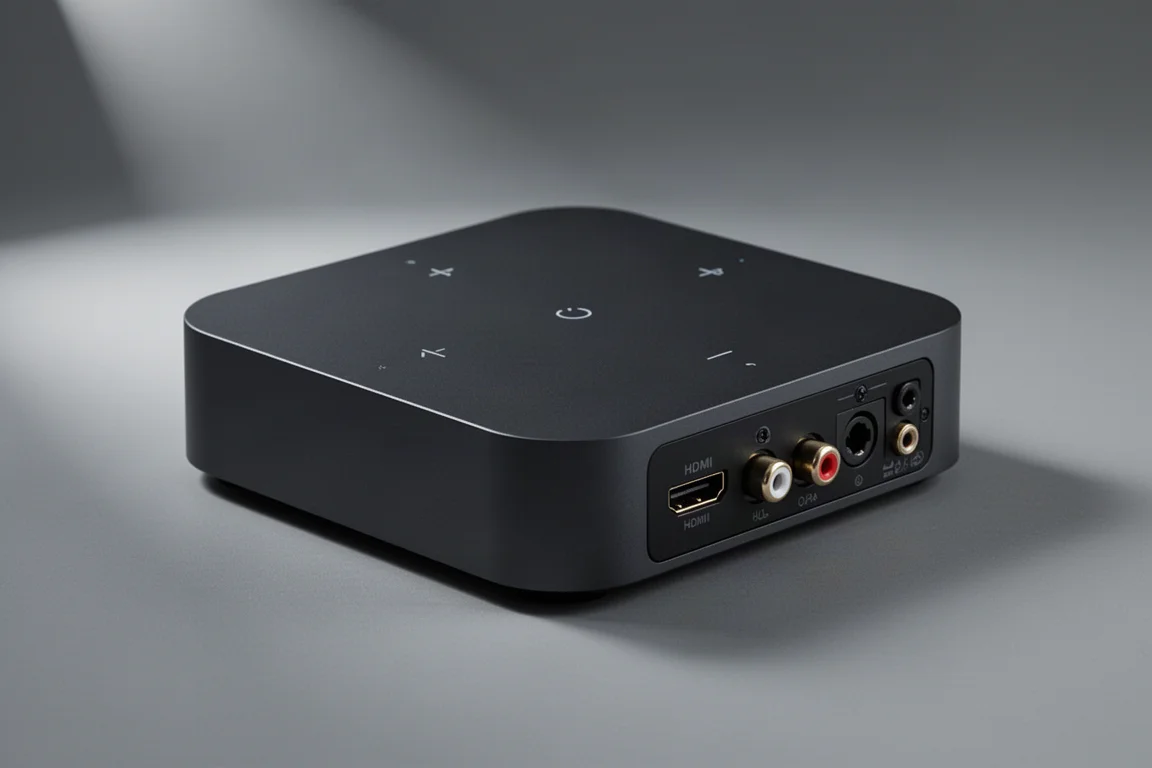
Around the back there are coaxial and Toslink digital outputs, a USB socket and analog RCA outputs fed by the internal DAC. Installing the Enhanced Digital Output applet enables that USB port to drive an external USB DAC, such as an AudioQuest Dragonfly. A headphone socket is present too.
Logitech Media Server and the Community Software Ecosystem
The hardware is only half the story. The Squeezebox Touch pairs with server software running on a PC, a Mac, a Linux machine or a Raspberry Pi. Logitech Media Server, once called Squeezebox Server and briefly SqueezeCenter, is now community developed. It is still available to download and still receives small updates, which is remarkable for a platform whose commercial parent stepped away in 2012.
Logitech does still maintain the mysqueezebox.com site, which is required for Tidal integration. Setting that up takes some patience, but it is a one-time task.
The plugin system is where the platform shows its flexibility. Plugins add SoundCloud, Mixcloud and SomaFM radio stations, and the Material skin plugin transforms the web interface. Plugins also let the media server send audio to Chromecast and AirPlay devices, so a Google TV, an Nvidia Shield Pro or an Apple TV can behave much like a Squeezebox endpoint. Roon server can also stream to a Squeezebox Touch, though Roon 2.0 requires an active internet connection.
That last point matters for local libraries. Streaming files stored on your own network through Logitech Media Server does not require an active internet connection, which makes the platform a genuinely useful fallback when a connection drops.
There is also Squeezelite, software that emulates the streaming endpoint function of a Squeezebox Touch. It can be installed on a Raspberry Pi, or on the same machine running the media server, which produces a small all-in-one streamer without hunting for used hardware.
Bluesound Node N130: A Modern Alternative
The Bluesound Node N130 dates from 2021 and is the more conventional purchase today: current production, active manufacturer support, and analog outputs that many listeners find warm and organic. It also includes a two-way Bluetooth headphone socket, a convenience the Squeezebox Touch does not match in the same form.
For listeners who want a single modern box with a company standing behind it, the Node is the simpler recommendation. Its analog output stage gives it a slightly fuller character, which suits material with plenty of texture and grit.
Sound Comparison: Subtle Differences, Not a Night and Day Gap
Comparing the Squeezebox Touch through its analog outputs against the Node N130 through its analog outputs produces a much smaller difference than the age gap would suggest. There is no night and day gap here, and not even a large audiophile gap to magnify.
The Squeezebox Touch carries a slight metallic sheen in the upper frequencies, which can help perceived detail retrieval and layer separation by a small amount. The Node N130 sounds a little warmer and a little more organic, which makes it a comfortable match for music with a rough-edged, characterful vocal or a dense acoustic arrangement. Electronic music tends to flatter the leaner top end of the Squeezebox Touch.
The honest summary is that the difference is tiny, on the order of half a percent in practical listening terms. Moving from a modern streamer to a discontinued 2010 model is not a step back into a dark age of digital audio.
Streaming Services, Gapless Playback, and Local Files
The Squeezebox platform covers most of the services people actually use: Spotify Connect, Tidal, Qobuz, Deezer, SoundCloud, Mixcloud and internet radio. Some arrive through plugins, and Tidal requires the mysqueezebox.com setup. Spotify Connect was part of the platform early on, while Qobuz arrived later as a plugin.
Searching Tidal through the web interface is basic but quick, particularly with the Material skin installed. The bigger question for most listeners is gapless playback: local file playback is gapless, and Tidal playback is gapless as well. Qobuz and Deezer have not been confirmed in the same way, though there is little reason to expect gaps.
One limitation is worth noting. The Squeezebox Touch can act as its own server, but it struggles to scan and process a large library. A separate server machine is the better arrangement for a serious collection.
What to Check Before Buying Second-Hand
Because production ended in 2012, any Squeezebox Touch is a used purchase. A worldwide second-hand search returns a healthy number of listings, with examples priced between roughly $100 and $250 depending on condition.
Check the remote if one is included, since leaking batteries are a common problem in units that have sat in storage for years. The remote is optional in practice, because the touch screen, smartphone apps and web interface all work as controllers.
The condition of the touch screen matters most, since it is the part that cannot easily be replaced. Beyond that, the software setup is the real project: assembling the plugins, installing the Material skin and arranging the layout can take a couple of hours. That is a one-off cost, and the server software itself is a free download.
Buying Advice: Which Streamer Makes Sense for You
For buyers who want a current product with manufacturer support, the Bluesound Node N130 is the straightforward choice. It is in production, it offers a warm analog output, and it includes a two-way Bluetooth headphone socket.
The Squeezebox Touch makes sense for a different kind of buyer: someone who wants a capable streamer at a low second-hand price, does not mind a setup session, and values a system that can run entirely on a local network. Its ecosystem also stretches further than one box, since the same server can feed Chromecast and AirPlay devices, and Squeezelite can turn a Raspberry Pi or an older computer into another endpoint for nothing beyond the hardware itself.
Conclusion
The Squeezebox Touch makes a strong case that current streaming hardware is not automatically better than hardware from 2010. Its software platform still covers most major services, still handles gapless local playback, and still works without an internet connection. The Bluesound Node N130 remains the easier modern purchase, with warmer analog output and active support behind it. Both are valid choices, and the right one comes down to whether you want current production or a cheap, flexible, community-maintained system.
Further reading
Related Reviews
Network Streamers
Cambridge Audio MXN10 vs WiiM Ultra: Two Network Streamers Compared
A side-by-side look at the Cambridge Audio MXN10 and the WiiM Ultra, covering sound character, streaming features, connectivity, and which kind of system each streamer suits.
Network Streamers
EverSolo DMP-A8 Review: A Higher-End Streaming Deck and Preamplifier
A closer look at the EverSolo DMP-A8, a streaming deck and preamplifier with AKM DAC chips, a linear power supply for the audio circuit, HDMI ARC, an analog input, and a parametric EQ.
Network Streamers
FiiO R7 vs Bluesound Node X: Two Network Streamers, Two Very Different Approaches
A practical comparison of the FiiO R7 and the Bluesound Node X, covering app support, connectivity, headphone output and the small sound quality differences that decide between them.