Network Streamers
FiiO R7 vs Bluesound Node X: Two Network Streamers, Two Very Different Approaches
A practical comparison of the FiiO R7 and the Bluesound Node X, covering app support, connectivity, headphone output and the small sound quality differences that decide between them.
Introduction
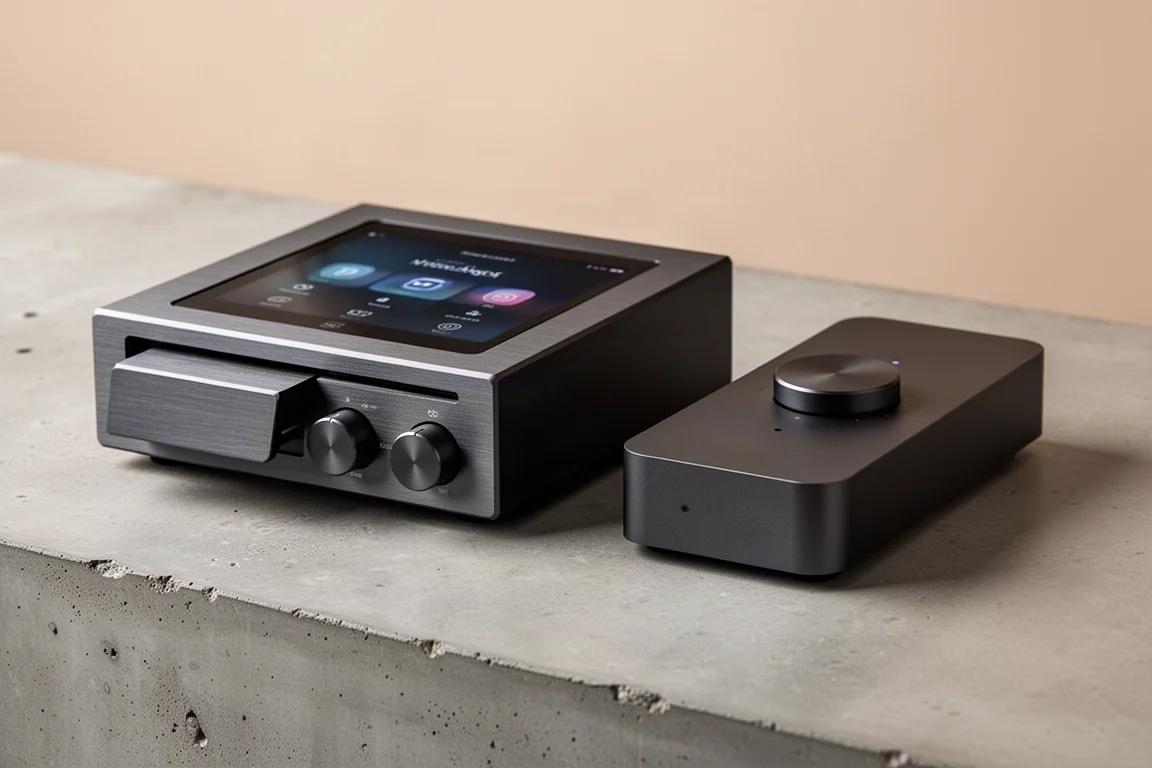
Two network streamers, two very different philosophies. The FiiO R7 is built on a trimmed-down Android foundation with a colour touch screen on the front, while the Bluesound Node X takes a quieter, more conventional route as a streaming DAC. Both can sit at the centre of a full-size hi-fi system, both can drive headphones directly, and both can feed a power amplifier or active speakers.
The decision between them comes down to connectivity and control rather than raw sound quality, because the two are far closer in character than their designs suggest. This comparison walks through what each one does well, where each one falls short, and which type of system each is built for.
What the FiiO R7 and Bluesound Node X Have in Common
Both units are network streamers that double as streaming DACs, and both are designed to slot into a proper hi-fi rack rather than to live on a desk as a portable player. They also share a notable piece of engineering: each uses a THX AAA headphone amplifier circuit, although they are not the same board. FiiO uses a more powerful off-the-shelf module that carries both the headphone output driver and its own power supply section on the same board, while Bluesound chose a less powerful THX AAA board and built a separate power supply around it.
Tonal balance between the two is more similar than different. Anyone moving from one to the other should expect a family resemblance rather than a dramatic change of character, with the real differences showing up in specific areas: bass weight, treble air, output power and connectivity.
The practical gaps start to matter once you look at what each box can connect to and how it is controlled, and that is where these two streamers part company most clearly.
FiiO R7: An Android Streamer With a Touch Screen
The R7 is best understood as a touch screen network streamer with a powerful headphone amplifier built in. Its operating system is Android 10, trimmed back for audio use: no camera, no SIM slot, no phone call functions. It runs from mains power, and there is also a DC input on the rear for owners who want to experiment with third-party power supplies.
Because it runs Android, the R7 can reach the Google Play Store, which opens the door to installing streaming apps directly on the device. Spotify, SoundCloud, Tidal, Plexamp and Apple Music all run natively, so playback does not have to pass through AirPlay or Chromecast. A Roon Ready app is pre-installed for network playback, and the Roon remote app can be added from the Play Store for library browsing, so the R7 can handle both the playback side and the browsing side of a Roon setup.
Plexamp users get an unusual bonus: Plexamp on a smartphone can act as a controller for the R7’s own Plexamp instance, telling the Plex server what to send to the streamer. That works over both Wi-Fi and Ethernet. FiiO has kept the aerials internal, and because the platform is Android, Wi-Fi and Bluetooth can be switched off entirely when a wired-only setup is preferred. Local playback is covered by an SD card slot and a USB storage input on the rear, alongside FiiO’s own music playback app for files stored on those cards.
FiiO R7 Connectivity, Headphone Output, and Everyday Handling
One of the more technical points in the R7’s favour is how it handles sampling. Android normally resamples digital audio, but FiiO routes most app signals around that resampling stage, so most streams stay bit perfect in most cases. A DSD upsampling engine can be switched on or off from the drop-down menu for listeners who enjoy that softer presentation on certain recordings. The internal DAC is built around an ESS chip, and it can also be reached through the optical and coaxial inputs on the rear. If the internal DAC is not to your taste, it can be bypassed entirely and the signal sent out through the optical or coaxial outputs to an external converter.
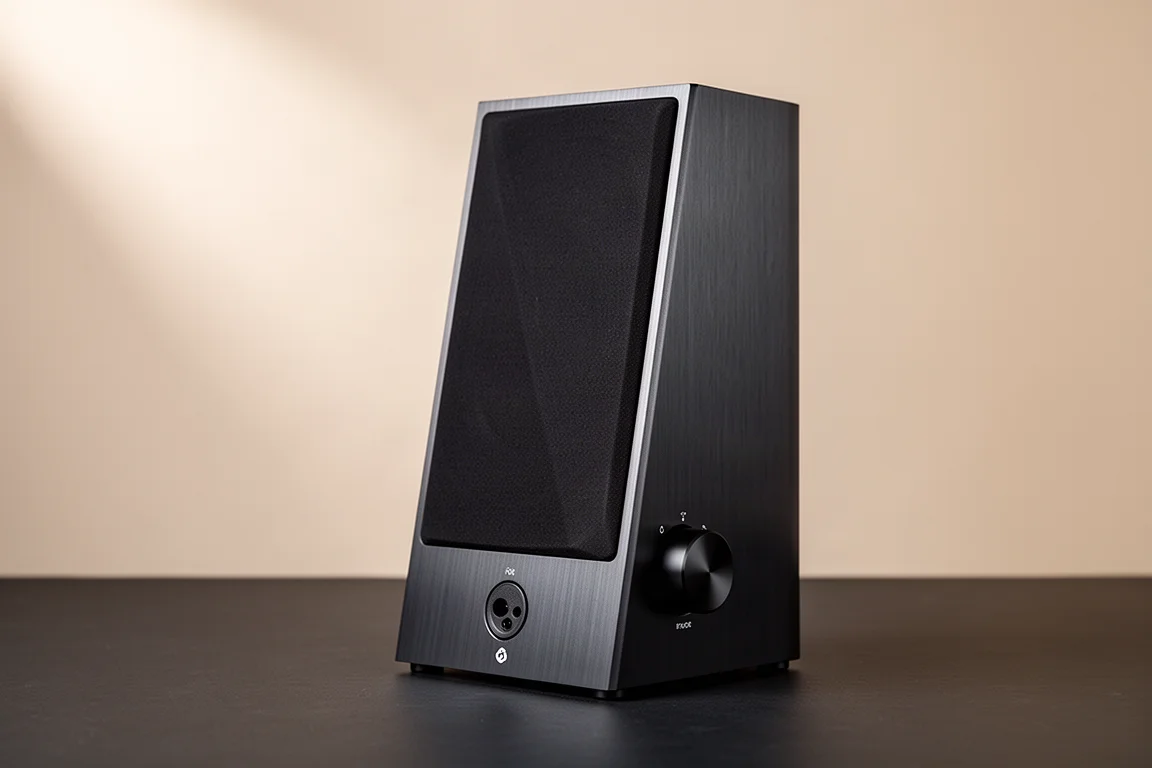
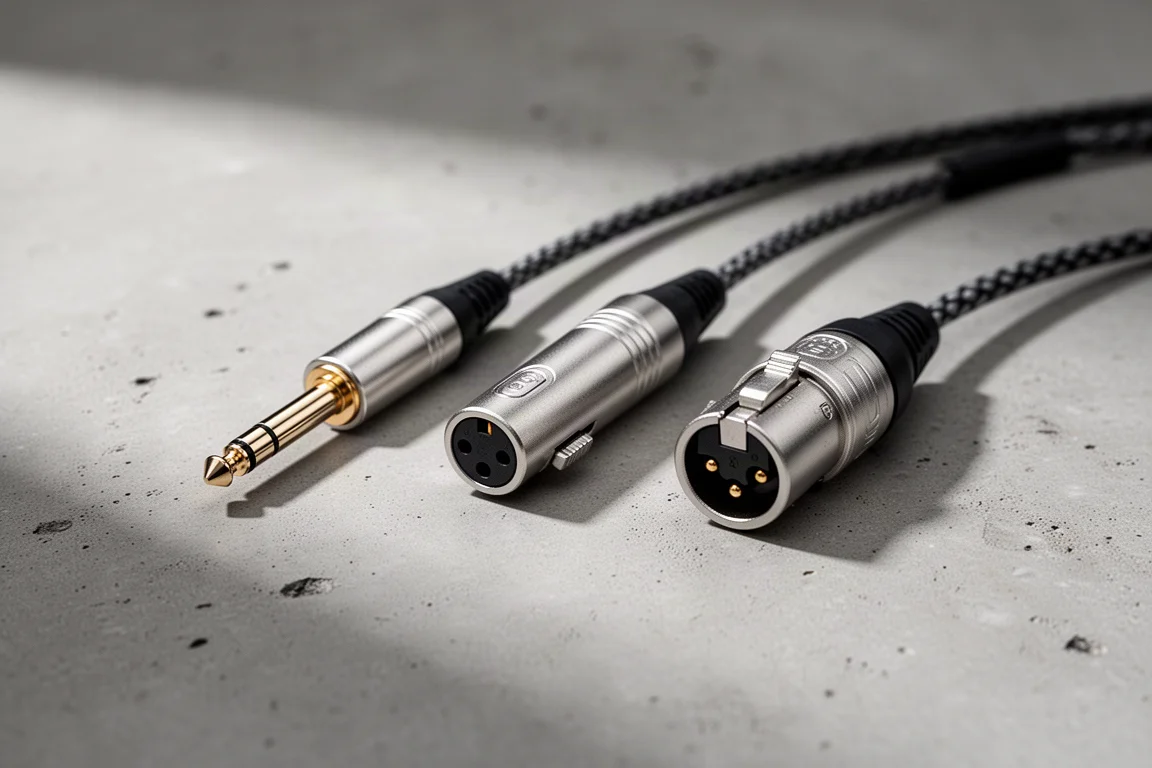
Analog outputs are generous. There are two pairs of single-ended RCA sockets and a set of balanced XLR outputs on the back, and three headphone connections behind the front cover: a quarter-inch single-ended socket, a balanced Pentaconn socket and a balanced XLR socket. The balanced headphone outputs deliver up to three watts into 32 ohms, and four gain levels are available inside the operating system, with the lowest setting intended for highly sensitive in-ear monitors where hiss would be obvious.
Volume control is handled consistently: sliders inside streaming apps, the on-screen display and the rotary on the side are all linked. A second rotary on the front switches between preamp mode, headphone mode, both at once, and a line out mode, and engaging line out triggers a confirmation warning before the level is passed on. There is 64 GB of internal storage for offline downloads, and apps need to be opened when you want to use them rather than running continuously in the background. Tidal Connect is not available here, since that feature applies to certified devices, so Tidal is used through its own app. The RM3 Bluetooth remote is a separate purchase rather than an included accessory, though it can scroll across home screen apps as separate panes and includes a mouse mode.
Bluesound Node X: A Streaming DAC With Subwoofer Output
The Node X approaches the same job from a different direction. It is a streaming DAC with a quarter-inch headphone socket on board and, importantly, a subwoofer output on the rear. That single connection matters for anyone running a two-channel system with a subwoofer, because it lets the sub be integrated without adding extra hardware. The FiiO R7 has no subwoofer output at all.
The Node X also uses a THX AAA headphone amplifier, but with a less powerful board than the FiiO, paired with a power supply Bluesound designed itself. It does not offer balanced XLR outputs, so a system that requires XLR connectivity points towards the FiiO instead. What the Node X does bring is a slightly airier treble presentation and a little more dynamic bounce.
Sound Quality Compared: FiiO R7 vs Bluesound Node X
Comparing the two as streaming DACs through the same system, the differences are subtle rather than sweeping. On a dense, bass-led track, the FiiO delivers fuller sounding bass guitar, while the Node X pulls percussion out more effectively and adds a little more air and dynamic bounce. That extra air also gives the Node X a touch more treble finesse, where the FiiO can occasionally sound a little stunted in the uppermost frequencies. Considered purely as a streaming DAC, the Node X edges ahead, but only just.
The picture shifts with headphones. Through its balanced outputs, the FiiO lends music more drive and forward momentum, with wider separation than the Node X manages from its quarter-inch socket. That is not a like-for-like comparison, since one output is balanced and the other is not, but it reflects the best each device can offer. Overall tonal balance between the two remains closer than those differences suggest.
Connectivity can settle the question faster than sound quality can. A system that requires XLR outputs has only one option here, and a system that needs a subwoofer output has only the other.
Headphone Pairing Notes and Practical Trade-offs
Headphone choice can tip the decision either way. With headphones that already carry plenty of bass weight and could use more sparkle at the top, the Node X is the more natural match. With headphones that are already bright and benefit from extra weight lower down, the FiiO R7 is the better partner, and it also adds more bass impact with sensitive multi-driver in-ears. Because the FiiO’s headphone stage is the more powerful of the two, it is the safer pick for hard-to-drive headphones.
Two practical omissions are worth noting on the FiiO side: there is no subwoofer output and no HDMI eARC input. The Node X covers the subwoofer connection, so anyone planning to run a sub should factor that in before choosing.
Buying Advice: Matching a Streamer to Your System
The FiiO R7 makes most sense for listeners who want a streamer that behaves like a phone. If you already keep memory cards for a portable player, or you want Apple Music running natively on the streamer with the option to download for offline playback, or you use Plexamp and want the streamer to act as a remote endpoint driven from your phone, the R7 covers all of that with a few taps. It is also the choice for anyone who needs balanced XLR outputs or a headphone amplifier with enough power for demanding headphones.
The Bluesound Node X suits a more conventional two-channel setup: a streaming DAC with a subwoofer output, a simpler control surface and a slightly more open top end. If your speakers or headphones already lean bright and you want a calmer balance, the FiiO’s fuller low end may be the better fit. If your system needs that last bit of treble air plus a subwoofer connection, the Node X is the more straightforward answer.
Both are capable streamers with genuinely different priorities, and neither is a compromise pick. The deciding factors are the connections your system needs and the way you prefer to control playback.
Conclusion
The FiiO R7 and the Bluesound Node X solve the same problem from opposite ends. The R7 is the more flexible machine, with native streaming apps, offline downloads, local storage options, balanced XLR outputs and a headphone amplifier that will drive almost anything. The Node X is the more focused one, with a subwoofer output, a cleaner top end and a simpler way of working.
If your system demands XLR connectivity, or you want to run streaming apps directly on the streamer and control Plexamp from your phone, the FiiO R7 is the obvious pick. If you run a subwoofer, prefer a lighter treble touch and want a straightforward streaming DAC, the Bluesound Node X is the easier recommendation. Either way, matching the box to the connections you actually use will matter more than the last degree of sonic difference.
Further reading
Related Reviews
Network Streamers
Cambridge Audio MXN10 vs WiiM Ultra: Two Network Streamers Compared
A side-by-side look at the Cambridge Audio MXN10 and the WiiM Ultra, covering sound character, streaming features, connectivity, and which kind of system each streamer suits.
Network Streamers
EverSolo DMP-A8 Review: A Higher-End Streaming Deck and Preamplifier
A closer look at the EverSolo DMP-A8, a streaming deck and preamplifier with AKM DAC chips, a linear power supply for the audio circuit, HDMI ARC, an analog input, and a parametric EQ.
Network Streamers
FiiO SR11 Review: The Best-Value Entry-Level Network Streamer
A close look at the FiiO SR11, a roughly $100 network streamer with Ethernet, Roon Ready certification, a front-panel sample rate display and a volume-controllable USB output.