Network Streamers
Cambridge Audio MXN10 vs WiiM Ultra: Two Network Streamers Compared
A side-by-side look at the Cambridge Audio MXN10 and the WiiM Ultra, covering sound character, streaming features, connectivity, and which kind of system each streamer suits.
Introduction
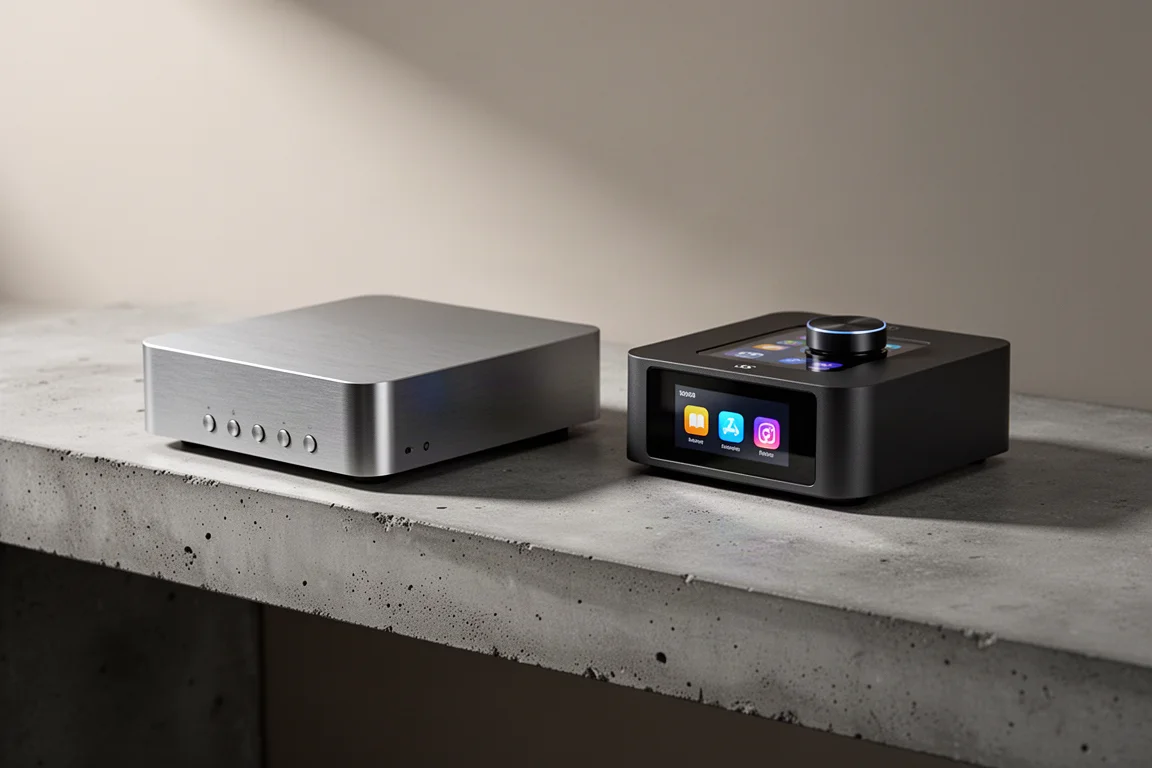
Two network streamers, one similar price point, and two very different ideas about what a streamer should be. The Cambridge Audio MXN10 sells for around €400 and keeps things deliberately simple. The WiiM Ultra sits at a comparable price and carries a far longer feature list. Choosing between them comes down to how much flexibility your system needs and how each one actually sounds.
This comparison covers what each streamer offers, how they behave day to day, and the sound differences heard during level-matched listening on a high-end system with floorstanding speakers and an integrated amplifier.
How These Two Streamers Compare
Both units do the same core job: pull music from a network and feed it to an amplifier. From there the two designs diverge sharply.
The Cambridge Audio MXN10 is the minimalist. Its front panel carries four click buttons that give one-press access to favourite playlists or internet radio stations, and the StreamMagic app handles control. It supports Apple AirPlay 2, Spotify Connect, Tidal Connect, Roon Ready and Google Cast. A USB-A socket on the back allows playback from directly attached storage, and the analogue outputs are driven by a DAC circuit built around an ESS Sabre ES9033Q chip. Optical and coaxial digital outputs are there for owners of outboard DACs, but there are no optical or coaxial inputs.
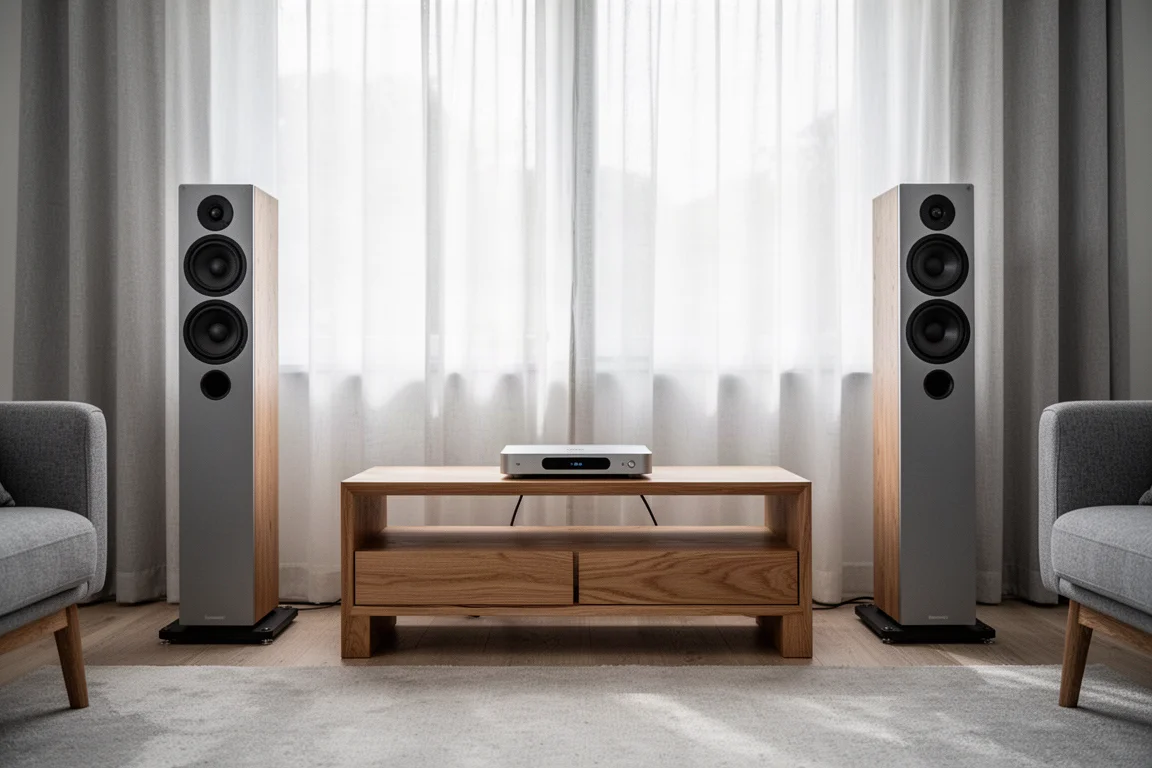
The WiiM Ultra goes the other way entirely. It adds HDMI ARC, a USB DAC output, an optical input and a coaxial input, touchscreen control with preset access, a volume and click wheel, and preamplifier functionality. It also offers a subwoofer output with bass management, room correction through a parametric EQ, and Squeezelite support, with Plexamp support indicated as a future addition. Its DAC circuit is built around an ESS 9038Q2M chip.
On paper, the feature count tilts heavily toward the WiiM Ultra. Whether that matters depends on what the rest of your system already does.
Cambridge Audio MXN10: Sound First, Features Second
Living with the MXN10 is refreshingly uneventful. Music arrives over Ethernet or Wi-Fi, and the screw-on aerial has proved robust in practice, with no dropouts or drop-offs during more than a week of solid use. Those four front panel buttons put a favourite internet radio station a single click away, which is genuinely useful on evenings when you would rather be told what to listen to.
The appeal is the restraint. There are no inputs to configure, no display to scroll through and no menus to learn. Google Cast support makes light work of services that other streamers handle awkwardly, and the StreamMagic app covers the essentials without getting in the way.
The trade-off is scope. If your system needs HDMI ARC, a digital input for a television or console, or a subwoofer output with bass management, this is not the streamer that provides it.
WiiM Ultra: Features, Inputs, and Flexibility
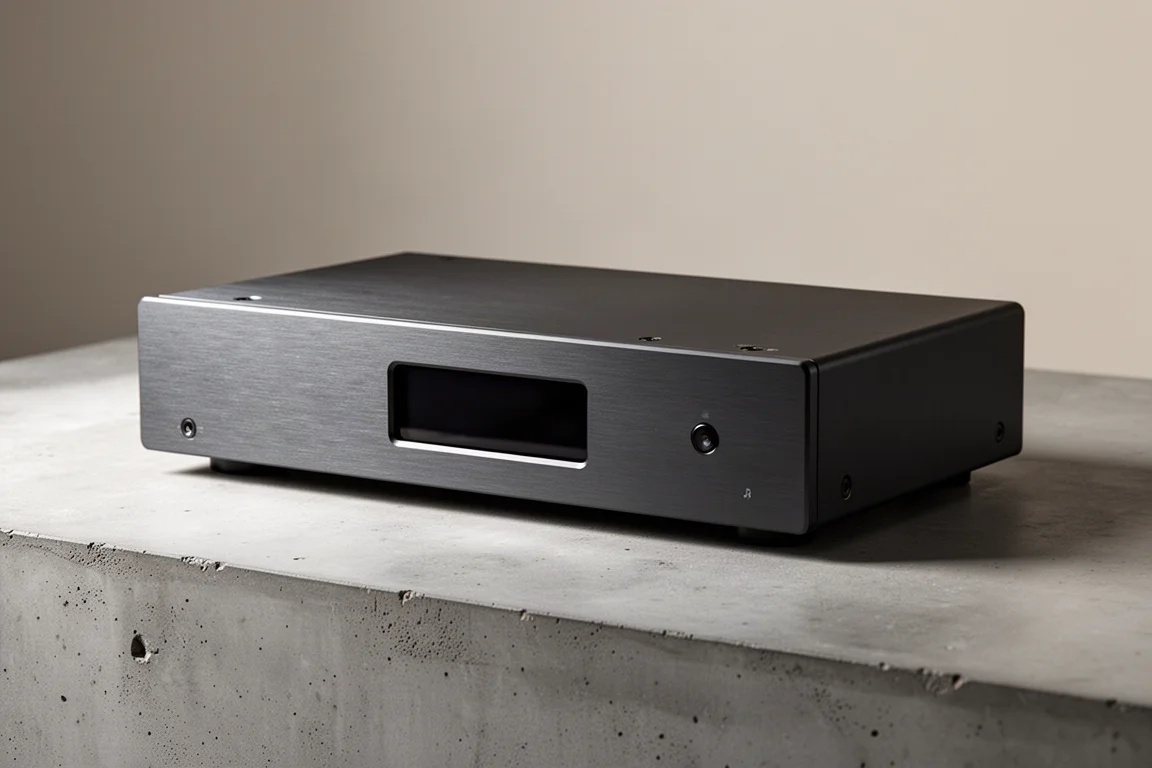
Set the WiiM Ultra next to the MXN10 and the Cambridge unit can look functionally bare. The Ultra covers HDMI ARC, optical and coaxial inputs, a USB DAC output, touchscreen control with presets, a volume and click wheel, preamplifier functionality, a subwoofer output with bass management, and room correction through a parametric EQ. Squeezelite is supported, and Plexamp support has been signalled for the future.
That breadth changes what the device can be. A single Ultra can sit at the centre of a system that includes a television, a games console and a powered subwoofer, and the parametric EQ gives you a way to address room problems without adding hardware. It is a genuinely different proposition from a simple network bridge.
The cost of all that capability is complexity. There are more settings, more menus and more ways to tune the sound, and the DAC filter options alone can keep a curious owner occupied for an evening.
Sound Quality: What the Listening Notes Showed
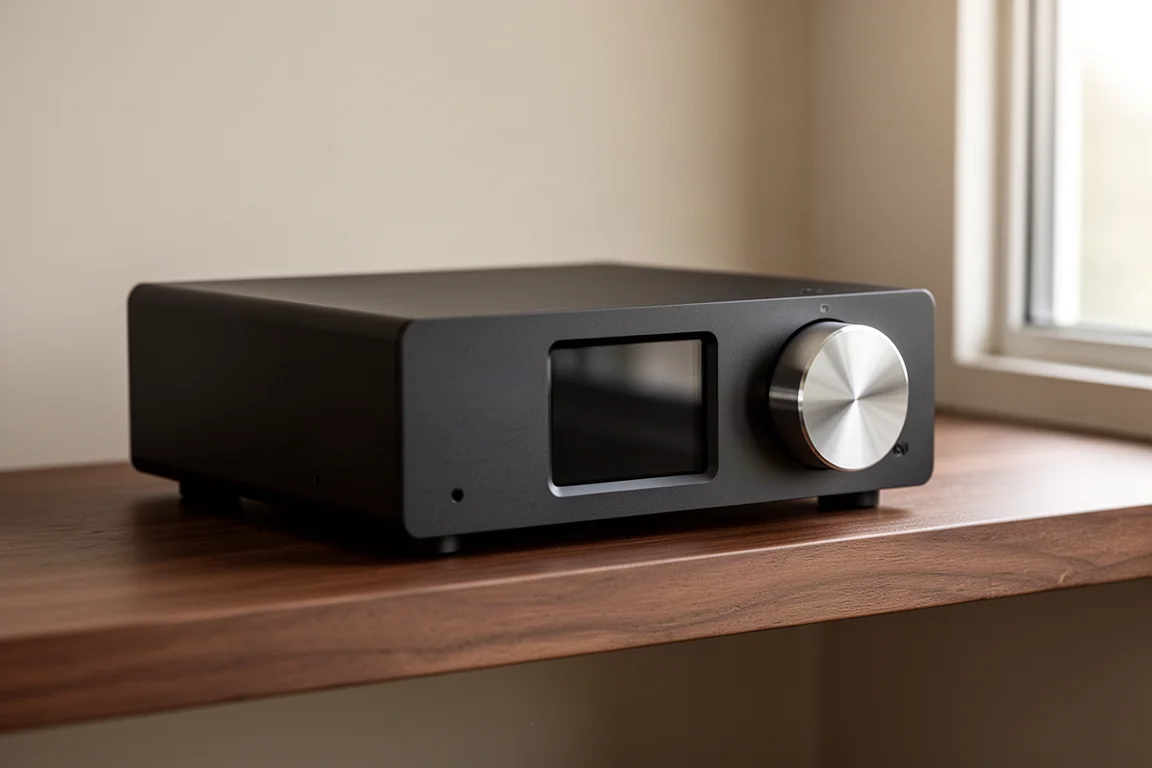
Feature lists do not tell you how a streamer sounds, and this is where the MXN10 makes its case. The two units were compared at matched levels across about a week of alternating listening on a high-end system, and the differences, while not dramatic, were consistent.
On low-end material, the MXN10 produced a bassline that sounded fuller and fleshier than the WiiM Ultra managed. On an Oasis album track that can turn unpleasant on weaker hardware, the Cambridge unit kept the recording just on the right side of listenable, while the Ultra’s treble could tip into harshness and invite a nudge of the volume control downwards. A rhythm guitar part on a Shades of Blue EP cut sounded more gossamer through the WiiM, and cymbals on American Music Club’s Mercury came across drier and more papery. Talk Talk’s New Grass showed the same pattern, with the WiiM’s cymbal shimmer sounding lighter.
Where the WiiM Ultra pulls ahead is with deliberately clinical material. Its lighter, airier treble suits dense, ultra-clinical electronic music better than the Cambridge presentation does. Across most other material, though, the MXN10 sounded more substantial and more liquid, with what amounts to a lower centre of musical gravity. The margin is not huge, but it is audible and repeatable.
It is worth remembering that a DAC chip is only one ingredient in a circuit. The power supply and the analogue output stage shape the sound just as much, so comparing DAC chips on a spec sheet tells you very little about what you will hear.
Controls, Apps, and Daily Use
Daily use is where the two philosophies show up most clearly. The MXN10’s four front panel buttons are a small thing that turns out to matter: one press and a favourite station or playlist is playing. The StreamMagic app handles setup and browsing, and Google Cast support means services that rely on casting are a click away rather than a workaround.
The MXN10 also fits neatly into a Roon setup. Files stored on a computer elsewhere in the house can be served to the streamer over the network, with a phone or tablet acting as the remote, and now-playing information can be pushed to a television through a separate app. None of that requires local storage on the streamer, although the rear USB-A socket is there if you prefer a directly attached drive.
The WiiM Ultra puts more control on the device itself. The touchscreen gives access to presets without reaching for a phone, and the volume and click wheel makes the unit usable as a preamplifier. Room correction and subwoofer bass management are configured once and then largely forgotten, which is the right way round for features like those.
Buying Advice: Matching the Streamer to Your System
Start with what your system already has. If you need HDMI ARC to bring television audio into the hi-fi, digital inputs for a disc player or console, a subwoofer output with bass management, or room correction, the WiiM Ultra covers those needs out of the box and the MXN10 does not. For a system built around a television or a powered subwoofer, that settles the question quickly.
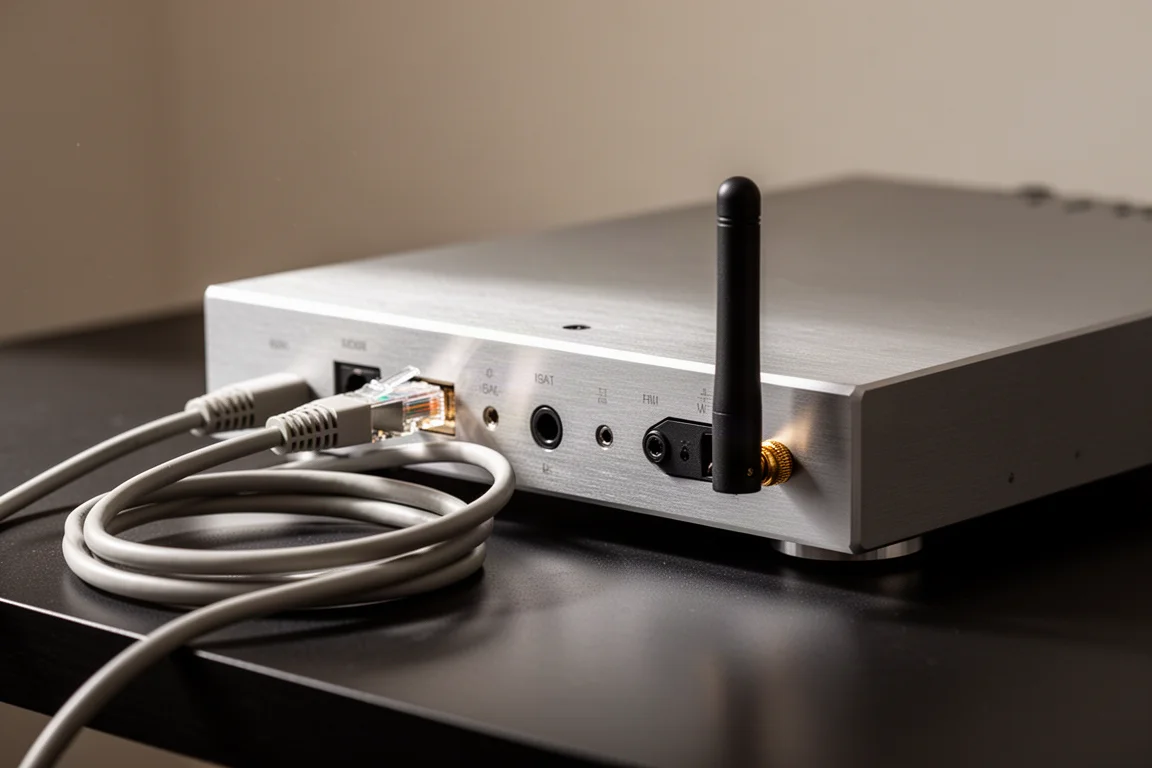
If your amplification already handles input switching, subwoofer integration and room correction, the feature gap matters far less, and the decision comes down to sound and simplicity. On that basis the MXN10 has the edge, with a fuller low end and a more organic overall presentation that suits a wide range of recordings.
Tonal matching is worth thinking about too. The WiiM Ultra’s lighter, airier treble can sound slightly thin on some material, and it benefits from a richer sounding amplifier to balance it out. The MXN10’s tonal balance is easier to live with across different systems, which reduces the risk of an unhappy pairing.
Who Each Streamer Suits Best
Choose the Cambridge Audio MXN10 if you want a streamer that disappears into the system: no screen, no menus, four preset buttons, and a sound that favours body and texture over air and sparkle. It is the better fit for listeners whose amplifier already does the heavy lifting.
Choose the WiiM Ultra if connectivity is the priority. HDMI ARC, optical and coaxial inputs, a USB DAC output, a touchscreen, preamplifier functionality, subwoofer bass management and parametric EQ room correction make it a hub rather than a bridge, and its treble-forward character is a good match for clinical electronic music and for systems that need a little extra light.
Practical Considerations Before You Buy
Two practical points are worth checking before you commit. First, the MXN10 has no optical or coaxial inputs, so anything you plan to feed in digitally will need to connect elsewhere in the chain. Second, the WiiM Ultra’s flexibility comes with a longer setup: room correction, subwoofer integration and DAC filter options all reward a little patience.
Neither unit is difficult to live with day to day. The MXN10 has proved stable over Ethernet and Wi-Fi, with no dropouts during extended use, while the WiiM Ultra’s extra inputs mean fewer boxes and cables elsewhere in the rack. Both approaches save space in their own way.
Finally, resist the temptation to buy on DAC chip alone. The chip is one part of a circuit, and the power supply and analogue output stage have just as much influence on the sound you end up hearing.
Conclusion
These two streamers are strong at their price, and the right choice depends on the system around them. The Cambridge Audio MXN10 wins on sound and simplicity, with a fuller low end and a more organic presentation that is easy to pair with a wide range of amplifiers. The WiiM Ultra wins on capability, with the inputs, room correction and preamplifier features that make it the centre of a modern system.
If you need the connections, buy the Ultra. If you need the sound and want fewer decisions, buy the MXN10.
Further reading
Related Reviews
Network Streamers
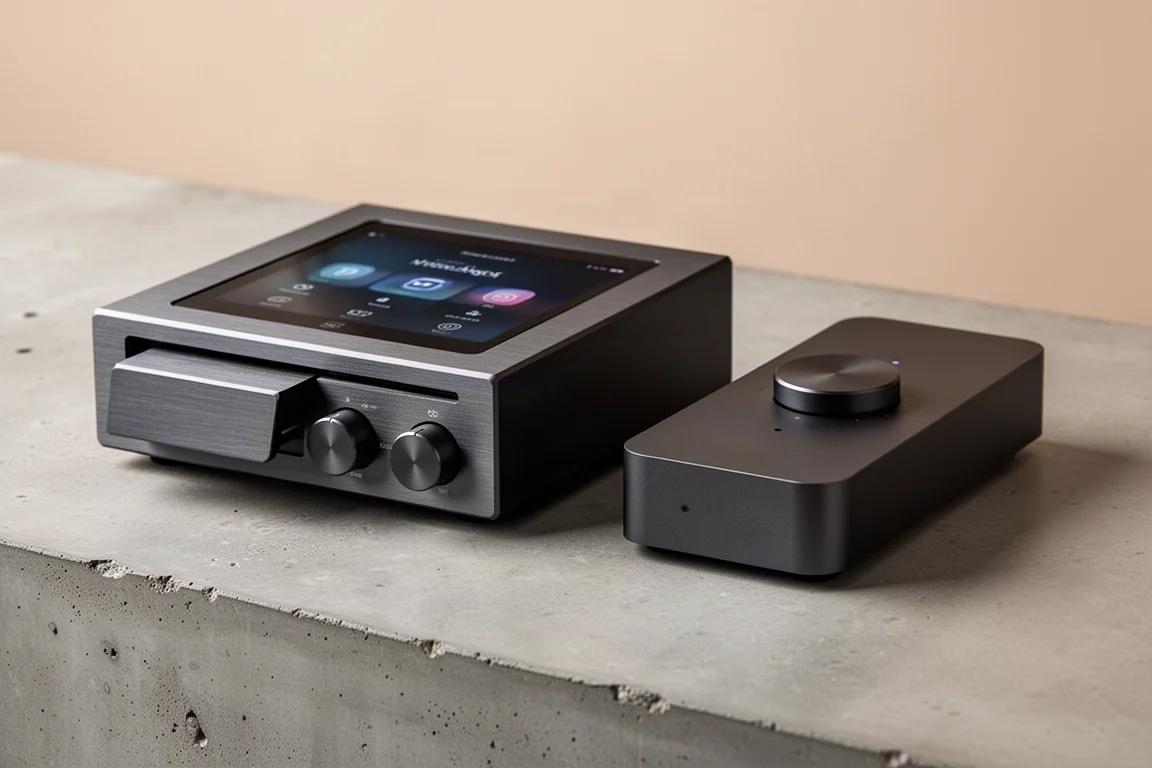
EverSolo DMP-A8 Review: A Higher-End Streaming Deck and Preamplifier
A closer look at the EverSolo DMP-A8, a streaming deck and preamplifier with AKM DAC chips, a linear power supply for the audio circuit, HDMI ARC, an analog input, and a parametric EQ.
Network Streamers
FiiO R7 vs Bluesound Node X: Two Network Streamers, Two Very Different Approaches
A practical comparison of the FiiO R7 and the Bluesound Node X, covering app support, connectivity, headphone output and the small sound quality differences that decide between them.
Network Streamers
FiiO SR11 Review: The Best-Value Entry-Level Network Streamer
A close look at the FiiO SR11, a roughly $100 network streamer with Ethernet, Roon Ready certification, a front-panel sample rate display and a volume-controllable USB output.