Home Theater
Living Room Home Theater Build: Three System Paths From Reference to Budget
A living room that was never designed for a theater, rebuilt around a 5.2.2 Dolby Atmos plan at three price points without changing the layout or the look.
Introduction
Some rooms get to be one thing. A dedicated theater with dark walls and a rack of equipment is a genuine luxury, and most homes simply do not work that way. The living room has to host a movie night, a dinner party, and a quiet Sunday morning in the same square footage.
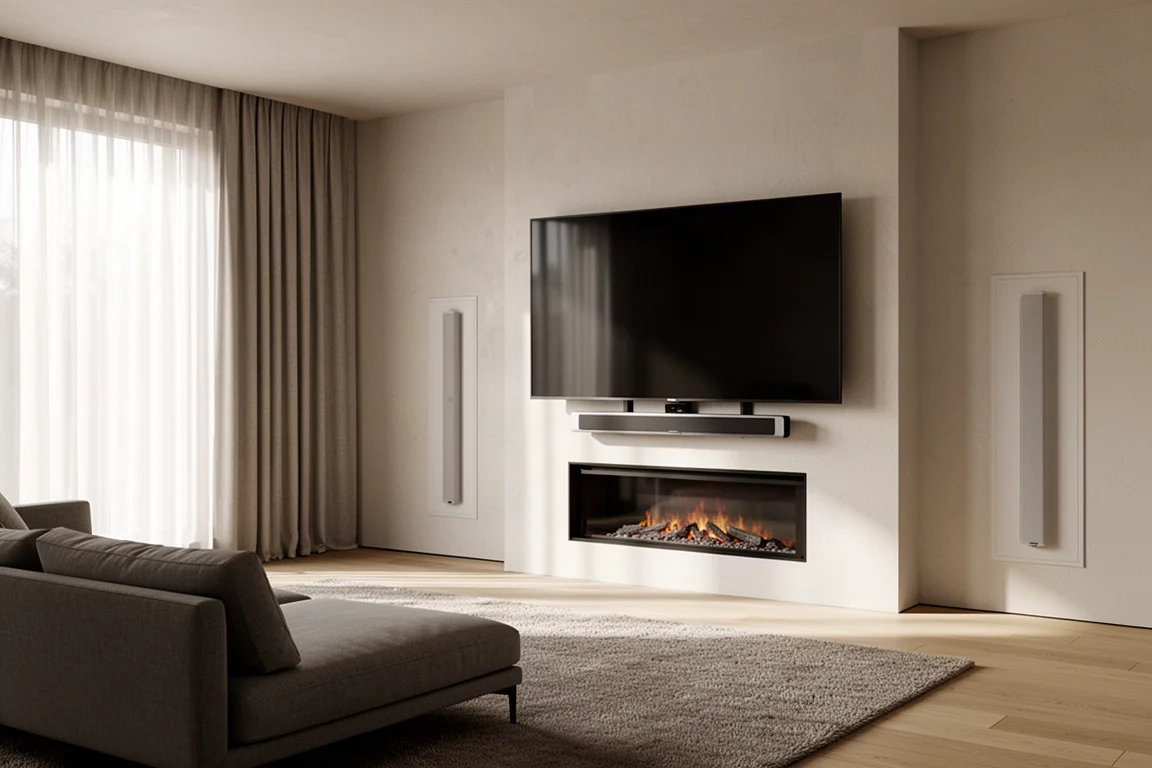
This build starts with a real living room and works toward something close to reference performance without moving the furniture, without changing the layout, and without letting the technology take over the design. The target is a 5.2.2 Dolby Atmos system that disappears into the room whenever it is not in use.
Three complete paths follow: a reference system, an enthusiast system, and a budget-friendly system. Each one solves the same problems, and each one costs dramatically less than the one above it.
Planning Around the Room You Already Have
The core space measures roughly 19 by 25 feet, and one side opens into the rest of the house, which pushes the effective width closer to 30 or even 40 feet. Open plans like this are common, and they are also difficult rooms for audio. Nothing is being moved or swapped for theater seating. Everything has to hide in plain sight.
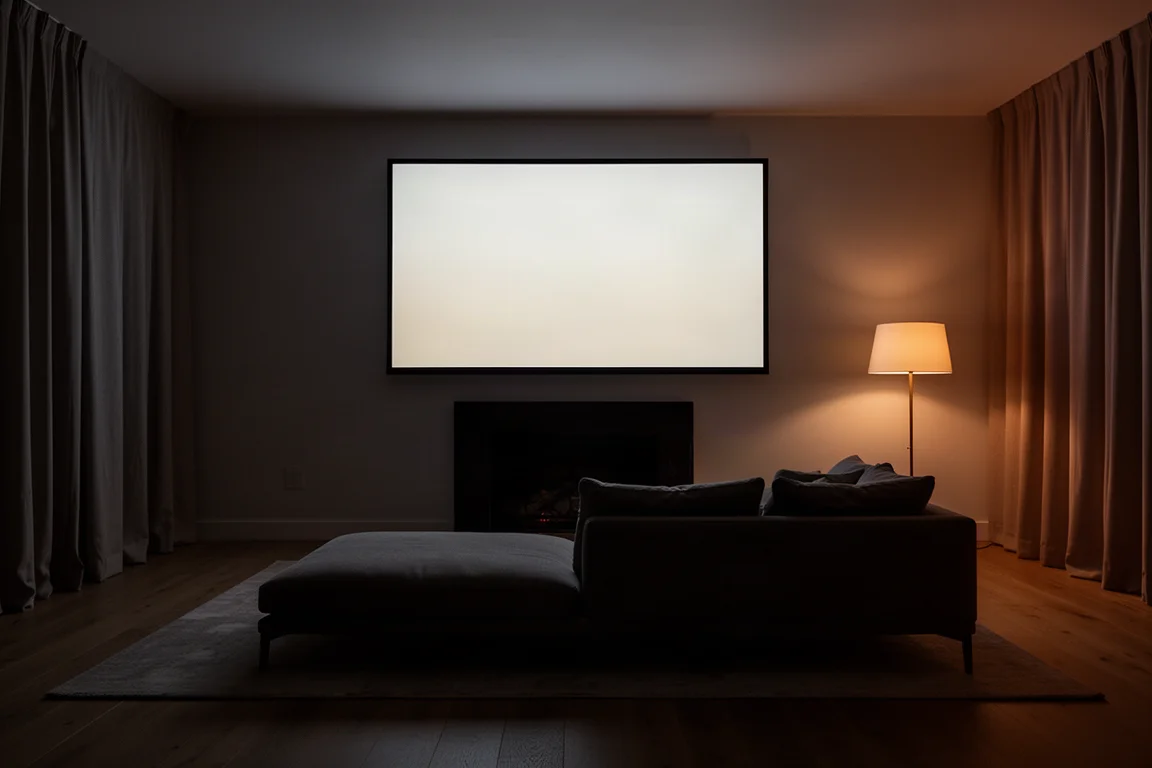
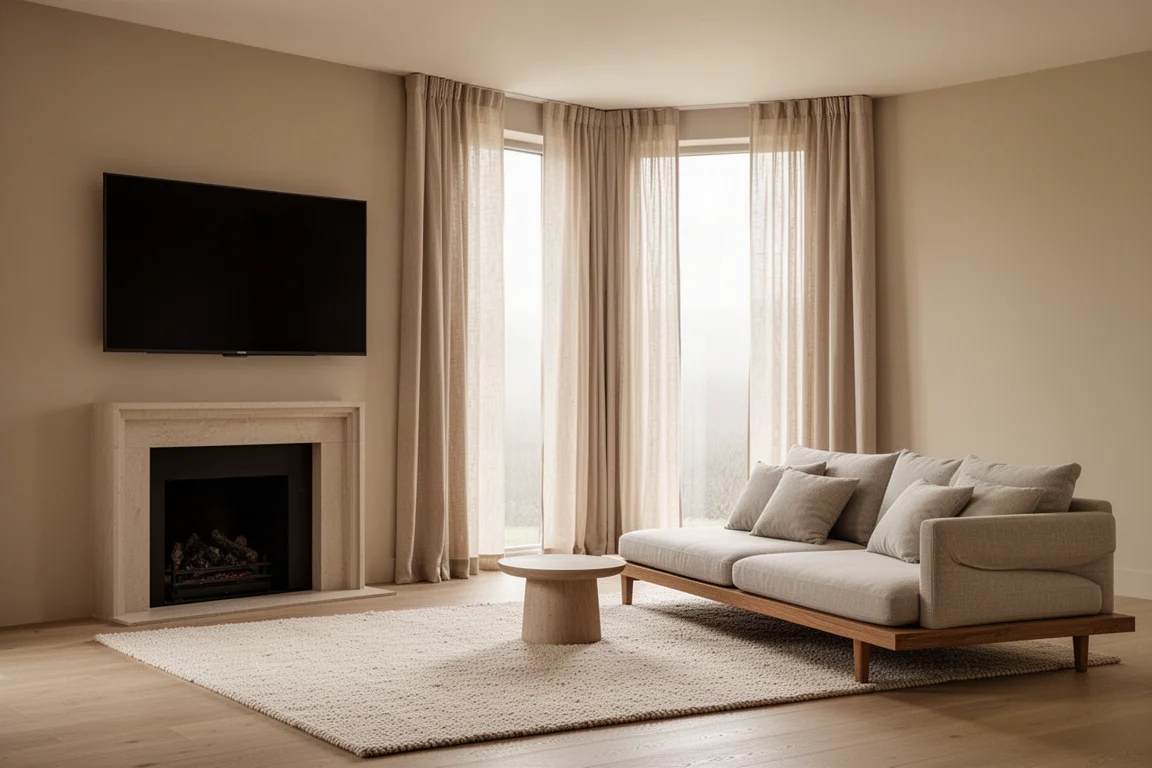
The windows stay, so lined floor-to-ceiling curtains go up on a motorized track. They control light, reduce reflections, and shorten decay time, which is how long sound lingers in a room. In a highly reflective space, dialogue blurs together, treble sounds brighter than it should, and long listening sessions become fatiguing.
Curtains do very little for bass, which needs something more substantial. Three floor-to-ceiling fabric-wrapped traps, hidden behind the curtains, control low frequencies and bring decay time down to around half a second, a strong result for a space this open. The room will not sound dead, but dialogue should be clearer and bass should feel tighter and more controlled.
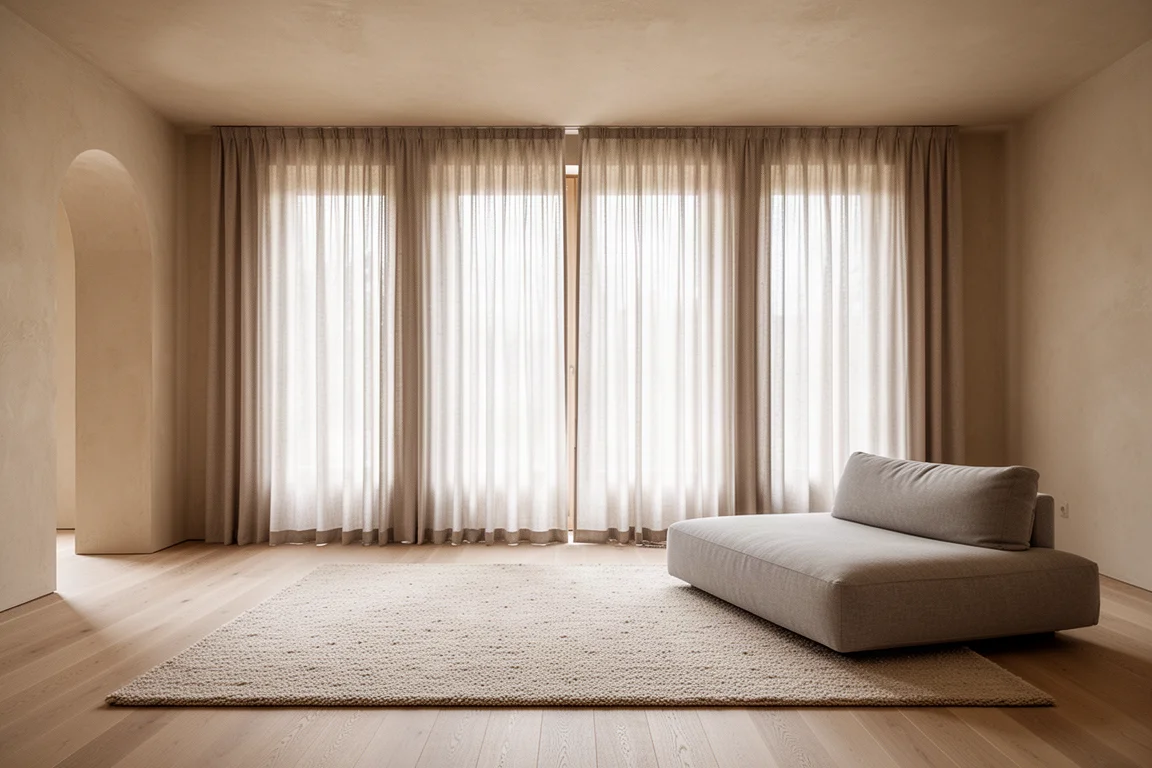
Basic modeling and measurement tools get you close, though photographs alone cannot predict a room perfectly. The corner traps also earn their keep by providing a 45-degree mounting surface for the surround speakers, which keeps those speakers out of the sightline and out of the furniture plan.
The Display: TCL QM8L on a Motorized Mantel Mount
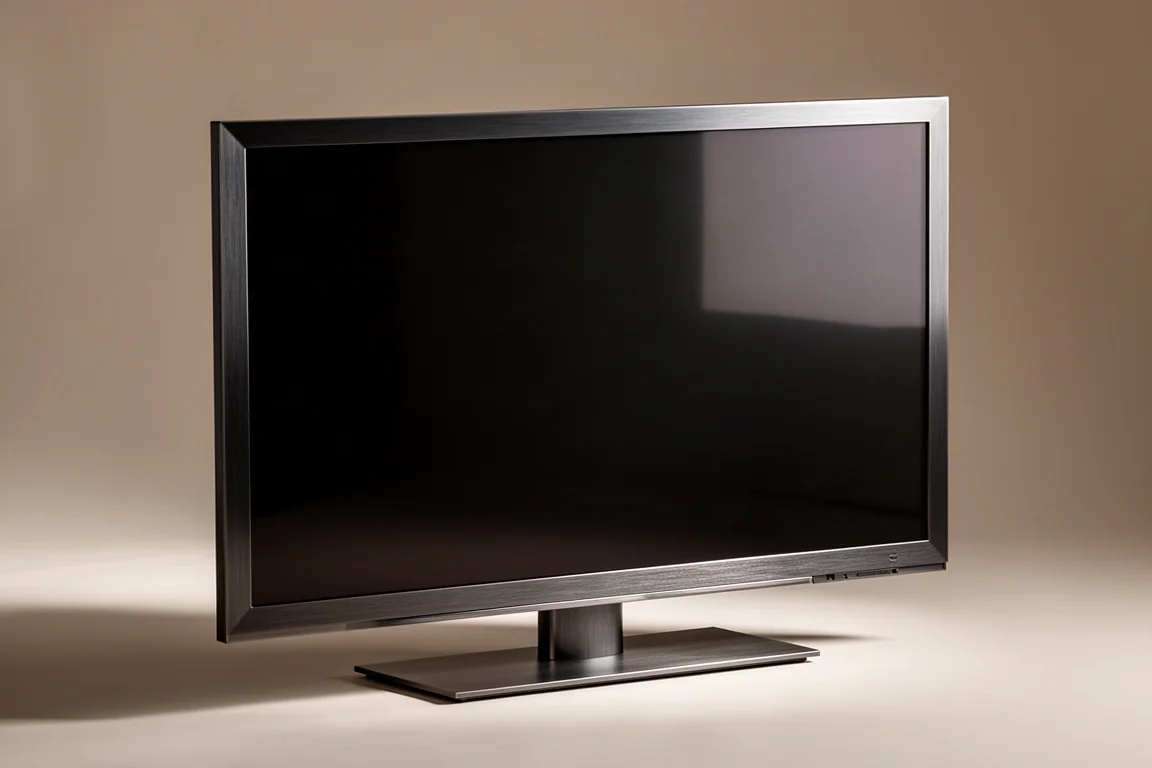
The room already had a television, and it was mounted far too high above the fireplace. Its matte finish and picture-frame styling are genuinely appealing, but it is expensive for what it delivers. The replacement is an 85-inch TCL QM8L on a motorized mantel mount that lowers the screen to a proper viewing height and sends it back up above the fireplace when the room returns to being a living room.
A drop-down projection screen in front of the television is technically possible, but it means adding a projector overhead, and at that point the room starts being fought rather than worked with.
Reference Left, Center, and Right: Wisdom Audio L8i
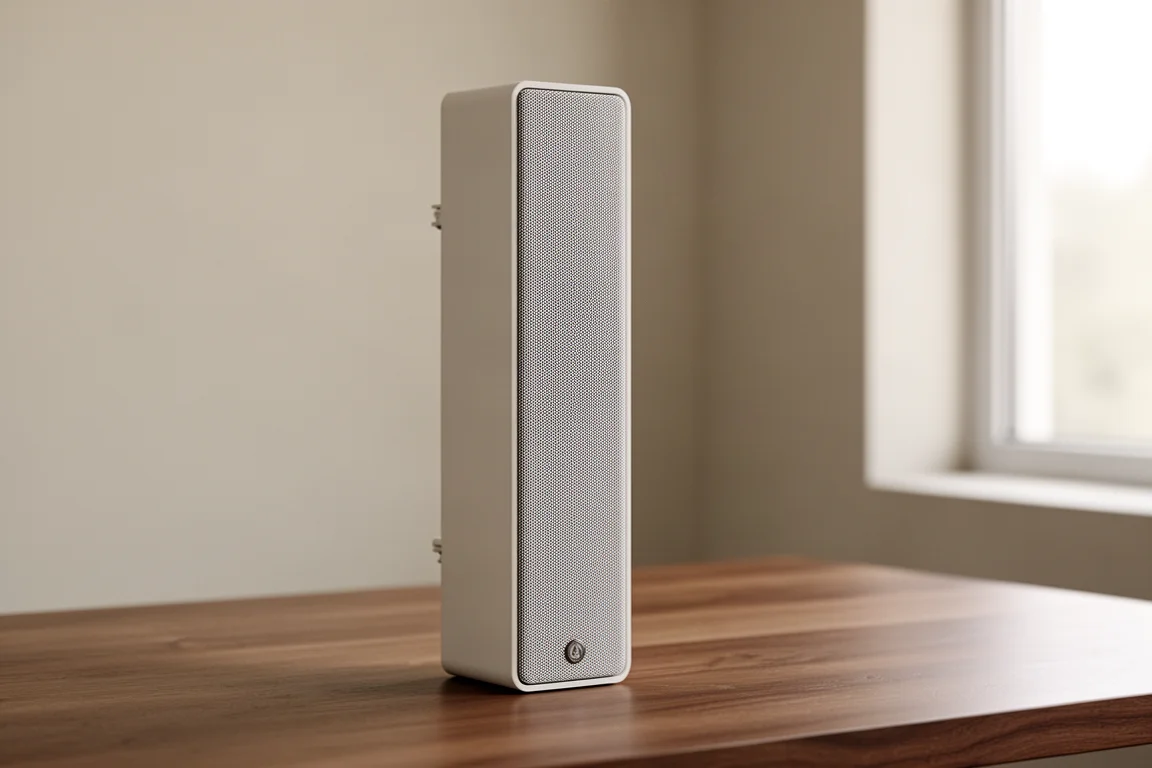
The reference path uses Wisdom Audio L8i in-wall line source speakers for left, right, and surround duty. They are slim, they sit flush with the wall, and they can reach reference levels without losing clarity when the volume goes up. Their vertical control is the bigger advantage here: less energy bounces off the floor and ceiling, so the presentation stays consistent no matter where you sit. Even with the curtains open, the sense of scale and clarity should hold together better than it would with more conventional speakers.
At around $8,000 each before amplification and processing, four of them come to roughly $32,000. Matching round Sage Series in-ceiling speakers handle the overhead channels, and a line source center built to match the width of the screen anchors the front stage.
Enthusiast Left, Center, and Right: JBL Synthesis SCL 6
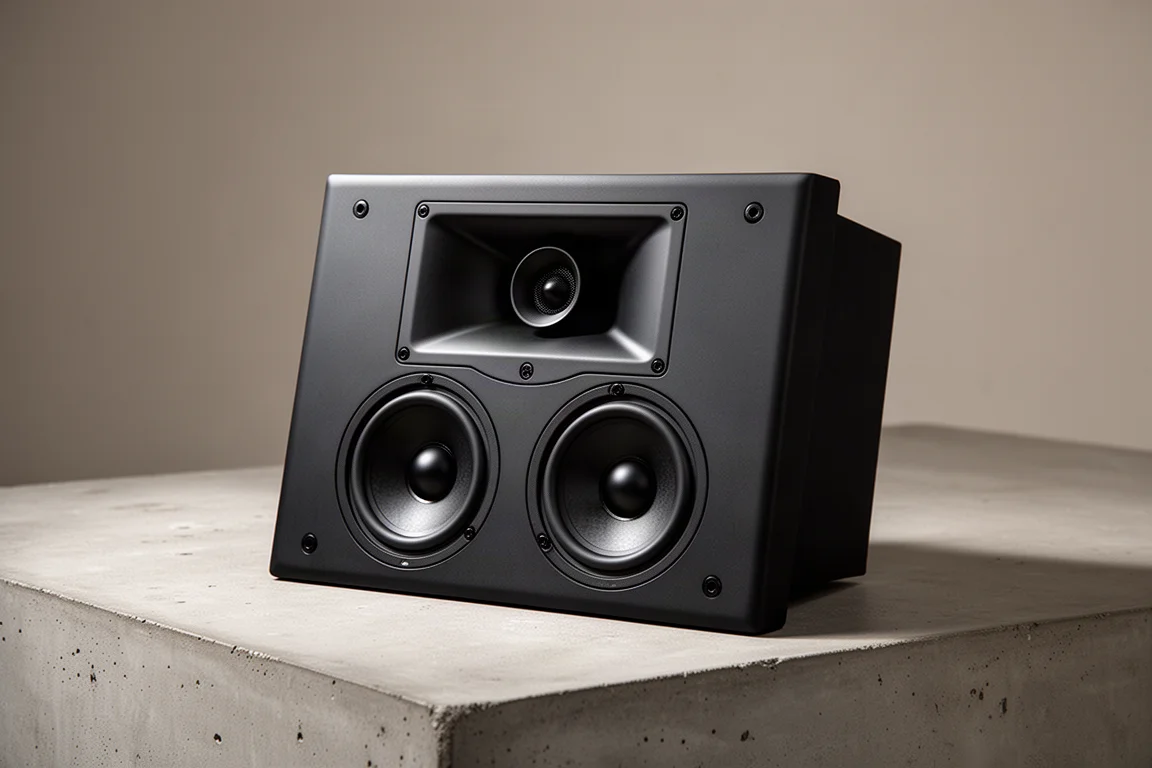
The middle path moves to JBL Synthesis, with four SCL 6 speakers at about $1,800 each. That lands around $7,200, less than the cost of a single Wisdom speaker. The cheaper Studio 6 theater line is available, but Synthesis has a long record of use in screening rooms, which makes it the better long-term choice here.
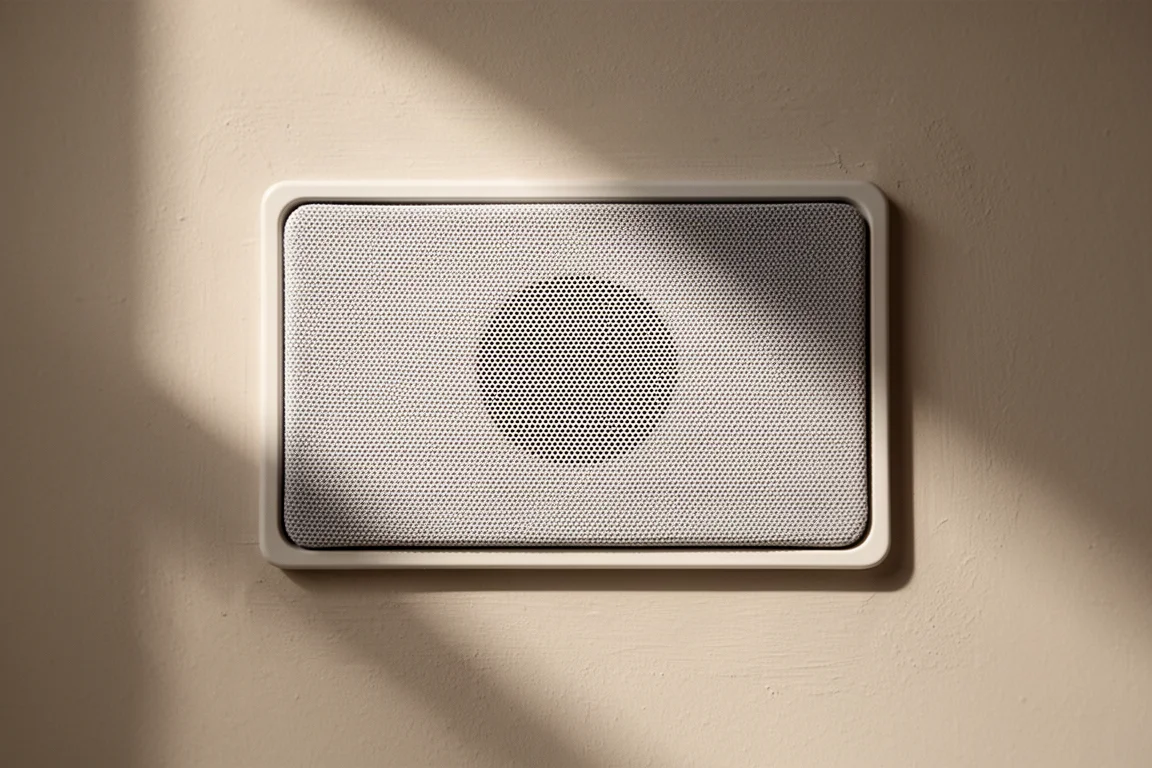
These speakers interact a little more with the room than a line source design, but the waveguide keeps output controlled and focused, and there is more than enough output to deliver a proper theater experience. The SCL 8 handles overhead duty. For the center channel, an SCL 6 in a custom enclosure below the screen is one option, and a custom center from Leon Speakers is another. The Leon will not match the rest of the front stage perfectly, but with careful setup and room correction such as Dirac, it blends well enough that it does not pull you out of the experience.
Budget Left, Center, and Right: Klipsch Heritage Theater Bar
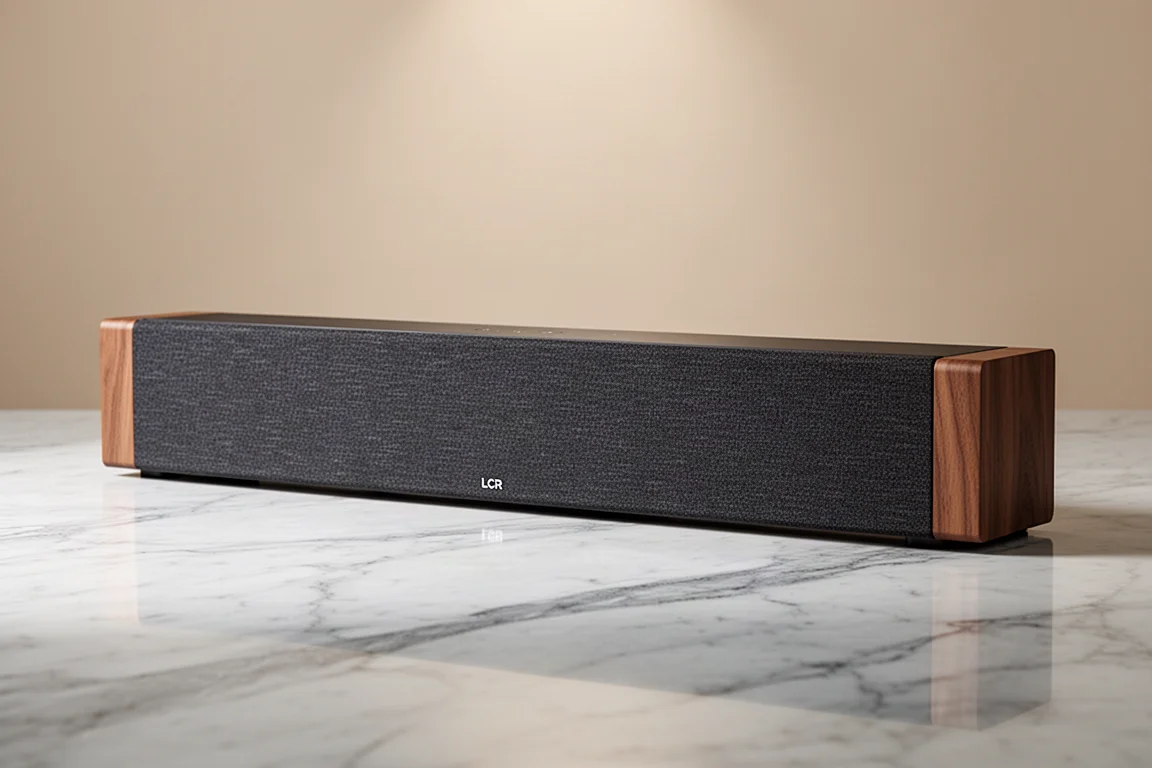
The budget path centers on the Klipsch Heritage Theater Bar, a passive LCR sound bar that is essentially three RP-600 style speakers in one box. It also suits the design of this room unusually well. The trade-off is separation, so the soundstage will not feel as wide as it would with discrete speakers, but from the couch it still feels engaging, just on a slightly smaller scale.
Because the bar mounts directly below the television on the same drop-down mechanism, it stays aligned with your ears when the screen is lowered and still works when the screen goes back above the fireplace. Klipsch CDT 3800 C2 in-ceiling speakers cover the overhead channels, and a pair of Klipsch R Series in-wall speakers mounted on the corner trap structures serve as rears, which keeps the system connected from front to back and top to bottom. Together they form a proper 5.0.2 Atmos foundation.
Reference Bass: Wisdom Audio RTL In-Wall Subwoofers
A space this large benefits from more than one subwoofer. The reference path starts with two Wisdom Audio RTL in-wall subwoofers flanking the main speakers, then adds two more in the ceiling toward the back of the room to address the sheer volume of the space. Spreading bass across four positions evens out response so the low end does not pile up in a single seat.
That configuration is not cheap. The subwoofers alone come close to $15,000, but it is how you get genuinely even bass in a room this size without filling it with large black cabinets.
Enthusiast Bass: JBL Synthesis SSW4 In-Wall Subwoofers
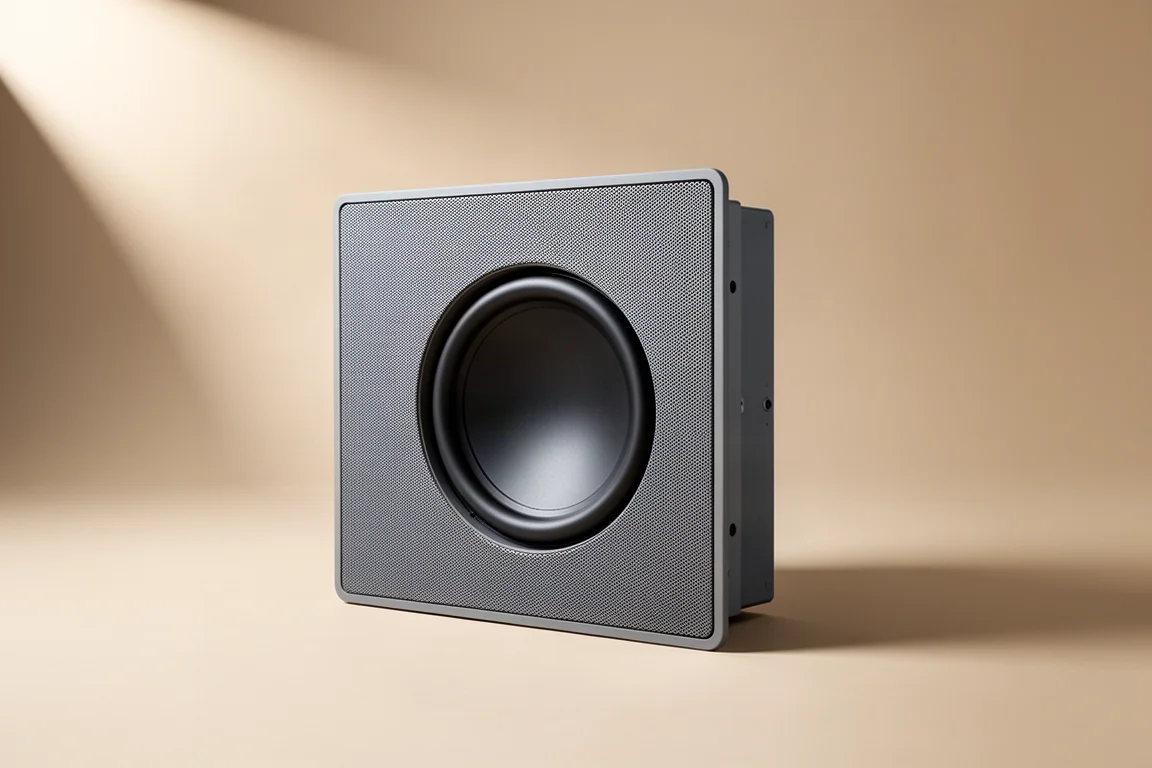
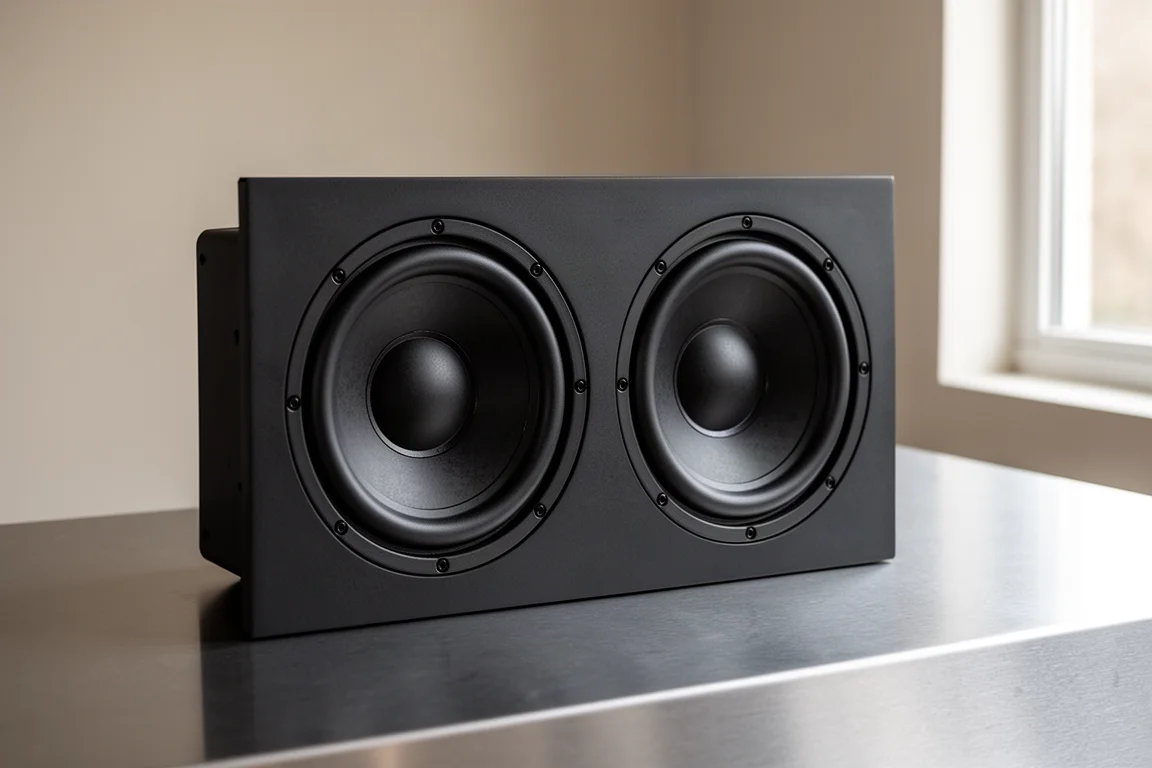
The enthusiast path stays in the wall with a pair of JBL Synthesis SSW4 dual 8-inch subwoofers mounted to the left of the main speakers. At around $2,400 for the pair, this is a far more approachable way to add low frequency output. You give up some extension and impact compared with the reference approach, but there is still more than enough low end for a convincing theater experience, and nothing new appears in the room.
Budget Bass: SVS 3000 Micro
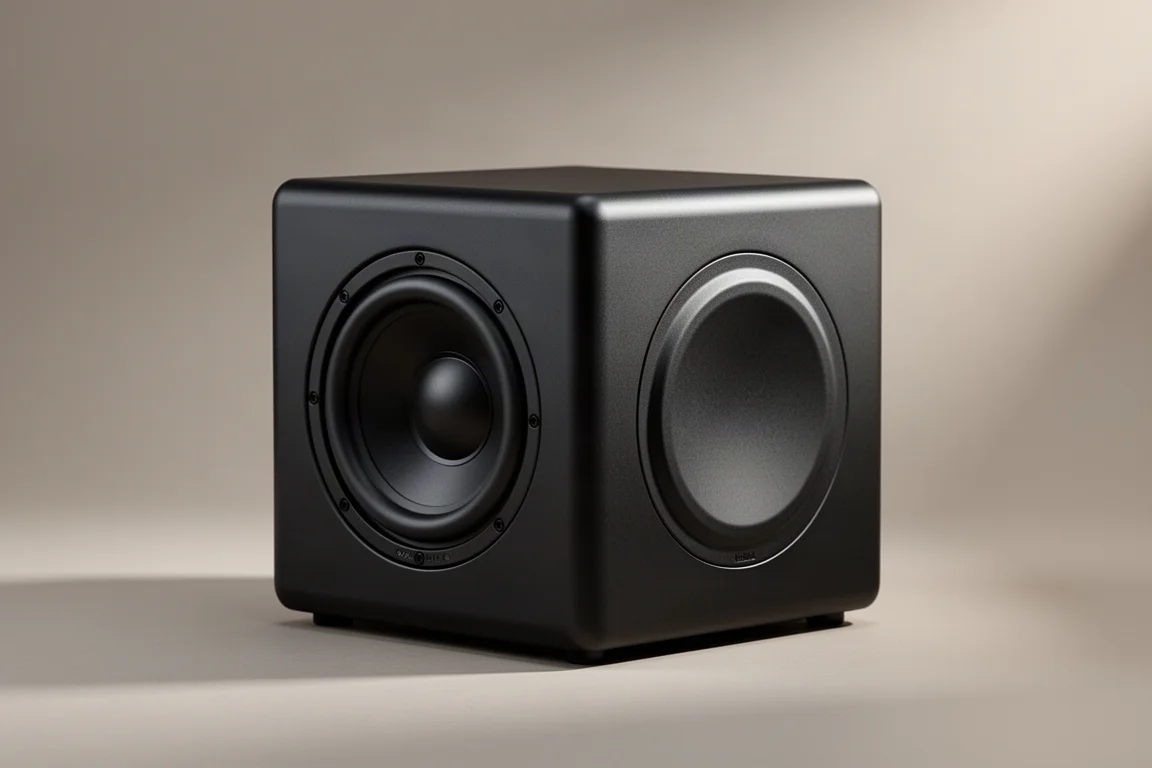
The budget path uses a pair of SVS 3000 Micro subwoofers. They are small, they are easy to reposition, which matters a great deal when you are dialing in smooth bass, and they do not take over the room visually. At under $2,000 for the pair, they represent one of the best balances of performance, flexibility, and living-room friendliness available right now.
Power for the Enthusiast System: Emotiva XPA Gen 3
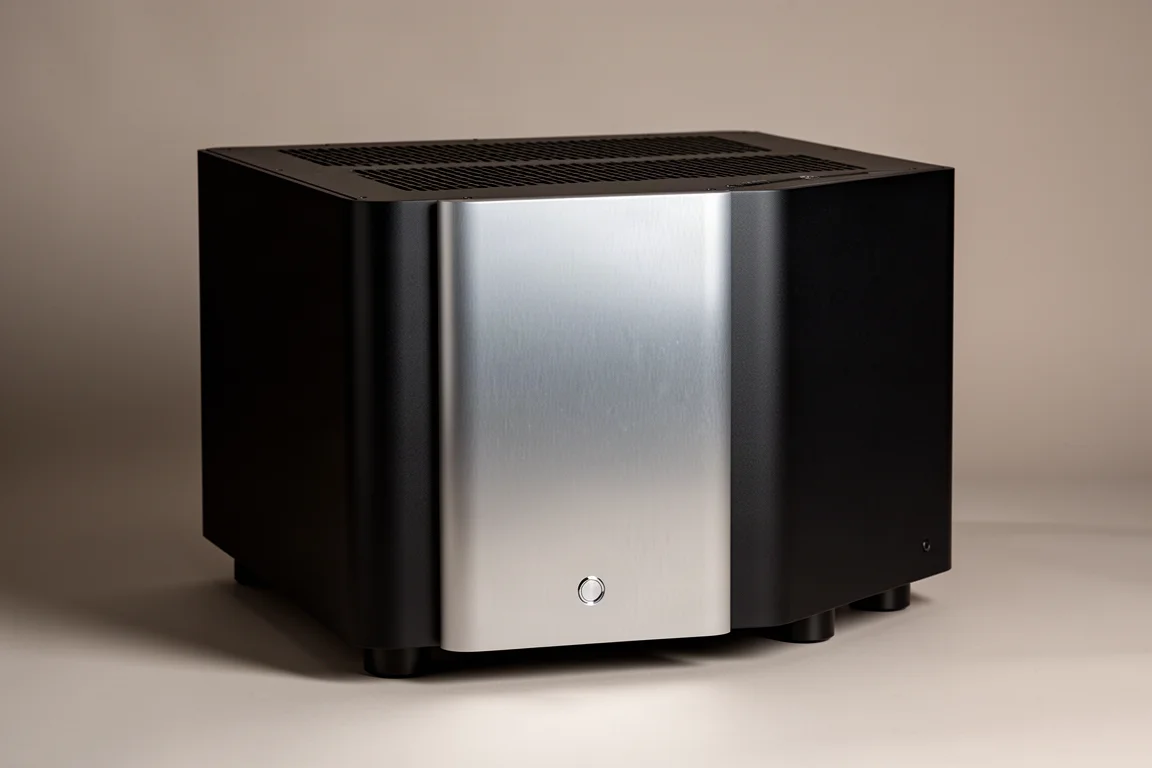
The enthusiast build is a nine-channel system: five main channels, two overhead channels, and two passive in-wall subwoofers. A nine-channel Emotiva XPA Gen 3 supplies the power while keeping costs in check.
Processing and Room Correction: Marantz AV30
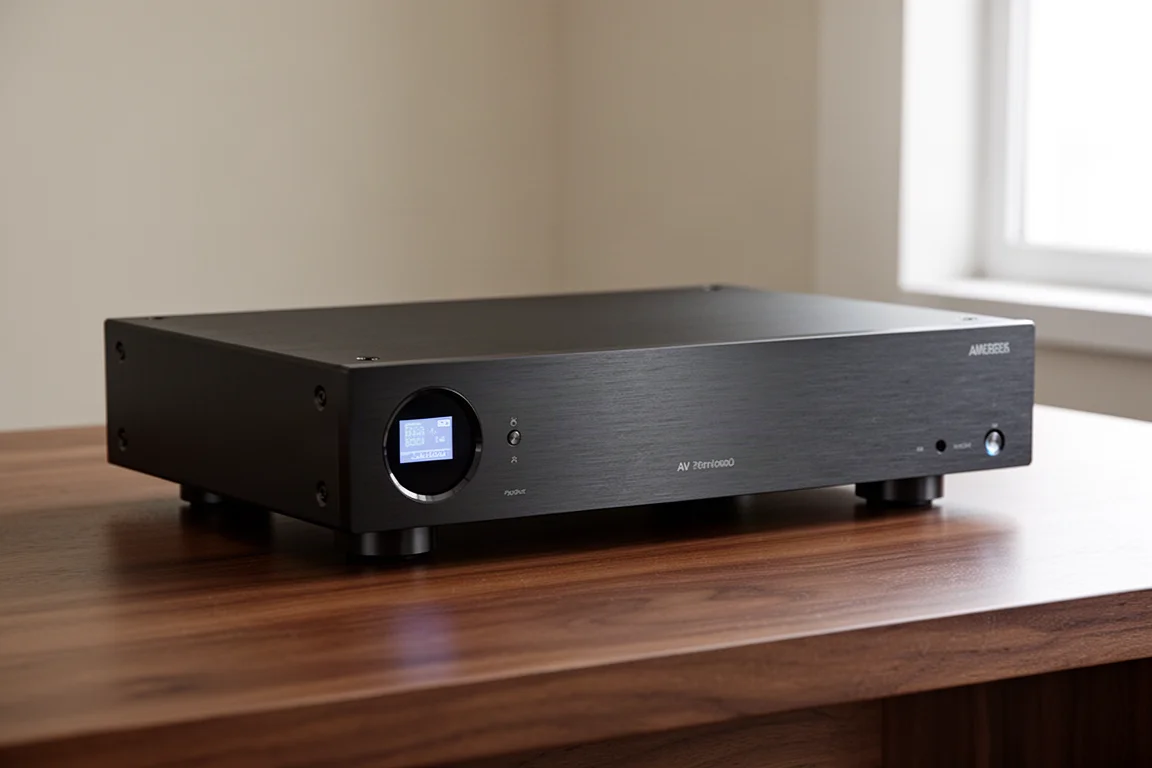
Paired with that amplifier, the Marantz AV30 handles processing and brings full Dirac support. Room correction matters a great deal in an open space like this one, where it helps the front stage blend together and keeps the room’s reflections from coloring the result.
The Budget Receiver: Onkyo RZ30
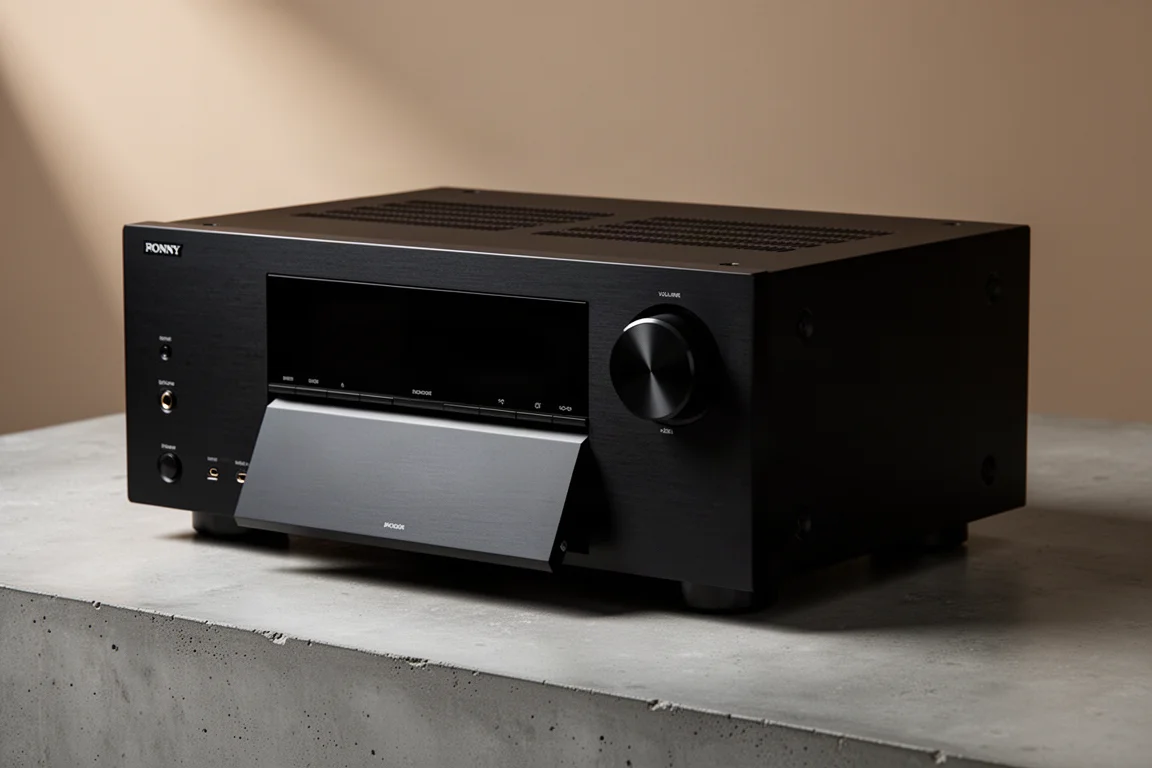
The Klipsch build keeps things simple with the Onkyo RZ30, an all-in-one receiver with full Dirac support. It covers everything the system needs in a single box, and additional amplification can be added later if more power is ever required. It is close to the easiest way into a system like this without overcomplicating the setup.
Total Cost and Buying Advice
Not including installation, the reference system lands between $75,000 and $90,000. That is a lot, and it is also what a cost-no-object system that truly disappears into the room tends to run. The enthusiast system comes in around $25,000, roughly a third of the cost, without giving up much in the way of performance. And if the budget has already been stretched by the rest of the house, a real theater can still be built here for about $8,000 all in.
Tower or stand-mount speakers from familiar brands would also work, but they change how the room reads. What makes a space like this feel elevated is not just the materials or the furniture. It is how everything works together, and how calm and intentional the result feels. A room can serve more than one purpose, but when it presents a single clear idea, it is easier to relax in.
The choice comes down to priorities. Go reference if maximum performance matters more than anything else. Go enthusiast if you want most of that performance for about a third of the price. Go budget if the room and the budget both need to stay modest, because that path still delivers a genuine theater.
Conclusion
The interesting part of this build is not any single component. It is that a living room designed for entertaining can also be a serious place to watch a movie, as long as the acoustic problems are handled honestly and the equipment is chosen to disappear. Curtains and hidden traps do the invisible work, the display comes down when it is time to watch, and the speakers live inside the walls.
Whichever path fits your room and your budget, the same principle applies: the only person who has to love how your system looks and sounds is you.
Further reading
Related Reviews
Home Theater
Anthem AVM 90 Review: A 15.4-Channel Flagship Preamp Processor
A close look at Anthem's flagship preamp processor, covering its dual ESS DAC architecture, 15.4-channel layout, ARC Genesis calibration and four independent subwoofer outputs.
Home Theater
Apple TV 4K With AirPods: A Best-Value Home Theater Setup
An Apple TV 4K paired with AirPods over Bluetooth makes a compact home theater setup for movies, spatial music and late-night viewing, and it can be assembled for as little as $300.
Home Theater
Arcam AVR15, AVR25, AVR35, and AVP45 Compared: Which AV Amplifier Fits Your System?
Four new Arcam home theater components share nine-channel amplification and Dirac Live, but differ in power, processing ceiling, and channel flexibility.