Audio Preamplifiers
Linear Tube Audio MicroZOTL Level 3 Review: Tube Character With Solid-State Quiet
A handbuilt line-stage tube preamplifier that aims for tube character without the softness, with a top-tier headphone amplifier and a three-year warranty.
Introduction
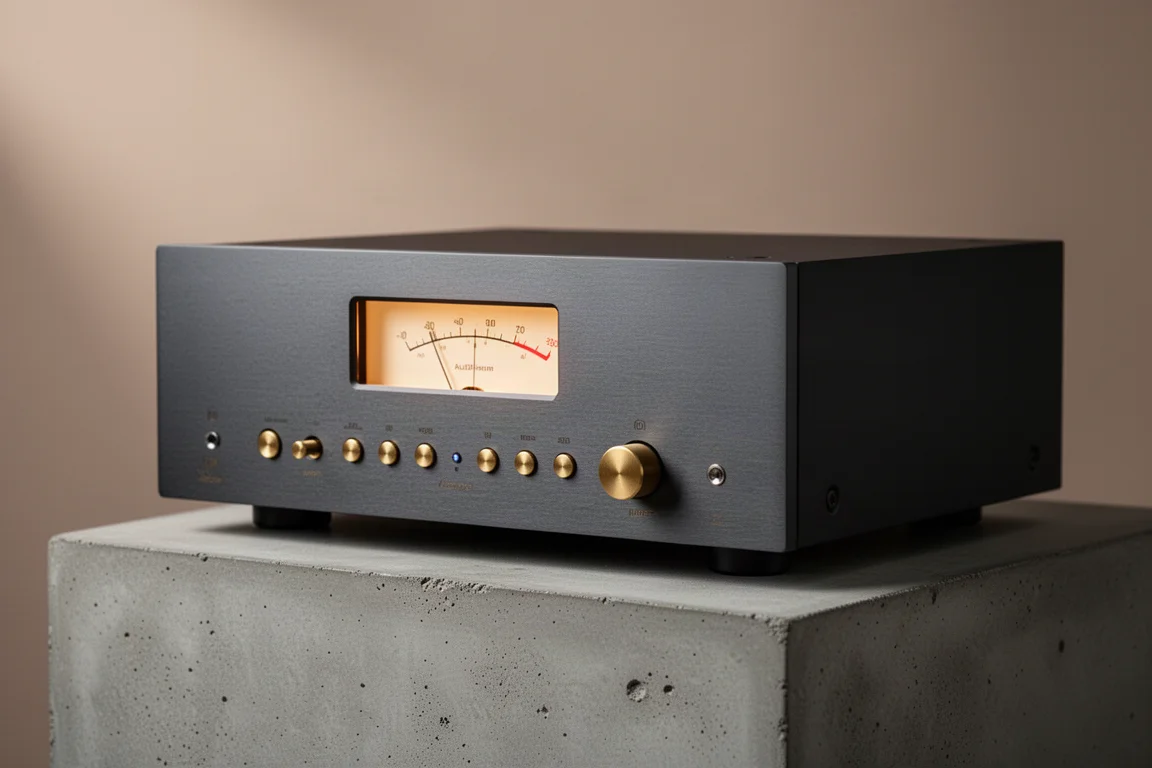
The Linear Tube Audio MicroZOTL Level 3 is a line-stage tube preamplifier, handbuilt in Takoma Park, Maryland. It is the newest version of the MicroZOTL design, and its brief is specific: deliver the qualities listeners value in tubes without drifting toward softness, sweetness, or a heavy mellow glow.
That brief shapes everything about the product. Many tube preamplifiers lean hard into warmth, and many solid-state designs lean hard into speed and silence. The MicroZOTL Level 3 is built to occupy the middle ground and give a listener a genuine measure of both.
Pricing is straightforward. The preamplifier costs $5,950 with its stock tubes, which are excellent in their own right, or $6,400 with a complete set of upgraded Ray Tubes. The warranty runs for three years. Linear Tube Audio sells direct to customers, and the price is the same worldwide in US dollars, including in the UK and EU.
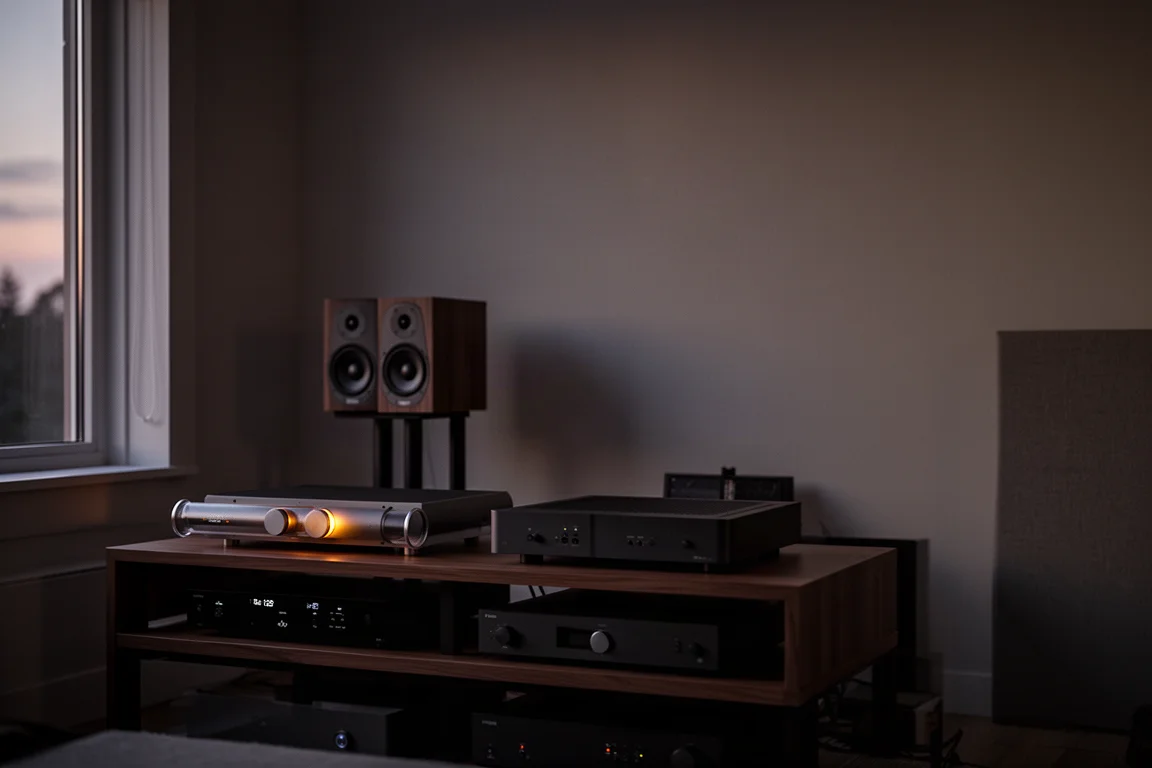
The Level 3 follows the MicroZOTL Level 2, and the two share an identical exterior. Inside, the differences are plain to see: circuit board layout and component choices have changed, and those changes are said to make the preamplifier even quieter than before. In listening, that shows up as more low-level detail and a more convincing sense of space.
Who the MicroZOTL Level 3 Is For
Three kinds of listeners will get the most from this preamplifier.
The first is the listener who is curious about tubes but wary of the stereotype. If soft, sweet, and overly mellow is not the sound you are chasing, this design is a sensible place to start.
The second is the headphone listener. A 1/4 inch (6.3 mm) jack sits on the front panel, and the headphone amplifier inside the chassis is top rate. Listeners who take headphones seriously will not need to add a separate headphone amplifier.
The third is the listener who already owns good outboard gear. This is a line stage only. There is no built-in phono preamplifier and no built-in DAC, so it works with line-level sources such as an external DAC, an external phono stage, or a tape recorder. That approach suits anyone who would rather choose a dedicated phono stage and a dedicated DAC instead of accepting the compromises that built-in versions usually involve.
Design, Controls, and Connectivity
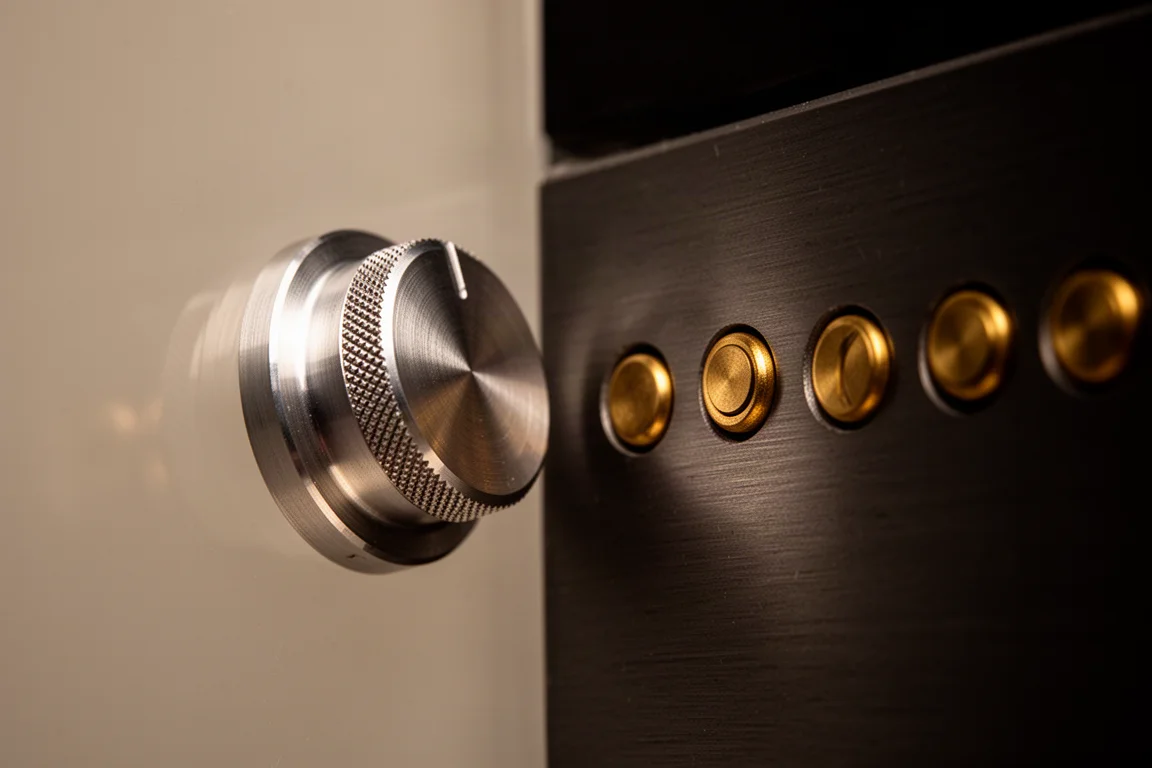
The front panel is where the preamplifier makes its first impression. A row of brass buttons runs across the face, and they are genuine brass and touch sensitive, so a light touch is enough to trigger them. The numerical display is large and easy to read from across a room, and it is dimmable.
The volume control is a stepped attenuator, and its feel is one of the highlights of the design. It moves silky smooth through every step, with the relays audible as they click from one position to the next. That tactile quality recalls the best of older high-end gear rather than the vague, plasticky feel of many modern controls.
Around the back, connectivity is generous. There are four sets of RCA inputs, one set of XLR inputs, and a tape input. Two main outputs mean a power amplifier and a powered subwoofer can both be driven at the same time from the same preamplifier.
The remote is metal and perfectly serviceable, though it does not feel like a natural match for a preamplifier at this price.
Main Strengths
Noise is the first strength worth naming. Tube preamplifiers can add hiss or hum compared with solid-state designs, which is a fair generalization. This one does not. It is as quiet as the solid-state preamplifiers that have run in the same system, which removes the usual objection to going with tubes in the first place.
Detail and space are the second. Low-level detail and spatial information are where the Level 3 separates itself from the Level 2. The two share a similar overall sonic signature, and the Level 2 is no slouch, but the Level 3 pulls ahead with more of the small cues that tell you where instruments sit and how a room behaves around them.
Tonally, the Level 3 comes across as a little more incisive, a little faster, and a little clearer than its predecessor. A big-band recording made in a Brooklyn church for Chesky Records, with the vocalist positioned to project above the band rather than separately miked, is a useful demonstration: the preamplifier sorts out the dynamic shading of many instruments playing at once, and the result feels closer to standing in the room where it happened.
Headphone Performance and Tube Choices
The built-in headphone amplifier deserves its own mention. Driven with planar magnetic headphones, it produced clarity that bordered on electrostatic, along with a relaxed, open soundstage that felt closer to speaker listening than to typical headphone listening. Anyone with a serious headphone collection will find that a compelling reason to keep this preamplifier in the system.
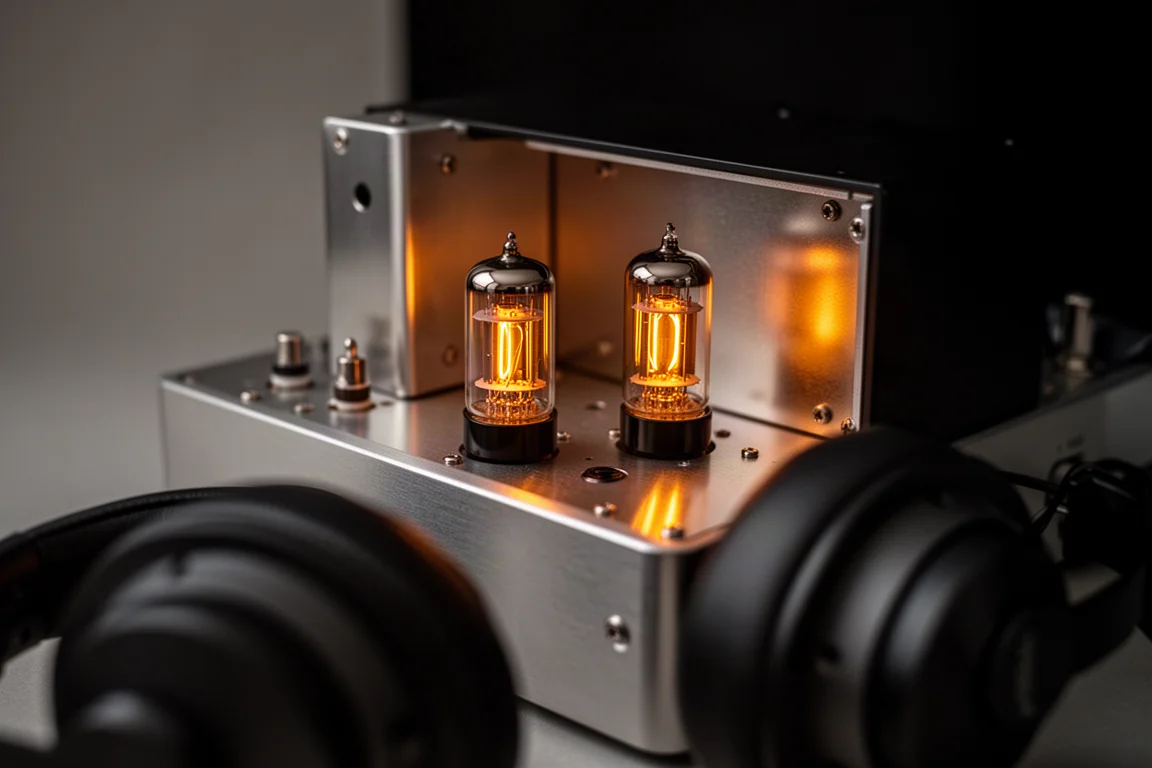
Tube choices give the owner some control over the character of the sound. The larger tubes can be 12SN7 or 6SN7 types, and the smaller signal tubes can be 12AT7 or 12AU7 types. They do not sound the same. The 12AU7 adds warmth, roundness, and body, while the 12AT7 lights up the presentation more. The bigger audible difference tends to come from the smaller signal tube, so it is worth treating the choice as a tuning exercise rather than a specification detail.
Things to Consider Before Buying
This is a line stage only, and that is the single most important thing to understand before ordering. There is no phono stage and no DAC on board, so a vinyl listener will want a high-quality external phono preamplifier, and a digital listener will want a DAC that meets the same standard. Plan for that in the budget rather than expecting the preamplifier to cover it.
The remote is the second consideration. It is metal and it works, but it does not carry the same sense of quality as the chassis and the controls it operates.
The third is character. The MicroZOTL Level 3 is not a lush, warm, overtly tubey preamplifier. Listeners who specifically want that softer, sweeter presentation should look elsewhere. Listeners who want tube virtues without giving up solid-state discipline will find this one lands in the right place.
Finally, the upgraded tube set adds to the cost. Stock tubes are excellent, and the Ray Tubes option raises the price to $6,400, so it is worth deciding up front whether that extra outlay is part of the plan.
Buying Advice
Because Linear Tube Audio sells direct, there is no dealer margin and no regional price variation to negotiate. Everyone pays the same price in US dollars, which simplifies the calculation considerably for buyers in the UK and EU.
Decide on tubes at the point of purchase. The stock tubes are excellent, and the Ray Tubes set is the upgrade path if you want the tuning flexibility described above and are comfortable with the higher figure.
Build the rest of the chain around it. A preamplifier at this level deserves a phono stage and a DAC of comparable quality, and feeding it with line-level sources that are up to standard is what allows its low noise floor and spatial resolution to show what they can do.
If the choice comes down to the Level 2 or the Level 3, the answer depends on priorities. Both share a similar signature and both are serious preamplifiers. The Level 3 adds more low-level detail, more spatial information, and quieter operation. For listeners who care most about hearing the room and the small details inside a recording, that step up is the reason to choose the newer model.
Conclusion
The MicroZOTL Level 3 is a specialist product, and it is honest about what it is. It is a handbuilt line-stage tube preamplifier with no phono stage, no DAC, and a remote that lags behind the rest of the package. What it offers in return is a rare balance: the character listeners associate with tubes, paired with noise levels and clarity that usually belong to solid-state designs, plus a headphone amplifier strong enough to remove a separate box from the rack.
For a listener who already has a good phono stage and DAC, who wants a touch of tube character without the softness, and who values a properly weighted volume control and a quiet, detailed presentation, the Level 3 makes a persuasive case. The $5,950 entry price is a premium commitment, and it is best made with the rest of the system already in place. Within those boundaries, this is a preamplifier that earns its place.
Product link
View more details for Linear Tube Audio MicroZOTL Level 3 Preamplifier
This product is mentioned in the review. Check the specifications, options, and compatibility before buying.
View more details for Linear Tube Audio MicroZOTL Level 3 PreamplifierFurther reading
Related Reviews
Audio Components
Advance Paris ACD Apex vs Onkyo Icon C-30: Two CD Players, Two Very Different Paths
A $1,400 tube-equipped CD player against a $400 deck. Where the extra money goes, what you actually hear, and which one suits your system.
Audio Amplifiers
AGD Audion Mark III Review: A Compact Class D Amplifier With Tube-Like Musicality
A gallium nitride Class D amplifier that delivers tube-like midrange warmth, serious bass grip, and a modular upgrade path in a very small chassis.
Hi-Fi Audio
Aiyima A80 Review: A Compact Class D Amplifier With a Screen That Earns Its Place
The Aiyima A80 pairs a 3255 amplifier chipset with a Sabre DAC, generous inputs, and a customizable display for around $230.