Outdoor Jackets
Four Lightweight Down Jackets Compared: What the Price Gap Really Buys
A practical comparison of four lightweight down jackets, from a $60 city layer to a $400 alpine jacket, and what the extra money actually pays for.
Introduction
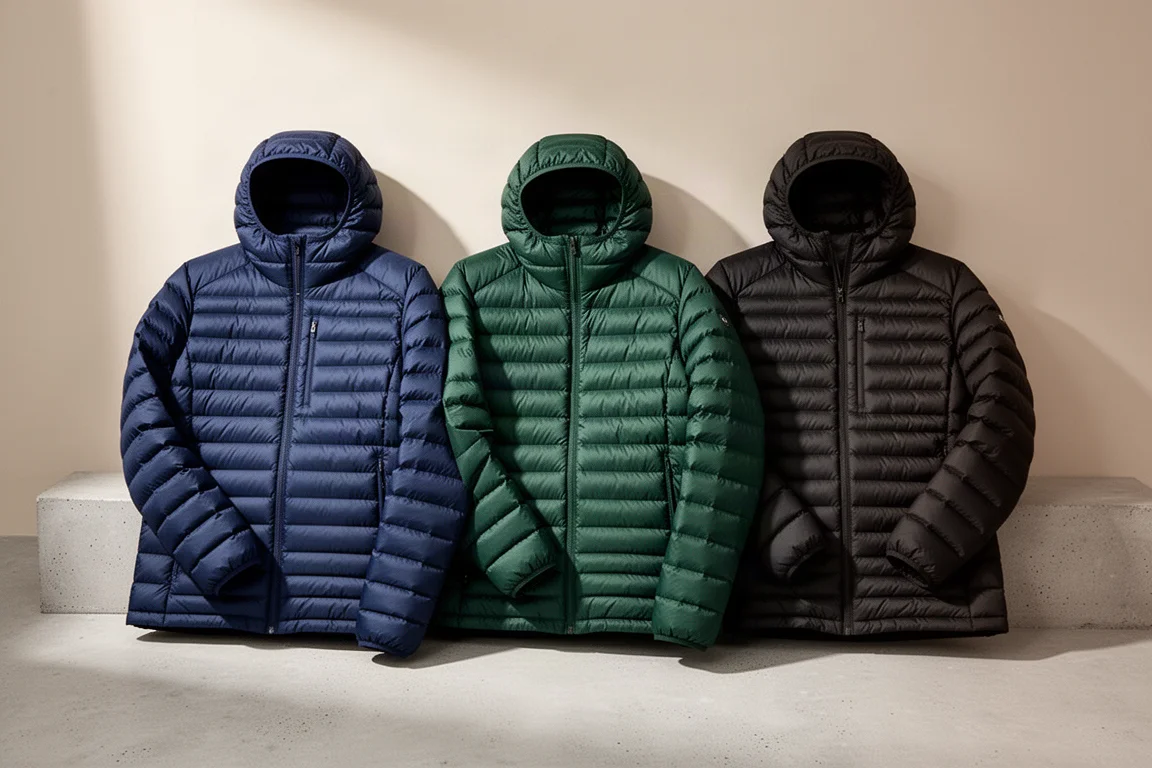
Down jackets are one of the few pieces of gear where two products can look almost identical on the rack and still sit hundreds of dollars apart. This comparison covers four lightweight down jackets across the price spectrum: a widely available budget option, a premium alpine layer, a value-focused hiking jacket, and an ultralight favourite. The question worth answering is straightforward. Does a lower price mean giving up real warmth, and what does the extra money actually buy?
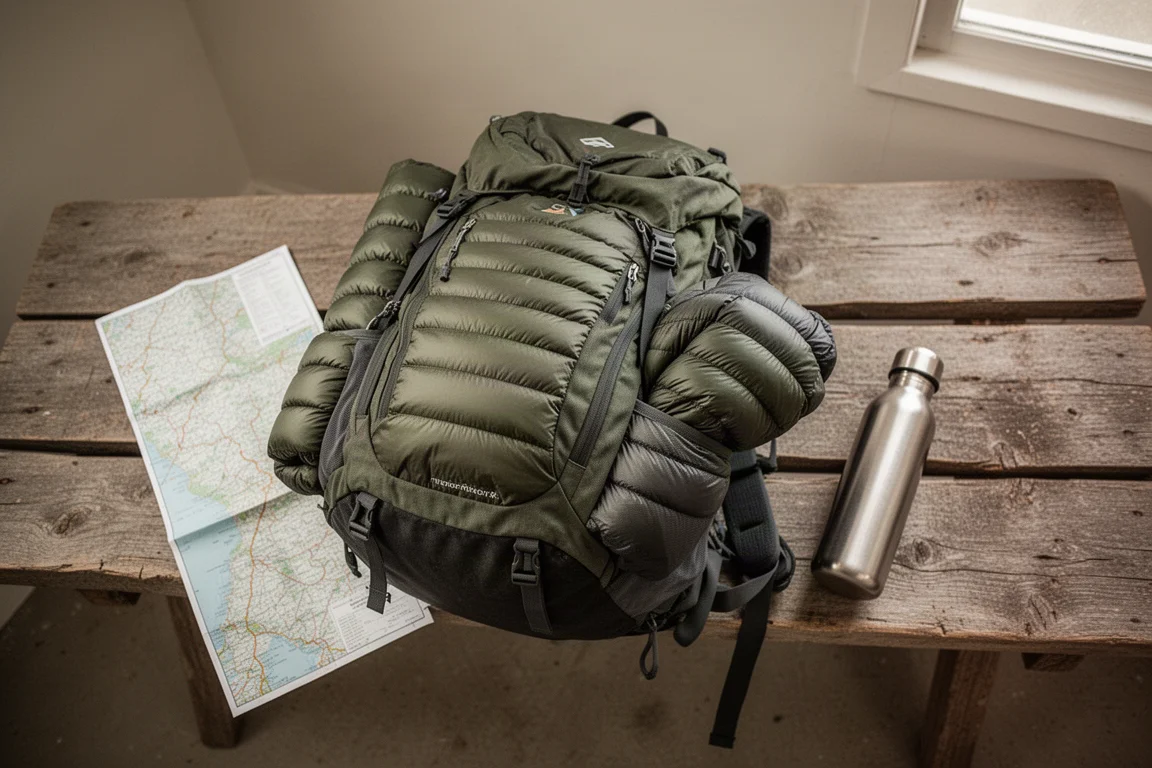
Spec sheets only tell part of the story. Two jackets can share the same silhouette and still differ in shell thickness, fill quality, and how well the cut seals warmth around the hem, sleeves and back. Those differences are what decide whether a jacket stays comfortable once you stop moving.
How These Down Jackets Compare
Four specifications drive most of the difference between these jackets: fill power, shell fabric thickness, total weight, and fit. Fill power describes how much loft a given amount of down provides, so a 650 fill jacket needs more down to reach the same warmth as an 850 fill jacket. Shell fabric is measured in denier, where a lower number means a thinner and lighter material. Weight matters most for anyone carrying the jacket in a pack. Fit decides how well the jacket holds warmth around the hem, sleeves and back.
Water resistance deserves its own note. Down insulation loses its ability to keep you warm once it gets wet, which is why most down jackets carry a durable water repellent finish on the exterior fabric. That finish is not cosmetic. It protects the insulation, and a jacket that wets through quickly stops being useful in cold, damp conditions.
Weight and warmth also trade against each other in ways that are not obvious from a spec sheet. A thin shell saves grams but lets more cold air move through seams and around a loose hem, while a heavier fabric and a longer cut hold heat closer to the body. Both approaches are valid. They simply suit different kinds of use.
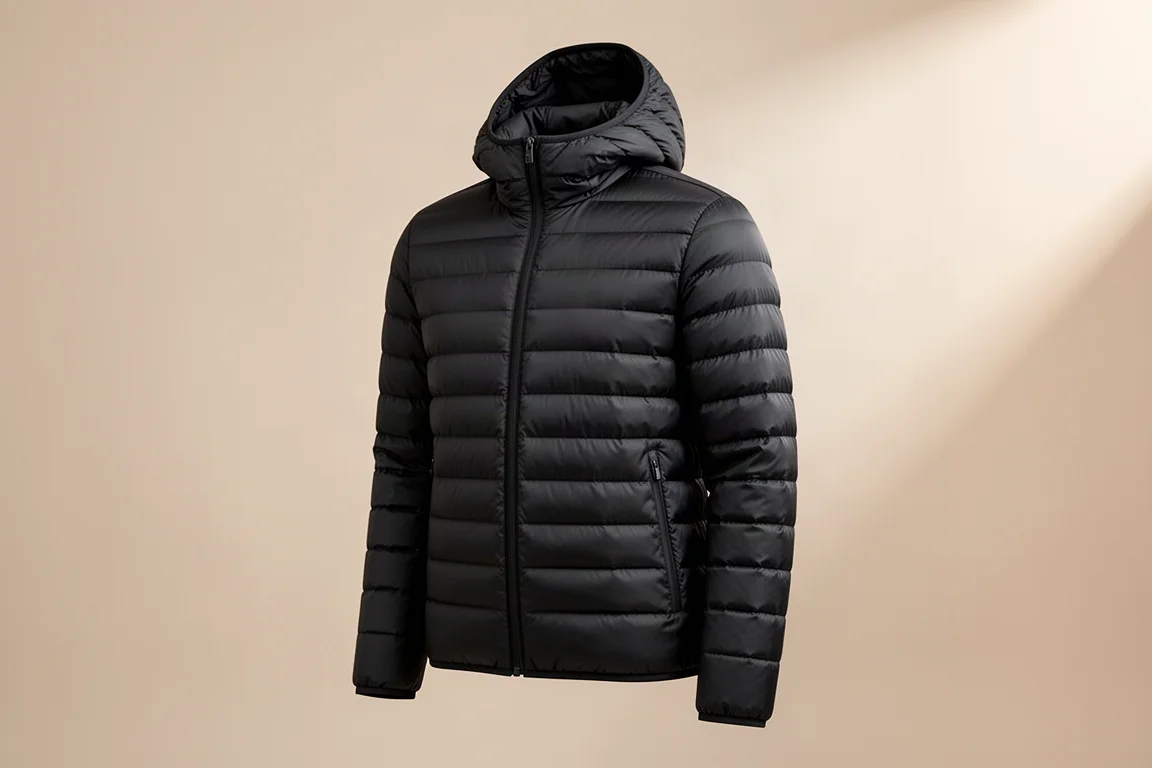
Uniqlo Ultralight Down Jacket: The Budget Pick
At around $60, the Uniqlo Ultralight Down Jacket is one of the cheapest down jackets you can find. It uses a 10 denier nylon shell and 750 fill down, and it weighs just 8.3 ounces. That combination is genuinely light, and while you are moving it feels warmer than the price suggests.
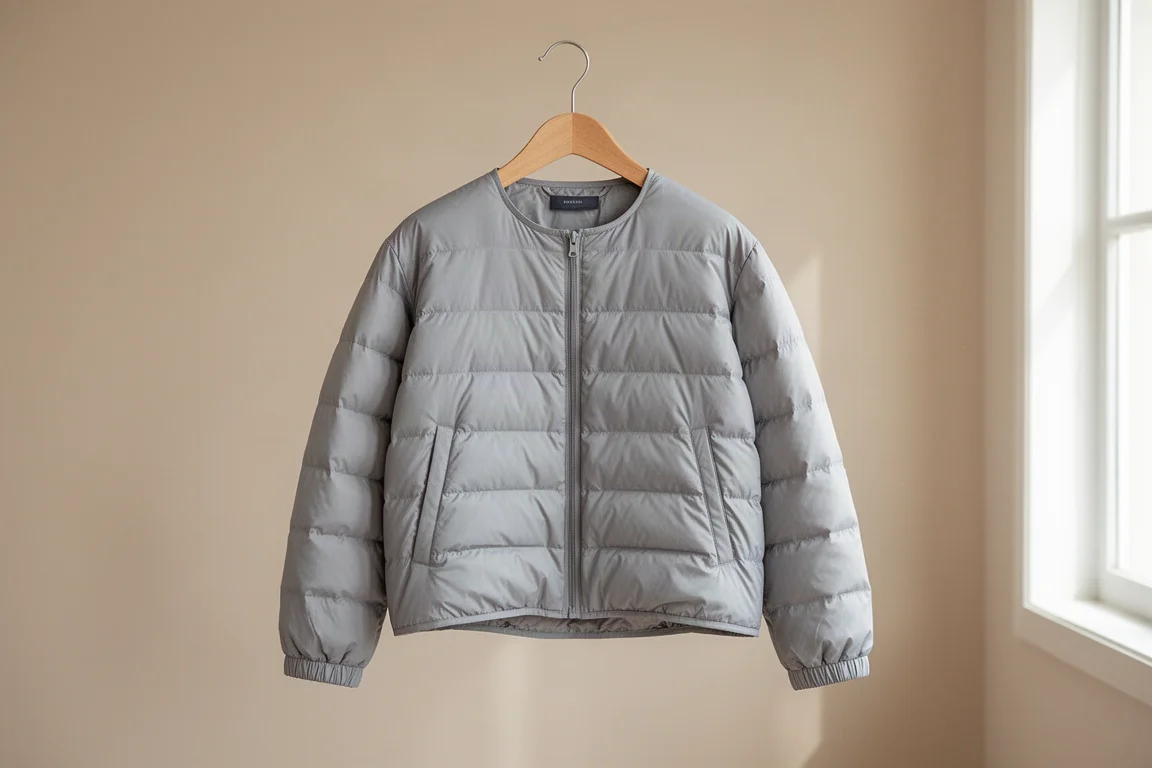
The trade-offs appear once you stop. The cut is boxy and short, with a loose middle and a wide hem that lets cold air in, and the thin shell does not hold up well to direct contact with snow or moisture. Holding the jacket up to a light source reveals areas around the seams where there is little or no down. It is positioned as a city jacket rather than a backpacking layer, which matches how it behaves in wet, exposed conditions. Durability is not automatically a weakness, since there are examples of these jackets still in use after ten years, but the fit and the weather resistance remain the main limits.
Arc’teryx Cerium Down Jacket: The Premium Pick
The Arc’teryx Cerium Down Jacket costs around $400 and answers the price question with materials. Its shell is 20 denier nylon, roughly twice the thickness of the Uniqlo fabric, and the insulation is 850 fill down. It weighs 10.2 ounces, so the extra weight goes into fabric and fill rather than added features.
On cold days the difference is easy to feel. The Cerium is longer in the body and in the sleeves, and the back panel extends lower to cover the seat, which keeps more heat in when you are standing still. The fit is trimmer and less boxy, so there is less dead air to warm up and less cold air leaking in around the hem. Shining a light through the jacket shows a more consistent layer of insulation across the panels.
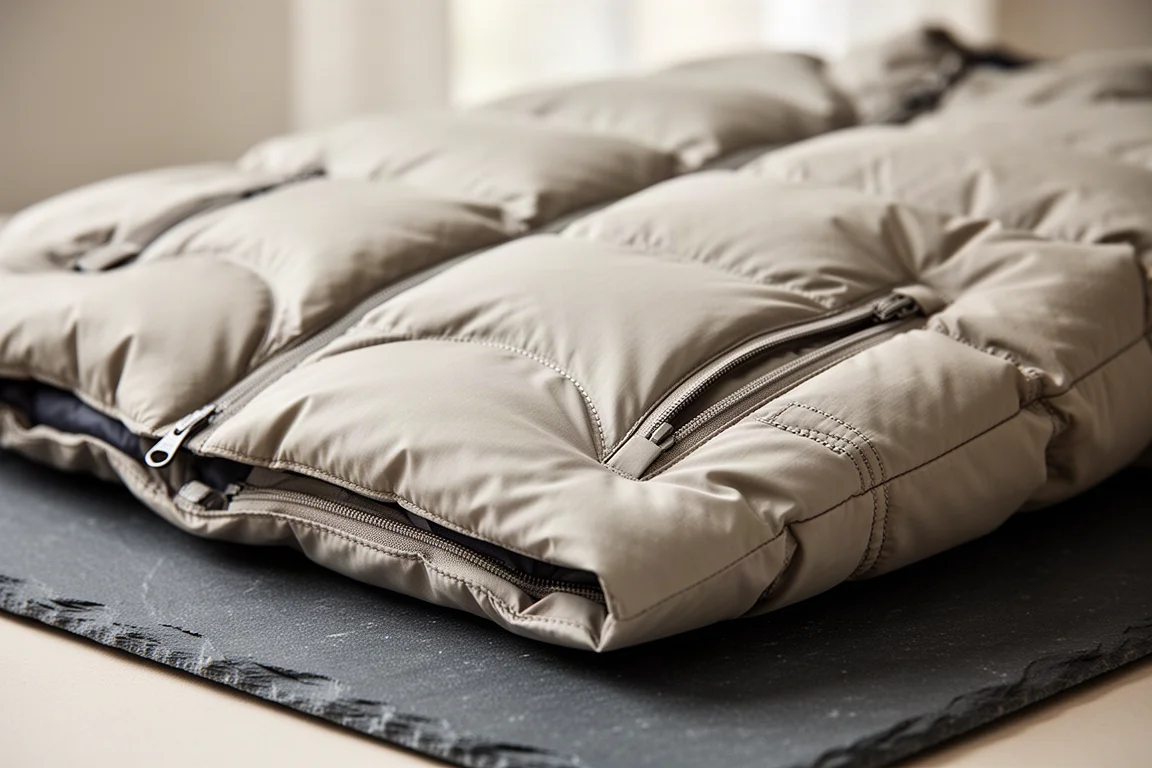
That added warmth is real, but it is not the whole story of the price gap. Much of what the higher cost covers is durability, a longer expected service life, and materials and construction intended for years of use rather than a single season.
REI 650 Down Jacket: The Value Step-Up
The REI 650 Down Jacket sits at around $99 and shows that you do not need to reach the premium tier to get a warmer jacket than the cheapest option. Its fill power is lower at 650, yet the jacket lofts noticeably more than the Uniqlo and traps heat more effectively as a result. For hikers and backpackers who want a dependable layer without a four-hundred-dollar outlay, this is the middle ground that makes the most sense.
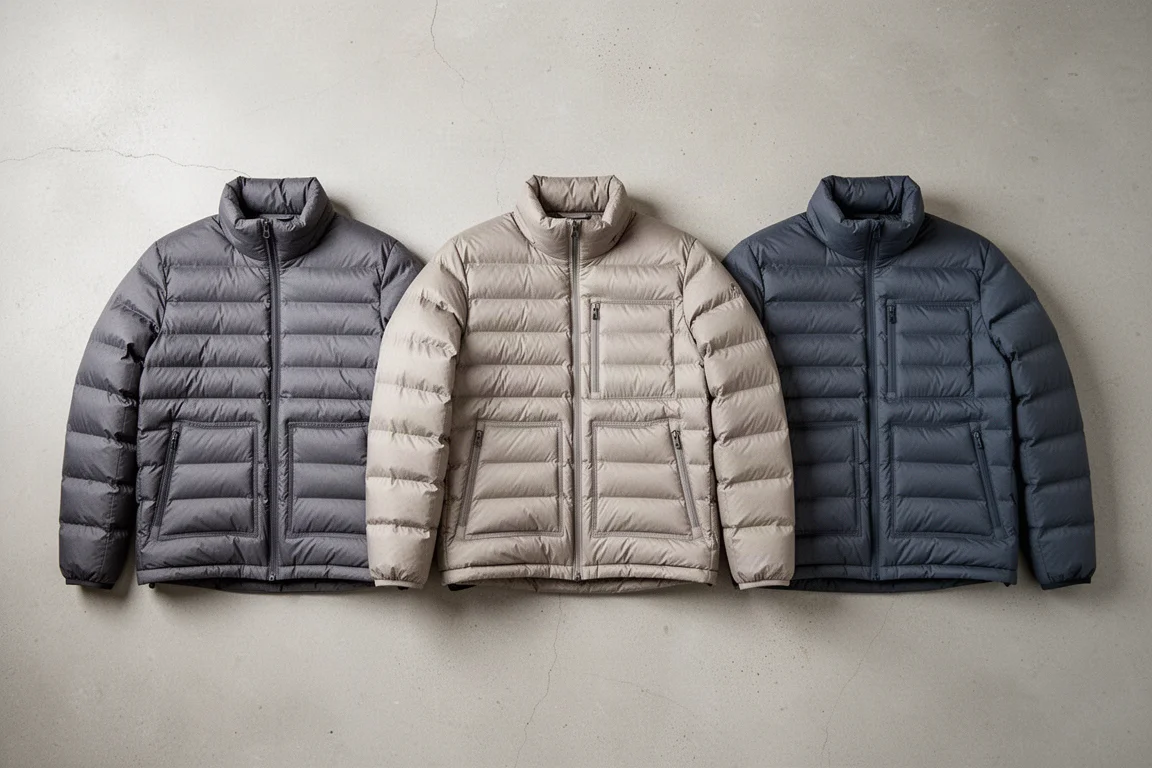
It is also a reminder that fill power alone does not tell you how warm a jacket will feel. Loft, cut and how tightly the jacket closes around the body all shape the result, and those are the qualities that separate a jacket you wear on a cool evening from one you rely on above the treeline.
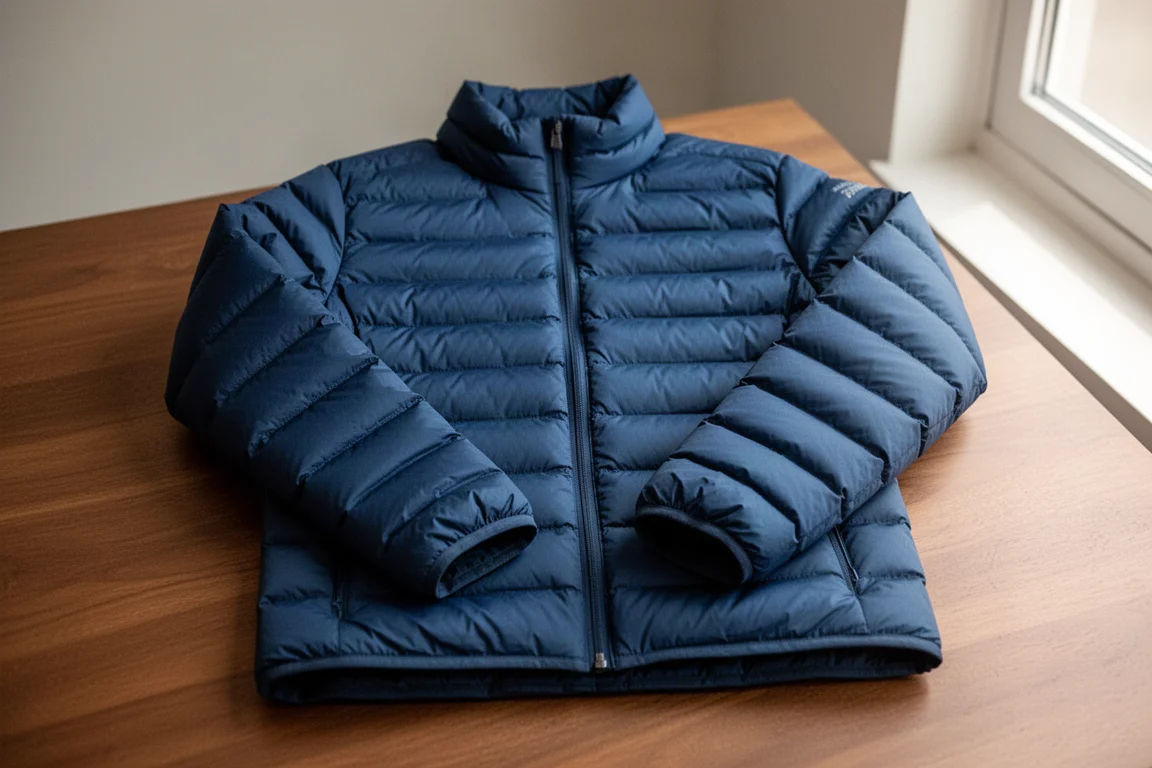
Mountain Hardwear Ghost Whisperer: The Ultralight Favourite
The Mountain Hardwear Ghost Whisperer weighs 7.8 ounces and costs around $350, which places it in premium territory despite being the lightest jacket in this group. It stays warm both while you are moving and while you are stopped, and the low weight means it takes up very little room in a pack.
For anyone who wants a single down jacket that works on nearly every trip, the combination of low weight and reliable insulation is the appeal. It is the most expensive way to save weight here, and it earns its place only if you will carry the jacket often enough to notice the difference.
Buying Advice
The cost difference between these jackets is not mostly about warmth. It is about durability, how long the jacket will last, ease of use, and materials chosen for a longer service life. A $60 jacket and a $400 jacket can both keep you warm on a mild day. They separate when conditions turn wet, cold and prolonged.

Match the jacket to the job. If you want a light layer for commuting and cool evenings, the Uniqlo is a reasonable and inexpensive choice, provided you keep it out of sustained rain and snow. If you hike or backpack in cold weather, the REI 650 offers the clearest step up in warmth per dollar. If you want a jacket that will hold up across many seasons, the Arc’teryx Cerium and the Ghost Whisperer are built for that kind of use, and the Ghost Whisperer adds a weight advantage that matters if it travels in your pack on every trip.
Conclusion
Warmth, weight and durability rarely arrive in the same jacket at the same price. The Uniqlo Ultralight Down Jacket is a capable budget layer with a short, boxy fit and limited weather resistance. The Arc’teryx Cerium Down Jacket is warmer and more durable, and its price reflects construction meant to last. The REI 650 Down Jacket is the value pick for hikers, and the Mountain Hardwear Ghost Whisperer is the lightest and most versatile of the four. Choose based on where you will wear it, not on the number on the tag alone.
Further reading
Related Reviews
Outdoor Jackets
Arc'teryx Alpha Jacket Review: A Lightweight Gore-Tex Shell Built for Climbing
A detailed look at the Arc'teryx Alpha Jacket, a lightweight Gore-Tex mountaineering shell with rugged shoulders, a Hadron body, and a deliberately simple feature set.
Outdoor Jackets
Arc'teryx Atom LT Review: A Versatile Synthetic Midlayer for Cold Weather
A detailed look at the Arc'teryx Atom LT, a lightweight synthetic midlayer built for active cold-weather use, with its strengths, trade-offs, and who it suits best.
Outdoor Jackets
Haglöfs L.I.M Mimic Barrier Hood Review: Light, Breathable, Built to Move
A close look at the Haglöfs L.I.M Mimic Barrier Hood, a 282 g windproof and breathable synthetic layer that works alone in mild weather and as part of a winter system.