Tents
Lightfighter Dragoon Review: An Eight-Person Four-Season Military Shelter
The Lightfighter Dragoon is a 57-pound, eight-person expedition tent built for extreme weather. Here is what its materials, size, and setup demands mean for real buyers.
Introduction
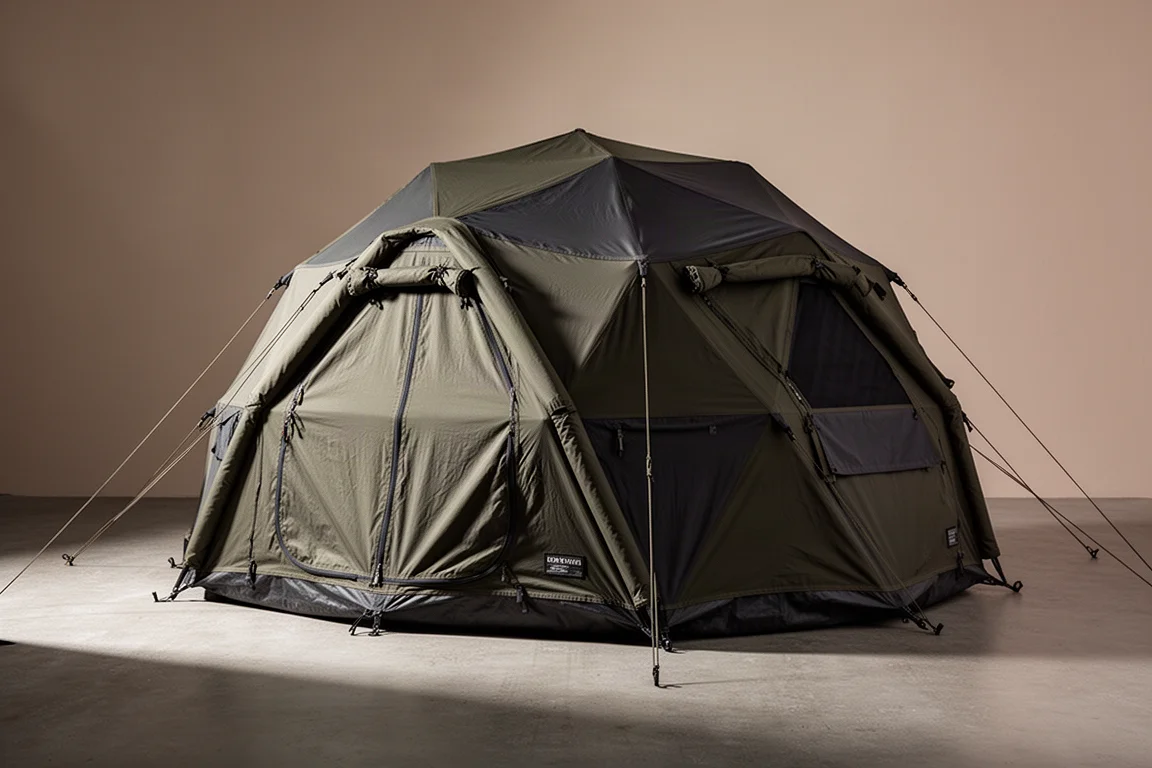
The Lightfighter Dragoon is a four-season expedition shelter designed for military use and also offered to civilian buyers. It is an eight-person, freestanding geodesic dome tent that weighs 57 pounds, packs into a wheeled deployment-style bag, and is priced around $4,300 on the civilian market. Lightfighter positions it as an all-season expeditionary tent capable of withstanding strong winds, heavy rain, and accumulating snow.
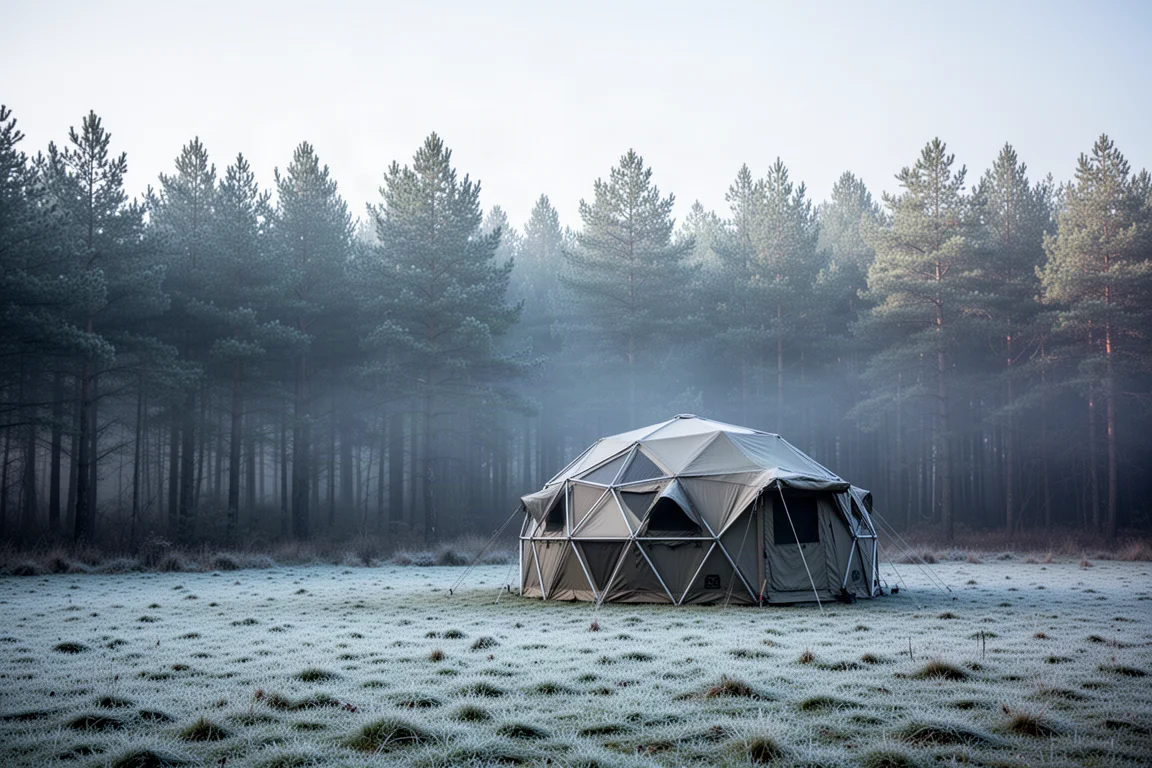
What separates the Dragoon from a typical large camping tent is not a single headline feature but the combination of scale and construction. The body uses a 70 denier ripstop nylon with a 5,000 mm hydrostatic head rating, a waterproof urethane coating, and a DWR finish. The floor, reinforced points, and pole sleeves step up to a heavier 210 denier Oxford nylon with the same 5,000 mm rating. Everything about the package is oversized: the poles, the stakes, the guy lines, and the interior volume.
That build quality is the reason the tent exists in this form. It is engineered around durability and weather resistance first, with weight and pack size treated as acceptable costs rather than design targets.
Key Specs and What Arrives in the Bag
The headline numbers are easy to state and hard to picture until the tent is standing. It measures 77 inches tall and 157.5 inches wide and long, and it packs down to roughly 30 by 17 by 16 inches. Lightfighter rates it for eight people, and eight occupants plus their gear fit inside without crowding.
Key specifications:
- Eight-person capacity with eight doors, each backed by mesh to form an internal fly
- Freestanding geodesic dome design rated as a four-season expedition shelter
- Body fabric: 70 denier ripstop nylon, 5,000 mm hydrostatic head, waterproof urethane coating, DWR finish
- Floor, reinforced points, and sleeves: 210 denier Oxford nylon with a 5,000 mm hydrostatic head rating
- Vent mesh: 40 denier nylon no-see-um mesh
- Four large vents at the top, four vents around the body, HVAC ventilation ducts, and additional upper vents
- A stove jack port that allows the tent to be used as a hot tent
- A removable floor secured with a large number of buckles around the perimeter
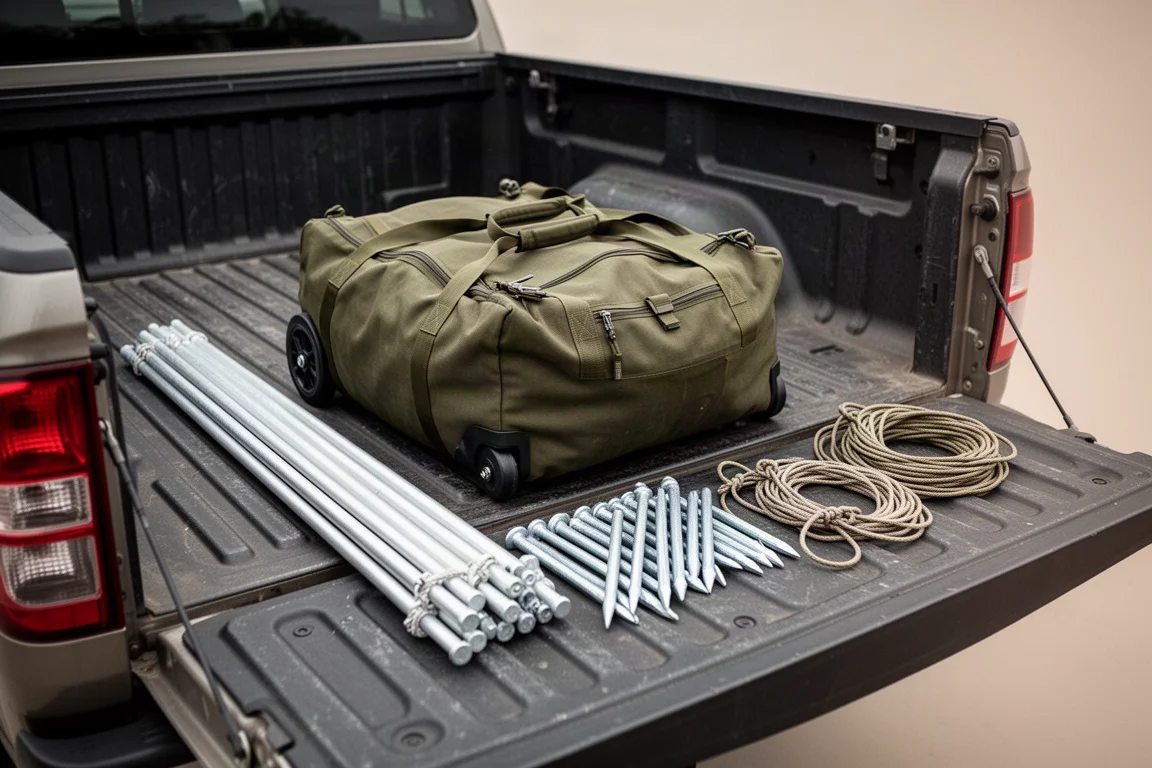
The included kit is substantial. Buyers receive the tent itself, two centre poles, four side poles, four vent poles, 16 attached dynamic guy lines, four additional dynamic guy lines, eight snow and sand parachute stakes, 20 heavy tent stakes, and the rolling storage bag. No ground sheet is included in the package.
The storage bag deserves its own mention because it doubles as a deployment bag. It has wheels on the back, multiple handles, two compression straps on the front, a velcro pocket holding setup instructions, and an internal harness system so it can be worn like a backpack when needed.
Who the Lightfighter Dragoon Is For
This is not a tent for solo backpackers, and Lightfighter does not pretend otherwise. The realistic civilian audience is narrow: hunters with vehicle access, well-equipped groups, and resorts or outfitters running organised outings where a single large shelter replaces several smaller ones. Military forces also use the tent, and Lightfighter states that civilian-market units are overages of a commercial off-the-shelf contract.
The practical use case is transport-based camping. The Dragoon is a tent that goes into the back of a truck, gets driven to a staging point, and may then be moved onto an ATV for the final approach into the mountains. It is not something to roll or carry any meaningful distance.
Groups get far more out of it than individuals. With several people sharing the load and the setup, the weight and bulk stop being the dominant problem, and the interior space becomes a genuine advantage for a base camp that stays put for days.
Main Strengths: Materials, Poles, and Build Quality
The most obvious strength is the material specification. A 70 denier ripstop nylon body with a 5,000 mm hydrostatic head rating, a waterproof urethane coating, and a DWR finish is a serious weather package, and pairing it with a 210 denier Oxford floor and reinforced stress points suggests the tent was designed to be lived in rather than handled carefully.
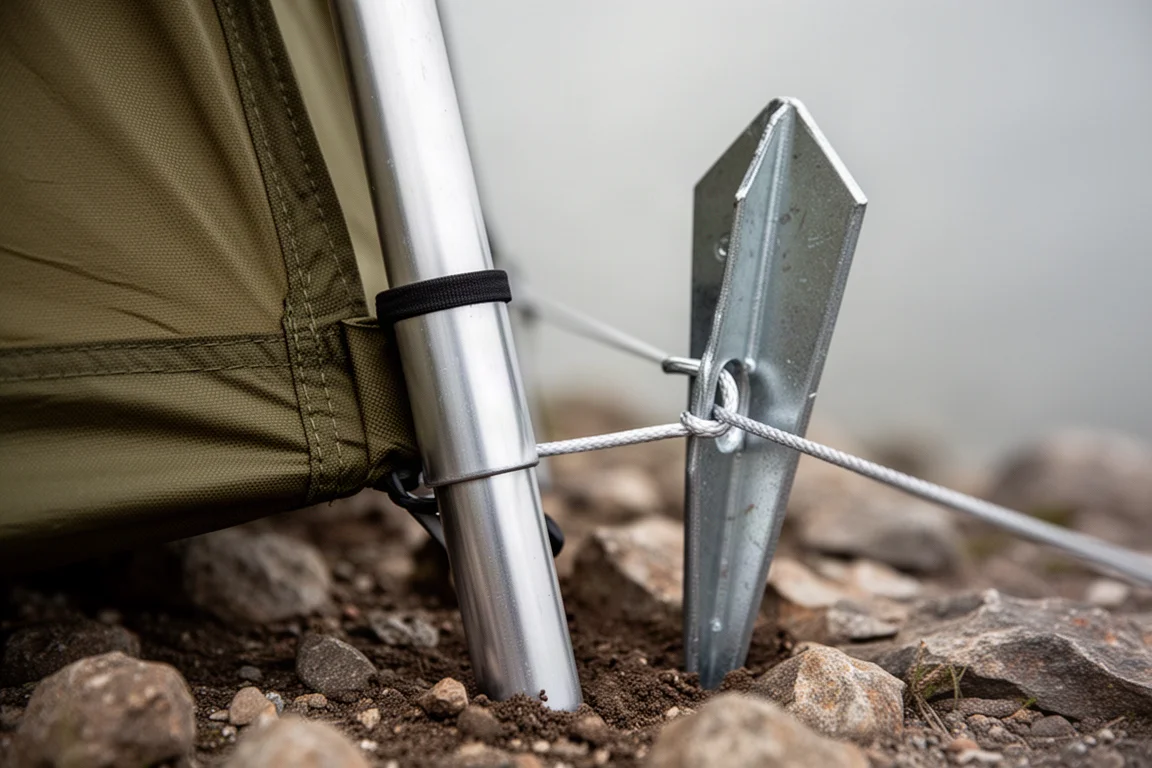
The hardware matches the fabric. The centre poles are the largest and thickest available on a tent of this class, the stakes are unusually heavy-duty, and the guy lines use dynamic cordage that is exceptionally strong. The geodesic dome geometry distributes load across the frame, which is what allows Lightfighter to claim resistance to strong winds, heavy snow loading, and sustained rain.
Inspection of the construction shows no loose threads or obvious shortcuts. Attention to detail is consistent throughout, which matters given both the price and the fact that the tent is intended for people working in demanding conditions.
Size and Weight: The Real Constraint
The Dragoon is genuinely massive in person. Measurements on paper do not convey it: standing next to the pitched tent, the scale is immediately apparent. The 57-pound weight is only part of the story, because the packed bag is large and awkward as well as heavy.
For one person, both size and weight are a real obstacle to manoeuvring, transporting, and pitching the tent. For a group, the same numbers are far more manageable. That single distinction should drive the buying decision more than any specification.
There is also a logistical cost that is easy to overlook. A tent this large that gets wet during a trip has to be dried out afterwards, and that requires either a large indoor space or a yard big enough to pitch it again. Many owners simply will not have somewhere suitable to do that, and a damp tent that never fully dries is a long-term problem.
Setup and Handling in Real Conditions
Setup is not complicated, but it takes time. A first attempt runs roughly 40 minutes, and one person working in calm conditions can reasonably expect around 30 minutes once familiar with the process. In windy conditions, solo setup is not advisable at all.
The physical effort concentrates in the frame. Because the materials and poles are so heavy, getting the two long centre poles seated requires genuine strength. It is achievable for most able adults, but it is not a frictionless process.
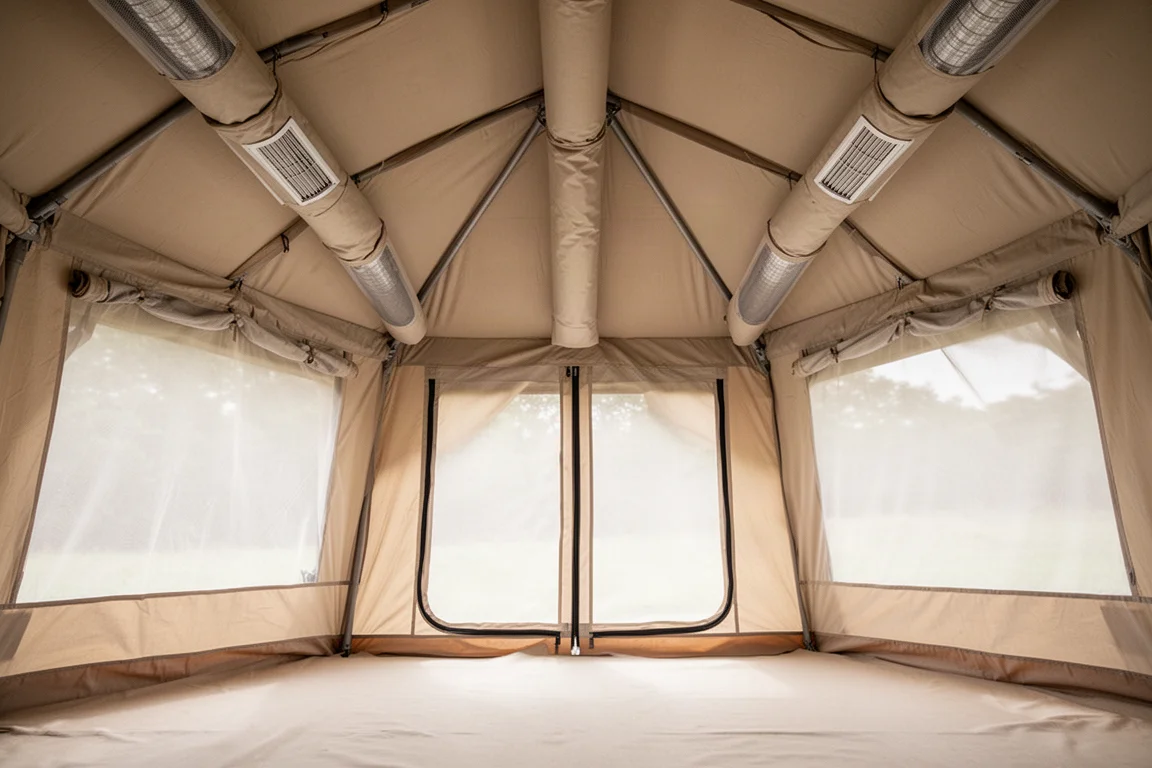
Handling improves sharply with help. A group working together can raise the tent with ease, which is exactly how it is intended to be used. The payoff for that effort is a very large, well-ventilated interior: the eight doors double as enormous vents, the four body vents and four top vents can be opened for maximum airflow, and the mesh behind every door keeps insects out while letting air through.
The design also covers colder and more technical use. The stove jack port allows a wood stove to be run inside, the HVAC ducts support heated or conditioned air, and the removable floor lets the interior be configured differently depending on the trip.
Things to Consider Before Buying
The Dragoon is an excellent tent that will not suit most people, and that is worth stating plainly.
- Weight and bulk: at 57 pounds and with a large packed footprint, it demands vehicle access.
- Setup effort: solo setup in wind is impractical, and the heavy poles require strength to seat.
- Drying space: after a wet trip, the tent needs a large area to dry properly.
- No ground sheet: one is not included, so that is an additional consideration for buyers who want a protective layer under the floor.
- Price: at around $4,300 on the civilian market, this is a specialist purchase rather than an upgrade path.
None of these are defects. They are the direct consequences of building a shelter around weather resistance, durability, and interior volume rather than portability.
Buying Advice
Buy the Lightfighter Dragoon if the priorities line up: a permanent or semi-permanent base camp, transport by truck or ATV, a group to share the work, and a genuine need for a shelter that handles snow loading, heavy rain, and strong wind. Hunters, outfitters, and organised groups are the natural buyers, and for those users the combination of materials, hardware, and interior space is hard to argue with.
Think carefully if the tent will usually be handled by one person, moved on foot, or dried in a small space. Those are the scenarios where the size and weight become daily frustrations rather than acceptable trade-offs. Matching the tent to how it will actually be transported and stored matters more here than in almost any other purchase.
Buyers who like the Lightfighter approach but need something smaller should also look at the brand’s one-person and two-person shelters and its cold weather kit, which share the same design philosophy in a far more portable format.
Conclusion
The Lightfighter Dragoon is a monster of a tent in every measurable way: size, weight, materials, stakes, and poles. Its specification is top notch, its construction is clean, and its all-season capability is the whole point of the design. For a group that needs a large, tough shelter with vehicle support, it delivers exactly what it promises.
For an individual camper, it is simply too much tent. The right decision comes down to transport, storage, and how many people will be sharing the work.
Product link
View more details for Lightfighter Dragoon
This product is mentioned in the review. Check the specifications, options, and compatibility before buying.
View more details for Lightfighter DragoonFurther reading
Related Reviews
Tents
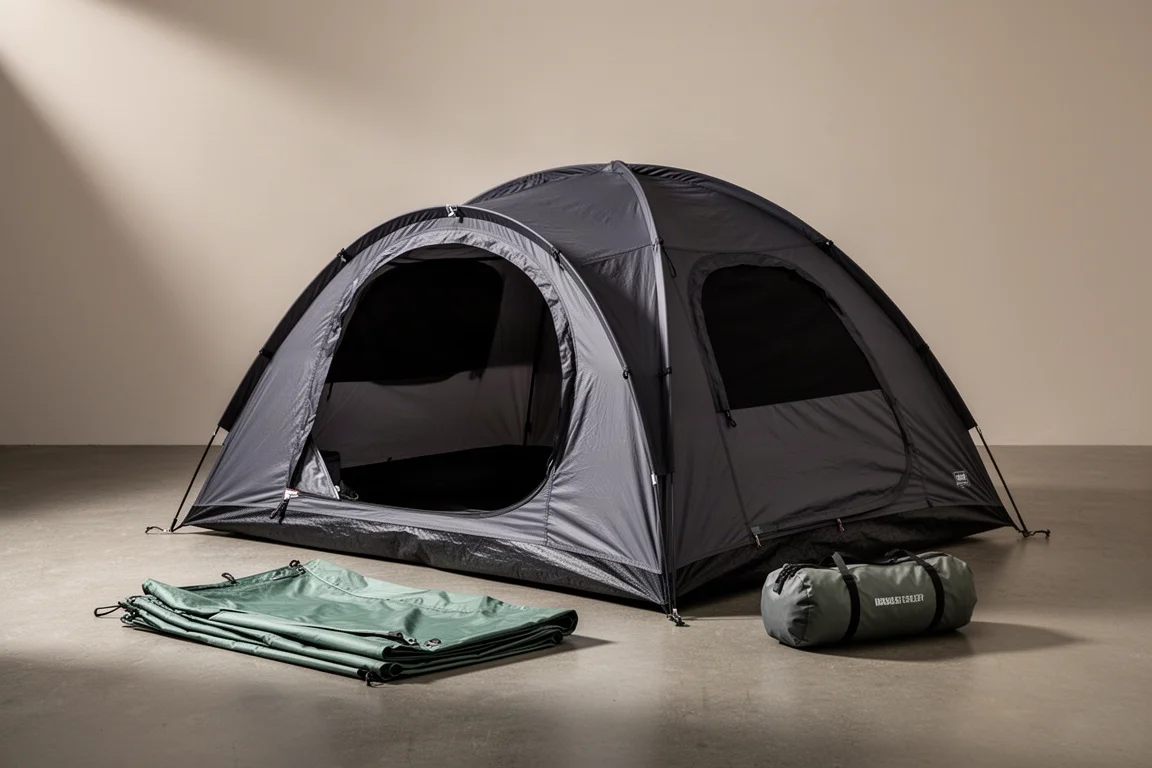
Black Dog Instant Setup 5 to 8 Person Tent Review: Fast Pitch, Serious Weather Problems
A quick-pitching Black Dog tent that goes up in seconds, but wet-weather testing revealed seam leaks, an overstated capacity claim, and awkward doors.
Tents
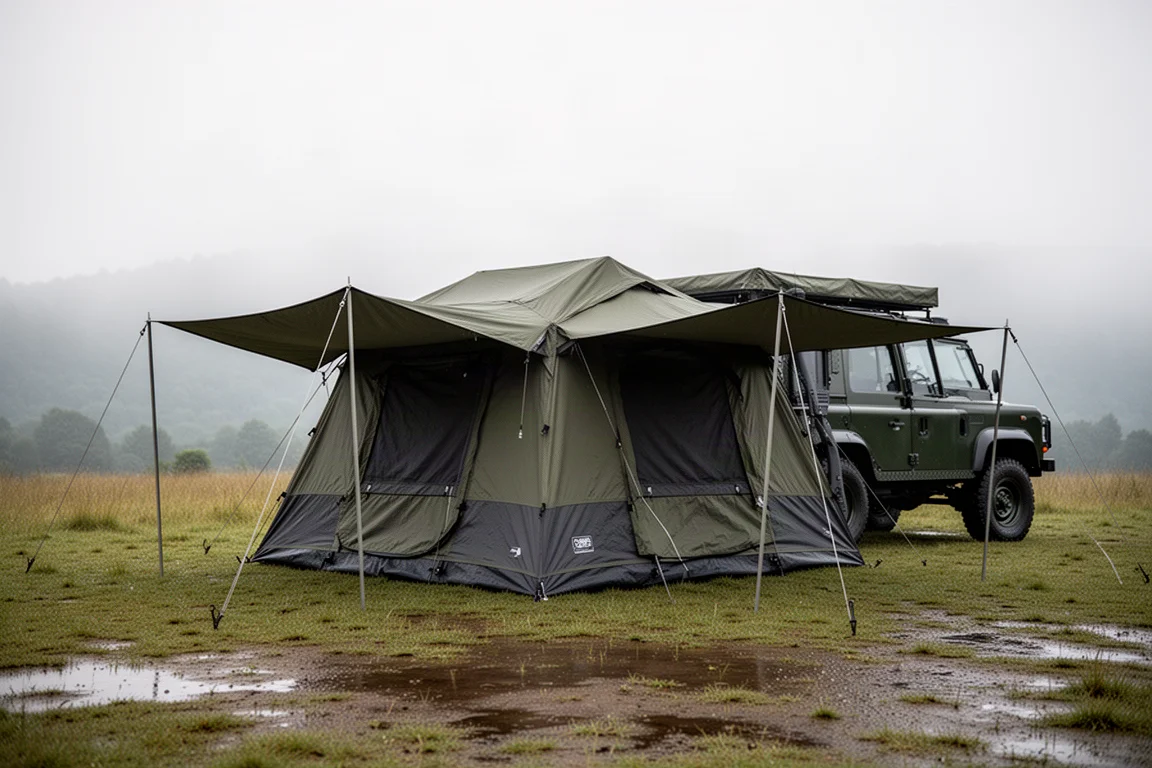
Lone Rider Motorcycle Tent Review: A Big Shelter That Stays Dry
A double-wall motorcycle tent with two large awnings, two entry points, and enough interior height to stand up, plus the pack size trade-off to weigh first.
Tents
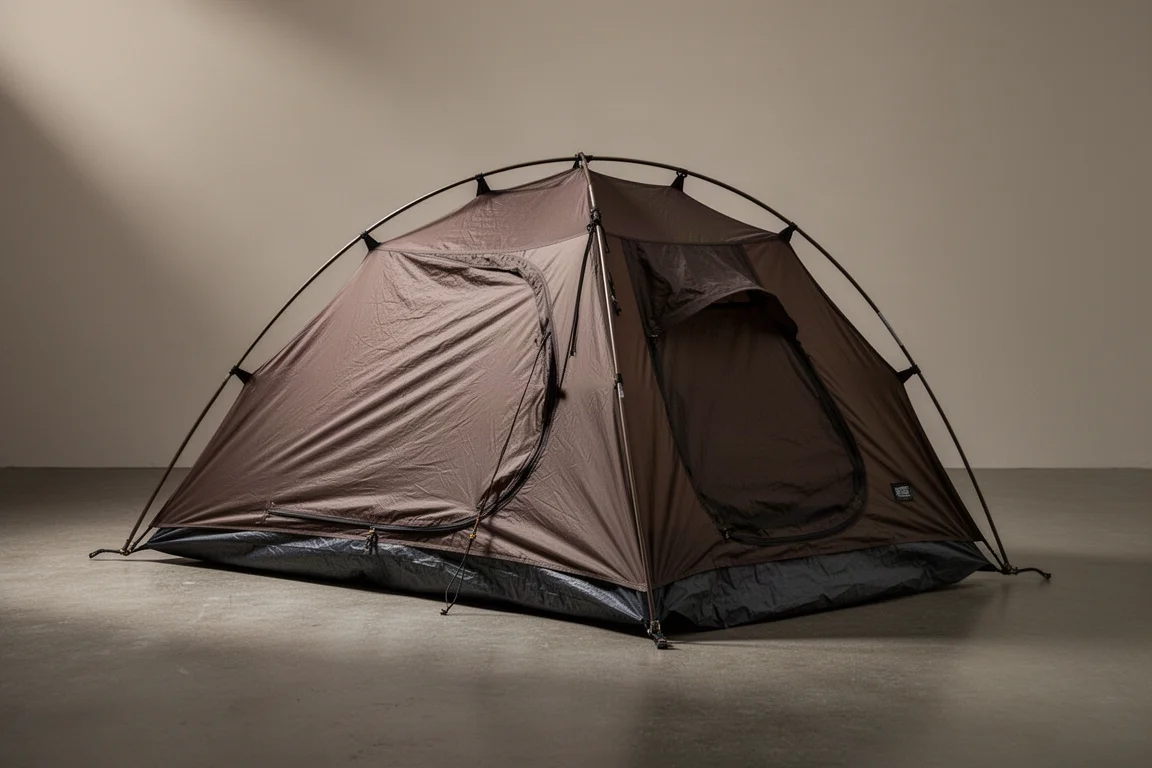
Mountainsmith Lyken 1-Person Tent Review: A Low-Profile Bivy Shelter for Cooler Weather
A close look at the Mountainsmith Lyken one-person tent, covering its real-world dimensions, setup options, materials, and the ventilation trade-offs worth weighing before you buy.