Camping Tents
Light Fighter PH2 All-In Two-Person Tent Review: One Shelter for All Four Seasons
A convertible two-person shelter that moves between three-season and four-season duty, with strong weather protection and a few sizing trade-offs worth knowing first.
Introduction
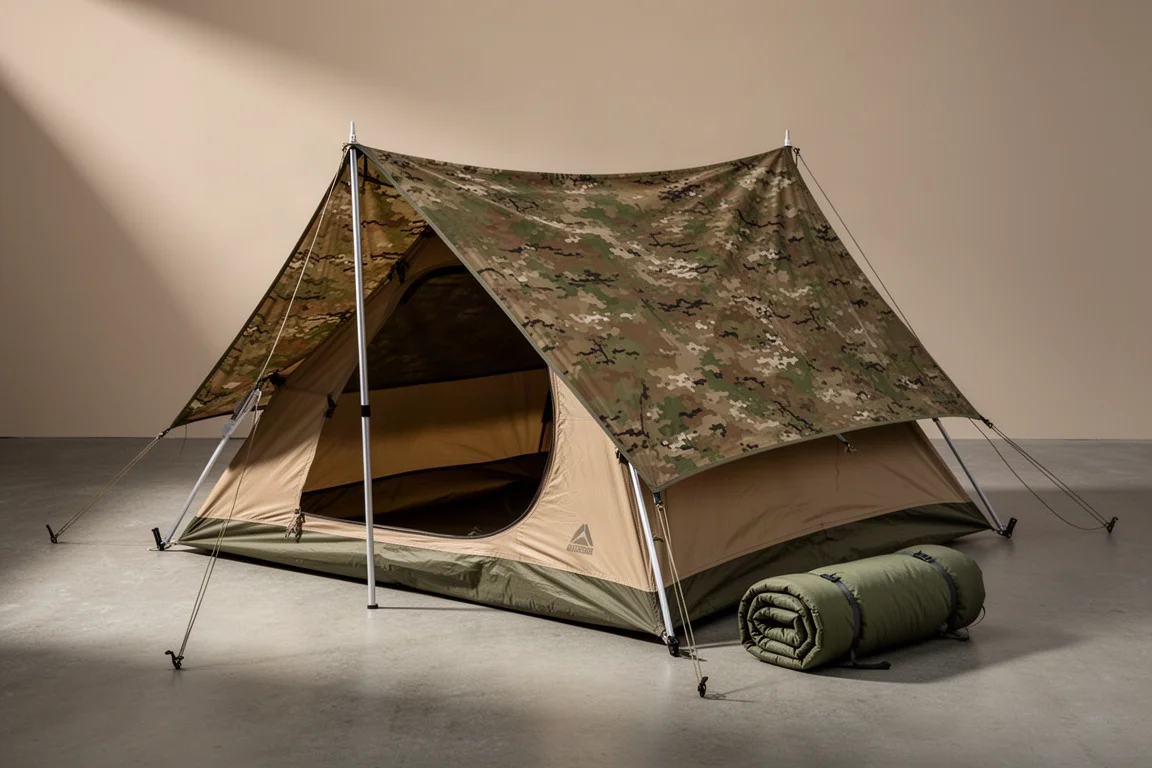
The Light Fighter PH2 All-In two-person tent is the civilian edition of a shelter built for military use, and that lineage shapes almost everything about it. The design is essentially identical to the military version, with the main practical difference being that this one is manufactured overseas rather than in the United States. Light Fighter itself is a United States company and a military contractor, producing everything from tents to deployment bags.
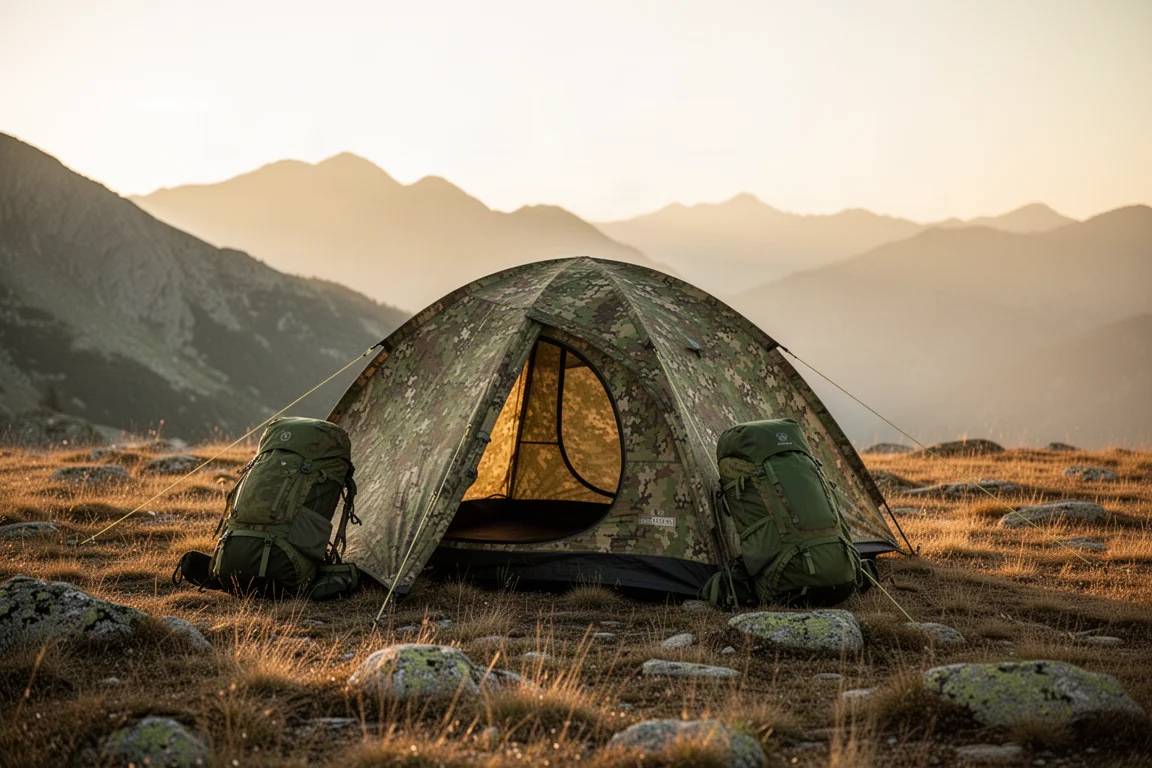
The PH2 name is a deliberate play on the old military pup tent, and this system is an evolution of that idea rather than a copy of it. What arrives in the All-In kit is more than a tent. There is the inner body with its mesh walls and bathtub floor, the cold weather kit known as the Windbreaker, the fly, a ground sheet, aluminium poles and stakes, snow anchors, and a storage bag. The result is one shelter that pitches as a three-season tent in warm weather and converts into a four-season tent when the temperature drops.
Very few tents on the market today can move between three-season and four-season duty and back again, and even fewer do it at a price that stays out of four-figure territory. That combination is what makes this shelter worth a closer look.
Who This Tent Is For
This is a shelter for campers who want one system instead of a cupboard full of tents. If your trips span summer backpacking, shoulder-season weekends and winter overnights, the PH2 All-In covers all of it without asking you to buy a second shelter later.
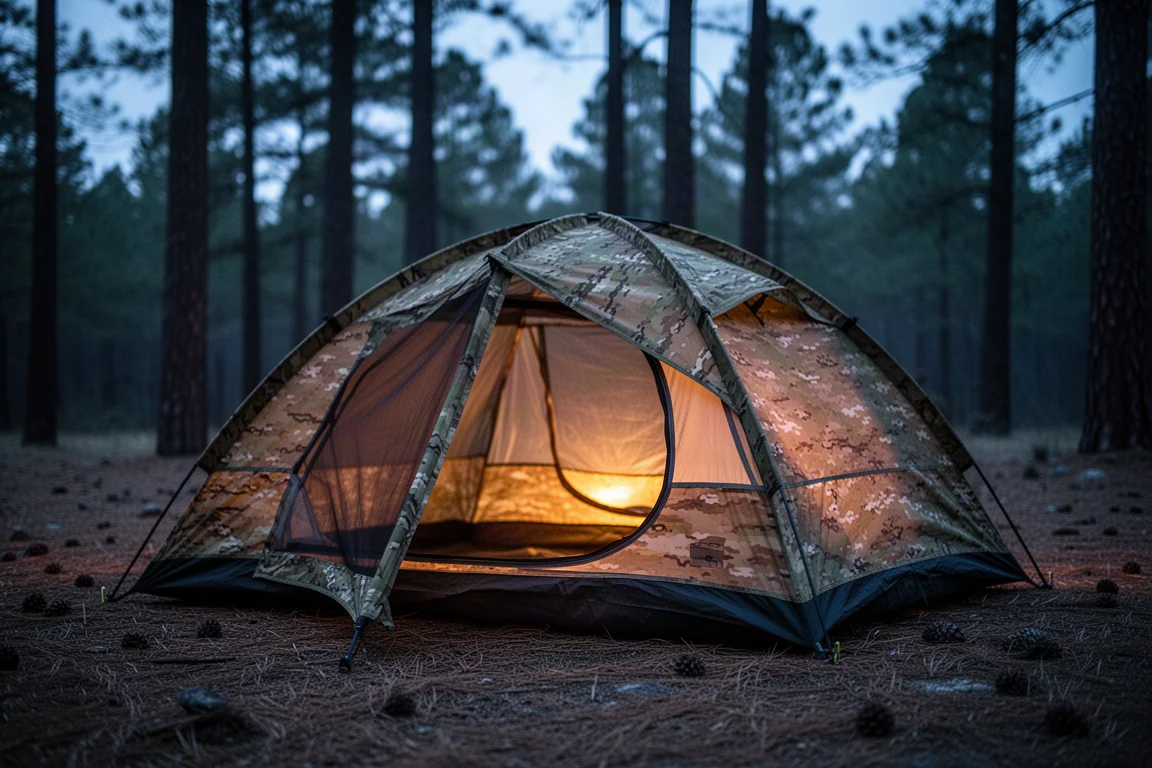
It also suits anyone who values weather resistance over featherweight packing. In its three-season configuration the ventilation is excellent, and the addition of the cold weather kit turns it into something you can reasonably take into snow and wind. Campers who have previously avoided winter camping because of the cost of a dedicated four-season tent are the clearest fit here.
The group that should think carefully is taller campers. Interior usable length is the limiting factor on this design, and it matters enough that it gets its own section below.
Main Strengths
Year-Round Convertibility
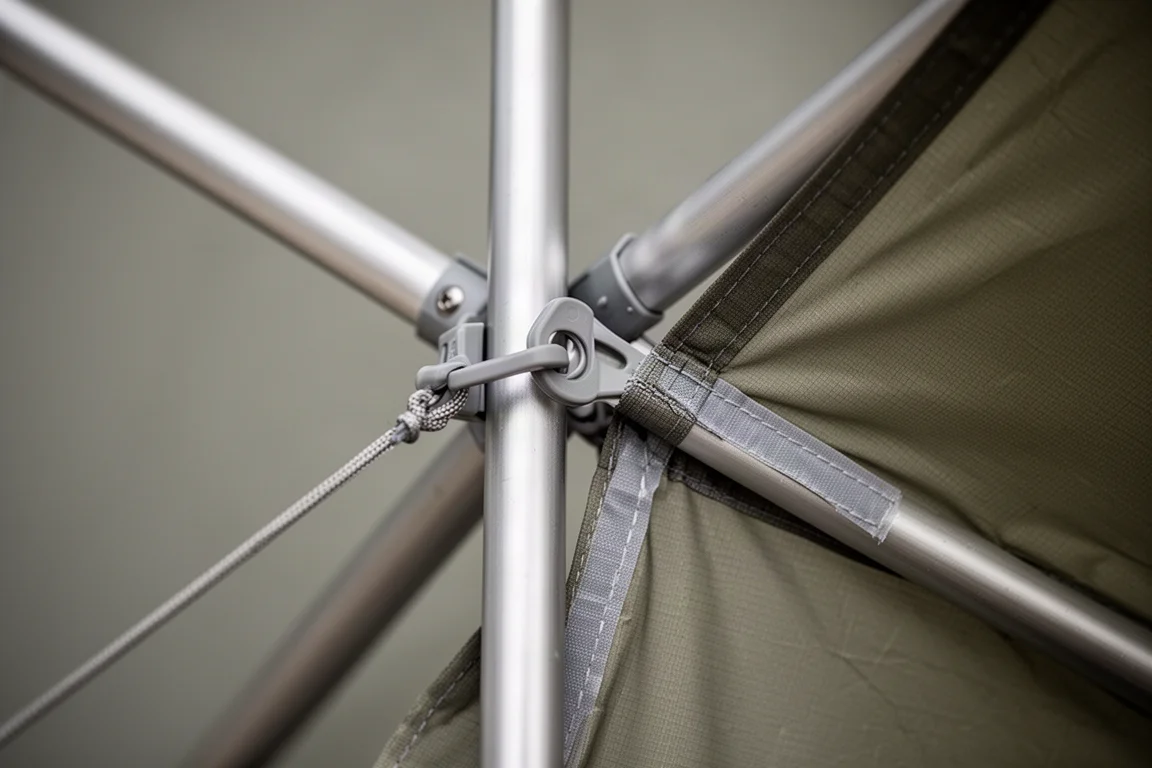
The headline feature is the Windbreaker cold weather kit. It lays over the top of the tent inner and attaches to the poles beneath the fly, covering the mesh and converting a three-season shelter into a four-season one. Its job is to block cold wind and hold in some heat, while still allowing moisture to move through the material so condensation stays manageable.
When the weather warms up, the Windbreaker comes off and the tent runs with just the inner and the fly. That single-system flexibility is genuinely unusual, and the fact that it is available here rather than at the four-figure sums typical of comparable convertible shelters is the heart of the value proposition. The cold weather kit is arguably the most compelling piece of outdoor design to arrive in the last decade, and it is surprising how few other manufacturers have followed it.
Weather Protection That Holds Up
Waterproofing has been consistently strong. This shelter has stayed dry through knockdown thunderstorms, ice storms and snow storms without leaking. In winter conditions it handles snow loading well and stands firm in strong wind once it is staked and guyed out.
The one-person version of this design has been used in winds around 40 mph without issue, and this two-person version handles 30 to 35 mph without drama. For a shelter at this price, that is meaningful reassurance, particularly for anyone moving up from a lightweight summer tent.
Build Quality and Setup
Stitching and seam taping are excellent, with no loose threads or sloppy finishing anywhere on the shelter. The materials are chosen for durability rather than gram-counting: a 70D nylon ripstop inner, a 30D nylon ripstop fly, a 30D water-resistant nylon cold weather kit, and aluminium poles and stakes.
Pitching is a straightforward process. The tent alone goes up in roughly ten minutes, and adding the cold weather kit takes about five more, so the full kit is realistic to set up in around fifteen minutes. The camo pattern and muted colour palette also give it a sharper, more purposeful look than the brightly coloured playhouse-style tents that dominate family camping aisles.
Things to Consider Before Buying
Interior Length Limits Taller Campers
The interior is 52 inches wide, or 4 feet 4 inches, and it has a peak height of 40 inches, or 3 feet 4 inches. That width comfortably fits two people and two sleeping pads. Length is where the design falls short. Usable interior space measures 72 inches, or 6 feet, and the military original was built for utility rather than comfort, so those same measurements carried over to the civilian version.
If you are 6 feet or under, you will be fine. At 6 feet and over, your head or your feet will likely touch a wall, and possibly both. Sleeping diagonally solves it but effectively turns this into a one-person tent. This is the single most important thing to check against your own height before ordering.
Weight and Packed Size
Trail weight, which covers the inner, the fly and the stakes, comes in at 5.9 lb. That is reasonable for a three-season shelter and genuinely good for something that can also serve as a four-season tent. The full All-In two-person kit weighs 9.9 lb, which is heavy for carrying any real distance.
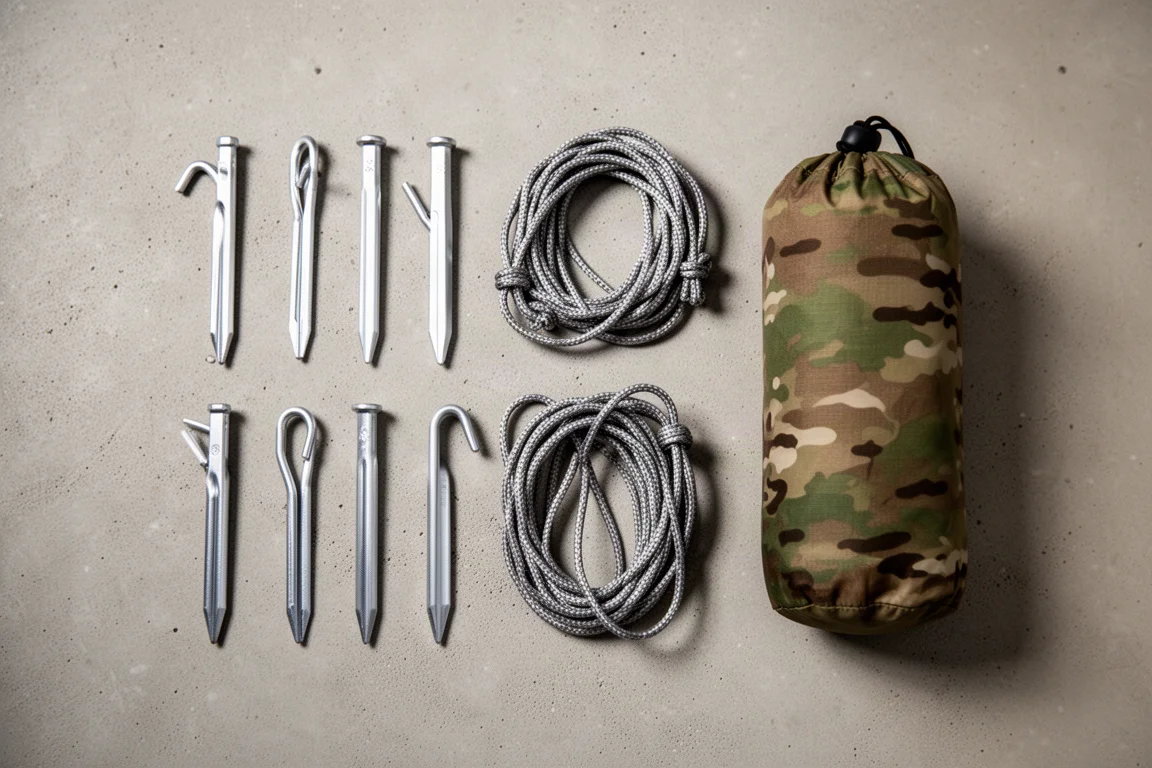
Packed, the entire kit sits in the tough sack at 19 inches by 8 inches, and that sack is made from a 500D MultiCam nylon. Inside a backpack it takes up a substantial amount of room. This shelter was never designed to be ultralight, so the honest framing is that you are trading pack volume and weight for year-round capability.
Stake Count and Fly Ventilation
The All-In kit includes six tent stakes. That is enough to stake out the body, one at each corner plus one for each door, but it is not enough to stake out the guylines. For a kit at this price point, at least four more stakes should be in the bag.
There is a second issue worth flagging. On the head and foot panels, the fly does not pull away from the inner, which reduces airflow across the body. Because that airflow is limited, condensation can form on the back of the fly and come into contact with the tent inner. If that panel could be staked out, airflow would improve dramatically and condensation would drop just as sharply. Taller campers who are already pushing the interior length will make this worse, since they press the inner against the fly. It is an old-school design detail that Light Fighter should correct.
Buying Advice
The PH2 All-In two-person kit is the complete version of this system, bundling the ground sheet, the cold weather kit, snow anchors and the storage bag. You do not have to buy everything at once. The components can be purchased separately, so a camper who only wants the three-season tent can start there and add the Windbreaker later.
For pricing context across the series, the one-person tent is $368 and the two-person tent is $471, with the All-In versions costing more for the additional components. Compare that against convertible four-season shelters from other brands, which typically run to $1,000 or beyond, and the value case is clear.
If you are 6 feet or under and you want one shelter that works from summer through winter, this is an easy recommendation. If you are taller, or if low pack weight is your priority, look at a larger or lighter dedicated option instead. The right answer depends almost entirely on your height and how much you value carrying one tent rather than two.
Conclusion
The Light Fighter PH2 All-In two-person tent is one of the most impressive shelters to come along in a long time. The ability to convert from a three-season tent to a four-season tent and back is genuinely ingenious, and it makes far more sense than buying two separate tents for two separate seasons. The weather protection, build quality and Windbreaker kit all live up to the promise.
The caveats are real but specific: a 6-foot usable interior length that punishes taller campers, a heavy and bulky full kit, six stakes where ten would be sensible, and a fly panel that needs the ability to be pulled away from the inner. None of these are deal breakers for a camper of average height who wants year-round coverage from a single purchase. For that reader, this is a confident buy.
Product link
View more details for Light Fighter PH2 All-In Two-Person Tent
This product is mentioned in the review. Check the specifications, options, and compatibility before buying.
View more details for Light Fighter PH2 All-In Two-Person TentFurther reading
Related Reviews
Camping Tents
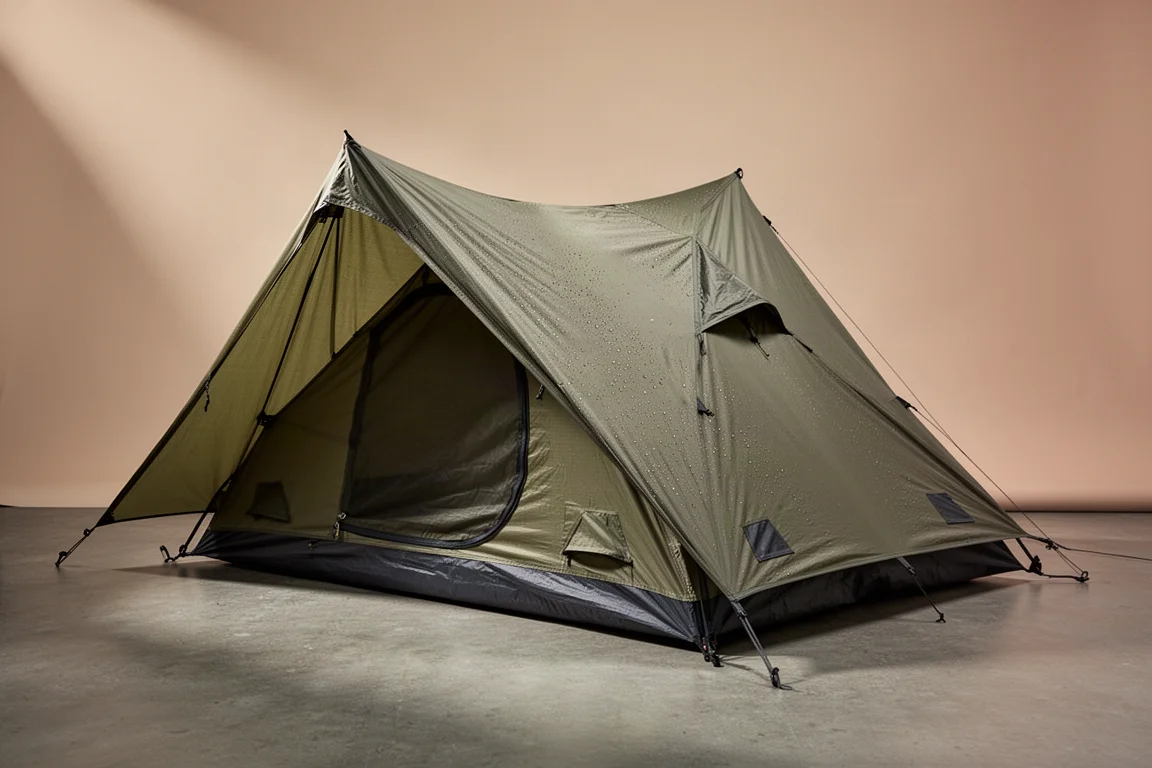
3F UL Gear Taiji Two-Person Tent Review: Field Waterproofing Results and Buying Advice
The Taiji pairs an attached fly with a removable inner, but sustained rain exposed untaped vent seams that need sealing before this shelter can be trusted.
Camping Tents
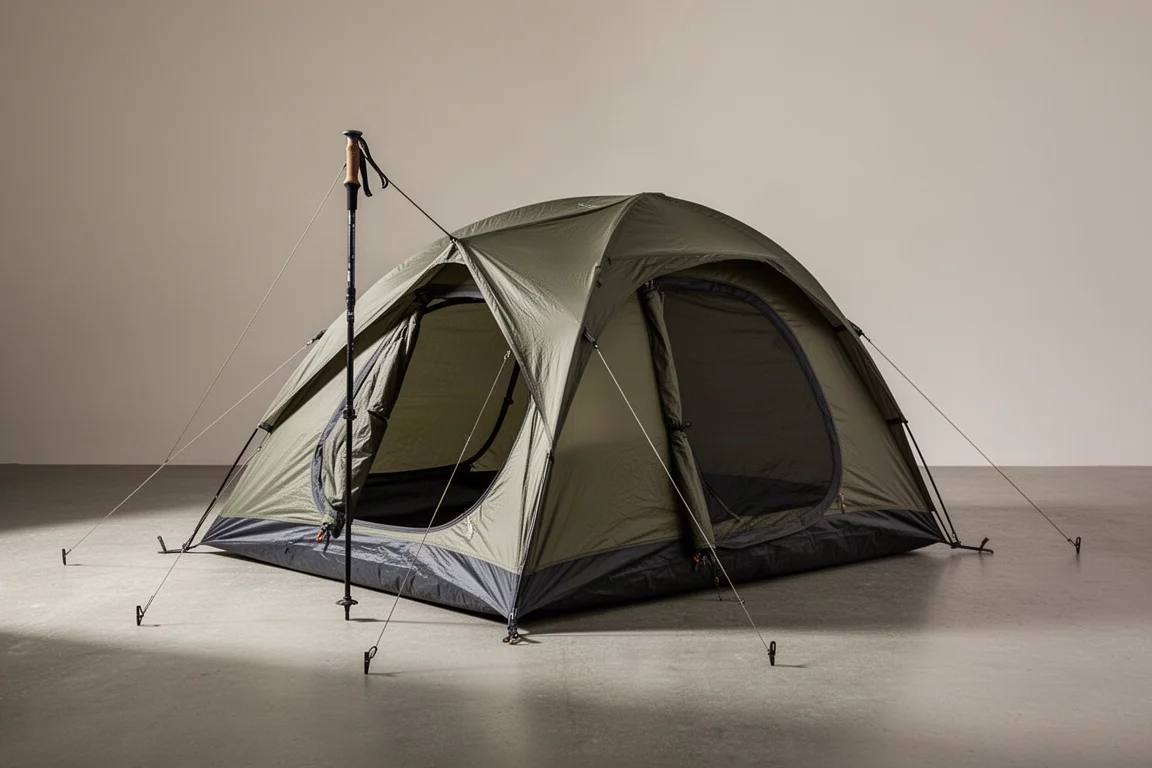
3FUL Gear Lanshan 2 Pro 4-Season Review: A Sub-$200 Single-Wall Trekking Pole Tent
An early look at the 3FUL Gear Lanshan 2 Pro 4-Season, covering its straightforward pitch, generous interior space, and the condensation and seam-sealing questions that come with any single-wall shelter.
Camping Tents
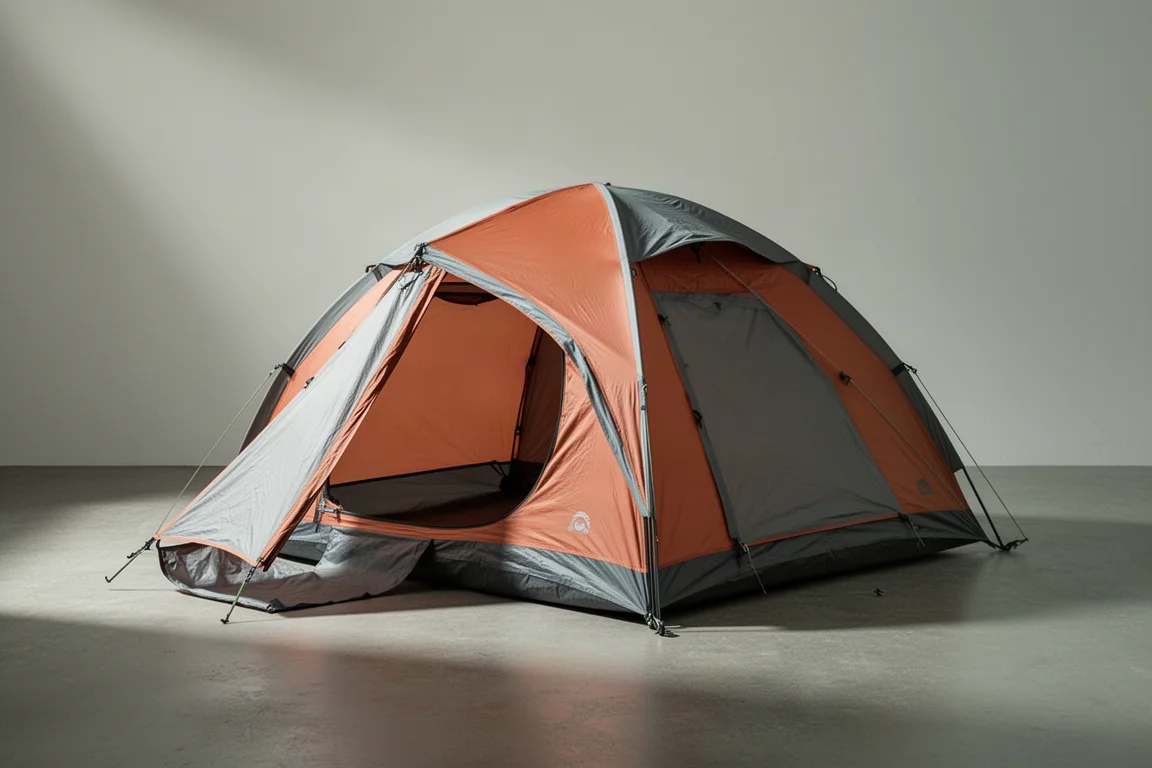
Alps Mountaineering Lynx 1-Person Tent Review: Big Value in a Small Budget Tent
A close look at the Alps Mountaineering Lynx 1-Person Tent, covering real interior dimensions, materials, setup time, ventilation limits, and who should buy it.