Camping Tents
Light Fighter One Person Tent Review: A Military Shelter With Civilian Manners
A detailed look at the Light Fighter One Person Tent, from its ballistic fiber poles and 5,000 mm coatings to real-world wind, rain, and snow performance.
Introduction
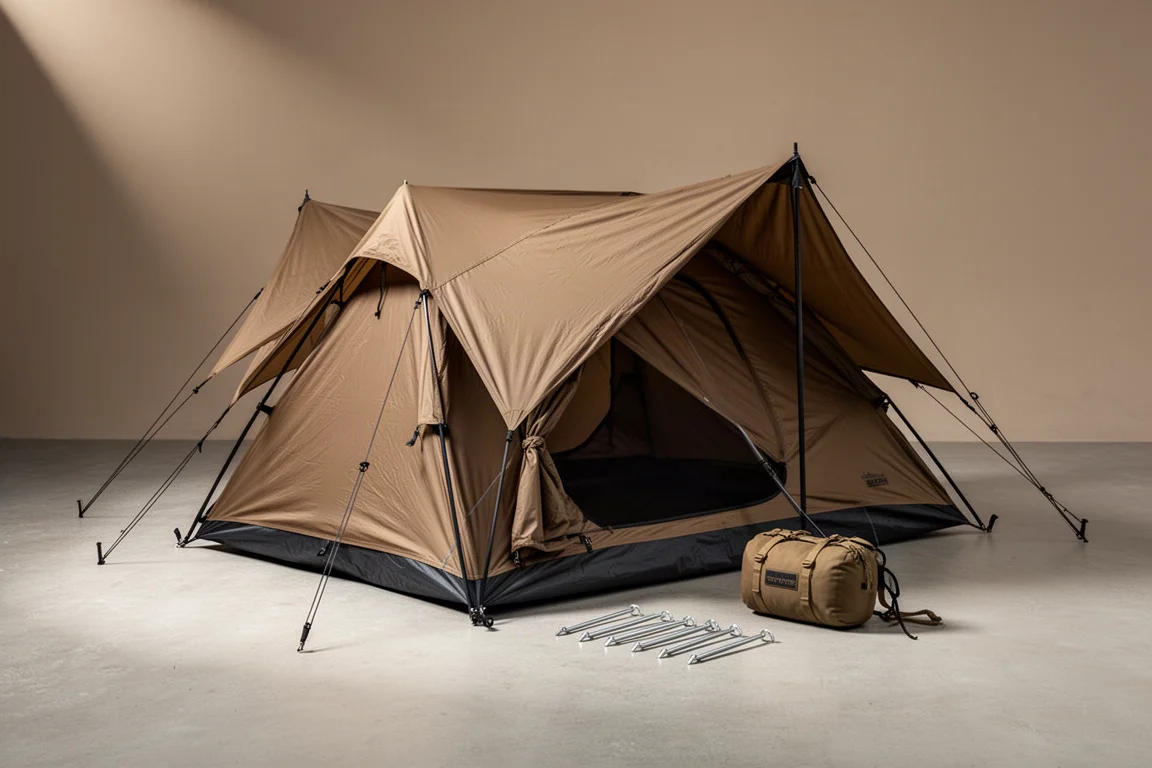
The Light Fighter One Person Tent is a military-grade shelter built around a distinctly civilian backpacking layout. It pairs a mesh inner body with a full-coverage fly, replaces conventional aluminum poles with a ballistic fiber frame, and can be converted into a cold-weather shelter with an optional add-on kit. Retail pricing sits at about $334 in coyote brown and $346 in OCP camo, while military surplus examples have been seen for $100 to $200.
That combination of tactical construction and civilian usability is what makes the design stand out. It is intended both for ground sleeping and for use on a cot, which puts it in a different category from most lightweight backpacking tents. A two-person version also exists, though the cold weather kit is not offered for that model at this time.
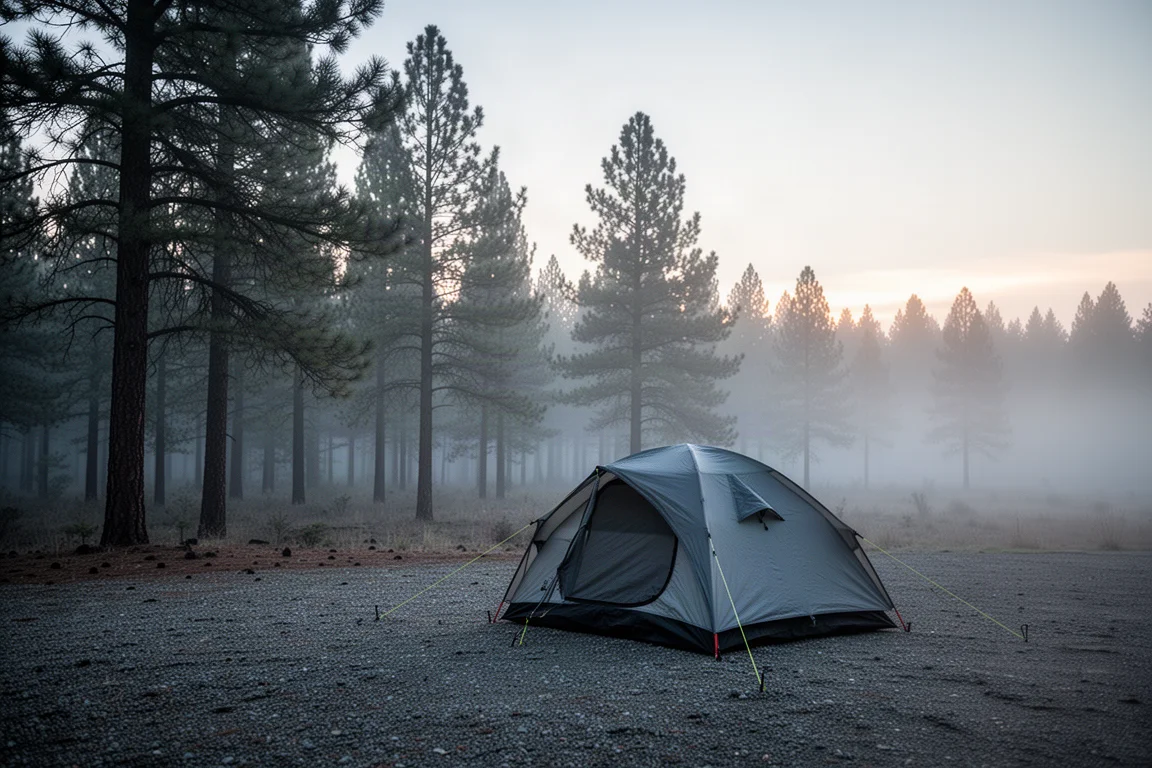
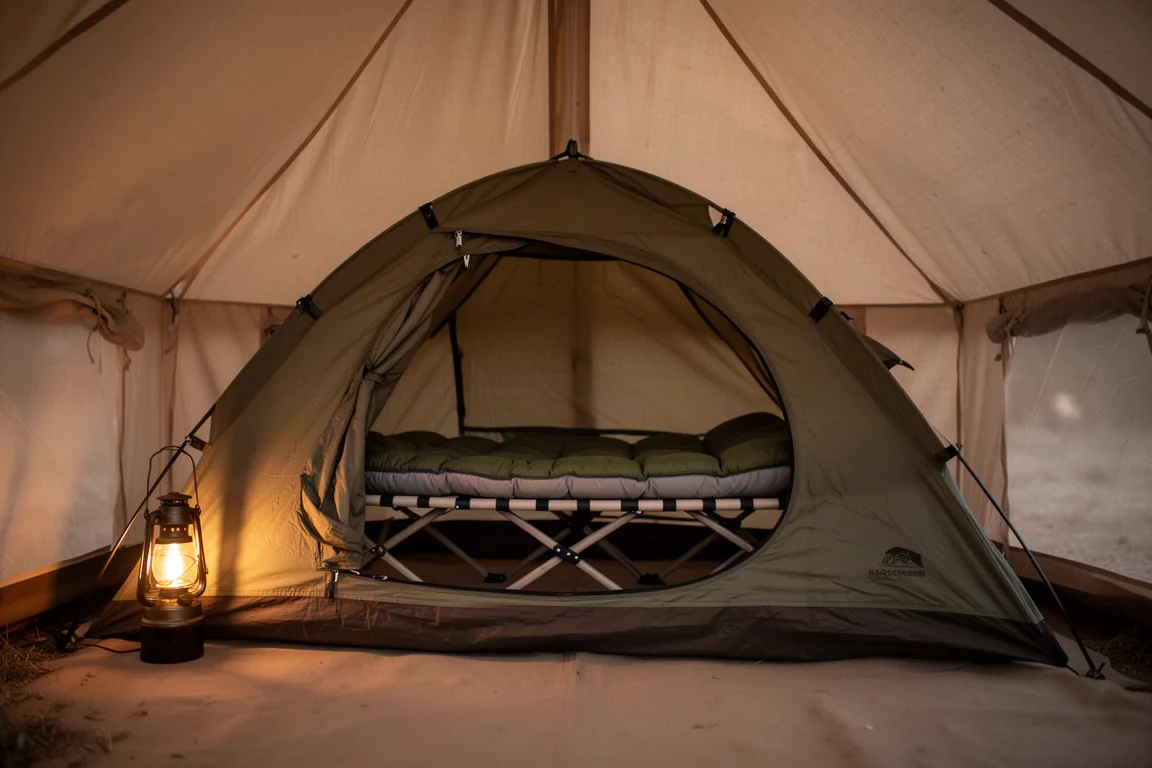
The tent is semi-freestanding: the body holds its shape on its own, but the doors need to be staked out to reach a proper pitch. Two doors and two vestibules give it a level of livability that most military shelters do not attempt.
What Comes in the Box
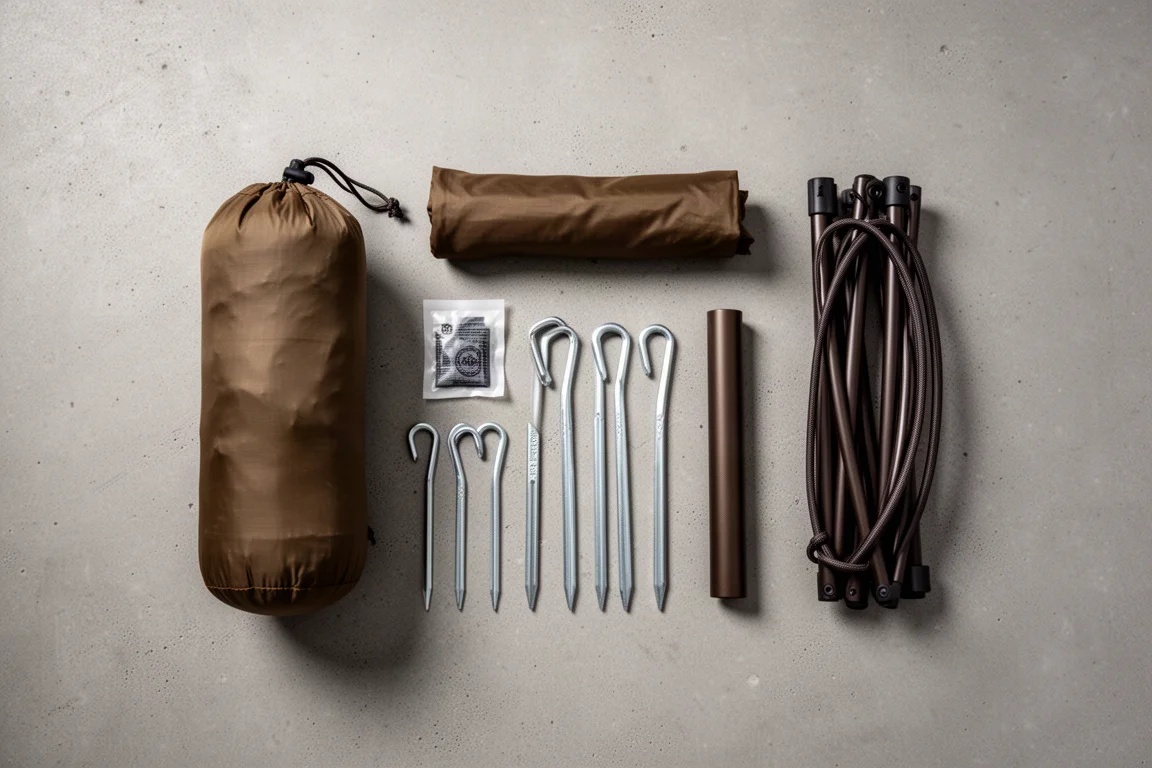
The package covers the essentials for immediate use. Buyers receive the tent body with its poles, the fly, six aluminum stakes, a storage bag, a repair kit, a setup guide, and a pole replacement sleeve.
Packed down, the shelter measures roughly 16 inches by 6 inches, and total weight comes in at about 4 pounds 12 ounces with everything included. For a three-plus season shelter with this much interior volume, that figure is reasonable, and the generously sized storage bag makes packing it away straightforward rather than a wrestling match.
Build, Materials, and Weather Protection
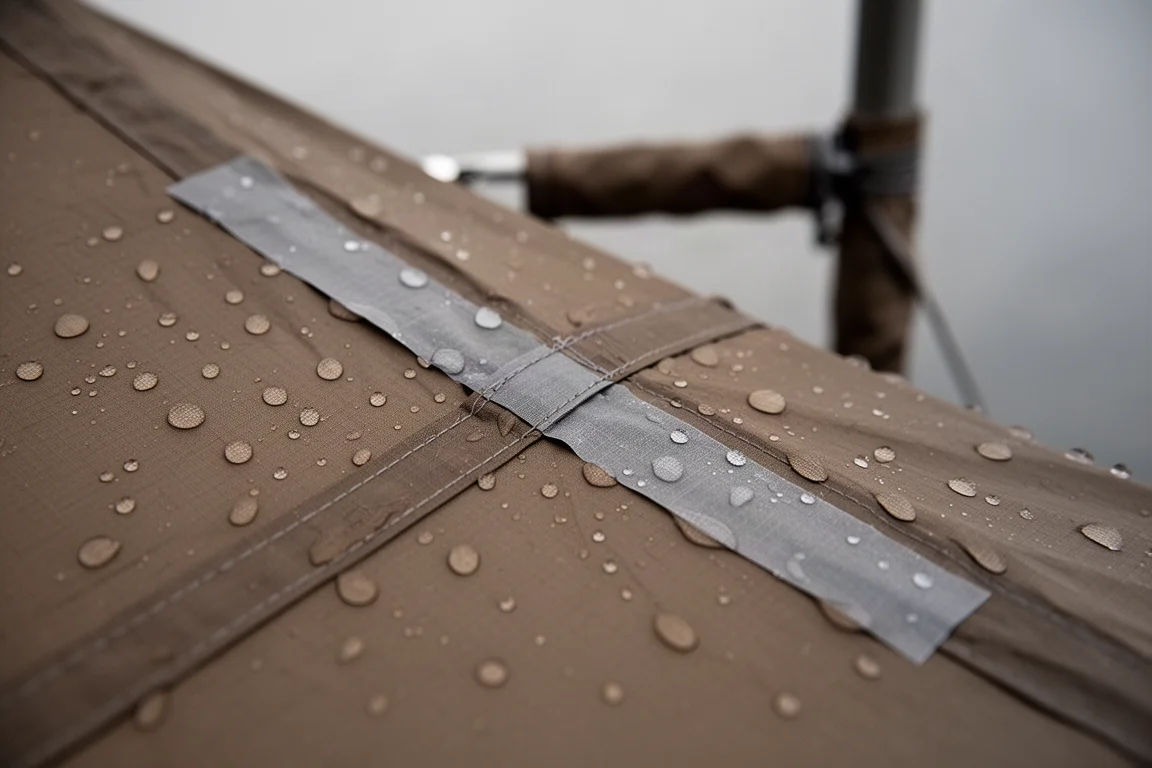
The inner body is a 40 denier poly mesh treated with permethrin, a bug repellent treatment. The floor uses a 70 denier nylon ripstop with a PU coating and a 5,000 millimeter hydrostatic head rating. The fly is a 40 denier nylon ripstop, also PU coated, and it carries the same 5,000 millimeter rating. Seams are taped on both the body and the fly.
The frame is the most distinctive part of the design. Instead of aluminum, the current version uses what the company calls Ghost Bone ballistic fiber poles, arranged as one large spider pole. They are described as lighter, stronger, more flexible, and more wind resistant than the aluminum poles used on earlier versions. Staking hardware is aluminum.
Pitched, the tent measures 84 inches long and 38 inches tall, with a floor that is 32 inches wide at the bottom and 28 inches wide at the head. Each vestibule pulls 36 inches away from the body, which creates genuinely useful storage space for packs and bulky gear. The zippers are two-way, with one at the top and one at the bottom, and the doors roll back and tie out of the way. Storm flaps cover the zippers and are held in place by three Velcro locks. Inside, there are mesh pockets in the corners front and back, two more mesh pockets up top, and loops for hanging small items.
Who This Tent Is For
This shelter suits two overlapping audiences. The first is military and tactical users who want a durable, weather-capable tent that works on the ground or strapped to a cot, with corner buckles provided for cot attachment. The second is civilian campers who want military-grade toughness without a complicated setup.
Versatility is the core selling point. The tent can be pitched using only the fly and a ground sheet, which is sold separately, in a configuration the company calls the hasty hooch. Optional extras extend the system further: a cold weather kit that adds a wind-blocking fabric layer, a tough sack external pouch that attaches to PALS webbing on a tactical pack, and a camouflage netting kit.
Main Strengths
Material and build quality are high for the money, and that holds true at both retail and surplus pricing. Long-term field use over roughly two to three years has covered rain, storms, and winter conditions, and the shelter has held up well.
Weather protection is the headline. In one stretch of heavy rain that lasted about six hours straight, the tent stayed dry. Staked out properly, it has handled winds around 40 miles per hour without drama, and it has carried roughly six inches of snow on the fly without issue. Condensation management is good, air circulation is effective, and the fly sits away from the body so the two do not come into contact. The bug mesh has kept insects out, and the zippers run smoothly.
Setup is quick once the process is familiar, at roughly five minutes, with the cold weather kit adding about another five. That kit is the smartest part of the whole system, since it turns a strong three-season shelter into something that can handle snow loading and strong winter winds.
Value is where the argument becomes compelling. True four-season tents with conversion kits commonly start around $800, with the conversion kits themselves running $250 to $300. The Light Fighter approach delivers a comparable three-season-to-four-season transition for a fraction of that outlay, and surplus availability pushes the entry point even lower.
Things to Consider Before Buying
The main limitation is that the fly cannot be staked out away from the body at the front and back. As a result, the overall pitch is not as taut as it could be, and the fly can flap a little in wind. Adding that capability would tighten the setup and improve airflow at the same time.
The tent is tall, which makes it comfortable to sit up and change clothes inside, but a tall profile also catches more wind. Guy line attachment points exist in four places, yet no guy lines are included, and no extra stakes beyond the six supplied. For winter use especially, plan on adding four guy lines and four additional stakes to pin the shelter down properly.
Ventilation is good rather than excellent, and the front and rear sections cannot be opened up the way the sides can. This is also not an expedition tent. It handles an average winter storm well, but a true four-season shelter remains the right choice for blizzard conditions.
Condition matters if buying surplus. One surplus unit arrived with a small leak at one of the doors that required seam sealing to resolve, while a tent sourced directly from the manufacturer has stayed dry. Surplus pricing is excellent, but inspect the fabric and seams carefully before committing.
Buying Advice
The decision largely comes down to sourcing. Buying new from the manufacturer gives predictable condition and the latest ballistic fiber pole design, at roughly $334 in coyote brown or $346 in OCP camo. Military surplus is far cheaper, often in the $100 to $200 range, and represents remarkable value for a shelter of this capability, provided the specific unit is sound.
Whichever route you take, budget for a small set of additions. If winter camping is part of the plan, the cold weather kit is the single most valuable upgrade, since it is what unlocks four-season behavior. A ground sheet is worth adding for the fly-only hasty hooch configuration, and four guy lines plus extra stakes will make the pitch noticeably more solid in wind.
For anyone carrying a tactical pack with PALS webbing, the tough sack is a practical extra that moves the shelter to the outside of the pack and frees up interior space. None of these additions are mandatory for fair-weather camping, but they are what turn a strong three-season tent into a genuinely year-round system.
Conclusion
The Light Fighter One Person Tent earns its reputation through construction rather than marketing. It delivers taped seams, 5,000 millimeter coatings on both floor and fly, a strong and flexible pole system, two doors, two large vestibules, and enough interior height to live in comfortably.
Its weaknesses are specific and fixable: a fly that cannot be pulled taut at the front and back, no included guy lines, and ventilation that is good but not exceptional. Add the cold weather kit and a few accessories, and the result is a highly versatile shelter that covers three-season camping and most winter conditions at a price that true four-season tents rarely approach.
Product link
View more details for Light Fighter One Person Tent
This product is mentioned in the review. Check the specifications, options, and compatibility before buying.
View more details for Light Fighter One Person TentFurther reading
Related Reviews
Camping Tents
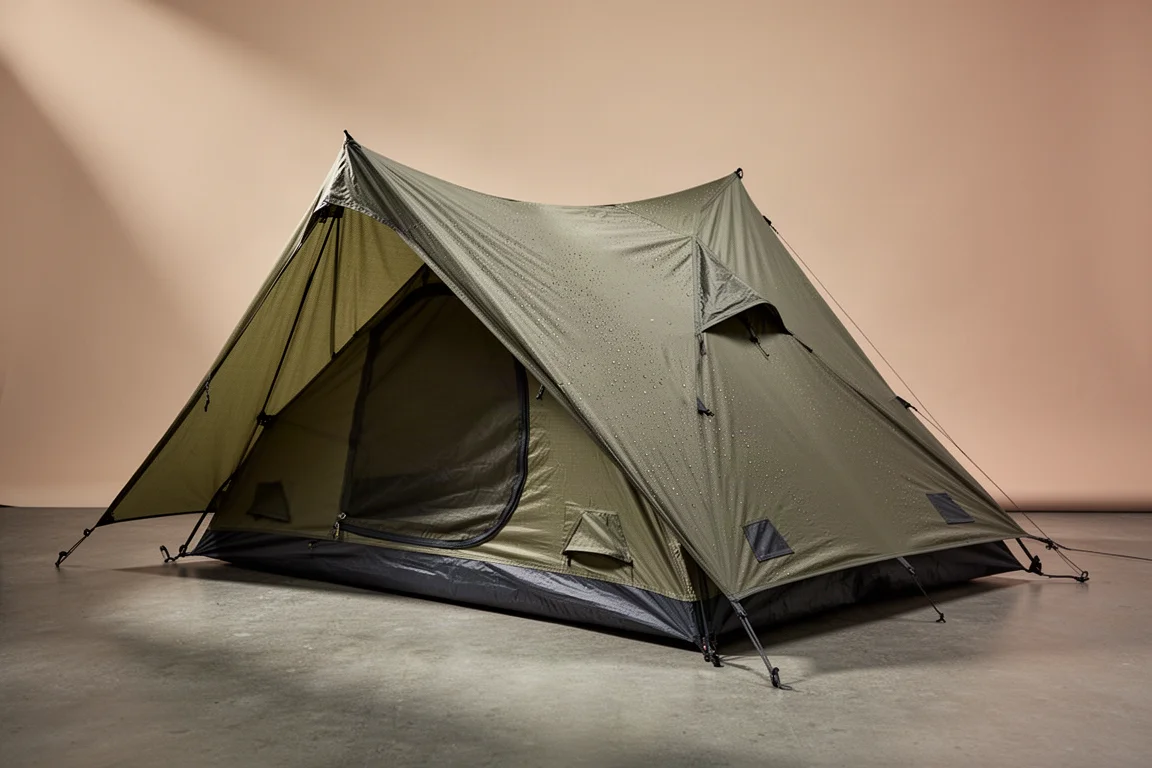
3F UL Gear Taiji Two-Person Tent Review: Field Waterproofing Results and Buying Advice
The Taiji pairs an attached fly with a removable inner, but sustained rain exposed untaped vent seams that need sealing before this shelter can be trusted.
Camping Tents
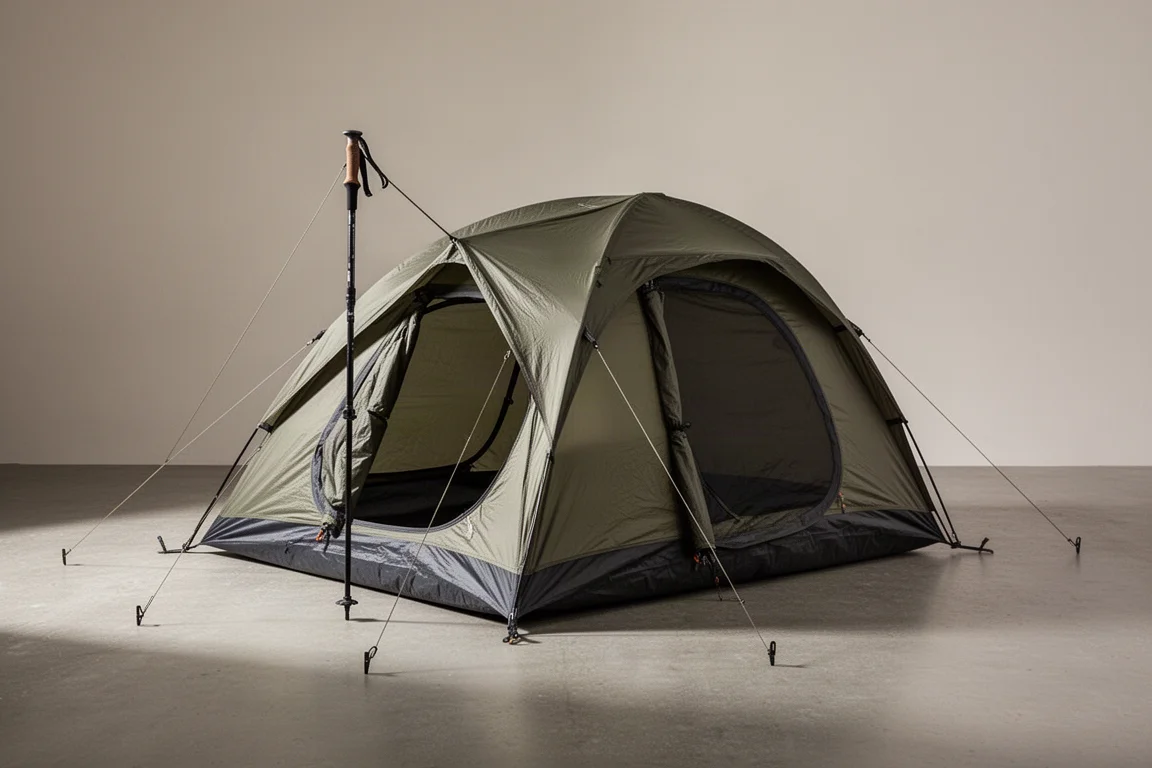
3FUL Gear Lanshan 2 Pro 4-Season Review: A Sub-$200 Single-Wall Trekking Pole Tent
An early look at the 3FUL Gear Lanshan 2 Pro 4-Season, covering its straightforward pitch, generous interior space, and the condensation and seam-sealing questions that come with any single-wall shelter.
Camping Tents
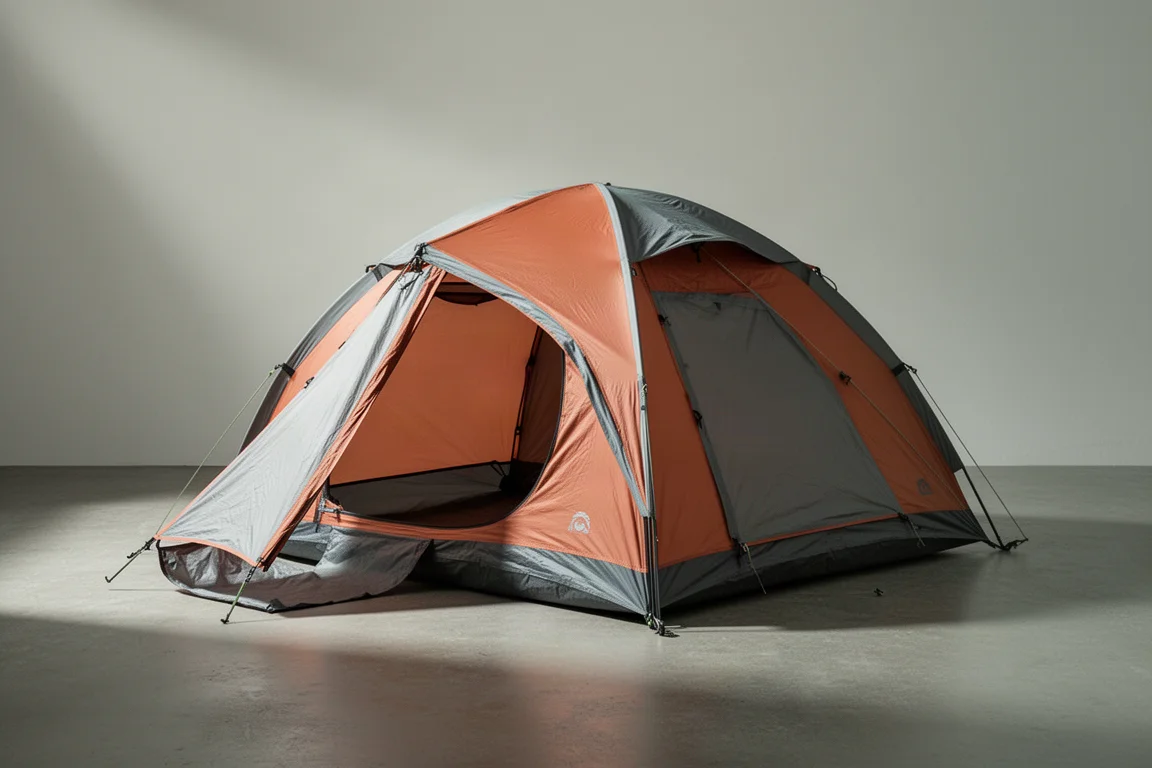
Alps Mountaineering Lynx 1-Person Tent Review: Big Value in a Small Budget Tent
A close look at the Alps Mountaineering Lynx 1-Person Tent, covering real interior dimensions, materials, setup time, ventilation limits, and who should buy it.