Camping Tents
Light Fighter Catamount II Review: A Four-Season Military Tent for Cold Weather
A close look at the Light Fighter Catamount II, a four-season military tent with a fly-first pitch, true double wall construction, and a roomy two-person interior.
Introduction
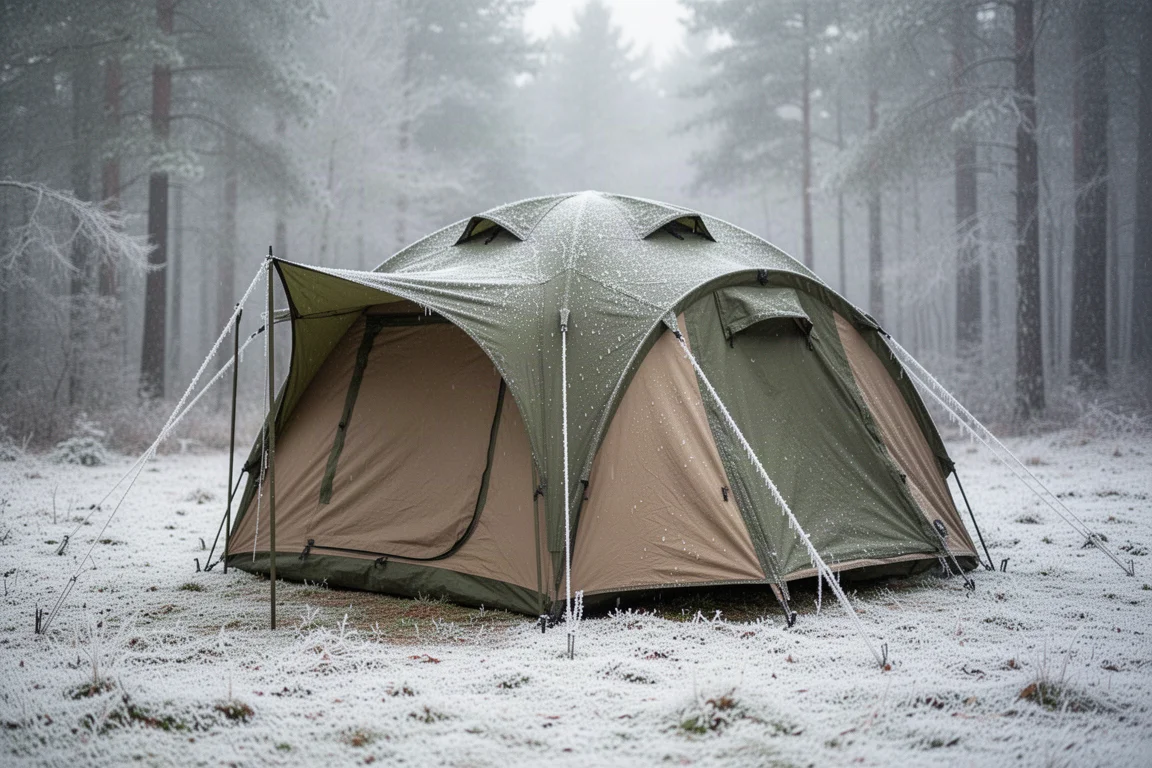
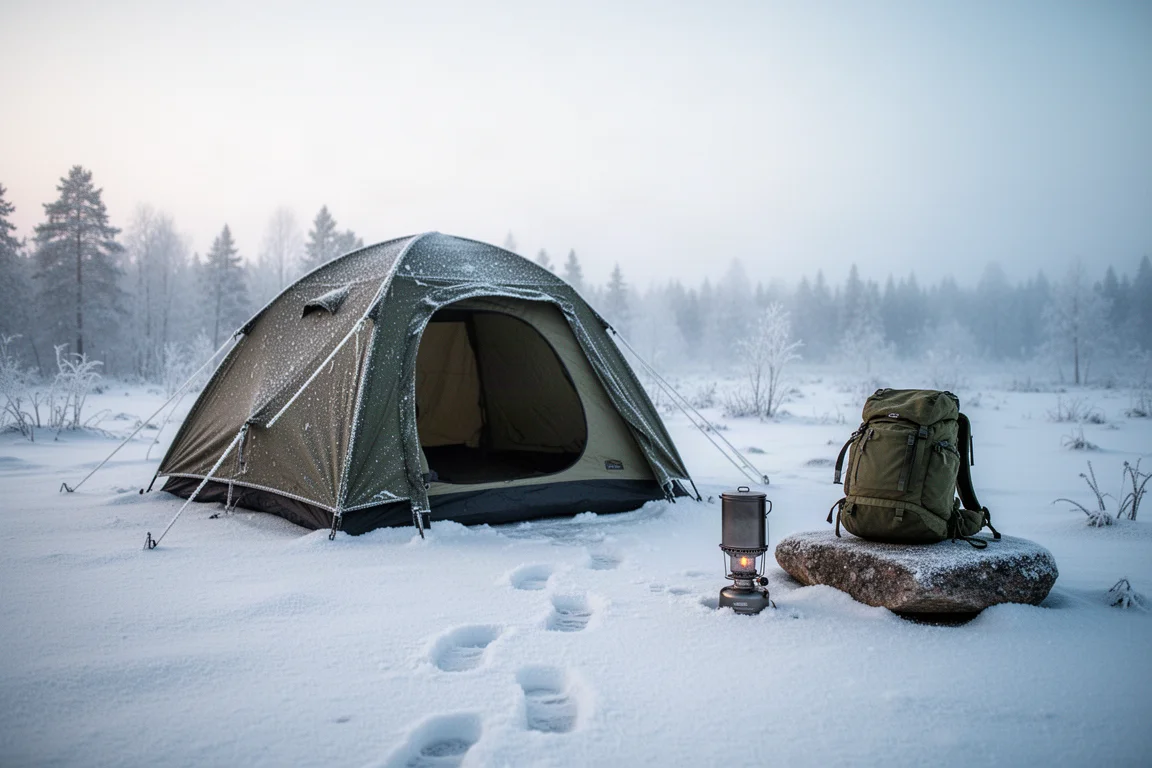
The Light Fighter Catamount II is a four-season military tent built for cold weather. It was originally designed around the needs of special forces units looking for a shelter that was highly stable, packable, and reasonably light, while still working across a wide range of weather conditions. Retail price is $553.
At a glance, the design is unusual. The Catamount II uses an exoskeleton layout, which means the poles sit on the outside of the tent body rather than running through sleeves or clips on the inside. Combined with a true double wall construction and a fly-first pitch, that layout is aimed at getting the shelter up quickly in rain or snow without soaking or icing the inner tent.
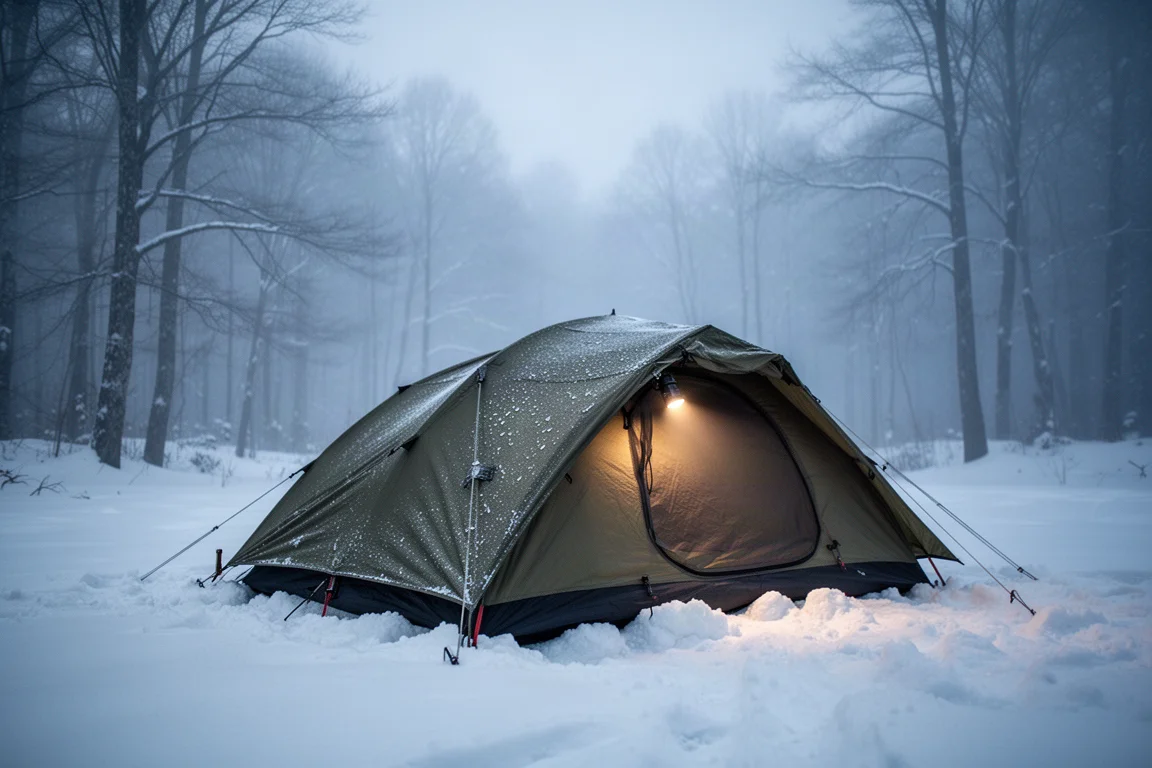
It is a big shelter. The floor measures 88 inches long and 59 inches wide, with a peak height of 39 inches and a 33 inch door entrance. That is enough room for two occupants and their gear, and it also means taller or larger users are not squeezed into a cramped space.
Who This Tent Is For
The Catamount II makes the most sense for people who camp in serious weather rather than fair-weather weekends. Snow loading and strong winds are part of the design brief, and the pole set is deliberately overbuilt for that job.
It also suits users who value a fast, predictable setup more than the lowest possible weight. The pack weight is right around 10 pounds, or 9.8 pounds when everything is packed away, and the packed size is roughly 22 inches by 9 inches in diameter. Backpackers counting ounces will feel that weight, but the trade is durability and weather protection.
Two-person use is the sweet spot. There is enough interior volume for two adults plus gear, and the vestibules add storage space outside the sleeping area.
Main Strengths
Fast Fly-First Pitch Setup
The tent uses three poles: a main spider pole and two windbreaker poles. Because the poles run on the outside, the fly can go up first. In practice that means the inner tent stays dry and free of ice during a wet or snowy pitch, which is exactly the scenario a cold weather combat tent is expected to handle.
Setup is straightforward for a four-season shelter, with no awkward steps that tend to slow things down in bad conditions. The poles themselves are burly, and they are built to cope with snow loading and strong winds rather than only calm weather.
Weather-Ready Materials and Construction
The rain cover is 30 denier nylon, the inner is 70 denier nylon, and the floor is nylon as well. YKK zippers are used throughout, and both the fly and the floor are seam taped.
The fly extends close to the ground, leaving only about an inch and a half of gap for airflow. That gap is intended to limit condensation without exposing the interior. The tent is also treated with Skintex MR3, a bug repellent treatment intended to deter mosquitoes and ticks, which is a genuinely useful detail in tick country.
The package includes six guy lines and four snow anchors, and the tent is finished in an OCP camouflage pattern. It also carries an NSN, which reflects its military supply context.
Interior Space and Storage
Inside, the layout is generous. There are two doors, one on each side, and each door is double walled with mesh and covered by a storm flap over the zipper. Two vents help with airflow, one on each side.
Storage is well covered, with two upper pockets and four corner pockets. The floor is a bathtub design with aggressive walls, measuring about eight inches at the long ends and about four inches at the sides.
Outside, two large vestibules provide 10.5 square feet each, or 21 square feet in total. That is enough space for backpacks, boots, and other gear you would rather not bring into the sleeping area.
Things to Consider Before Buying
The most obvious consideration is weight. At roughly 10 pounds packed, the Catamount II is not a lightweight backpacking tent, and the stuff sack is large. This is a shelter you carry because of what it does in bad weather, not because it disappears in a pack.
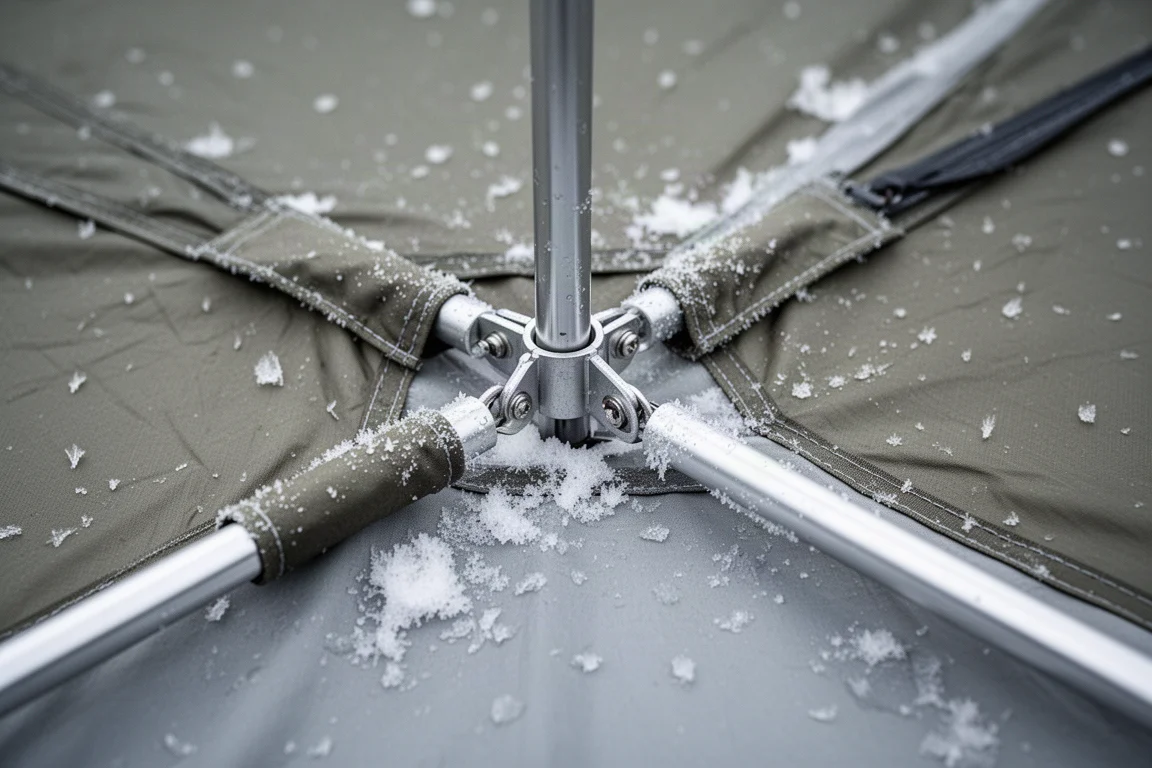
The exoskeleton design has a real drawback in winter. Because the poles are exposed on the outside, moisture can land on them and freeze, particularly at the joints. When that happens, breaking the tent down can become slow and difficult, and the poles may need time and effort to separate. The approach is not unusual in this category, but it is worth knowing before you commit to it for freezing rain or heavy snow trips.
The tent is also configurable, which is worth understanding before your first trip. It can be pitched with the inner tent, with the inner removed, with the ground sheet, or without it. The included accessory kit contains a patch kit, a ground sheet, 16 ground stakes, a waterproof user’s guide, a setup guide, and a burrito style stuff sack.
Buying Advice
At $553, the Catamount II sits in a specialist price bracket, and it is priced like the military-oriented four-season shelter it is. The value case rests on construction quality: burly poles, reinforced stitching, no loose threads, and a double wall build that is clearly aimed at sustained bad weather rather than occasional use.
If you need a stable two-person shelter for cold conditions and you are willing to carry the weight, the strengths line up well. If your trips are mostly three-season and weight sensitive, a lighter option will serve you better. For anyone buying it for winter use, plan around the frozen pole issue with a bit of care during breakdown, and take advantage of the multiple pitch configurations to match the conditions you expect.
Conclusion
The Light Fighter Catamount II is a serious cold weather shelter. The fly-first pitch and exterior pole design make it quick to set up, the double wall construction and burly poles are built for snow and wind, and the interior is genuinely roomy for two people and their gear.
The trade-offs are clear and honest: weight, pack size, and the risk of frozen pole joints in winter conditions. Buyers who accept those in exchange for a stable, weather-ready four-season tent will find a lot to like here.
Product link
View more details for Light Fighter Catamount II
This product is mentioned in the review. Check the specifications, options, and compatibility before buying.
View more details for Light Fighter Catamount IIFurther reading
Related Reviews
Camping Tents
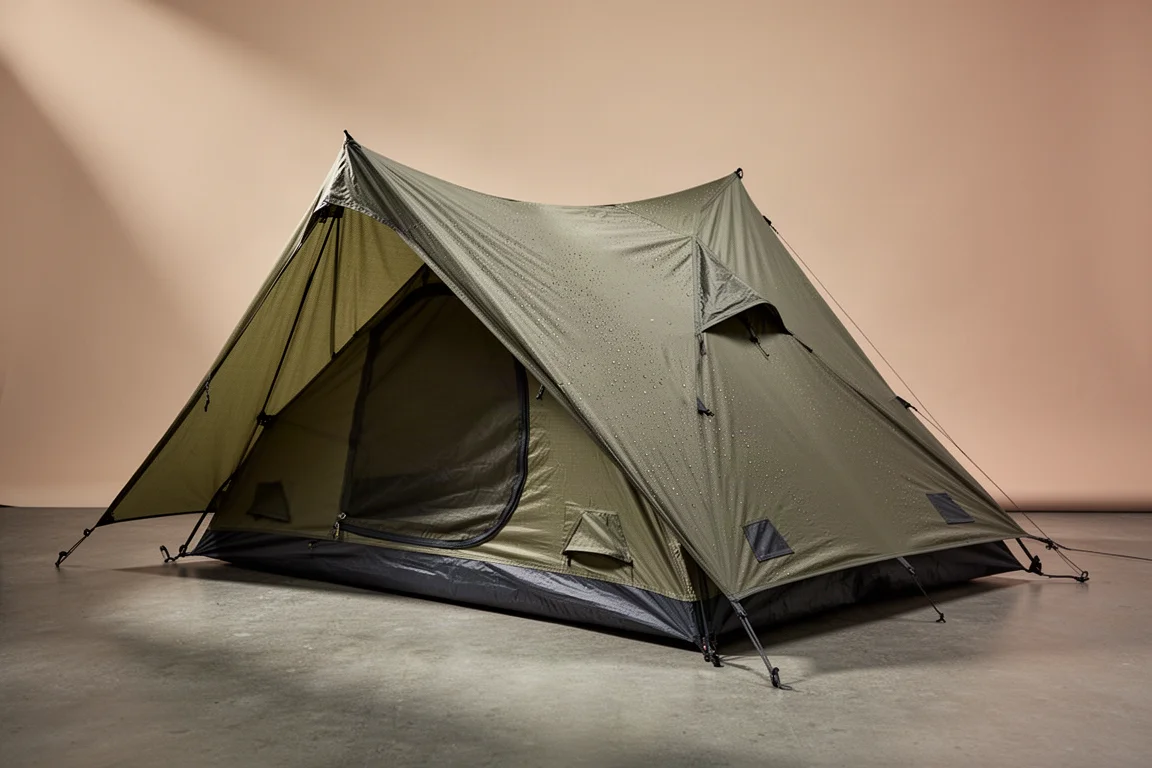
3F UL Gear Taiji Two-Person Tent Review: Field Waterproofing Results and Buying Advice
The Taiji pairs an attached fly with a removable inner, but sustained rain exposed untaped vent seams that need sealing before this shelter can be trusted.
Camping Tents
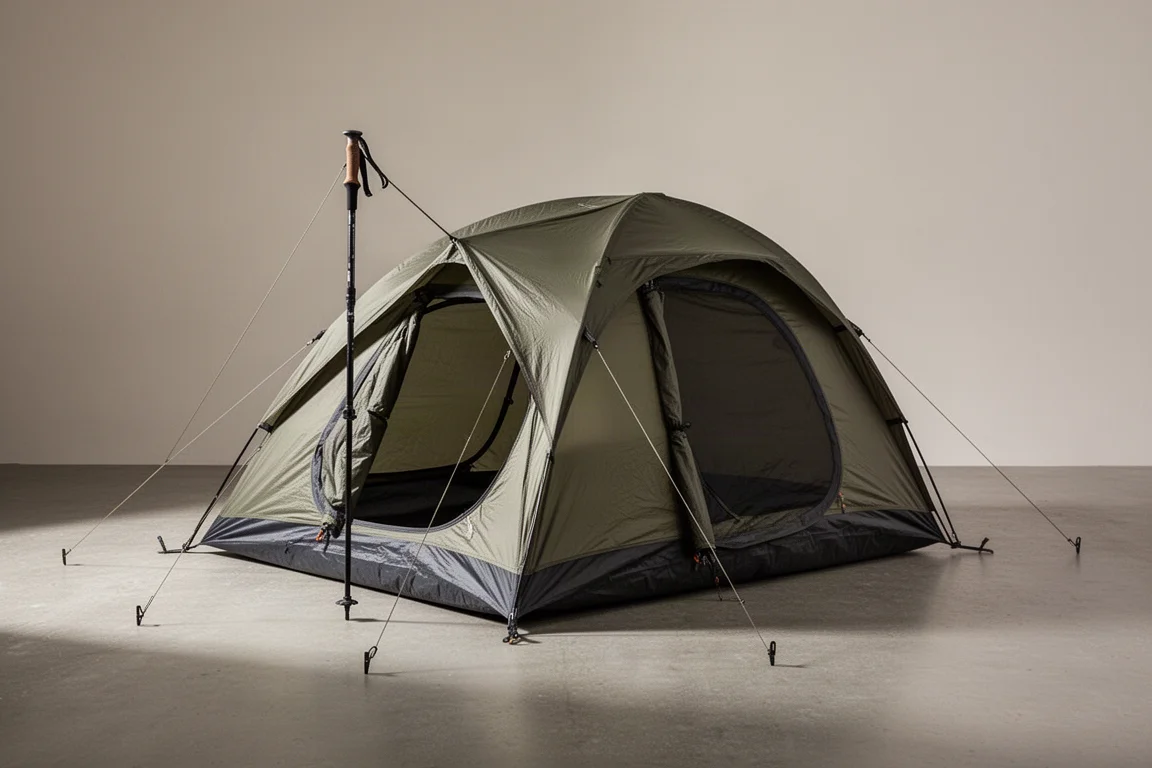
3FUL Gear Lanshan 2 Pro 4-Season Review: A Sub-$200 Single-Wall Trekking Pole Tent
An early look at the 3FUL Gear Lanshan 2 Pro 4-Season, covering its straightforward pitch, generous interior space, and the condensation and seam-sealing questions that come with any single-wall shelter.
Camping Tents
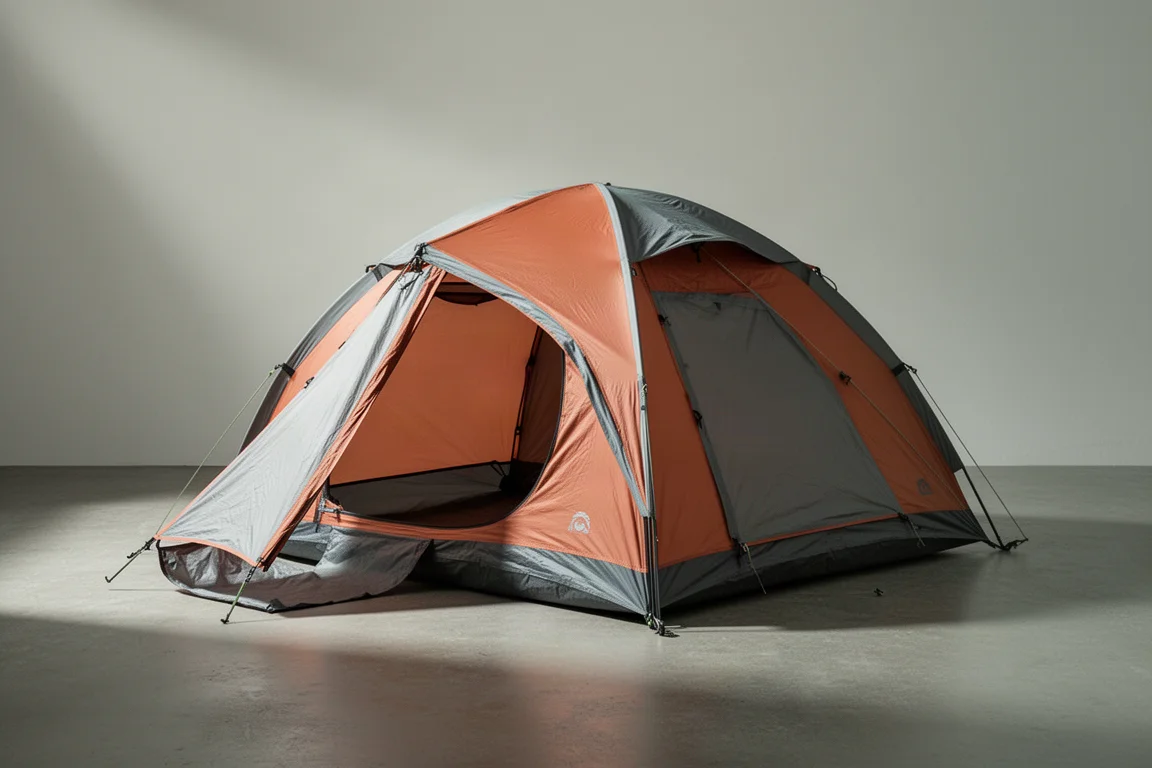
Alps Mountaineering Lynx 1-Person Tent Review: Big Value in a Small Budget Tent
A close look at the Alps Mountaineering Lynx 1-Person Tent, covering real interior dimensions, materials, setup time, ventilation limits, and who should buy it.