Ski Destinations
Les Trois Vallées Review: The World's Largest Interconnected Ski Region
Over 600 km of marked trails across 25,000 acres in the French Alps. Here is what Les Trois Vallées is actually like to plan, ski, and navigate.
Introduction
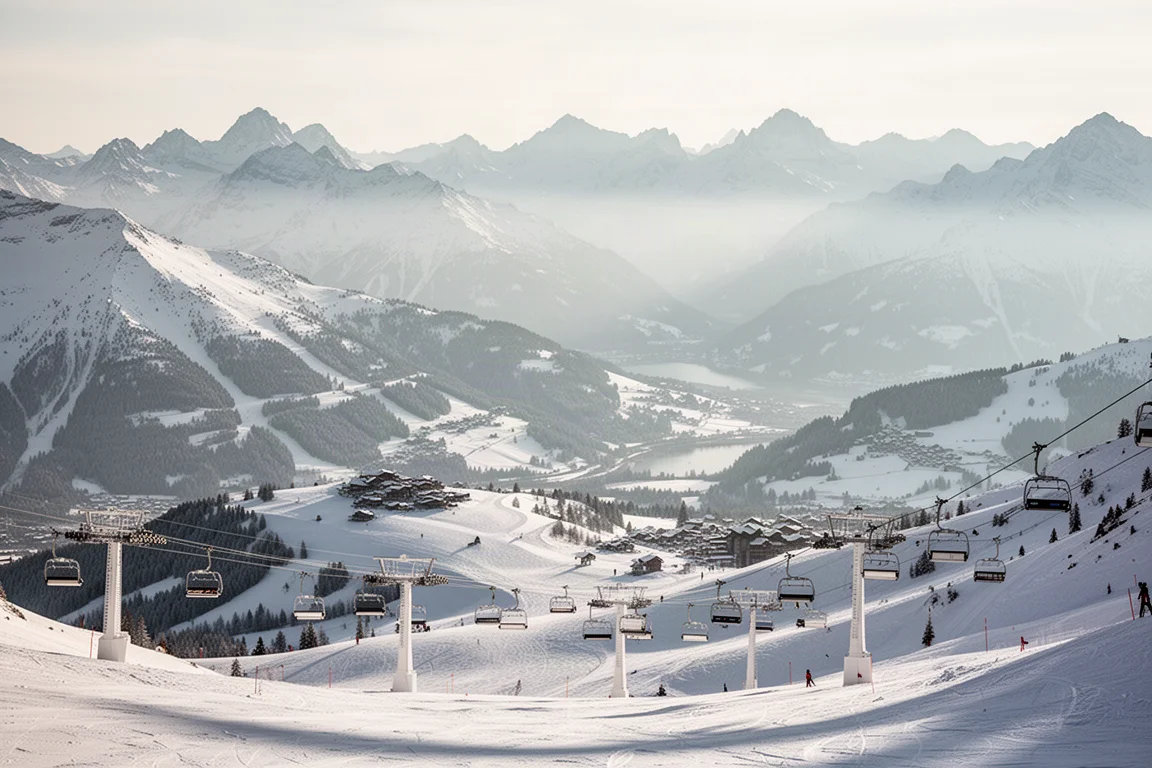
Most destination ski resorts take several days, sometimes more than a week, to cover properly. Les Trois Vallées in France operates on an entirely different scale: more than 600 km of marked ski trails spanning over 25,000 continuous acres from edge to edge. At a typical skiing cadence, covering every marked trail once would take roughly 40 continuous hours, and properly covering the off-piste terrain would take well over 100 hours.
That scale raises an obvious question: what is it actually like to plan a vacation to a ski region this big, and are there reasons you shouldn’t go? After looking closely at the terrain, snow, logistics, and lift infrastructure, the short answer is that Les Trois Vallées is one of the most distinctive ski destinations in the world, with a few real trade-offs worth understanding before you book.
The Layout: Six Sectors Across Three Valleys
The region is essentially what its name suggests: three valleys in a row, though the setup has more nuance than that. From east to west, the headline resorts are Courchevel, known for its extremely upscale character; Méribel, the largest and most centrally located; and Val Thorens, one huge above-tree-line bowl spanning multiple aspects with the highest base elevation of any ski resort in the European Alps.
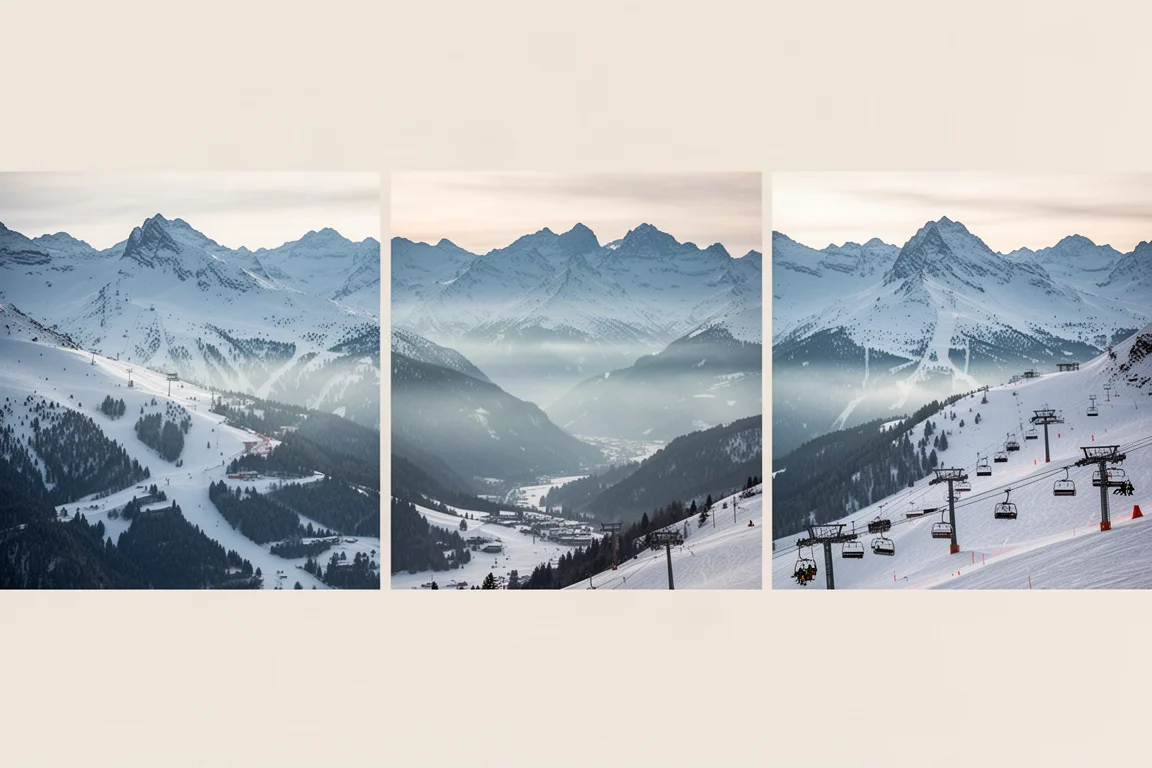
All three are enormous in their own right. For perspective, Méribel alone is larger from edge to edge than every single ski resort in North America. Smaller sectors also sit on the west side of the region: Saint-Martin de Belleville, which serves lower elevation terrain near the commune of the same name; Les Menuettes, offering family-friendly slopes below Val Thorens; and Orelle, effectively Val Thorens’ backside, which includes the highest lift-served point in the entire region. Across all six sectors there is more than enough skiable terrain for every ability level, though as with most European Alps resorts, below-tree-line terrain is somewhat limited.
How the Terrain Suits Each Ability Level
Despite the massive and complex footprint, Les Trois Vallées is not a bad destination for beginners, though lower-level visitors may want to focus on an individual resort rather than the whole domain. Easier green pistes are found across four of the six sectors, with Saint-Martin and Orelle the exceptions. The best green trails are arguably at Courchevel, which offers easy slopes across multiple lifts and elevations. One complication: there are no green trails linking the resorts to one another, so moving between sectors on easy terrain is not an option.
Intermediates are where the region truly shines. Blue trails span all but a handful of lift pods, with large mid-mountain sections dominated by this level of terrain. In Saint-Martin de Belleville, almost every trail is an intermediate blue. Compared to North American destinations, the blue pistes here tend to be a bit easier than what you would find in the Rockies or on the West Coast.
Advanced skiers looking for groomed challenges are also well served. With the exception of some lower elevation sections of Courchevel, Méribel, and Saint-Martin, every part of the region has reasonably steep red pistes suitable for advanced intermediate to true advanced guests. A handful of reds can see moguls build up in the afternoon during busy periods.
Freestyle Terrain and Black Runs
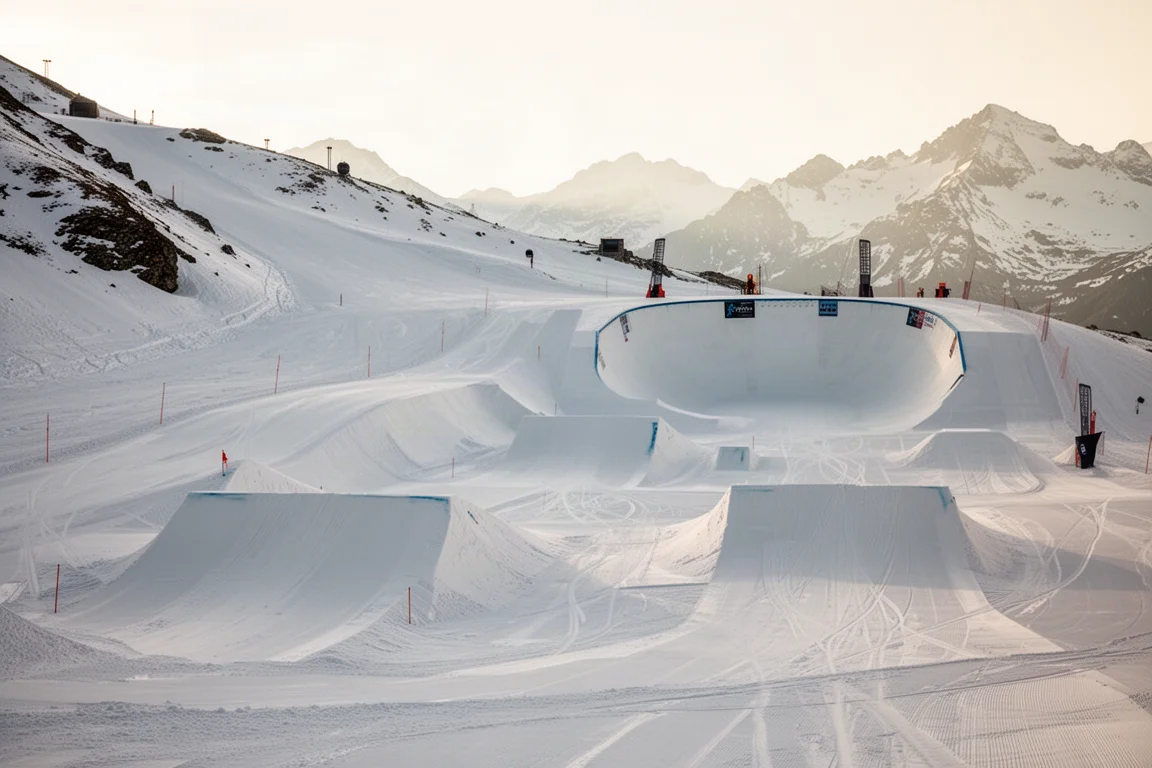
As the largest interconnected ski region in the world, Les Trois Vallées delivers solid freestyle terrain: six snow parks across the full footprint, two each at Val Thorens and Méribel, and one each at Courchevel and Les Menuettes. The best build is Val Thorens’ VT Park, with massive jumps, rollers, a halfpipe, and an airbag feature. Méribel’s open Park is also a must-hit for freestylers, with two halfpipes ranging from medium to extra large. The parks at Courchevel and Les Menuettes are tamer but still feature decently large elements.
Black runs are not as widespread as blues and reds, but plenty exist throughout the footprint, especially in upper-mountain areas. Regular blacks are typically groomed, though they can get bumped up. For the hardest in-bounds challenges, free ride pistes marked with an orange boundary around the black rating are never groomed and often supremely steep. Thrill seekers should note the Grand Couloir at Courchevel, which brings the steepest gradient of any marked trail in the region into a definitive no-fall zone. The Couloir Tournier, extending off the same Saulire ridge into Méribel, is a close second in difficulty.
There is also a small selection of hike-to terrain. At the very top of Courchevel, the Free Ride Lab has two marked pistes, one advanced red and one expert black, left over from a lift removed several years ago and never replaced. It can hold great hidden powder stashes if it hasn’t snowed recently, but for most visitors the hike probably isn’t worth it.
Off-Piste and Backcountry Awareness
If 600 km of marked terrain isn’t enough, the off-piste selection is remarkable. Several sections of terrain sit between the marked trails, especially in upper-mountain areas, some fairly mellow and others involving substantial obstacles including rocks, cliffs, and unmarked couloirs. There are also enormous sections of lift-served off-piste outside the outer trails of Méribel, Val Thorens, Orelle, and Les Menuettes, where it is genuinely easy to get lost and end up in the middle of nowhere. Further touring routes into the French Alps wilderness are accessible with a bit of hiking.
This is true backcountry terrain. There is no avalanche or hazard maintenance, so you are on your own to assess conditions. Anyone planning to access this terrain should carry proper backcountry equipment, including a beacon, shovel, and probe, and visitors unfamiliar with the region should strongly consider hiring a guide.
Snow Conditions and Visibility
Snowfall varies across the region, but upper-mountain areas average well over 200 inches, and high-elevation Val Thorens typically sees a very robust 250 inches, competitive with some areas of the North American Rockies. Snowmaking covers over half the terrain, primarily mid and lower mountain areas, so conditions generally stay strong even when Mother Nature doesn’t cooperate. All the resorts have bases of at least 1,300 m, quite high for the French Alps, and valley runs have remained mostly open in recent years. Orelle and the Brides-les-Bains section of Méribel are the only areas where lift downloading is regularly required. Some valley runs, notably those to Le Praz at Courchevel and Les Allues at Méribel, can get icy or bare during the season.
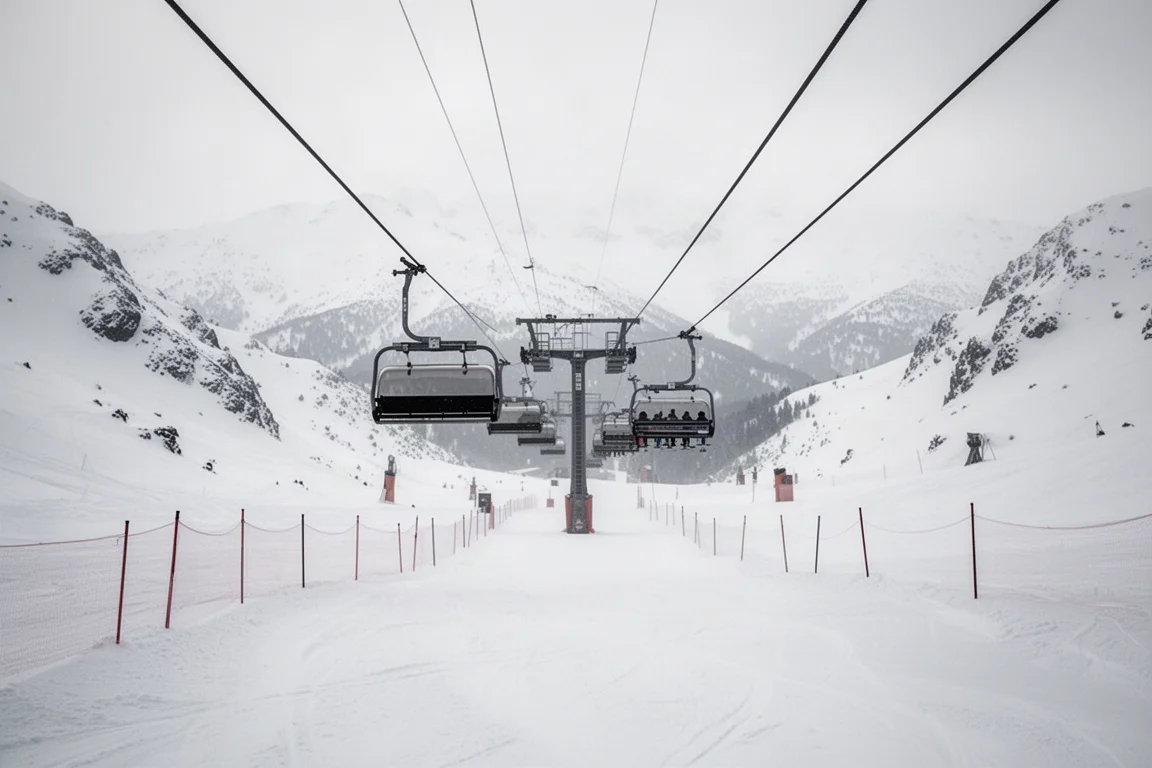
The main condition caveat is visibility. Because the region is high-Alpine in nature, storm days bring difficult visibility, a major issue at Val Thorens, Orelle, and most of Les Menuettes, which sit entirely above tree line with few natural landmarks. Even in flat light, reading the snow surface can be extremely difficult. Courchevel, Méribel, and Saint-Martin do offer some below-tree-line terrain for low-visibility days, but it is limited. Some navigation aids help: boundary poles delineate every marked piste, with left and right poles styled differently to help skiers stay within the run, and numbered poles indicate how far you are from the bottom of each run.
Lifts and Getting Around
The lift system is mostly modern, with high-speed lift service dominating the footprint. Surface lifts exist but are exceptionally rare compared to many other high-end Alps resorts. The variety is impressive, from bubble chairs to enclosed gondolas, detachable chairs, and aerial trams, and it is often possible to ride from the bottom to the top of a valley using exclusively enclosed lifts. Some gondolas and trams use a jig-back design that hurts capacity, though tram cabins fit up to 160 people at a time, which softens the impact. Within individual sectors, getting around is reasonably straightforward, with resort signage intuitive even for those who don’t speak French. Méribel is the exception, with a somewhat confusing base setup and indirect lift layout.
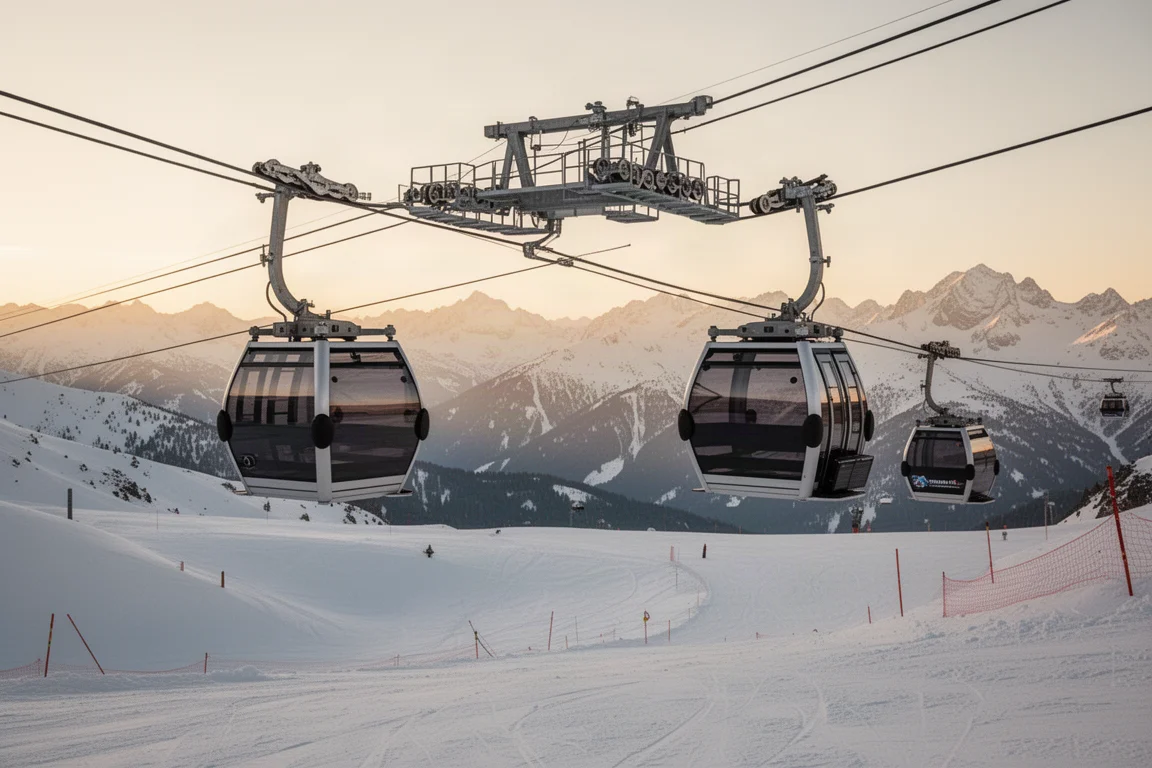
Navigating the domain as one comprehensive footprint is another matter. The major sectors have a staircase setup: moving left to right on the trail map often involves gaining elevation as much as transporting across. To reach any part of Val Thorens from Courchevel, guests need to find the essentially highest-elevation lift at Méribel to avoid a circuitous detour through Les Menuettes. Even neighboring sectors take two or three lifts to reach from any given base area. Budget at least half an hour between sectors, and over an hour to traverse more than one resort. The most frustrating part: the resorts are connected by lifts, not roads. If you end up at Val Thorens or Les Menuettes after lifts close and need to return to Courchevel or Méribel, expect up to €200 for a taxi ride taking well over an hour. It may simply make sense to book a hotel in the village where you end up stuck.
Lift lines deserve a note. Certain transit routes see massive queues during peak times: the Plaisières gondola at Méribel, used to reach Val Thorens and the popular Mont Vallon summit area; the aging Chenu gondola at Courchevel, linking the Courchevel 1850 base to the Lauzière zone and parts of Méribel; and the relatively low-capacity Cime Caron tram at Val Thorens, which accesses the best advanced terrain at both Val Thorens and Orelle. Any lift on a direct valley-to-valley route gets busy at peak times, while lifts on limbs away from these transport routes are usually much quieter.
Atmosphere, Dining, and Nightlife
The views are a genuine highlight. The unending networks of resort infrastructure are a sight in themselves, and upper-mountain areas across Val Thorens, Orelle, Méribel, and Les Menuettes offer photo-worthy vistas. Val Thorens’ completely car-free base village and white-painted chairlifts make for an unforgettable aesthetic, but the real star is Courchevel, which directly overlooks the Vanoise National Park. Its Col de la Chambre and Saulire zones feel the most one-with-nature of the entire region. That said, Courchevel is by far the most moneyed resort, with not just high-end restaurants and stores but branded lifts and gondola cabins. If you want down-to-earth vibes, Courchevel is about as far from that as it gets; Méribel and Les Menuettes are much more relaxed.
The restaurant scene is competitive. Unless you are in the Saulire area of Courchevel or the very top of Orelle, you are always close to dining, ranging from basic cafeterias and sandwich shops to ultra high-end Michelin-star restaurants. Courchevel has the highest-end dining setup, while Méribel and Les Menuettes offer the most casual grab-and-go options. Note that unlike many North American resorts, several dining facilities offer sit-down service only, so not every lodge accommodates a quick bite.
The après scene is strong, though it depends on the resort. For pre-close partying, head to the Folie Douce locations at Val Thorens and Méribel, which get rowdy even on weekdays with live music and DJs through the afternoon. Both resorts also have additional venues across the slopes, including La Rond Point at Méribel and Bar 360 at Val Thorens. One caution: if you stay until close, you will be skiing back down alongside a large group of people who aren’t exactly sober. Courchevel and Les Menuettes have less slope-side après but decent base village options with live music, while Saint-Martin and Orelle are not the places for an après vibe. For night owls, Méribel, Val Thorens, and Les Menuettes all have nightclubs staying open well past midnight, in some cases until 5 a.m.
Getting There and Where to Stay
Getting to Les Trois Vallées depends heavily on which resort you plan to stay at. Orelle and Courchevel, the two furthest-apart towns, are nearly an hour and a half from each other by road in clear conditions. For most international travelers, Geneva in Switzerland is the best airport to fly into, though some regional French cities have nearby airports as well. Public transportation is limited: while some bus service exists to each resort, there is no direct airport-to-resort bus, and routes via the town of Moutiers often involve multiple transfers and can take over five hours from Geneva. Many guests find it easiest to rent a car or book a private shuttle, which takes closer to two or two and a half hours from Geneva depending on the resort.
Lodging options are varied. Budget travelers can find basic apartments in Brides-les-Bains, Saint-Martin de Belleville, and Orelle, and the cheapest options of all sit in small French communes about 15 to 20 minutes from the bases. Mid-range chalets and hotels are common in Méribel and Courchevel Moriond, while Val Thorens’ mid-range options lean a bit more upscale. At the highest end, Courchevel 1850’s five-star hotels offer top-tier amenities including fine dining, private spas, and concierge services.
Buying Advice: Lift Tickets and Value
Perhaps the best part of Les Trois Vallées, especially for visitors from the United States, is the lift ticket price. Full-domain tickets covering over 25,000 acres of terrain top out at just €79, and individual resort tickets are even cheaper. At current exchange rates that is under $85, almost unthinkable value compared to North American pricing. Les Trois Vallées is also available for seven consecutive days on the Epic Pass, full pass only, but unless you’re skiing in the United States at least one other time this winter, buying lift tickets directly is probably the better move.
In overall rankings across ten scoring categories, the full region earns a 75, while Courchevel, Méribel, and the Val Thorens/Orelle pairing each score 77, and Les Menuettes/Saint-Martin scores 70. Part of the reason the full domain scores lower than individual resorts is that beyond a certain size, a ski area simply becomes too unwieldy for most people to treat as one comprehensive experience. It is fair to say that skiing from Courchevel to Val Thorens and back won’t be a common occurrence for most visitors. On the other hand, the region somewhat broke the rating scale: the footprint is over three and a half times the threshold for the maximum size score, with more than enough high-Alpine terrain from beginner to advanced to justify its high terrain diversity marks.
Conclusion
Les Trois Vallées is probably the best European ski region visited in the past year. Its footprint provides a level of continuous size, well-rounded terrain for all abilities, and comprehensive infrastructure that is genuinely hard to come by anywhere in the world, backed by a reliable snow record for Europe. Add the remarkably competitive lift ticket pricing and you end up with a must-hit destination for anyone with the Alps on their radar. The trade-offs are real: complex inter-resort navigation, transit lift queues, flat-light visibility challenges, and road-disconnected villages. If you plan around those, this is a ski trip unlike any other.
Product link
View more details for Les Trois Vallées
This product is mentioned in the review. Check the specifications, options, and compatibility before buying.
View more details for Les Trois ValléesFurther reading
Related Reviews
Ski Destinations
16 American Ski Resorts Ranked: From Park City to Snowbird
A season-long tour across 16 American ski resorts, ranked from worst to best, with honest notes on terrain, snow, crowds, and vibe at each one.
Ski Destinations
Andermatt-Sedrun-Disentis Review: Switzerland's Low-Key Epic Pass Resort
A wide, quiet Alpine ski region spanning three separate mountain zones, now on the Epic Pass. Here is how the terrain, snow, lifts, and village experience stack up.
Ski Destinations
The Best Ski Resorts in Western Canada, Ranked
We rank every major Canadian ski resort west of the Rockies, from Nakiska's day-trip convenience to Whistler Blackcomb's unmatched terrain diversity.