Trekking Poles
Leki Skytera vs Skysolo: Choosing the Right Folding Trekking Pole
A practical comparison of two new Leki folding trekking poles: the lightweight Skytera and the beefier, taller-friendly Skysolo.
Introduction
Trekking poles used to carry a stubborn reputation: something you reach for once your knees start complaining, and never before. That idea has quietly fallen apart. Runners chasing fast times cut weight everywhere else and still carry poles, because the difference they make on climbs and descents is too large to ignore. If you walk, hike, or run anywhere with real elevation, poles earn their place in your pack.
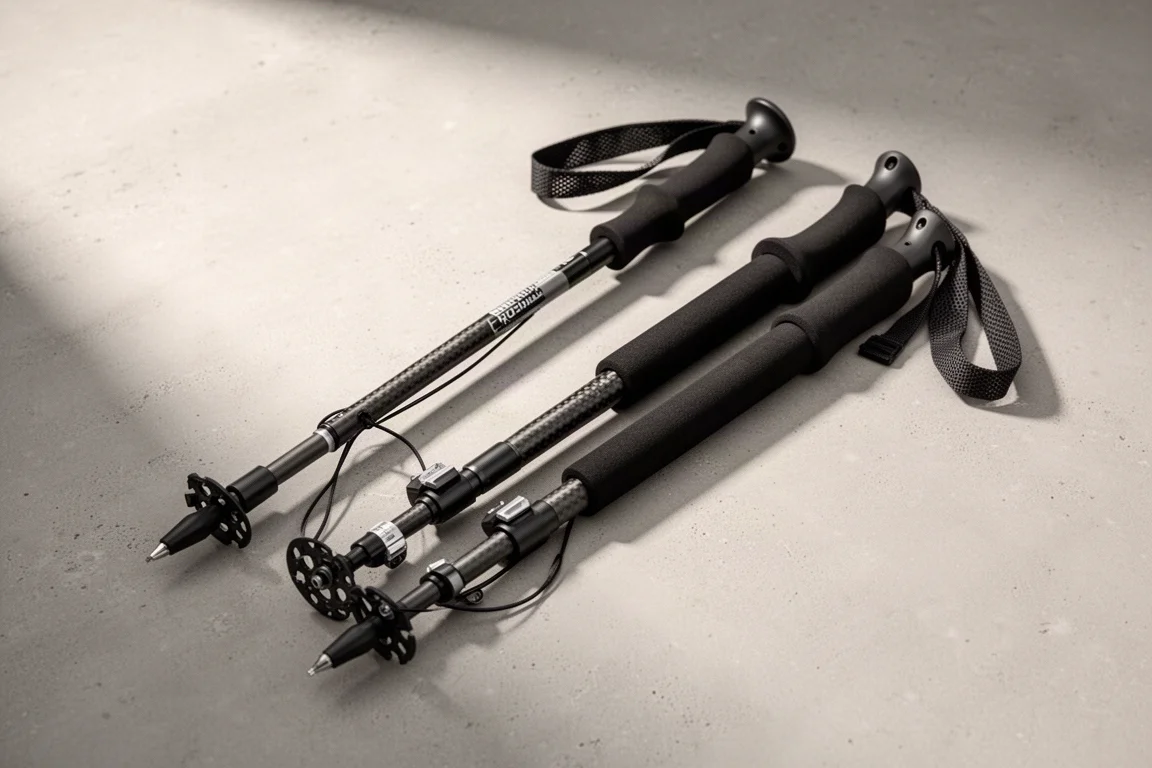
Leki has launched two new folding poles, the Skytera and the Skysolo, and they sit at slightly different points on the same spectrum. Both use carbon shafts, both fold down small enough to disappear into a bag, and both are built around the same grip and strap philosophy. The differences come down to weight, height range, and how much punishment each pole is designed to absorb.
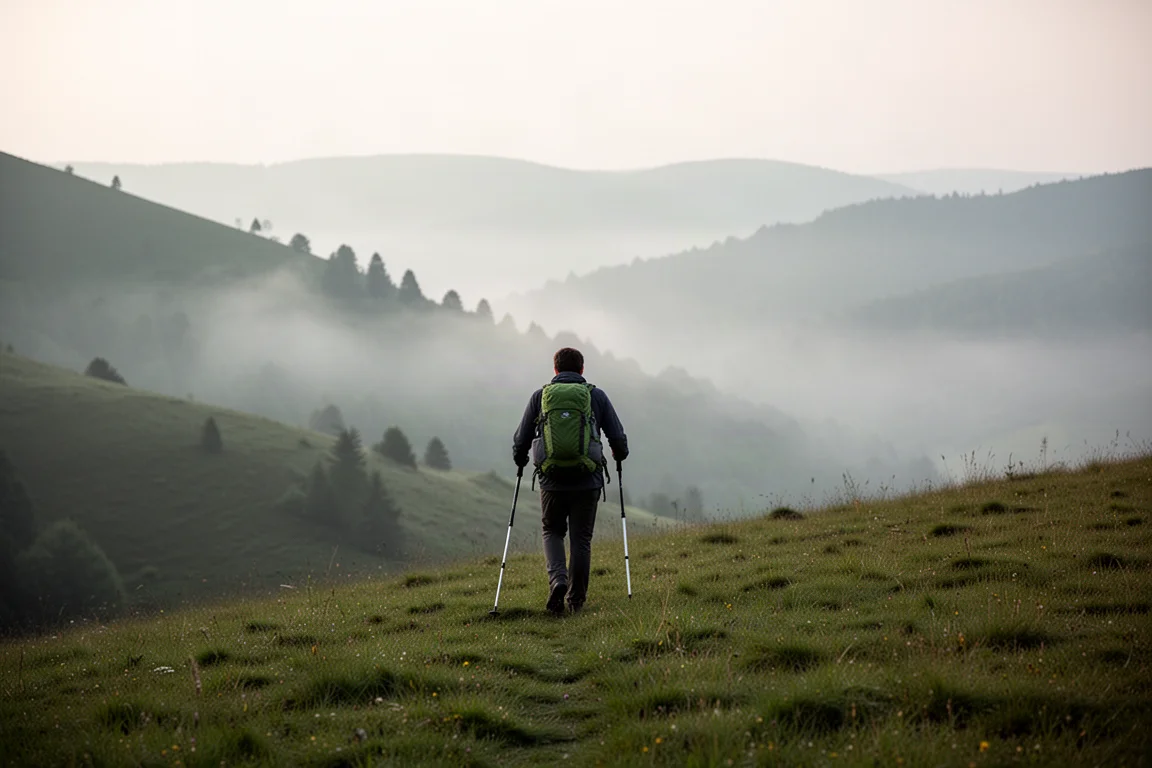
This guide covers what each pole does well, who it suits, and the technique details that decide whether poles feel like a genuine help or an ongoing nuisance.
What to Look for in Folding Trekking Poles
Folding poles, sometimes called micro sticks or Z poles, break into short segments that pack down far smaller than telescopic poles. That compactness is the main reason they now travel everywhere: a folded pole sits inside a daypack instead of sticking out of the top of it, so there is no reason to leave it behind.
The trade-off is that telescopic poles usually feel stronger and offer more granular height adjustment, at the cost of extra weight and bulk. Folding poles accept a small weight penalty at the joints but win comfortably on portability. For most walkers, runners, and trekkers, that is the right compromise.
Two other details matter more than most people expect. The first is the strap, because a well-shaped mesh strap carries load through the webbing rather than your grip, which is the difference between a comfortable day and aching hands. The second is height adjustment, since a pole that cannot match your arm length will never feel natural.
Leki Skytera: Lightweight All-Round Performance
The Skytera is the lighter of the two. It is built from carbon fiber and weighs around 178 g per pole, which is remarkable for a pole that still feels sturdy in the hand. Leki makes even lighter running-specific poles, but those are intended for racing and are more prone to snapping under heavy use. The Skytera is the pole you can take trekking, running, and mountaineering without worrying about it.
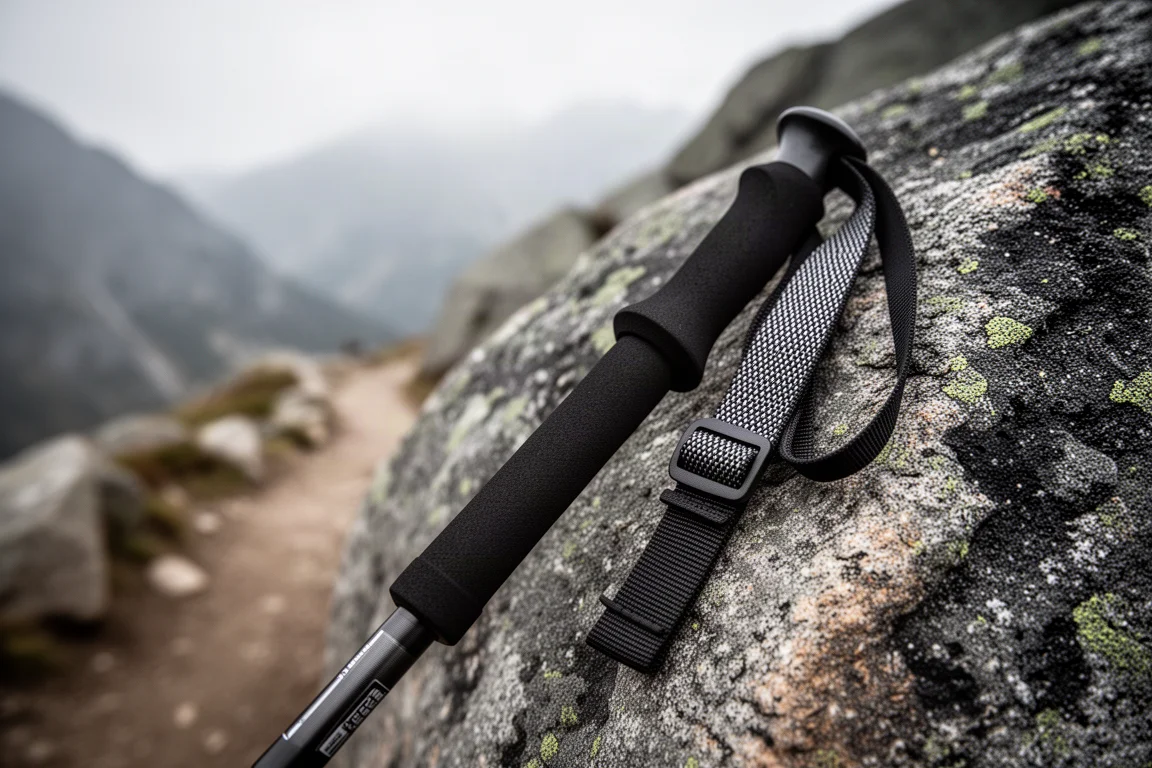
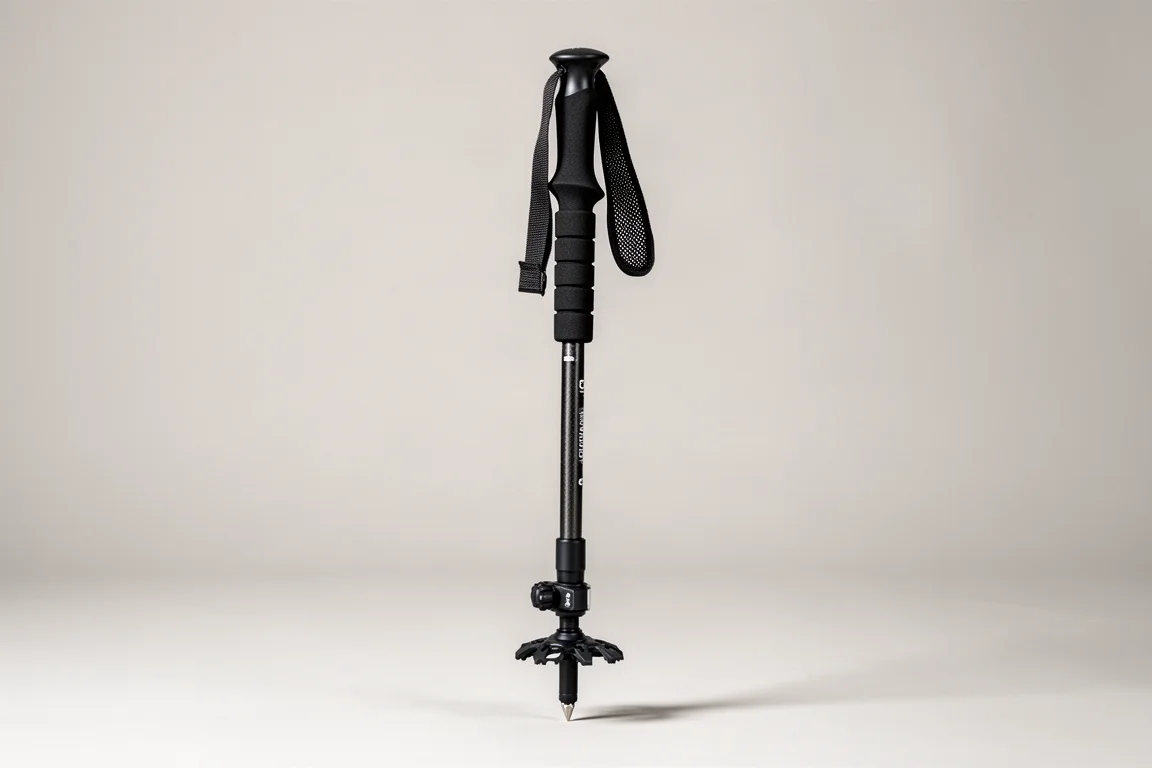
It folds down to roughly 40 cm, so it vanishes into a pack. The Flick Vario system adjusts between 110 cm and 130 cm, which suits a wide range of users. The handle is a long foam grip using Leki’s Verticon foam, comfortable in the hand and still grippy when sweaty, and the mesh strap spreads load without digging in or soaking up moisture. On rocky or contoured ground, the extended grip lets you choke down on the pole and hold it at an angle without adjusting the length.
The new locking mechanism is a genuine improvement. You pull the last two segments apart until they click, and the pole is locked and ready. To pack it away, open the Vario section, slide the segments apart, and the whole pole separates and folds. There are no fiddly buttons and no wrestling with tension. The carbide tip is durable and replaceable, and the small Nordic basket can be swapped for a larger one in deep snow.
Leki Skysolo: More Pole for Taller or Heavier Users
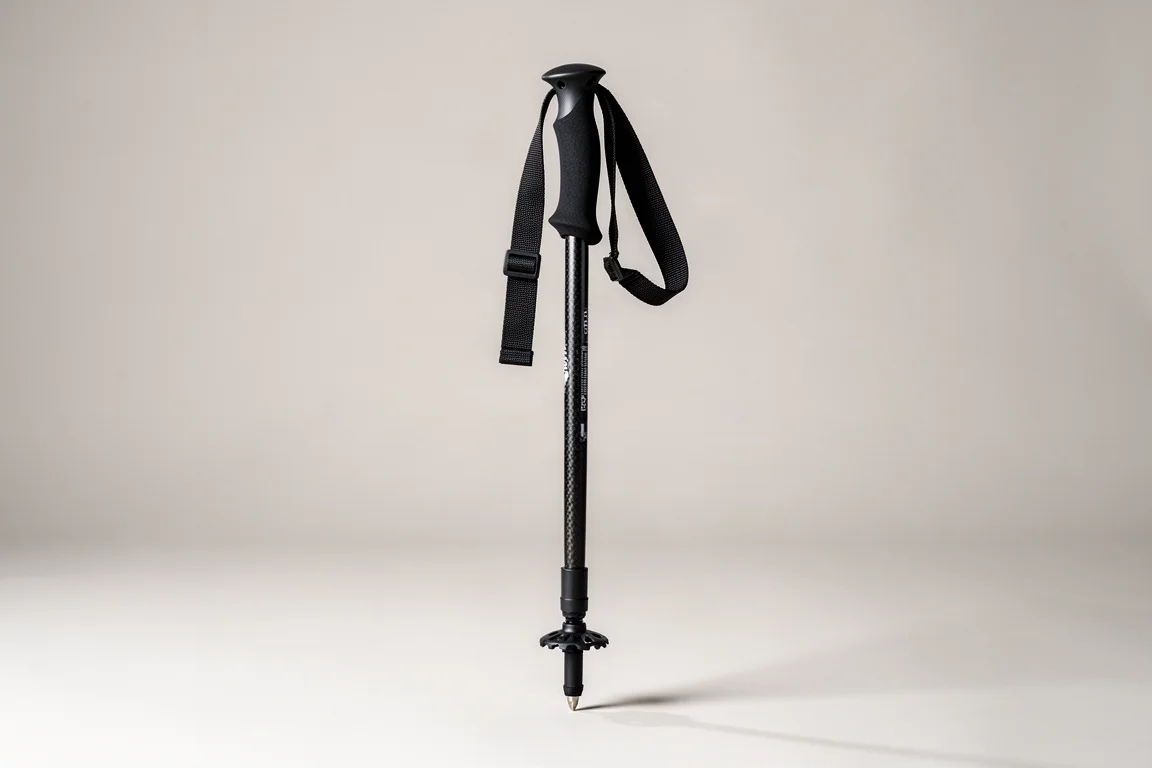
The Skysolo is the Skytera’s bigger sibling, and the differences are deliberate. It uses a larger diameter shaft, which takes more punishment and suits heavier loads or rougher terrain. Despite that, it still weighs around 238 g per pole and packs down to about 42 cm, so it remains a genuinely packable pole.
The height range is the clearest reason to choose it. The Skysolo adjusts from 120 cm to 140 cm, which covers taller users and anyone who found the Skytera’s 130 cm ceiling too low. The foam handle extends further down the shaft for comfortable hand placement on steep ground, and the pole ships with larger snow trekking baskets for deep powder.
It also uses Leki’s chunkier push-button locking mechanism rather than the newer system on the Skytera. The button is heavier, but it is very satisfying to use: press it and the tension releases, letting the pole fold. Reassembly is just as easy. Let the segments hang below you, pull the top two apart until they click, and the pole is locked and ready.
Getting the Most From Your Poles: Strap and Length
Most complaints about poles come down to technique rather than the pole itself. The single most important habit is to use the strap properly. Come up from underneath and put your hand over the top, so the webbing carries the load across the back of your hand. Done correctly, you can push hard through the strap on a climb without gripping the shaft at all, which is what keeps your hands fresh over a long day.
Getting that wrong, with the strap routed down through the palm, puts strain straight through the wrist and makes the pole feel awkward on every gradient. The strap itself is adjustable on both poles. Pull the top of the webbing, hear the click, slide it to suit your hand, and push it back down to lock it in place.
For length, the rule of thumb is simple: set the pole so your arm sits at a right angle with your hand where you naturally hold it. On soft ground the tip sinks in and effectively shortens the pole, while on hard ground the carbide tip sits proud. Allowing for that makes a noticeable difference over a full day.
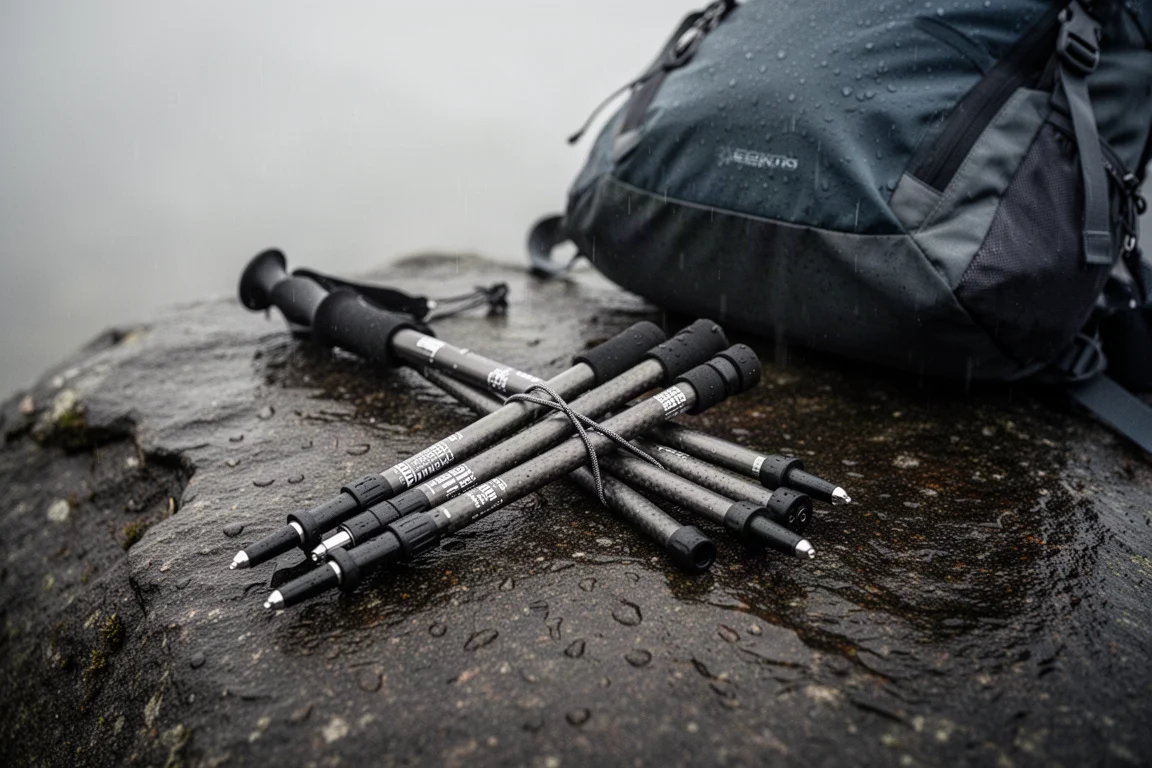
One more point worth taking seriously: use two poles, not one. A single pole encourages an asymmetric gait that can leave you limping and twisting through the hips. A pair behaves like two extra legs, sharing load on the climbs and adding control on descents.
Leki’s Repair-Friendly Approach
Durability is not only about how a pole survives a fall. It is also about what happens when something finally wears out. Leki has put real effort into keeping poles out of landfill, and much of the maintenance can now be done at home.
Baskets, rubber tips for hard ground, and carbide tips are all replaceable. More significantly, individual sections can be swapped. The pole segments are joined by a durable coated cord, and the connection is held by a small plastic piece that can be untwisted by hand or, if it has stiffened with use, loosened with a spanner. The damaged section slides off, a replacement goes on, and the process reverses. Leki also holds spare parts for poles it has stopped manufacturing, which means an accident does not have to mean buying a new pair.
Overall Buying Advice
Both poles share the same design thinking: light carbon shafts, comfortable foam grips, breathable mesh straps, replaceable tips, and a folding format that makes them easy to carry. The choice between them comes down to your body and your terrain.
Choose the Skytera if you want the lightest practical all-rounder. Its 110 to 130 cm range suits most users, and at around 178 g per pole it is easy to carry all day across trekking, running, and mountaineering. It is the pole to reach for when weight matters but you still want something that can handle real ground.
Choose the Skysolo if you are taller, heavier, or harder on your gear. The 120 to 140 cm range, thicker shaft, longer foam grip, and larger baskets make it the more capable option for big packs, deep snow, and sustained rough terrain. At around 238 g per pole it is still light enough to disappear into a pack.
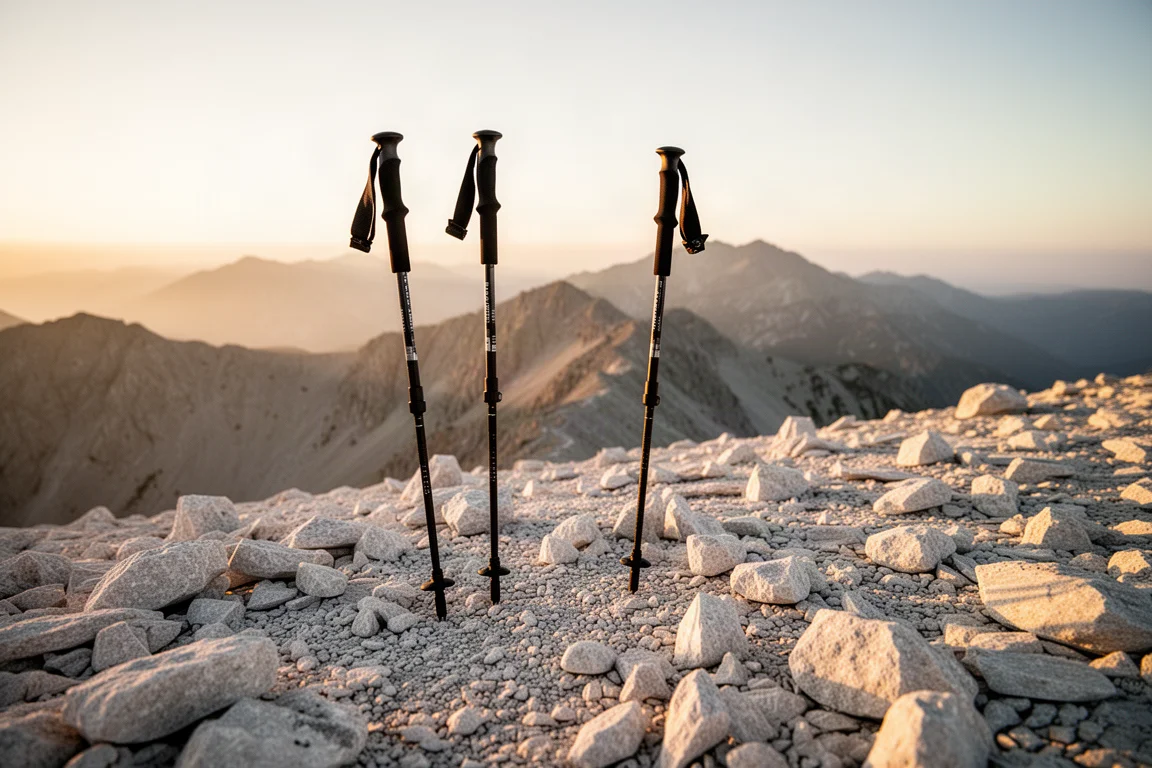
If you are new to poles, borrow a pair before you commit. The first walk with them is usually the moment the idea clicks, particularly with folding poles that pack away so small you can bring them on any trip.
Conclusion
The Skytera and Skysolo cover two sensible answers to the same question. One is a light, versatile all-rounder; the other is a stronger version for users who need more height and more resilience. Both fold small, both carry load through a well-designed strap, and both can be repaired rather than replaced. If you walk or run anywhere with real hills, either pole is a straightforward upgrade to how a long day feels.
Further reading
Related Reviews
Trekking Poles
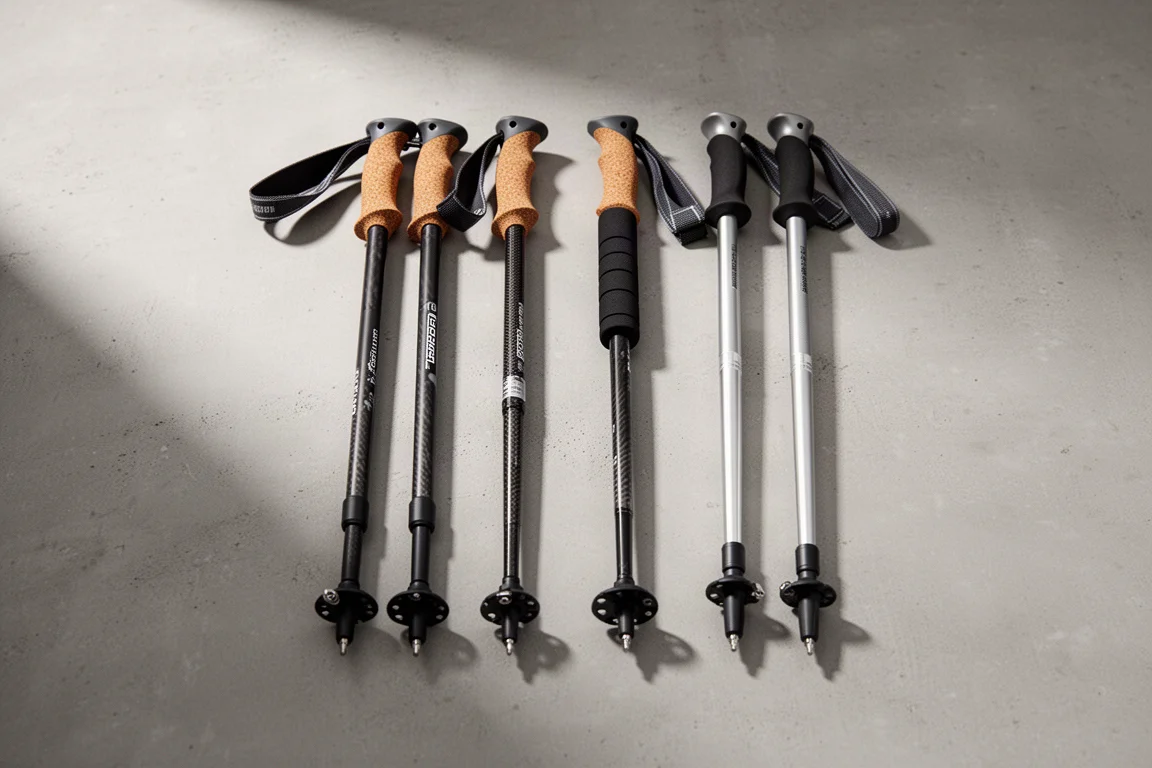
Best Trekking Poles for Thru-Hiking: Four Sets Compared
A practical comparison of four trekking pole sets for long-distance hiking, from a $23 aluminum pair to a $200 carbon pole that packs down smaller than the rest.
Trekking Poles
Black Diamond Alpine Carbon Cork vs Leki Micro Vario: Trekking Poles Compared
A long-term look at two collapsible trekking poles, covering lock design, grip comfort, tip life, and what each pair asks of a long-distance hiker.
Trekking Poles
Gossamer Gear LT5 Trekking Poles Review: Ultralight Support That Breaks Slowly
A long-term look at the Gossamer Gear LT5 Trekking Poles, covering ultralight weight, twist locks, EVA foam grips, repairability, and what happens when one snaps.