Trekking Poles
Gossamer Gear LT5 Trekking Poles Review: Ultralight Support That Breaks Slowly
A long-term look at the Gossamer Gear LT5 Trekking Poles, covering ultralight weight, twist locks, EVA foam grips, repairability, and what happens when one snaps.
Introduction
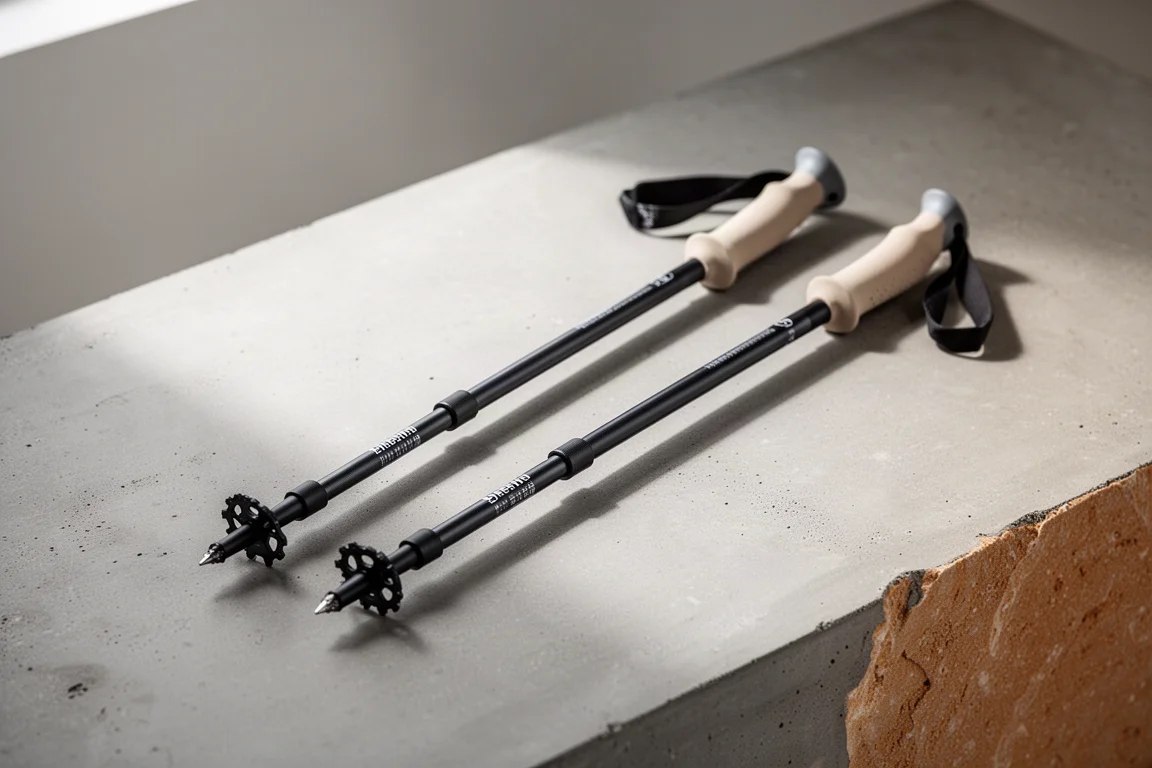
Gossamer Gear LT5 Trekking Poles sit at the ultralight end of the trekking pole market, and the price reflects that position: roughly $100 per pole. They have been in regular use for about a year and a half, across mountain climbs, desert, swamp, dirt, mud, and paved road. On a rocky ridgeline, one of them finally broke. That break is worth explaining, because it says more about how these poles behave in the field than a specification sheet can.
The headline numbers are straightforward. Each pole extends to 130 centimeters, which is tall enough for most trekking pole shelters, and fully collapsed it measures 23.5 inches, or 60 centimeters. The grips are EVA foam, the shafts use twist locks, and the tips are carbide. Baskets and other accessories come in the box.
Who This Product Is For
These poles make the most sense for people who hike and backpack consistently, whether that means long backpacking trips, regular day hikes, or a mix of both. Weight is the reason. Both poles together weigh about as much as a single standard trekking pole, and that difference shows up on long days, especially on climbs.
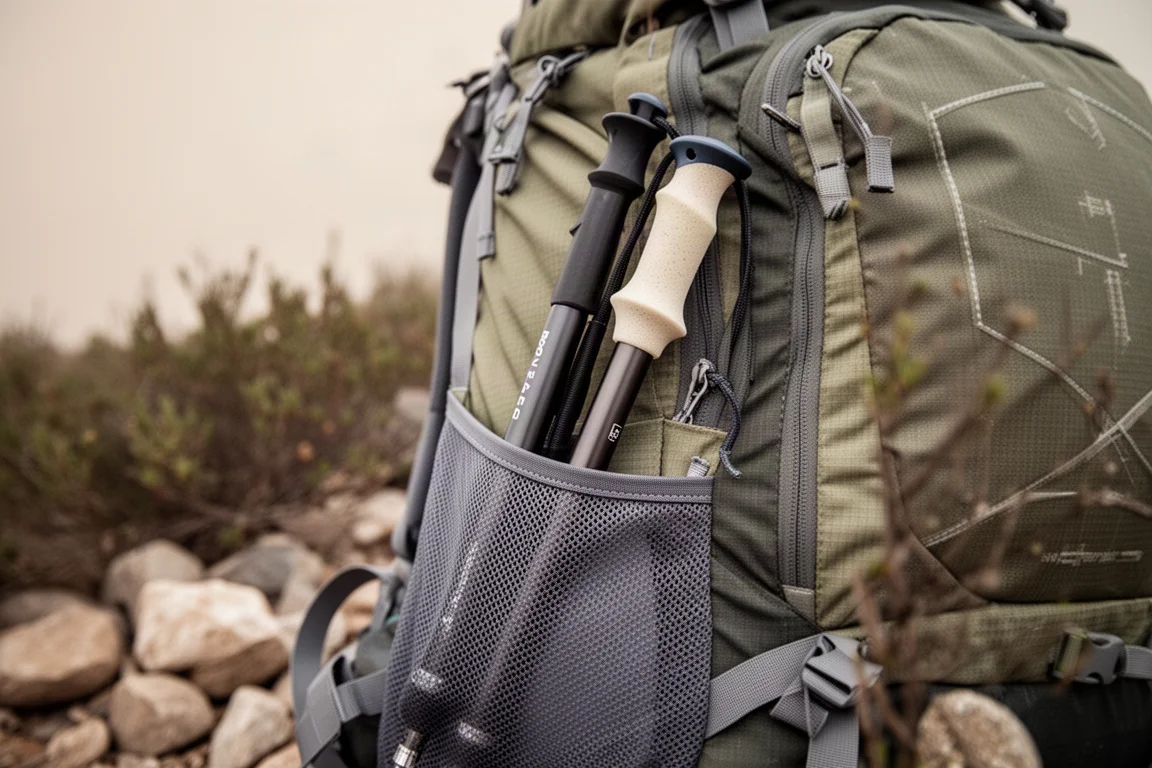
They also suit hikers who want a pole that stows quickly without fuss. Because there are no flip locks, the collapsed pole slides cleanly into a water bottle pocket or a pack’s mesh side pocket, and it can be pulled out with one hand while walking. That sounds minor until you are on a steep section and would rather not stop and unbuckle anything.

The case against them is simple. For anyone who backpacks once or twice a year, the cost is hard to justify. Ultralight construction earns its price through frequent use, not occasional use.
Main Strengths
Weight is the defining strength here. Both poles together come in at roughly the weight of one conventional trekking pole, which is the kind of difference you notice at the end of a long day rather than in the first mile. Handing them to other hikers tends to produce the same reaction: surprise at how little they weigh.
Packability follows from that. At 60 centimeters collapsed, they strap to the outside of a pack without standing up like an antenna and catching on branches, and they fit inside side pockets on most packs. The absence of flip locks is a deliberate trade-off that works in their favor, since there is nothing to snag on mesh or on other gear sharing the pocket.
The height range is another practical advantage. At 130 centimeters fully extended, they are tall enough for trekking pole tents that call for a taller pole, which extends their usefulness well beyond walking.
The carbide tips have also held up across a wide range of ground. After mountain climbing, desert, swamp, dirt, mud, and road, the tips are still going strong, and the included baskets are there for the rare occasions when you want them, such as snowshoeing.
Grips and Twist Locks in Daily Use
The grips are EVA foam rather than cork, although at a glance they look like cork. Gossamer Gear lists the grip material as EVA foam on the product page, and the resemblance is close enough that it is easy to assume otherwise. In practice the foam does not feel like the cloth-like padding found on cheaper poles. It has a firmer, more cork-like feel under the hand, and after extended use it stops being a concern.
The twist locks were the bigger question at first. Twist locks have a reputation for slipping, and on these poles one shaft will occasionally end up slightly shorter than the other after a couple of miles. In every case that has come down to not tightening the lock firmly enough at the start. A good twist settles it, and the locks themselves have not failed.
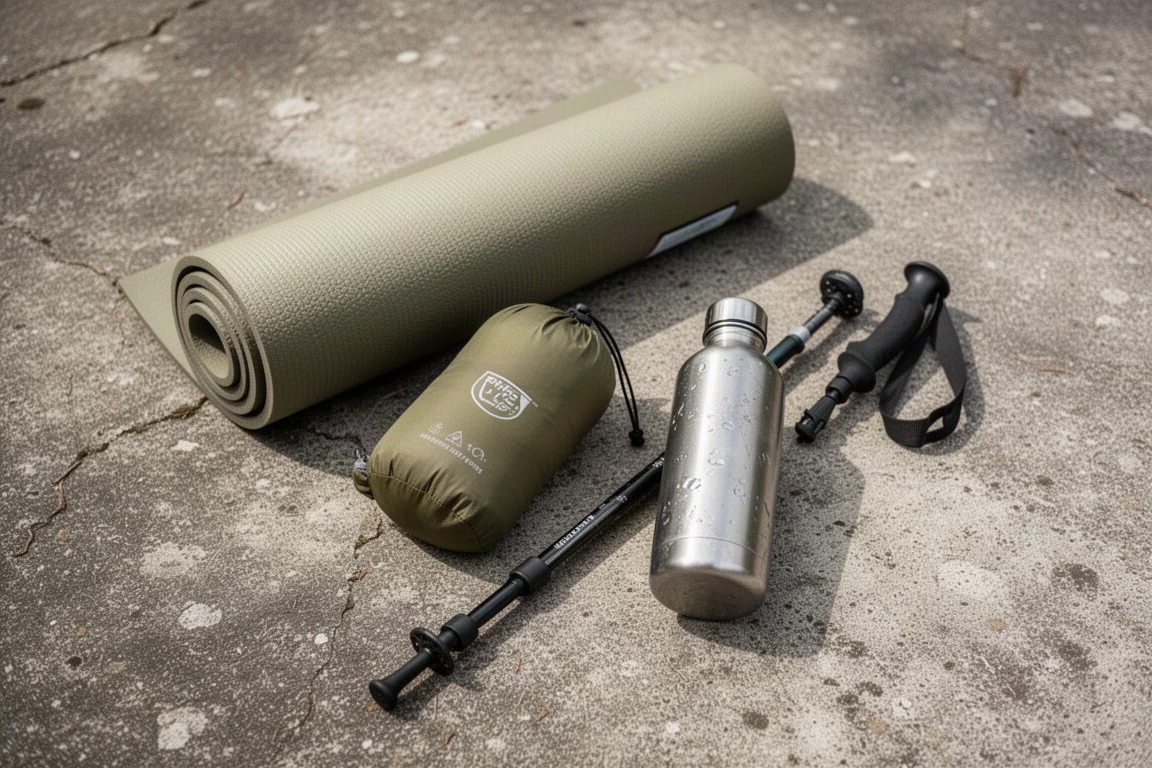
Adjustment is quick, and the sections hold position once properly tightened. For hikers who prefer the simplicity of a twist lock over a lever, this system is uncomplicated and easy to manage in the field.
Real-World Durability and a Ridge Incident
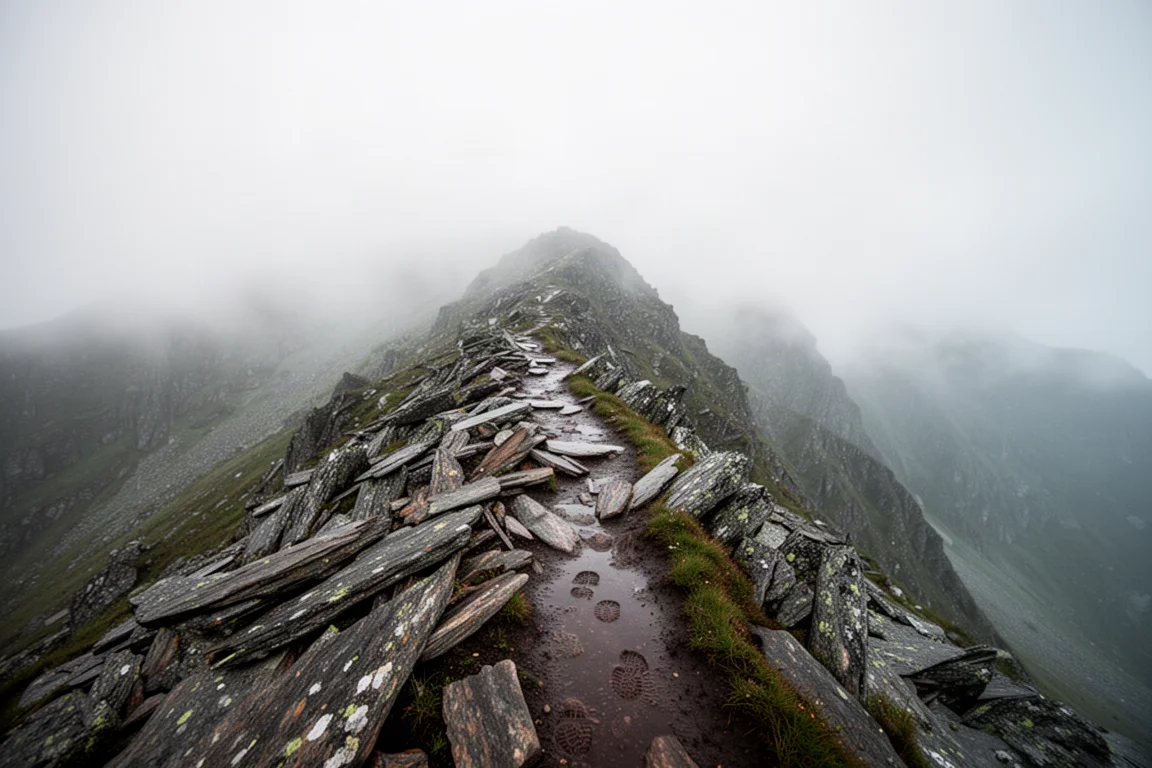
The most useful test of any trekking pole is what happens when you actually fall on it. On a rainy day on a rocky ridgeline, with slick rock underfoot and a long drop off to one side, a foot slipped on an angled rock and the full weight of the body came down onto the pole. The pole lodged between rocks, bent, and snapped.
What matters is how it snapped. It did not give way instantly the way a pencil does. It folded slowly enough to keep supporting weight through the fall, which turned a hard impact into a controlled one. The arm still hit the rock, but the pole absorbed much of the force on the way down. The pole is finished. The fall was survivable.
That is a fair way to judge ultralight gear. Something has to give, and the real question is whether it gives in a way that protects the user. Here, it did.
Things to Consider Before Buying
Price is the first consideration. At roughly $100 per pole, these are among the more expensive trekking poles available, and the value depends entirely on how often you use them. Frequent hikers get their money back in reduced fatigue. Occasional backpackers likely will not.
The twist locks require attention. They hold well when tightened properly, but a section will creep if you set them loosely. If you prefer set-and-forget hardware, that is worth knowing before you buy.
Pack size is good but not the smallest available. Folding Z-style poles collapse shorter, and if stowing inside a small pack is a priority, those designs have an edge.
The EVA foam grip is also worth flagging for anyone who specifically wants cork. It behaves well, but it is not the material the appearance suggests.
Repairability and Replacement Parts
One of the more reassuring details is that these poles can be repaired rather than replaced. Individual sections are available from Gossamer Gear for about $35 each, so a snapped shaft does not mean buying a whole new set. For a pole that has already broken once, that keeps long-term cost of ownership reasonable and makes the initial price easier to justify across several seasons.
Buying Advice
These poles reward a specific kind of buyer: someone who hikes often enough that weight matters, who wants a simple twist-lock design, and who values the ability to replace a single section instead of an entire set. In that context, the price per pole is easier to accept.
If you hike only a few times a year, the math does not work. A heavier, cheaper pair will do the same job for considerably less. The LT5 is a tool for volume of use, not for occasional outings.
One practical habit is worth adopting: tighten each twist lock firmly at the start of the day, then check them after the first couple of miles. That single routine prevents nearly every slipping issue that shows up in normal use.
Conclusion
Gossamer Gear LT5 Trekking Poles are light in a way that changes how a long day feels, and they are built with a repairable, serviceable design. They are expensive, the grips are foam rather than cork, and the twist locks expect a firm hand. Set against that is a pole that has covered a wide range of terrain over about a year and a half and, when it finally broke under a falling hiker, broke slowly enough to matter.
For frequent hikers who want to cut weight without giving up height range or packability, these are worth a serious look. For everyone else, the price is the deciding factor.
Product link
View more details for Gossamer Gear LT5 Trekking Poles
This product is mentioned in the review. Check the specifications, options, and compatibility before buying.
View more details for Gossamer Gear LT5 Trekking PolesFurther reading
Related Reviews
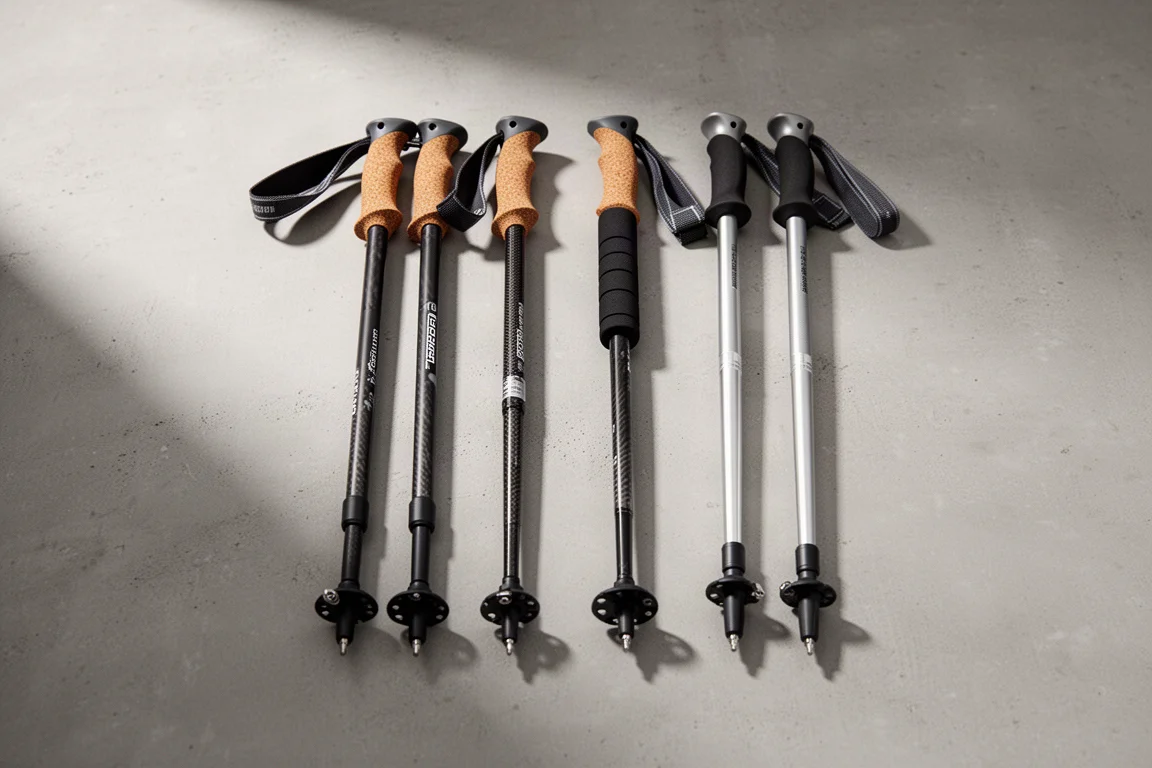
Trekking Poles
Best Trekking Poles for Thru-Hiking: Four Sets Compared
A practical comparison of four trekking pole sets for long-distance hiking, from a $23 aluminum pair to a $200 carbon pole that packs down smaller than the rest.
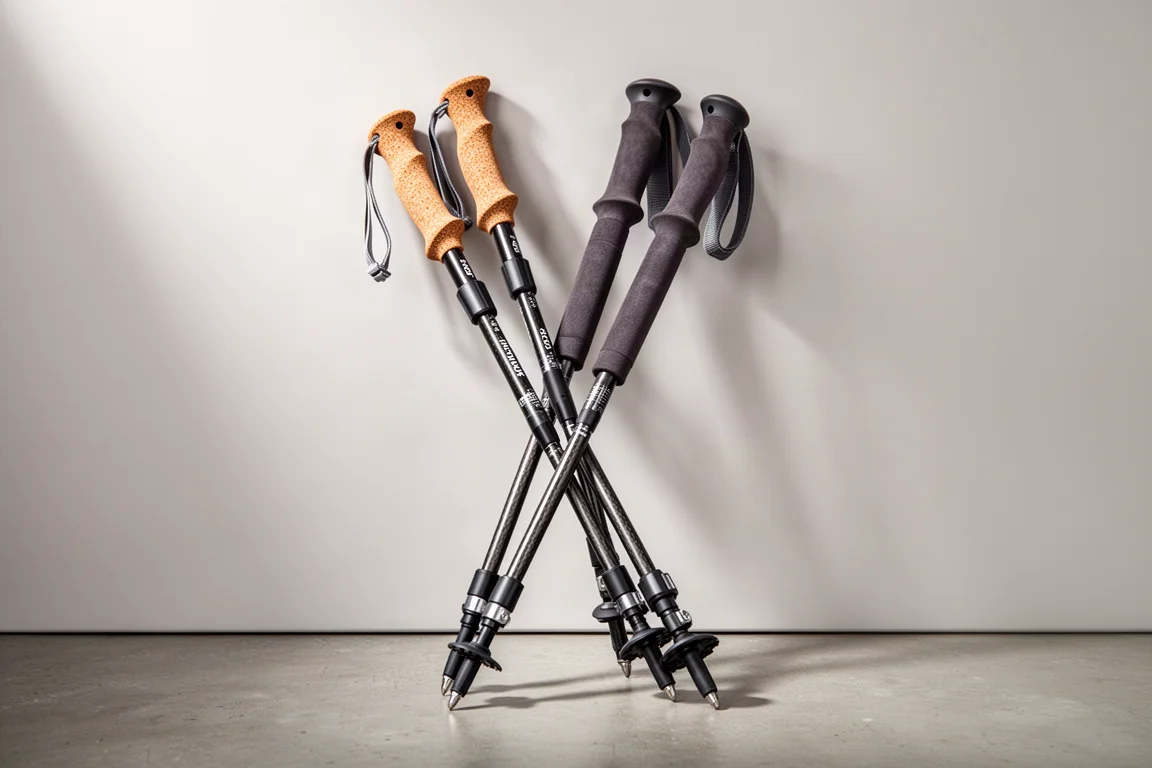
Trekking Poles
Black Diamond Alpine Carbon Cork vs Leki Micro Vario: Trekking Poles Compared
A long-term look at two collapsible trekking poles, covering lock design, grip comfort, tip life, and what each pair asks of a long-distance hiker.
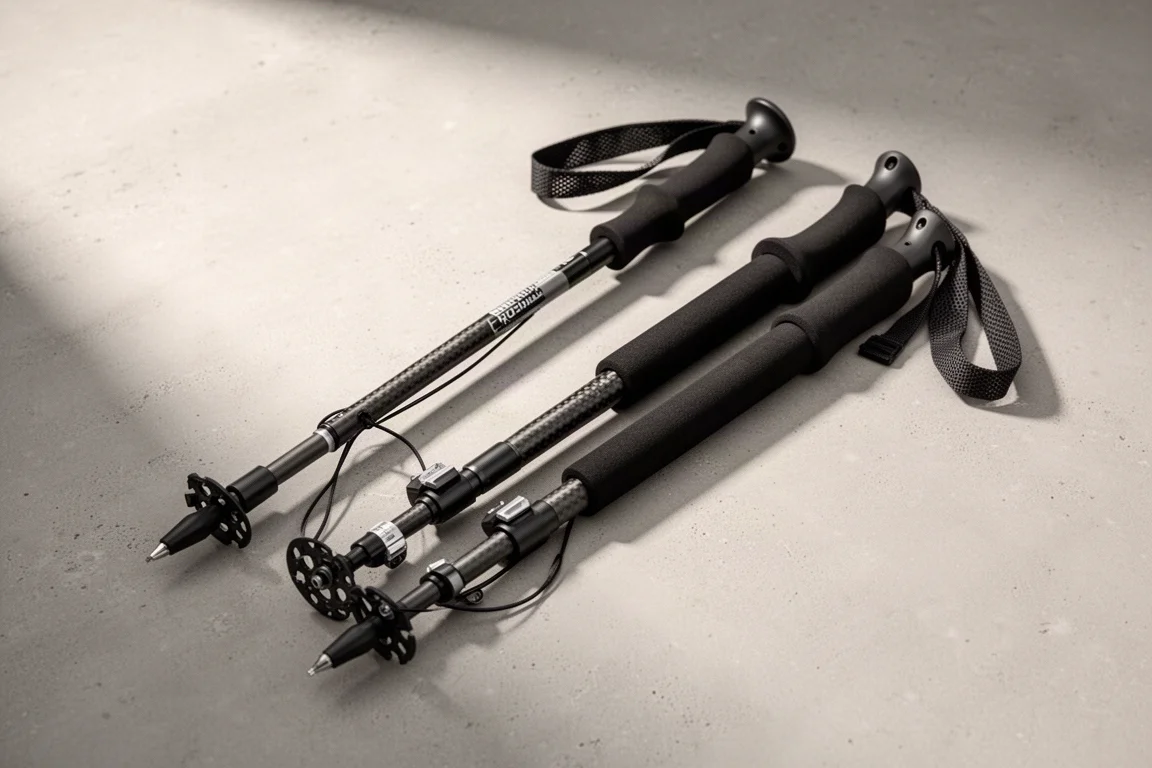
Trekking Poles
Leki Skytera vs Skysolo: Choosing the Right Folding Trekking Pole
A practical comparison of two new Leki folding trekking poles: the lightweight Skytera and the beefier, taller-friendly Skysolo.