Home Theater
Laser TV vs Traditional Projectors: Why Ultra Short Throw Setups Win for Home Theater
Laser TVs solve the three biggest problems with traditional projectors: shadow casting, light sensitivity, and expensive lamp replacement. Here's why this technology is worth the investment.
Introduction
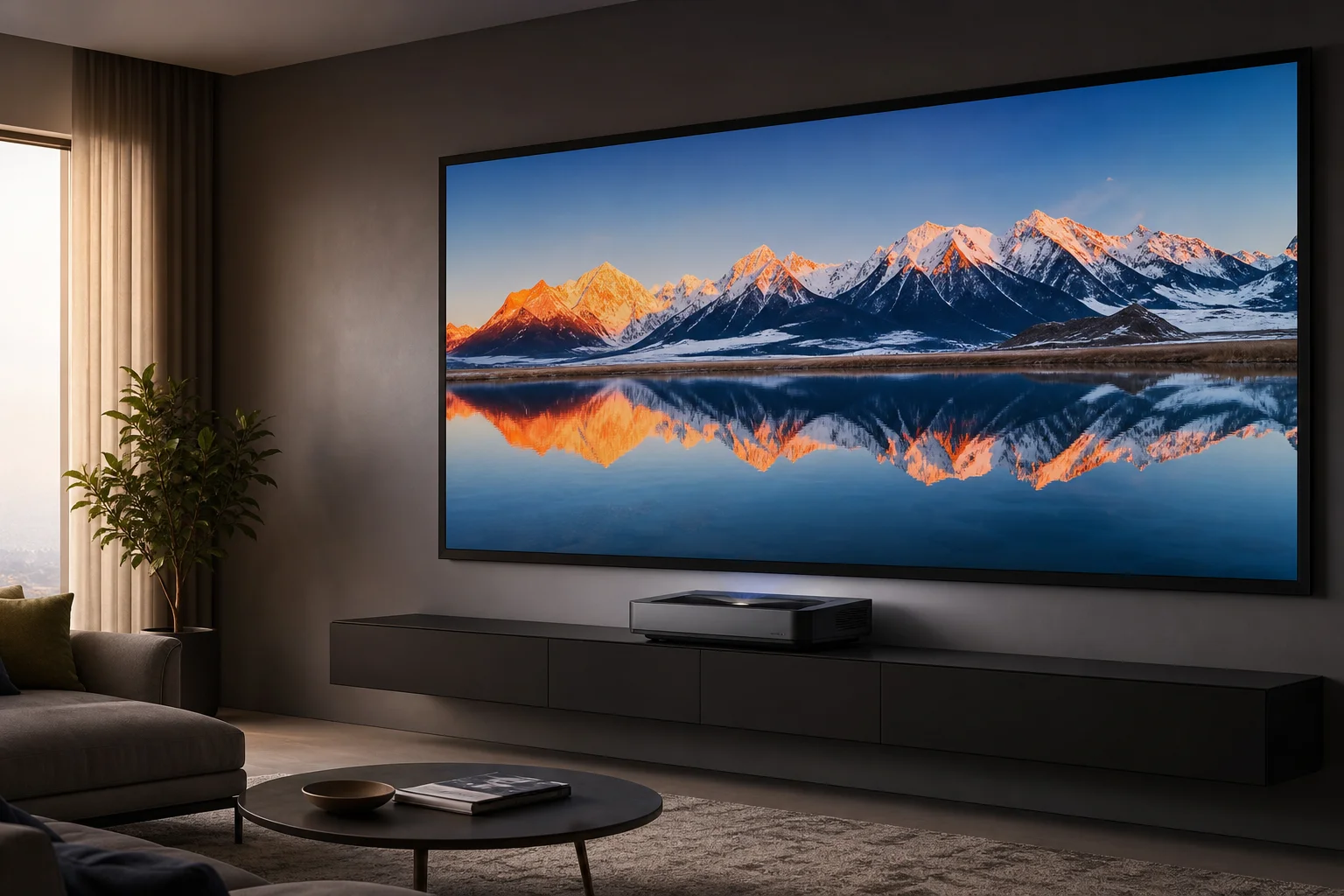
For decades, home theater enthusiasts have faced a difficult choice: buy a massive television at an astronomical price, or accept the compromises that come with traditional projectors. Laser TV technology changes this equation entirely. Unlike conventional projectors, laser-based ultra short throw systems deliver large-screen performance that works in lit rooms, requires minimal maintenance, and costs significantly less than equivalently sized televisions.
The Three Problems with Traditional Projectors
Traditional projectors excel at creating large images, but they come with three significant drawbacks that affect daily use.
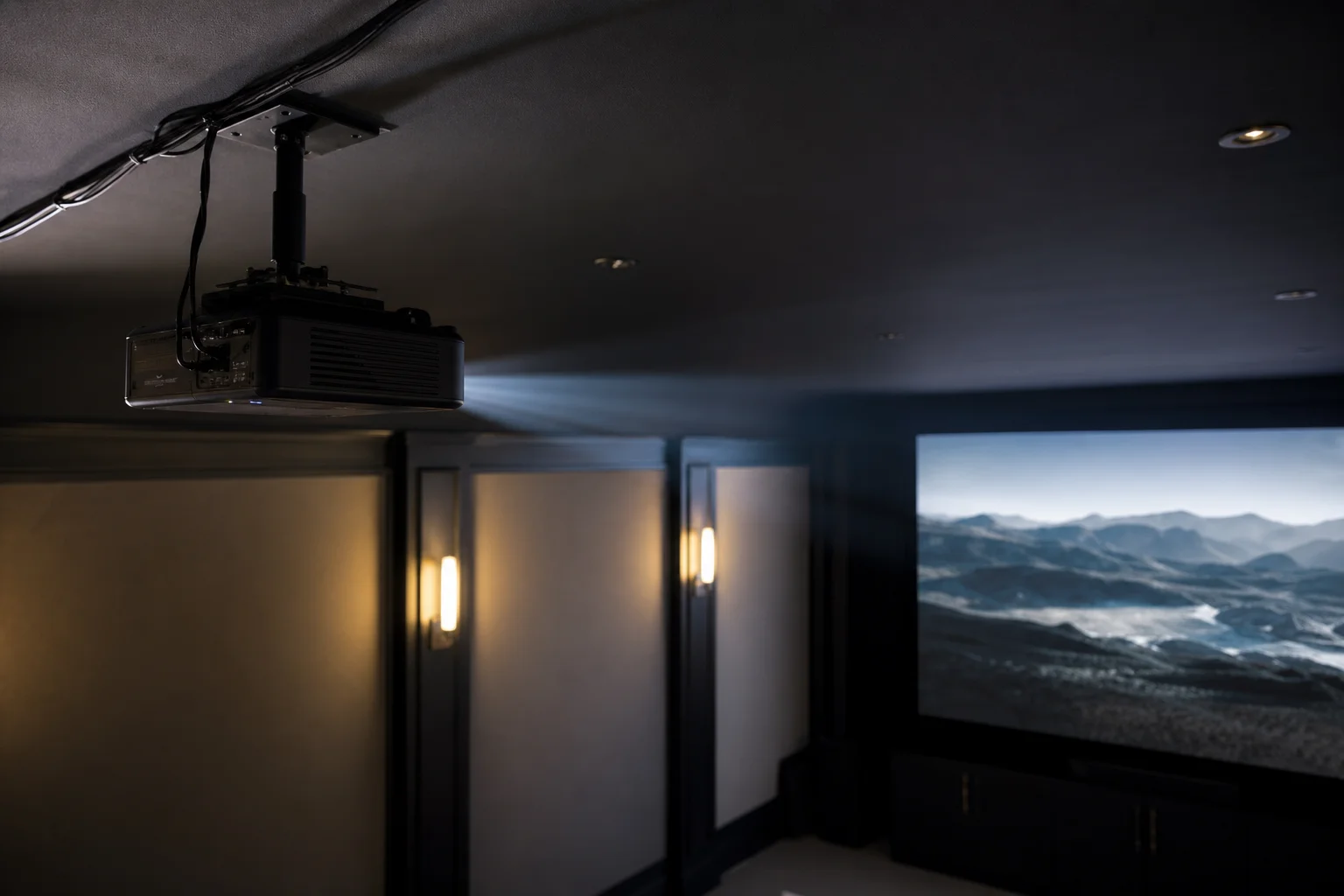
The first issue is shadow casting. Because a traditional projector sits far from the screen—often 14 feet or more away—anything that passes between the projector and screen creates a visible shadow. This means you cannot walk in front of the projector without disrupting the image, and anyone standing in the light path will be temporarily blinded by the intense beam. This severely limits how you can use the room during viewing.
The second problem is light sensitivity. Traditional projectors require near-total darkness to produce acceptable image quality. Turn on the room lights and the image washes out dramatically. Colors fade, blacks become grey, and contrast collapses. This makes traditional projectors impractical for daytime viewing or rooms where ambient light cannot be completely controlled. A high-quality projector screen helps, but the difference between lights-on and lights-off performance remains stark.
The third issue is lamp maintenance and cost. Traditional projectors use lamps that degrade over time and eventually require replacement. A typical lamp lasts 18 months to a few years before displaying warning messages and flickering. Replacement lamps cost between 80 and 200 dollars, and the replacement process is inconvenient. Over the life of the projector, these recurring costs add up significantly.
Why Televisions Are Not the Answer
For screens larger than 85 inches, televisions become prohibitively expensive. A 110-inch television—the largest commonly available consumer model—costs around 13,600 dollars, working out to approximately 124 dollars per diagonal inch. Screens larger than 110 inches are not commercially available in the consumer market at any price. If you want a 120-inch or 150-inch display for home theater, a projector is your only option.
How Laser TV Works
Laser TV is actually a misnomer. The technology consists of two components: an ultra short throw laser projector and a specialized screen with ambient light rejection technology.
The projector is the key innovation. Unlike traditional projectors that sit far from the screen, an ultra short throw projector mounts just 12 to 18 inches away from the screen surface. This proximity eliminates shadow casting and allows the projector to remain out of the way, often mounted on a low shelf or stand rather than on the ceiling.
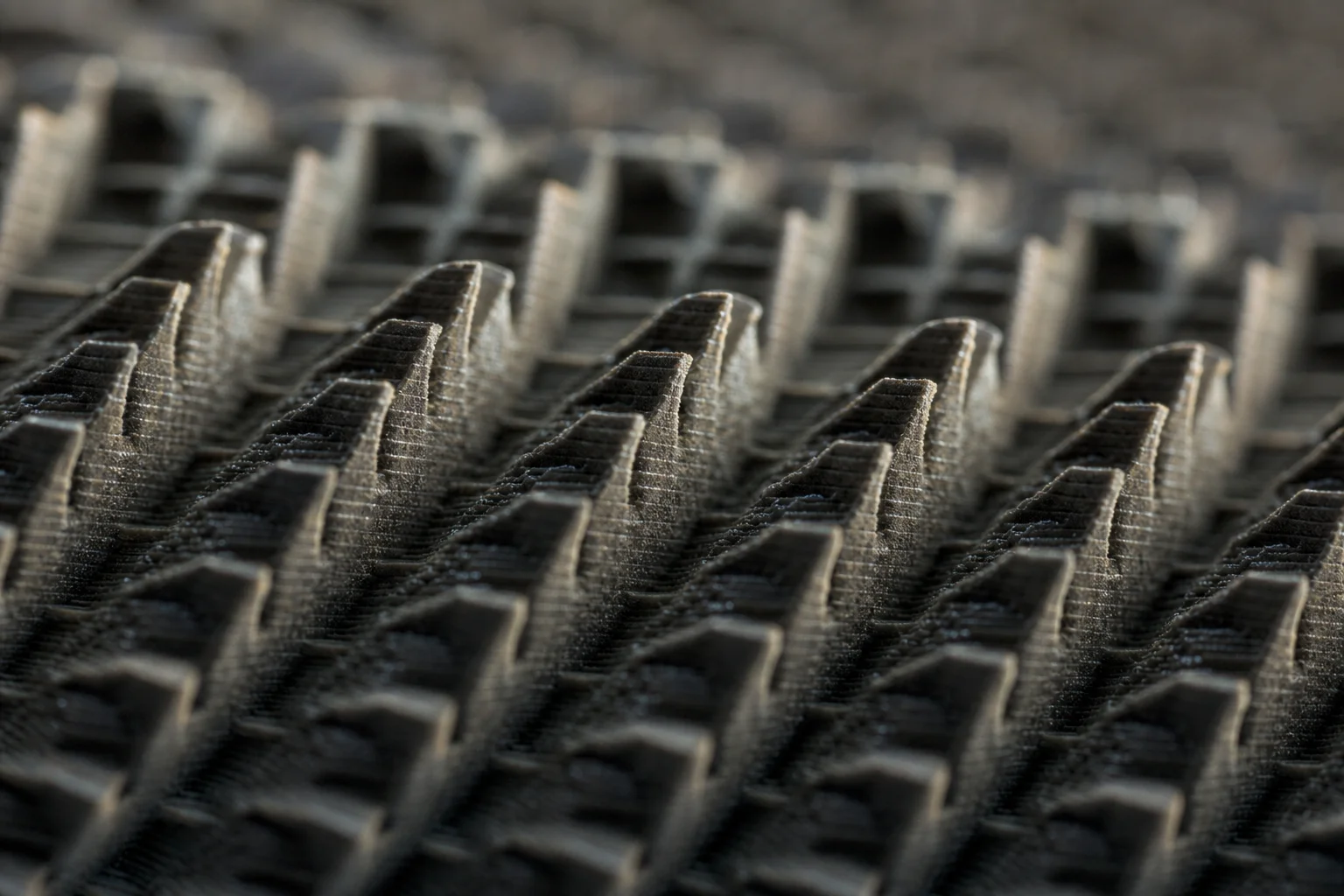
The screen is equally important. Ambient light rejection screens use a microscopic sawtooth pattern etched into the surface. The ridges of this pattern have horizontal shelves at the top that reflect overhead light back upward, away from the viewer. The valleys have shelves at the bottom that reflect light from the projector back toward the viewer. This clever design allows the screen to reject over 90 percent of overhead light while still displaying the projector’s image clearly. The result is a screen that maintains excellent contrast and color even with room lights on.
Laser TV Performance in Lit Rooms
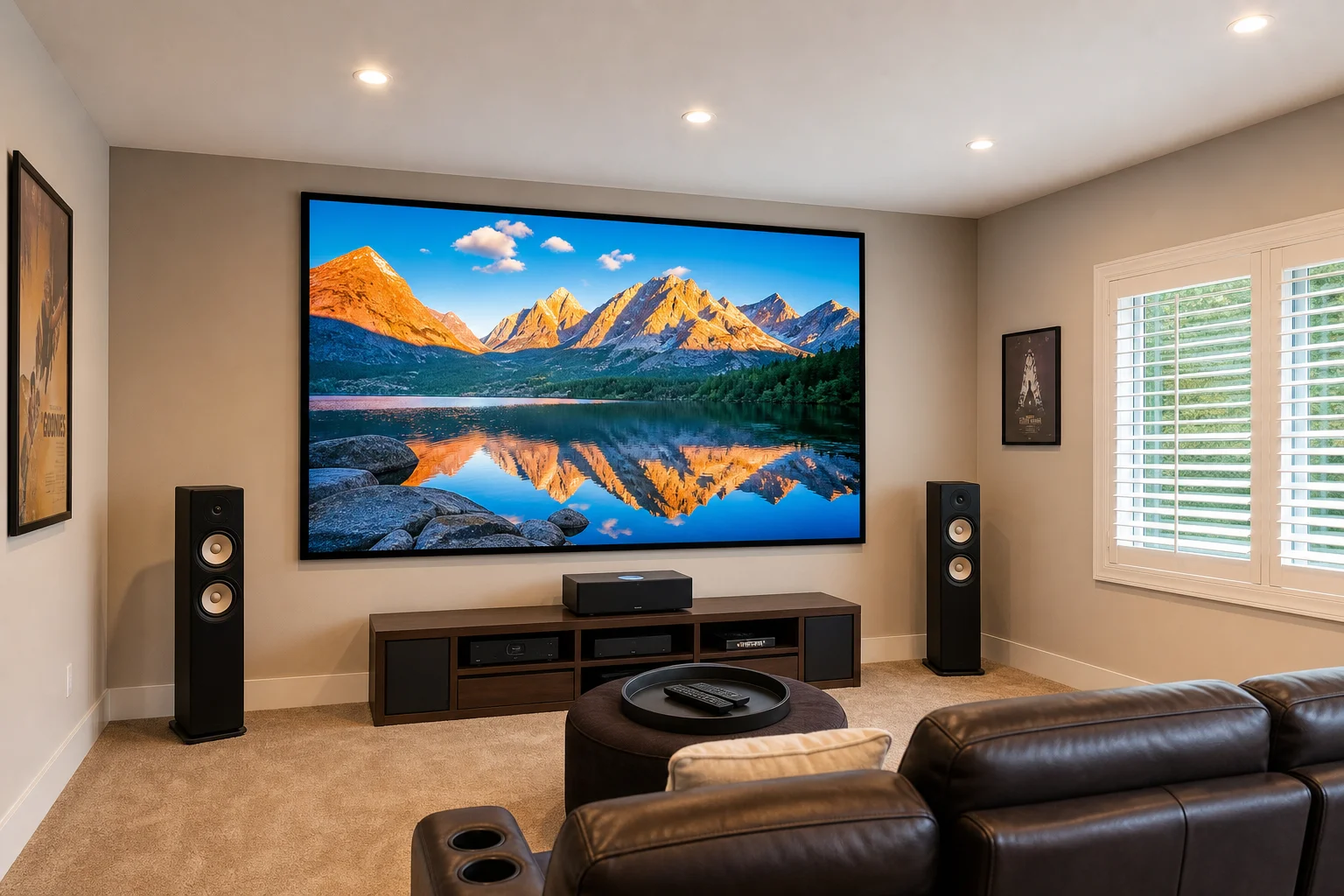
The performance difference between traditional projectors and laser TV systems is dramatic when lights are on. A traditional projector with a high-quality screen still produces a washed-out image in daylight. A laser TV with an ambient light rejection screen maintains vibrant colors, deep blacks, and strong contrast regardless of room lighting. This transforms the home theater from a dark-only space into a room that works for daytime viewing, movie nights, and everything in between.
Lamp Life and Maintenance
Laser projectors eliminate the lamp replacement problem entirely. The laser light source in these systems is rated for 20,000 hours of operation. To put this in perspective, if you watch content eight hours per day, the laser will last approximately 13 years before reaching end of life. For most users, this means the projector will outlast their interest in the technology. There are no replacement lamps to buy, no warning messages, and no maintenance hassles.
The Complete Laser TV Setup
A complete laser TV system consists of an ultra short throw projector and a fixed-frame ambient light rejection screen. The Formovie Theater projector has been independently tested against 14 competing ultra short throw systems from brands including LG, Samsung, and Hisense, and ranked as the top performer by multiple experts.
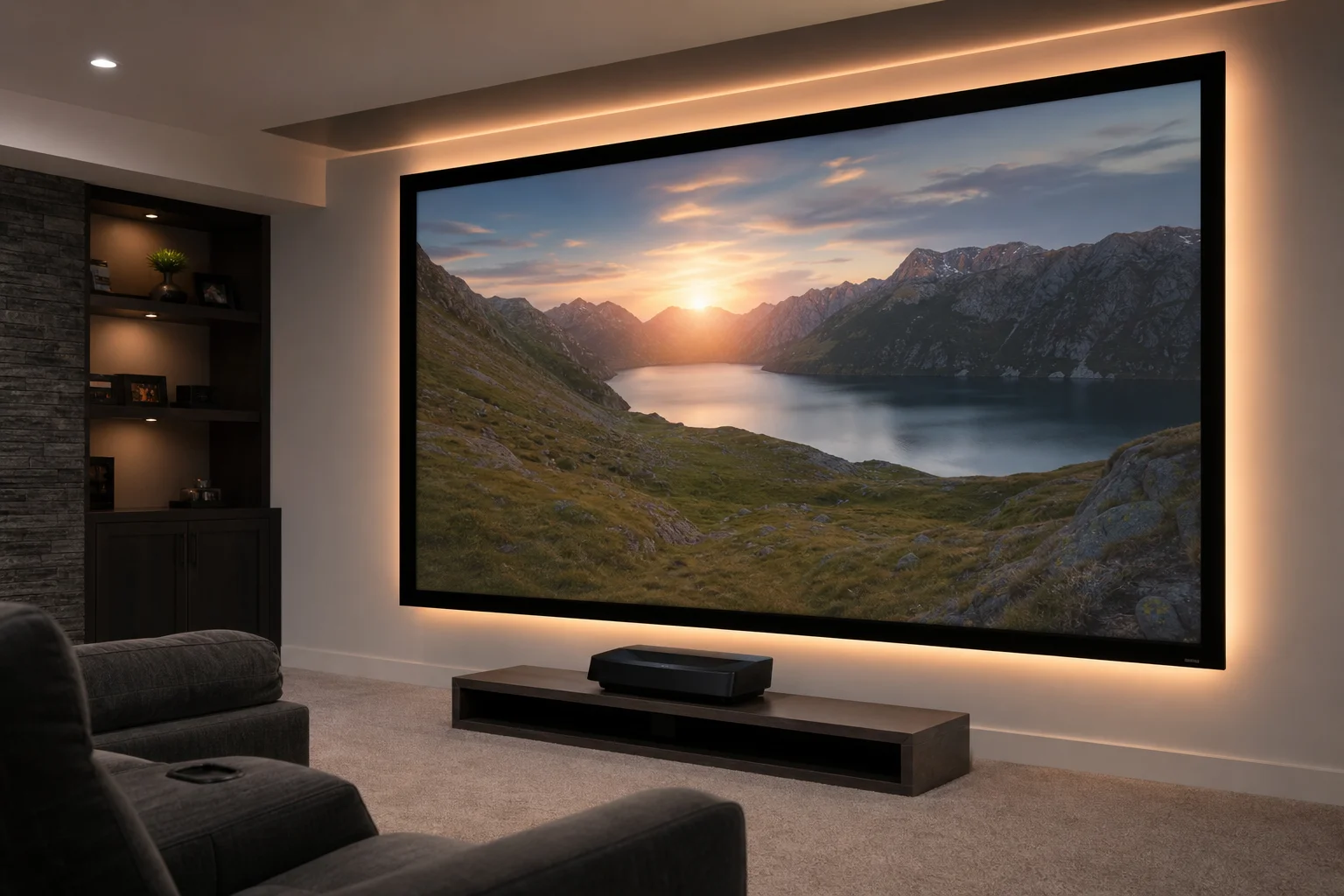
The Elite Screens Aeon CLR is a purpose-built screen designed specifically for ultra short throw projectors. The fixed frame design ensures the screen remains perfectly stable and flat. The included bezel gives the setup the appearance of a giant television while also containing any light bleed at the edges. Many models include integrated LED backlighting that can be adjusted or turned off as desired. Installation takes a few hours and can be completed by a homeowner with basic tools.
The complete setup—projector, screen, and installation—costs approximately 5,500 dollars. While not inexpensive, this price is substantially lower than a 110-inch television and enables screen sizes that are simply unavailable in the television market. The image quality in both lit and dark rooms surpasses what traditional projectors can deliver.
Conclusion
Laser TV technology solves every major problem with traditional projectors while remaining more affordable than equivalently sized televisions. The combination of ultra short throw projection and ambient light rejection screens creates a home theater experience that works in real-world lighting conditions, requires virtually no maintenance, and delivers exceptional image quality. For anyone considering a large-screen home theater upgrade, laser TV is the clear choice.
Product link
View more details for Formovie Theater
This product is mentioned in the review. Check the specifications, options, and compatibility before buying.
View more details for Formovie TheaterFurther reading
Related Reviews
Home Theater
Best Home Theater Receivers 2026: Three Strong Contenders for Music and Movies
Three capable AV receivers that balance home theater performance with music listening, each with distinct strengths in power, connectivity, and room calibration.
Home Theater
Best Premium Soundbar Systems 2026: Eight Flagship Setups Compared
Eight premium soundbar systems from $1,000 to $4,000 tested for vocal clarity, sound stage, surround effects, height performance, and bass.
Home Theater
Best Wireless Surround Sound Systems 2026: Three Options Compared
We compare three wireless surround sound in a box systems from Highense, Valyrian, and Sony to see which offers the best home theater experience without the hassle of running speaker cables.