Digital-to-Analog Converters
Lab 12 DAC One Reference Review: A Tube Converter Built for Ease and Body
A non-oversampling tube DAC from Greece with eight multi-bit converter chips, a heavy chassis, and a 5-year warranty. Here is what its relaxed, spacious sound does well and what it asks you to give up.
Introduction
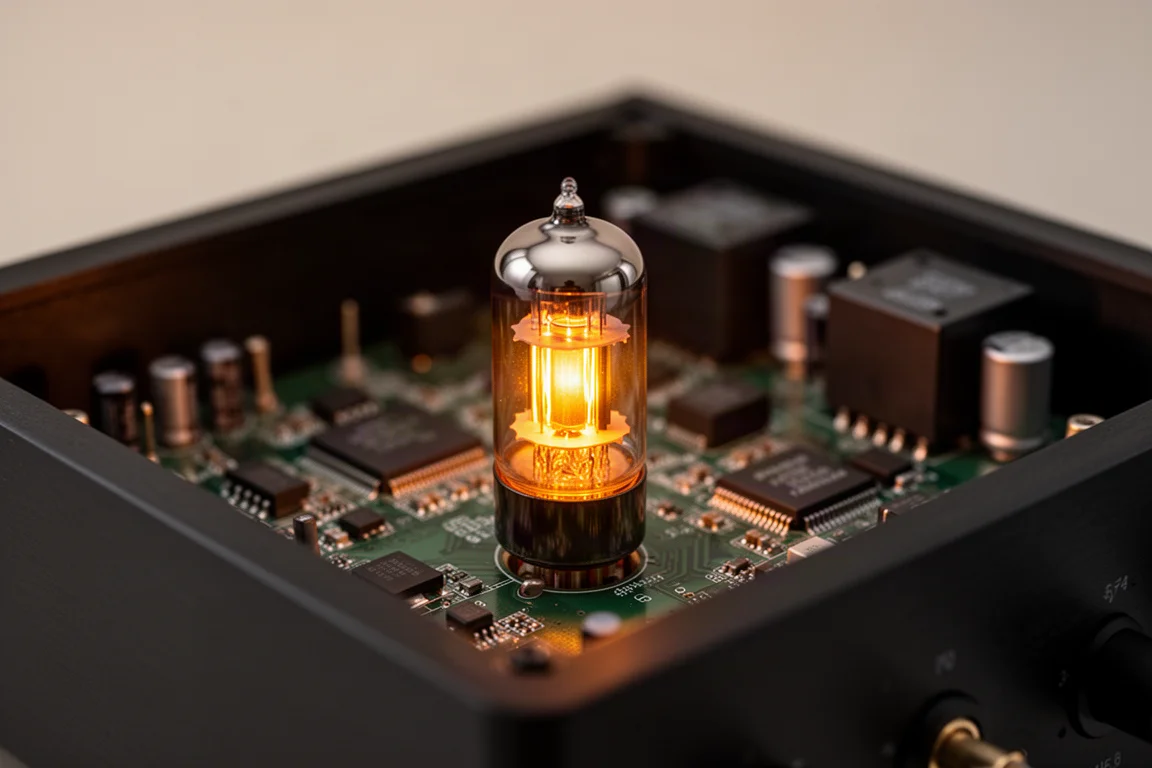
Vacuum tubes and digital audio can look like an unlikely pairing, but they can work well together, and the Lab 12 DAC One Reference is a clear example. Made in Greece, it is a non-oversampling digital-to-analog converter with two 6922 tubes.
The idea itself is not new. When digital playback first arrived, plenty of listeners found it bright and hard, and a well-executed tube output stage helped change minds about how digital could sound. The DAC One Reference follows that tradition, leaning toward ease and body rather than clinical precision.
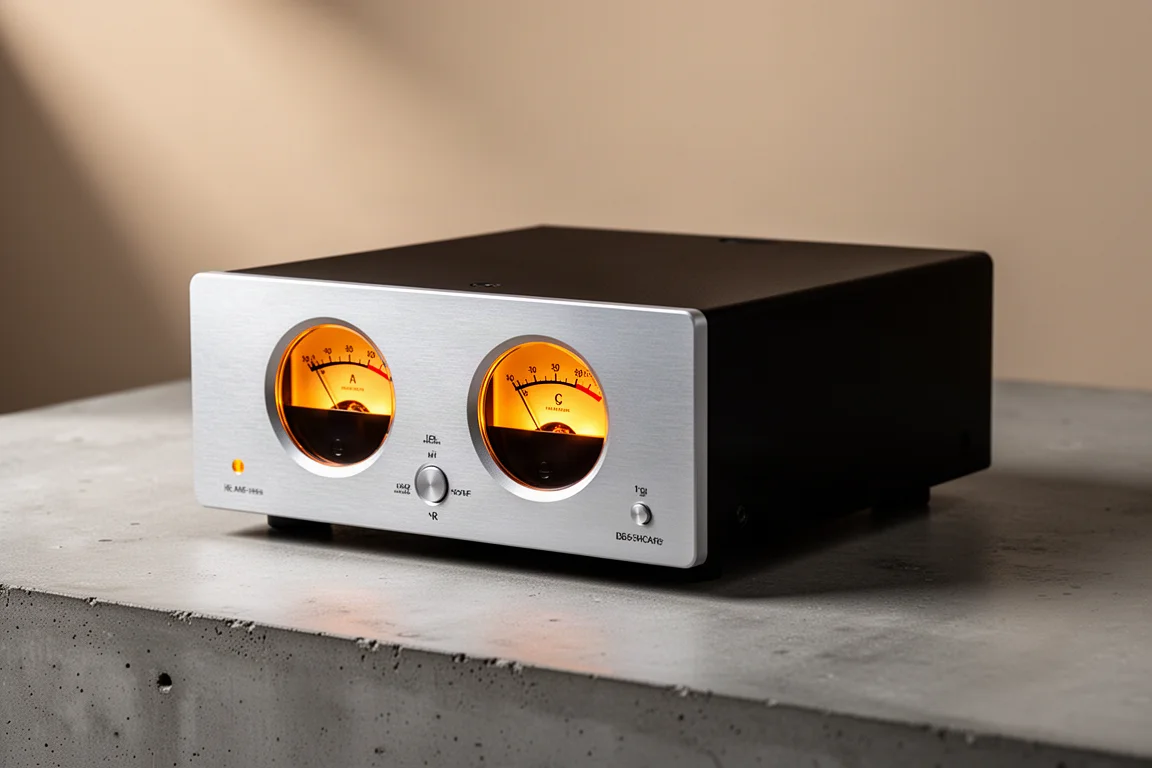
The look is retro rather than modern. The front panel carries meters, which is unusual for a converter, and the unit is available in silver or black. Inside, the design is all business, with eight multi-bit Philips converter chips handling the conversion work.
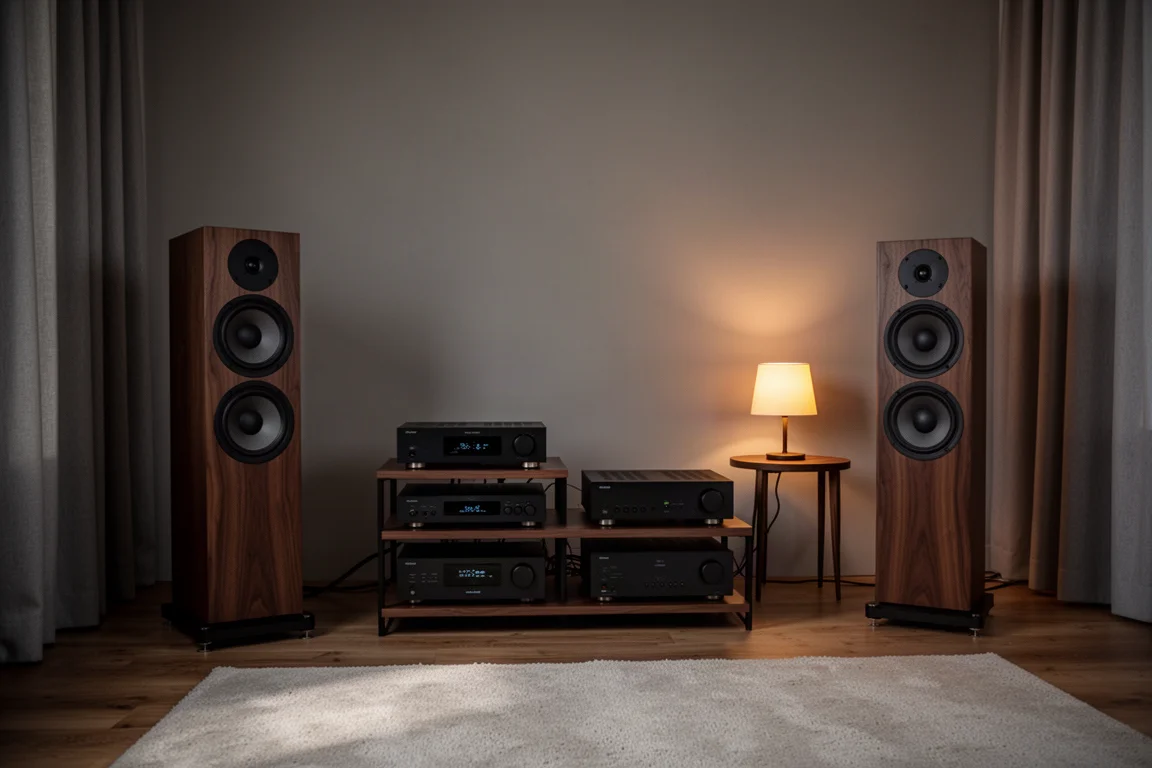
Build quality feels solid throughout. The chassis weighs close to 17 pounds, and the converter is covered by a 5-year warranty, which is longer than the two or three years typical in this category. The price is $3,395.
Design, Build Quality, and Connectivity
The chassis has real substance. Pick it up and the weight tells you where the money went, and the front-panel meters suggest output-level monitoring, although their role is largely aesthetic rather than functional.
What matters more is the architecture underneath. Eight multi-bit Philips converter chips, a non-oversampling design, and a pair of 6922 tubes form the core of the circuit, and the result is a component that behaves more like a piece of lab equipment than a lifestyle gadget.
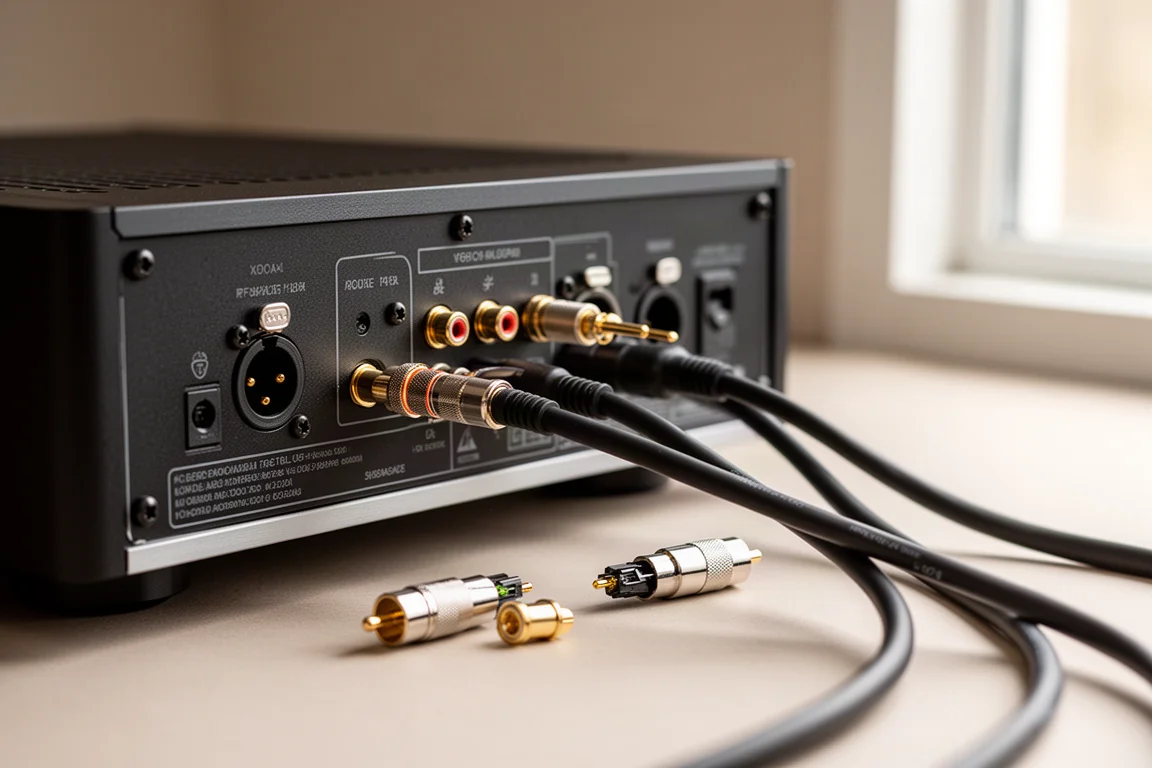
Connectivity is deliberately sparse. On the back you get one USB input, two coaxial inputs, and one optical input. Outputs are balanced XLR and single-ended RCA. There is no remote control, no DSD support, and no MQA decoding. This is a PCM converter, and it is aimed at listeners who have already settled on a digital front end and simply want the best conversion they can get from it.
Who the Lab 12 DAC One Reference Is For
This converter suits listeners who value beauty and ease over the last word in resolution. It is a natural fit for anyone who spends a lot of time with rock, dance, or reggae, where weight and drive in the low end matter more than forensic detail.
It also suits people whose libraries are PCM-based, whether on disc or streamed, and who are not chasing DSD or MQA playback. If you have a transport or a streamer you already like, the DAC One Reference slots in behind it without asking for much.
It is a less obvious choice for listeners who want the clearest possible window into every recording. There are converters built around that goal, and they make a different set of trade-offs.
Main Strengths: A Relaxed, Dimensional Presentation
The defining quality here is the way the music relaxes and opens up. Nothing shouts at you. The presentation sits at ease, and the soundstage is big, wide, and deep, with a genuine sense of layering between instruments rather than a flat wall of sound.
The bass deserves its own paragraph. There is weight and drive down low, an oomph that feels closer to what you would expect from a powerful amplifier than from a converter. With rock, dance, or reggae, that low-end substance pulls you further into the music, and it holds up when you turn the volume up.
Voices are where the character becomes most obvious. On John Lennon’s first two solo albums, Plastic Ono Band and Imagine, the voice comes across as more completely present between the speakers, with breath, phrasing, and dynamics that feel right. These are relatively uncluttered recordings, which makes the added sense of a human being in the room easier to appreciate.
The low-end character shows up on other material too. With a Beastie Boys album, the funk in the playing and the drum sound came through with real substance, the kind of listen that ends with a smile. On a garage-rock record in the spirit of 1960s Nuggets compilations, the forward motion and drive were exciting rather than tiring, and an imperfect recording stayed easy to enjoy.
How It Compares With Other Digital-to-Analog Converters
The most useful reference point is the Linear Tube Audio Aero DAC, since it is also a tube design. It is faster, clearer, more transparent, and more vivid, but it gives up some of the body and soul that the Lab 12 brings. The Lab 12, in turn, is softer, sweeter, rounder, and warmer. This is not a question of which converter is better. It is a question of which balance you want, and the Aero is proof that not every tube converter has to be soft and warm.
The Mola Mola Tambaqui sits at the opposite end of the spectrum. It is a solid-state converter with very high resolution, and on excellent recordings it lets you hear deep into the mix in a way that is genuinely exquisite. On weaker recordings, that same clarity exposes hardness, edge, and brightness. With rougher material, the Lab 12 is simply the easier listen.
The pattern repeats on a 1969 live recording by Crosby, Stills, Nash and Young in high resolution. The Lab 12 presented four individual human voices in the room, while the Aero gave more of a sense of the whole venue. Both are valid presentations, and your taste in music will decide which one feels right.
Things to Consider Before Buying
Format support stops at PCM. There is no DSD, no MQA, and no remote control, so if your library includes DSD files or you depend on MQA, this converter is not the right tool.
The input count is modest: one USB, two coaxial, one optical, plus XLR and RCA outputs. That covers a transport and a streamer comfortably, but it will not serve a large multi-source system without a switcher.
Character is a design decision, not a defect. The relaxed, warm presentation is the whole point, and it is what makes difficult recordings pleasant. If your priority is the most transparent possible view into a recording, this is the wrong set of trade-offs.
Finally, treat the meters as a visual signature rather than a measurement tool, and plan your rack space accordingly. The 17-pound chassis is not a small component, and it deserves a shelf that can take the weight.
Worth noting as well: the 5-year warranty is a meaningful part of the value here. A longer coverage window on a converter with tubes inside is not something every manufacturer offers, and it reduces the long-term risk of buying into a tube-based design.
Buying Advice
At $3,395 the DAC One Reference sits firmly in premium territory, and the case for it rests on the combination of the heavy chassis, the 5-year warranty, and a sound that is genuinely distinctive rather than merely competent.
The best way to get value from it is to pair it with a front end you already trust. A good CD transport or a capable network streamer will let the converter show what it does, and the sparse input set is easier to live with when you know exactly what you plan to connect.
System synergy matters more than usual with a component this characterful. If the rest of your chain is already warm and relaxed, the result can tip too far in that direction. If your amplifier and speakers lean neutral or slightly forward, the Lab 12’s ease balances them nicely.
Buy it for what it is. If you want your digital library to sound beautiful, involving, and comfortable for long sessions, this converter makes a strong case for itself. If you want the most resolving playback possible and you mostly listen to excellent recordings, look at a high-resolution solid-state design instead, and accept that it will be less forgiving.
Conclusion
The Lab 12 DAC One Reference is a beautiful sounding converter, and it knows exactly what it wants to be. It is non-oversampling, tube-based, built in Greece, and finished in a chassis heavy enough to feel like serious equipment. It gives you a wide, layered soundstage, voices with real presence, and bass with weight and drive.
What it does not give you is maximum resolution, DSD or MQA support, or a remote control. Those omissions are the price of its character, and for listeners who prize beauty over analysis, the exchange is a fair one.
Product link
View more details for Lab 12 DAC One Reference
This product is mentioned in the review. Check the specifications, options, and compatibility before buying.
View more details for Lab 12 DAC One ReferenceFurther reading
Related Reviews
Digital-to-Analog Converters
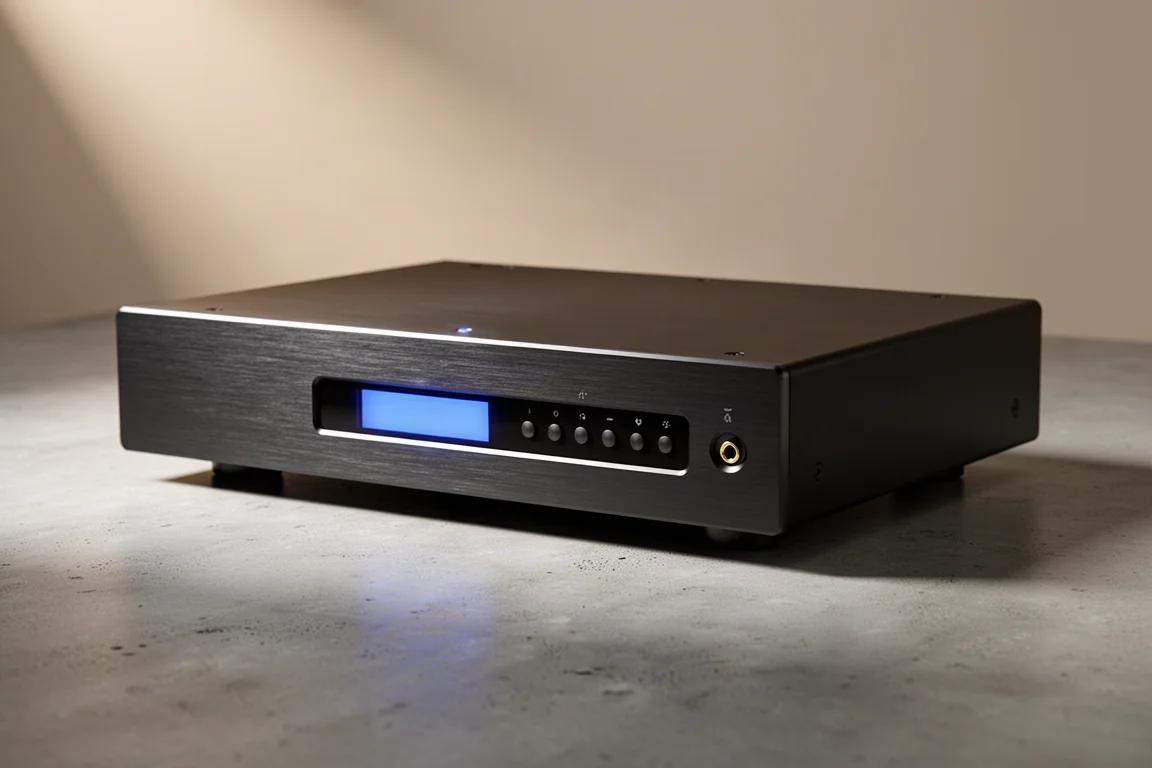
Emotiva XDA-3 Review: A $699 Converter That Keeps Analog Analog
The Emotiva XDA-3 pairs a high-resolution converter with a real preamplifier and a built-in headphone amp, and its analog inputs never touch a digital stage.
Audio Components
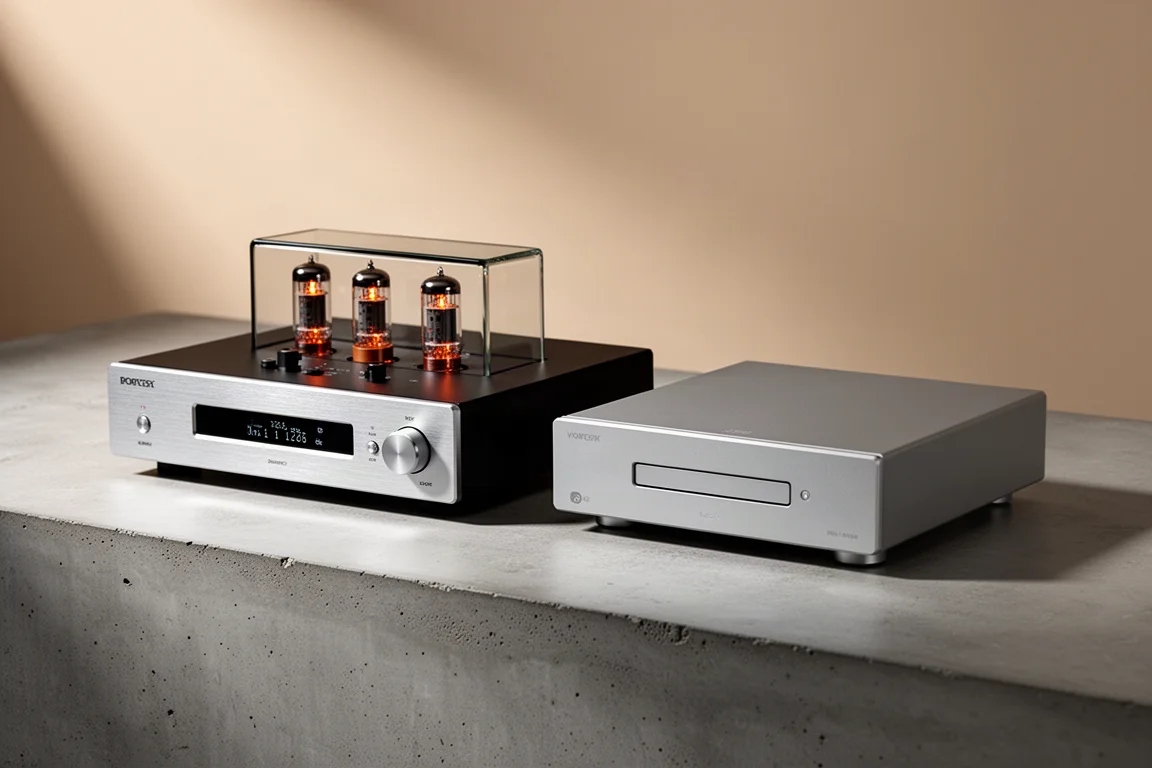
Advance Paris ACD Apex vs Onkyo Icon C-30: Two CD Players, Two Very Different Paths
A $1,400 tube-equipped CD player against a $400 deck. Where the extra money goes, what you actually hear, and which one suits your system.
Hi-Fi Audio
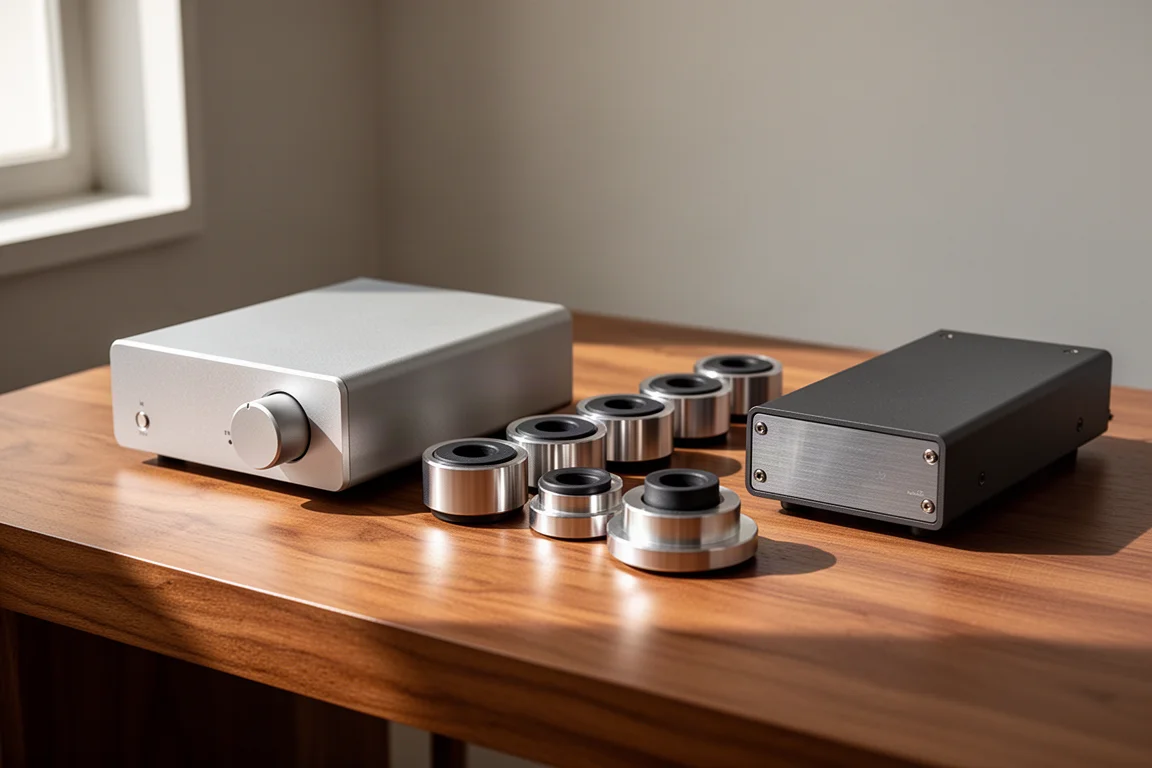
Affordable Hi-Fi Upgrades Worth Doing: Four Practical Improvements
Four affordable hi-fi upgrades, from a dedicated DAC to speaker isolation and a proper phono stage, with notes on what each one actually changes.