Mountaineering Boots
La Sportiva G-Series Mountaineering Boots: G-Tech vs G-Summit vs G2 Evo
How the La Sportiva G-Tech, G-Summit and G2 Evo differ, and which mountaineering routes each boot is built for.
Introduction
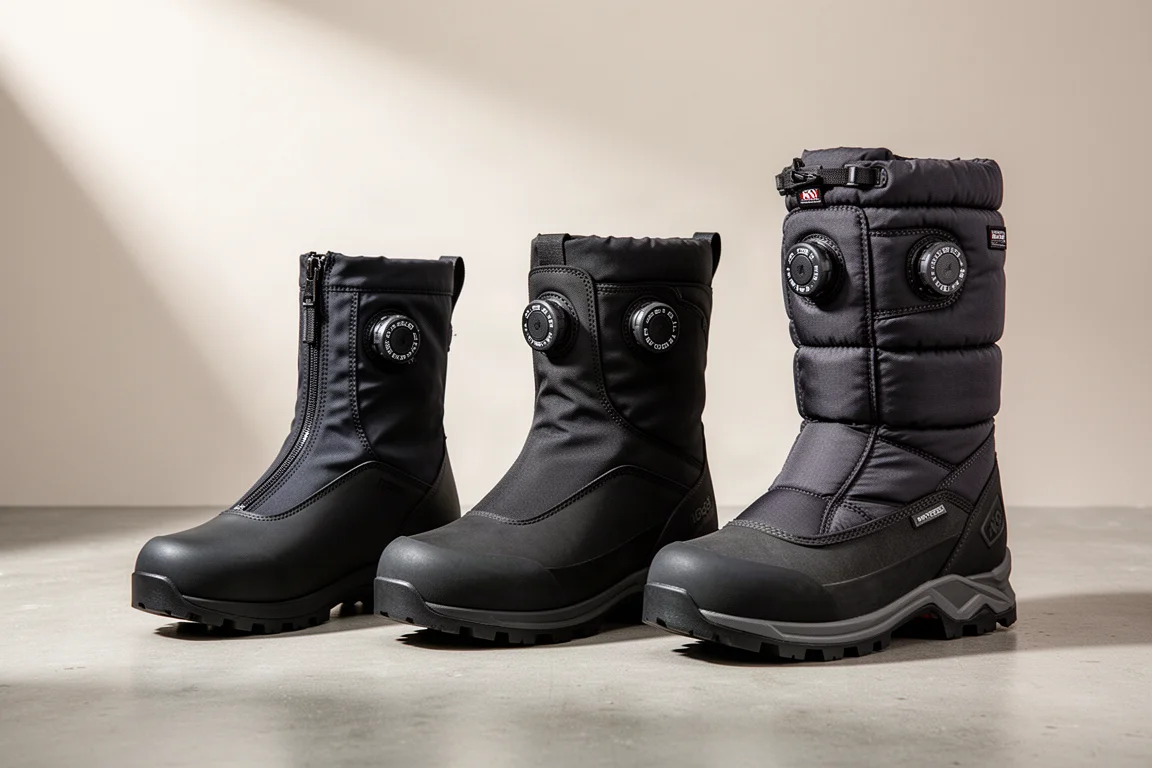
La Sportiva’s current G-series mountaineering boots share a family look: the same zip-up gaiter across the front, the same external BOA closure, the same rigid sole. Side by side, the G-Tech, the G-Summit and the G2 Evo can look almost interchangeable. In practice, each one is built for a different kind of route.
This guide explains what the three boots have in common, where they diverge, and which objectives each one suits, so you can match the boot to the climbing you actually plan to do.
What All Three La Sportiva Boots Share
Three design decisions run across the entire range.
Every boot has a zip-up gaiter covering the front. The gaiter is not claimed to be fully waterproof, but the outer face sheds water well and the zip is a waterproof design, and in practice feet have stayed dry.
Every boot uses an external BOA closure instead of laces. You click the dial in and crank it down, which pulls the heel firmly into place, and it can be done with the thickest gloves on. The important part is what happens later: when your toes start to go numb from a tight fit, you pull the dial and the whole system releases instantly, so you can stand there and let the blood flow back. Over a long winter day, that release and re-tighten cycle is what keeps feet warm.
Every boot has a fully rigid sole and takes semi-automatic or automatic crampons, which makes all three B3 boots. Each one also sits at or near the front of its category for weight relative to warmth.
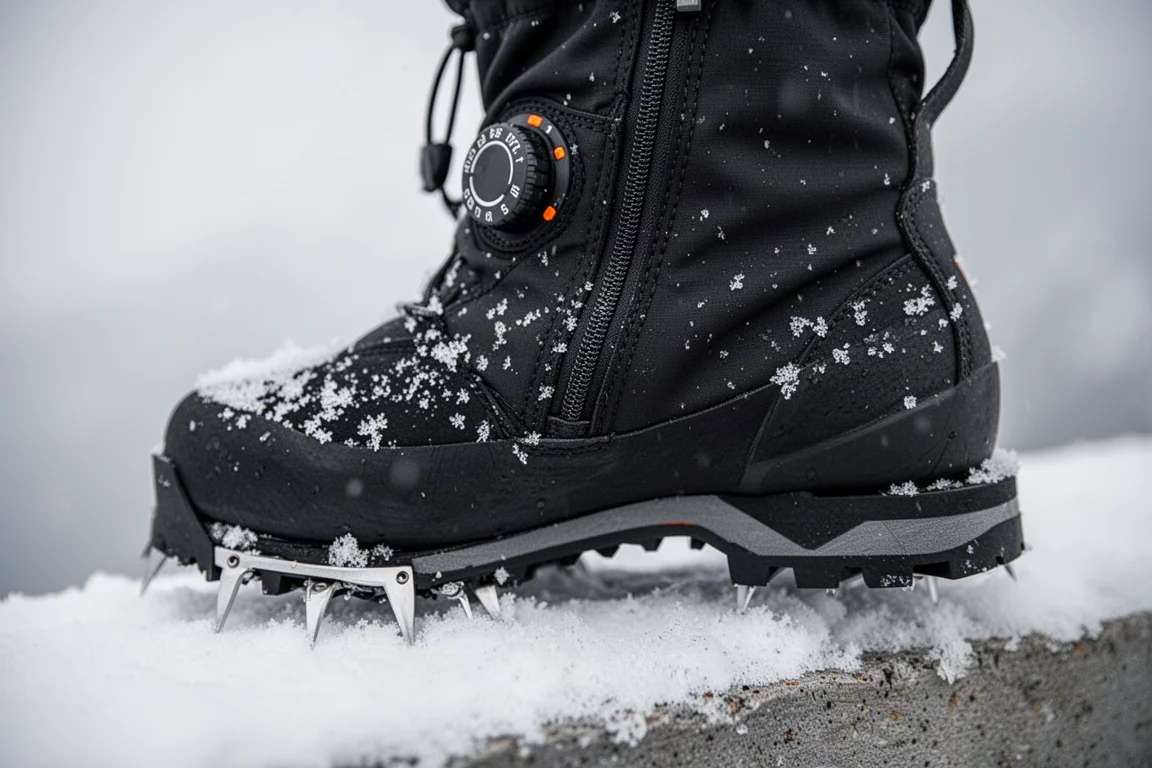
That combination of low weight and full mountain capability is what makes the range stand out, more than any single feature.
La Sportiva G-Tech: Lightest Option for Hard Mixed and Ice
The G-Tech is the lightest of the three, at roughly 630g per boot in a size 8. That is around a third lighter than the classic Nepal Cube style of boot many climbers use as a workhorse. If you do not want that weight on your foot all day, the difference is immediately obvious.
The sole is deliberately thin, which puts your foot closer to the crampon. On hard Scottish mixed ground, steep ice and Continental ice, that closeness translates into precision: you can feel where the front points are biting and place them accurately rather than clumping around. The sole is fully resoleable, and it can be resoled in sections, so if only the front or only the back has worn thin you do not have to replace the whole sole.
Inside, a Core Wrap thermal lining and a 5mm carbon insert work to hold warmth in a boot that looks far too thin to be warm. One La Sportiva athlete has worn the G-Tech in international ice climbing competition, where most competitors use far lighter rock-shoe style boots with crampons attached. The ability to release the BOA on belays keeps circulation going through the day, and climbers who push hard in these report them as among the warmest boots they have worn, precisely because the fit can be loosened and re-tightened at will.
Fit is the one thing to plan around. The G-Tech is slimmer and narrower than the other two boots in the range. It can feel tight at first, particularly when cranked down, so give it time and try it on at home or in the shop before committing.
Its natural ground is hard mixed climbing, steep ice falls and steep ice routes abroad, and it also makes easier ridges and long walk-ins feel lighter.
La Sportiva G-Summit: The Modular Two-in-One Boot
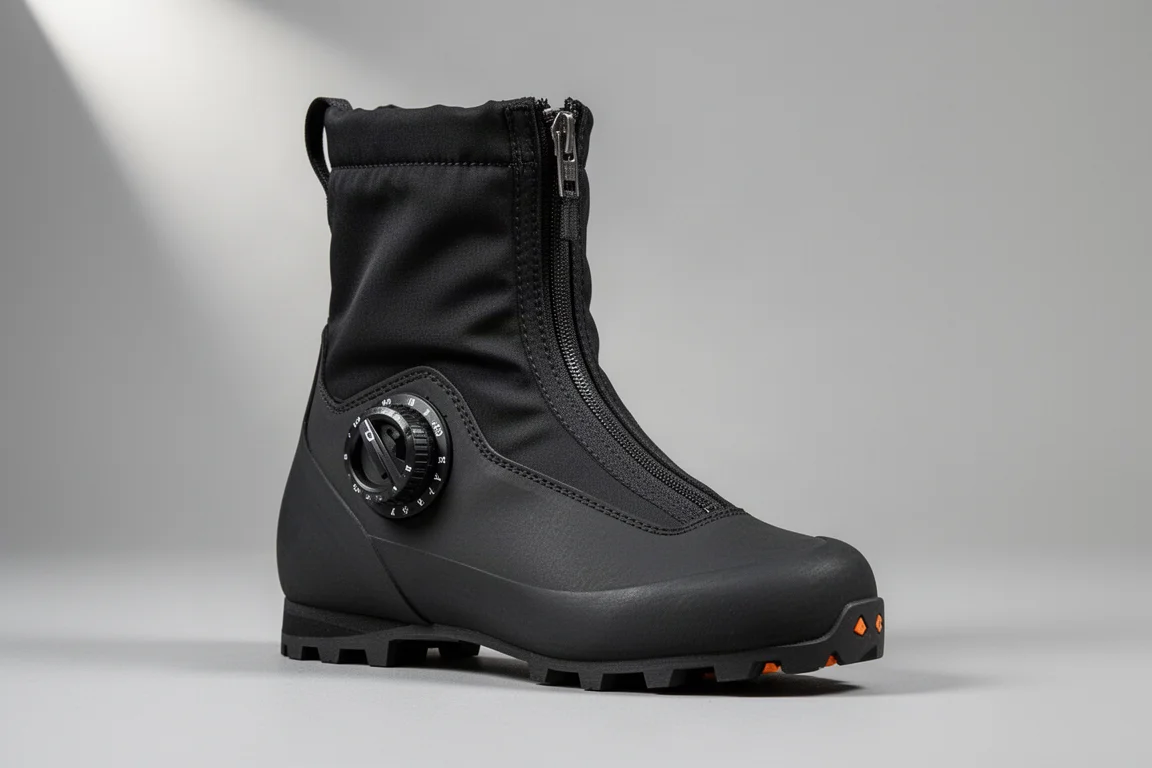
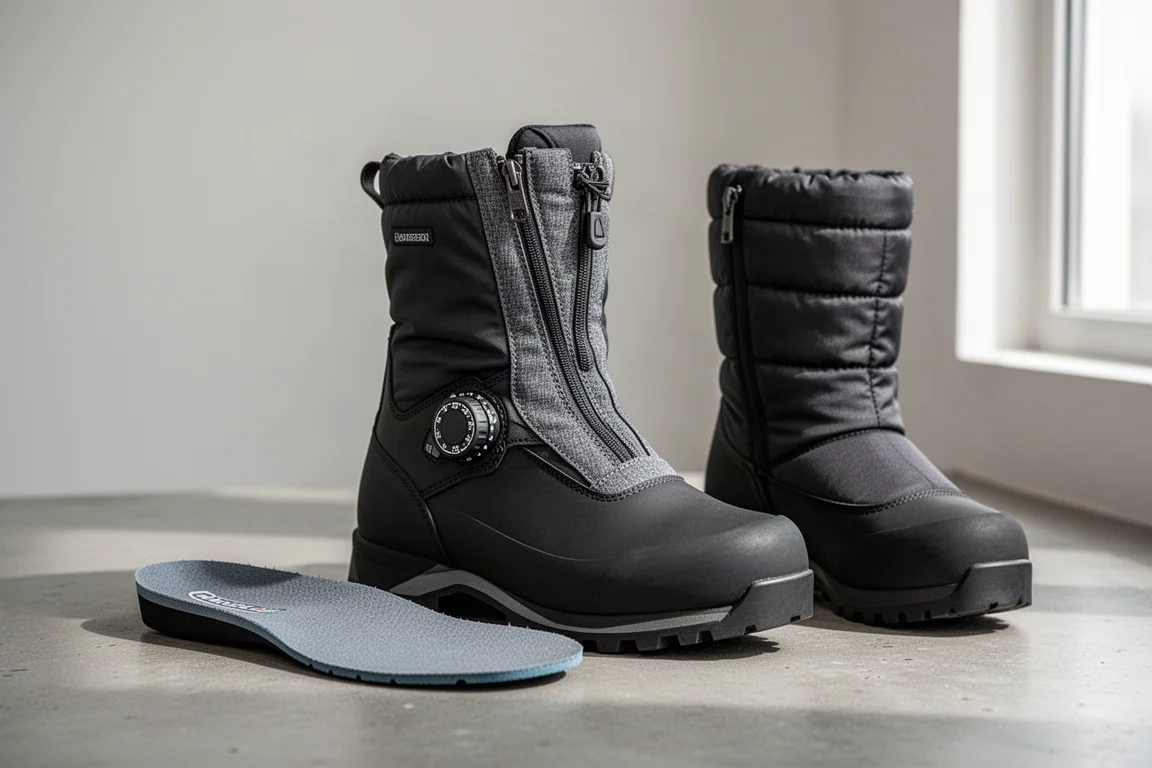
The G-Summit looks almost identical to the G-Tech on the outside, with the same water-shedding gaiter, the same waterproof zip and the same external BOA. The difference is inside, and it is a significant one: the boot is modular, and it arrives with two components that change both warmth and fit.
Used with the thick insole it comes with, the G-Summit is a single boot. It behaves much like the G-Tech, perhaps a little warmer, thanks to a good amount of insulation built into the boot itself. The insole is deliberately thick because it fills the extra volume inside the shell.
Used with the liner instead of the insole, the same boot becomes a double boot. La Sportiva is explicit that the two should never be combined: the boot is marked to be used only without the insole once the liner goes in. In double-boot configuration the G-Summit is aimed at cold winter ascents in the Alps, multi-day routes, and objectives from around 4,000m up to 5,000m. Even with the liner in place it weighs around 830g per boot, still lighter than a pair of Nepal Cubes.
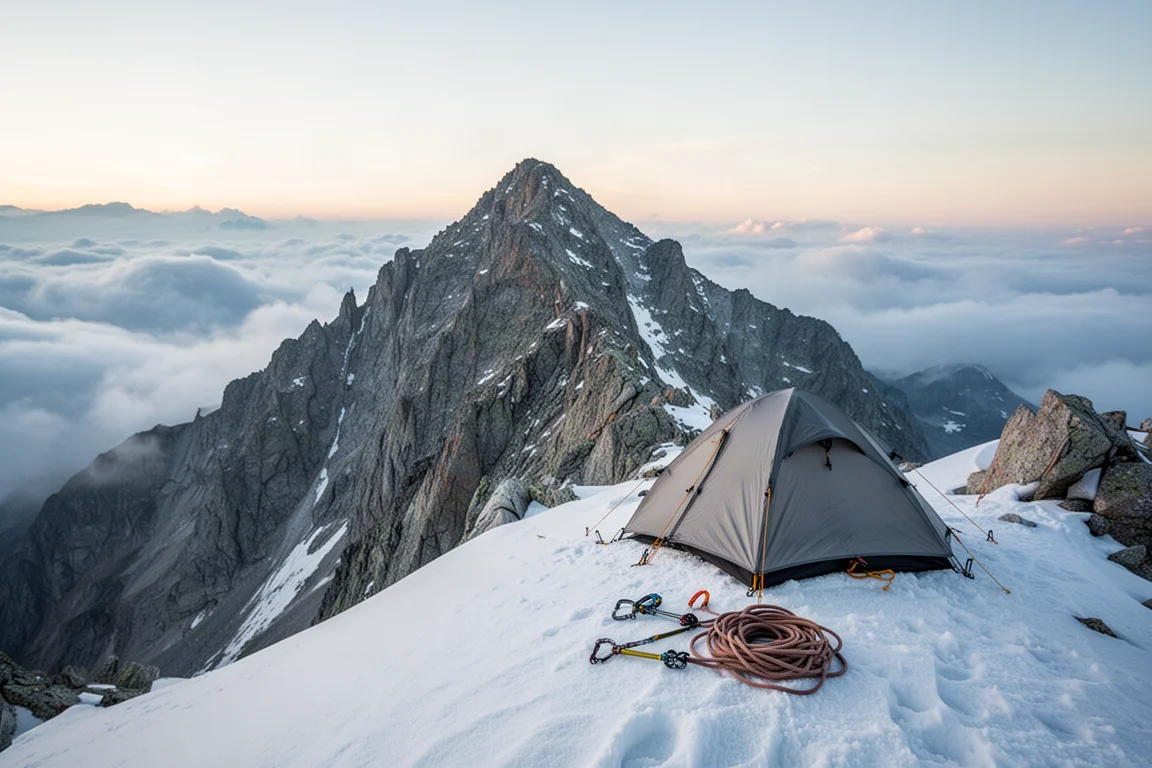
There is also a practical benefit beyond the specifications. On a Ben Nevis day you can walk in from the car park with the insole in and the boot in single form, arrive at the snow line, swap the insole for the liner and carry on in a double boot. On a multi-day route the liner can come out to dry overnight and go into your sleeping bag, so you are not pushing your feet into a frozen boot in the morning.
The fit has more room than the G-Tech, which is intentional: the extra space accommodates thicker socks, the liner, and feet that expand and move as they warm up. Expect to experiment with sock thickness depending on which configuration you are using.
La Sportiva G2 Evo: Warmest of the Three
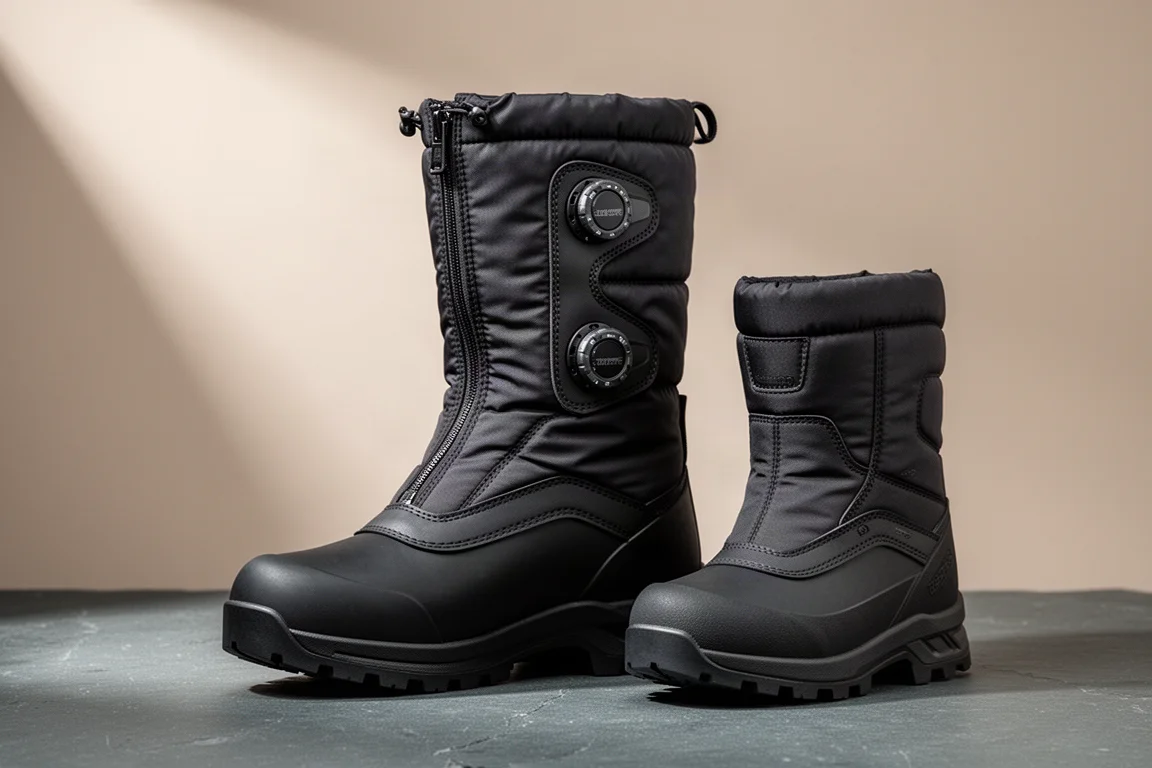
The G2 Evo is an all-out double boot and the warmest of the three. It is always worn with its liner, never as a single boot, and it is designed for high mountains up to around 6,000m. It stays light for what it is at roughly 1,030g per boot, and it still climbs well enough to handle hard pitches rather than simply plodding uphill.
It is the only boot of the three with two BOA dials. The outer dial does the job the external BOA does on the other two, cranking the heel down, and that is the one that can restrict circulation. The inner dial sits under the gaiter and works more like the velcro ankle strap on the other boots, adding support without cutting off blood flow. Having it on a dial matters because it is easy to adjust with big gloves on, which is exactly the situation the boot is designed for.
Warmth comes from several layers: a reflective aluminium lining, a lot of additional insulation in the sole to limit heat loss through the ice you are standing on, and a honeycomb structure in the insulation that traps the warm air your own feet generate while keeping weight down. The outer face fabric includes Cordura, so scuffing from crampons is less of a worry.
One habit worth adopting: put the liner on first, tighten its velcro closure, then step into the shell. Trying to step into a liner that is already inside the boot is difficult to get right. The liner also separates for drying overnight in a tent, and it can stay in your sleeping bag to keep warm.
Matching Each Boot to the Route You Plan to Climb
- Light and fast on hard Scottish mixed ground, steep ice falls and technical ice routes: the G-Tech.
- A mix of Scottish winter, colder alpine days and multi-day routes between roughly 4,000m and 5,000m: the G-Summit, in whichever configuration the day demands.
- High-altitude objectives up to around 6,000m, including peaks such as Island Peak and Mera Peak, and cold expeditions such as Denali: the G2 Evo.
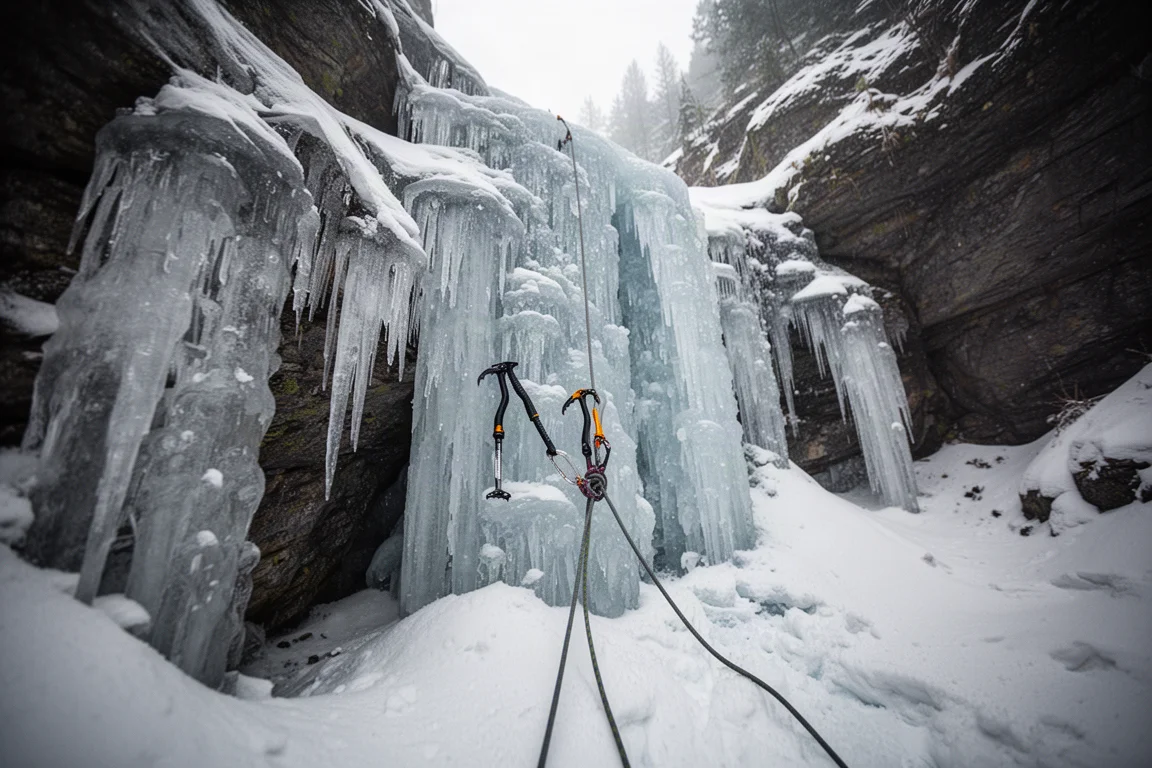
Warmth is not the only variable. The lighter the boot, the closer you feel to your crampons, so on technical ground the G-Tech or the G-Summit in single form will climb more precisely than a full double boot. On long, cold, high routes, precision matters less than keeping your feet functional, and that is where the G2 Evo earns its extra weight.
Fit, Sizing, and Care Notes
The G-Tech runs slimmer and narrower than the other two. If it feels tight at first, bear with it: the BOA can be released on belays and loosened for walk-ins, and the initial tightness usually settles. The G-Summit and G2 Evo have more internal room, partly to accommodate thicker socks and liners.
A few habits make the range easier to live with:
- Never combine the thick insole and the liner in the G-Summit. The boot is marked accordingly.
- Take the liner out of the G-Summit or G2 Evo overnight so it can dry, and sleep with it in your bag on multi-day routes.
- The G-Tech sole can be resoled, and it can be resoled in sections, so worn front or back edges do not require a full replacement.
Buying Advice
If you already know your objectives, the choice is straightforward: the G-Tech for the lightest possible setup on technical ground, the G-Summit if your seasons mix Scottish winter with colder alpine trips, and the G2 Evo for genuinely cold, high and long routes.
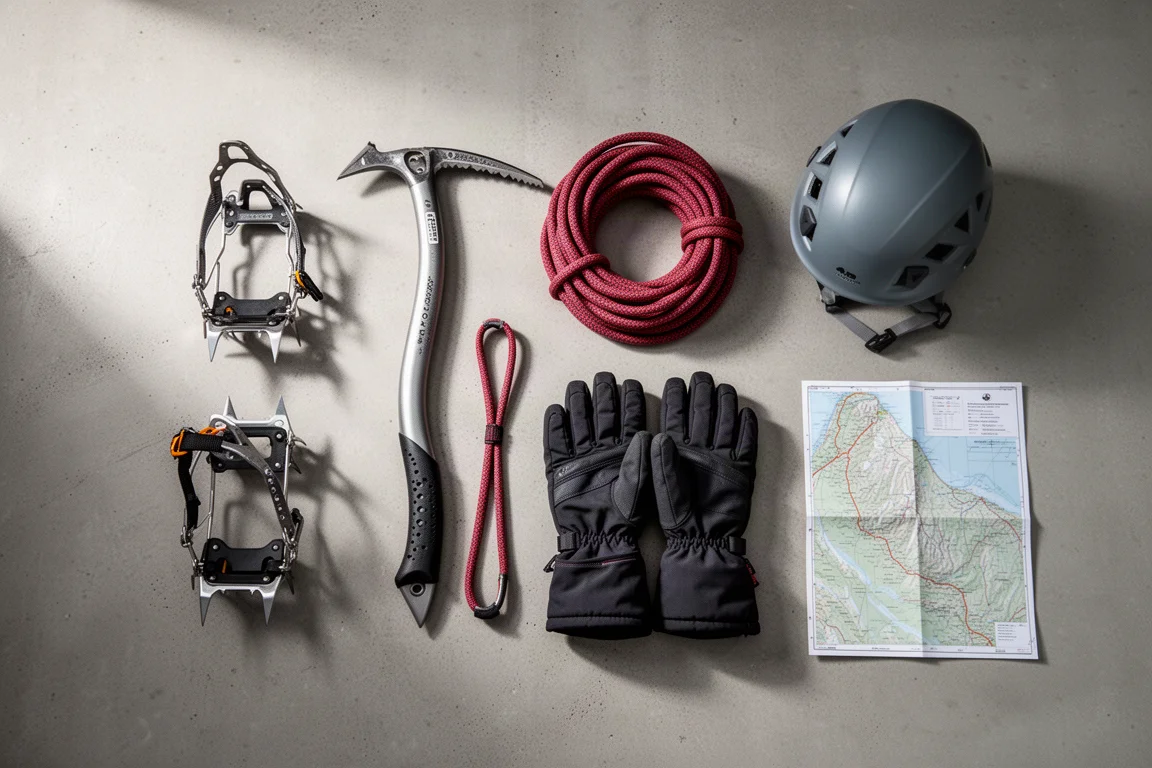
If you are unsure, the G-Summit covers the most ground. It answers the common situation of climbing Scottish winter this year and heading to the Alps or somewhere colder next year, without buying two pairs of boots. That flexibility is worth a lot in a category where nothing is cheap.
Whichever you choose, plan on trying the fit before you commit. These are close-fitting technical boots, and the difference between the slim G-Tech and the roomier G-Summit and G2 Evo is something you will feel straight away.
Conclusion
Three boots, three jobs. The G-Tech is the light, precise option for hard mixed ground and steep ice. The G-Summit is the modular all-rounder that converts between a single boot and a double boot. The G2 Evo is the warm, high-altitude double boot for the biggest and coldest objectives. Match the boot to the route, and the shared design of the range starts to make a lot of sense.
Further reading
Related Reviews
Mountaineering Boots
Salewa Ortles Ascent Mid and Ortles Light Mid Review: Two B2 Boots for Winter Hills and Alpine Days
A close look at two Salewa mountaineering boots: the durable B2-rated Ortles Ascent Mid and the lighter, packable Ortles Light Mid.

Backpacking Gear
Building a 10 lb Base Weight: An Ultralight Backpacking Gear List
A practical walkthrough of the ultralight pieces behind a 10 lb base weight, from a 765 g pack and a roomy one-person tent to a full camp chair and a dependable water filter.

Road Bikes
10 New Road Bikes Worth Watching: Aero, Titanium, Steel and Endurance Standouts
A practical roundup of 10 new road bikes, from aero flagships chasing single-watt gains to titanium, steel and endurance platforms built for real roads.