Mountaineering Packs
La Sportiva Challenger 28 Review: A Burly, Modular Mountaineering Pack
A 28-litre mountaineering pack built from Challenge SailCloth Ultra, with removable straps and frame, ski and ice axe carry, and a two-compartment layout.
Introduction
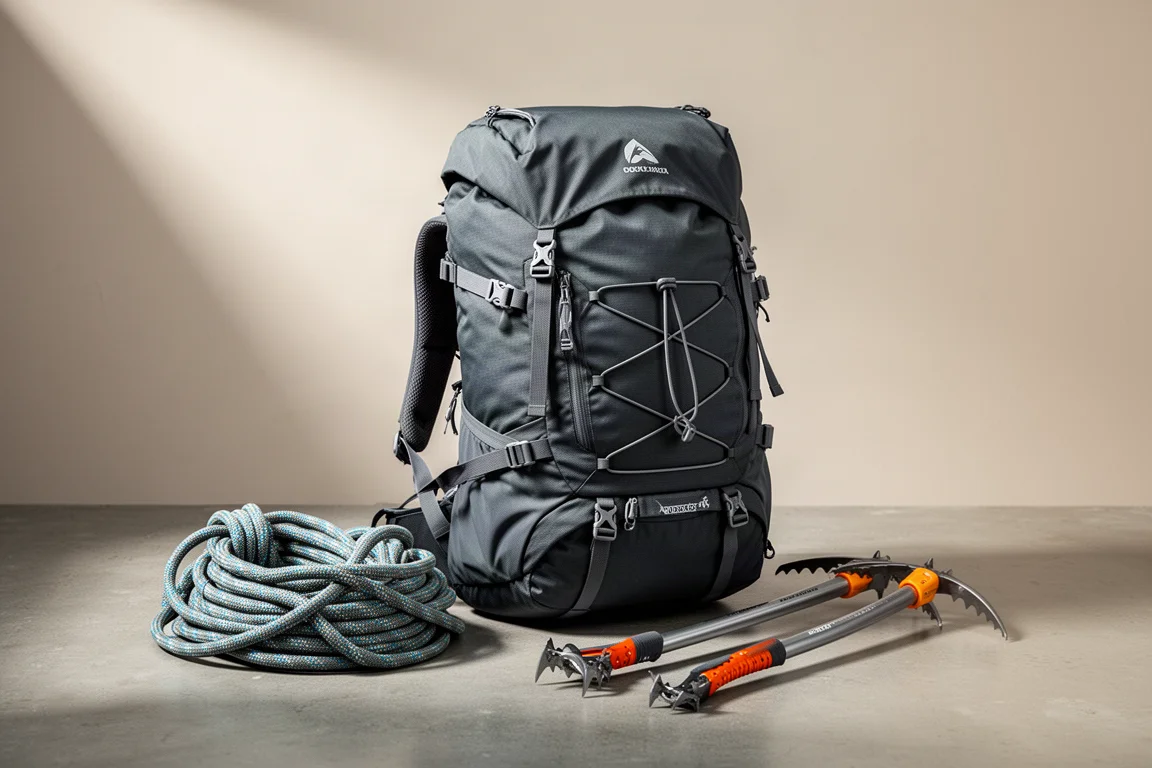
La Sportiva has built its reputation on footwear for the mountains, and the Challenger 28 marks the Italian brand’s arrival in the rucksack category with a pack that feels anything but tentative. At first glance it looks compact and nimble, a 28-litre sack with a clean silhouette. Pick it up, though, and the fabric tells a different story: this is a pack designed to be dragged up cliffs, loaded with metal and skis, and used hard in whatever weather the hills deliver.
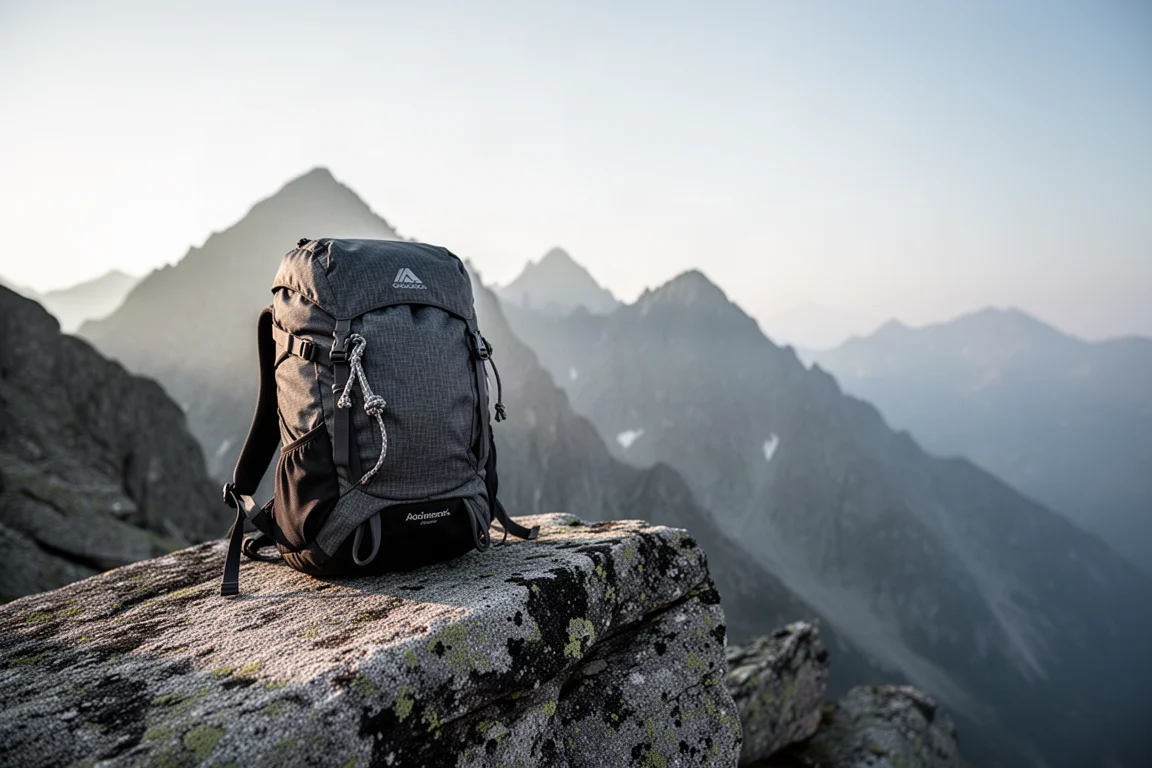
The headline number is 28 litres, and it will stretch closer to 32 litres when the roll top is left uncinched. More interesting than the volume is how much of the load can live on the outside, which is what makes a pack this size viable for winter climbing, ski touring and alpine routes.
Who This Pack Is For
The Challenger 28 is a mountaineering pack first. It is not aimed at single-pitch cragging or as a general-purpose daypack. It is built for people who move through the mountains on skis, on rock and on ice, and who want one bag that adapts to all three.
On a long walk-in to a winter venue, many climbers will still reach for something bigger, simply because of the volume of clothing involved. Where the Challenger makes most sense is the alpine style of day: layers already on, harness on, rope out, and a short approach from a lift or a hut. In that context the size feels well judged, and everything you need sits either inside the pack or clipped to the outside of it. Testing on Scottish winter climbs showed the pack can swallow helmet, crampons, ice axes and rope on the exterior, then slim down to something light and close-fitting at the base of the route.
Main Strengths
The Challenger 28 earns its keep through two things: materials that refuse to wear out, and a feature set that can be stripped back or built up depending on the day.
Bomb-Proof Fabric and Weather Protection
The fabric is what gives this pack its name and its character. Challenge SailCloth Ultra is used in two thicknesses: the 400 variant covers the high-abrasion zones down the front, where skis, rock and ice tools make contact, while the lighter 200 variant is used where the pack needs to stay pliable, such as the roll top. The result is a surface that feels dense and tactile, and that is meant to take a beating rather than be protected from one.
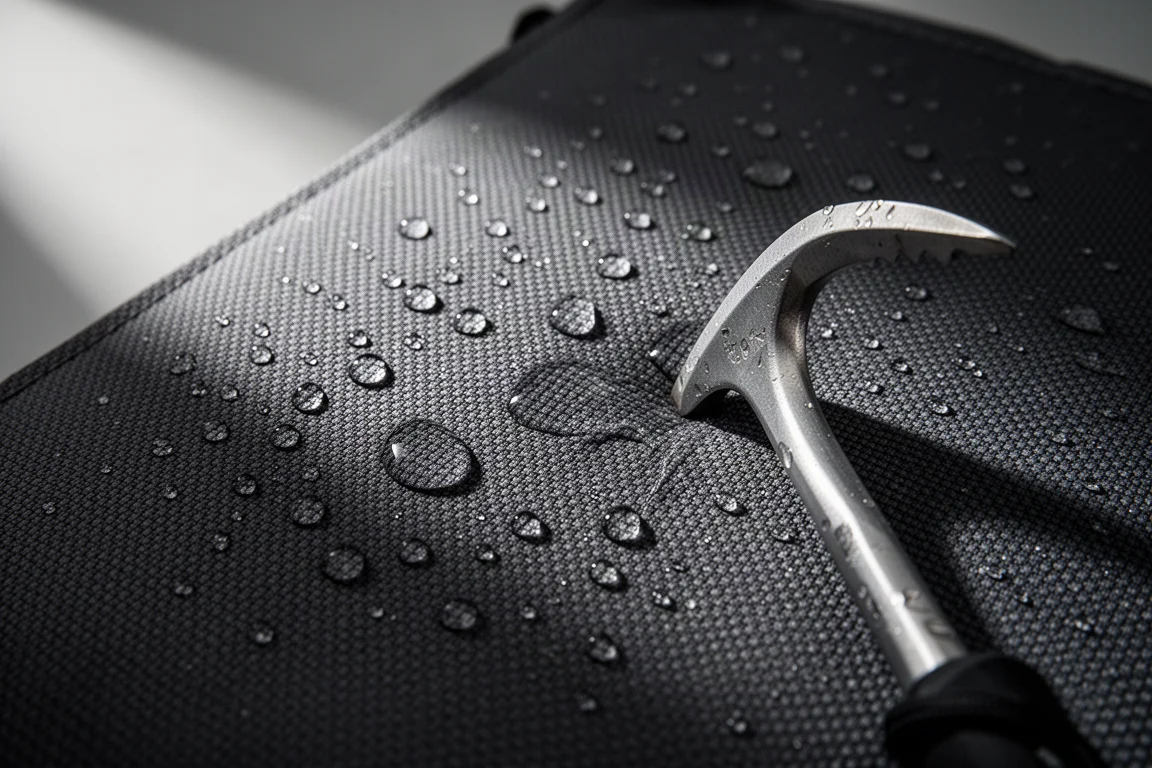
La Sportiva does not claim the Challenger 28 is fully waterproof, but the fabric carries a waterproof rating and the roll top closure adds a further barrier, which puts it among the more weather-resistant packs available. For most mountain use that combination should keep contents dry through sustained rain and spindrift.
Modular Carry Options for Skis, Ropes and Ice Axes
Almost everything on the outside of this pack can be removed or reconfigured. The rope buckle at the top is metal rather than plastic, slides on and pulls back, and can be operated one-handed on a belay with gloves on. The roll top closure is quick to use and can be clipped down in a second position for a tidier profile when the pack is not full, and its buckles are larks footed so they can be taken off entirely.
Side compression straps are removable too, letting you cinch an empty pack tight against your back, and the lower compression strap is deliberately overbuilt so that skis can be dropped into it. Top and bottom straps together allow an A-frame ski carry, with a side carry option as well and an additional ski carry point. Ice axe attachments are solid metal and easy to use with big gloves, the front bungee is a natural home for crampons you want to reach quickly, and the daisy chains on both sides accept the helmet bungee that comes with the pack, so a helmet can ride on the outside without any aftermarket add-on.
Frame, Hip Belt and Carrying Comfort
A small pack can still carry a heavy load, and a rope, harness, rack and skis add up quickly. The Challenger 28 uses a solid internal frame that transfers that weight onto the hips and distributes it well, and the shoulder straps are shaped to stay comfortable both while climbing and while carrying a loaded pack. The hip belt includes removable fins with a pocket, so hard routes can be climbed without the fins interfering with a harness. Metal thread-through buckles replace plastic throughout, and the shoulder straps carry the same burly fabric on their outer face for the abrasion that comes with dragging a pack up a multi-pitch route.
Two-Compartment Layout and Front Access
Behind the concealed weatherproof zip on the front there is a second zip, and behind that, two separate compartments. That layout was designed with ski mountaineering in mind, where avalanche safety gear needs to stay separate from everything else: shovel and probe can be pulled straight out of their own compartment without digging past a rope, a jacket or lunch.
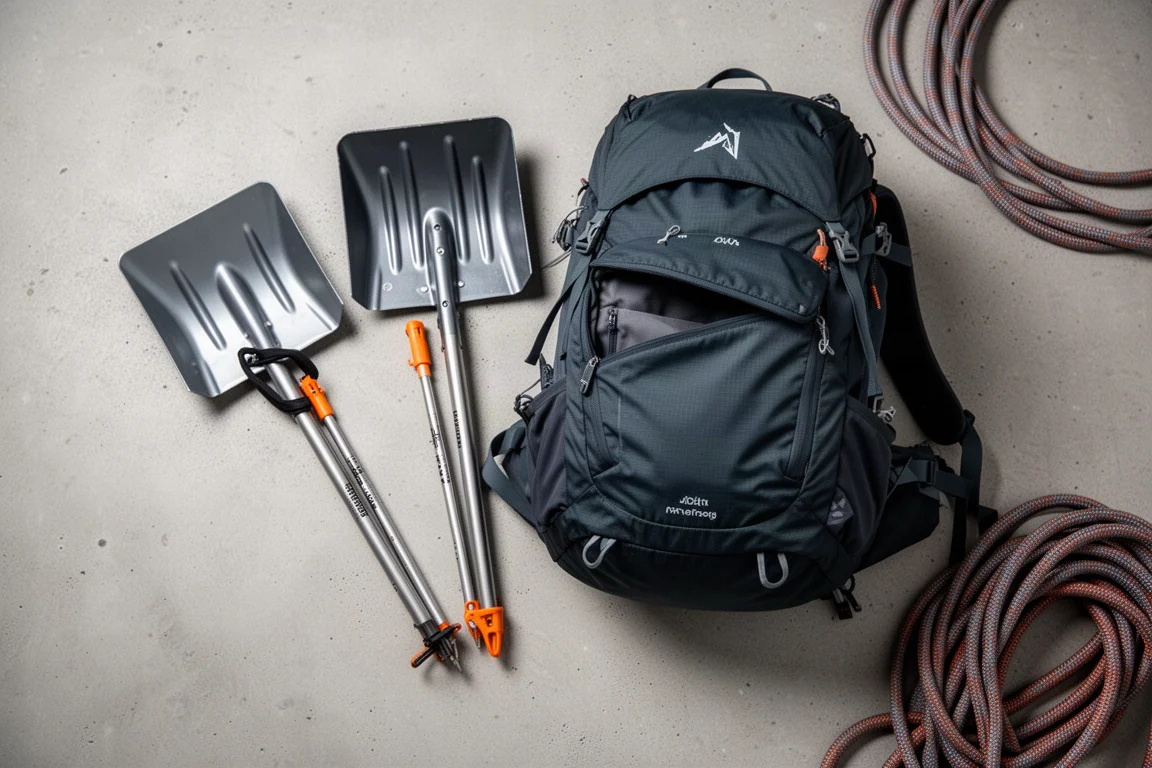
The front zip is large enough to extract gear directly rather than going through the roll top, and an additional zip inside reaches the rear compartment for anything stored there. A rope can be kept in the pack with the end running out to the harness for glacier travel. The same organisation pays off on alpine and mixed routes, where knowing exactly which compartment holds your gloves or belay jacket matters once the weather turns.
Things to Consider Before Buying
It is worth being clear about what the Challenger 28 is not. It is not marketed as a fully waterproof pack, so in prolonged heavy rain you are relying on a rated fabric and a roll top rather than a sealed bag. It is also a specialised mountain pack rather than a general daypack, and 28 litres will not suit every approach, particularly long walk-ins with a full winter layering system.
Because so many components are removable, it is worth deciding before you set off which straps, fins and frame elements you actually want, so that nothing is left behind on the hill or lost in a vehicle.
Buying Advice
The case for the Challenger 28 rests on versatility inside a single, very tough package. If your days involve ski touring, winter climbing, alpine rock or mixed ground, and you like carrying bulky items such as rope, helmet and crampons on the outside of a pack that stays compact on your back, this is a very coherent design.

The removable frame is the feature that broadens its appeal most: keep it in for heavy loads on the approach, take it out for fast and light movement where a pliable pack that sits close to your back feels freer. Add the metal hardware and the abrasion-resistant fabric, and the pack is clearly built for a long service life rather than a single season.
Conclusion
La Sportiva has entered the rucksack market with something more interesting than a first attempt. The Challenger 28 is burly, modular and thoughtfully organised, with a fabric that invites abuse and a feature set that can be reduced to almost nothing when speed matters. For climbers and ski mountaineers who want one pack to cover a wide range of mountain days, it is a genuinely compelling option.
Product link
View more details for La Sportiva Challenger 28
This product is mentioned in the review. Check the specifications, options, and compatibility before buying.
View more details for La Sportiva Challenger 28Further reading
Related Reviews
Winter Camping Gear
Winter Camping Gear List: What a Four-Day Traverse in the Canadian Rockies Requires
Eight pieces of winter backcountry kit, from a 75-liter pack to a white gas stove, chosen for deep snow, heavy loads, and temperatures around minus 30 degrees Celsius.
Climbing Packs
Blue Ice Warthog 40 Review: A 700 Gram Alpine Pack That Keeps Its Features
The Blue Ice Warthog 40 pairs a 700 gram carry weight with ice axe, rope, and crampon functionality, making it a strong fit for alpine and winter climbing days.
Mountaineering Boots
La Sportiva G-Series Mountaineering Boots: G-Tech vs G-Summit vs G2 Evo
How the La Sportiva G-Tech, G-Summit and G2 Evo differ, and which mountaineering routes each boot is built for.