Ski Resorts
La Parva Ski Resort Review: Chile's Low-Key Andes Escape
A closer look at La Parva's terrain, snow quality, lifts, village vibe, and how it ranks among South American ski resorts.
Introduction
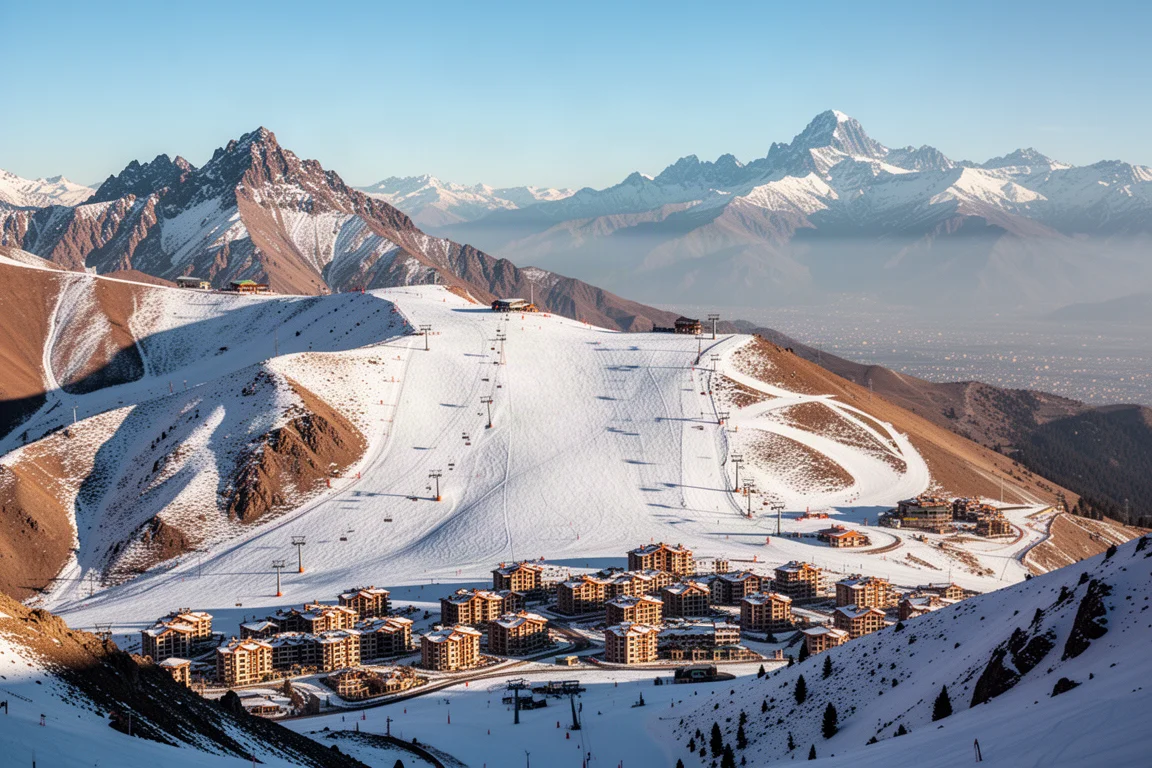
La Parva sits in Chile’s central Andes as an under-the-radar option for a southern hemisphere ski trip. It lacks the flash of some neighboring resorts, but its Euro-style village and local, low-key atmosphere have long been selling points for those who know the area. If you are planning a South American ski trip, here is how La Parva actually performs on the mountain, plus how it stacks up in overall regional rankings.
The Mountain Experience
La Parva offers 988 claimed skiable acres and a 1,650-acre footprint boundary to boundary. That is modest by North American standards, though still within the typical range of a good Chilean ski resort. The mountain spans one big face across a handful of ridges, creating several distinct mountain pods, with a competitive vertical drop of just over 3,000 feet, though the bottom 500 feet or so are mainly village access and learning terrain. With the exception of a few trees near the base villages, the skiable footprint sits entirely above tree line.
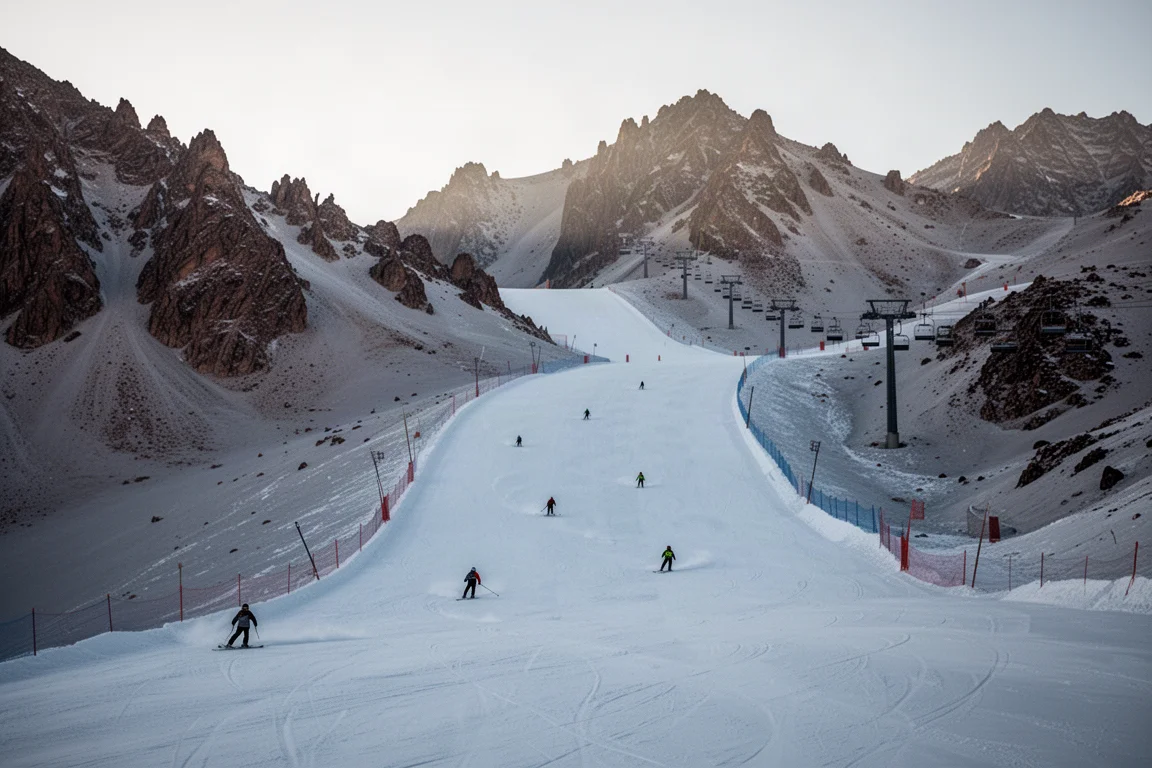
True beginners should look elsewhere. Outside a well-insulated bunny hill, green trails simply do not exist here, and guests must advance to blue or harder terrain to ski any mid or upper mountain area. The nearby resorts of Valle Nevado and El Colorado are much better fits for those just starting out.
Intermediate and Advanced Terrain
Intermediate skiers unlock a more open mountain, but the blue experience is mixed. On the plus side, guests can ski the full vertical drop on blue-rated terrain, and these trails offer some of the best views at the resort. However, a significant portion of the blue network, including all of the mid-mountain blues, are traverses designed to give access to reds and blacks rather than enjoyable trails in their own right. Low intermediates will often find themselves wanting more.
La Parva’s red terrain is where the resort starts to seriously show its strengths. The extensive red runs off most mid and upper mountain lifts bring excellent steep groomer terrain, and reaching this level unlocks access to 100% of the resort’s chairlifts. Black runs, while less extensive, offer earnestly steep groomed lines for picking up real speed. For experts, a handful of designated freeride zones offer ungroomed mogul and powder skiing with some resort maintenance and safety control, and areas just outside the marked runs add more mogul and powder opportunities when conditions allow.
Off-Piste and Backcountry
To really get the most out of La Parva, head off-piste. A number of excellent backcountry lines sit just outside the boundary, including couloirs and shoots reachable by traversing without hiking, plus hikable lines and touring routes accessible from inbounds trails. For those who want to earn their turns on incredible peaks, this is a genuine standout.
That said, off-piste terrain is not maintained, patrolled, or marked by the resort, and avalanches can and will occur. Anyone heading out should have a clear plan for entering and exiting, avalanche equipment such as a beacon, shovel, and probe, and a partner or experienced guide if unfamiliar with the routes.
Snow Quality and Conditions
La Parva receives reasonable snowfall each southern hemisphere winter, with accumulation typically ranging from 100 to 200 inches between June and September. Totals are usually a bit lower than the nearby, higher-elevation Valle Nevado, but close. Where the resort really stands out is snow quality: the high altitude and dry climate typically produce light, dry accumulation when storms roll through, and under the most favorable circumstances it can rival the best snow in Utah.
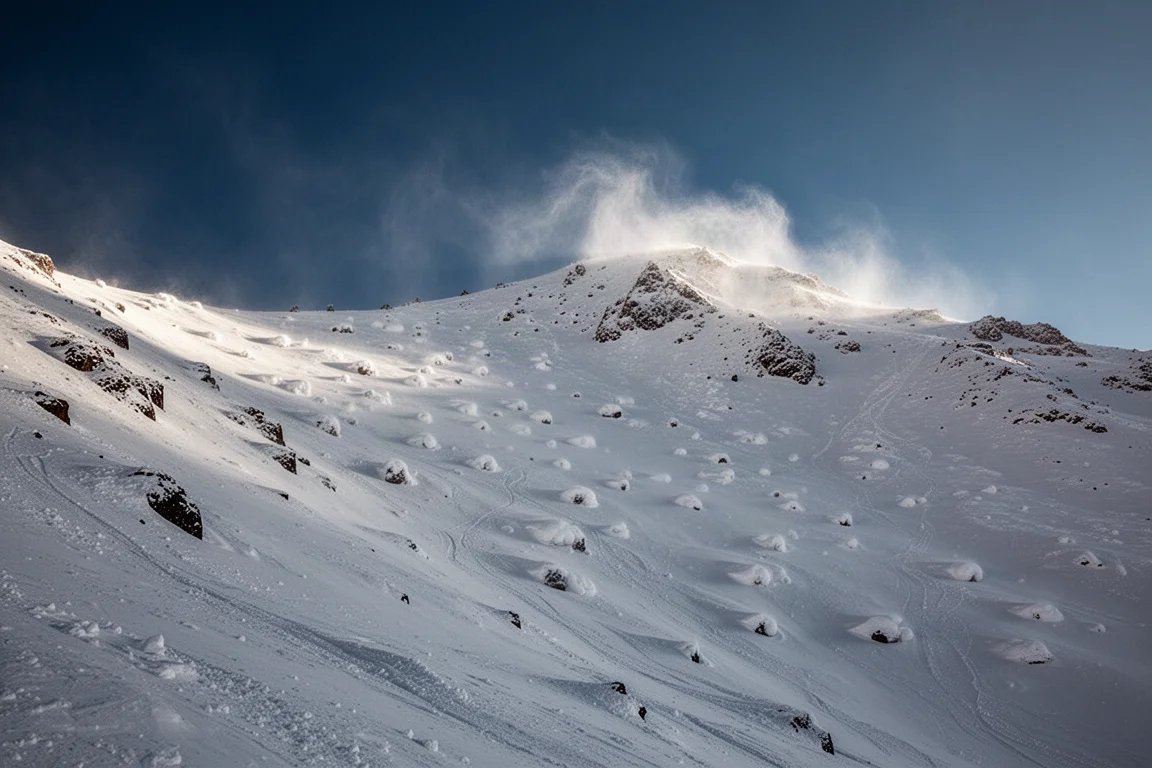
The catch is that accumulation tends to be feast or famine. Big storms are often followed by long stretches of sunshine and drought, and the season-long base is often built off just a handful of storm events. Official trails hold a baseline level of resiliency thanks to mountain ops, but in bad years, conditions just off the maintained trails can be nearly bare, so off-piste skiers rolling the dice in a lean season may be disappointed.
Lifts and Crowd Flow
La Parva’s uphill network feels modern compared to several Chilean competitors, where surface lifts are the default. A substantial portion of the terrain, including much of the expert and upper mountain footprint, is accessible by chairlift. Surface lifts do serve some terrain, and guests need the number 7 platter to reach the family-oriented number 4 triple on the upper mountain, but these follow a moderate pitch and are reasonable in length.
The downside: every chairlift here is slow and fixed grip. The resort runs two quads, two triples, and one double, and the advanced-oriented number 1 quad carries 200 chairs with a staggering 15-minute ride time. Skiers used to high-speed lifts will likely get frustrated. The saving grace is a lack of crowds. La Parva draws far more winter sports-goers and fewer sightseeing tourists than Valle Nevado or El Colorado, so you will rarely compete for space on the chairs, and the wide footprint plus lift redundancies in popular areas help spread congestion.
Village, Dining, and Off-Mountain Facilities
La Parva’s on-mountain facility setup is strong by South American standards. Multiple mid-mountain restaurants with outdoor seating have an inviting, distinctly European flair, and the base village extends the theme with several restaurants bordering the lower mountain plus casual cafeteria options. Digital nomads take note: a co-working space is available in the La Parva Chica base area.
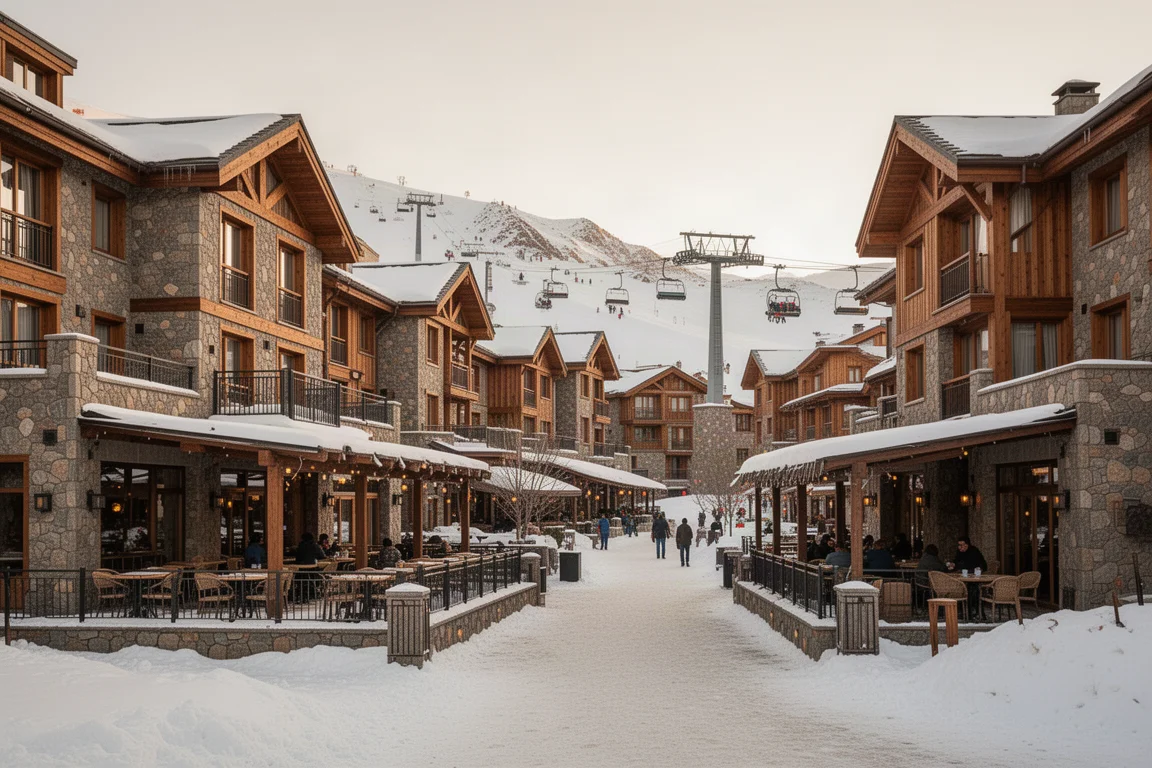
The setting itself is a major draw. From the upper mountain, visitors get panoramic views of towering peaks above the resort, some reaching over 17,000 feet, and of the Santiago metro area thousands of feet below. The Euro-inspired base and less touristy clientele create a more local feel than the resort’s closest, best-known competitors. Après ski is enjoyable but geared toward low-key socializing rather than late-night parties, so those hoping for a lively nightlife scene may want to look elsewhere.
Heli Skiing and Resort Connections
For those chasing bigger lines, La Parva operates an extensive heli-skiing operation into mountains extending well above the resort boundary. The resort claims over 200,000 acres of terrain, and the operation can deliver untouched powder among the best on the continent. It is also quite pricey, running several thousand dollars a day, so plan your budget before committing.
La Parva is one of three interconnected resorts in Chile’s Tres Valles region alongside Valle Nevado and El Colorado. All three are physically connected by skiable terrain under the right conditions, but each maintains a separate lift ticket system, and skiing into a neighboring resort does not necessarily grant access to its lifts. La Parva and Valle Nevado now share ownership, and as of the 2025 season the two offer a ticket add-on allowing access to both resorts in the same day, though no full Tres Valles joint pass exists and El Colorado remains fully separate.
On the pass front, La Parva is one of the only South American resorts on a North American mega pass product: the Power Pass and Power Pass Select offer 10 days per season, shared and interchangeable with Valle Nevado. The Power Pass is a more regional product, however, mainly covering modestly sized resorts in the US West, so it makes less sense than Ikon, Epic, Mountain Collective, or Indy for most Northern Hemisphere travelers.
Getting There and Where to Stay
The drive from Santiago looks manageable on paper at under two hours, but in reality it is a challenging high-altitude mountain route. The road is extremely narrow and winding with over two dozen hairpin turns, involves a rapid elevation gain of roughly 6,000 feet, and conditions deteriorate quickly in a storm, when chains are required. Police checkpoints are common, verifying that drivers carry chains or are staying at a resort. On weekends and holidays the road converts to one-way operation, uphill from 8:00 a.m. to 2:00 p.m. and downhill from 4:00 p.m. to 8:00 p.m., so plan accordingly. Parking is easy with a main lot near the base plus an overflow lot.
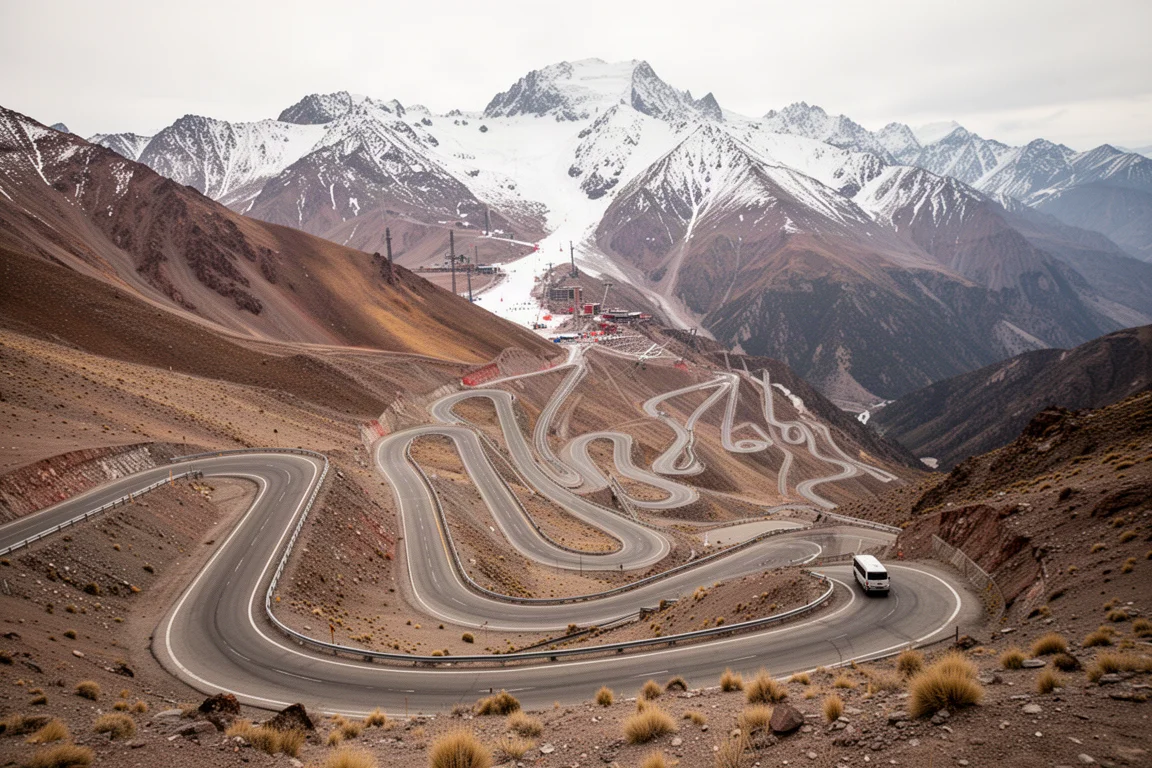
If you are not experienced driving in these conditions, book a private shuttle from Santiago. Some taxis will offer rides but frequently lack proper snow equipment; 4x4 van operators like Ski Total are a safer bet, though you should confirm passenger and luggage details ahead of time as overpacked vans can be an issue, especially on return trips.
Because of the road and the one-way scheduling, most multi-day visitors stay on mountain. La Parva has no traditional hotels in its village proper; accommodations are limited to self-catered condos, apartments, and private homes. Many offer flexible arrival and departure dates, unlike some competitors. The condos are expensive but very conveniently located and often ski-out, and groups can split the cost for a reasonable per-bed deal. Cheaper accommodations and true hotels are available down the road in Farellones near the El Colorado base.
Pricing and Rankings
Last season, one-day adult lift tickets cost 74,000 Chilean pesos, with a significant discount for Visa card holders. The recent change in ownership may bring pricing changes, but similar rates are expected this winter, making for a decent value proposition. Here is how La Parva scores across a 10-category evaluation:
- Snow: 6 (hit-or-miss quantity, but world-class lightness and dryness when conditions align)
- Resiliency: 5 (trails stay decent, but warm spells hurt the advanced and freeride terrain)
- Size: 5 (988 skiable acres, 1,650-acre footprint)
- Terrain diversity: 6 (forgettable lower mountain, but increasingly rewarding with experience)
- Challenge: 8 (demanding freeride terrain, steeps, chutes, couloirs, and mogul fields)
- Lifts: 3 (well-maintained and easy to ride, but all slow)
- Crowd flow: 8 (far less traffic than many competitors)
- Facilities: 7 (easy to stop for a break, though some mid-mountain lodges are small)
- Navigation: 6 (some annoying traverses, but signage and directions are very strong for South America)
- Mountain aesthetic: 9 (stunning views of peaks above and the Santiago metro below)
These scores add up to an overall 63, placing La Parva third in Chile and fourth in South America as a whole.
Conclusion
La Parva is not the most famous ski resort in South America, and it is not the most modern either. But for a southern hemisphere trip with demanding freeride terrain, world-class snow quality in the right window, strong signage, and a genuine escape from the crowds, it is hard to beat. It is probably not the resort for inexperienced friends or family, but for a quiet, crowd-free experience in the days after a storm, La Parva is a great choice. If the resort’s mix of Euro-style village charm and expert terrain appeals to you, consider booking your stay in advance.
Product link
View more details for La Parva
This product is mentioned in the review. Check the specifications, options, and compatibility before buying.
View more details for La ParvaFurther reading
Related Reviews

Ski Resorts
Alyeska Resort Review: Alaska's Largest Ski Resort, Worth the Journey?
A deep look at Alyeska Resort: heavy snowfall, expert terrain, an Icon Pass connection, and the trade-offs of a near-sea-level mountain in the Last Frontier.

Ski Resorts
Bear Valley Ski Resort Review: Northern California's Quiet Sierra Alternative to Tahoe
A lesser-known Sierra resort with over 1,300 skiable acres, surprisingly strong expert terrain, and crowd levels Tahoe can only dream of. Here is what to know before you go.

Ski Resorts
Colorado Ski Resorts Ranked: The Best Destination Mountains for Overall Experience
A ranked guide to Colorado's destination ski resorts, covering terrain, snow, logistics, crowds, and cost so you can pick the right mountain for your trip.