Sleeping Pads
Klymit Double V Insulated vs Uninsulated: Which Sleeping Pad Suits Your Trip?
A practical comparison of the Klymit Double V Insulated and Uninsulated sleeping pads, covering R-value, weight, packed size, and setup time.
Introduction
Choosing between the Klymit Double V Insulated and the Klymit Double V Uninsulated comes down to one question: how much warmth do you actually need? Both pads share the same footprint, the same chamber layout, and the same pump-style stuff sack. The real differences sit in insulation, weight, packed size, and how long each one takes to set up and put away.
This comparison walks through what the two pads have in common, where they diverge, and which version makes more sense for a given trip.
Shared Design: V-Chambers, Side Rails, and FlatValves
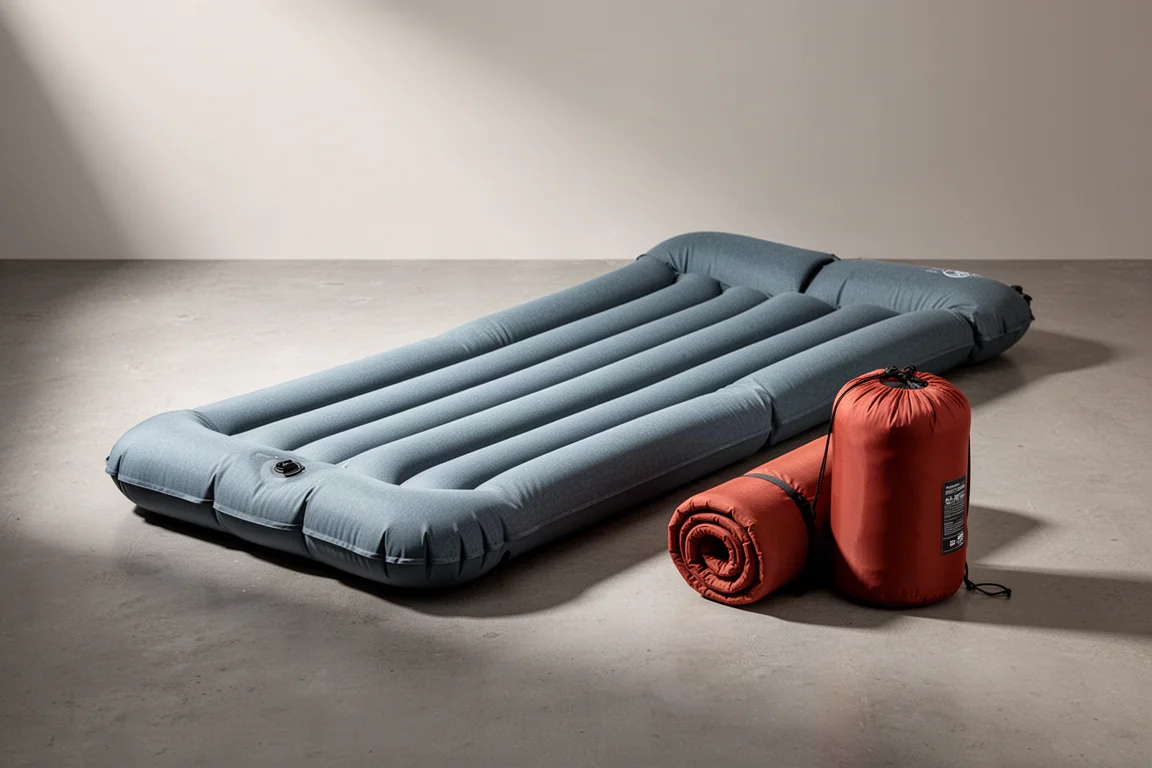
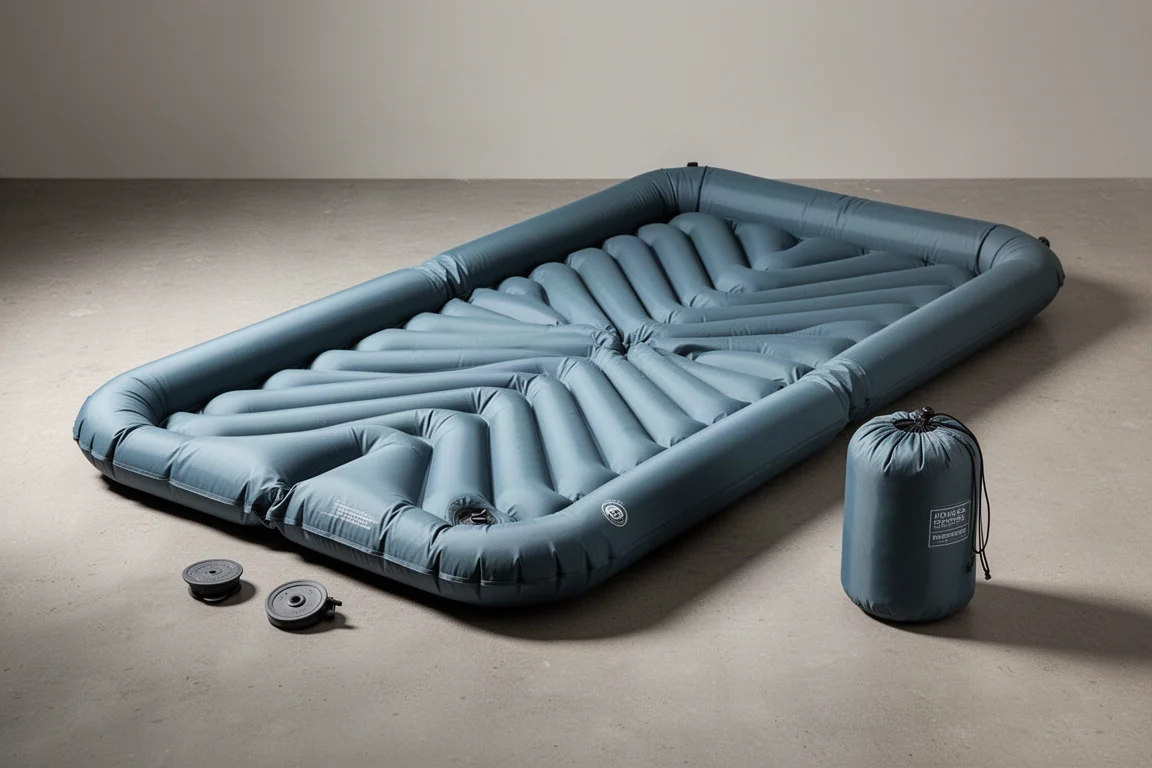
Both Double V pads measure about 74 by 47 by 2.5 inches, which gives two sleepers a genuine double footprint. V-shaped air chambers run across the entire surface, and side rails along the edges add useful edge support, so the pad holds its shape rather than rolling you toward the middle. Bouncing is minimal on both, meaning movement on one side does not translate strongly to the other.
Construction is 75D polyester on both the top and the bottom of each pad, and each version uses separate FlatValves, one for inflation and one for deflation. Air retention is equally strong across the two.
The stuff sacks double as pumps. Either pad can be inflated quickly without airflow and without using your breath, which is a real advantage on a cold morning or at higher altitude where every extra effort costs something.

That pump design also shapes day-to-day use. Because the sack itself moves the air, the pads inflate in a steady rhythm rather than in the long, tiring bursts that hand pumping or breath inflation requires, and the same sack doubles as storage when the pad is packed away.
Klymit Double V Uninsulated Sleeping Pad
The Uninsulated version is the blue pad, and it is the lighter and more compact of the two. It weighs 43.4 ounces, or 2.7 pounds, for the pad and stuff sack together, and it packs down to roughly 11 by 7 by 5 inches. Insulation is minimal, which gives it an R-value of 1.3.
That combination makes portability its strongest argument. It is the version to choose when warmth is not the limiting factor and you would rather carry less on the way in.
Klymit Double V Insulated Sleeping Pad
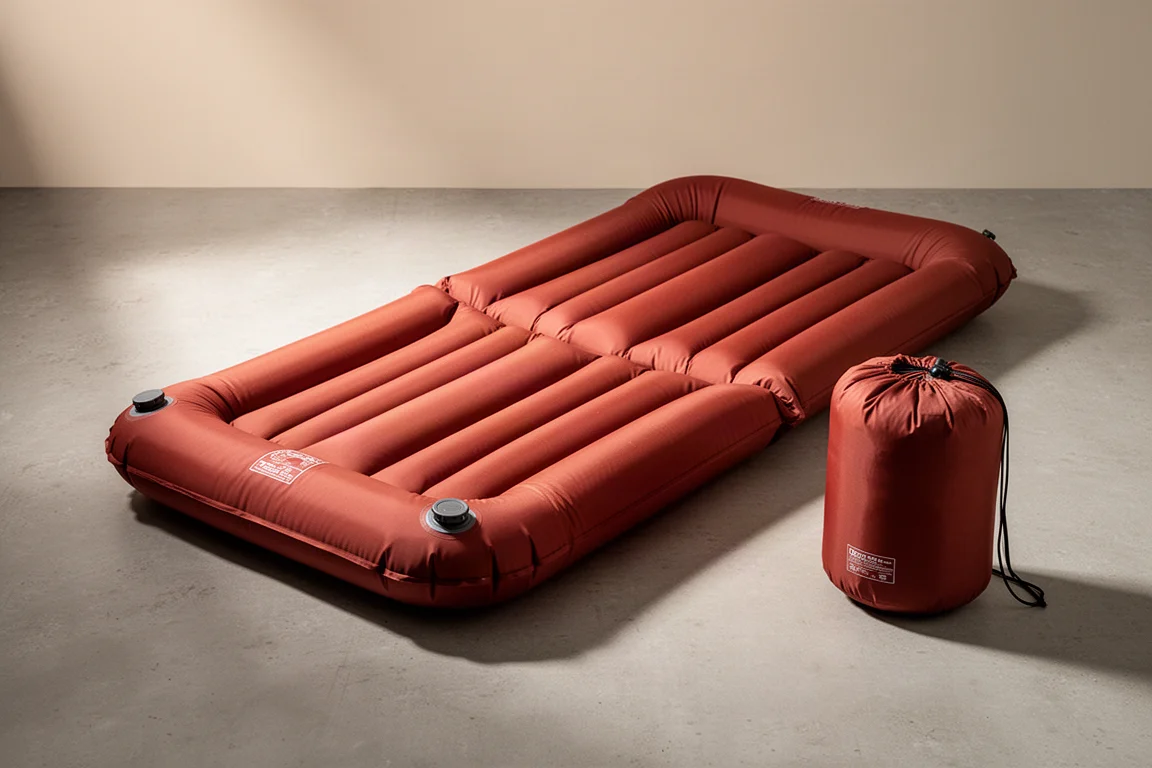
The Insulated version is the red pad, and it carries more insulation in a thicker build. It weighs 57.2 ounces, or 3.6 pounds, with the stuff sack, which is about 30% more than the uninsulated pad, and its packed size of roughly 12 by 7.5 by 7 inches is around 60% bigger. The return on that extra bulk is an R-value of 4.4, which opens the pad up to three-season camping.
Because the stuff sack on this version is slightly larger, it takes three to four fewer pump strokes to fill, even though the pad itself is bigger.
Weight and Packed Size Compared
The weight gap is close to a pound, and the packed volume gap is easier to feel in a pack than the numbers suggest. The Uninsulated pad at 2.7 pounds including its stuff sack fits neatly into a smaller pack, while the Insulated pad at 3.6 pounds and roughly 60% more packed volume takes up noticeably more room.
For solo travelers or anyone flying with gear, that difference is often the deciding factor. For car camping or short approaches, the extra bulk of the insulated version rarely matters.
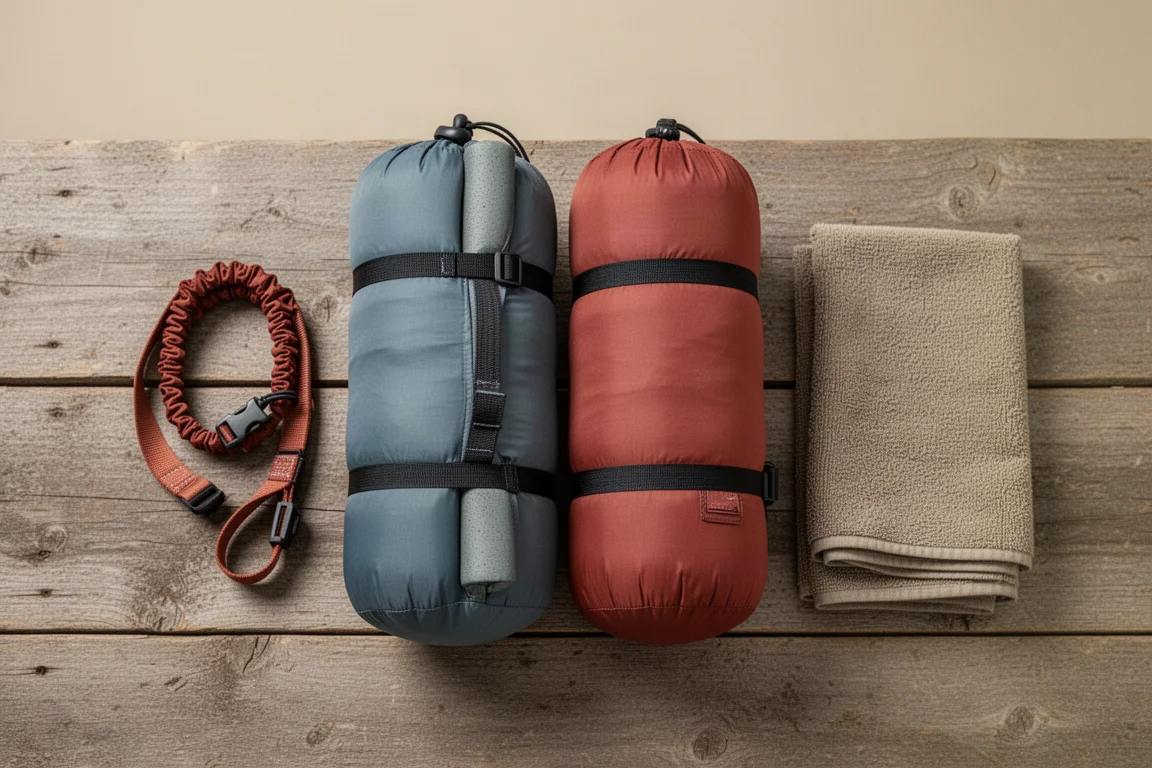
It helps to think about this in terms of what else the space could hold. A pound and a larger stuff sack translate into either less food carried, or a heavier pack on the same route, and that trade is worth making only when the insulation is genuinely needed.
Warmth and R-Value: Which Season It Suits
The insulation gap is the clearest difference between the two pads. The Uninsulated Double V has minimal insulation and an R-value of 1.3, which suits warmer conditions and mild overnight temperatures. The Insulated Double V reaches an R-value of 4.4 and is the version that can be used for three-season camping.
If your trips run from spring through autumn, or if you sleep cold, the insulated pad removes a variable you would otherwise have to solve with extra layers or a warmer bag. If your camping is concentrated in warm months, that insulation is weight you will carry without using it.
Inflation, Deflation, and Packing Times
Setup times are close, and both pads benefit from the pump-style stuff sack. Without moving airflow, the Uninsulated pad takes about 17 bags of air, or roughly 2 minutes 15 seconds, while the Insulated pad takes about 13 bags, or 1 minute 45 seconds, because its stuff sack is slightly larger.
With moving air, the bags fill more, so the Uninsulated pad needs around 14 bags, or about 1 minute 45 seconds, and the Insulated pad around 11 bags, or about 1 minute 30 seconds.
Deflation follows the same method on both: open both valves, fold the pad in half lengthwise twice, then roll to push the air out. That takes about 1 minute on the Uninsulated pad and about 1 minute 15 seconds on the Insulated pad. Packing is the wider gap. Folding lengthwise three times and rolling tightly takes about 2 minutes for the Uninsulated pad, and about 3 minutes 30 seconds for the Insulated pad, because air traps in the baffles and resists being squeezed out.
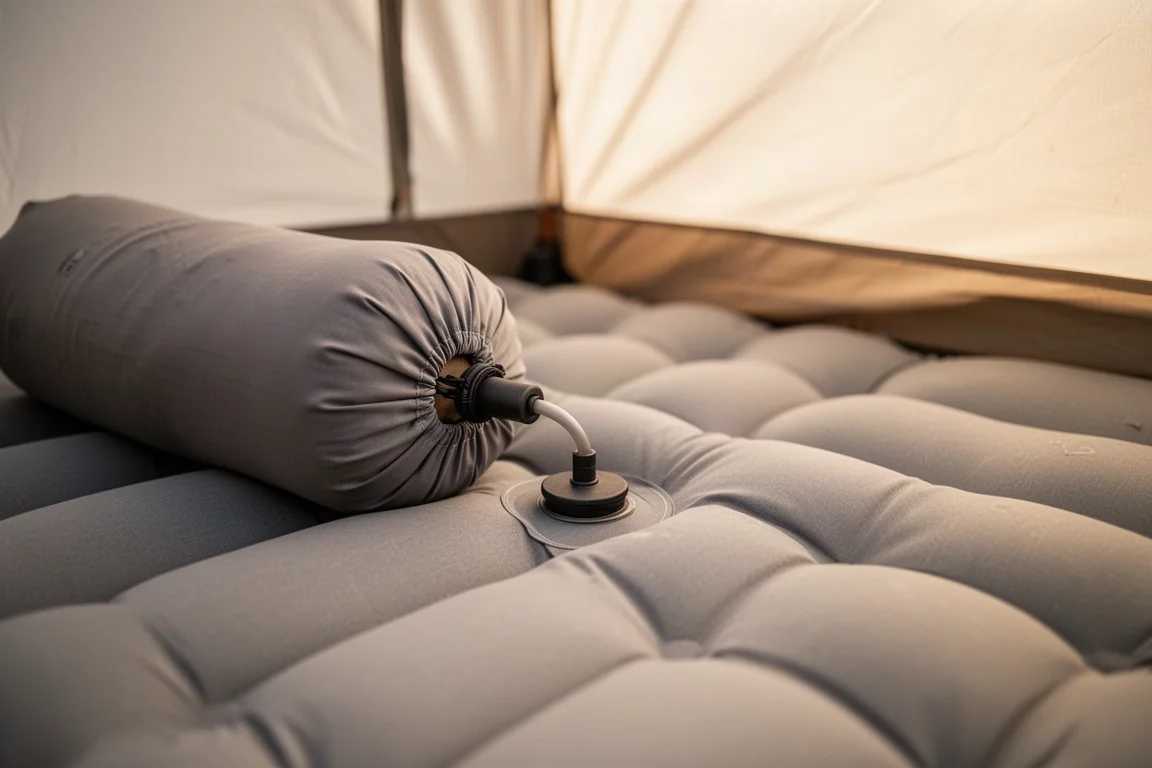
Practically, that means the Insulated pad asks for about a minute and a half more of your attention when you break camp. It is not a burden on a relaxed morning, but it is worth knowing if you are the type who packs up fast and wants to be on the trail early.
Real-World Use: Tents, Trips, and Portability
Both pads fit into all two-person tents, including models with lower peak heights, which makes them easy to pair with the shelters most campers already own. Both are versatile enough for shorter backpacking trips, camping, and travel, and both hold up to repeated packing and unpacking.
The Insulated pad is the slightly more versatile of the two because it covers three-season camping. The Uninsulated pad is the more portable one, and it is the version that disappears into a pack with minimal fuss.
Buying Advice
Match the pad to the trips you actually take. If you camp mainly in warm weather and count grams, the Uninsulated Double V gives you the same footprint and chamber design at 2.7 pounds with a smaller packed size, and the lower R-value will not matter when overnight temperatures are mild.
If you want one pad that covers spring, summer, and autumn, or you sleep cold, the Insulated Double V is the version that earns its extra pound and extra bulk. The R-value of 4.4 is the reason to choose it, and the longer packing routine is the cost of that insulation.
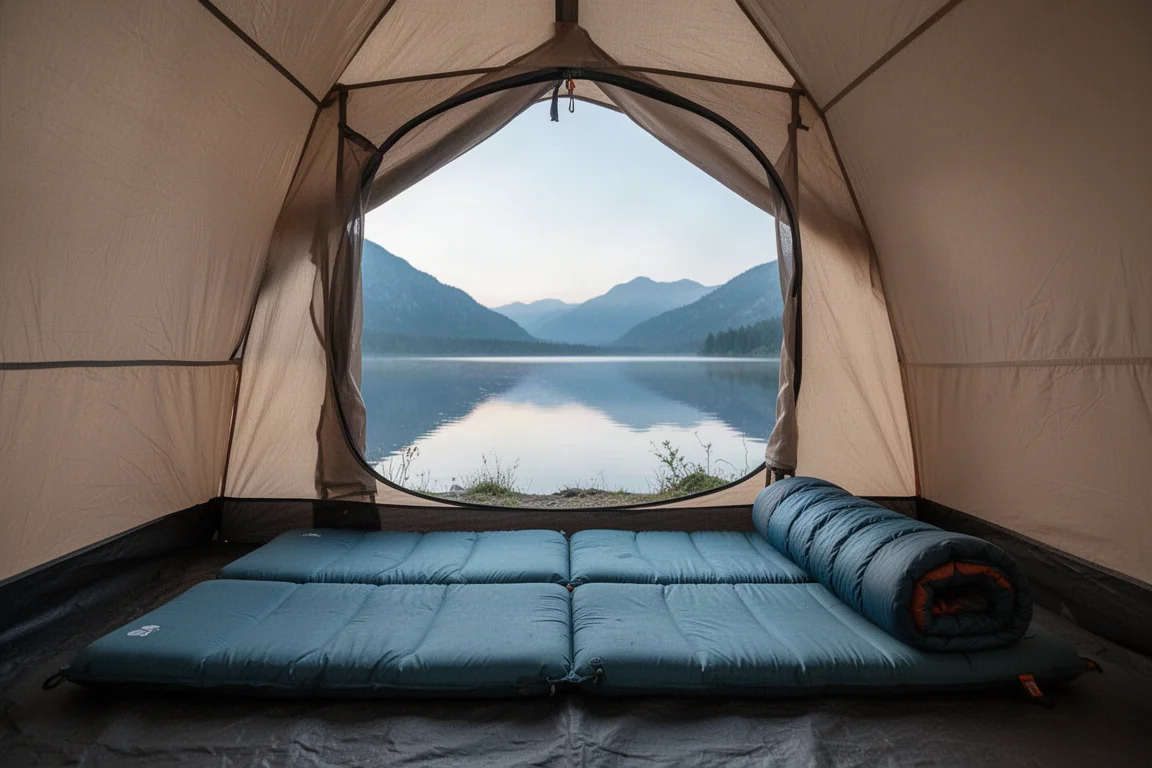
A simple way to decide: if you have ever added a blanket or an extra layer underneath you on a summer trip, choose the insulated pad. If you have never felt cold from below and your priority is a lighter pack, the uninsulated pad is the smarter buy.
Conclusion
Both Klymit Double V pads share the same 74 by 47 inch footprint, the same V-shaped chambers and side rails, the same 75D polyester build, and the same pump-style stuff sack. The choice comes down to insulation versus portability. The Uninsulated pad is lighter at 2.7 pounds with a smaller packed size and an R-value of 1.3, while the Insulated pad trades about a pound and roughly 60% more packed volume for an R-value of 4.4 and three-season capability. Pick the version that matches the weather you camp in, and either pad will do the job it was designed for.
Further reading
Related Reviews
Sleeping Pads
Best Backpacking Sleeping Pads 2026: Nine Pads Rated on Price, Comfort, Warmth, and Weight
Nine backpacking sleeping pads compared on price, comfort, warmth, and weight, from a $65 summer pad to a year-round option rated at R-7.3.
Sleeping Pads
Best Backpacking Sleeping Pads: Comfort, Warmth, and Weight Compared
A practical comparison of the Nemo Quasar 3D, Therm-a-Rest NeoAir XTherm Max, and Big Agnes Rapide SL for backpackers choosing between comfort, warmth, and packed weight.
Sleeping Pads
Best Backpacking Sleeping Pads: Ultralight, Winter, Comfort and Budget Picks
A practical roundup of the sleeping pads that stand out for ultralight weight, winter warmth, pressure relief and value, plus three popular pads that fell short.