Sleeping Pads
Klymit Double V Insulated Sleeping Pad Review: A Versatile Two-Person Pad for Three-Season Camping
A close look at the Klymit Double V Insulated Sleeping Pad, covering build quality, the pump-sack inflation system, packed size, comfort, and who it suits.
Introduction
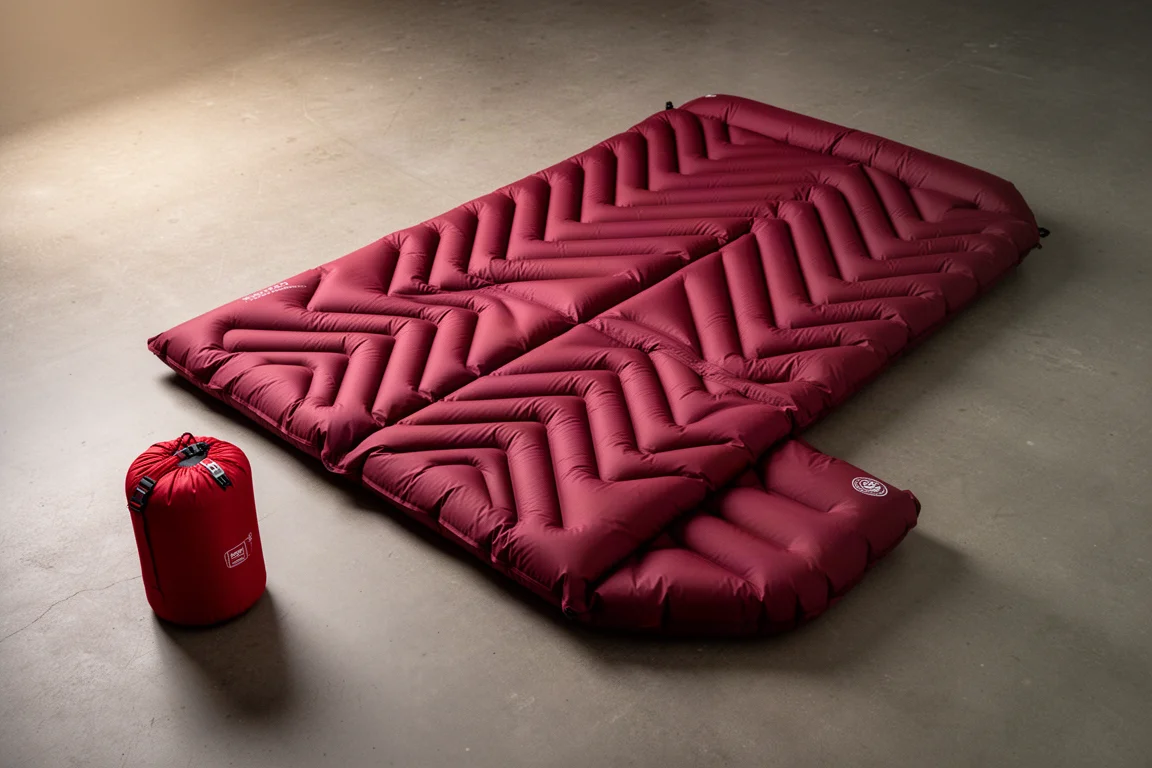
A two-person sleeping pad has to earn its place in the pack. It needs to be comfortable enough for two sleepers, compact enough to carry, and adaptable enough to work in more than one tent. The Klymit Double V Insulated Sleeping Pad, in its red insulated version, sets out to cover all three. It measures about 74 by 47 inches, uses a V-shaped chamber layout across the whole surface, carries an R-value of 4.4, and ships with a roll-top stuff sack that doubles as a pump. It arrives with instructions and a patch kit, and it is widely available through Amazon at a favorable price.
This review covers what the pad does well, where it asks for patience, and which campers will get the most from it.
Who this product is for
The Double V Insulated is a strong fit for campers who want one pad that covers several jobs. It works for shorter backpacking trips where an extra pound or so is acceptable, for car camping where tent floor space is limited, for travel, and for two-person tents, including low-profile models with modest peak height.
Because it is low profile and sized at roughly two standard sleeping pads side by side, it slots into small tents without swallowing the livable space. Anyone who wants a single pad that can move between backpacking, camping, and travelling is squarely in the target audience.
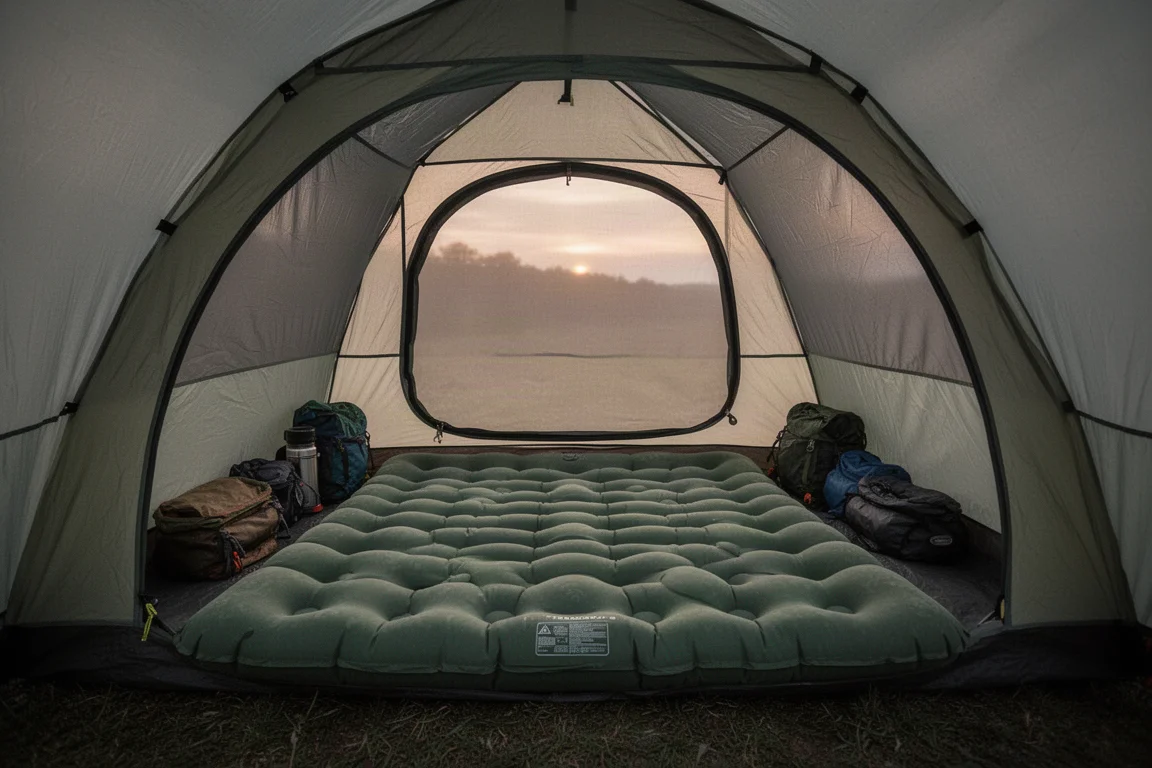
Two sleepers who share a pad regularly will also appreciate the reduced air movement between the left and right chambers, which keeps bouncing to a minimum through the night.
Main strengths
Build quality and air retention
The pad is made from 75D polyester, which sits on the thicker side for sleeping pads and feels durable in hand. The top surface and the underside feel identical in texture and thickness. The seams look well finished, and the FlatValves sit nearly flush with the surface, with separate inflate and deflate valves that make the fill and empty steps much easier to manage. The valve flaps feel thick and rugged.
Air retention is one of the pad’s best qualities. It has been used with two sleepers for three consecutive nights without needing a top-up. After close to a year of ownership it still holds air with no leaks at all.
Inflation is quick with the pump-sack system
The roll-top stuff sack converts into a pump. The inflate valve is a one-way design, so the bottom of the sack pops onto it with an audible click and stays secure. From there the sack is filled with air, the top is folded down two or three times, and the trapped air is pushed into the pad by hand.
Without airflow, the sack holds slightly smaller volumes and the pad takes roughly 13 to 14 sacks, about one minute and 45 seconds to two minutes. With moving air, such as wind blowing into the opening, the sacks fill more fully and the pad takes around 12 sacks, or about a minute and a half. If the pad ends up too firm, opening the inflate valve and pressing gently on the built-in flap releases a little air.
Portability and packed size
The complete package weighs 57.2 ounces, or about 3.3 pounds. The stuff sack accounts for 3.7 ounces and the pad itself for 53.5 ounces. Packed down, the pad measures roughly 12 by 7.5 by 7 inches, which is not much larger than a 32-ounce water bottle. It is not an ultralight pad, and the weight is worth factoring into longer trips.
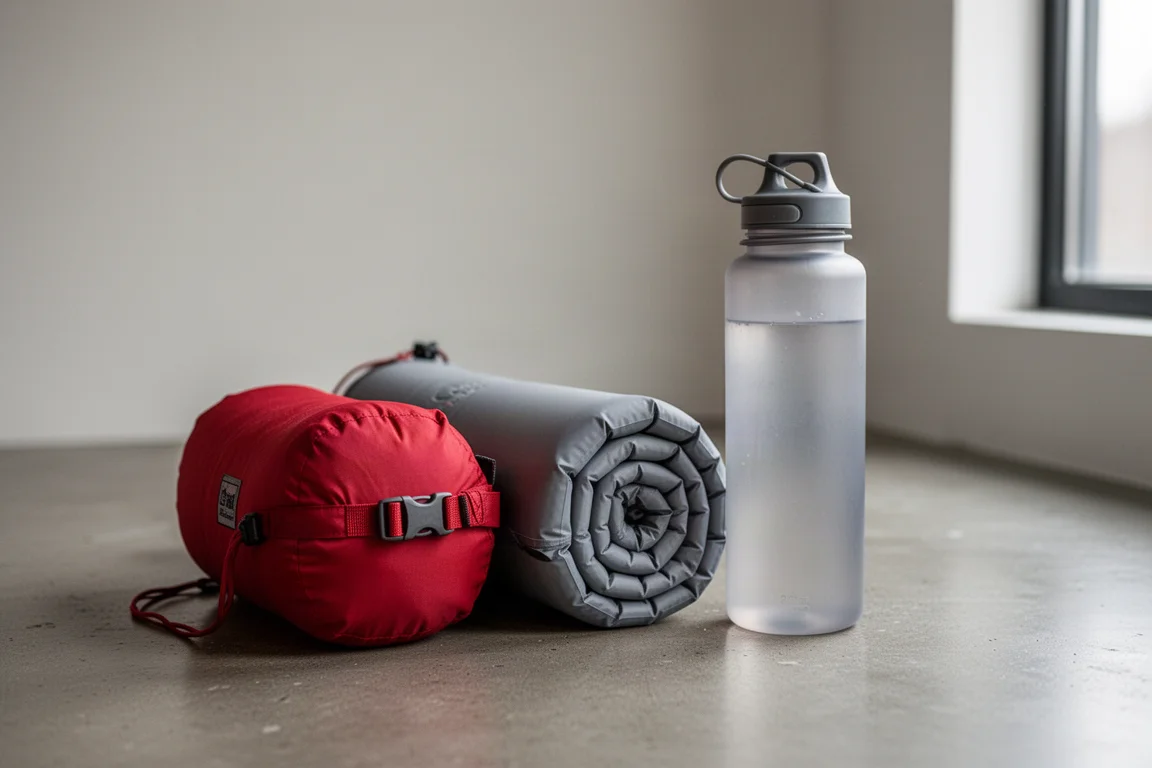
The roll-top closure lets the sack be compressed as far as needed, and the top buckle doubles as a carry handle. A small hole at the bottom of the sack helps push out trapped air. The opening is on the small side, so a fully deflated pad fits back in far more easily than a partially deflated one.
Versatility across tents and seasons
With an R-value of 4.4, the pad is built for summer and three-season camping rather than winter. In summer temperatures between 60 and 80 degrees Fahrenheit it never felt too warm. The V-shaped baffles also create small pockets that a sleeping bag can fill, which supports insulation. Cold-weather insulation was not verified in use, so winter campers should treat the R-value as the limit of the claim.
The pad fits comfortably inside a two-person dome tent with room left at the sides for gear, and it leaves enough height to sit up and crouch. In a four-person dome tent it can be placed horizontally or vertically, and two pads can sit side by side with space remaining for gear. It can be inflated inside the tent where there is room at the sides, or inflated outside and squeezed through the door.
Things to consider before buying
Deflating and repacking takes patience
Emptying the pad is the least enjoyable part of ownership. Air can linger in the V-shaped chambers, and pushing the rolled pad back into the stuff sack takes effort, roughly a two-minute workout even when the recommended fold-and-roll method is followed. The same difficulty did not appear with the uninsulated version of the pad.
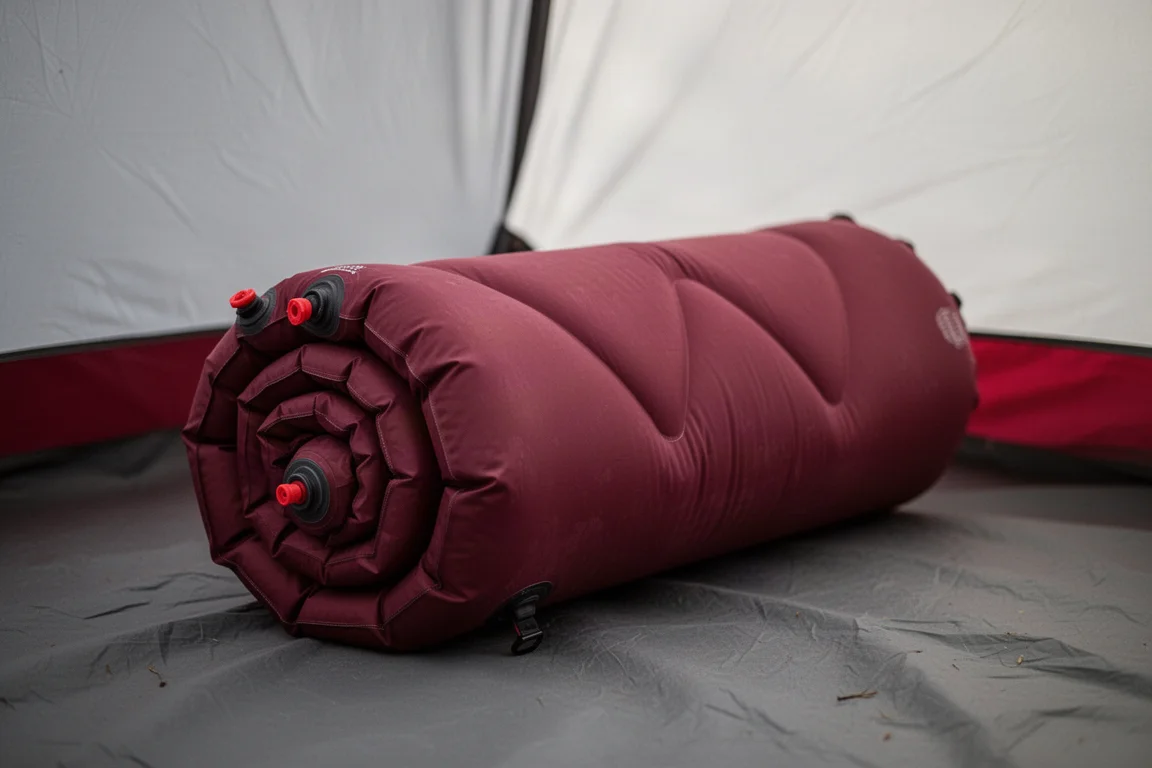
The method that works is to open both the deflate valve, which is a simple two-way opening, and the inflate valve, fold the pad in half lengthwise twice, then roll it tightly starting from the side without the valves. If air is trapped in the final rolls, pressing gently on both valves clears it. Deflating takes about a minute and 15 seconds, and folding and packing properly adds around three and a half minutes. A larger stuff sack would make the whole process noticeably easier.
Comfort and surface feel
Fully inflated, the pad lifts a sleeper about 2.5 inches off the ground. On the back, stomach, or side, the body does not touch the ground at full firmness. Pressure points are a different story: elbows, knees, and seated weight can still register the ground beneath, and the same happens occasionally when tossing and turning.
The V-shaped chambers run across the entire pad and give the body plenty of support and contour, though the surface is not as smooth or plush as a self-inflating foam mattress. It takes a few nights to adjust. Edge support is better than many taller two-person air mattresses, although the side rails will not stop a sleeper from rolling off. The fabric is a little louder than other air and self-inflating mattresses, but not distractingly so.
Buying advice
The Double V Insulated makes the most sense for campers who value versatility over minimum weight. It is a sensible pick for shorter backpacking trips where an extra pound and a bit more packed volume are acceptable, for campers who are short on tent floor space, and for anyone who wants one pad to handle backpacking, camping, travelling, and small two-person tents.
It is a less obvious choice for ultralight backpackers, for winter campers who need more insulation, and for anyone who dislikes spending a few minutes wrestling a pad back into its sack. Shoppers who mostly camp in warm weather and want to save weight and packing effort may find the uninsulated version easier to live with, since it avoids the trickier deflation.
Conclusion
The Klymit Double V Insulated Sleeping Pad is a durable, compact, and genuinely versatile two-person pad. Its 75D polyester build, low-profile valves, and reliable air retention hold up well over time, and the pump-sack system fills it in under two minutes. The trade-offs are real but narrow: deflating and repacking demand patience, and the V-shaped surface takes a few nights to get used to. For three-season campers who want one pad that fits almost any small tent, it remains an easy recommendation.
Product link
View more details for Klymit Double V Insulated Sleeping Pad
This product is mentioned in the review. Check the specifications, options, and compatibility before buying.
View more details for Klymit Double V Insulated Sleeping PadFurther reading
Related Reviews
Sleeping Pads
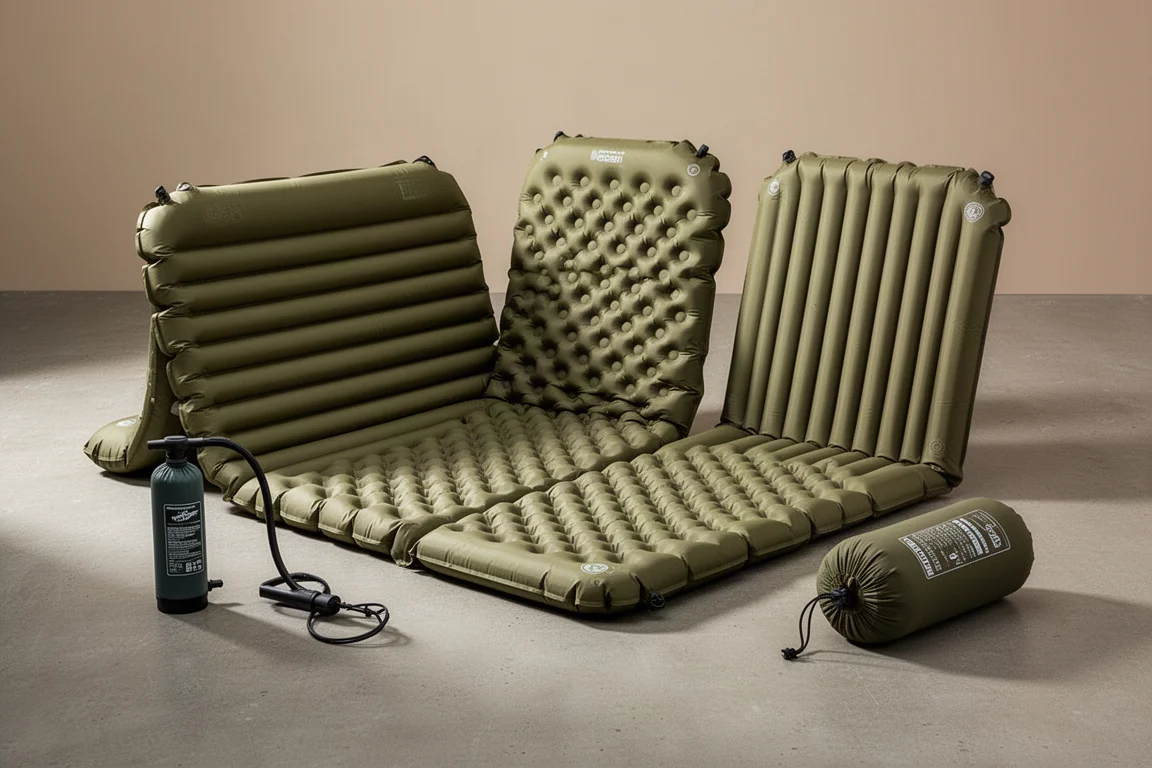
Best Backpacking Sleeping Pads 2026: Nine Pads Rated on Price, Comfort, Warmth, and Weight
Nine backpacking sleeping pads compared on price, comfort, warmth, and weight, from a $65 summer pad to a year-round option rated at R-7.3.
Sleeping Pads
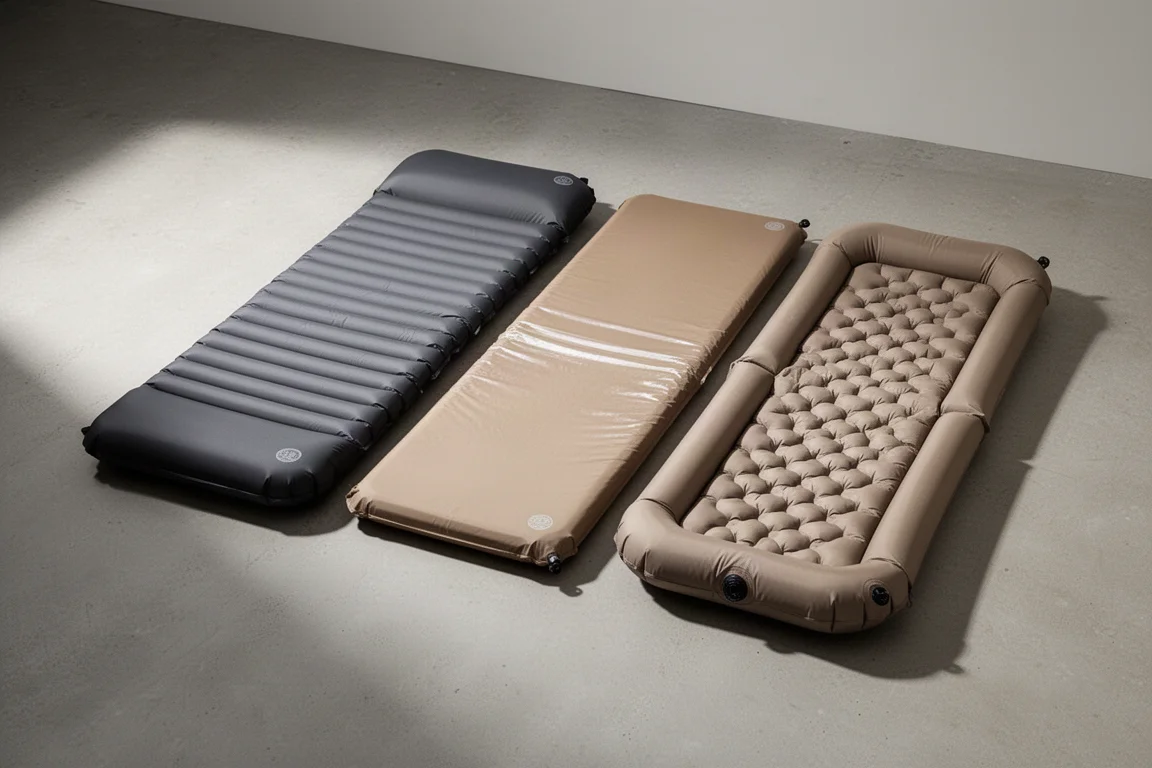
Best Backpacking Sleeping Pads: Comfort, Warmth, and Weight Compared
A practical comparison of the Nemo Quasar 3D, Therm-a-Rest NeoAir XTherm Max, and Big Agnes Rapide SL for backpackers choosing between comfort, warmth, and packed weight.
Sleeping Pads
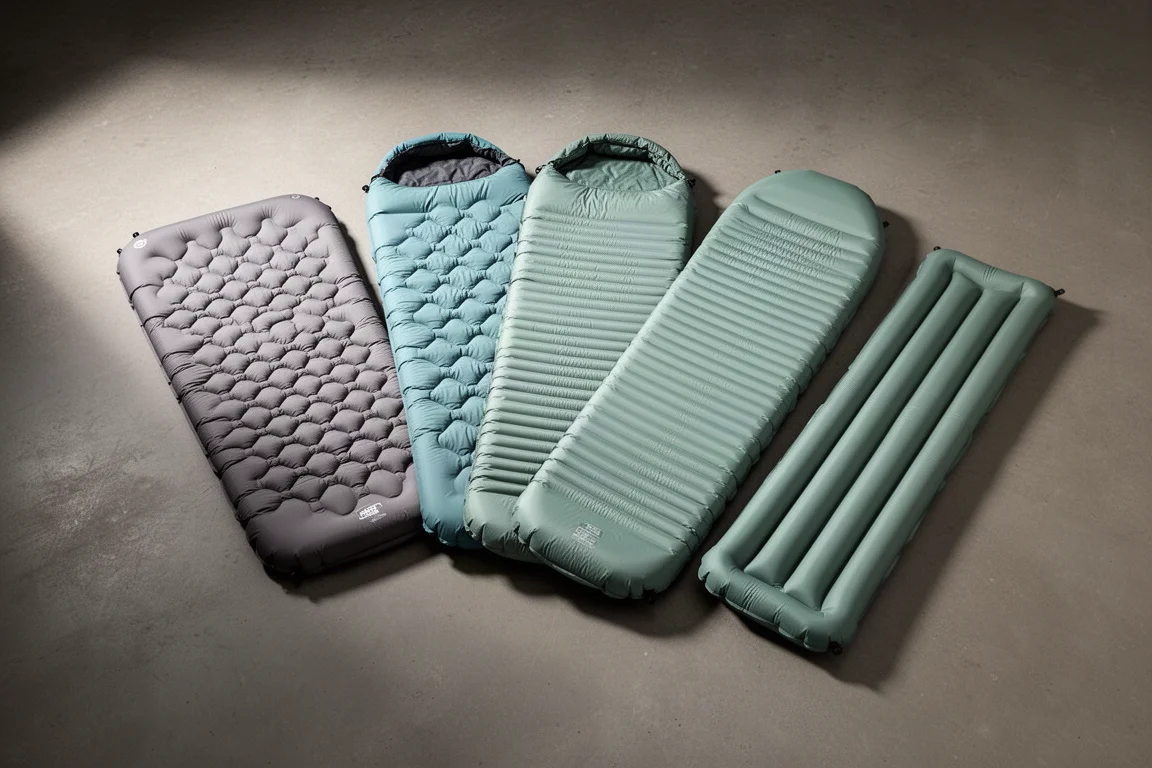
Best Backpacking Sleeping Pads: Ultralight, Winter, Comfort and Budget Picks
A practical roundup of the sleeping pads that stand out for ultralight weight, winter warmth, pressure relief and value, plus three popular pads that fell short.