Hi-Fi Speakers
Klipsch The Sevens Review: A Balanced Active Speaker That Gets the Basics Right
A practical look at the Klipsch The Sevens active loudspeakers, covering deep controlled bass, strong dynamics, HDMI ARC convenience, and the trade-offs worth knowing before you buy.
Introduction
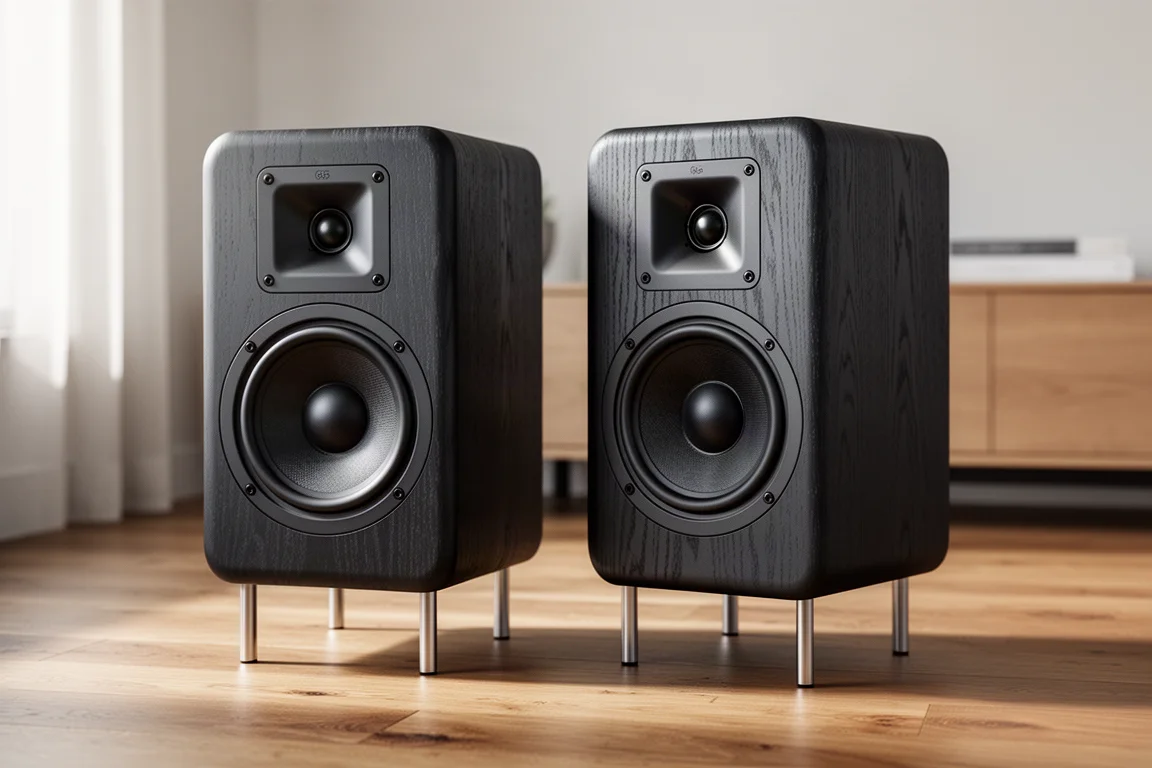
Klipsch The Sevens are active stand-mount loudspeakers that sit above the smaller model in the range, sharing its platform but adding cabinet size and output. Inside the primary cabinet there are four class D amplifiers. Two of them drive 1-inch tweeters coupled to a Tractrix horn, and the other two drive a pair of long-throw 6.5-inch mid-bass drivers. The crossover is handled in DSP. The second cabinet carries no electronics at all, receiving its mid-bass and tweeter feeds through an umbilical cable connected to the primary speaker.
In Europe the pair sells for around 1,500 Euros, and it arrives in a walnut finish with a mid-century modern character. That price puts it in direct competition with a passive alternative: a pair of Klipsch passive stand-mounts plus a separate integrated amplifier and a streamer. The interesting question is whether an all-in-one active pair is the smarter purchase.
Who This Product Is For
The Sevens make most sense for listeners who want one purchase, one setup, and then years of listening without revisiting the equipment chain. There is no amplifier matching to worry about, no separate streamer to add unless network streaming is a priority, and no risk of pairing the speakers with an amplifier that does not suit them.
They also suit television and film use better than most stereo speakers in this class, thanks to an HDMI ARC connection and genuinely extended low bass. Listeners who favour electronic music, modern pop, and R&B will appreciate the low-end reach, and anyone sensitive to a bright, edgy top end will find the treble here more forgiving than on Klipsch’s livelier passive models.
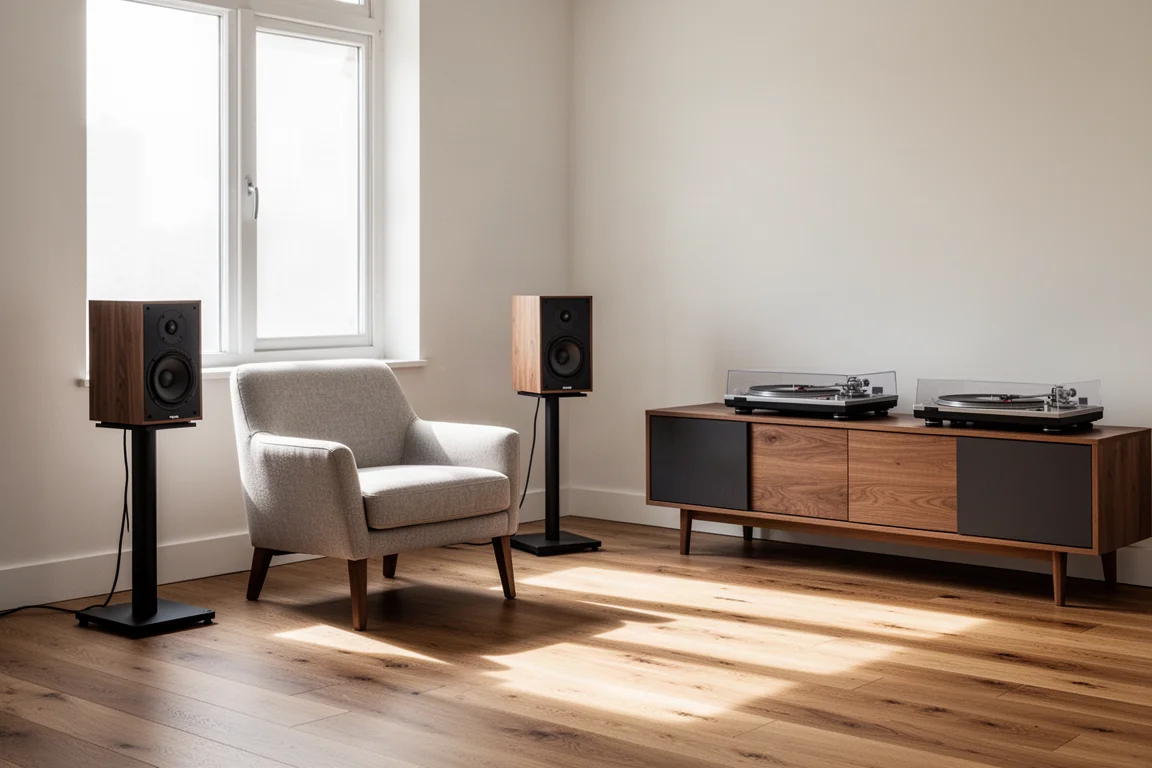
That combination of convenience and a relaxed top end is unusual. It means the speakers work as well for quiet background listening late at night as they do for a focused session, which is a wider brief than many hi-fi speakers attempt.
Design and Build
The cabinet is finished in wood veneer with a mid-century modern silhouette, and there is a notable practical detail on the underside: a cork layer that lets you place the speakers directly on a low board or shelf without scratching the surface or coupling them hard to the furniture. Because they are rear ported, they will ultimately benefit from stands that allow some space behind them and place the tweeters closer to ear height, but the cork base means that upgrade can wait.
Klipsch supplies two umbilical cables with The Sevens, one two metres long and one four metres long. The longer option matters more than it sounds, because it lets you separate the two cabinets properly instead of leaving a cable stretched across the space between them. Proper separation is what produces a convincing stereo image in the first place.
The grille is the one styling decision that divides opinion. It is a fairly plain cream fabric, and the speakers look considerably better with the grilles removed. Buyers who liked the muted, earthier grille treatment of the smaller model may find this one less appealing.
Main Strengths: Dynamics and Bass Balance
Dynamics are the headline. These speakers move from quiet passages to loud ones without strain and without sounding polite or restrained. That quality is characteristic of Klipsch designs and it is very much present here.
Just as important is what the bass does not do. The Sevens are not bloated in the low end. They sound balanced straight out of the box with no EQ applied, and Dynamic Bass is switched off by default, which is the right call. Klipsch rates the low-frequency response at minus 3 dB at 39 Hz, which is impressive for a stand-mount of this size, and the bass is not only deep but punchy. That combination makes them unusually capable at low listening levels, where thinner speakers tend to collapse into nothing.
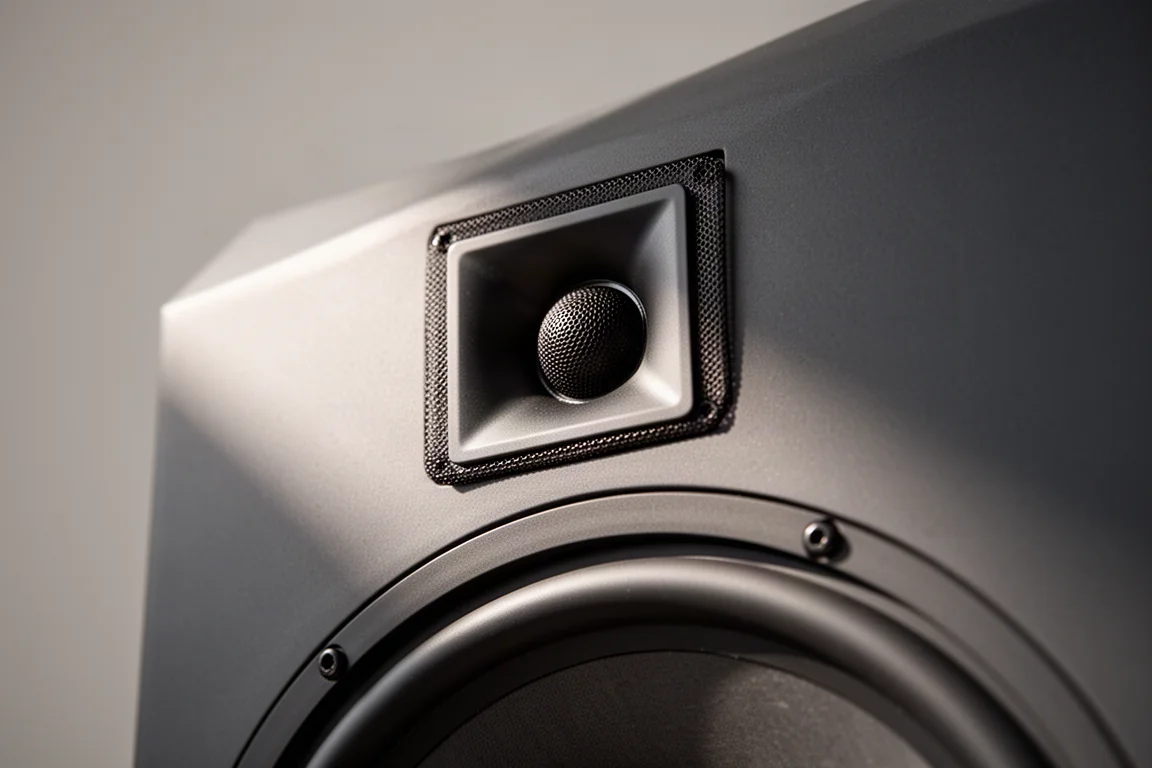
At the other end of the spectrum the treble is smoother than expected for a horn-loaded design. It is not as crisp or as lively as the passive Klipsch stand-mounts, and on the Twin Peaks soundtrack the track “Audrey’s Dance” sounds slightly more hooded here than it does through the passive pair. Klipsch confirms the tweeter unit itself is shared with the passive model, so the difference comes down to voicing. The result is a slightly darker, easier, more forgiving presentation.
Connectivity, Controls, and App Experience
All connections live on the back of the primary loudspeaker, which can be configured as either the left or the right channel. The input list covers a toslink optical socket, HDMI ARC, a moving magnet phono input, a line level analogue mode, and Bluetooth. There is also a subwoofer output.
The toslink and HDMI ARC inputs are auto-sensing, so switching between sources happens without manual reselection. That is a genuinely useful convenience. HDMI ARC also lets a television remote control the volume, and it makes it easy to stream Apple Music from a TV, which is often the most convenient route.
There is no network streaming built in. For Roon, Tidal Connect, or Spotify Connect you will need to add an external streamer over the optical input. The internal digital-to-analogue converters are specified to handle PCM up to 24-bit/192 kHz, though the implementation matters more than the headline number.
If a subwoofer is connected, The Sevens high-pass the main speakers and low-pass the subwoofer at 60 Hz, using a fourth-order Linkwitz-Riley slope. That is a proper integration rather than a simple summed output.
Volume and source selection can be handled three ways: the two rotary controls on top of the primary speaker, the Connect app over Bluetooth, or the supplied infrared remote. The app behaved flawlessly in testing, with no dropouts. The remote is a basic plastic handset that is a little fussy about being aimed precisely at the primary speaker. The source selector rotary also felt slightly loose, and on rare occasions an input selection slipped back to a neighbouring source.
Things to Consider Before Buying
The most obvious consideration is that everything except the drivers and amplifiers sits in one cabinet, and all the cables arrive at the back of that cabinet. With a television, a streamer, a turntable, and a subwoofer connected, the cable bundle gets busy. It is unavoidable given the design, but it is worth planning for.
Analogue purists should also note that the DSP crossover means analogue inputs are digitised on entry, through a converter behind the RCA sockets. For most listeners this will not matter at all, but it is a real characteristic of the design.
Dynamic Bass is a mixed tool. It extends the low end and lifts bass as the volume drops, which is effectively a loudness-style correction for how hearing changes at low levels. At low late-night volumes it fills out the bottom end nicely. At louder levels it can make the bass sound lumpy and indistinct, and a subwoofer is the more sophisticated route to more low end. There is also a night mode in the app that pulls the bass down, useful for quiet evening listening.
Finally, the aesthetic. The cream grille is plain, and the copper-coloured mid-bass drivers of the passive models are not present here. Buyers who care about how the speakers look with grilles on should factor that in.
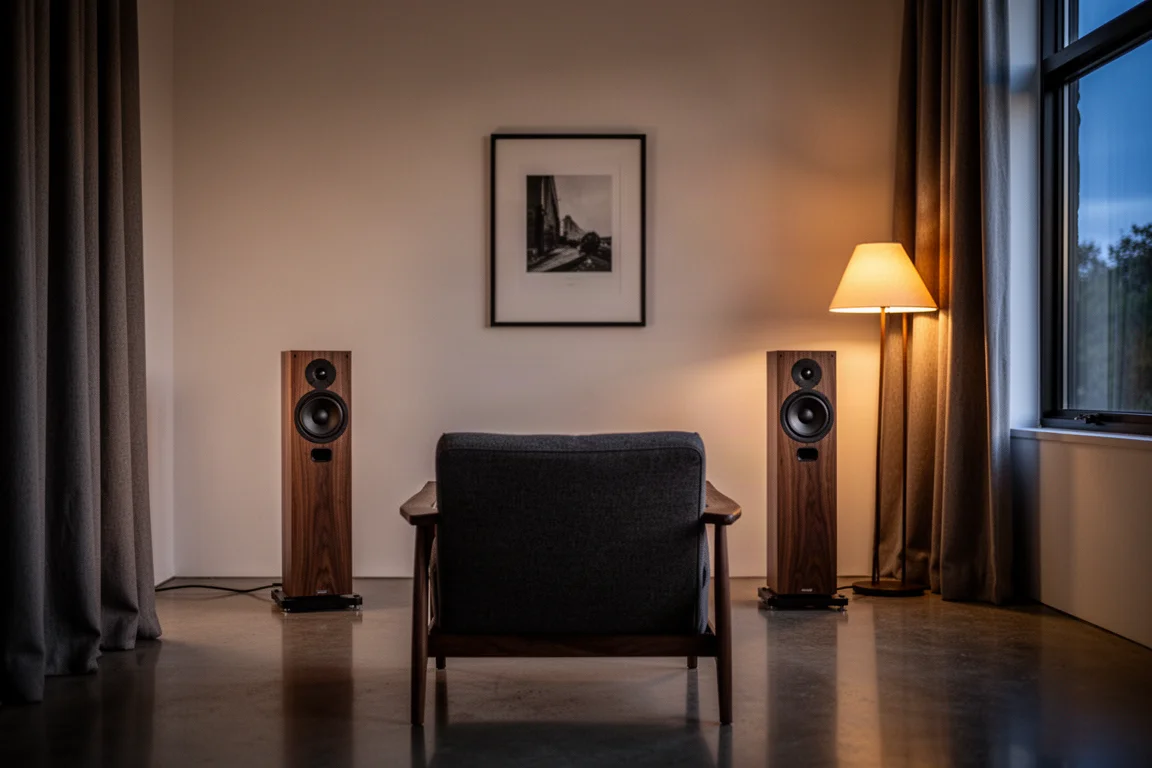
None of these are deal-breakers. They are the sort of details that are easier to live with when you know about them in advance, and most of them come down to how much equipment you plan to attach.
Active Versus Passive: What the Comparison Revealed
The natural comparison is a passive system built around the Klipsch RP-600M II stand-mount, driven by an Audiolab 6000A integrated amplifier with a network streamer feeding the optical input. That combination lands at roughly 1,700 US dollars, and it does not include interconnects or speaker cable, so the real-world total is higher.
On sound quality the contest is closer than the price gap suggests. The passive system has a livelier, more incisive treble that draws a more overtly etched sound stage, placing instruments with slightly more precision. Its midrange is a touch more dynamic, and it sounds marginally more natural with analogue sources.
The Sevens answer with deeper, punchier bass and a more forgiving top end. They handle poorer recordings better, they are more satisfying at low volumes, and their low-end reach makes them far better suited to film and television without a subwoofer. Because the analogue inputs are digitised, a turntable feeding the line level input loses a little of the character that the passive system preserves.
Functionally, though, it is not close. HDMI ARC, automatic source sensing, subwoofer integration, and the absence of any amplifier matching all favour The Sevens. Swap the integrated amplifier for a streaming amplifier to get comparable functionality from the passive route and the sound gets thinner, which tilts the balance back toward the active pair.
Buying Advice
For anyone new to hi-fi, or anyone who simply wants a music system that is bought once and then forgotten for several years, The Sevens are the straightforward recommendation. They remove the guesswork about amplifier matching, they cover television and music, and they deliver deep bass that a passive stand-mount at the same budget will not match.
For listeners who enjoy choosing and swapping components, the passive route remains entirely valid and can sound superb. It is a different hobby, not a better one.
One point worth making clearly: a pair of speakers like these will comfortably outperform a soundbar. A soundbar may be more discreet, but it cannot produce the stereo separation that two properly spaced cabinets deliver. Anyone considering a soundbar for music should listen to The Sevens first.
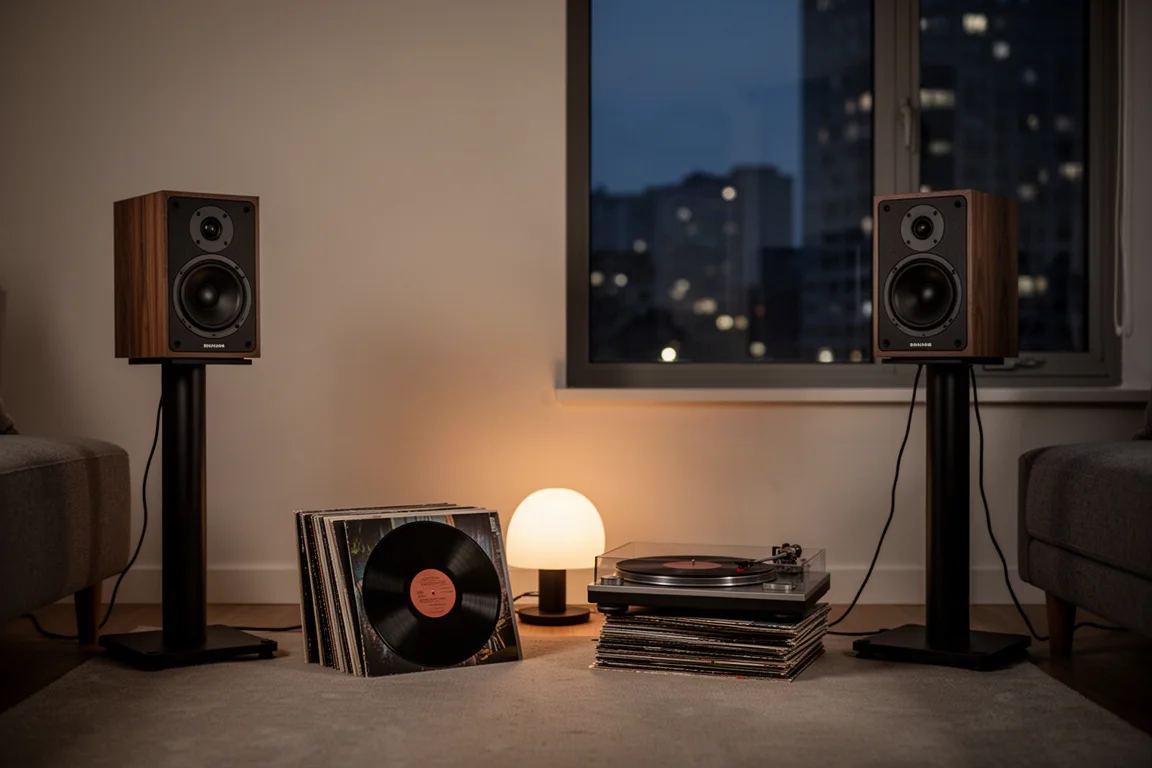
If the budget is tight, start with the speakers on a low board and add stands later. The cork base makes that a reasonable first step, and stands will let you pull the rear-ported cabinets further from the wall and bring the tweeters up to ear height.
Conclusion
The Sevens are a confident, well-balanced active loudspeaker. The bass is deep but controlled, the dynamics are excellent, the treble is forgiving rather than aggressive, and the connectivity covers everything from a turntable to a television. The quirks are minor: a plain grille, a fussy remote, a loose source dial, and a rear panel that gets crowded once every input is used.
Against a comparable passive system the sound quality argument is genuinely unresolved, but the convenience argument is not. For most listeners building a first serious system, that is the deciding factor.
Product link
View more details for Klipsch The Sevens
This product is mentioned in the review. Check the specifications, options, and compatibility before buying.
View more details for Klipsch The SevensFurther reading
Related Reviews
Hi-Fi Speakers
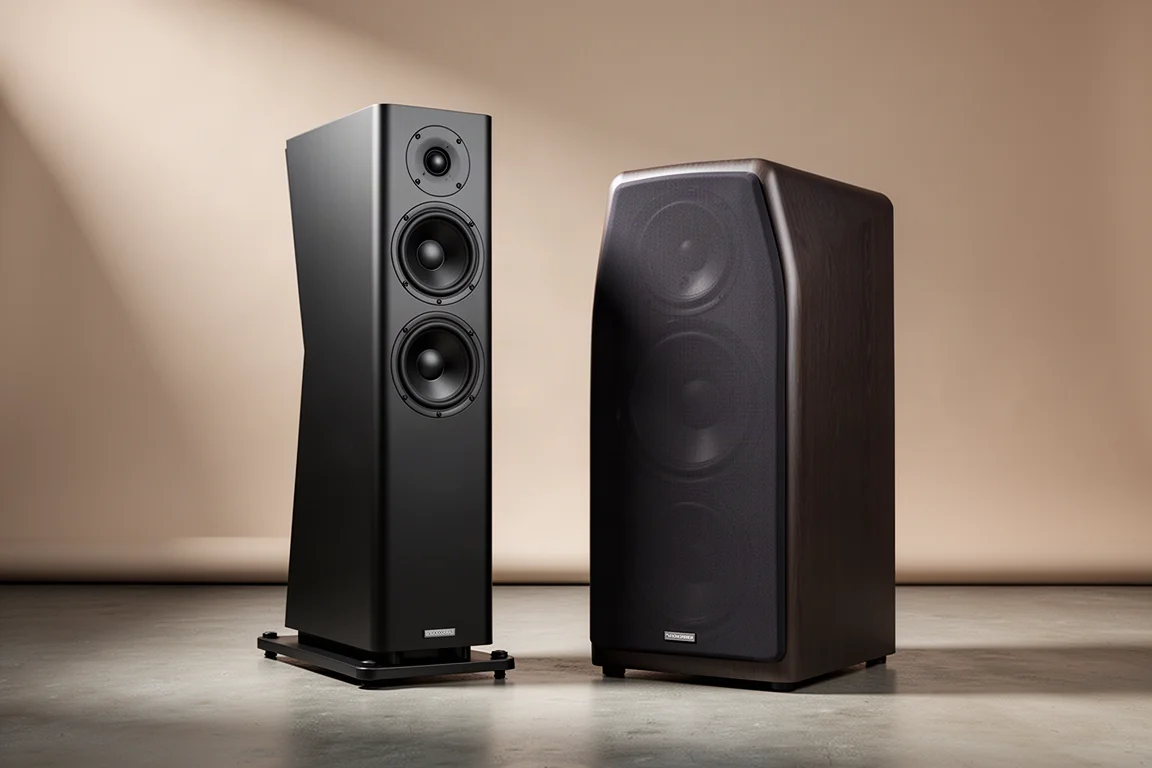
1723 THX Tower vs 1528 Bookshelf: Which Speaker Fits Your Room?
Two speakers at roughly the same price, built very differently. How the 1723 THX tower and the 1528 bookshelf compare on construction, bass, power needs, and sound.
Hi-Fi Speakers
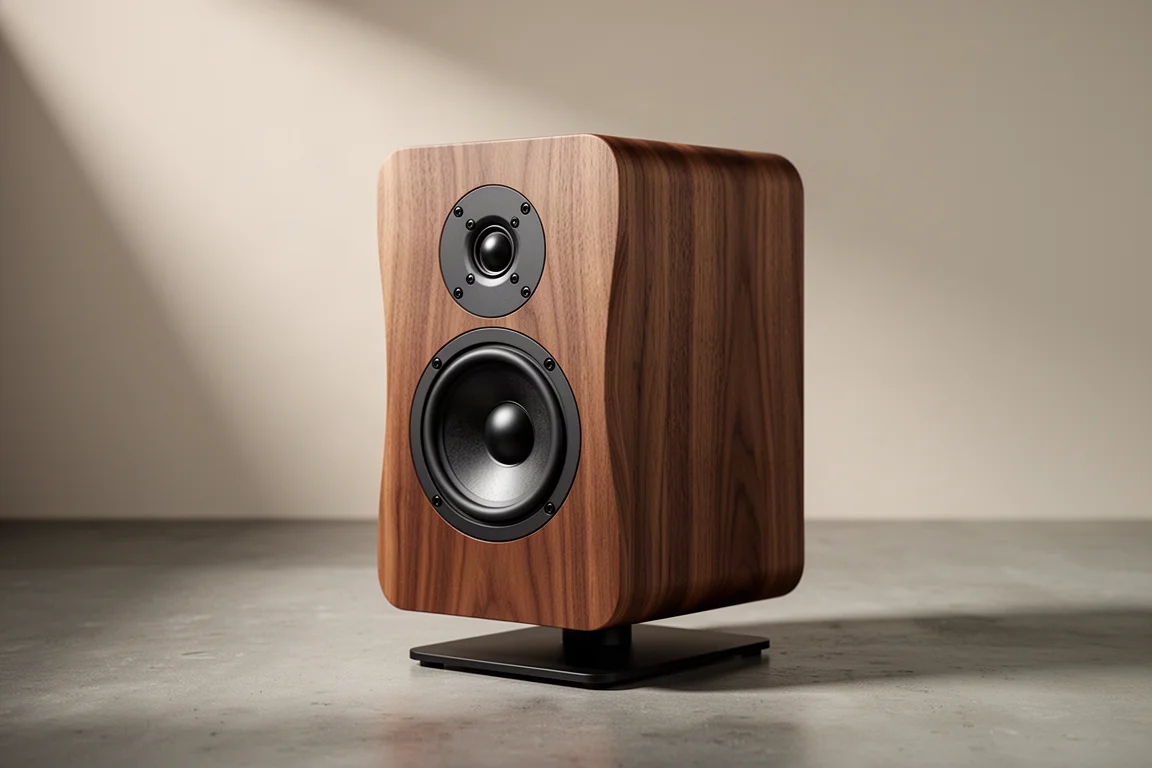
Acoustic Energy AE 300 Review: Deep Bass From a Compact Standmount
A two-way standmount with real wood veneer, surprising low-end weight, and a warm, easygoing character. Here is what to know before buying.
Hi-Fi Speakers
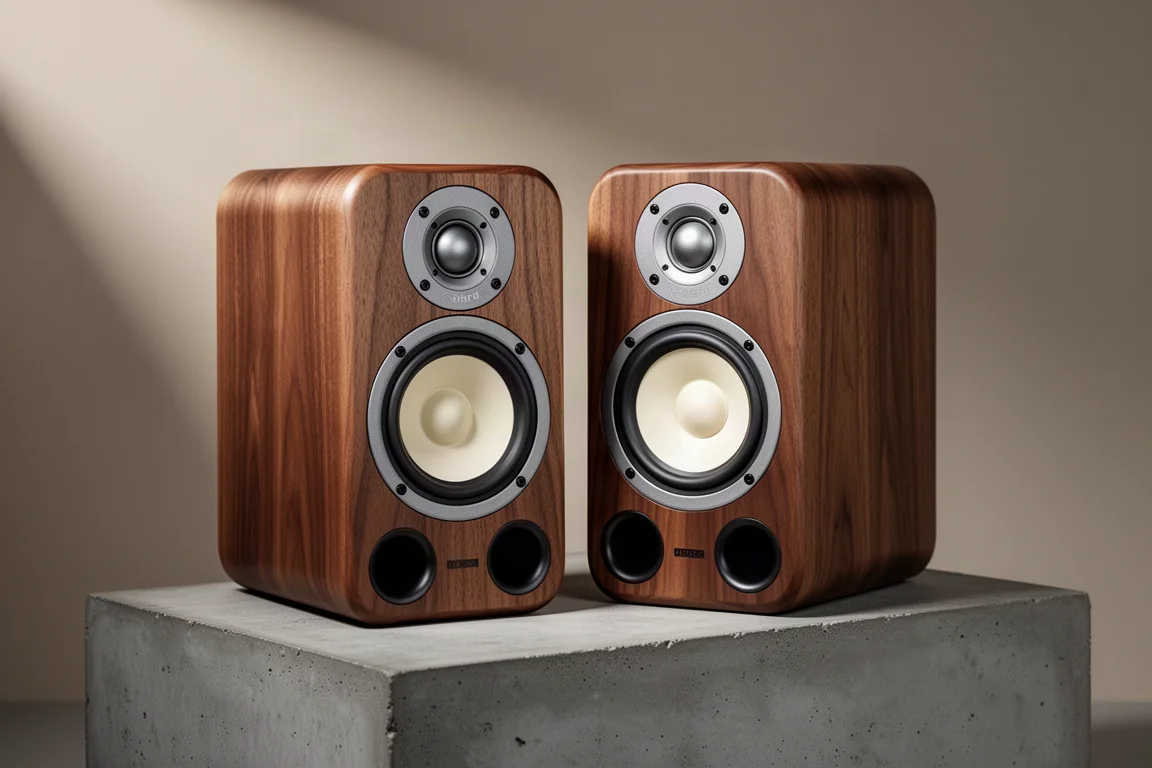
Acoustic Energy AE1 40th Anniversary Review: A Modern Take on a British Classic
A compact standmount that revives a 1980s favorite with all-new parts, a warm mid-centric balance, and a price of £1,499 per pair.