Powered Speakers
Klipsch The Sevens II Review: A Complete Hi-Fi System in Two Speakers
A powered two-way speaker pair with built-in streaming, amplification, and Dirac Live room correction. Here is what the Klipsch The Sevens II does well and what to weigh before buying.
Introduction
The Klipsch The Sevens II is the second generation of Klipsch’s powered bookshelf speaker, and it takes an unusual position in the hi-fi market. It is not just a speaker. It is an amplifier, a streamer, and a room-correction platform in a single pair of cabinets, which means most of the decisions a traditional two-channel system forces on you simply disappear.
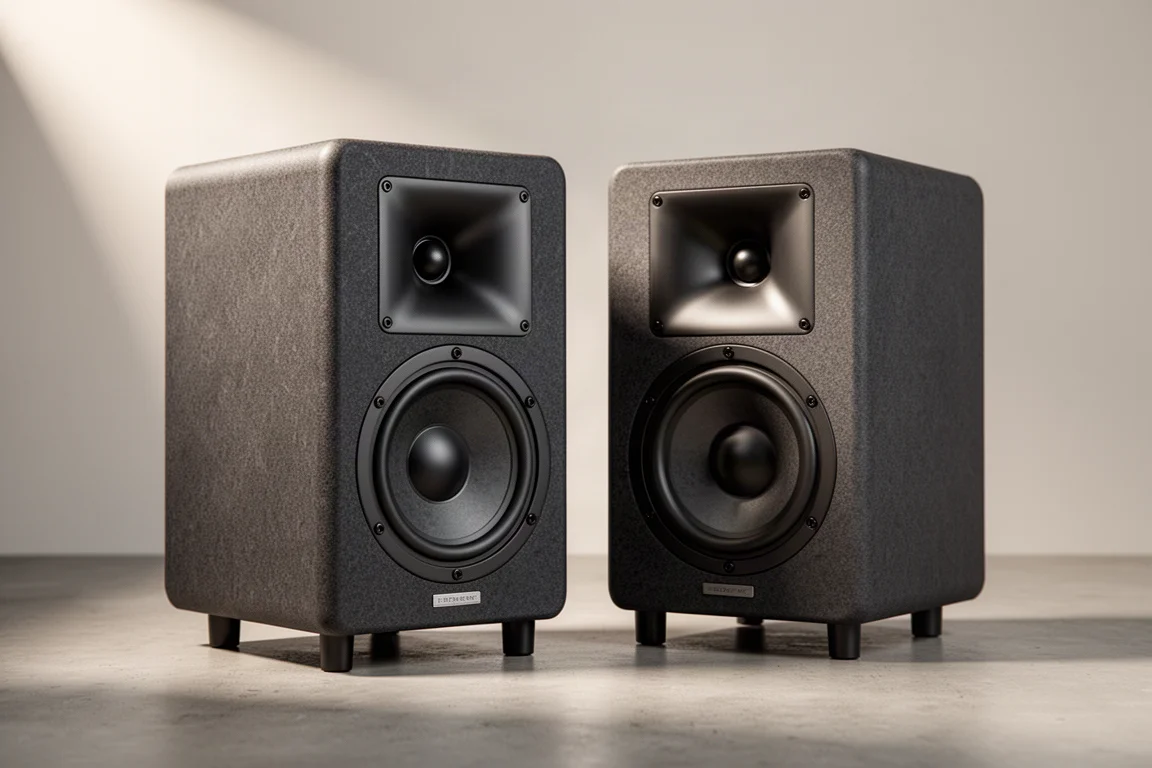
On paper the formula looks modest: a two-way powered design with a 6.5-inch woofer and Klipsch’s signature horn-loaded tweeter. The pair is priced at $1,999. Klipsch has a long history with horn-loaded designs and a manufacturing base where many employees have stayed for decades, and that heritage is part of what gives these speakers their character.
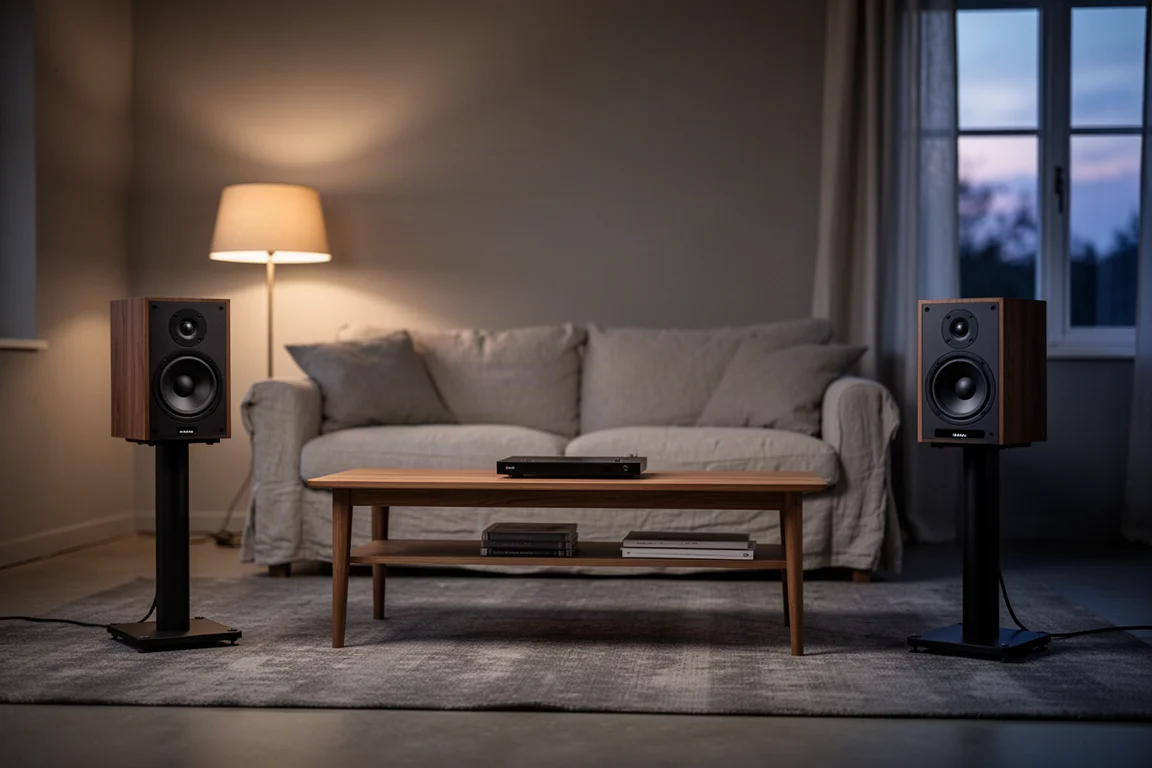
What makes the Sevens II worth a closer look is how much of a complete system it becomes once it is set up. It can carry music listening, television sound, and streaming duties in one living room without extra boxes, and it does so without the usual reliability headaches that come with juggling separate components. The rest of this article covers who it suits, where it genuinely shines, and the few things worth knowing before you commit.
Who This Product Is For
This is a speaker for listeners who want the best-performing hi-fi they can get in the easiest possible package. If your goal is to sit down and enjoy music and movies rather than choose a separate amplifier, streamer, DAC, and correction processor, the Sevens II collapses that entire chain into two cabinets.
It is also a strong fit for shared living spaces. A television can feed it over HDMI, a turntable can plug straight in, and streaming services are built in, so the same pair handles everything the household wants to watch or listen to.
It is not the right product for someone who enjoys handpicking every component in the chain. Audiophiles who like to tune, swap, and upgrade individual parts will find the integrated approach limiting rather than liberating. If tinkering is part of the pleasure for you, look elsewhere.
Main Strengths
The case for the Sevens II rests on three things: how they sound, what Dirac Live does to that sound, and how much functionality is built in.
A Lively, Dynamic Sound Signature
Klipsch has a recognisable house sound, and these speakers carry it: lively, dynamic, and fun rather than polite and analytical. That character holds up in direct mode, where a lot of speakers go flat and uninvolving. Here, bass output is substantial without leaning on digital processing, and dynamics stay intact even at high volume.
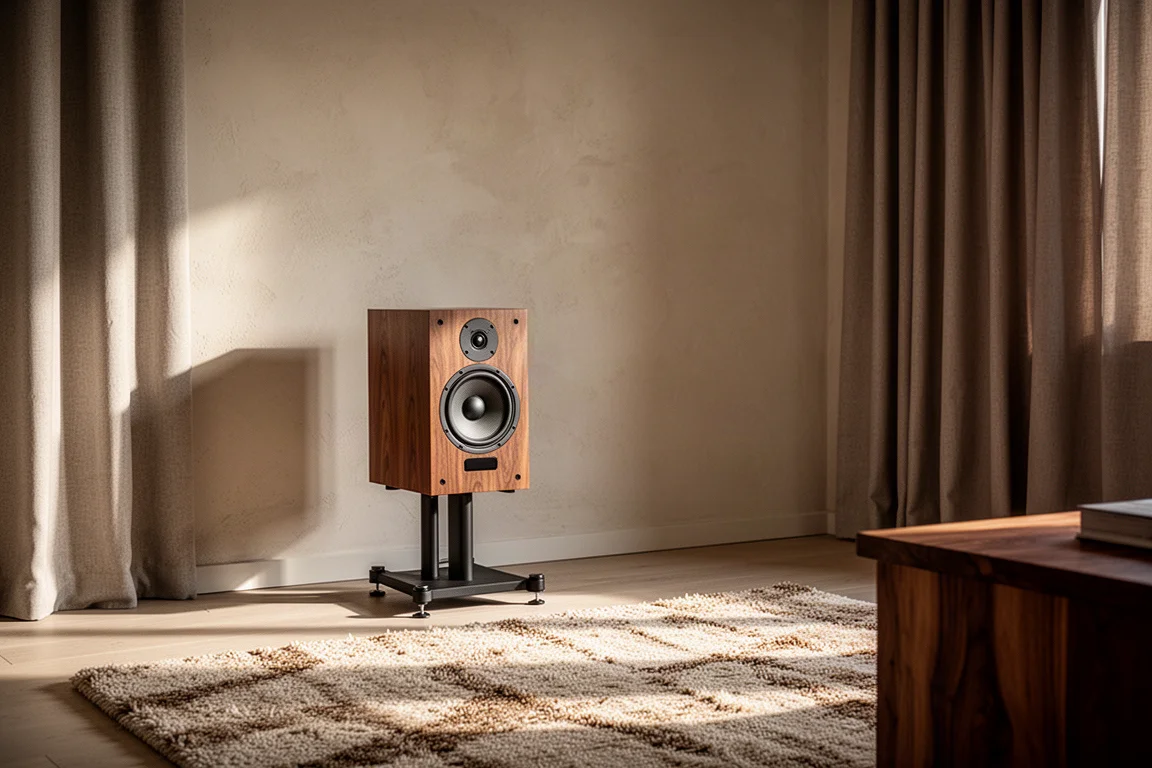
Just as importantly, the presentation is not fatiguing. Long listening sessions stay comfortable, which is not always true of horn-loaded designs. Playback across a wide range of material held up consistently, with nothing sounding like a weak spot.
Dirac Live Room Correction
Room correction is the feature that changes the most about how these speakers perform, and it is built in rather than sold as an add-on. Klipsch drew on DSP expertise from its relationship with Onkyo, and the result is Dirac Live running through the Klipsch Connect Plus app.
The process is short: connect the supplied calibration microphone, place it at your listening position, and run the test from your phone. In a room with hard floors and no acoustic treatment, the difference is immediate. Imaging tightens, the soundstage opens noticeably wider, and bass behaviour and time alignment improve. The effect is not limited to music. Film soundtracks benefit in the same way, with dialogue and effects landing more precisely.
A Genuine All-in-One System
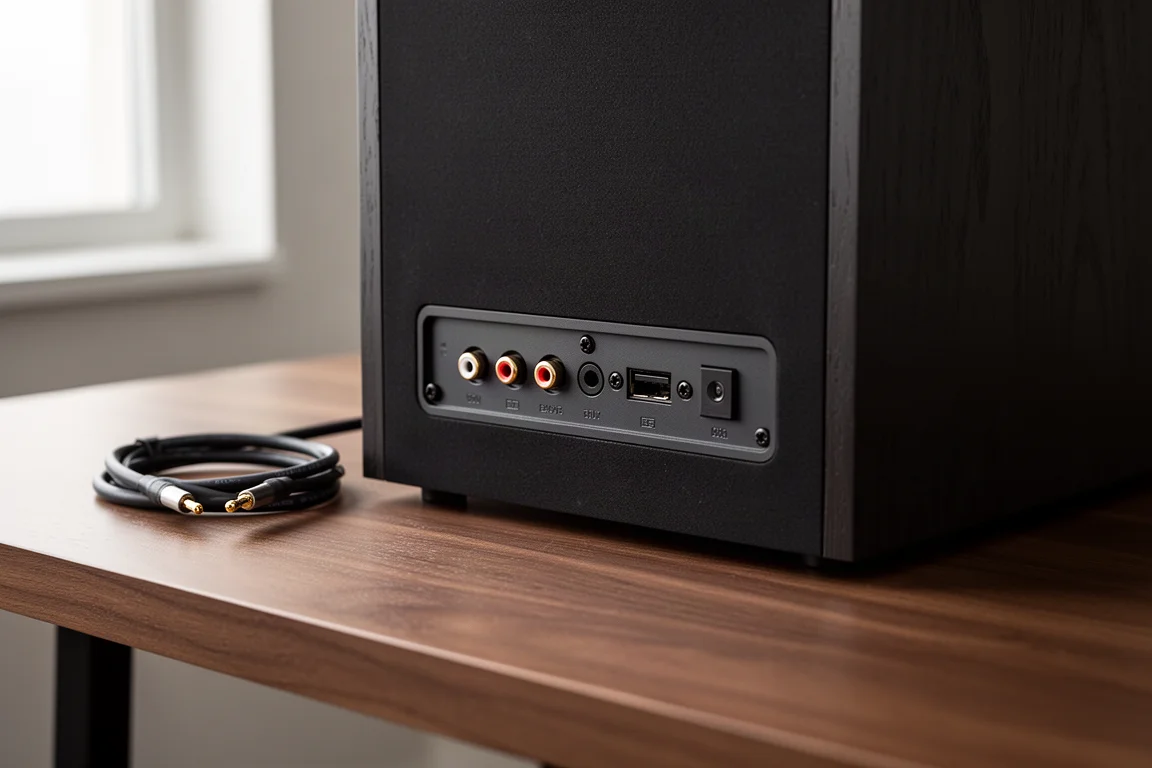
The connectivity list is unusually complete for a speaker of this size. HDMI eARC and a second HDMI input, optical and coaxial digital inputs, an analog input, a phono stage with a ground terminal, a calibration microphone input, a subwoofer output, a USB Type A port for stored music, and an ethernet connection all sit on the back panel.
Streaming is handled internally, with Tidal Connect, Spotify Connect, Apple AirPlay, and Chromecast support once the speakers are on your network. The two cabinets arrive paired and will communicate wirelessly, or you can link them with the long ethernet cable included in the box.
On top of the hardware, there are three listening modes (movie, music, and direct) plus a five-band EQ. Direct mode is the most convincing for music, but the flexibility is there when you want it. Adding a subwoofer through the dedicated output takes the low end considerably further, to the point where a well-matched sub can be more than a small room needs.
Connectivity That Simply Works
There is one more strength that deserves its own mention because it is rarer than it should be: reliability. With a television connected over HDMI eARC, sound comes out of the speakers consistently, every time. That sounds like a baseline expectation, but anyone who has cycled through amplifiers and receivers knows how often HDMI handshakes fail and how much household patience that costs.
Things To Consider Before Buying
The first consideration is appearance. The Sevens II are a good-looking pair of speakers, but they carry less of the heritage character that made the previous generation distinctive. The front is now a single-piece baffle with the waveguide integrated into it, which gives a cleaner but less classic look.
The second is the control panel on top. Input selection is handled by a single button paired with a series of coloured LEDs, so you need to remember which colour maps to which source. That is a small thing, but it means reaching for the manual more often than you might expect. Some listeners will appreciate the minimal approach; others will find it annoying.
The phono stage is usable but basic. If vinyl is a serious part of your listening, an external phono preamp is likely worth budgeting for. And if your longer-term plan is a full surround setup, confirm whether wireless surround speakers can be paired with these before you buy, since that expansion path is not clearly established here.
Buying Advice
At $1,999, the Sevens II is a significant outlay, but the price covers more than a pair of speakers. It includes the amplifier, an internal streamer with the major services supported, Dirac Live room correction, and an HDMI implementation that behaves the way it should. Priced against a comparable separates chain, that changes the value calculation considerably.
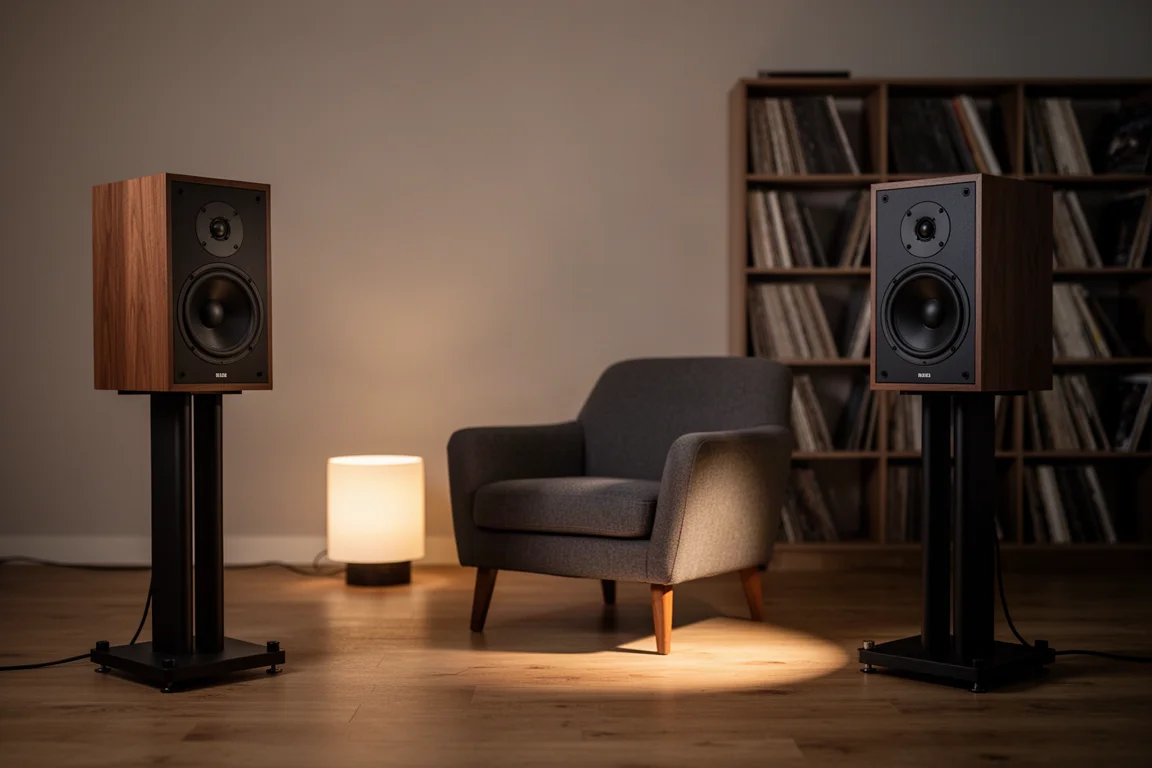
The straightforward guidance is this. If you want a single purchase that handles music and television beautifully, needs no further components to sound its best, and rewards a short setup session with a measurable improvement, the Sevens II is a strong candidate. If you would rather build and tune a system piece by piece, spend your money on separates instead.
Conclusion
The Klipsch The Sevens II is one of those products that makes a compelling argument for integration done properly. The sound is lively and dynamic without becoming tiring, Dirac Live genuinely improves how they behave in a real room, and the feature set covers streaming, television, vinyl, and external sources without clutter.
The trade-offs are modest and specific: styling that is less distinctive than the previous generation, an input selector that takes some getting used to, and a phono stage that serious vinyl listeners will want to replace. None of them undermine the core experience. For anyone who wants high-performance two-channel sound in the simplest possible package, this is a very easy pair to recommend.
Product link
View more details for Klipsch The Sevens II
This product is mentioned in the review. Check the specifications, options, and compatibility before buying.
View more details for Klipsch The Sevens IIFurther reading
Related Reviews
Powered Speakers
AbramTek X50 Review: Powered Speakers With Real Bass and a Full Feature Set
The AbramTek X50 pairs a phono preamp, HDMI ARC, optical, and Bluetooth with genuinely capable sound. Here is what it does well and what to check before buying.
Powered Speakers
Amazon Basics Powered Speaker Review: Useful Features, Compromised Sound
A practical look at the Amazon Basics Powered Speaker: a handy remote and an optical input, held back by shouty upper mids, minimal bass, and erratic pricing.
Powered Speakers
Aperion Audio Alaire Review: Compact Powered Speakers With Serious Bass
A compact two-way powered speaker with genuine low-end punch, excellent imaging, and a control scheme that depends entirely on its remote.