Powered Speakers
Klipsch The Nines Review: A Complete Two-Channel System in Two Cabinets
A powered stereo speaker pair with HDMI ARC, a phono stage, and app-based EQ that gets a real hi-fi setup running in minutes.
Introduction
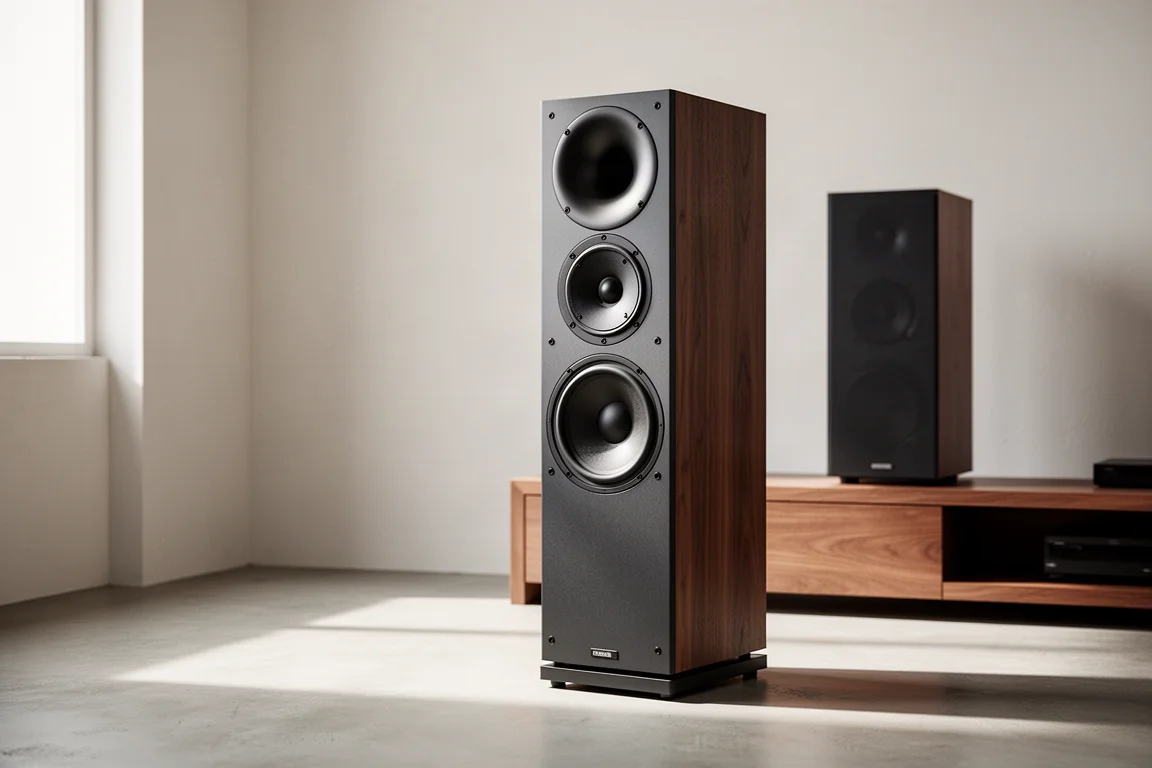
Klipsch The Nines is a powered stereo speaker pair that puts the amplifiers, a DAC, a phono stage, and a full set of inputs inside two Heritage-inspired cabinets. In practice it behaves less like a conventional pair of speakers and more like a complete two-channel system that happens to arrive without a stack of separate boxes.
That distinction matters. Powered speakers have a reputation for trading personality for convenience, and The Nines is Klipsch’s answer to that trade-off. With an eight-inch woofer, a horn-loaded titanium tweeter, and roughly 10 by 19 by 15 inches of cabinet per side, it aims for the scale of a real hi-fi setup while staying simple enough to run from a television remote and a phone app.
Who The Klipsch The Nines Is For
This system suits listeners who want genuinely good two-channel sound without assembling a component stack. If an ideal evening involves a turntable, a streaming app, and a film on the television all feeding the same pair of speakers, The Nines covers every one of those sources without a receiver, an outboard DAC, or a separate phono stage.
It also fits rooms where a full separates system would be unwelcome. A bedroom, a second living room, a cabin in the woods, or a bungalow near the beach are all natural homes for it, particularly when the people sharing the space are not interested in tweaking settings. The controls are simple enough that a child can work them, which says a great deal about how approachable the whole package is.
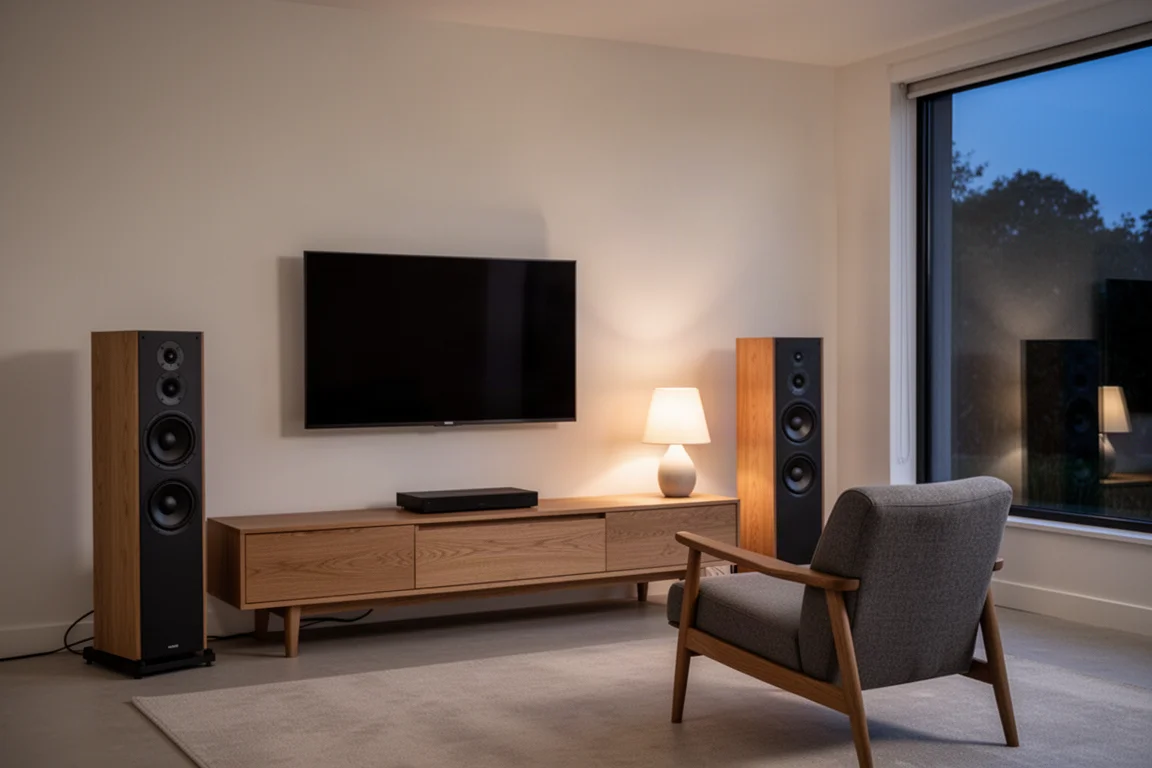
There is a practical argument for households with children or partners who are indifferent to the hobby. Because everything is integrated and the tuning lives in an app, one person can dial in a sound they enjoy without anyone else needing to understand what a preamp does or why an input needs to be selected.
Main Strengths
Sound Quality and Tuning
The Nines is bi-amped, with 100 watts feeding each eight-inch high-excursion woofer and 20 watts feeding each one-inch titanium tweeter in a Tractrix horn. Klipsch rates the system at 34 Hz to 25 kHz, plus or minus 3 dB, with a maximum SPL of 150 dB.
In use, the presentation is wide and precisely layered, and the treble is a standout. Cymbals, bells, and metal percussion sound like metal because the tweeter is metal, and it never tips into grain or harshness. Bass can be as generous as you want, and the midrange can be smoothed, cooled, or filled in through the three-band EQ. The factory flat setting is genuinely usable on its own, and adding a subwoofer through the dedicated subwoofer output blends in cleanly.
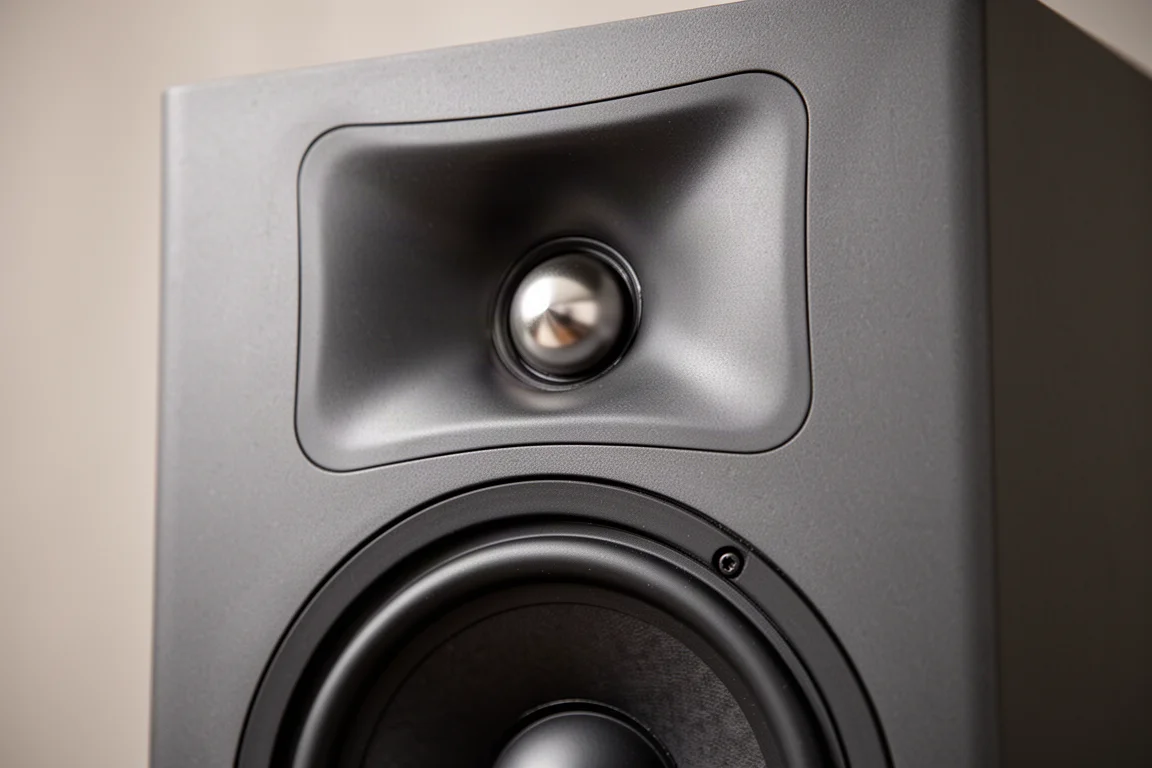
A few built-in presets give quick starting points for vocal, bass, and rock material, and the dynamic bass control behaves like half of a loudness function, lifting low-end output when a track needs it.
Connectivity and Inputs
The back panel is straightforward but unusually complete for a powered speaker. HDMI ARC handles the television, and the system was up and running with a TV in about five minutes. Optical and USB inputs cover digital sources, and the internal DAC is specified at 24-bit/192 kHz, enough for current high-resolution libraries. The USB connection uses a standard printer-style cable.
Analog options are flexible. One RCA input can work either as a regular line input or as a phono preamp, and there is a 3.5 mm input alongside it, so you get two analog inputs or one analog input plus a phono stage. A phono ground terminal sits next to the connections for turntables that need it. There is also a subwoofer output, a left/right channel switch so the primary speaker can sit on whichever side of the room has an outlet, and a Bluetooth pairing button. The phono stage performs well, with a turntable connected directly and no external box required.
Setup, Controls, and the App
The two cabinets link with a four-pin threaded cable that carries both power and signal. It runs about 13 feet, and an extension is included, so the speakers can be spaced fairly wide apart. The left/right switch on the back removes the usual outlet anxiety.
Local control is one of the best parts of the design. Two knurled metal dials sit on top of the main speaker: the upper wheel selects the input, and the lower wheel handles volume. Both feel substantial and are quick to reach when you need to drop the volume on a television show in a hurry. An included remote covers volume, subwoofer level, subwoofer phase, input selection, play/pause, and mute.
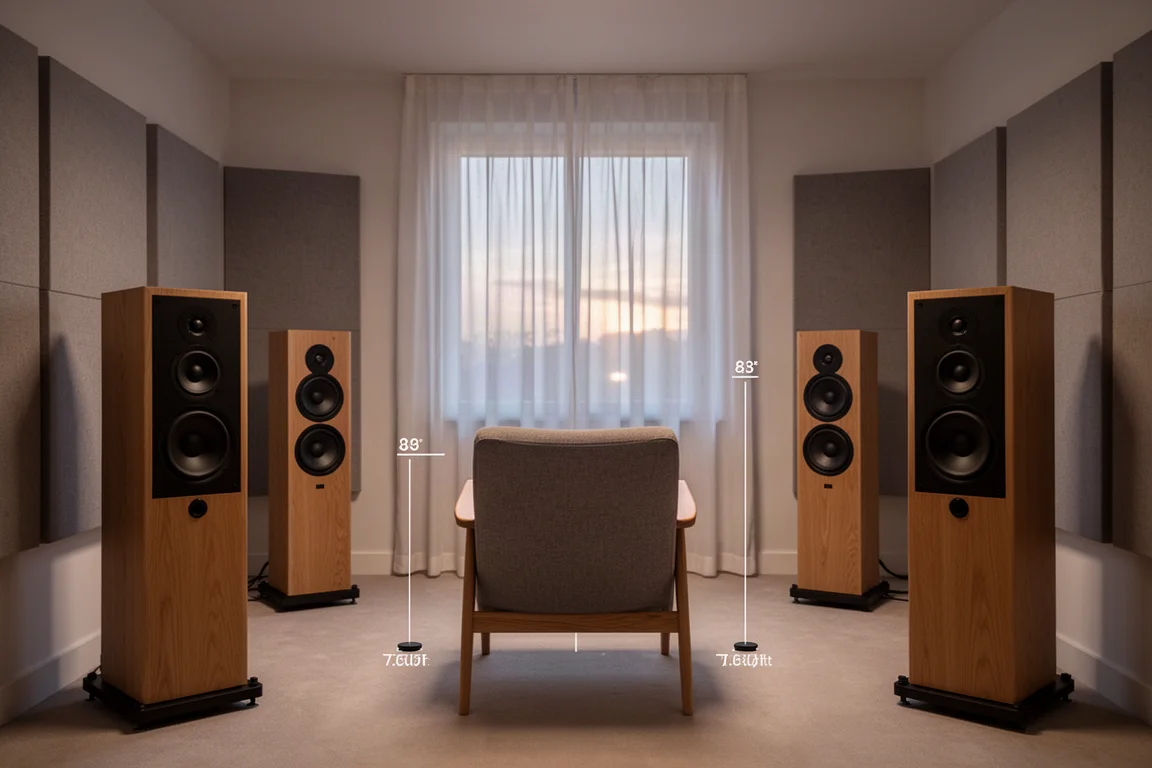
The companion app adds a three-band EQ, dynamic bass, and a night mode, along with the input presets. It reconnects over Bluetooth when you return to it, which takes a couple of seconds, but the connection itself has been stable. For most listeners, flat tuning with a small treble lift and dynamic bass engaged is a strong starting point.
Things to Consider Before Buying
Cabinet size is the first thing to check. At roughly 10 inches wide, 19 inches tall, and 15 inches deep, each speaker is considerably larger than it appears in photographs, and it needs a surface or stand that can take the footprint.
Second, midrange detail is not the system’s strongest suit. There is a slight softness there compared with some dedicated separates, and depending on how much bass boost you apply, the low end can become intense. Both are manageable through the EQ, but they are worth knowing about before you buy.
Third, if you are willing to build a system around an integrated amplifier and passive speakers, cleaner sound and lower cabinet resonance are achievable at a similar budget. What you give up is the local control, the input count, the phono stage, and the five-minute setup. That trade-off is the whole point of The Nines, and it is a fair one to make deliberately rather than by accident.
Buying Advice
The Nines lists at $1,500 per pair, and open-box examples have appeared around $1,300. Klipsch has a long history of running sales on its speakers, so patience can pay off if the list price feels steep. Considering that the figure covers two speakers, two amplifiers, a 24-bit/192 kHz DAC, a phono stage, HDMI ARC, and a subwoofer output, the value case is stronger than the number alone suggests.
Finish choice is worth a moment. The black ash version looks sharp, but the walnut veneer is the more striking option, and either way the real wood side panels are a highlight of the Heritage-inspired design.
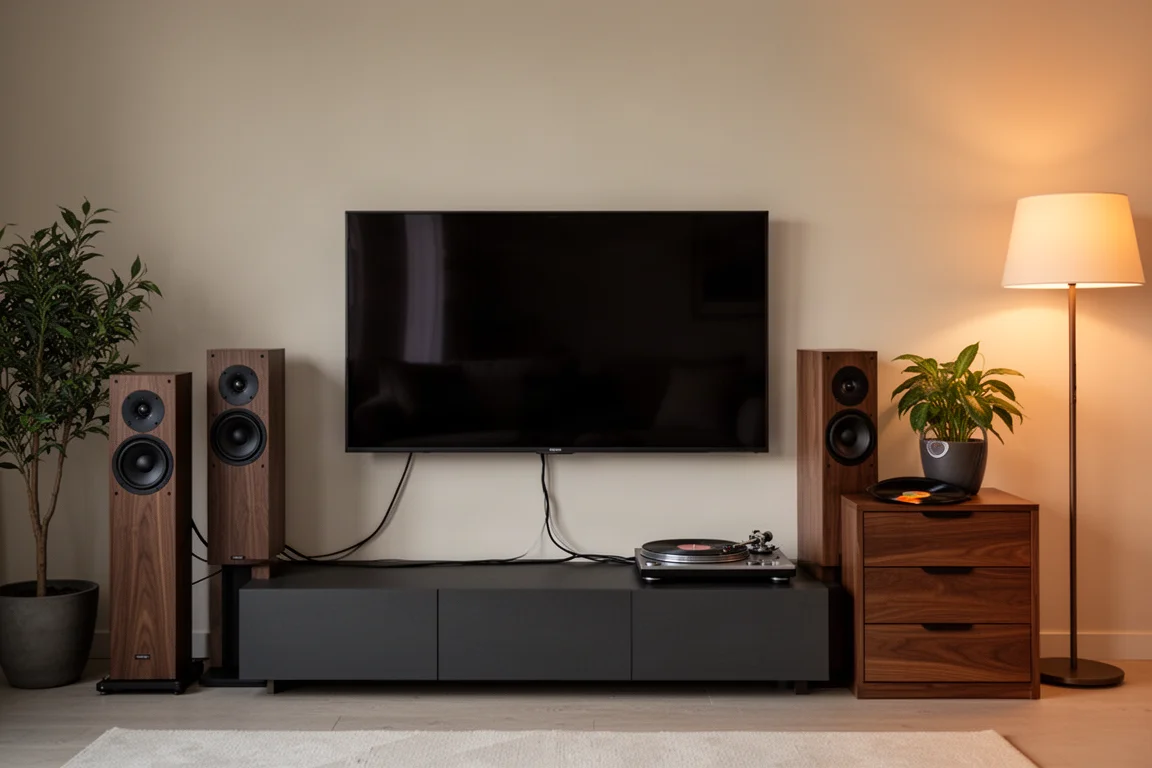
Pair it with a turntable you already own, a television, or a streaming source, and it will handle all three without extra hardware. Just budget the space for two substantial cabinets, and plan on a stand or console that keeps them at a sensible listening height.
Conclusion
Klipsch The Nines gets most of the way to a proper two-channel hi-fi system while removing nearly all of the friction. Setup takes minutes, the controls are intuitive enough for anyone in the house to use, and the app lets you shape the sound for music, film, or late-night listening. It is not the last word in midrange detail, and separates at the same price can be more refined, but as a system that makes good sound easy to live with, it is a compelling buy.
Product link
View more details for Klipsch The Nines
This product is mentioned in the review. Check the specifications, options, and compatibility before buying.
View more details for Klipsch The NinesFurther reading
Related Reviews
Powered Speakers
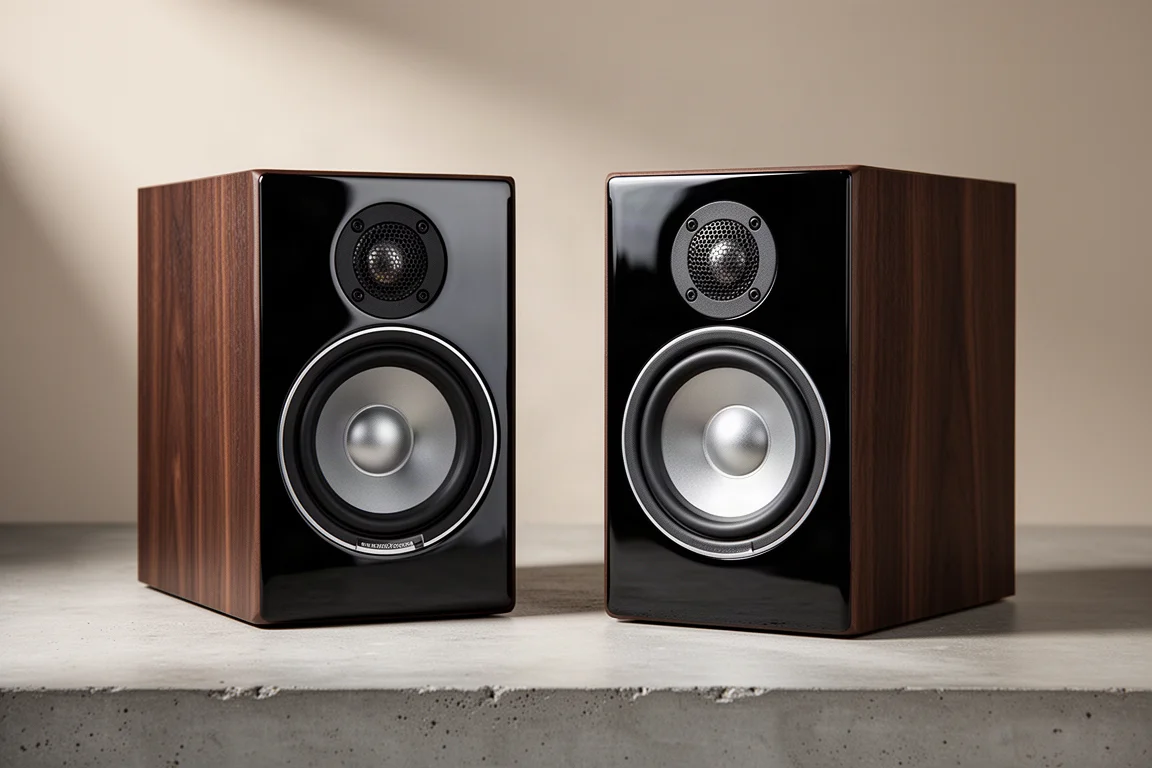
AbramTek X50 Review: Powered Speakers With Real Bass and a Full Feature Set
The AbramTek X50 pairs a phono preamp, HDMI ARC, optical, and Bluetooth with genuinely capable sound. Here is what it does well and what to check before buying.
Powered Speakers
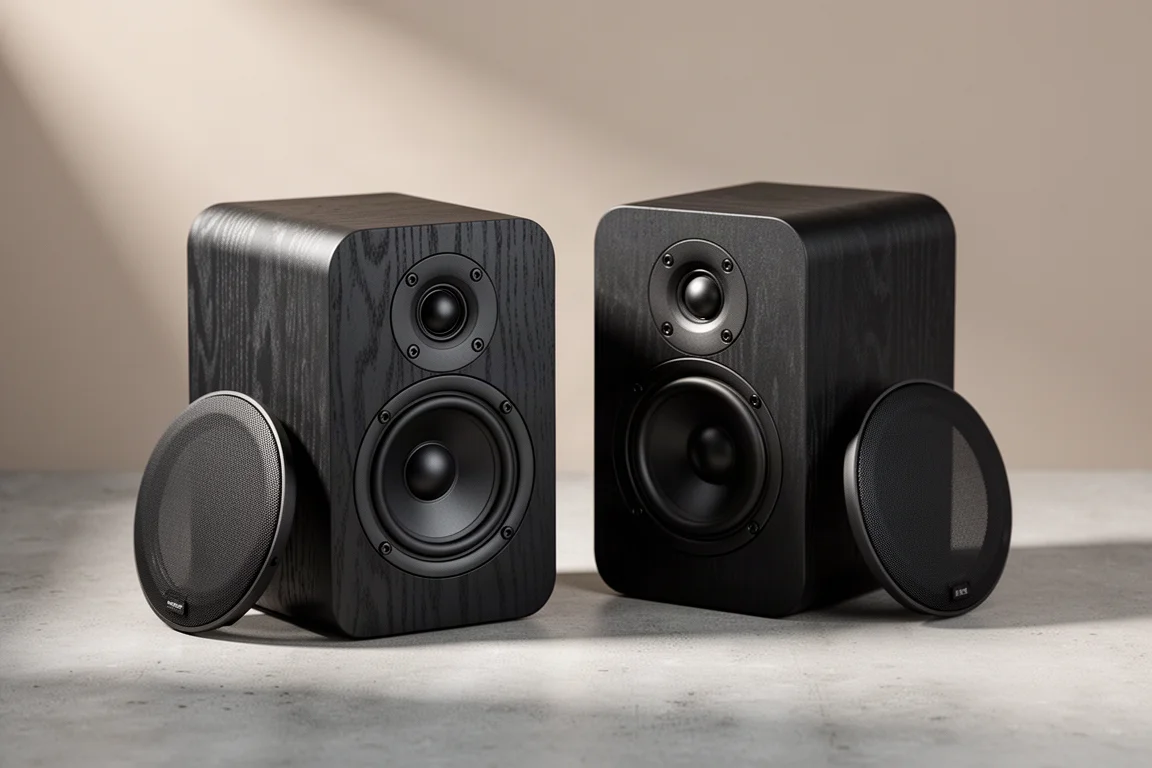
Amazon Basics Powered Speaker Review: Useful Features, Compromised Sound
A practical look at the Amazon Basics Powered Speaker: a handy remote and an optical input, held back by shouty upper mids, minimal bass, and erratic pricing.
Powered Speakers
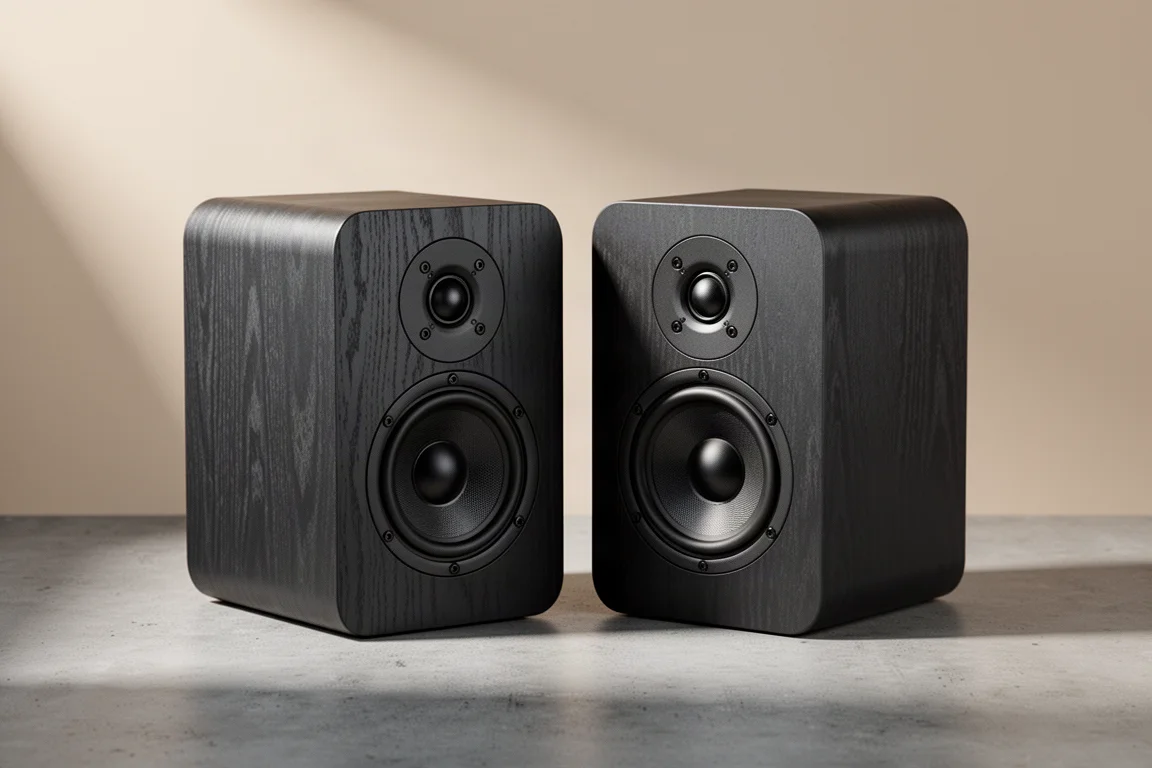
Aperion Audio Alaire Review: Compact Powered Speakers With Serious Bass
A compact two-way powered speaker with genuine low-end punch, excellent imaging, and a control scheme that depends entirely on its remote.