Powered Speakers
Klipsch The Fives, The Sevens and The Nines Mark II: Which Powered Speaker Fits Your Room
Klipsch rebuilds its powered bookshelf lineup with Onkyo electronics, Wi-Fi streaming, Dirac Live on the larger models, and three cabinet sizes to choose from.
Introduction
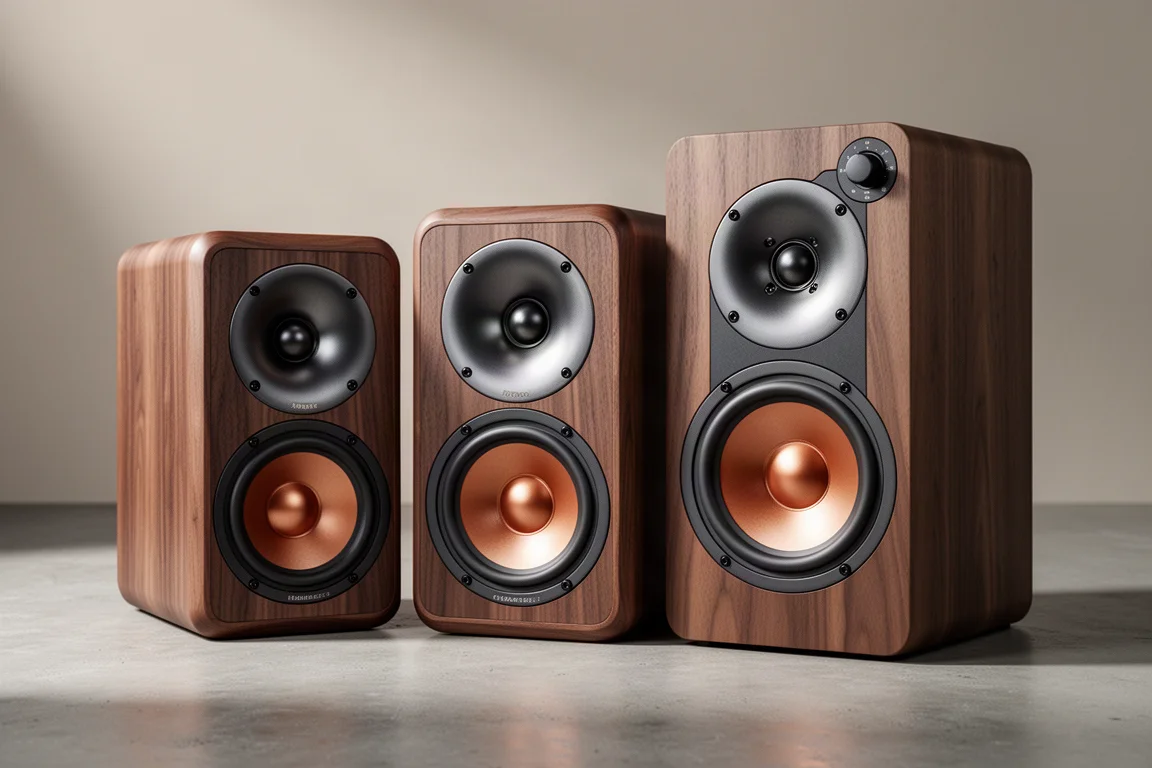
Klipsch has rebuilt its powered bookshelf lineup, and the three new models share far more than a family name. The Fives Mark II, The Sevens Mark II, and The Nines Mark II keep the horn-loaded character that made the originals distinctive, then add streaming, room correction, and home theater processing that previously required separate components.
The original The Fives arrived in 2020 as the first powered bookshelf speakers anywhere to include HDMI ARC, which meant a single cable to a television, genuine stereo separation, and volume control from the TV remote. The Sevens and The Nines followed with the same horn-loaded tweeter and the same HDMI ARC connection, scaled up around 6.5-inch and 8-inch woofers, with the largest model reaching down to 31 Hz.
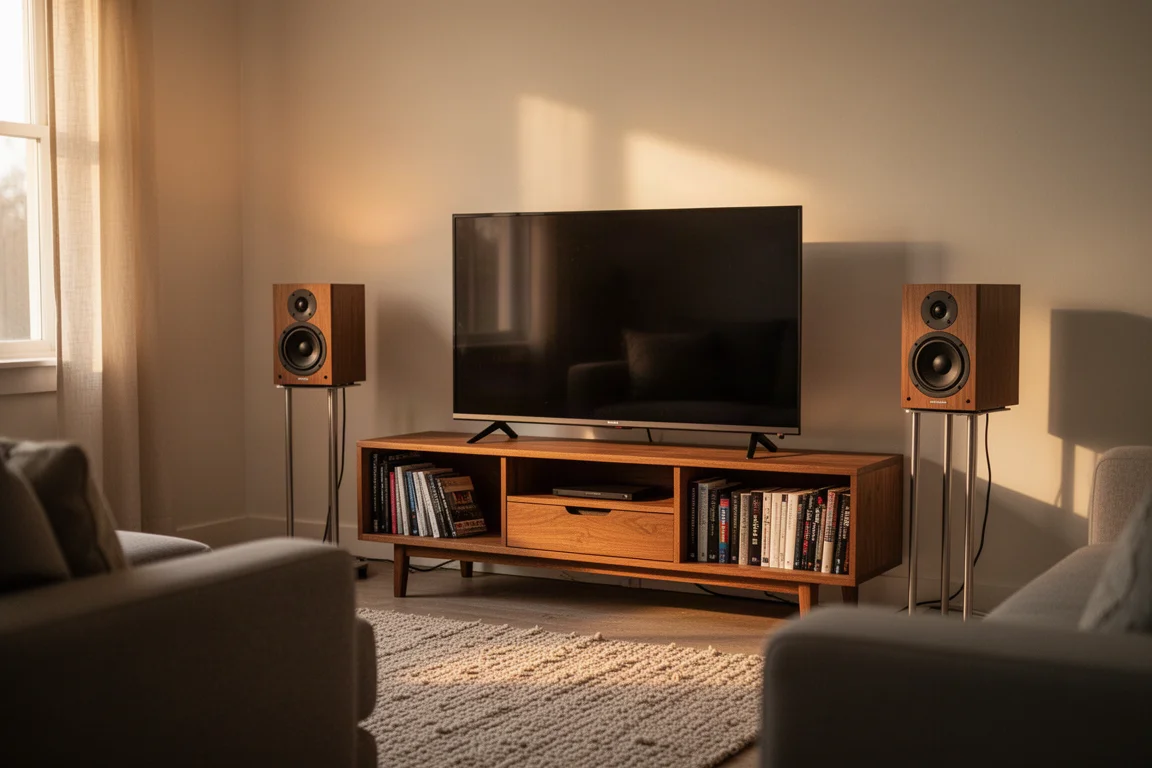
This generation is not a cosmetic refresh. Each model now carries electronics derived from AV receiver engineering, a new baffle material, and redesigned woofers, and the three cabinet sizes are intended to cover everything from a desk system to a large living room.
What the Mark II Series Adds
The headline change is the electronics package. Klipsch and Onkyo came under the same parent company in 2021, and the Mark II models build Onkyo AV receiver engineering directly into the speaker cabinet. That brings Dolby Atmos decoding, a full streaming platform, a built-in moving magnet phono stage, HDMI eARC, optical and coaxial digital inputs, and USB-C audio for a computer. For many listeners this replaces a receiver, a network streamer, and a phono preamp in one tidy package.
Wireless streaming is now built in across the range, with support for AirPlay 2, Google Cast, Spotify Connect, Tidal Connect, Qobuz Connect, and Roon. HDMI moves from ARC to HDMI 2.1 with eARC, which allows uncompressed Dolby Atmos passthrough, better lip sync, and TV remote volume control. A second HDMI 2.1 input accepts a console or streaming box directly: video passes through to the television as normal, while audio goes straight from the source to the speakers, bypassing the TV and its processing limits.
Dolby Atmos is handled with virtual height channels. These remain two-speaker stereo systems with no upward-firing or overhead drivers, so digital signal processing creates the impression of height and surround information from the pair. For film and television, that virtualization comes across as more convincing than a plain stereo downmix.
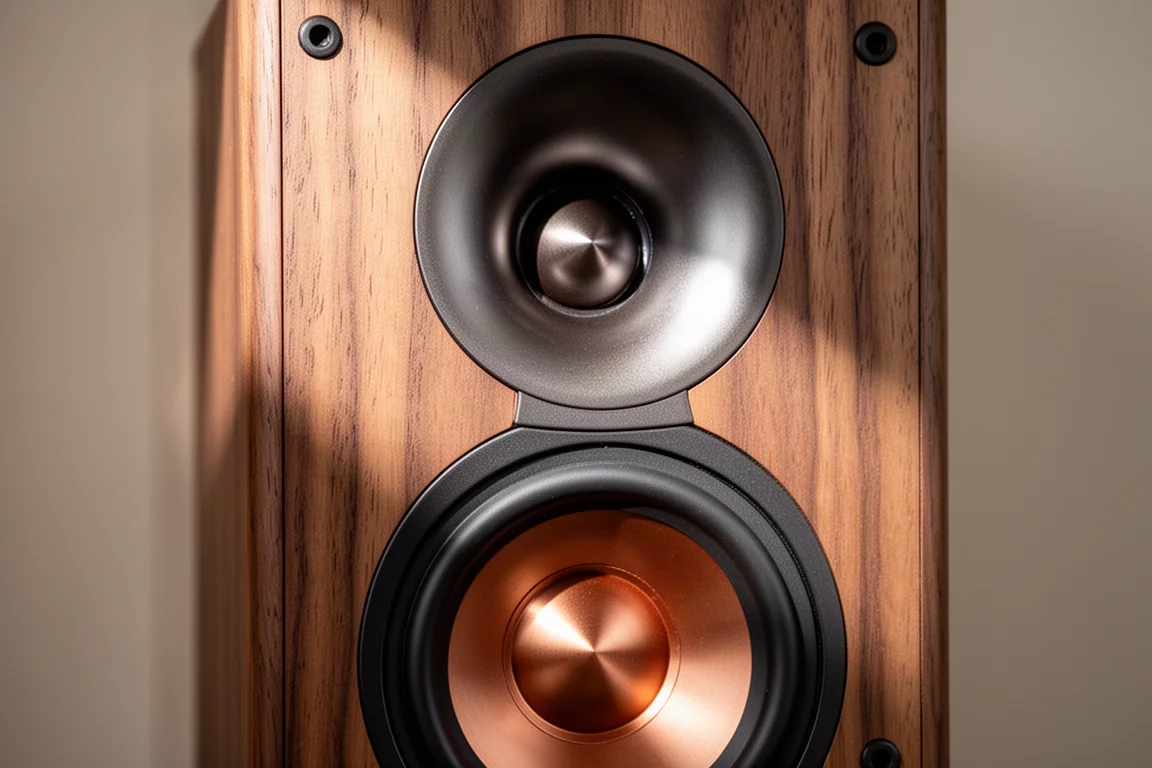
Acoustically, every model moves to a single-piece BMC baffle, a glass fiber reinforced thermoset composite that is denser and more rigid than the MDF used previously, which reduces unwanted resonance. The curved radius of the baffle is designed to widen the sound stage by reducing diffraction around the tweeter. Woofers now use Klipsch jet Cerametallic cones, a ceramic metallic composite that is lighter and stiffer than the earlier fiber composite cones, and the same technology appears in the Reference Premiere series. The result is tighter, more defined bass and faster transient response. The tweeter is unchanged in concept: a 1-inch titanium dome loaded by a Tractrix horn in all three models.
High-resolution support reaches 24-bit/96 kHz across the range, and each model includes a subwoofer output with a crossover that hands off to the sub at around 65 Hz, a point chosen to blend the speakers and the subwoofer smoothly. The Klipsch app adds volume and power control, input selection, Dirac Live control where available, equalizer presets with custom adjustment, direct, music and movie modes, dynamic bass, a dialogue mode, a night mode that reduces bass, custom input shortcuts, primary speaker assignment, lip sync adjustment, LED brightness, and auto power settings.
Klipsch The Fives Mark II
The Fives Mark II is the compact option, built around a 5.25-inch jet Cerametallic woofer and rated at 103 dB SPL at 1 meter, which is substantial output for a cabinet this size. Frequency response runs from 50 Hz to 25 kHz. Finish options are ebony, walnut, and a new red oak with a white baffle.
Two details separate it from its larger siblings. The link between the left and right speakers is wired only, with no wireless inter-speaker option, and there is no Dirac Live room correction. A wired connection remains the most stable way to run any of these speakers and supports the highest sample rates, but it does mean planning a cable route between the two cabinets.
The Fives Mark II is priced at $1,399 per pair at launch as of April 2026, a clear step up from the original Fives, which often sold well under $1,000. The increase reflects a different product rather than a small update: Bluetooth-only becomes full Wi-Fi streaming with AirPlay 2 and Roon, HDMI ARC becomes HDMI 2.1 with eARC and Atmos, and the new baffle and woofer change the sound. These speakers suit a small to medium room, a secondary TV setup where sound bars fall short, a compact two-channel system, or a desk.
Klipsch The Sevens Mark II
The Sevens Mark II steps up to a 6.5-inch jet Cerametallic woofer in a larger cabinet and is priced at $1,999 per pair at launch as of April 2026. It keeps everything found in the Fives Mark II and adds two features: Dirac Live room correction and an optional wireless inter-speaker link.
Dirac Live is the same room correction technology used in high-end AV receivers, and it is unusual to find it in powered speakers at all. The included version is limited bandwidth, correcting up to 500 Hz rather than the full frequency range. That covers the bass and lower midrange, which is where most rooms cause their worst problems, so the improvement is usually noticeable straight away. Full-bandwidth correction is available as a paid upgrade directly from Dirac.
Calibration can be run two ways. The Klipsch Connect Plus mobile app offers a simple three-position walkthrough, and a microphone is included, with a small tripod helpful for stable placement. The Dirac Live desktop app for PC or Mac opens up many more measurement positions and allows target curve adjustment. Both options are included with the license.
The wireless inter-speaker link removes the cable between left and right, which helps in rooms where routing a cable across a floor or over a doorway is impractical. When running wirelessly, the maximum sample rate drops to 48 kHz, which covers streaming services, while 96 kHz high-resolution local files are best played over a wired connection.
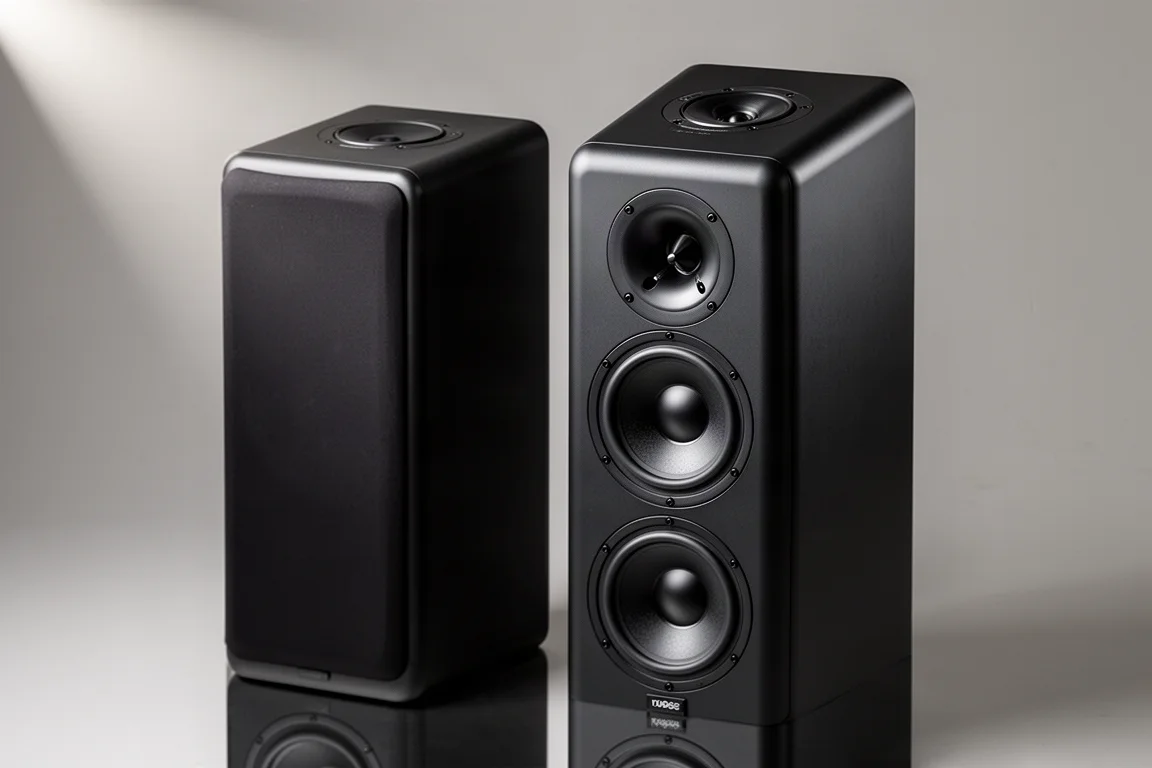
Klipsch The Nines Mark II
The Nines Mark II is the flagship at $2,399 per pair at launch as of April 2026, and every dimension grows. The 8-inch jet Cerametallic woofer brings system output to 107 dB SPL at 1 meter and bass extension down to 31 Hz, so a properly set up pair in a suitable room does not leave listeners feeling that a subwoofer is missing.
Two features are exclusive to this model. DTS:X with Virtual:X joins Dolby Atmos, giving compatibility with both major immersive audio formats. Balanced XLR inputs place the Nines Mark II in studio monitor territory for home studio users, and they also help with longer cable runs, since balanced connections reject noise and interference in a way unbalanced connections cannot. If source gear has balanced outputs and a system suffers from hum, this is the model in the range that addresses it.
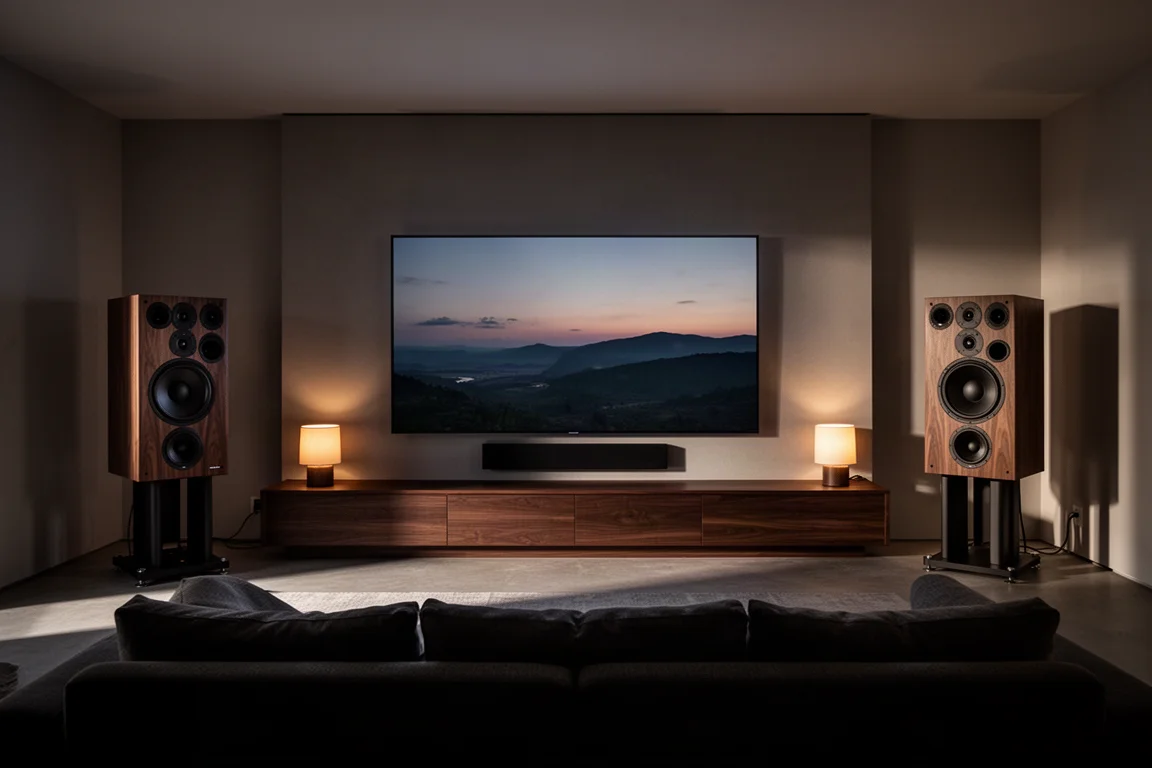
Between the larger woofer, deeper bass, higher output, DTS:X, and XLR inputs, the Nines Mark II is the most substantial hardware upgrade in the lineup. It is the right choice for a large room, a serious living room home theater, or a home studio where output level and format support both matter.
Setup and Placement Notes
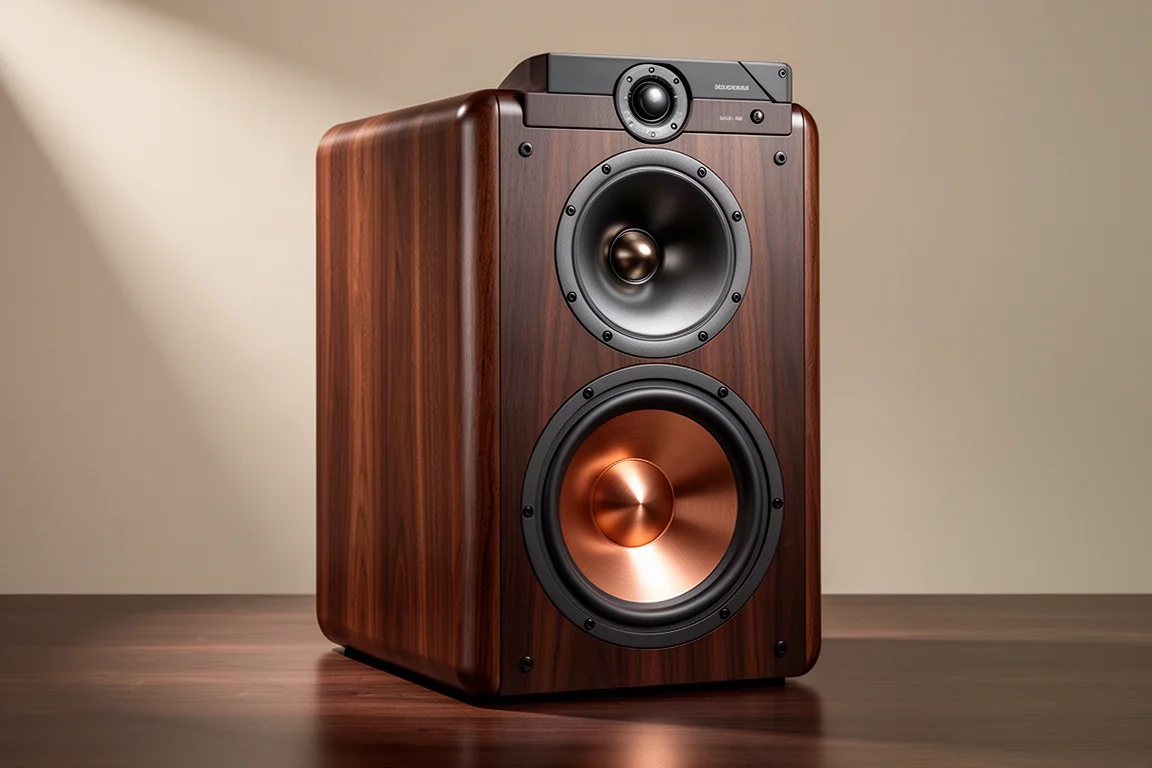
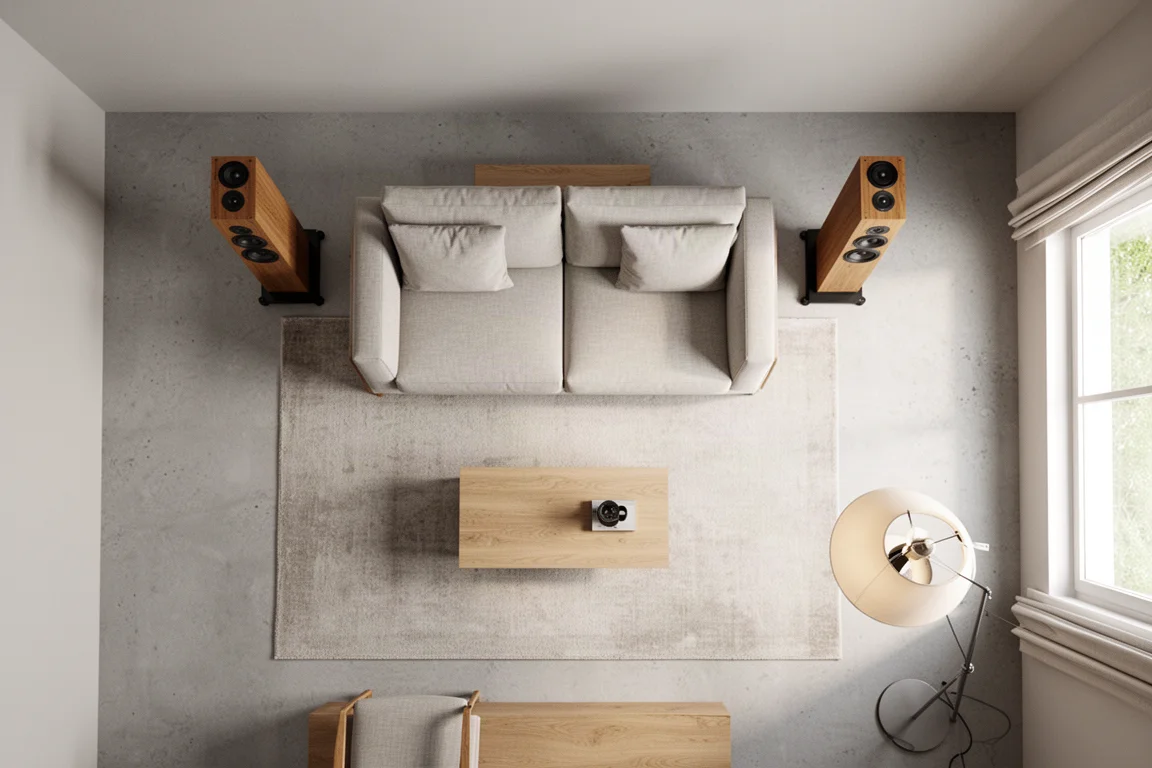
Build quality is consistent across the three models, with cabinets that carry real weight and look convincing in person. Getting the most from them depends on setup. High-quality stands, positioning away from the wall, and even spacing between the speakers matter as much as the electronics, and Dirac Live is worth running on the models that include it because it tunes the system to a specific room rather than an average one.
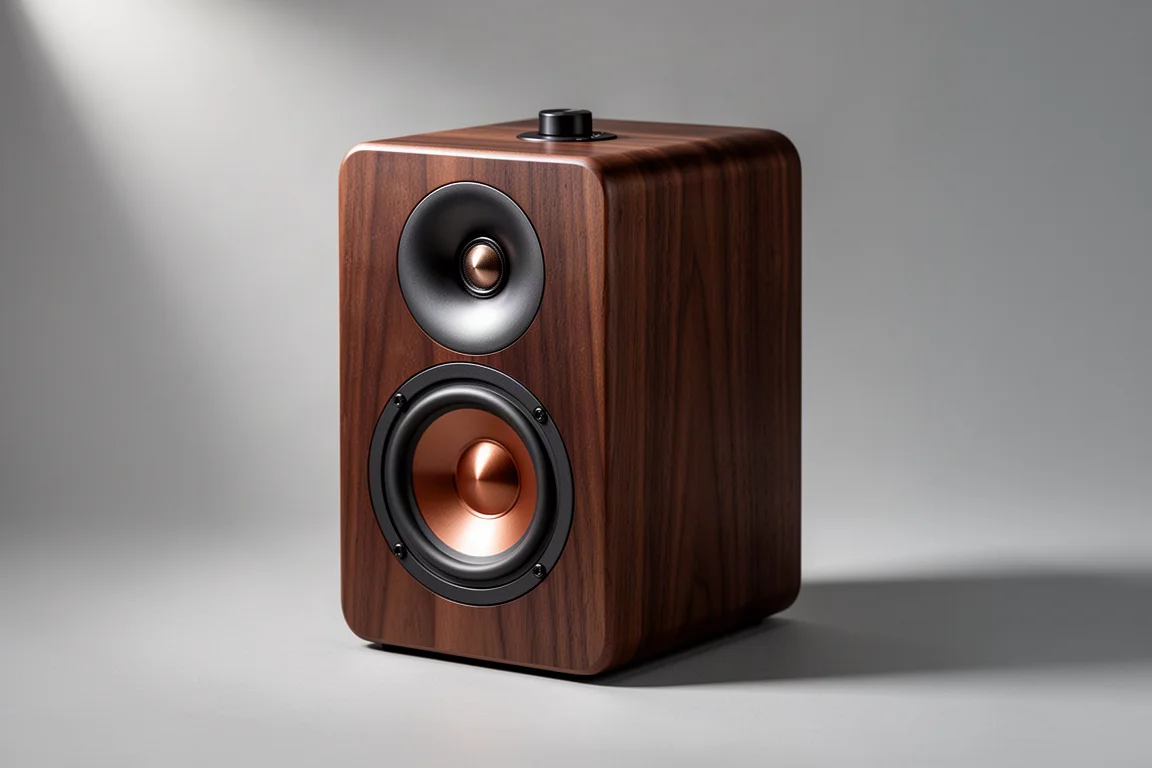
Day to day use is straightforward. Magnetic grilles pop on and off the front. On the right-hand speaker, a dial on the top surface handles volume and a button switches inputs, so adjustments are possible without reaching for a phone or the remote. The included remote covers the functions most listeners need and proved easy to work with.
Buying Advice: Which Model Fits Your Room
Room size is the clearest guide. The Fives Mark II covers small to medium spaces, secondary TV systems, desks, and compact two-channel setups, and its wired-only inter-speaker link needs a plan for the cable. The Sevens Mark II adds headroom for a medium living room along with Dirac Live and wireless linking, which makes it the most flexible step in the range. The Nines Mark II is for large rooms, home theater duty, and studios, and it is the only model with DTS:X and balanced XLR inputs.
A second consideration is format support. All three handle Dolby Atmos with virtual height channels, and only the Nines Mark II adds DTS:X. Anyone with a mixed library of discs and streaming content may value that compatibility, while listeners who mostly stream will find the smaller models sufficient.
Conclusion
All three Mark II models are clear steps forward from the originals, closing the gap that mattered most by adding full Wi-Fi streaming, HDMI 2.1 with eARC, and, on the larger models, Dirac Live room correction. Each keeps the horn-loaded character that defines the brand while adding processing and inputs that previously required separate components. Choosing between them comes down to room size, whether Dirac Live and wireless linking justify the step up, and whether DTS:X and balanced inputs are worth the flagship price.
Further reading
Related Reviews
Powered Speakers
AbramTek X50 Review: Powered Speakers With Real Bass and a Full Feature Set
The AbramTek X50 pairs a phono preamp, HDMI ARC, optical, and Bluetooth with genuinely capable sound. Here is what it does well and what to check before buying.
Powered Speakers
Amazon Basics Powered Speaker Review: Useful Features, Compromised Sound
A practical look at the Amazon Basics Powered Speaker: a handy remote and an optical input, held back by shouty upper mids, minimal bass, and erratic pricing.
Powered Speakers
Aperion Audio Alaire Review: Compact Powered Speakers With Serious Bass
A compact two-way powered speaker with genuine low-end punch, excellent imaging, and a control scheme that depends entirely on its remote.