Powered Speakers
Klipsch The Fives Review: A Lively Powered Speaker Pair That Needs Some Setup Care
A powered two-box speaker system with real dynamic punch, HDMI ARC, and a phono-ready input, plus the bass and app quirks worth knowing before you buy.
Introduction
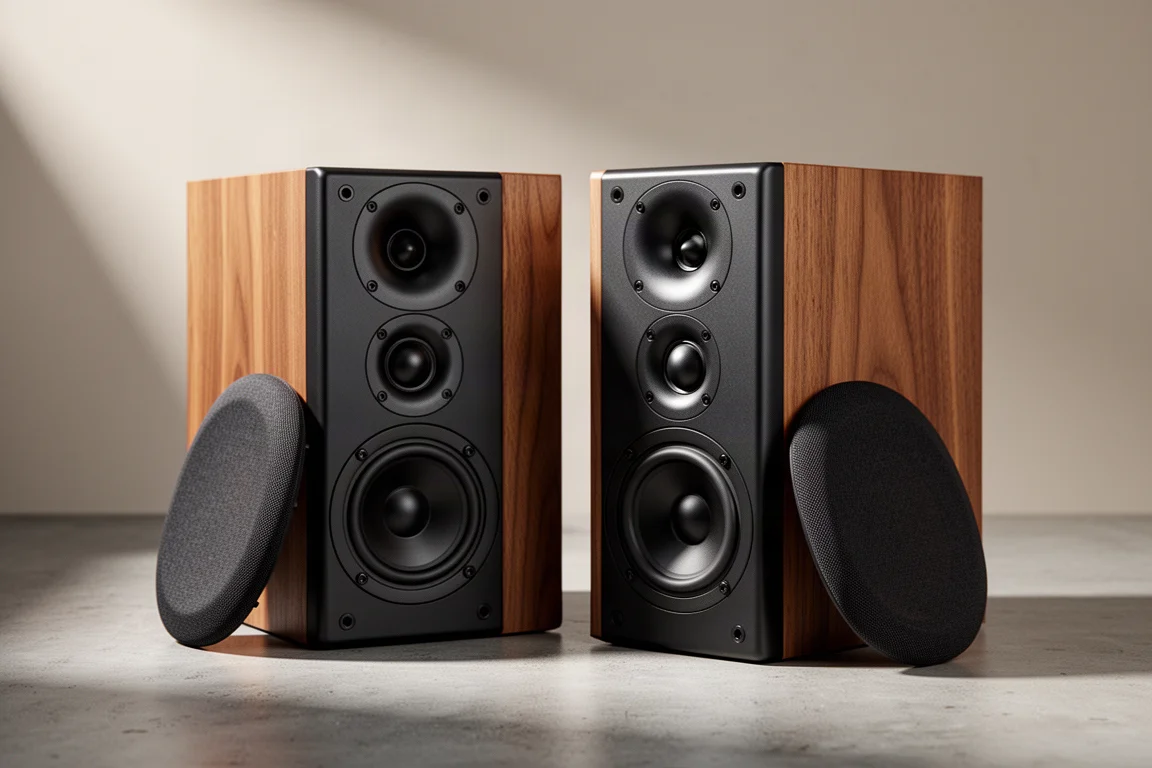
Klipsch The Fives is a pair of powered loudspeakers built to deliver a complete two-channel system from two boxes. Each cabinet carries a one-inch titanium dome tweeter loaded into a Tractrix horn, the same horn shape Klipsch applies to the rear port, with a 4.5-inch mid-bass driver sitting below it. The amplification lives inside the primary speaker, and Klipsch states that each tweeter receives 20 watts of class D power while the mid-bass drivers are driven by their own class D amplification. Only the primary speaker needs mains power, and a switch on its back panel lets you assign it as the left or right channel. A four-metre umbilical cable carries the signal across to the second cabinet.
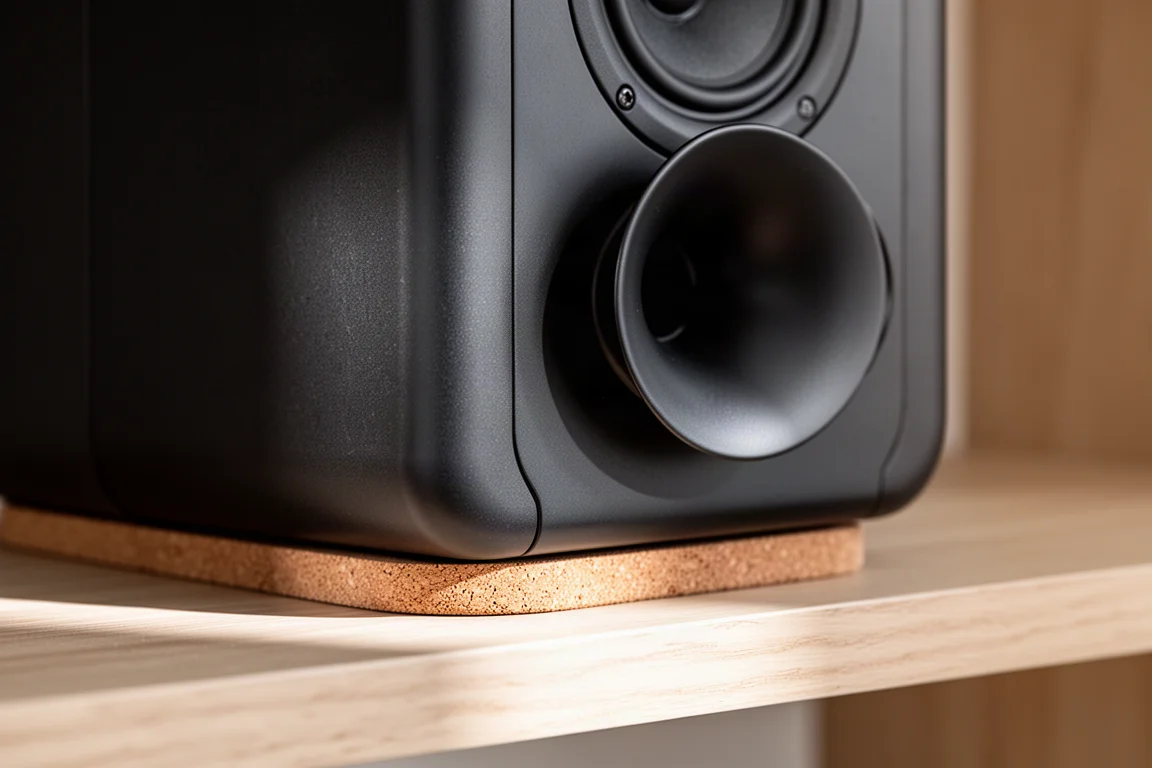
At around 799 euros per pair, The Fives undercut the Sonos Arc soundbar by a couple of hundred euros. That matters for anyone who wants music to step into the room with proper stereo width rather than sitting flat against the television. Klipsch also includes two sets of detachable magnetic grilles, one in a sandy shade and one that follows the grille treatment used on the Forte IV, plus cork mats on the underside of each cabinet to protect furniture.
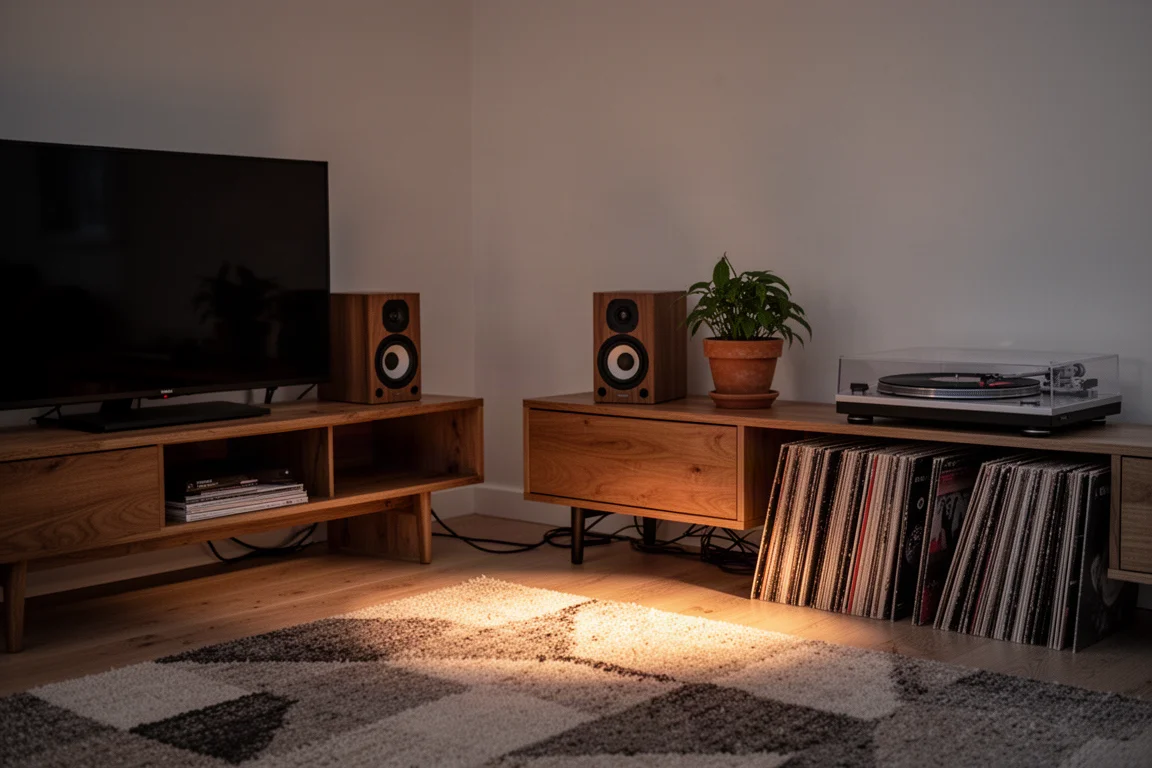
The sections below cover what The Fives do well, where they need attention, and the practical details that decide whether they suit your room.
Who the Klipsch The Fives Are For
The Fives suit listeners who want an energetic, forward presentation. They are built for people who lean in rather than lean back: big on dynamics, crisp at the top, and happy to push a recording at you. If your listening leans toward home theatre and you want that level of excitement available at all times, they make a convincing case over a soundbar.
They also suit anyone who wants to avoid the amplifier and DAC question entirely. Because the amplification and processing are already inside the cabinet, there is no matching to do and no separates to choose. Setup is quick, and a pair can be playing music within about five minutes of unboxing.
Listeners who prefer a smoother, easier presentation may find a passive pairing such as the Dali Spektor 2 driven by the Rotel A11 Tribute more to their taste, though a system of that kind gives up the low-end punch The Fives deliver.
Main Strengths: Dynamics, Build Quality, and Easy Setup
The first thing that stands out is scale. The Fives sound big and bombastic, with a clean-leaning mid-range and a very crisp top end. Dynamics are the headline, and they are the reason these speakers feel lively with almost any material. The trade-off is character: this is not a sweet or easeful speaker, and it is not the most delicate or refined at the top end.
Build quality is a genuine strength. The cabinets feel solid, the finishing is nicely done, and the pair looks sharp in a living room. The two supplied magnetic grilles give you a choice of look, and the cork mats underneath protect the surface they sit on. Aesthetics are personal, and the grille construction will not appeal to everyone, but the speakers themselves look the business.
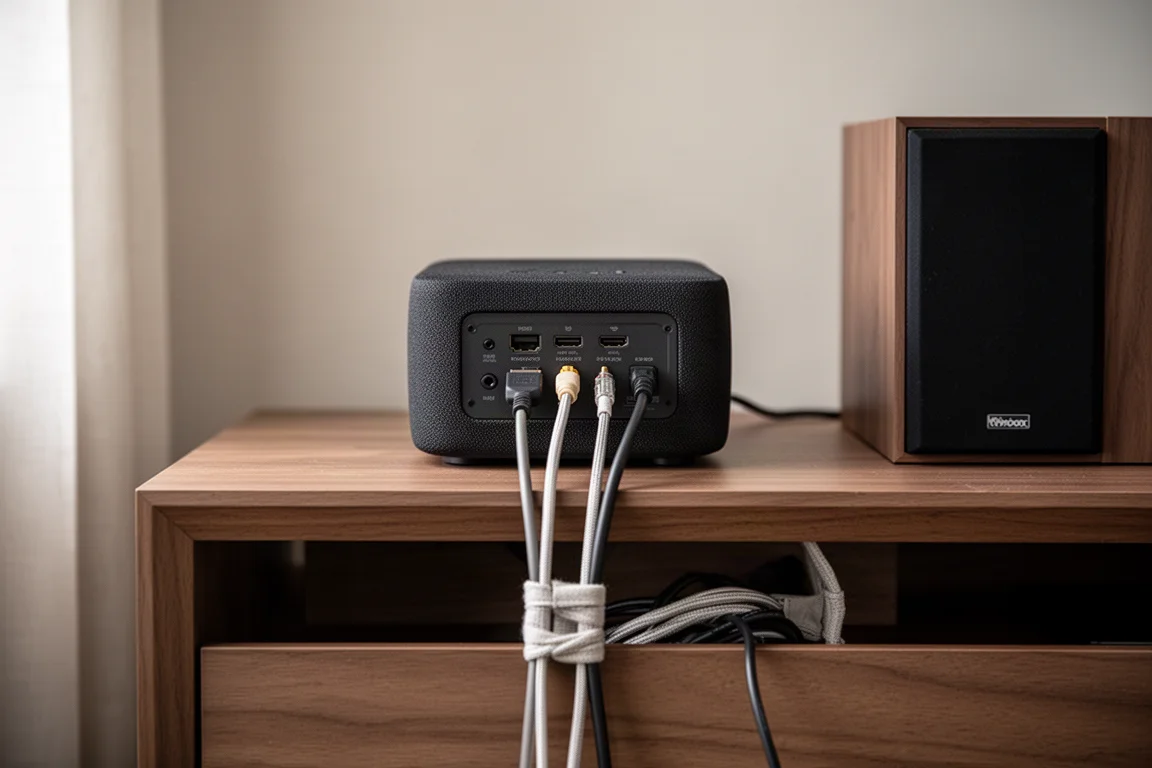
Connectivity is generous for a powered pair. The primary speaker offers HDMI ARC, an optical input, a 3.5 mm line-level analog input, and twin RCA inputs that can be switched to a moving magnet phono stage for a turntable. Two control wheels on top handle source selection and volume, and a basic plastic infrared remote is included in the box. Setup is genuinely simple, and the phantom centre image the two cabinets draw is slightly better than what the Dali Spektor 2 and Rotel A11 Tribute combination produces.
Sound Quality: Bass, Top End, and Comparisons
Out of the box, the low end is the issue. The Fives can sound bloated and congested, as if the bass is trying to burst out of the cabinet, and that congestion colours everything above it. This is not a break-in matter; it comes down to EQ settings.
Klipsch’s dynamic bass setting is a loudness-style compensation that adds low-end weight as volume drops, mirroring the way hearing becomes less sensitive to the extremes at low levels. Engaging it overcooks the bass badly, turning bass guitar lines muddy through the mid-band and making dense material hard to enjoy at anything above very low listening levels.
The firmware released at the end of 2020 added a bass cut setting that behaves much closer to a flat response, and that setting has since been renamed Night Mode inside the Klipsch Connect app, where it trims the strongest dynamics and bass for late-night sessions. Even with flat EQ engaged, material with a lot of low-end energy can still sound muddy and congested below the waist at anything other than quiet volumes. Pulling the app’s bass EQ down to -4 helps, and the speaker location settings offer a similar effect, trimming bass by 3 dB in wall mode and by 6 dB in corner mode.
The top end is crisp rather than refined. It can sound a little crude at times, and it is keen with hi-hats, which means long sessions can become tiring after a couple of hours. Input choice matters as well: fed over optical, the upper mid-range is clearer and the low-end congestion eases compared with HDMI, although the same EQ work is still required.
Against the Dali Spektor 2 and Rotel A11 Tribute system, the differences are clear. The passive pairing has far less low-end punch, but it is smoother at the top, more refined, easier to listen to over long stretches, and more capable of playing loudly before congestion sets in. The Fives answer with punchier bass, a greater dynamic swing, and slightly better imaging.
Setup, App Control, and Connectivity
Getting the speakers onto the Klipsch Connect app is a two-step process. You download files from the internet, place them on a USB drive, insert that drive into the back of the speaker and reboot it. A separate updater app then connects to the speaker and performs another update, after which the Klipsch Connect app can reach the primary speaker over Bluetooth and expose the more advanced settings.
The connection is not especially stable. It drops out from time to time, and some settings are not stored by the speaker, so EQ changes can disappear after a reboot and need reapplying. Patience helps here, and the payoff is a sound you can shape properly.
Cabling is the other practical consideration. The primary speaker needs mains power, the umbilical to the second cabinet, and whichever source cables you use, so its back panel fills up quickly. The four-metre umbilical is tight for stands placed around two and a half metres apart with the cable routed behind a low board, and the cork underside suggests Klipsch expects these speakers to sit on furniture rather than stands.
The top-mounted control wheels for source and volume make everyday use straightforward, and the included remote covers the basics without feeling special.
Things to Consider Before Buying
The low end needs work out of the box. Expect to spend time in the app, and expect to reapply EQ settings after a reboot, since they are not always retained.
The app is fiddly to set up and not entirely stable in use. It is worth treating that as part of ownership rather than a one-off task.
The top end is crisp and forward, which is exciting in short bursts but can become tiring over longer sessions, particularly with bright recordings.
The four-metre umbilical limits placement. If you want the speakers on stands with real distance between them, check the run before you commit, and plan how you will manage the cables at the back of the primary speaker.
The remote is a basic plastic infrared unit, and the grille construction will not suit every taste, even though the cabinets themselves look smart.
Buying Advice
At around 799 euros per pair, The Fives cost a couple of hundred euros less than the Sonos Arc, and they offer far more stereo width and musical presence than a soundbar at that price. If you want music to fill the room rather than sit politely in front of the television, that is a meaningful advantage.
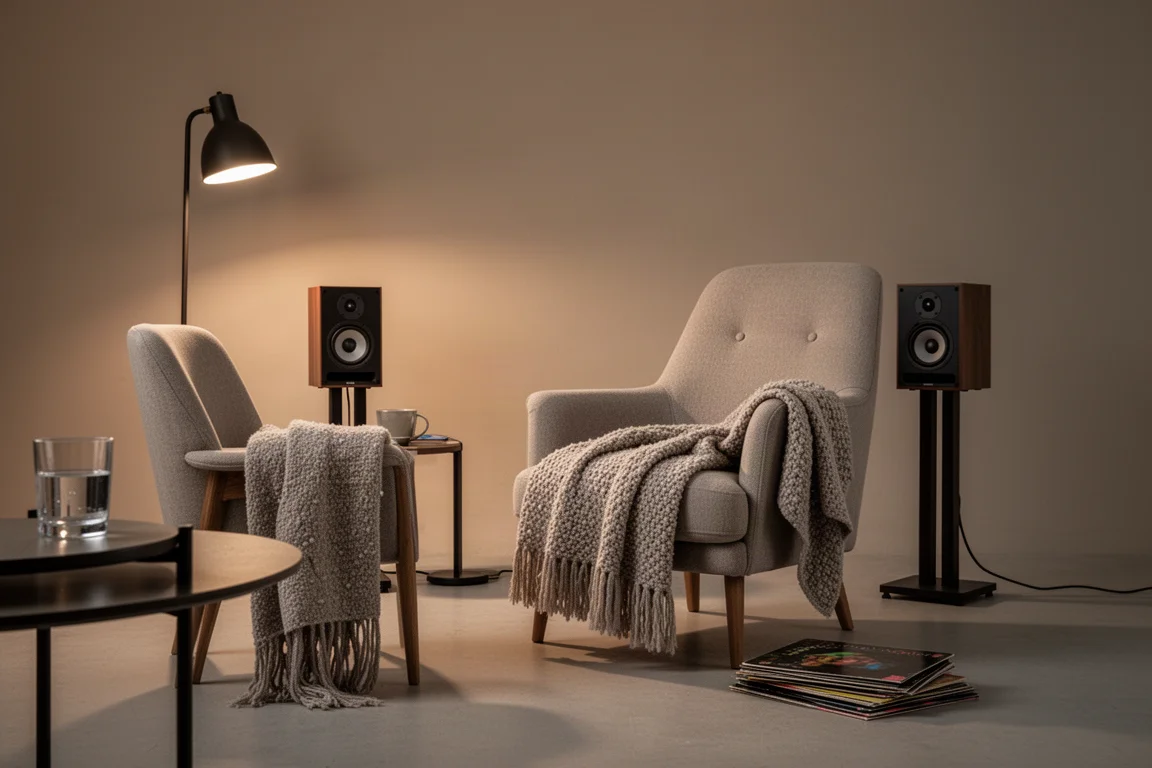
Buy them if you want a lively, edge-of-seat presentation, television integration over HDMI ARC, and a system that is playing within minutes without any amplifier or DAC decisions. Look elsewhere if you want a smooth, lean-back sound or a speaker that stays composed at higher volumes; the Dali Spektor 2 with the Rotel A11 Tribute, at roughly 1,000 euros as a system, is the calmer alternative, with noticeably less low-end punch. Whichever route you take, plan on spending a little time with the app, and try optical as well as HDMI if music is your priority.
Conclusion
The Fives are a good speaker rather than a great one. The dynamic punch, solid build, generous inputs, and simple setup are real strengths, and once the EQ settings are dialled in the sound is genuinely enjoyable. The bass congestion out of the box, the fiddly app process, the settings that do not always stick, and the forward top end are the reasons they fall short of an effortless recommendation. Buy them with those quirks in mind and they deliver plenty for the money.
Product link
View more details for Klipsch The Fives
This product is mentioned in the review. Check the specifications, options, and compatibility before buying.
View more details for Klipsch The FivesFurther reading
Related Reviews
Powered Speakers
AbramTek X50 Review: Powered Speakers With Real Bass and a Full Feature Set
The AbramTek X50 pairs a phono preamp, HDMI ARC, optical, and Bluetooth with genuinely capable sound. Here is what it does well and what to check before buying.
Powered Speakers
Amazon Basics Powered Speaker Review: Useful Features, Compromised Sound
A practical look at the Amazon Basics Powered Speaker: a handy remote and an optical input, held back by shouty upper mids, minimal bass, and erratic pricing.
Powered Speakers
Aperion Audio Alaire Review: Compact Powered Speakers With Serious Bass
A compact two-way powered speaker with genuine low-end punch, excellent imaging, and a control scheme that depends entirely on its remote.