Subwoofers
Klipsch SPL-12 Review: A Discontinued Subwoofer That Makes Sense at $500
A 12-inch, 300-watt ported subwoofer with serious output for the money, now selling well below its original retail price while stock lasts.
Introduction
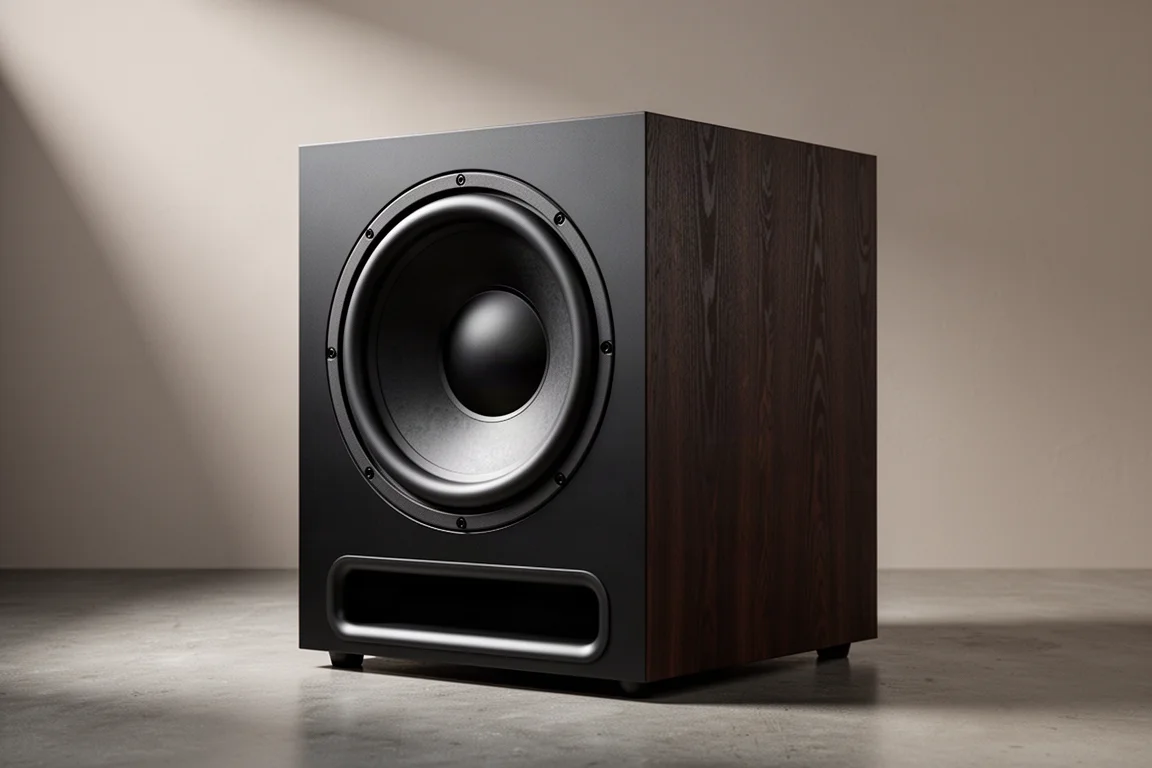
The Klipsch SPL-12 is a 12-inch front-firing subwoofer that is being discontinued, and that single fact shapes nearly every reason to consider it. Listings at other retailers have hovered near $850, while at least one seller has been moving the same cabinet for around $500. That gap is the whole story: at full retail this is an easy subwoofer to walk past, and at $500 it becomes one of the more compelling ways to add genuine low-frequency output to a room without spending four figures.
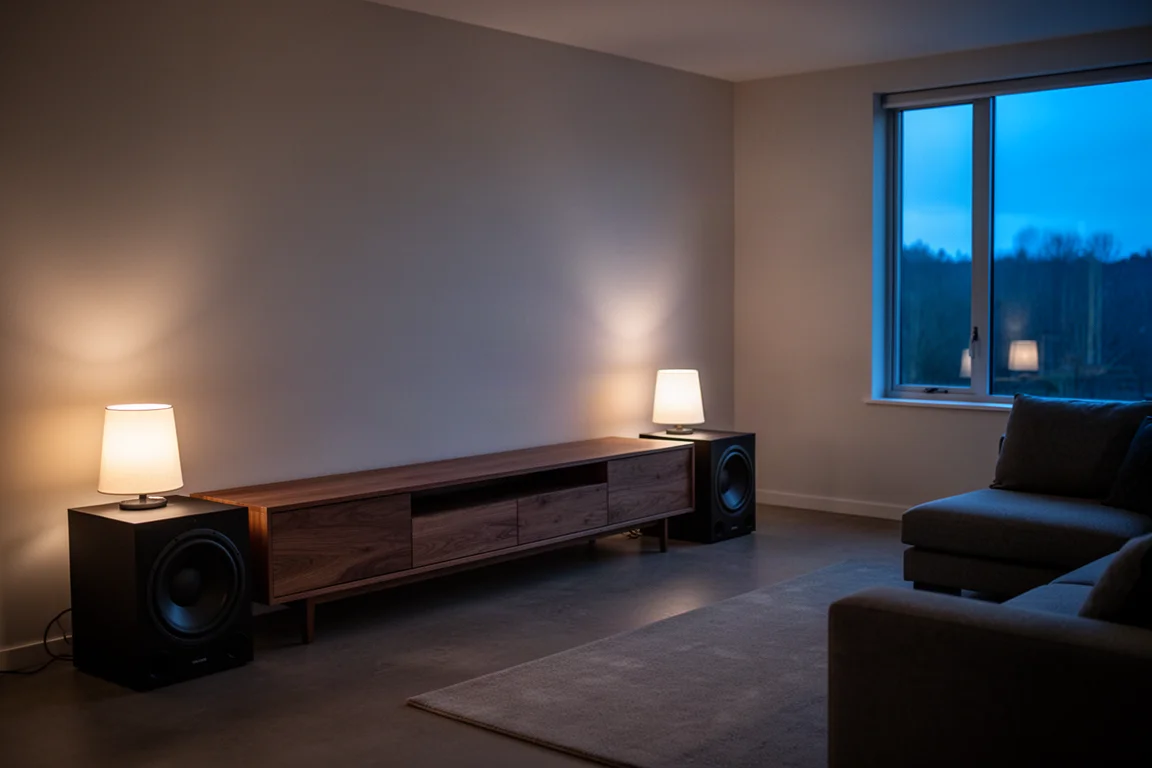
It is a large subwoofer, though not enormous by the standards of serious high-output designs. The cabinet is tall and deep, so the practical question is less about the driver size and more about whether you have floor space with a little room to breathe behind it.
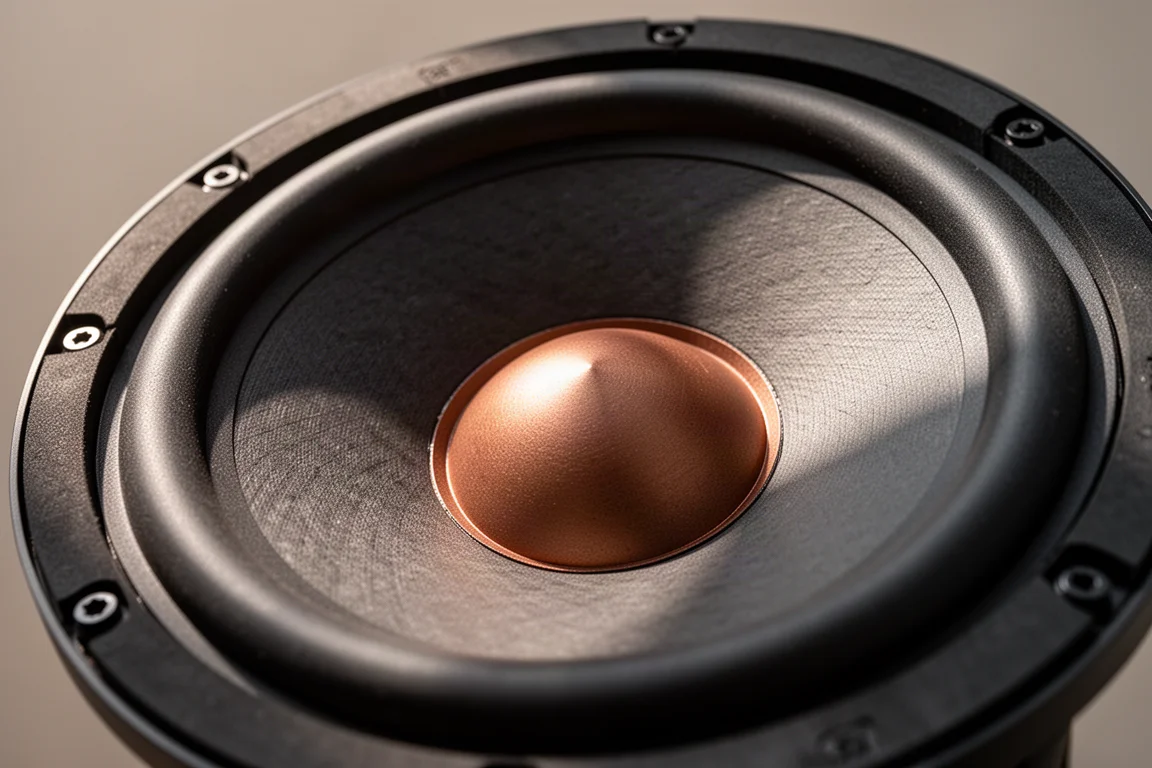
Inside, a 300-watt RMS class D amplifier drives a 12-inch long-throw ceramic metallic spun copper woofer, with 600 watts of peak power available for short bursts. Klipsch rates the frequency response from 24 Hz to 125 Hz, a range that lets film soundtracks and bass-heavy music reach well below what most speakers can reproduce on their own.
Who This Subwoofer Is For
This is a subwoofer that leans toward home theater first and music second, though it handles both without complaint. If your priority is impact during films, the SPL-12 delivers the kind of weight and extension that makes explosions, engines and low synth lines feel physical rather than implied. Listeners who mainly want a subtle reinforcement of a two-channel system will also find it useful, but they are paying for output they may never use.
The value case sharpens when you think in pairs. Two SPL-12 units at the discounted price land close to $1,000, which is a genuinely interesting proposition for anyone building a dedicated room or a large open living space. Running two subwoofers evens out bass response across a seating area and reduces the local peaks and nulls a single cabinet tends to create.
It is not aimed at listeners who want app-based control, room correction, or continuous phase adjustment. Buyers who expect to tune a subwoofer from their phone should look at designs built around that workflow.
Main Strengths: Output, Depth, and Control
The headline strength is output for the money. A 300-watt RMS class D amplifier paired with a 12-inch long-throw driver, backed by 600 watts of peak power, produces bass that stays composed even in a large open-concept living room with ceilings around 20 feet. The cabinet holds together under pressure: no rattles, no resonance, no sense that the enclosure is being pushed past what it was designed to do.
Extension is the second strength. The SPL-12 reaches down far enough that the lowest octave is present rather than suggested, and the port moves enough air to be visibly working. The bass is controlled rather than one-note, which matters more than raw output once you live with a subwoofer for a few weeks.
Compared with a sealed subwoofer in similar price territory, this ported design hits noticeably harder. A sealed cabinet of comparable size will typically sound tighter and more restrained, while the SPL-12 trades some of that restraint for sheer physical impact. For film use in a large room, that trade is usually the right one.
Back Panel Features and Setup
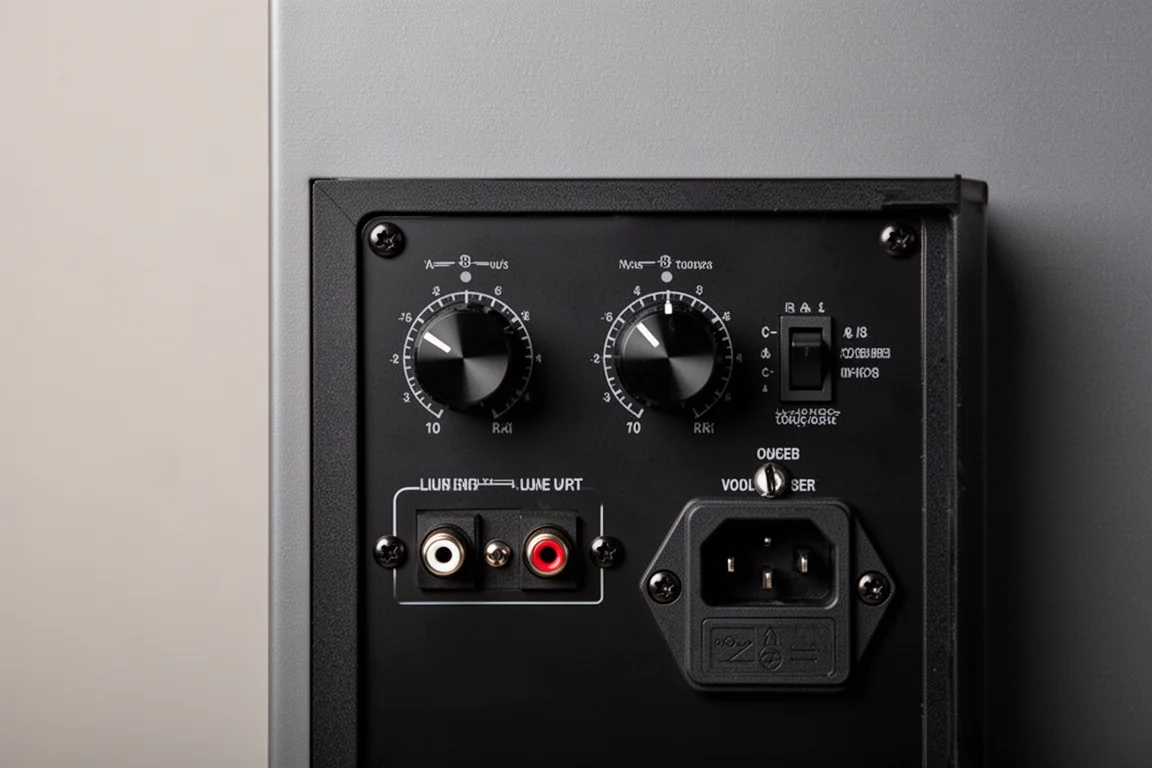
The rear panel is simple, and that simplicity is both the appeal and the main point of criticism. A power mode button switches between always on and an auto setting that relies on signal sensing. Auto sensing is convenient when it works reliably, and a common workaround is simply to leave the subwoofer powered on permanently.
Next to it sits a phase switch with two positions rather than a continuously variable control. A two-position switch resolves the majority of phase issues in a typical setup, but it does not offer the fine adjustment that an app-controlled subwoofer can provide. Below that is the low pass filter, which matters when the subwoofer is fed from a two-channel amplifier rather than a receiver’s dedicated low-frequency output. A sensible starting point is around 80 Hz, with higher settings for very small speakers. The gain control sits alongside it, and starting at the midpoint before adjusting is the practical approach.
Inputs are line level only. There are no speaker-level connections, which rules out wiring the subwoofer in series with a stereo amplifier that lacks a pre-out. There is also a dedicated input for an optional wireless connection kit, plus a 110 or 220 volt selector and a standard IEC power socket.
Things to Consider Before Buying
Feature count is the first thing to weigh. At this price point several competitors offer continuously variable phase, smartphone control, or parametric equalisation, and the SPL-12 offers none of them. If you enjoy tuning a system and measuring the result, this subwoofer will feel limited.
Power is the second consideration. A 300-watt RMS rating can look modest on paper next to subwoofers quoting considerably more, and that number will put some buyers off. In practice the amplifier is matched to the driver, and the combination produces far more usable output than the specification alone suggests, but anyone shopping purely by wattage should factor that in.
Size is the third. The cabinet measures roughly 14.75 inches wide, 17.69 inches high and 21.25 inches deep, so the depth is the dimension that most often causes problems. It will fit beside a console or behind a sofa, but it needs clearance at the back for the port and the connections.
Size, Placement, and Wireless Options
Because the SPL-12 is deep rather than wide, it tends to slot into spaces where a broader cabinet would not. Placing it along a side wall, behind a chair, or beside a media unit all work, provided the driver and port are not pressed against a surface.
If cable routing is difficult, the optional wireless kit removes the need to run a signal cable across the room. Low-frequency information carries well over a wireless link with little audible penalty, so hiding the subwoofer in a corner becomes realistic. It is worth noting that third-party wireless transmitters have performed the same job for years and may cost less, though they will not match the fit and finish of a purpose-built module.
Buying Advice: Why the Discontinued Price Matters
At the original retail price of roughly $850, this subwoofer is difficult to recommend over the alternatives. The feature set is too limited and the competition too strong for it to stand out at that figure.
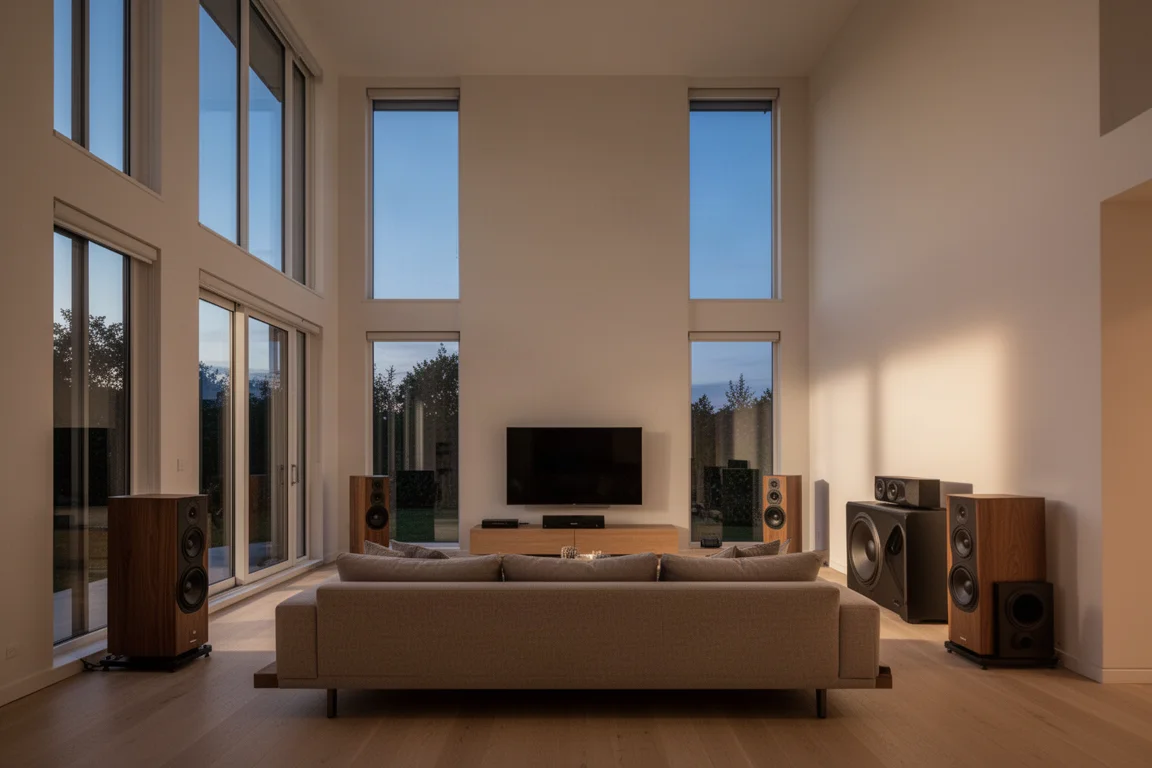
At around $500, the calculation changes completely. That price buys a 12-inch, 300-watt ported subwoofer with real low-frequency extension and enough output to pressurise a large room, and there is little else at that figure with the same combination of size and impact. The catch is availability. Discontinued stock is finite, and once these sell through they are gone, so the decision has a deadline attached to it that a current model would not.
If you need one subwoofer and want maximum output per dollar, this is a straightforward buy at the discounted price. If you are building toward a pair, the case is even stronger.
Conclusion
The Klipsch SPL-12 is a specialist purchase with a clear window of opportunity. It is a simple, old-fashioned ported subwoofer: no app, no variable phase, no speaker-level inputs, and no interest in being anything other than loud, deep and composed. For a home theater setup in a large room, that is exactly the right set of priorities, and at the discontinued price it represents a substantial amount of bass for the money.
Buyers who need advanced tuning should look elsewhere. Buyers who want to feel the low end of a film soundtrack without spending four figures should take a close look while stock remains.
Product link
View more details for Klipsch SPL-12
This product is mentioned in the review. Check the specifications, options, and compatibility before buying.
View more details for Klipsch SPL-12Further reading
Related Reviews
Subwoofers
Arendal 1961 Subwoofer 1S Review: Beautiful Build, Modest Punch at $1,000
A sealed $1,000 subwoofer with a gorgeous cabinet, plus three lower-priced alternatives that deliver more impact for movie nights.
Subwoofers
Arendal Sound 1723 2V Subwoofer Review: Dual 13.8-Inch Drivers Under $3,000
A flagship ported subwoofer with dual opposing 13.8-inch drivers, a 1,200W RMS amplifier, app-based DSP, and a 10-year warranty.
Subwoofers
Ascendo 16 Sub Active Sealed Review: Sealed Bass Built on Real Engineering
A close look at the Ascendo 16 Sub Active Sealed, a 16-inch sealed home theater subwoofer with independently verified measurements, a purpose-built driver, and genuinely controlled output.