Bookshelf Speakers
Klipsch RP-600M vs RP-600M II: Is the Newer Version Worth Upgrading To?
A close comparison of the Klipsch RP-600M and the RP-600M II, covering tonality, directivity, placement, and who should actually upgrade.
Introduction
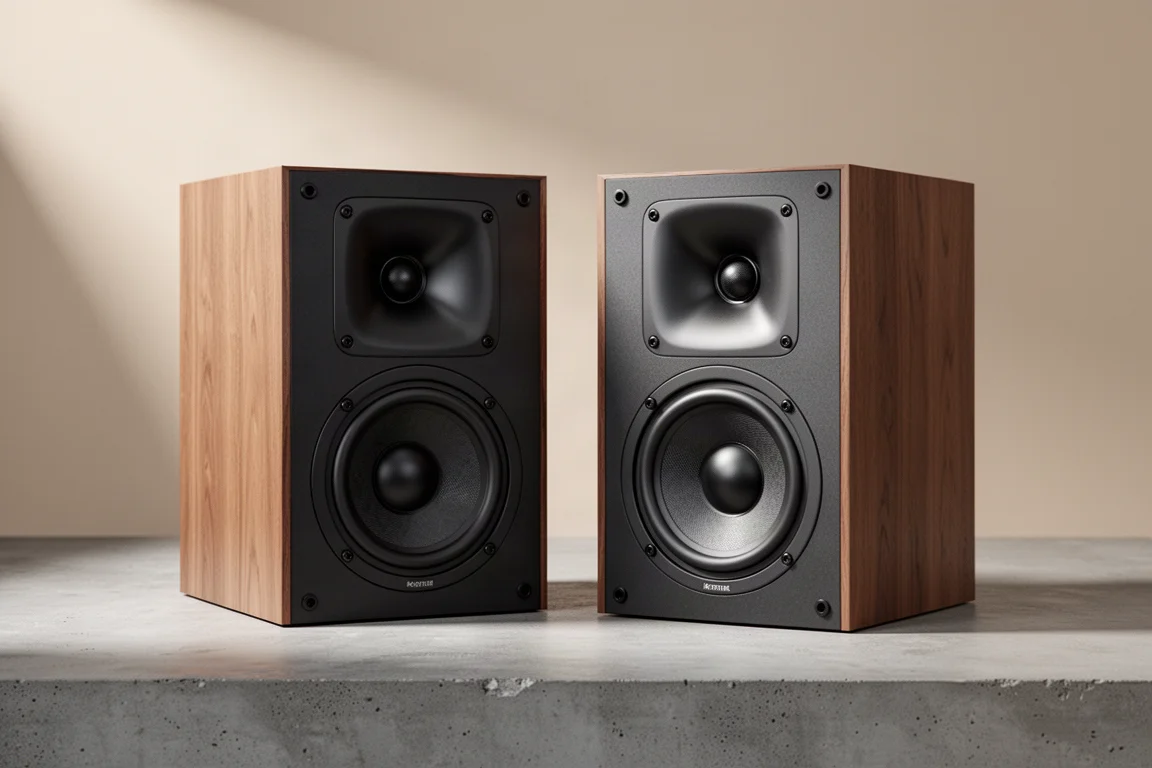
Two versions of the same compact bookshelf speaker sit side by side here: the original Klipsch RP-600M and the newer Klipsch RP-600M II. The question that matters most is simple. If you already own the original, should you upgrade?
The short answer is that it depends on how you listen. If you already have a way to apply your own equalization, such as a miniDSP, there is a strong case for keeping the RP-600M and adjusting it to taste. If you do not use EQ and do not want the extra cost and complexity, the RP-600M II is the more complete speaker out of the box.
How the Two Versions Differ
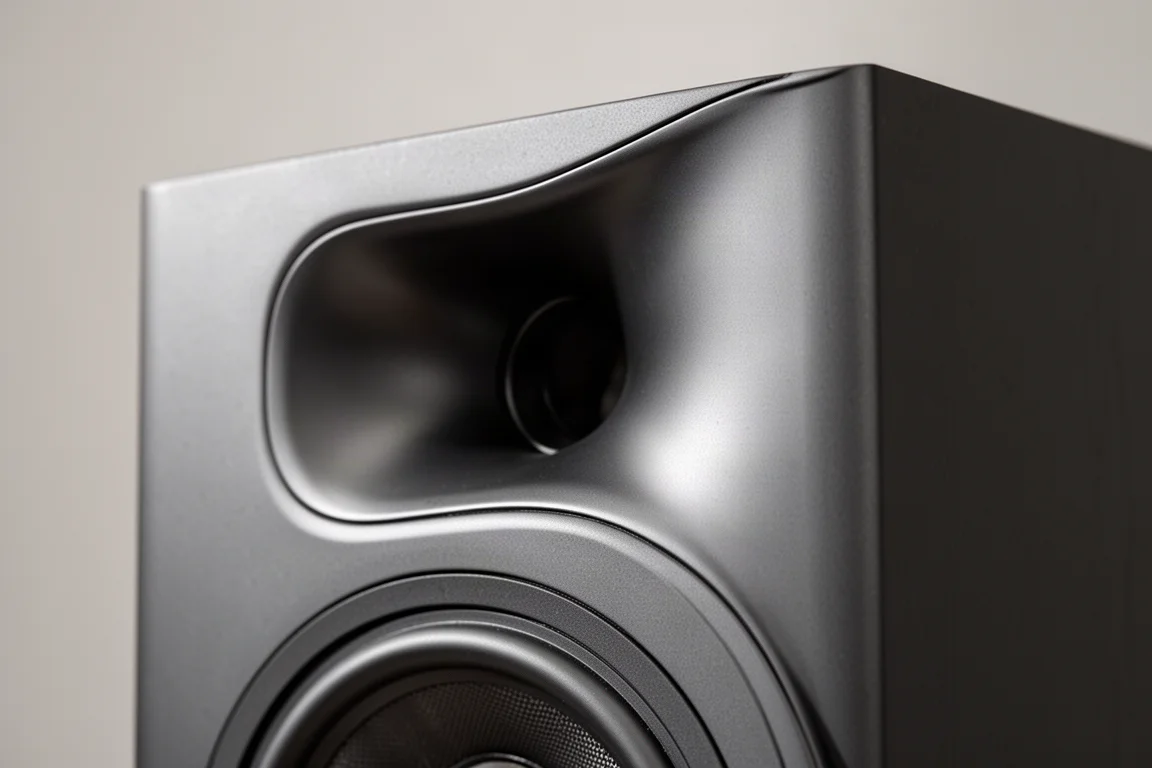
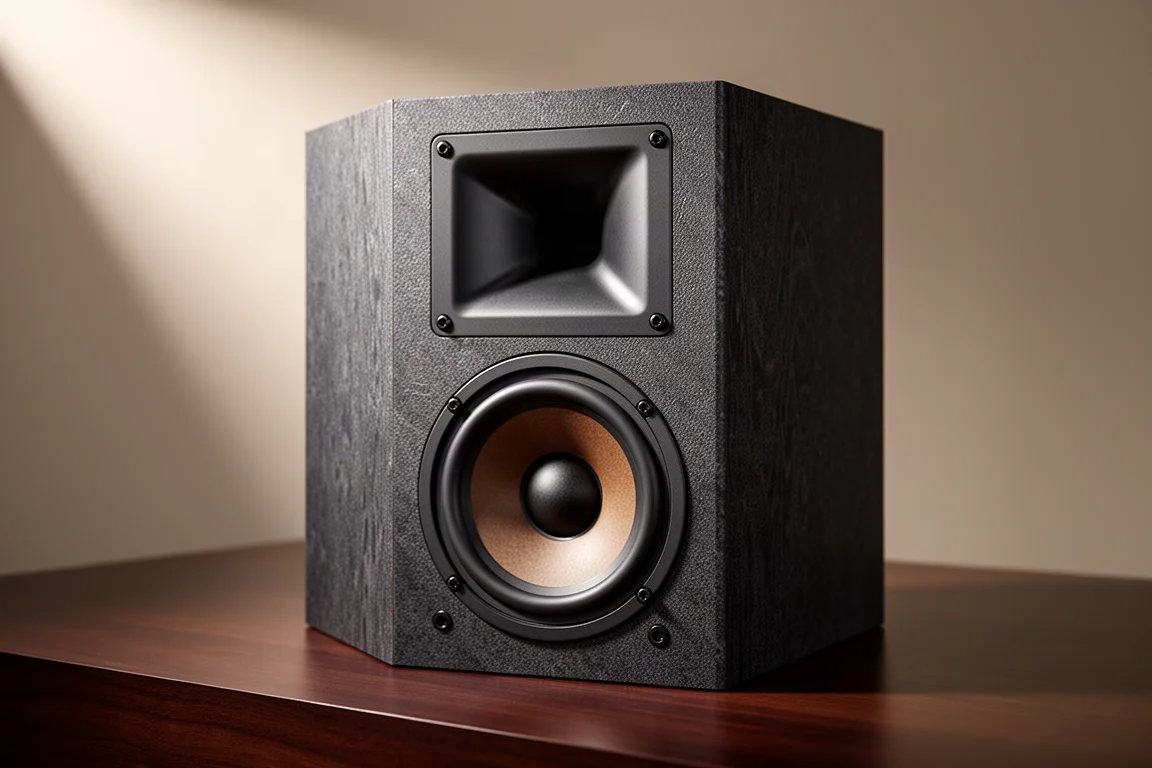
The two cabinets look similar at a glance, and the most visible change is at the front. On the RP-600M II the waveguide around the horn extends all the way out to sit flush with the baffle, so the transition from horn to cabinet edge is one continuous, smooth surface. On the original RP-600M that transition stops roughly a quarter of an inch short and then steps flat to the baffle. The smoother edge on the newer model helps reduce diffraction.
Around the back the difference is more obvious. The RP-600M II uses anodized bolts for locking down speaker wires and includes jumper cables for bi-amping or for running the speaker without bi-amping. The original is perfectly functional, but its rear panel is a simpler, less polished piece of design.
In terms of raw output capability the two are close to neck and neck. Compression behavior and distortion figures are broadly similar, with only minor deviations between them. The real difference is in tonality and in how each speaker spreads sound into the room.
Klipsch RP-600M: The Original
The original RP-600M is the more linear of the two when it comes to horizontal dispersion, which means its character changes less as you move from side to side in front of it. That consistency is exactly why it responds so well to equalization: correct the response and you keep a very even radiation pattern.
Its weaknesses are tonal. There is a pronounced resonance in the lower vocal range, around 300 Hz, which is hard to ignore. The estimated in-room response also shows a dip of roughly 3 to 4 dB in that region. Overall tonality is a long way from what the newer version delivers.
Klipsch RP-600M II: The Newer Version
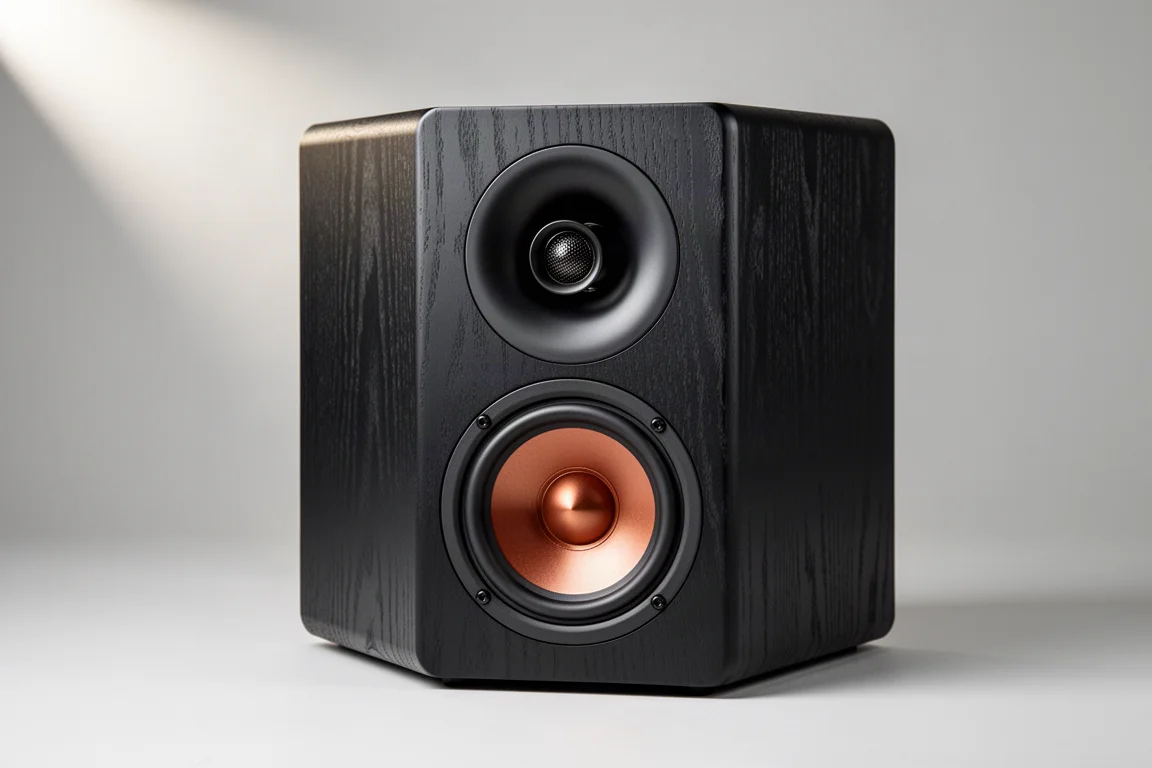
The RP-600M II is a substantial step forward in tonality. Its estimated in-room response is markedly more neutral than the original, and the lower vocal resonance of the older model is no longer a defining trait.
The other headline change is directivity. Horizontal radiation is roughly 10 to 20 degrees wider, which translates into a greater sense of envelopment, more space around instruments, and a soundstage that breathes more freely. Image placement stays precise despite the wider spread, and that combination is the part that stands out most.
That wider radiation is not free of trade-offs. The dispersion is very slightly less linear across angles than the original, so the speaker’s character shifts a touch more as you move off to the side. The difference is small, and for many listeners the gain in spaciousness is worth far more than the small loss in consistency.
Sound Quality and Tonality
Both speakers carry a lifted treble. Listeners with some high-frequency hearing loss, or those in a heavily absorptive room, may find that lift appealing. If you prefer a neutral top end, there are two easy remedies: toe the speakers outward by about 20 degrees, or leave the magnetic grille in place. The grille slightly changes directivity and adds a couple of higher-Q notches to the response, but it also smooths and flattens the top end, and in practice the speaker sounds better with it on.
Bass behavior is similar across both models. Anechoic output reaches roughly 70 Hz at F3 and around 40 Hz at F10, with a gentler rolloff than a typical vented design. In a real room, useful bass tends to stop around 60 Hz, so kick drums keep their character and harmonics but lose some of their weight. A subwoofer is still advisable with either speaker.
One more thing worth knowing is sensitivity. Klipsch rates these speakers in room half space, which adds roughly 6 dB, and a room typically adds several dB more, so published figures run around 9 dB above an anechoic equivalent. The rated numbers are 96 dB for the original and 94.5 dB for the newer version, while measured output lands closer to 85 dB and 86 dB respectively. That is what you would expect from a compact two-way with genuine low-end extension.
Setup and Placement Tips
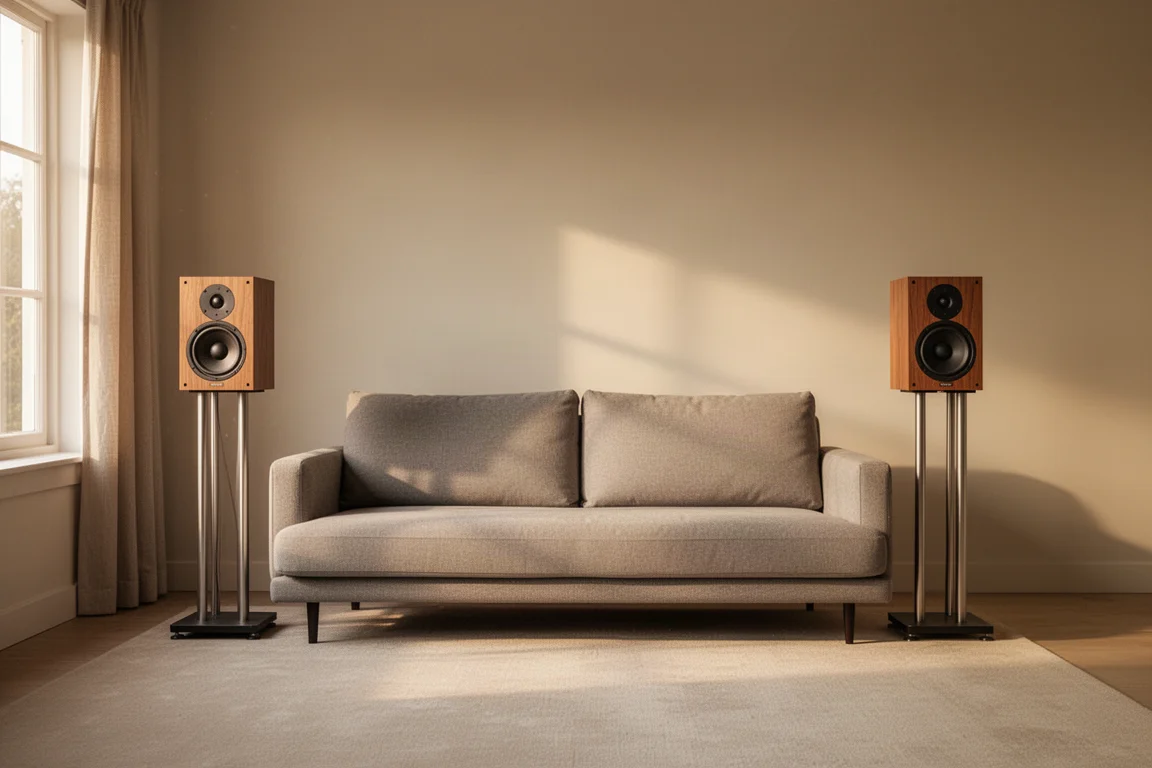
Placement changes how these speakers sound more than most owners expect. Toeing them out roughly 20 degrees from on-axis is a good compromise: it shelves the top end slightly while preserving soundstage width and image precision. Some listeners will prefer 30 degrees. Vertically, stay within about 10 degrees above or below the tweeter axis.
If you use equalization, a curve derived from anechoic data can make the on-axis response very linear, and the effect on the estimated in-room response is significant. What EQ cannot do is change directivity: the radiation pattern stays the same at every angle regardless of the correction applied. It is also far cheaper and more reversible than swapping crossover components, which can cost a few hundred dollars with no guarantee you will like the result.
Who Each Version Suits
If you own the original RP-600M and already run EQ, there is little reason to change. Apply a correction curve, and the older speaker gives you a very even horizontal dispersion that is marginally better than the newer model’s.
If you do not use EQ, or you would rather not spend on it, the RP-600M II is the better buy. It arrives more neutral, and its wider radiation creates the sense of space that many listeners are chasing in the first place.
One caveat applies to both. In a lively room, or where a reflective boundary sits within a foot or so of the speaker, the wider radiation of the RP-600M II may work against you. A narrower pattern keeps more energy away from nearby walls, which can make a bright, reverberant room easier to live with.
Buying Advice
Upgrading to the RP-600M II makes the most sense if you value envelopment and a wider soundstage and you are not planning to build an EQ setup around your speakers. The tonal improvement alone is meaningful, and the wider radiation is the kind of change you notice immediately.
Keeping the original RP-600M makes sense if you already have equalization in your system. Its dispersion is slightly more linear, and correcting its response costs nothing beyond the time it takes to measure and apply a curve. Either way, plan for a subwoofer if low-frequency weight matters to you, and experiment with toe-in and the grille before deciding the speakers are not for you.
Conclusion
The RP-600M II is the stronger speaker for most people buying fresh: more neutral, wider in its radiation, and more refined in its details. The original RP-600M remains a sensible choice for listeners who already apply their own equalization and are happy with a slightly narrower, more consistent presentation. Match the choice to how you actually listen, and either version will serve you well.
Further reading
Related Reviews
Bookshelf Speakers
Acoustic Energy A100 Mark II Review: A Compact Standmount With an Expansive Soundstage
The Acoustic Energy A100 Mark II brings clarity, natural tonality and a wide soundstage to an entry-level standmount, with a few setup details worth knowing first.
Bookshelf Speakers
Acoustic Energy AE-100 Mark II Review: Compact Bookshelf Speakers With Standout Imaging
A compact British two-way bookshelf speaker with deep, layered imaging, fast bass, and a slight treble lift to weigh against a crowded $500 field.
Bookshelf Speakers
Acoustic Energy AE100 MK2 Review: Measured Performance and Four Alternatives
A close look at the Acoustic Energy AE100 MK2 bookshelf speaker, what its measured performance reveals, and four alternatives with different trade-offs.