Home Audio
Klipsch Reference Premiere RP-1600SW Review: A 16-Inch Subwoofer Built for Large Rooms
A deep-diving look at the Klipsch RP-1600SW, a 110-pound, 16-inch ported subwoofer with 800 watts continuous, flat response to roughly 16 Hz, and a five-year amplifier warranty.
Introduction
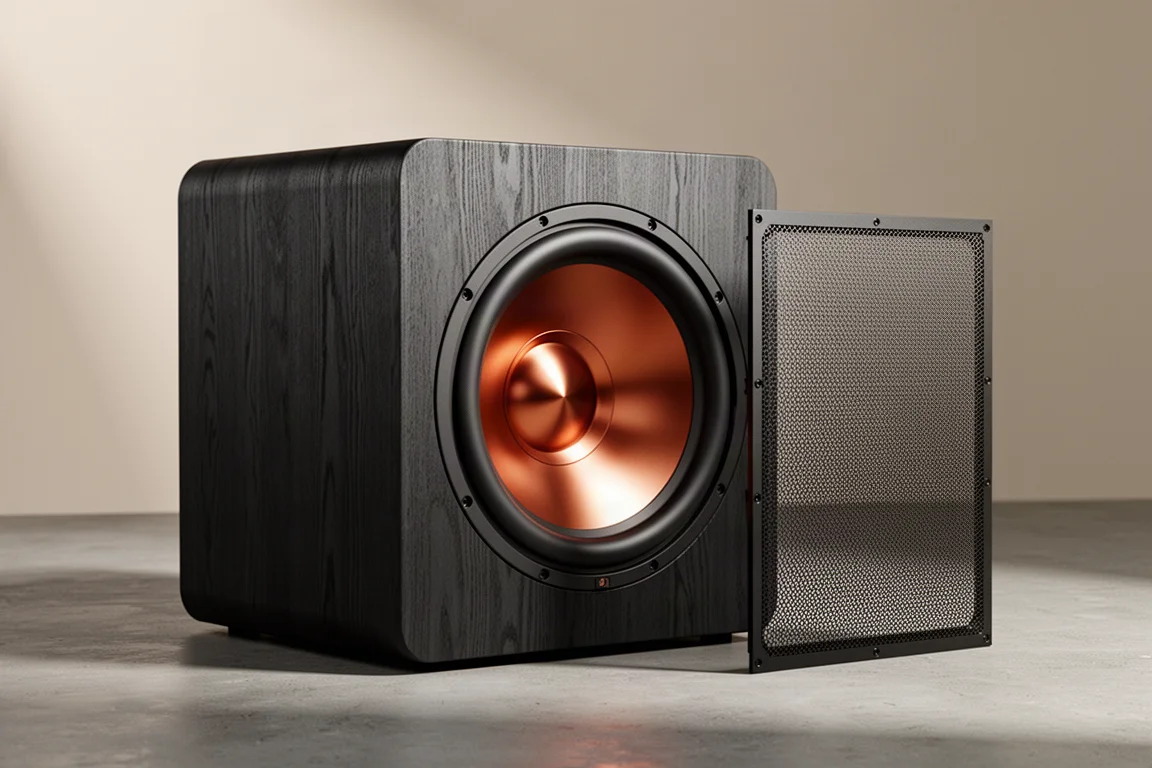
Klipsch is best known for horn-loaded speakers and copper-toned drivers, but the Reference Premiere RP-1600SW takes the brand into genuinely large subwoofer territory. With a 16-inch woofer, it is the biggest subwoofer Klipsch offers for home audio, sitting below only the company’s cinema-oriented models.
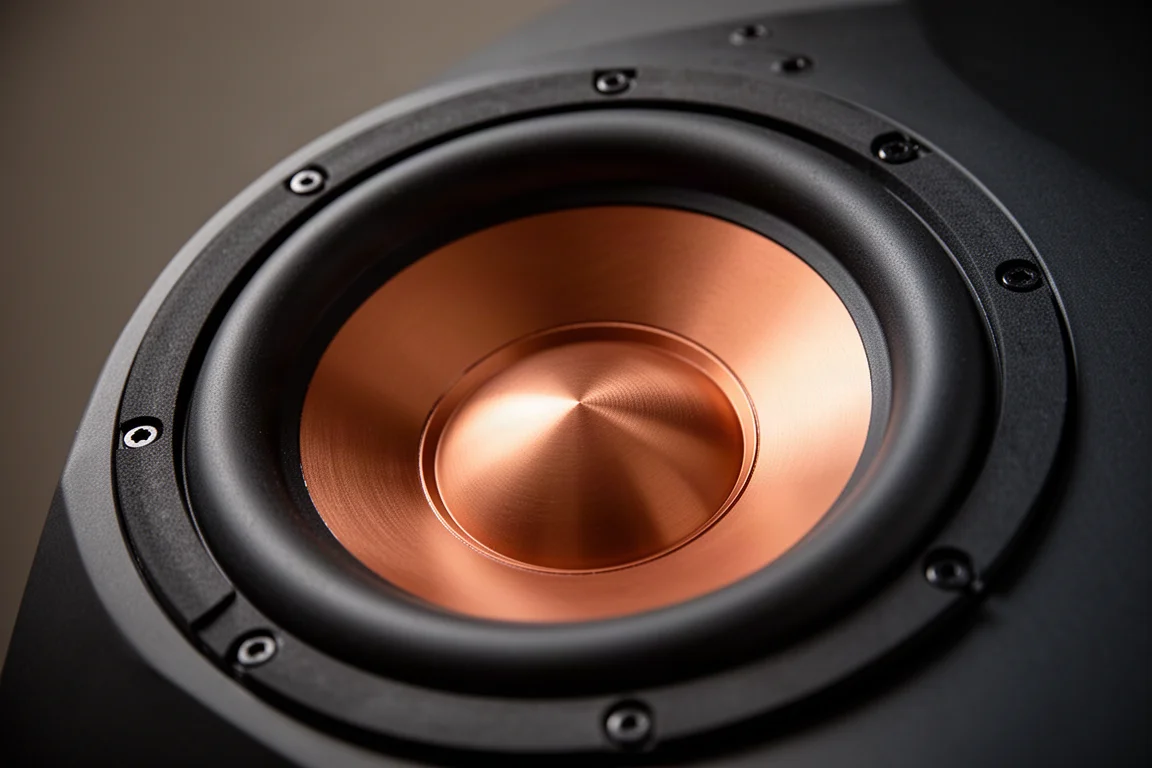
The specification list is substantial. The cabinet is a slot-ported design built around an anodized aluminium cone that Klipsch markets as Cerametallic, driven by an amplifier rated at 800 watts continuous and 1,600 watts peak. The whole assembly weighs 110 pounds. List price is $1,800, and promotional pricing has brought it down to roughly $1,439.
Who the RP-1600SW Is For
This is a subwoofer for listeners building a dedicated theater or listening room, where a large cabinet can be positioned without compromise and where the goal is serious low-frequency output rather than discreet furniture.
It also suits people who already own a capable AV receiver or processor. The RP-1600SW keeps its own feature set deliberately lean, on the assumption that bass management, room correction, and parametric EQ are handled upstream by better-equipped electronics.
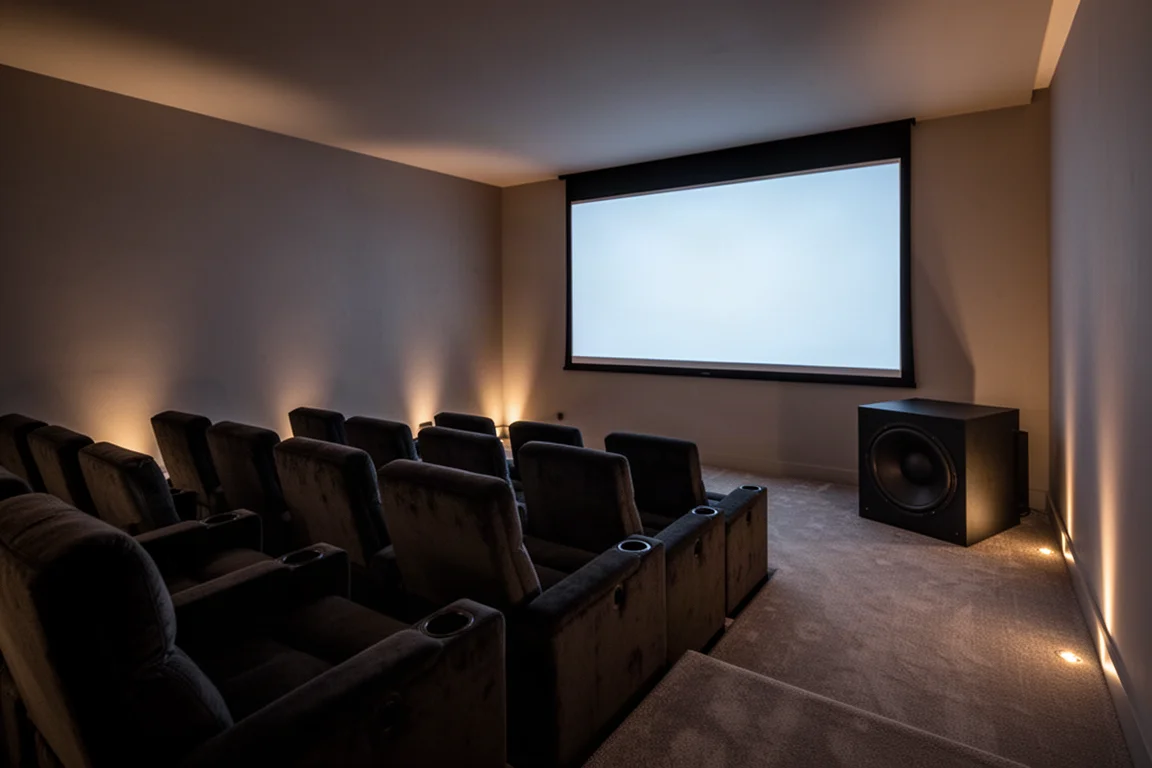
Anyone shopping for a compact subwoofer to tuck beside a sofa in a shared living room should look elsewhere. The RP-1600SW rewards space and planning, and it asks for both.
Main Strengths
The case for this subwoofer rests on three things: how deep it goes, how loud it goes, and how clean it stays while doing it.
Deep Bass Extension and Control
Ground-plane measurements taken outdoors in effectively anechoic conditions show a notably flat, neutral response that holds down to roughly 16 to 17 Hz. That is genuinely deep for a ported cabinet, and it reflects deliberate tuning and equalisation shaping rather than an accidental match of driver and box.
The upper end of the range is just as interesting. The RP-1600SW stays flat to nearly 150 Hz and is only about 6 dB down at 200 Hz, which is unusual for a driver with this much moving mass. In practice that means you can cross it over higher than typical, handing more of the mid-bass workload to the subwoofer instead of asking smaller satellite speakers to carry it.
Burst testing produces a passing result at 10 Hz, with output building from around 12 Hz and the genuinely usable region beginning at roughly 16 Hz and above. Above 20 Hz the cabinet delivers substantial output, enough that a pair in a large room can pressurise the space convincingly.
Distortion behaviour is strong for a subwoofer of this size. Even at the highest sustained levels, total harmonic distortion barely breaches 10 percent above 20 Hz. Below 16 Hz distortion climbs significantly, which is worth knowing but also describes territory most music never reaches. Second-order harmonics dominate at nominal volumes and third-order harmonics take over when the subwoofer is pushed, which is a well-balanced profile rather than a warning sign.
Time-domain performance follows the same pattern. Group delay averages around five milliseconds above 50 Hz, where it actually matters, and only rises meaningfully below 20 Hz, where it is far less audible.
Amplifier, Controls, and Build
The plate amplifier is rated at 800 watts continuous rather than peak, which is a meaningful distinction. That figure represents 1,600 watts peak, and the driver is capable of using the power. The amplifier also carries a five-year warranty, well above the one to three years typical for plate amps in this segment, which suggests confidence in the design’s long-term reliability.
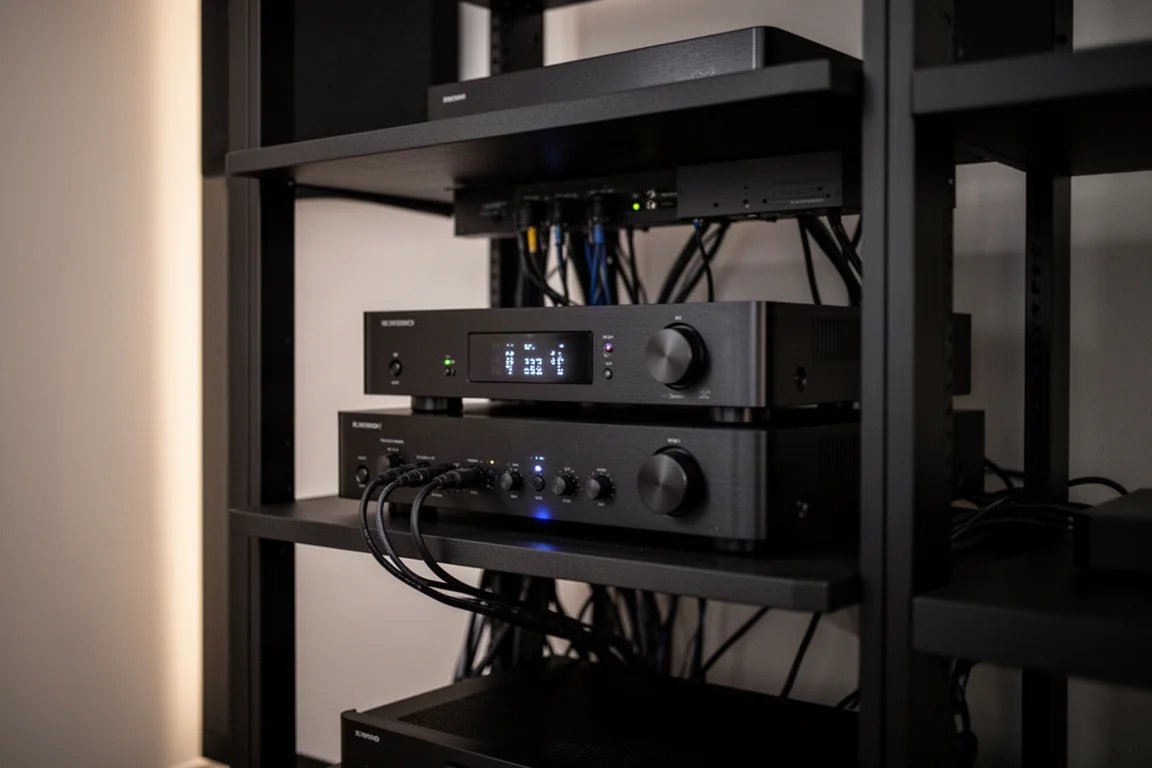
Inside, the cabinet uses additional bracing to support the weight of the motor assembly, which cannot simply hang off the front baffle. The control set is deliberately minimal: a low-pass filter, a volume control, and a phase switch. There is no app, no onboard DSP, and no parametric EQ.
That spartan approach makes sense for the intended buyer. Bass management, room correction, and parametric EQ are better handled by a capable AV receiver or processor, and anyone building a dedicated theater room is likely to have one already. If you depend on subwoofer-side features instead, this is not the product for you.
Things to Consider Before Buying
Two practical issues deserve attention before ordering: the physical size of the cabinet, and how the port behaves at the very lowest frequencies.
Room Size and Placement
At 110 pounds, the RP-1600SW is not a one-person lift. Plan the delivery route, the doorway widths, and the final position before it arrives, and arrange for a second pair of hands on the day.
Visually, Klipsch has done more than most with a very large box. The cabinet has radiused edges rather than hard corners, and the copper-toned driver and accents give it a distinctive look. The included grille covers the driver cleanly, so the subwoofer can read as a plain dark cabinet if you prefer that.
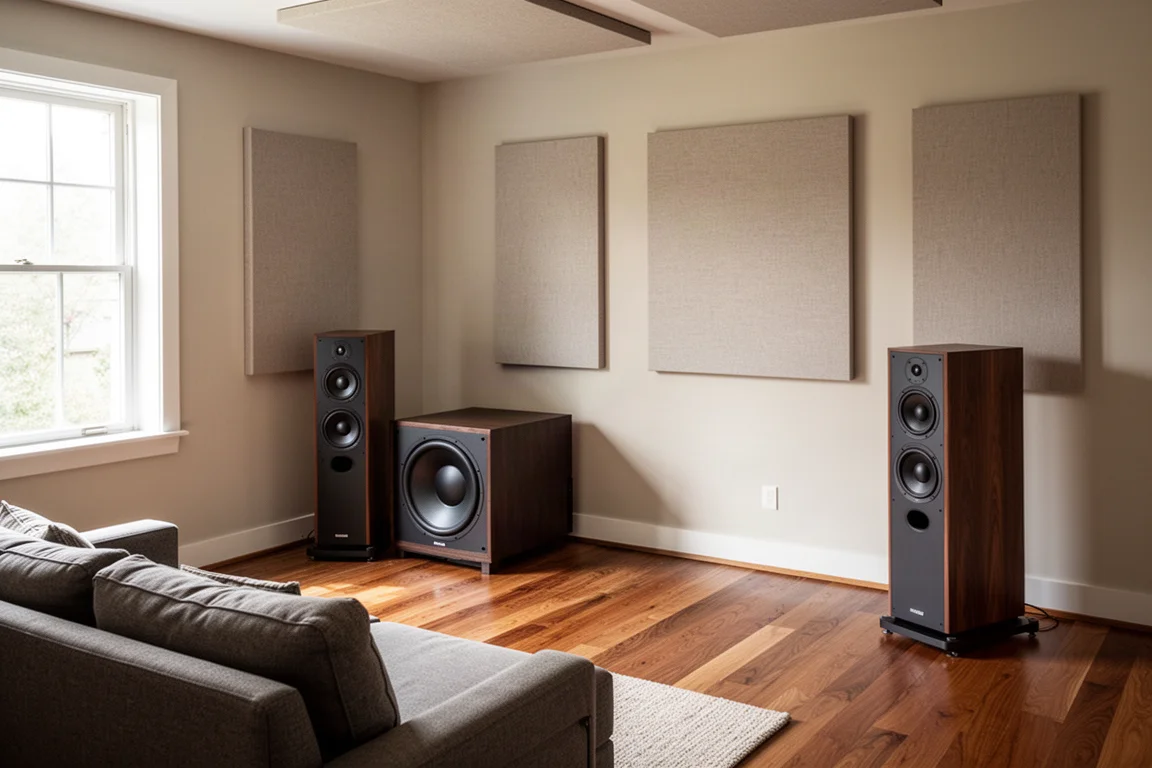
This is a subwoofer for a dedicated theater or listening room rather than a compact living room setup. Give it a corner or a front-wall position with room to breathe, and expect it to dominate the visual space it occupies.
Port Behaviour at the Lowest Frequencies
The slot port is tuned low, and the tuning point looks ambitious for the driver and enclosure size. When pushed hard below 20 Hz, the port can produce audible chuffing.
In normal listening this is unlikely to be a problem. The content that drives a subwoofer that hard below 20 Hz is mostly film effects and a small number of unusual music tracks. Aggressive low-frequency test sweeps are where the behaviour shows up most clearly.
A more conservative tuning point around 20 Hz would probably have been the safer engineering choice, and a limiter appears to be present but relatively relaxed in how aggressively it intervenes. For most buyers this is a minor caveat rather than a dealbreaker.
Buying Advice
At an $1,800 list price, the RP-1600SW is priced competitively for the amount of output and extension it delivers, and promotional pricing has taken it down to roughly $1,439. At that lower figure it becomes very difficult to beat.
The competition is real, though. SVS, Monoprice, and Rythmik all offer subwoofers in this space, and SVS in particular adds app control, DSP, and parametric EQ filters. Matching the Klipsch’s output with an SVS typically costs more. SVS’s flagship 16-inch model is a step above in deep-bass output, but it is also larger, heavier, and considerably more expensive; the Klipsch holds its own in the mid-bass region.
If you have a dedicated room, a processor or receiver that handles bass management and room correction, and the space for a large cabinet, the RP-1600SW deserves a place on your shortlist. Watch for promotional pricing, because the value proposition changes considerably when it drops.
Conclusion
The Klipsch Reference Premiere RP-1600SW is the most capable subwoofer Klipsch has built for home audio. It combines deep extension, wide dynamic range, low distortion above 20 Hz, and solid time-domain performance with a five-year amplifier warranty and a design that looks more considered than most large dark boxes.
The trade-offs are size, weight, a minimal control set, and port behaviour when pushed hard below 20 Hz. None of those matter much to a buyer with a dedicated room and a capable processor, and for that buyer this is a strong, well-priced option, particularly when it is on promotion.
Product link
View more details for Klipsch Reference Premiere RP-1600SW
This product is mentioned in the review. Check the specifications, options, and compatibility before buying.
View more details for Klipsch Reference Premiere RP-1600SWFurther reading
Related Reviews
Home Audio
Aperion Novus Tower and Center Review: Punchy Home Theater Sound With Real Refinement
A close look at the Aperion Novus tower and center speakers, from their layered paint finish and punchy bass to the 4-ohm load and what the price actually buys.
Home Audio
Arendal 1610 Tower Review: Flagship Dynamics in a Room-Friendly Tower
A compact floorstanding tower with three 8-inch aluminium woofers, a 5-inch carbon midrange, and the kind of bass heft usually reserved for much larger speakers.
Home Audio
Arendal 1723 S THX Review: A Reference Speaker Built Like a Tank
A practical look at the Arendal 1723 S THX, a sealed, THX-certified speaker with exceptional build quality, a very flat top end, and a midrange that responds beautifully to EQ.