Desktop Speakers
Klipsch ProMedia Lumina vs Edifier MR5 vs Adam Audio D3V: Three Desktop Speakers Compared
A close look at three nearfield desktop speakers, the Klipsch ProMedia Lumina 2.1 system, the Edifier MR5, and the Adam Audio D3V, and which desk each one suits.
Introduction
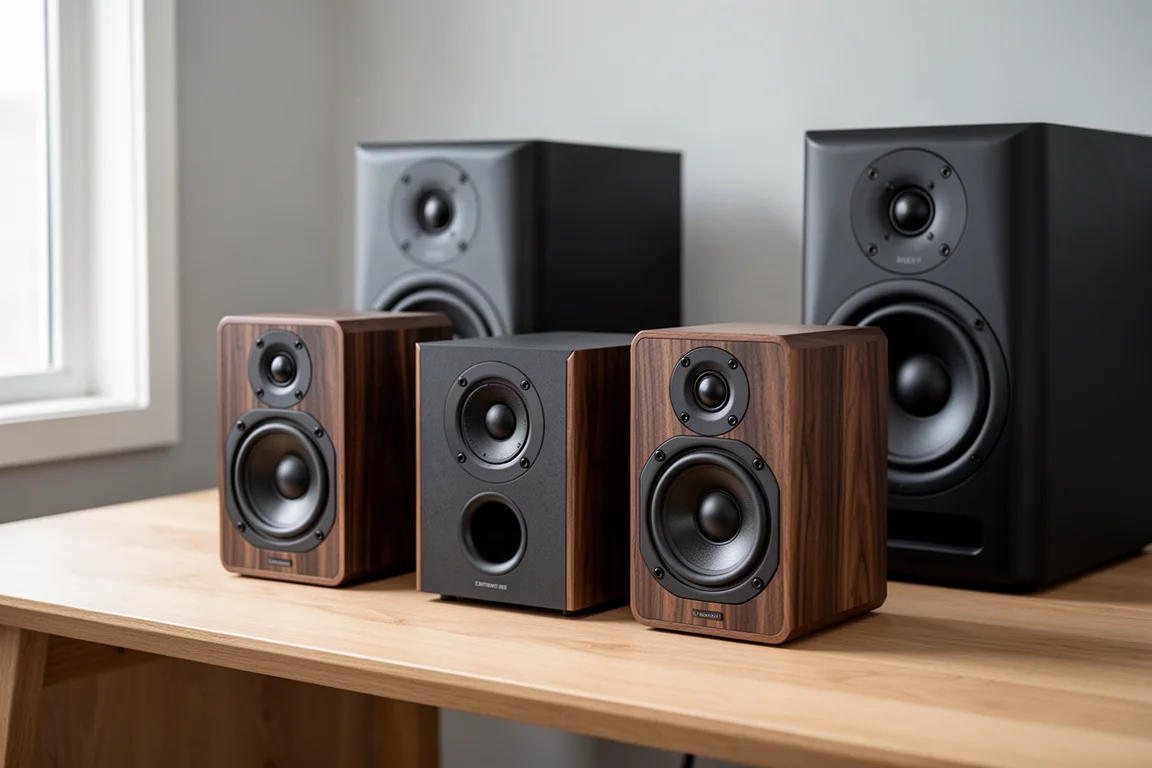
Desktop nearfield speakers sit close to the listener, which makes small differences in voicing, placement, and low-frequency reach far more noticeable than they would be in a living room. The three speakers here take different routes to the same desk. The Klipsch ProMedia Lumina adds a powered subwoofer to a compact satellite pair, while the Edifier MR5 and the Adam Audio D3V are two-piece systems that rely on their main cabinets for bass.
This comparison looks at how each one measures, how it behaves as volume rises, and which desk each is best suited to.
What to Look For in a Desktop Speaker Setup
The first thing to get right is tweeter height. A small satellite speaker usually ends up below ear level on a desk, so look for a cabinet that can be angled upward, or plan on raising it. The second is radiation width. A speaker with a narrower pattern can sound less spacious when aimed straight at the listener, and pointing it slightly outward trades a little image focus for a wider stage.
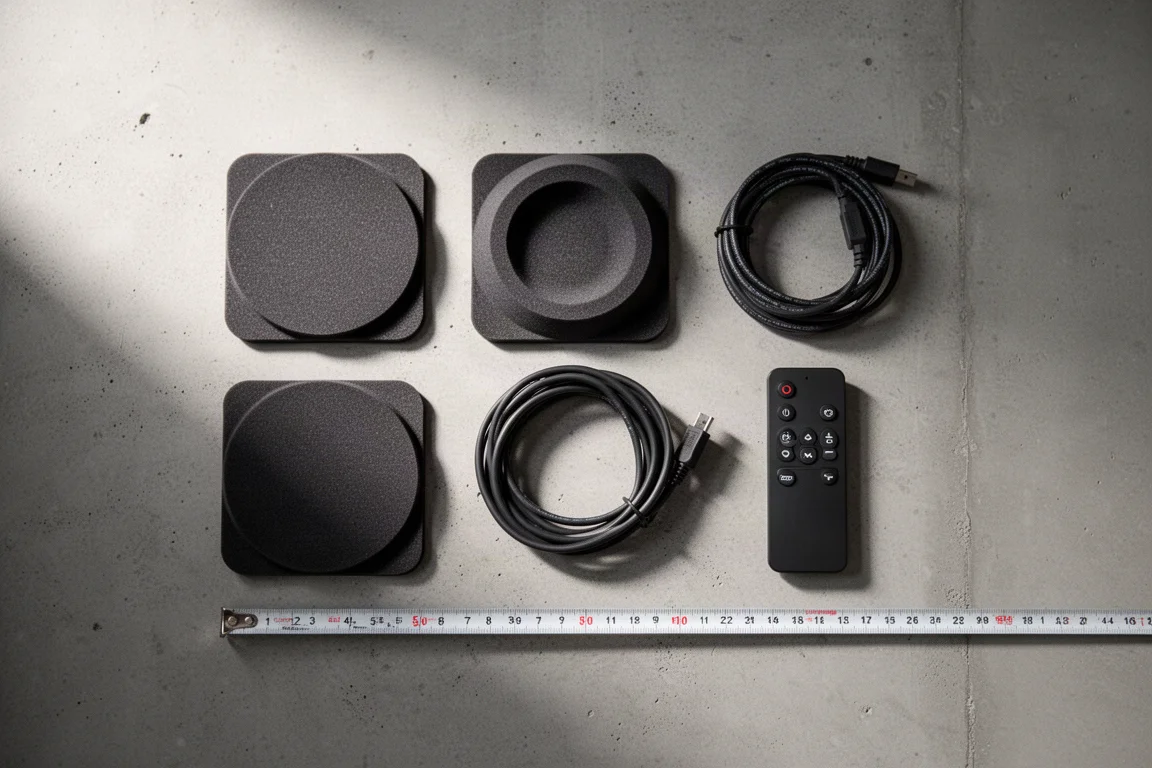
Low-frequency reach is the third consideration. A separate subwoofer module plays deeper than a two-piece system of the same size, but it needs a spot under or beside the desk and a cable run back to the powered enclosure. Check the supplied cable length before committing to a layout, because the distance between the powered enclosure and the satellites is limited.
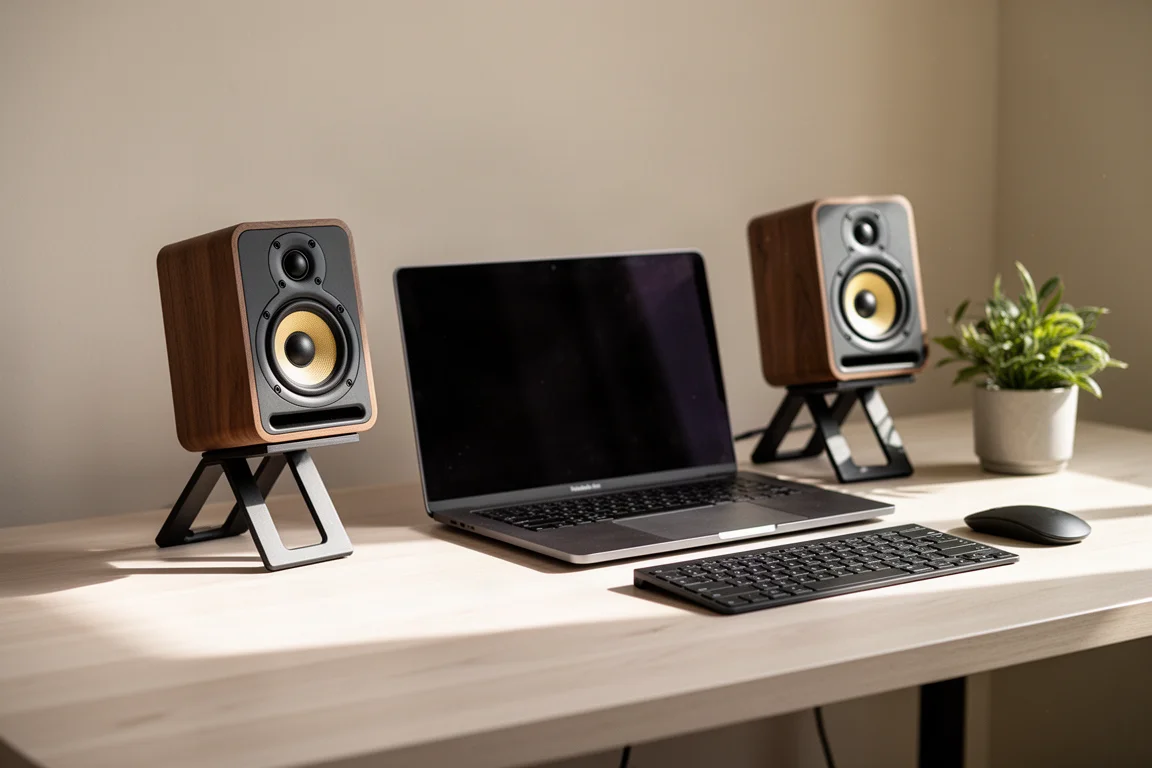
Finally, look at what the control app actually allows. Fixed EQ bands are useful for broad tonal tweaks, while parametric bands let you set frequency, gain, and bandwidth, which is far more effective for targeting a specific problem region.
Klipsch ProMedia Lumina: 2.1 With a Dedicated Subwoofer
The Klipsch ProMedia Lumina is a 2.1-channel desktop system built around two satellites and a powered subwoofer. Each satellite combines a 3.5-inch driver with a 1-inch dome tweeter loaded into a Tractrix horn, and the subwoofer uses a 6.5-inch driver in a ported enclosure. Extended cables run from the powered enclosure to the individual satellites, so the subwoofer has to stay within a few feet, which is workable for most desktop layouts.
On axis, the measured response stays within roughly plus or minus 3 dB until the upper treble, where it climbs sharply and sits about 5 dB above the mean. That lift of around 3 to 5 dB gives the system a bright character that can sound grainy and fatiguing over longer sessions. Toeing the satellites out by 20 to 30 degrees flattens that region considerably and produces a more linear result, which is why off-axis placement is the first thing to try here. If you prefer a brighter top end, you may read that lift as extra detail, but the on-axis balance is the least neutral of the three speakers in this comparison.
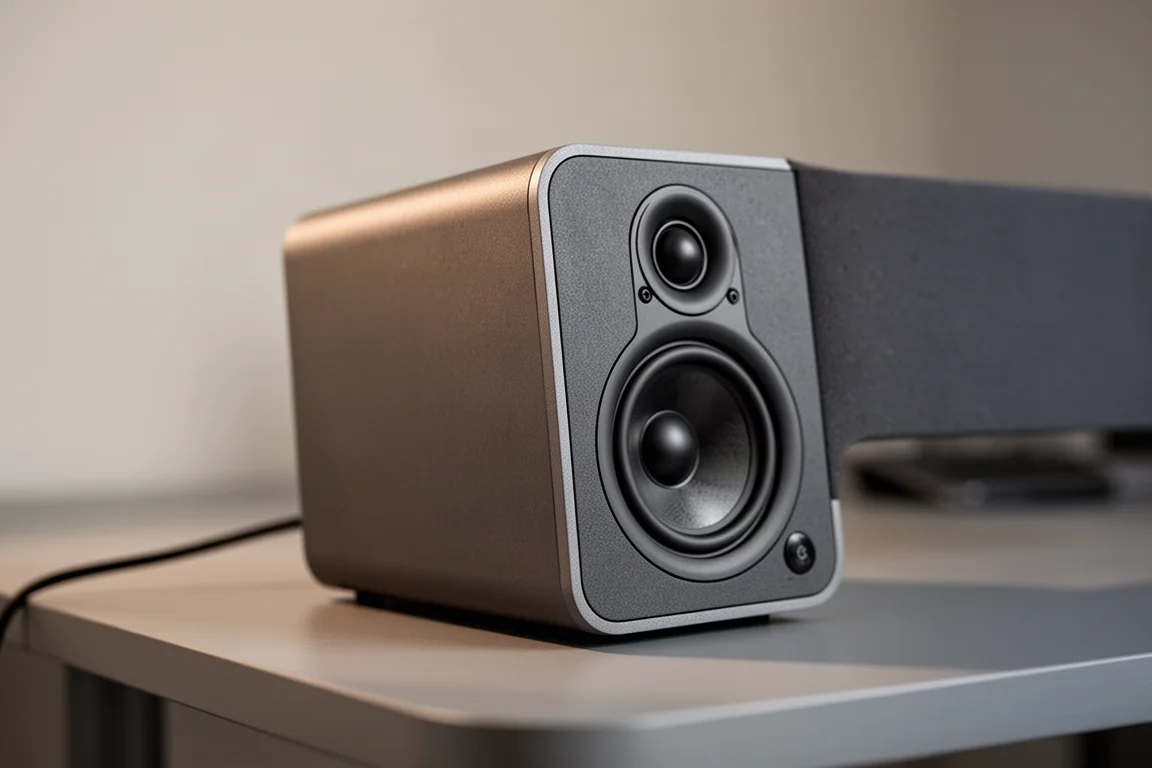
Bass is where the system separates itself from the other two. The subwoofer reaches down to roughly 40 to 50 Hz, with a bass F3 of 46 Hz and an F10 of 38 Hz, deeper than most speakers in its size and price class. Distortion at 86 dB looks good, with some activity just below 2 kHz that may point to cone breakup. At 96 dB distortion rises but stays reasonable for the cabinet size, and multitone distortion sits above a 3% threshold in places. A built-in limiter caps output under demanding signals, and compression averages around 8 dB through the midrange at high levels, with a peak that lines up with the handoff between the satellites and the subwoofer.
The app covers EQ and RGB lighting, and the lighting options are a real part of the appeal for anyone who wants the desk to look a certain way. Color and finish choices round out the customization angle. The EQ bands are fixed rather than parametric, so you cannot dial in frequency, gain, and bandwidth independently. A movie mode boosts both the low and high ends; everything described above applies to music mode.
Edifier MR5: A More Neutral Voicing
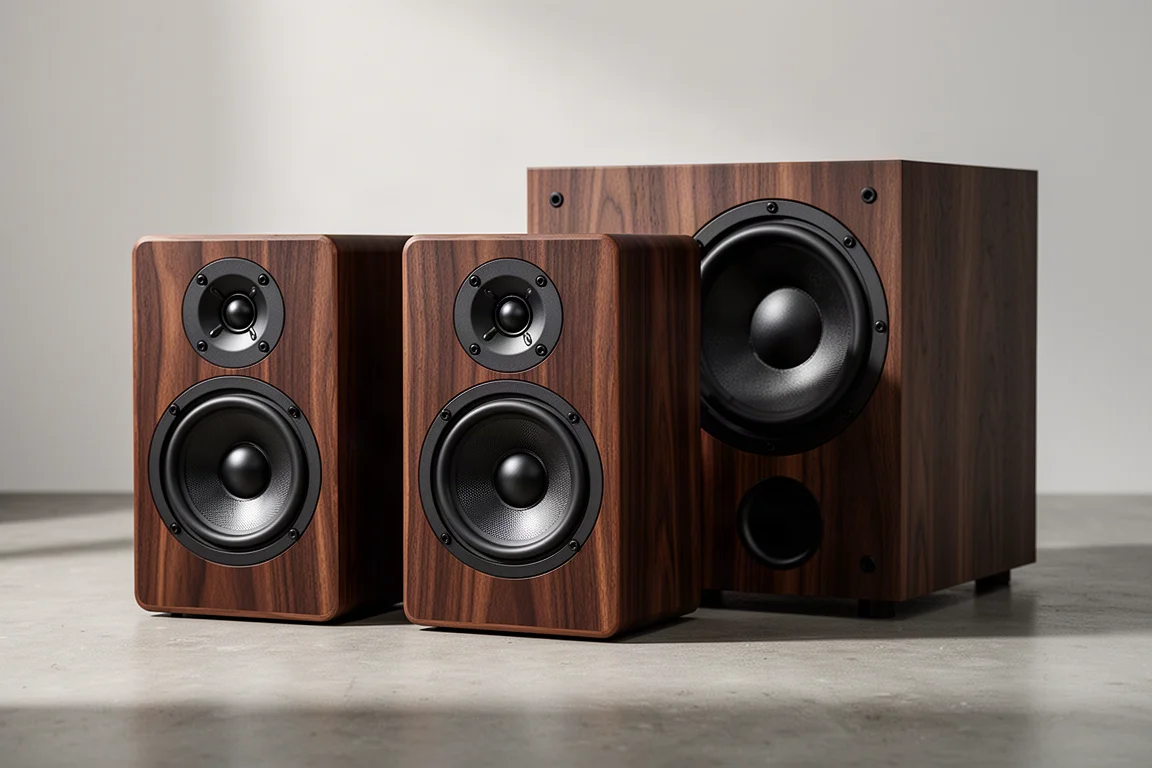
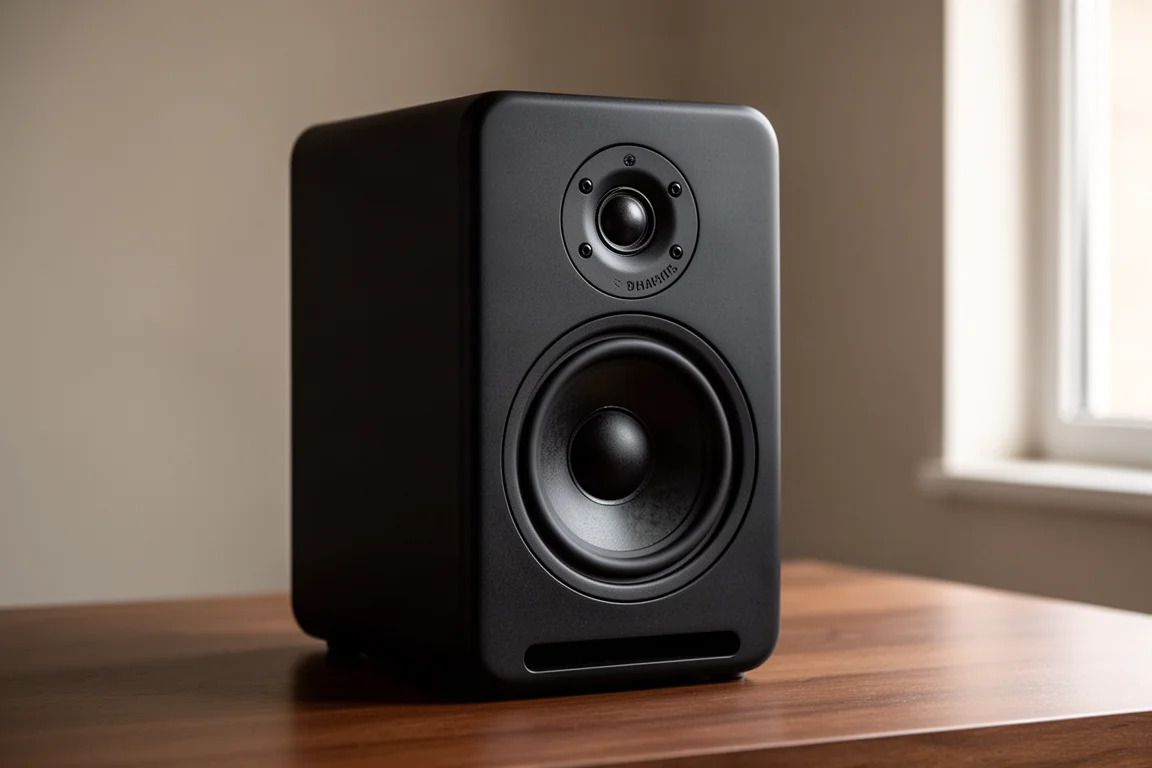
The Edifier MR5 is a two-piece system with no separate subwoofer module. Its measured response is more neutral overall than the Klipsch, with a modest lift in the bass region and some emphasis in the higher frequencies, but nothing like the Klipsch’s upper-treble rise.
Dynamic behaviour differs as well. At 86 dB the MR5 shows less compression than the Klipsch, but it becomes more non-linear overall as output rises, whereas the Klipsch concentrates its compression in the 100 to 200 Hz mid-bass region. That makes the MR5 a comfortable choice at ordinary desktop listening levels and a less predictable one when pushed hard.
Adam Audio D3V: Studio-Grade Neutrality
The Adam Audio D3V is intended as a studio-grade monitoring speaker, and it measures as the most neutral of the three by a clear margin. Like the Edifier, it has no separate subwoofer module, so low-frequency output depends entirely on the main cabinets.
At 86 dB it shows very little compression. At 96 dB it loses a large part of the mid band, which sets a practical ceiling on how loud it stays accurate.
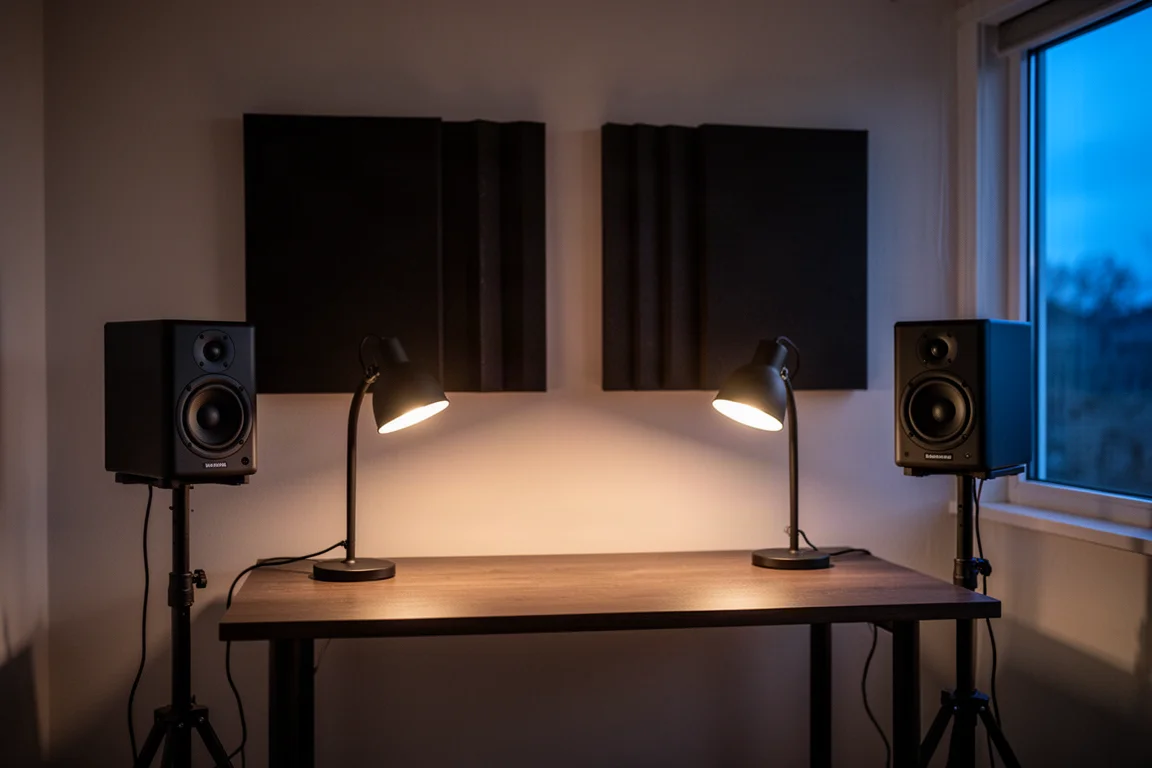
That trade-off defines the speaker. Its neutrality makes it the most trustworthy of the three for nearfield listening at moderate levels, while its compression behaviour at high output means it is not the pick for loud, bass-heavy playback.
How the Three Compare
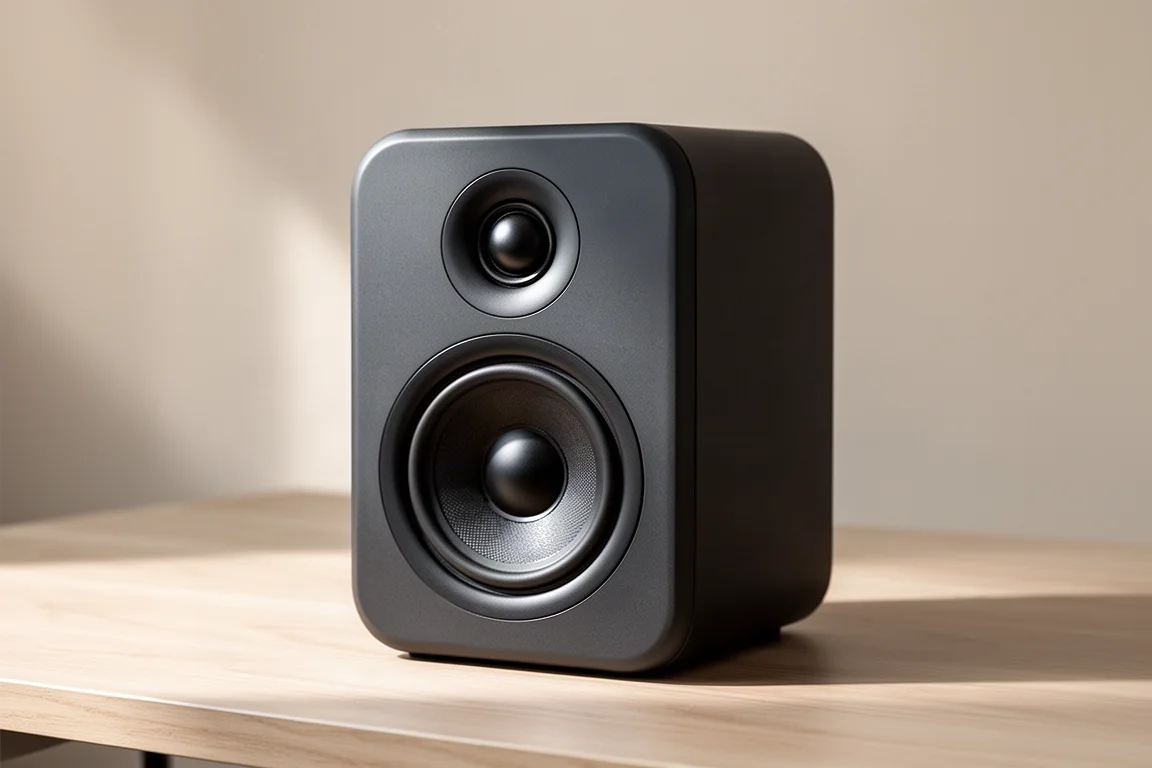
The Klipsch is the only one of the three with a dedicated powered subwoofer, and that is the main reason it plays lower and louder than the others. It is also the brightest on axis, the most sensitive to placement, and the only one with app-controlled EQ and RGB lighting. Its radiation pattern is narrower than the other two, so pointing it outward widens the stage at the cost of some image focus, a trade-off that matters less at nearfield distances.
The Edifier MR5 sits in the middle on tonality. It is more neutral than the Klipsch, with a gentler bass lift and less upper-frequency emphasis, but less linear than the Adam as volume climbs.
The Adam Audio D3V is the reference-flavoured option. It is the most neutral of the three and the least compressed at moderate levels, and it is the one to choose when accuracy matters more than low-end extension or maximum output.
Buying Advice
Choose the Klipsch ProMedia Lumina if you want a compact 2.1 system that reaches genuinely low for its class, and if app control and lighting customization matter to you. Plan on toeing the satellites out, and use PC-side equalization if you want to smooth the upper treble further. Give some thought to where the subwoofer will live, since the cable run to the satellites is finite.
Choose the Edifier MR5 if you prefer a more neutral tonal balance and want to avoid finding space for a subwoofer, and if you listen at moderate levels where its non-linearity at higher output is less of a factor.
Choose the Adam Audio D3V if neutrality is the priority and you work at moderate nearfield levels. If deep bass or high output is essential, a system with a separate subwoofer is the better fit.
Conclusion
All three speakers are credible nearfield options, and the decision comes down to priorities rather than outright quality. The Klipsch ProMedia Lumina offers the most low-frequency output and the most customization. The Edifier MR5 offers a more neutral balance in a simpler two-piece setup. The Adam Audio D3V offers the most neutral response of the group. Match the speaker to how loud you listen and how much desk space you can give up, and any of the three will serve a desktop system well.
Further reading
Related Reviews
Desktop Speakers
Audio Smile Little British Monitor Review: A Compact Desktop Speaker With Measured Neutrality
A small European powered desktop speaker with a waveguide tweeter, an aluminum cone woofer, and an unusually flat measured response for its size.
Desktop Speakers
Audioengine A2+ Review: A Small Desktop Speaker That Knows Its Place
The Audioengine A2+ is a compact powered desktop speaker pair with Bluetooth, a tidy footprint, and a sound profile tuned for life on a desk rather than a listening room.
Desktop Speakers
Five Desktop Speakers Compared: Edifier, Kanto, Adam Audio, and Kali
Five compact desktop speakers from roughly $170 to $349 per pair, compared on accuracy, listening window stability, output capability, and desk footprint.