Home Theater
Inconspicuous Bedroom Home Theater: Klipsch Heritage Soundbar, Pro-160RPC, and Anthem MRX 1140
How a passive Klipsch Heritage soundbar, Pro-160RPC in-ceiling speakers, and an Anthem MRX 1140 come together in a 5.1.2 bedroom system, and what the build really costs.
Introduction
Rooms rarely cooperate with home theater plans. A bedroom without studded interior walls, a living room where the household rules out bookshelf speakers, tower speakers, and on-wall speakers alike, or a family room where the television hangs above a fireplace: these are the situations where conventional speaker advice runs out.
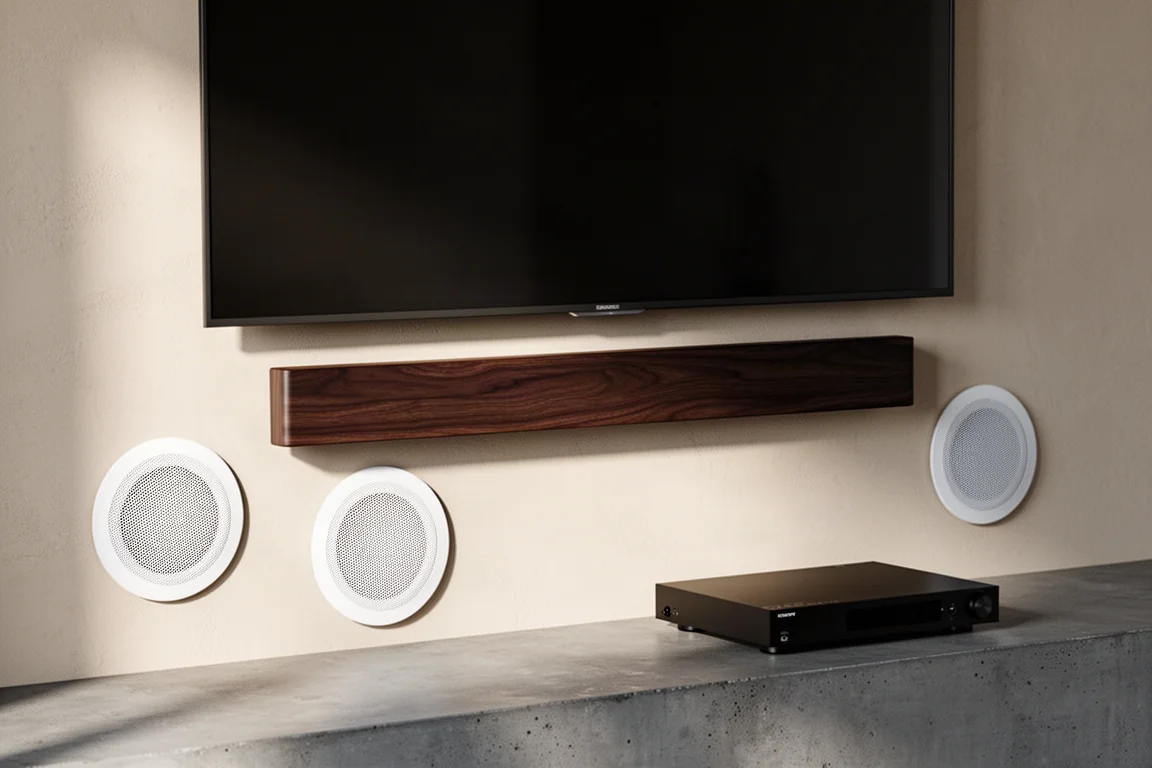
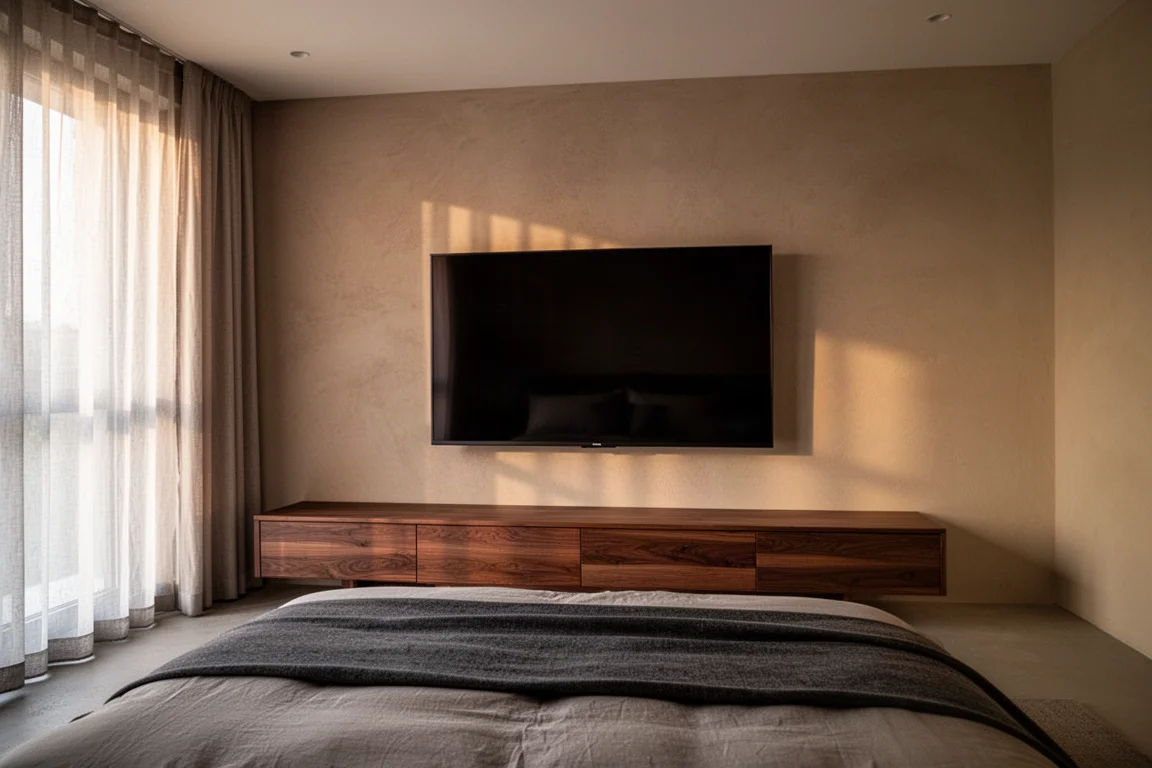
The alternative is architectural audio. This 5.1.2 bedroom system pairs a Klipsch Heritage passive soundbar with Klipsch Pro-160RPC in-ceiling speakers and an Anthem MRX 1140 receiver, supported by in-ceiling subwoofers. Nothing in the room calls attention to itself. The furniture, the curtains, the motorized shades, and the fireplace stay the visual focus until the system is switched on.
The full build lands around $10,000. That is a real number, and it buys a system that looks like part of the interior and behaves like a proper theater.
Why a Passive Soundbar Makes Sense in a Bedroom
A passive soundbar is a different animal from the powered soundbar most people picture. It has no built-in amplification, so it is driven by the receiver that already powers the rest of the system. That single distinction is what lets it sit in the same conversation as separate speakers rather than in the soundbar conversation.
The case for it is straightforward. When a room cannot accept a left, center, and right trio of boxes, those three channels still need to point at the seating area. An all-in-ceiling surround system solves the visual problem but not the directional one, and even well-designed angled in-ceiling speakers do not fully match a speaker aimed directly at the listener. A passive soundbar puts the front three channels on the wall at the right height, aimed at the bed or the couch, with dialogue anchored to the screen.
The category has changed. Powered soundbars earned their reputation for small drivers and compromised sound, and that reputation was largely fair. A newer generation of high-fidelity passive soundbars from specialist manufacturers takes the opposite approach, using purpose-built drivers and crossovers to deliver genuine output within the limits of a slim cabinet.
Klipsch Heritage Soundbar: Custom Fit and Finish
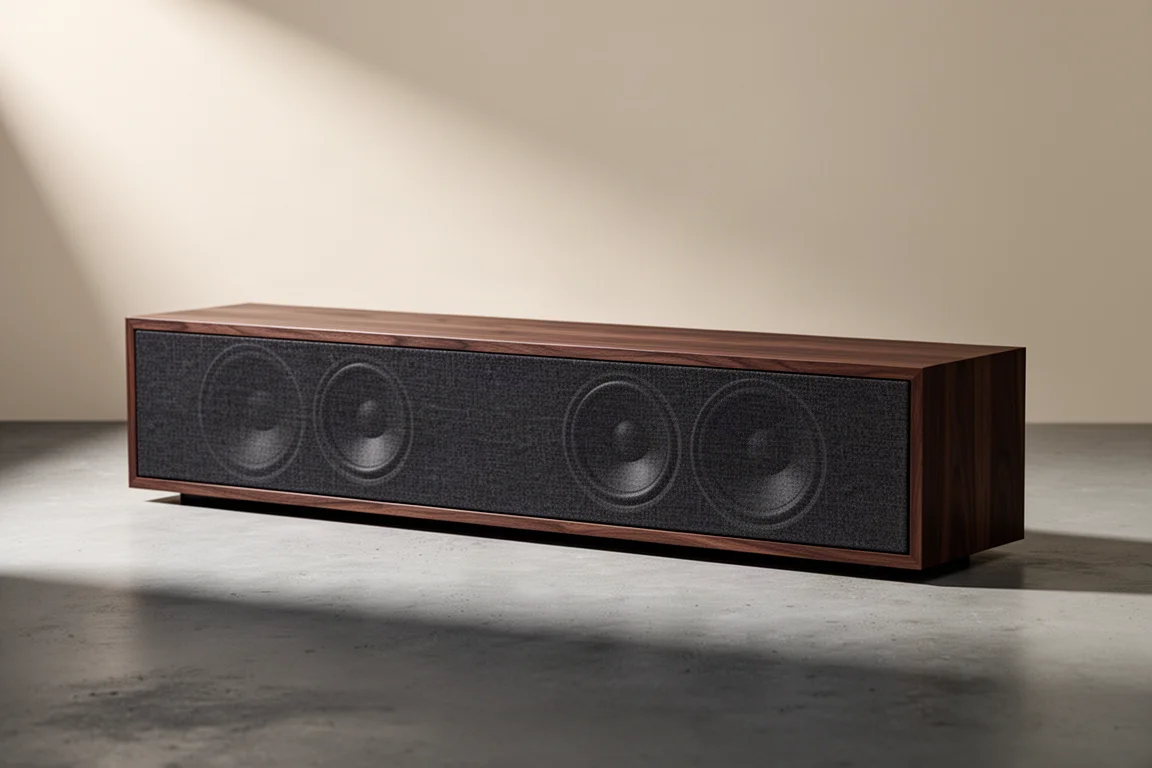
The Heritage soundbar is built to be cut to the width of the television, so it can sit flush with the screen instead of hanging below it at a mismatched size. In this room it matches a 65-inch display exactly. It mounts on the wall, the installation is fairly simple, and the result is a clean horizontal line rather than a piece of electronics parked under the screen.
Klipsch offers a range of cabinet colors, wood finishes, and grille options, from retro through mid-century, transitional, and contemporary styles. The wood finish in this room suits a rustic modern interior, and the retro character of the cabinet is part of the appeal rather than something to hide.
Klipsch Heritage Soundbar: Performance and Setup Notes
The front stage uses dual 4-inch Cerametallic drivers per channel and a 3/4-inch titanium horn tweeter with 90 by 90 degree coverage. Sensitivity is around 90 dB and the soundbar can reach roughly 110 dB, so headroom is not the limiting factor in a room of this size.
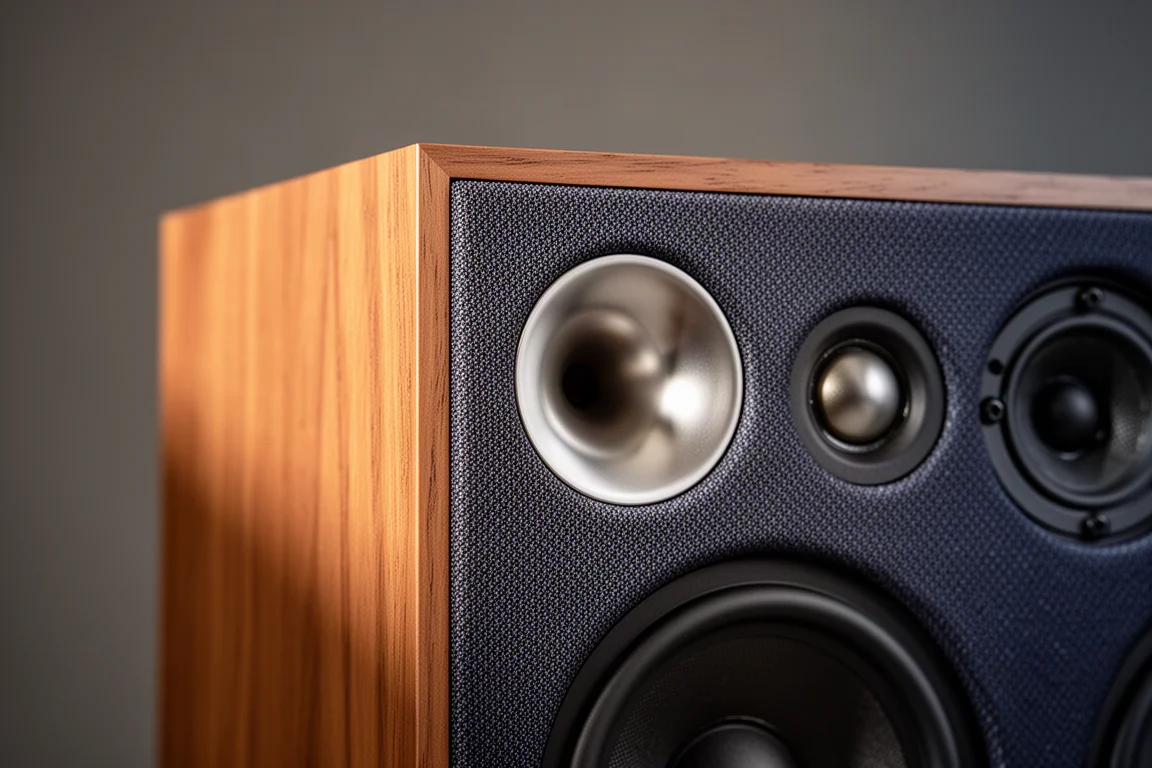
Two specifications matter more than the rest. First, the soundbar does not play below 120 Hz, and Klipsch states plainly in the manual that it should be paired with a subwoofer. Second, the center array uses the same driver configuration as the left and right channels rather than an MTM arrangement. That choice invites questions on paper, but in practice the center channel stays articulate and intelligible, with no lobing problems audible from the listening position.
Horn-loaded designs can come across as forward, and some listeners will want a gentle taper in the upper frequencies. Beyond that, very little correction is needed to make the soundbar sound natural.
For music, the trade-off is stereo separation. A soundbar is only as wide as the television it matches, so the left and right channels sit closer together than separate speakers would. Upmixing handles most of it by bringing the surround and height channels into the mix, and the result is a satisfying music experience rather than a compromise. A wider screen means a wider soundbar and more separation to work with.
Klipsch Pro-160RPC In-Ceiling Speakers for Surrounds and Height
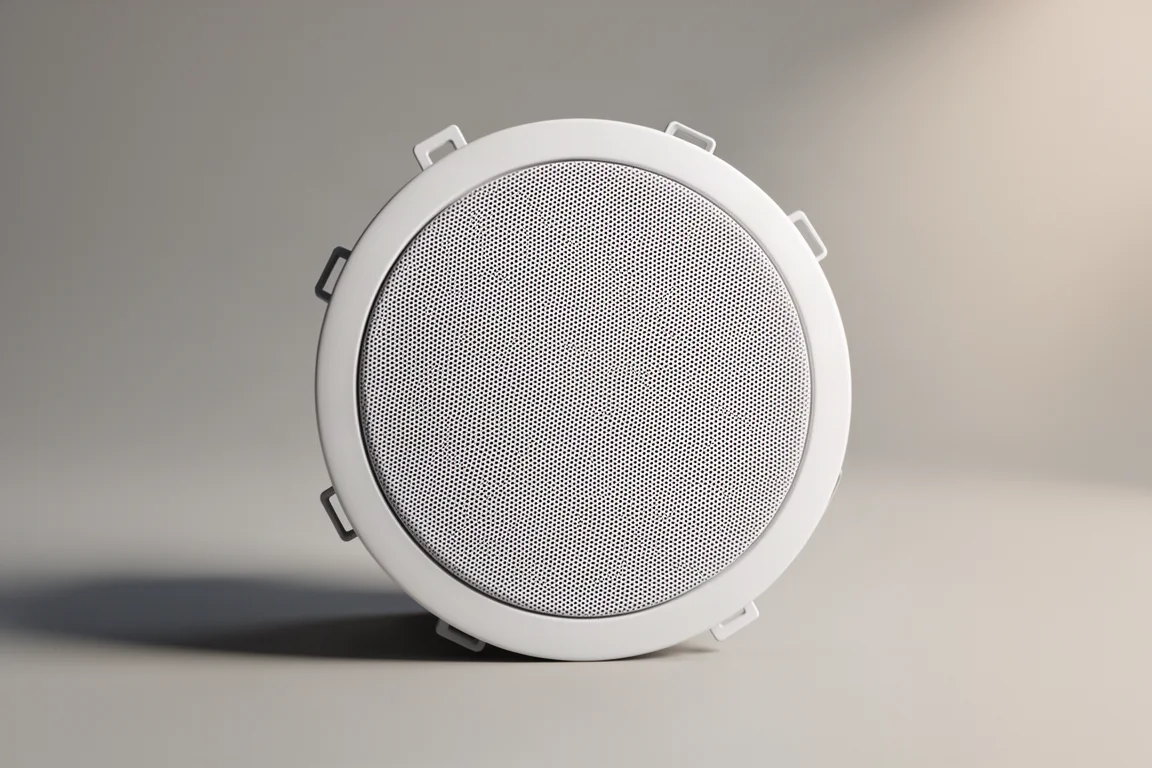
The Pro-160RPC speakers handle surround and height duties at around $339 each. What stands out is their bass output for an in-ceiling design with no back box, which follows from being engineered for a free-air application. They also install easily, which matters in a build where several ceiling positions have to be cut and finished.
Placement in this room follows Dolby Atmos guidelines rather than convenience. The height speakers sit in the center of the tray ceiling, above and forward of the bed, roughly a foot higher than the rear speakers, and deliberately out of the corners. That arrangement gives even coverage across the listening area instead of a hotspot on one side.
In-ceiling speakers for Atmos attract skepticism, and the criticism is often aimed at the wrong target. The format works well when the speaker is capable of it, and this pair is.
Anthem MRX 1140: Room Correction That Does the Work
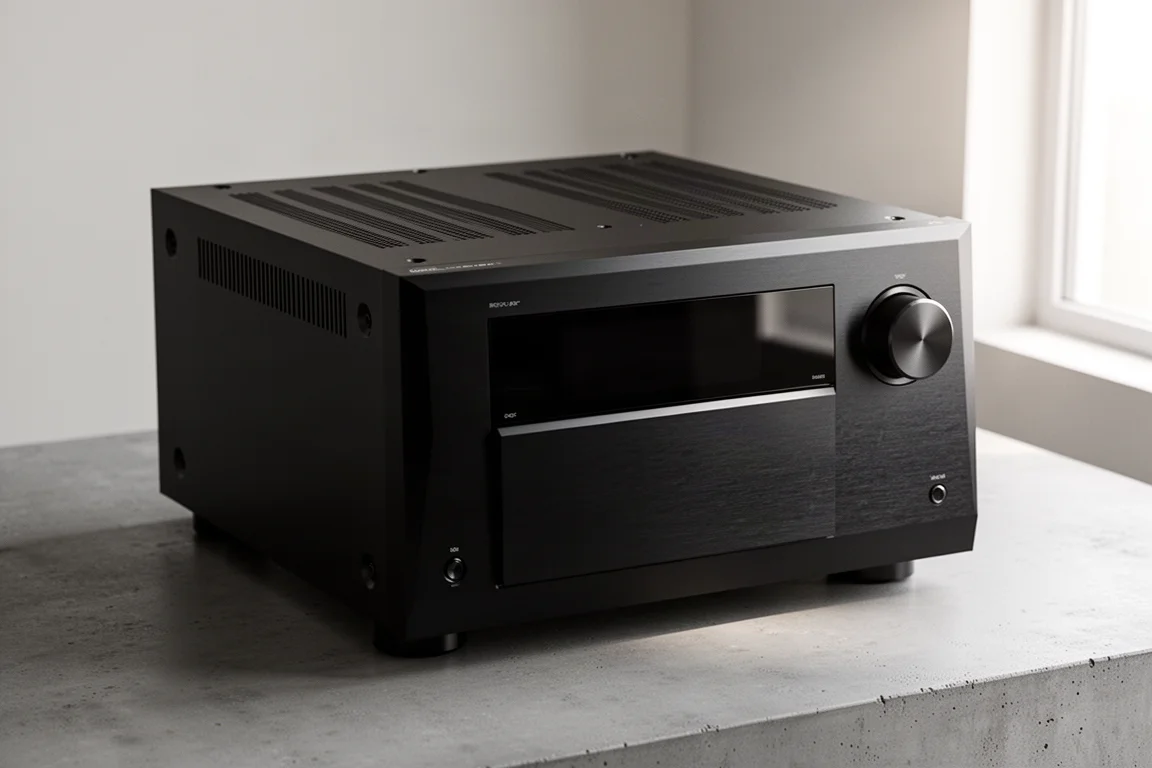
The MRX 1140 powers the whole system, and setup is notably easy for a receiver at this level. ARC Genesis room correction with the phase alignment tool handled the hard part: it identified the correct crossover frequency between the passive soundbar and the subwoofers without guesswork.
That matters more than it might sound. A soundbar with dual 4-inch drivers needs a higher transition than a bookshelf speaker, typically in the 110 to 120 Hz range. Getting that handoff right is the difference between a coherent front stage and an audible gap between the speakers and the bass.
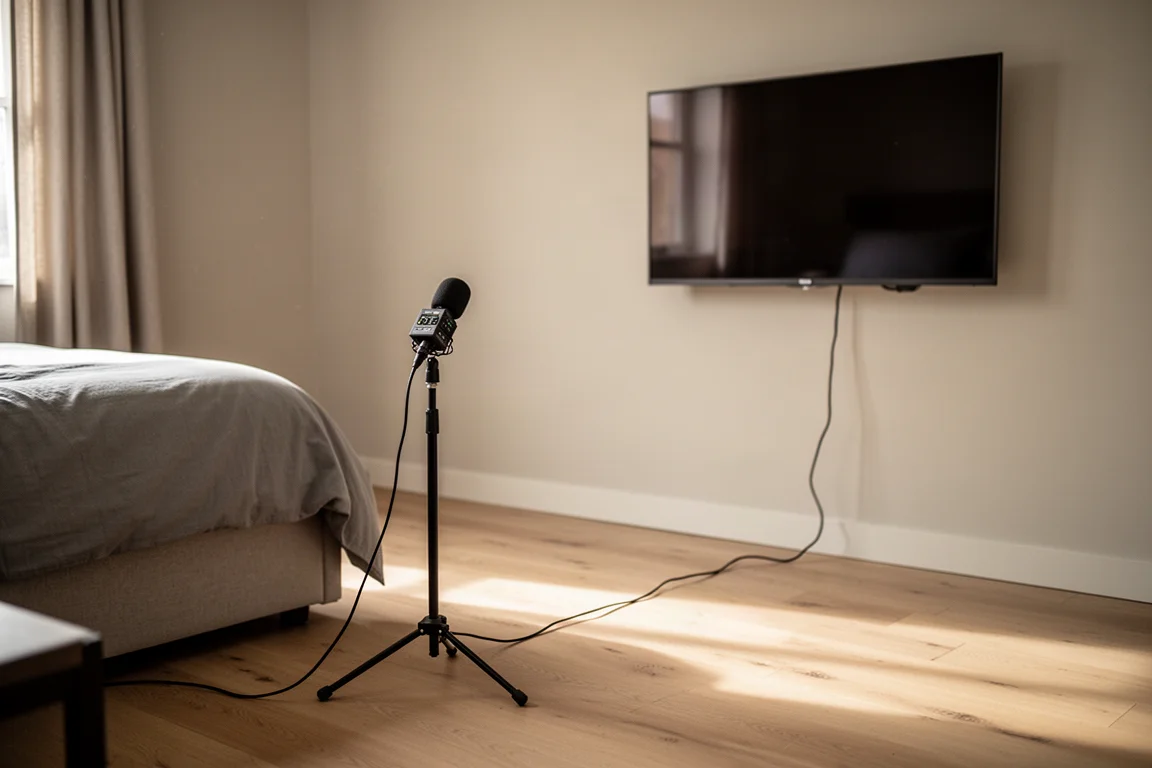
For music, Anthem Logic upmixing brings the height and surround channels into play, which fills in the width the soundbar cannot provide on its own. Dirac room correction is also available for listeners who prefer that route, though ARC Genesis proved capable enough here that the extra step was not needed.
The receiver stays composed under load. Nothing overheats, dynamics are ample, and the amplifier drives the passive soundbar and the in-ceiling channels at the same time without strain.
How the Three Pieces Work Together
Individually these are three competent products. Together they address a problem none of them solves alone: a room that will not accept conventional speakers but still needs a front stage aimed at the listener, height and surround effects placed correctly, and a crossover handoff that keeps the low end continuous.
The subwoofers deserve a mention in that chain. Mounted in the ceiling, they sit on a major boundary surface just as a floor-standing subwoofer sits on the floor, so they benefit from the same boundary reinforcement, and the output they produce here is closer to a pair of large box subwoofers than their cabinet size suggests. Port chuffing was not audible even on bass-heavy material.
The overall effect is a system that disappears into the room and then performs like a dedicated theater when it is switched on. Dialogue is intelligible from the bed, effects move convincingly overhead, and the low end holds together without drawing attention to where it comes from.
Buying Advice: What It Costs and Who It Suits
Broken down, the soundbar lands a little under $3,000 depending on width and materials, the Anthem MRX 1140 is around $3,000, and the Pro-160RPC in-ceiling speakers are around $339 each. With in-ceiling subwoofers in the mix, the complete 5.1.2 system comes to roughly $10,000.
That figure is worth comparing against the alternative rather than against a cheap soundbar. A center channel and a pair of bookshelves of comparable quality land in a similar price range, and they still leave the harder questions unanswered: where the cabinets go, how they look, and whether the center channel can be placed properly at all. In a room where the answer to those questions is nowhere, the architectural approach stops being the expensive option and starts being the only one.
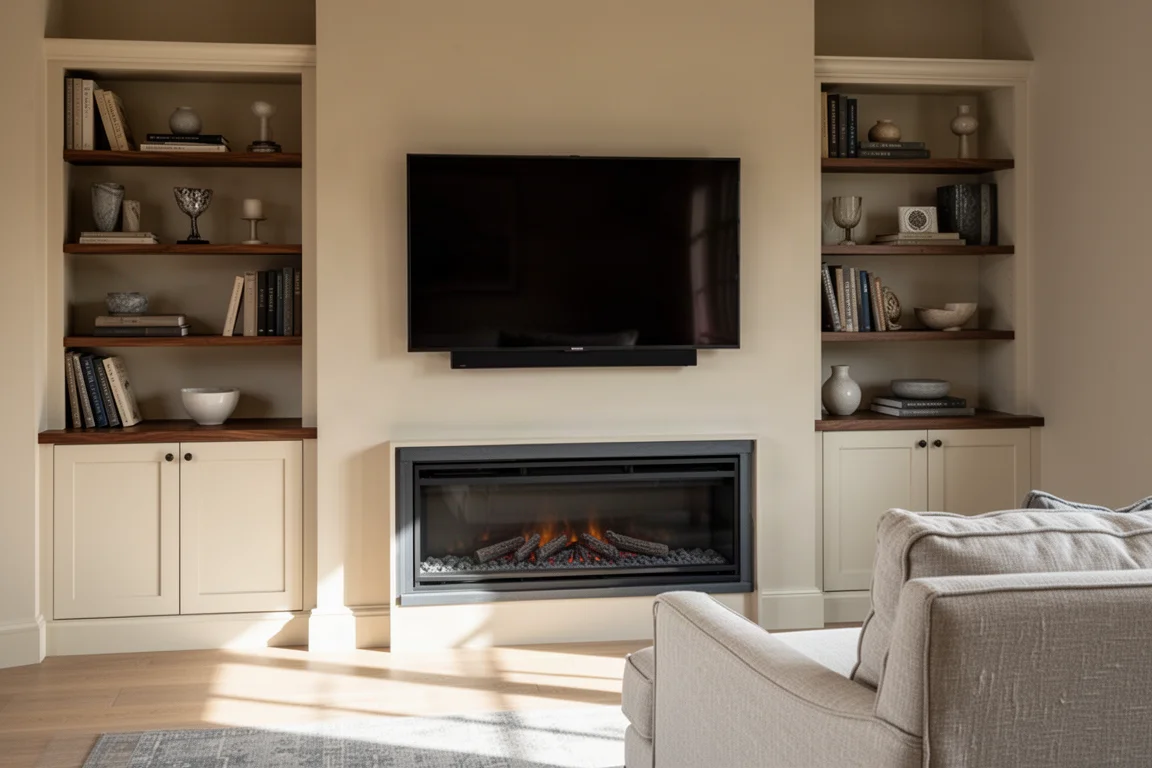
The system suits bedrooms and family rooms where box speakers are not welcome, rooms with shelving flanking the television, and the familiar fireplace-and-television arrangement where a center channel would otherwise sit on a mantel or be replaced by something small and mismatched. If stereo music listening is the priority and the room can accept proper speakers, that path still offers more separation. Where it cannot, this one delivers a genuinely even front stage with real output.
Conclusion
A room that will not accept conventional speakers does not have to accept compromised sound. A passive soundbar cut to match the television, in-ceiling speakers placed according to the format rather than to convenience, and a receiver with capable room correction add up to a system that vanishes into the decor and still performs. For a bedroom or family room where appearance matters as much as output, this combination is worth the investment.
Further reading
Related Reviews
Home Theater
Anthem AVM 90 Review: A 15.4-Channel Flagship Preamp Processor
A close look at Anthem's flagship preamp processor, covering its dual ESS DAC architecture, 15.4-channel layout, ARC Genesis calibration and four independent subwoofer outputs.

Home Theater
Apple TV 4K With AirPods: A Best-Value Home Theater Setup
An Apple TV 4K paired with AirPods over Bluetooth makes a compact home theater setup for movies, spatial music and late-night viewing, and it can be assembled for as little as $300.
Home Theater
Arcam AVR15, AVR25, AVR35, and AVP45 Compared: Which AV Amplifier Fits Your System?
Four new Arcam home theater components share nine-channel amplification and Dirac Live, but differ in power, processing ceiling, and channel flexibility.