Hi-Fi Speakers
Klipsch Cornwall IV Review: A Heritage Loudspeaker Built for Presence
A detailed look at the Klipsch Cornwall IV, covering its bass character, midrange presence, placement demands, finish options, and how it fits within the Klipsch Heritage line.
Introduction
The Klipsch Cornwall IV is a large floorstanding loudspeaker from a Heritage line that stretches back to 1959. The original Cornwall was designed as a full-range alternative to the Heresy and as a center-channel partner for a pair of Klipschorns. Few listeners use it that way today, but the underlying idea has not changed. This is a big cabinet with a big woofer and a horn-loaded top end, and it puts immediacy and presence ahead of politeness.
Like the rest of the Heritage range, the Cornwall IV is designed and assembled in Hope, Arkansas. The cabinet is built from MDF and finished in real wood grain matched veneer, and pairs are book-matched. Klipsch covers the speaker with a 10-year manufacturer’s warranty, which matters for anyone buying with the intention of keeping a system together for a decade or more. Standard finishes are walnut, cherry, and black.
Who the Cornwall IV Is For
The Cornwall IV is for listeners who want the sensation that high-efficiency, horn-loaded speakers produce. That sensation is difficult to quantify. Frequency response figures do not really describe it, because it comes from the way the drivers move and the way the cabinet loads the room. You either respond to it or you do not.
It also suits buyers who are willing to treat placement as part of the setup rather than an afterthought. The Cornwall IV rewards careful positioning and toe-in, and it rewards a decent source chain.
What it does not suit is a listener who wants a speaker that flatters everything. High-sensitivity designs leave less room for weak recordings to hide, so a compressed or harsh master tends to sound compressed and harsh. Anyone who wants a forgiving speaker that works across every genre, and for film soundtracks as well as music, will be better served by a more conventional design.
Main Strengths
Low-End Character and Bass
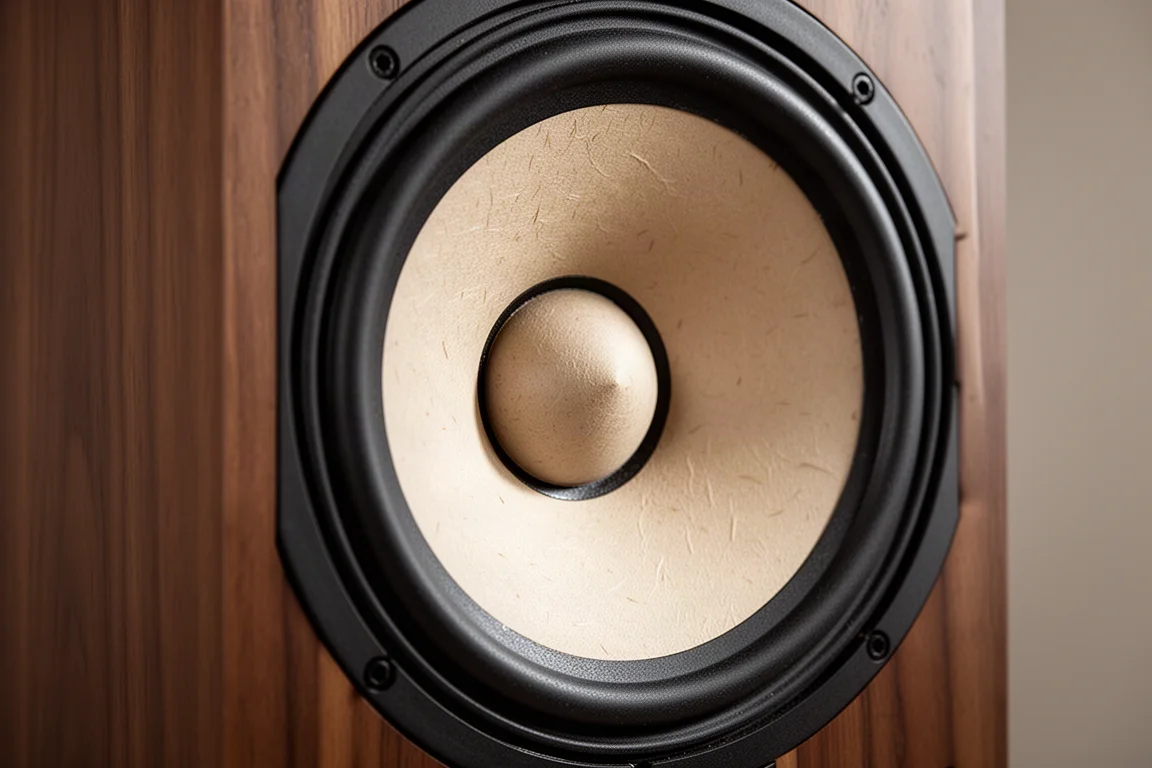
A 15-inch woofer in a cabinet this size creates an expectation of thunderous, room-shaking bass. The reality is more nuanced. The Cornwall IV is rated down to 34 Hz, but its low end rolls off gradually somewhere between 50 and 40 Hz. It reaches 34 Hz, just not with the same vigor it shows at 50 Hz, which is roughly the point where subwoofer territory begins.
That makes the bottom end lively and slightly boosted rather than heavy. There is real finesse down there. Double bass and kick drums come across as plucky, nimble, and textural, and the large driver stays controlled even when driven hard.
If you want to feel the air pressure that follows the strike of a kick drum pedal, a subwoofer is still required. A single compact subwoofer is enough to fill in that last octave, and the rest of the speaker’s character stays intact.
Midrange Presence and Transparency
The midrange is what makes the Cornwall IV such an addictive speaker. Its character is close to the Forte IV, and vocalists arrive with an immediacy that makes it easy to forget you are listening to a recording rather than a live event. That transparency comes from speed and detail rather than from a colorless or strictly neutral tone.
Placement is the key to getting it right. The crossover region has a mild rise in bass presence, and if the speaker is poorly placed, that rise can mask low-mid-bass detail and leave the sound warm but woolly. Push the speakers too far out into the room and the bass becomes anemic, which skews the whole tonal balance toward the treble.
Toe-in has a dramatic effect on midrange focus. Aimed straight ahead, the Cornwall IV produces a broader, softer sound. Toed in directly at the listening position, it delivers near scalpel-like focus.
Treble, Soundstage, and Dynamics
Because of the crossover design, the tweeter is most noticeable from around 5 kHz upward. It adds detail, intelligibility, and sparkle without sounding overtly forward or aggressive. It also rolls off slightly less than the ribbon tweeter used in the Wharfedale Aura 4. Cymbals and flutes pick up a sense of brilliance that sounds convincingly live.
The soundstage is enormous. The Cornwall IV can fill both small and large rooms, and it disappears in a way that is surprising for a three-way speaker of this size. Detail between the speakers is excellent, and center focus improves with toe-in.
Dynamically, the Cornwall IV is close to untouchable at or near its price. Only the La Scala is a hair faster on the attack. Big dynamic swings and small ones are handled with the same reflexes.
Things to Consider Before Buying
Placement and Toe-In
The Cornwall IV asks more of your room than most speakers in its class. Its bass is boosted enough that poor placement costs you low-mid detail, and its midrange focus shifts noticeably with toe-in. Plan for a listening position you can aim the speakers at, and expect to spend time moving them in small increments.
None of this is unusual for a high-efficiency design, and the payoff is a presentation that feels live. It does mean the Cornwall IV is not the speaker to buy if you want to drop it in a corner and forget about it.
Finishes and Customization
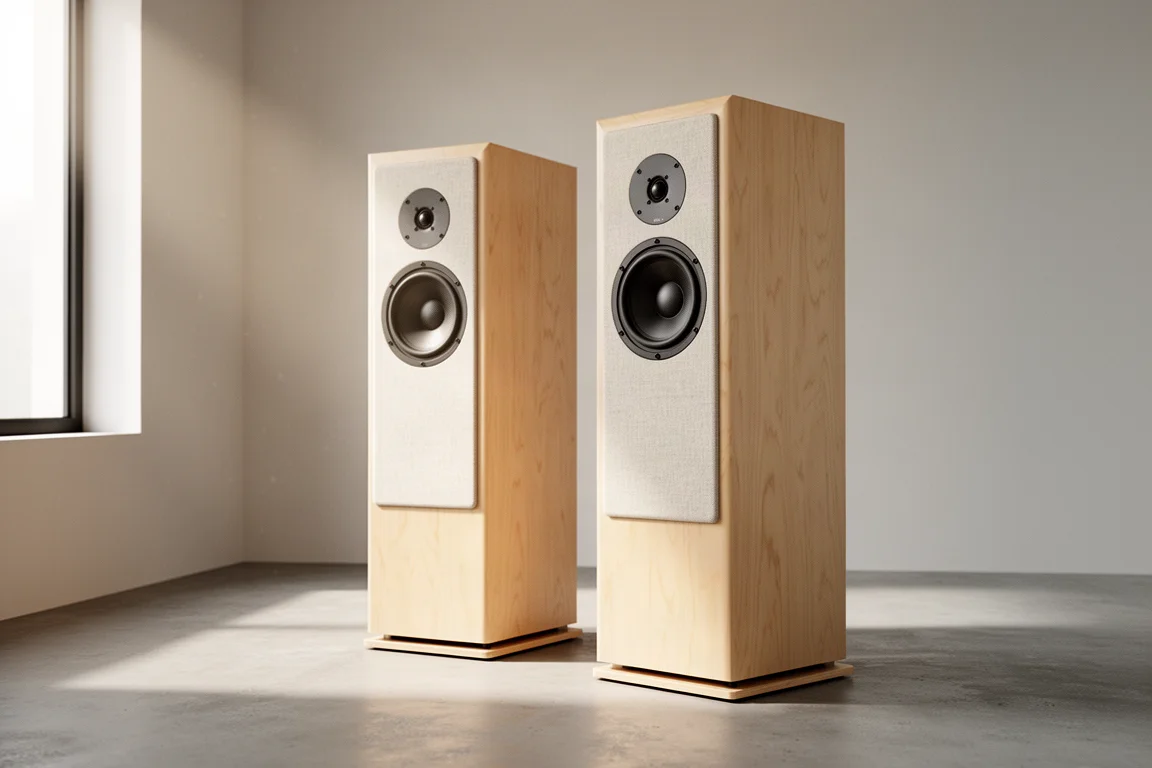
Standard finishes are walnut, cherry, and black. Beyond those, Klipsch Heritage products can be customized, something the company does not advertise heavily. A custom veneer and grille combination, such as a light maple cabinet paired with a lambswool grille, changes the look substantially and makes the speaker feel like a piece of furniture rather than an appliance.
Customization adds cost and lead time, and both depend on the selection and availability of the materials. Each customized pair is hand-labeled on the back to reflect the cosmetic changes made.
How the Cornwall IV Compares With the Rest of the Heritage Line
Within the Heritage family, the Cornwall IV sits in a particular spot. The La Scala is fully horn-loaded, while the Cornwall IV is a hybrid that relies on a conventional woofer for its low end. That means the Cornwall IV plays notably deeper than the La Scala, but with bass that is more boosted and therefore more sensitive to placement. The La Scala is the more forgiving of the two in a difficult room, and it remains the fastest and most dramatic speaker in the line.
Against the Forte IV, the Cornwall IV plays lower, but only marginally. From the midrange upward, the two are very evenly matched. The Forte IV is smaller and lighter, which makes it easier to accommodate in more rooms, and it costs less. For most buyers shopping the Heritage line, the Forte IV is the stronger pound-for-pound choice.
The Heresy IV is a different proposition. It is the right answer when space is tight and you want horn-loaded immediacy and presence, but it is not really comparable to the Cornwall IV. Adding a subwoofer to a Heresy IV will not deliver Cornwall IV or Forte IV performance.
Buying Advice
If you are shopping within the Heritage line and want the best balance of performance and practicality, the Forte IV is the sensible pick. Choose the Cornwall IV instead when you want the deeper low end, the larger presentation, and the sense of occasion that comes with the biggest hybrid in the family, and when your room can support the placement work it demands.
It is also worth being honest about what else is available. The Polk R700, at around two thousand dollars a pair, remains very difficult to beat. It is easier to live with, easier to set up, and it sounds good across every genre of music and film, while being far more forgiving of source quality. The Wharfedale Aura 4 is similarly capable across a wider range of genres, easier to set up despite its size, less critical of placement, and it leans toward a more studio-like sound rather than a live one.
None of that diminishes what the Cornwall IV does. Horn-loaded, high-efficiency speakers produce a sensation that conventional dynamic drivers simply cannot replicate, and no measurement fully captures it. The question is not which speaker is objectively better. It is which listening experience you actually want.
Conclusion
The Klipsch Cornwall IV is not a modern speaker in the conventional sense, and it is not trying to be. What it offers is presence, scale, and a live-music quality that is hard to find elsewhere, backed by a 10-year manufacturer’s warranty and a customization program that lets you make the pair your own. It is imperfect in ways that are part of its character, and it asks for a little patience with placement in return.
If you want a speaker that disappears into a system and handles everything without complaint, a conventional design will serve you better. If you want the horn-loaded experience and the deeper low end of the Heritage hybrids, the Cornwall IV is a compelling long-term purchase, and one worth hearing before you commit.
Product link
View more details for Klipsch Cornwall IV
This product is mentioned in the review. Check the specifications, options, and compatibility before buying.
View more details for Klipsch Cornwall IVFurther reading
Related Reviews
Hi-Fi Speakers
1723 THX Tower vs 1528 Bookshelf: Which Speaker Fits Your Room?
Two speakers at roughly the same price, built very differently. How the 1723 THX tower and the 1528 bookshelf compare on construction, bass, power needs, and sound.
Hi-Fi Speakers
Acoustic Energy AE 300 Review: Deep Bass From a Compact Standmount
A two-way standmount with real wood veneer, surprising low-end weight, and a warm, easygoing character. Here is what to know before buying.
Hi-Fi Speakers
Acoustic Energy AE1 40th Anniversary Review: A Modern Take on a British Classic
A compact standmount that revives a 1980s favorite with all-new parts, a warm mid-centric balance, and a price of £1,499 per pair.