Home Audio
Klipsch Cornwall III Review: High-Sensitivity Horn Speakers That Fill a Room
A practical look at the third-generation Klipsch Cornwall, from its 102 dB sensitivity and 15-inch fiber composite woofer to the placement and amplifier choices that shape its sound.
Introduction
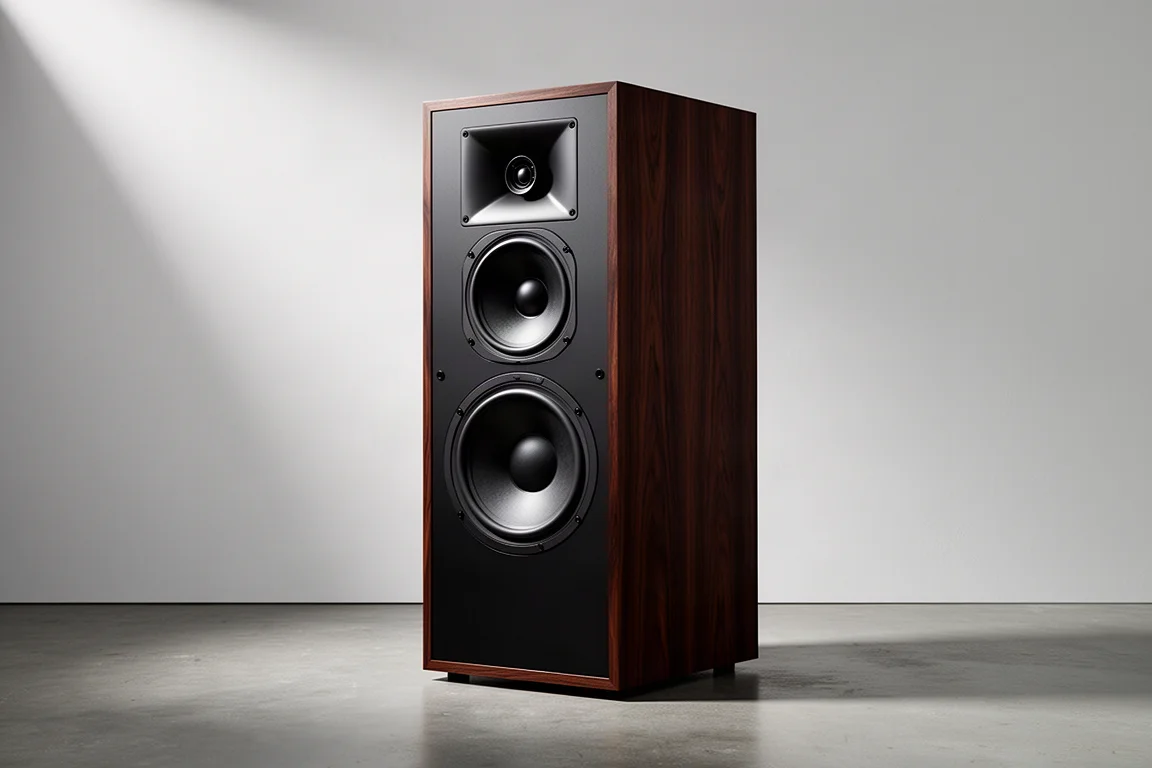
The Klipsch Cornwall III is a large, horn-loaded floorstanding speaker built around a simple idea: make the speaker sensitive enough that almost any amplifier can drive it, then let the cabinet size do the heavy lifting on bass. The third-generation Cornwall is rated from 34 Hz to 20,000 Hz, with a sensitivity of 102 dB and a nominal impedance of 8 ohms.
That combination matters. A pair can reach satisfying volume levels in a normal room from an amplifier delivering only a couple of watts per channel, which makes the Cornwall III an appealing match for low-power tube designs. It also means the speaker reveals a great deal about the amplifier and the room behind it. A new pair is listed at around $4,400, with finishes in American Walnut, black ash, and cherry.
Who the Klipsch Cornwall III Is For
This is a speaker for listeners who want big, effortless output without a big amplifier, and who have the floor space to accommodate a cabinet measuring 36 inches high, 25 inches wide, and 15 inches deep. Each speaker weighs 98 lbs, so placement is a two-person job and a long-term decision rather than something to move on a whim.
It also suits listeners who care most about the middle of the music. The Cornwall III separates instruments and voices to a degree that makes familiar recordings sound newly organised, and it does so without pushing vocals forward or recessing them. If your priority is pinpoint imaging in a small room, a large horn speaker is a different proposition. If your priority is scale, clarity, and easy drive, this is the right territory.
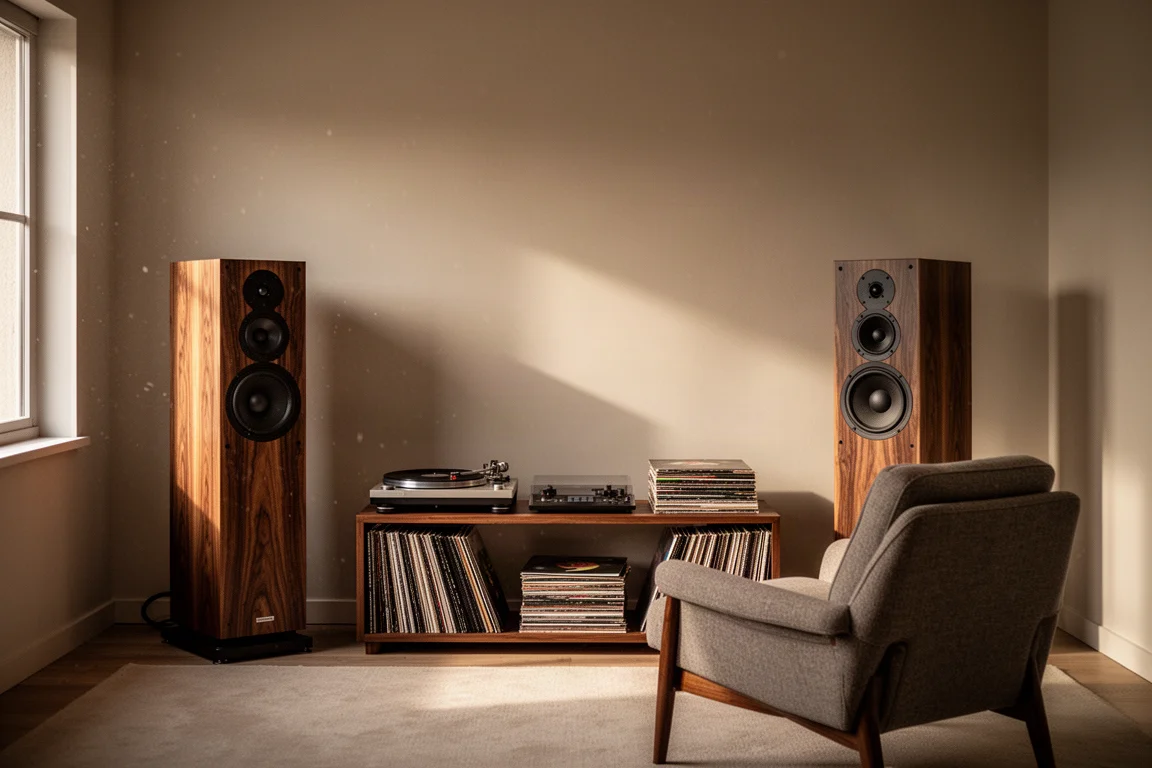
Listeners who already own a low-power tube amplifier will find the Cornwall III unusually accommodating, and those building a system around a solid state amplifier will find it equally willing. The deciding factor is less about whether it can be driven and more about how you want it to sound.
Design, Placement, and Room Fit
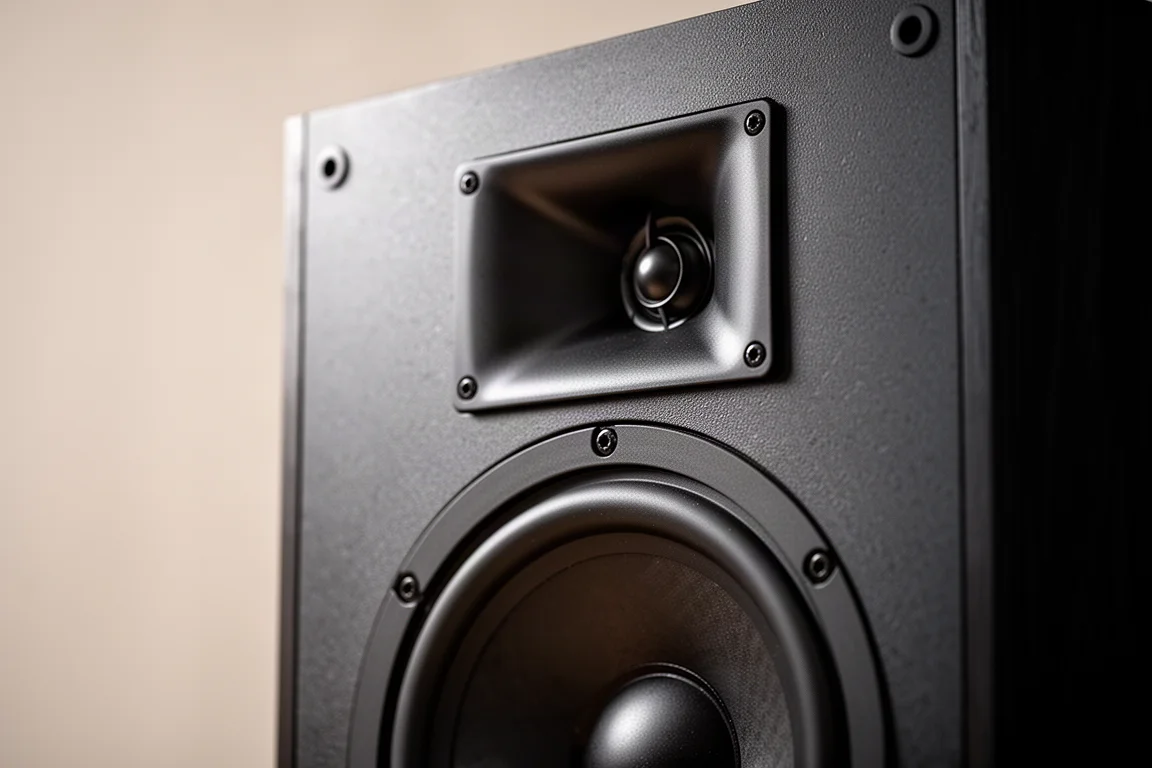
The Cornwall III is a three-way design with crossover points at 800 Hz and 5,000 Hz. The tweeter and the mid-range both use titanium diaphragm compression drivers, and the woofer is a 15-inch fiber composite cone. The horn loading on the upper drivers is what gives the speaker its sensitivity and its particular way of projecting detail into a room.
The name suggests corner placement, and the cabinet is designed to work against a wall or in a corner. That said, pulling the speakers roughly three feet out from the back wall and towing them in slightly, rather than aiming them straight ahead, widened and deepened the soundstage considerably. In a room with consistent sidewalls, the improvement was immediate and obvious. Buyers with a flexible room should plan on experimenting with distance from the wall before settling on a final position.
Main Strengths: Sensitivity, Dynamics, and Clarity
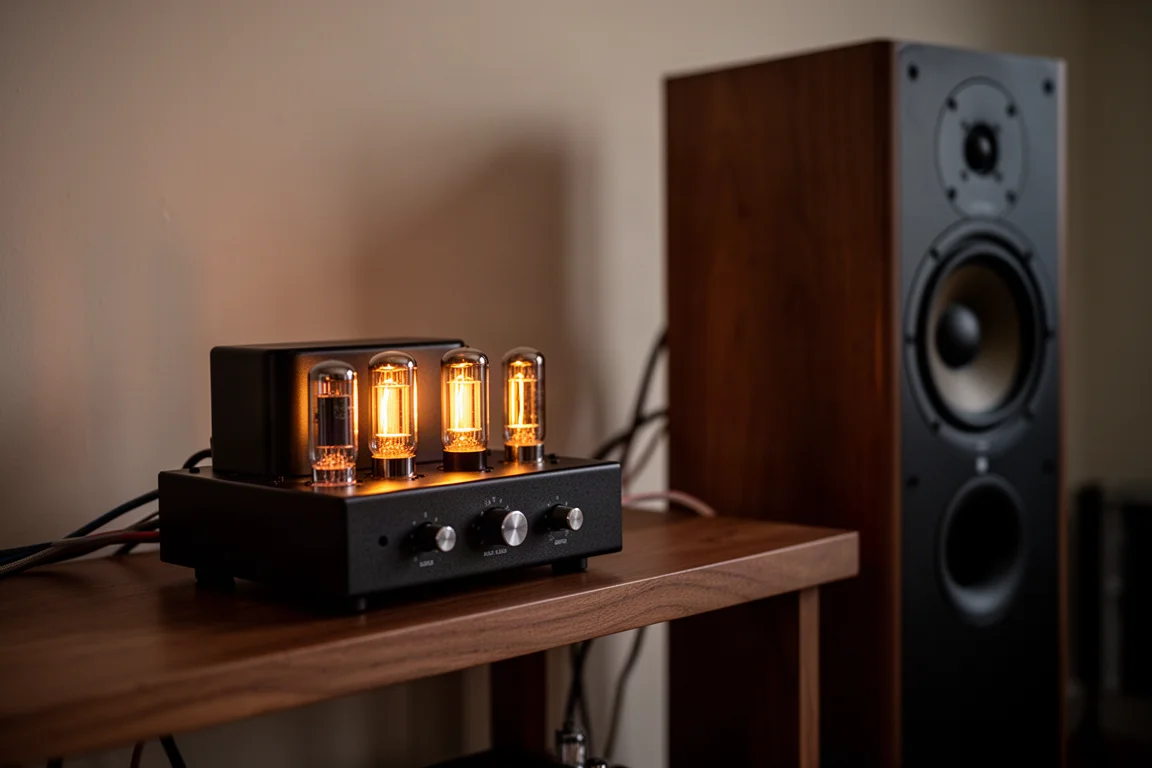
Sensitivity is the headline number. At 102 dB, the Cornwall III reached comfortable listening levels from a 2.5 watt single-ended tube amplifier without strain. Very few floorstanding speakers can be driven that easily, and it opens up amplifier choices that would otherwise be off the table.
The more surprising strength is separation. Instruments, lead vocals, and backing vocals arrive as distinct layers rather than a blended mass. On dense, layered recordings, individual keyboard lines and bass figures stayed legible against each other. That quality held up across very different material, from acoustic recordings to heavily produced pop.
Dynamics are the other half of the story. The speaker scales quickly when the music asks for it, and it handles the build of a dynamic track without sounding compressed or hesitant. Even at low volume, the presentation stays open rather than flattening out.
Mid-Range and Treble Detail
Mid-range clarity is where the Cornwall III makes its strongest case. Vocals resolve with unusual precision, including small details such as the exact point where a sung note stops. Acoustic string plucks come across as physical events rather than vague sounds.
The treble is equally articulate. Cymbal work is rendered with enough resolution to distinguish between different strikes on different cymbals, and percussion in general is handled with a realism that is difficult to find at this level. A tambourine, for example, reveals both the shake and the hit as separate elements. The horn-loaded tweeter here is notably better controlled than horn designs often are, and it moves a lot of air without sounding sharp.
Tonally, the speaker sits in the middle: not warm, not cool. There may be a slight emphasis somewhere in the 4 to 6 kHz region, but the upper mid-range is not hyper-forward, and nothing about the balance feels aggressive over long sessions.
Bass Response and Amplifier Pairing
The 15-inch fiber composite woofer extends down to a claimed 34 Hz, and the amount of bass on offer is best described as balanced rather than exaggerated. It is neither a bass-heavy speaker nor a thin one. On tracks that call for punch, it delivers. On everything else, the low end stays out of the way of the mid-range, which is the more important quality.
Amplifier choice changes the character meaningfully. With a 2.5 watt tube amplifier, there was still enough bass for most listeners, though the low end lacked some of the start-and-stop control that a more powerful amplifier provides. Switching to a 200 watt per channel solid state amplifier added dynamics, more punch, and noticeably firmer control of the bass. Imaging also became more specific, with instruments placed rather than simply spread across the stage.
The tube presentation was more three-dimensional, but also hazier. The solid state presentation was more definitive and, on balance, more realistic. That is a useful thing to know before buying: the Cornwall III will work with a very small amplifier, but it rewards a more powerful one.
One pattern held across both setups. Bass never covered up mid-range clarity, and the speaker kept its composure regardless of how much low-frequency energy a track contained.
Things to Consider Before Buying
Size is the first consideration. At 98 lbs per speaker and 36 inches tall, the Cornwall III demands floor space and a permanent home. Rooms with limited freedom to position speakers will not let the design show what it can do.
Placement is the second. The cabinet is intended for wall or corner placement, but the soundstage opens up substantially when the speakers are pulled out and toed in. Buyers should assume that some experimentation is part of the process.
Amplifier matching is the third. The speaker can be driven by almost anything, but the difference between a low-power tube amplifier and a high-power solid state amplifier is real, and it affects bass control, dynamics, and imaging precision. Neither approach is wrong, but they do not sound the same.
Finally, there is the tonal question. The Cornwall III is balanced rather than coloured, with a possible mild emphasis in the lower treble. Listeners who prefer a warm, softened presentation may find it more revealing than they expect.
Buying Advice
If you have the room, the budget, and a preference for clarity and scale over compact size, the Cornwall III is worth serious consideration. A new pair is listed at around $4,400 and comes in American Walnut, black ash, or cherry, so the finish can be matched to the room rather than worked around.
Pair it with an amplifier you can live with, not just one that technically drives it. A low-power tube amplifier will work and will sound dimensional. A solid state amplifier with more power will tighten the bass, sharpen the imaging, and add dynamic headroom. If you already own both, the speaker makes the comparison easy and enjoyable.
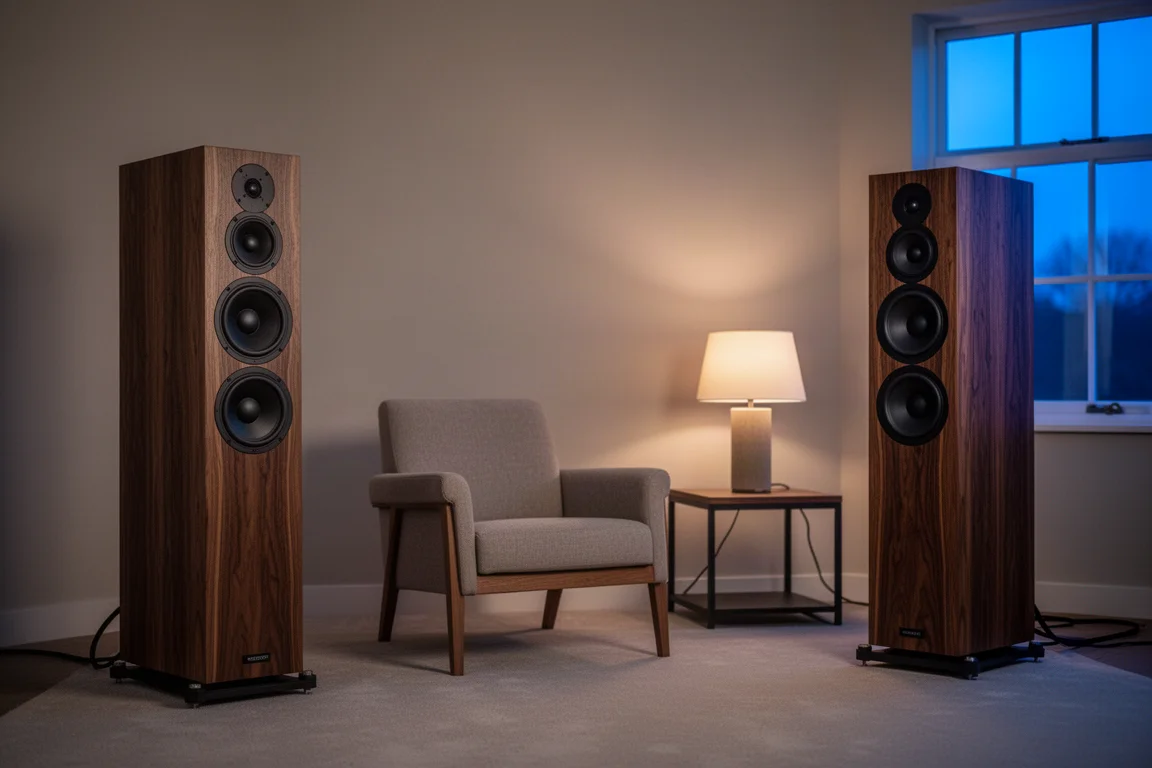
Before ordering, measure the space. The Cornwall III wants a wide, reasonably symmetrical wall, and it wants the freedom to sit a little away from that wall. Buyers who can give it both will get the most from the design.
Conclusion
The Klipsch Cornwall III is a high-sensitivity three-way floorstanding speaker that pairs old-fashioned efficiency with modern driver materials. Its 102 dB sensitivity, 800 Hz and 5,000 Hz crossover points, titanium compression drivers, and 15-inch fiber composite woofer add up to a speaker that is easy to drive, unusually revealing in the mid-range, and capable of genuine scale.
It is not small, it is not light, and it asks for careful placement. Within those constraints, it delivers a level of instrument separation and treble realism that makes long listening sessions easy to justify. For listeners with the space and the budget, it is a compelling long-term choice.
Product link
View more details for Klipsch Cornwall III
This product is mentioned in the review. Check the specifications, options, and compatibility before buying.
View more details for Klipsch Cornwall IIIFurther reading
Related Reviews
Home Audio
Aperion Novus Tower and Center Review: Punchy Home Theater Sound With Real Refinement
A close look at the Aperion Novus tower and center speakers, from their layered paint finish and punchy bass to the 4-ohm load and what the price actually buys.
Home Audio
Arendal 1610 Tower Review: Flagship Dynamics in a Room-Friendly Tower
A compact floorstanding tower with three 8-inch aluminium woofers, a 5-inch carbon midrange, and the kind of bass heft usually reserved for much larger speakers.
Home Audio
Arendal 1723 S THX Review: A Reference Speaker Built Like a Tank
A practical look at the Arendal 1723 S THX, a sealed, THX-certified speaker with exceptional build quality, a very flat top end, and a midrange that responds beautifully to EQ.