Hi-Fi Speakers
KLH Model 5 vs Wharfedale Linton: Which Standmount Speaker Fits Your Room?
Two wide-radiating standmount speakers with similar bass extension and sensitivity, split by placement needs, tonality, and how they behave at higher volumes.
Introduction
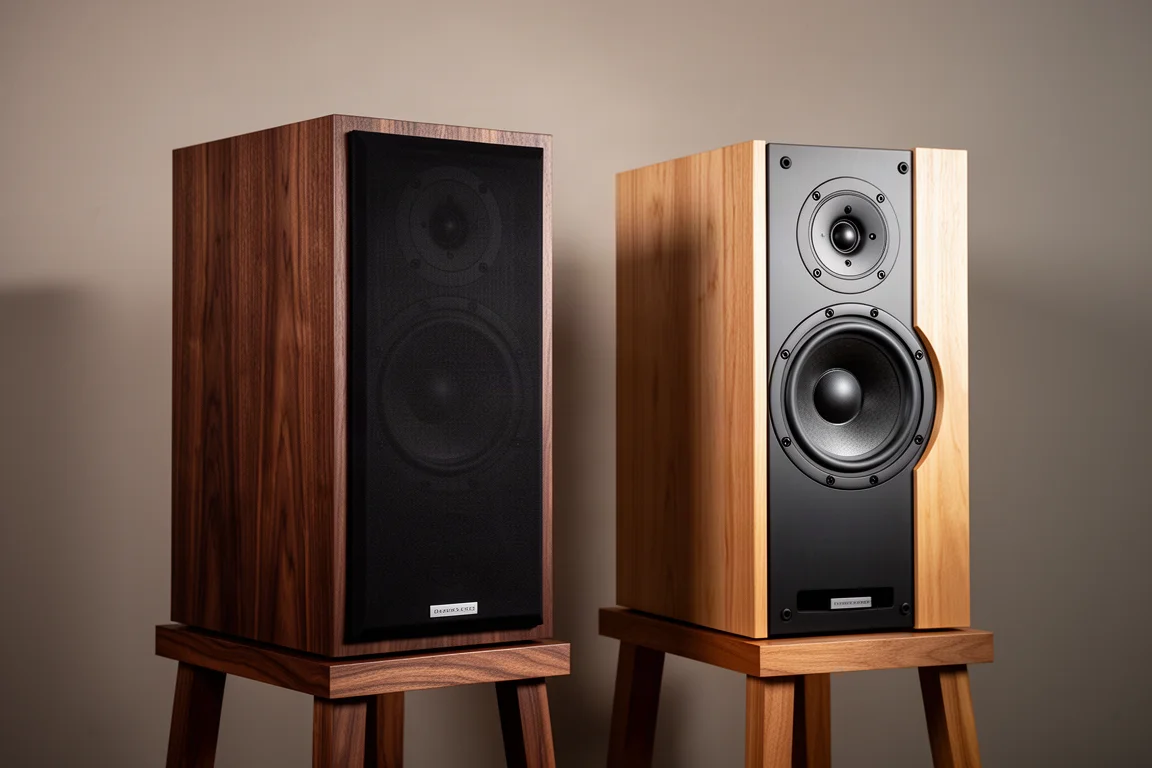
The KLH Model 5 and the Wharfedale Linton occupy the same corner of the market: large standmount speakers with wide radiation, similar bass extension, and similar sensitivity. They are also two of the more interesting options for listeners who want a big, room-filling presentation rather than a tightly focused one.
The two designs part ways on placement and voicing. The KLH Model 5 is built to sit close to a wall and gives you adjustable settings to fine-tune its balance. The Wharfedale Linton ships with a single fixed setting and is intended to be used with its grille on. Which one makes sense depends less on which is better in the abstract and more on the room you actually have.
What Both Speakers Share
Both speakers use a wide radiation pattern, roughly plus or minus 70 degrees through the midrange and treble. That means a lot of energy is sent out into the room, including toward the side walls, and reflected sound carries a substantial share of what you hear.
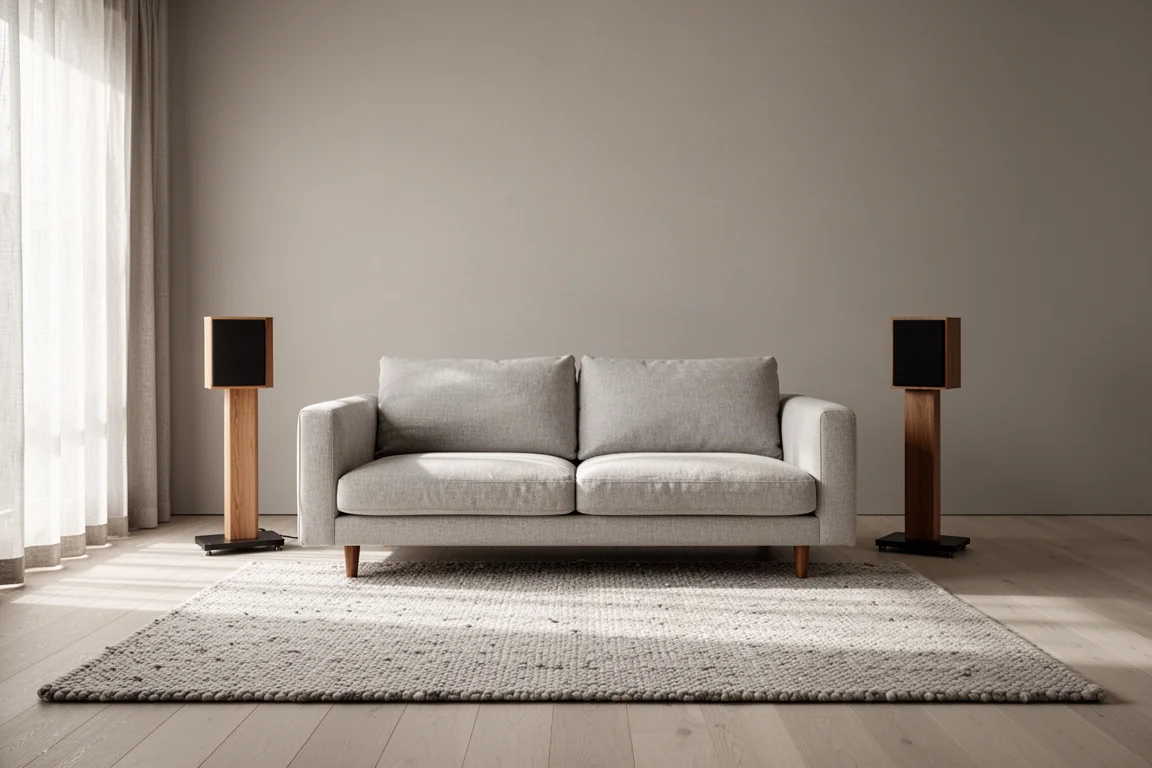
If you dislike wide-radiating speakers, neither of these is likely to suit you. Designs with a more constricted waveguide focus their energy at the listening position and spray less onto the walls. If you do enjoy a broad presentation, both of these deliver it generously.
The trade-off is imaging precision. Both give up some pinpoint placement of instruments in exchange for that breadth, and no amount of toe-in fully recovers it. Bass extension is also very close between them: the F3 figures are essentially identical, and the F10 values sit only about three hertz apart. Sensitivity is comparable as well, at roughly 85 dB for both.
KLH Model 5: Strengths and Trade-Offs
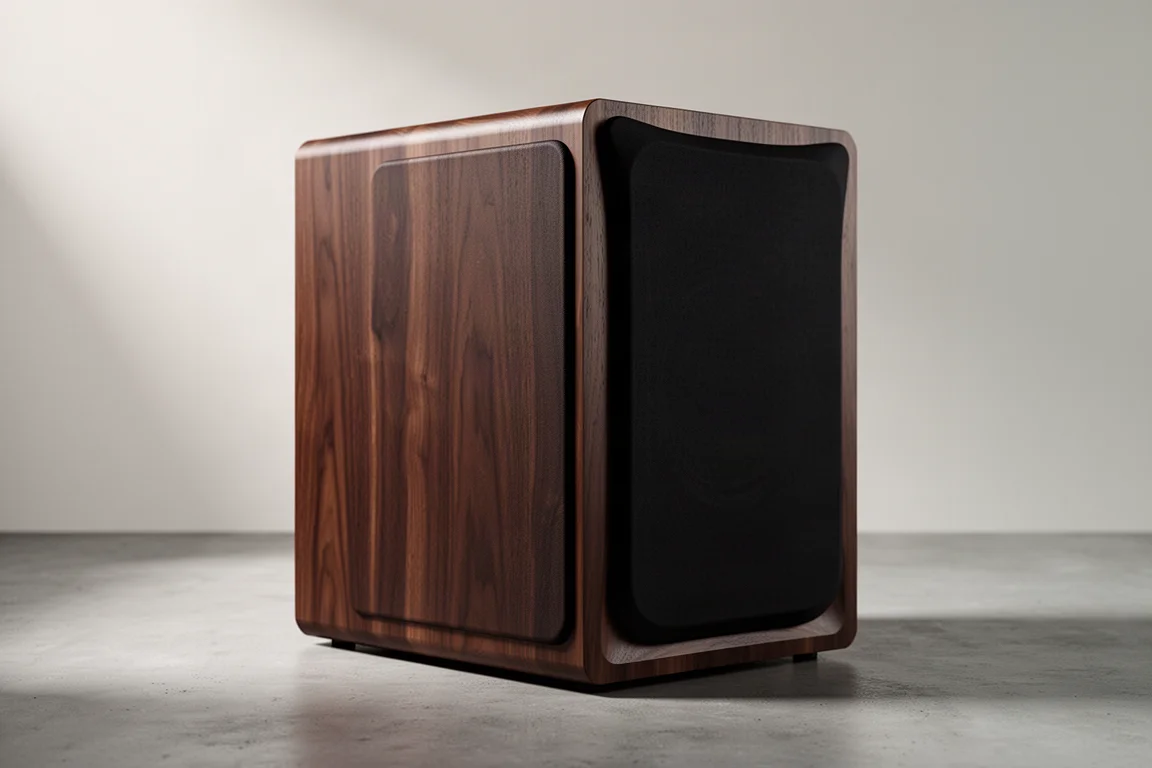
The Model 5 includes adjustable settings, and in listening the low setting worked best, with the medium setting used occasionally. The grille stayed on, and the speakers were toed out about 10 degrees rather than aimed straight at the listening position.
The design uses baffle step compensation, which drops output in the upper mid-bass to lower midrange transition around 200 to 300 Hz. That costs some mid-bass punch and pulls back the body of deeper male vocals and upper female vocals. Moving to the low setting raised the mid-bass relative to the midrange and largely restored neutrality, but the effect was still audible in a room that required the speakers to sit about three feet out from the wall. KLH recommends placing the speaker between six and 24 inches from a wall, and the tuning assumes that proximity.
Two other traits stood out. There is a midrange resonance, measured around 900 Hz, that crept in from song to song and made some material sound boxy or nasal. At higher output levels, roughly 85 to 90 dB at four meters, the 2 to 4 kHz region turned harsh, with guitar and string attack jumping forward. At lower volumes this was not an issue. High frequencies roll off, which reads as warmth. On-axis linearity is poor, partly because of the grille and largely because of diffraction from the lip that runs around the cabinet, though the peaks and dips smooth out as you move off axis.
Wharfedale Linton: Strengths and Trade-Offs
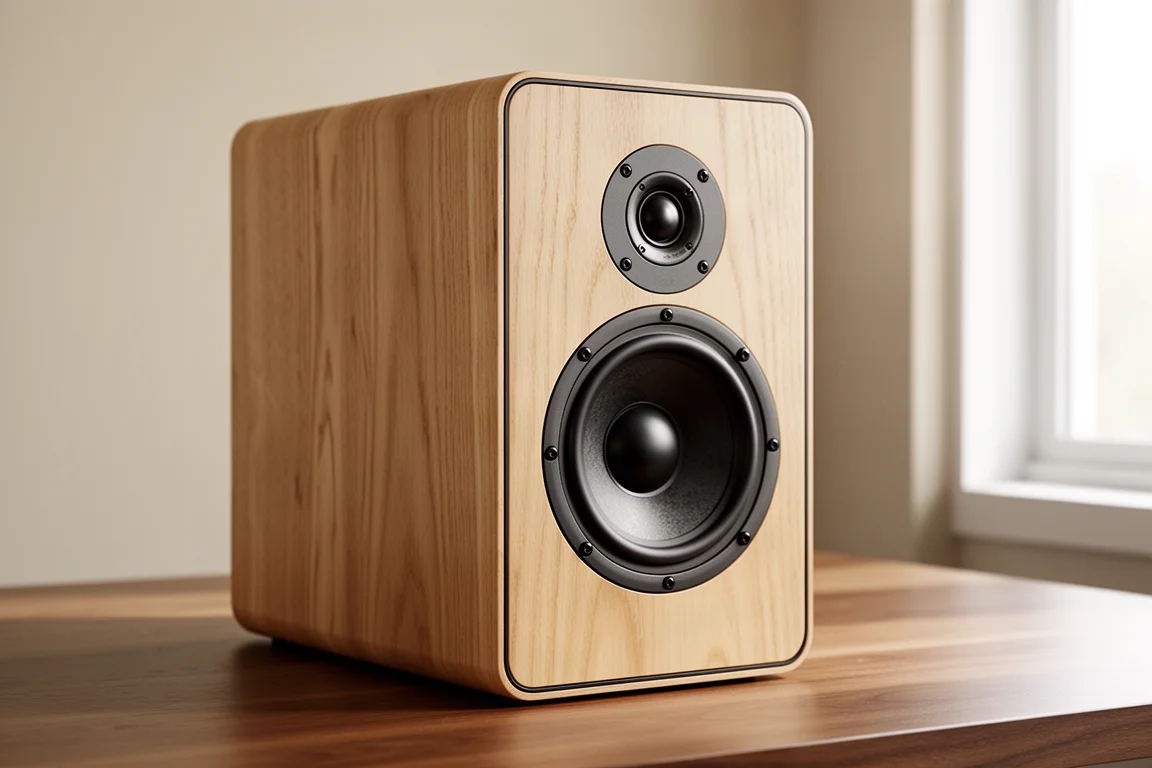
The Linton has no adjustable settings. It arrives with a single fixed balance and is designed to be used with the grille on, which mitigates some of the diffraction behaviour from the cabinet lip.
Measured performance is the more neutral of the two. The mid-bass to midrange region is close to flat, with a dip of roughly half a decibel to one decibel, and the overall linearity is better than the Model 5’s. There is a rise in the on-axis response, which is why listening slightly off axis worked better.
The one clear shortfall is a dip around 1 kHz that takes away some attack, most noticeable on snares, where high-dynamic-range tracks lost a little of their snap. There is also a roll-off above roughly 12 kHz, less pronounced than the Model 5’s high-frequency drop but present all the same. Compared with the Model 5, the Linton extends a little further in high-frequency radiation, which reinforces reflected energy at the top end and supports its estimated in-room response. That is a large part of why it reads as neutral rather than warm.
Measured Performance and What the Data Shows
A single on-axis measurement says very little about how a speaker behaves in a room, because reflections arrive from the sides, above, below, and behind the listener. Data captured around the whole speaker gives a far more useful picture of timbre.
For the Model 5, that data confirms the baffle step behaviour around 200 Hz and shows substantial non-linearity in the higher frequencies. For the Linton, it shows a largely neutral mid-bass and midrange with the 1 kHz dip, plus an on-axis rise that responds well to a slight off-axis angle.
The estimated in-room response, which combines direct sound with reflections, is reliable above roughly 500 to 600 Hz. Below that, room modes dominate the result. This is the most practical way to judge the tonality of a speaker before you commit to it, because it describes the balance you will actually hear rather than a single point in space.
Neutrality, Warmth, and Listening Impressions
The Model 5 sounds warm, a consequence of its reduced high-frequency output. The Linton shows the same characteristic but to a much smaller degree, which is why it comes across as the more neutral speaker of the two.
The Linton’s 1 kHz dip is the one thing worth wanting to fix. It can be equalised if your setup allows it, or simply accepted given how much else the speaker does well. The Model 5 does not have that dip, so a listener who prioritises attack and presence in that region may prefer its balance despite the added warmth. Neither approach is wrong; they simply favour different recordings and different tastes.
Room Placement and Setup Considerations
Placement is where this decision is often made. The Model 5 is designed to work near a wall, six to 24 inches away, and its tuning assumes that reinforcement. The Linton is not.
In a room that forces the speakers roughly three feet into the space, the Model 5 loses the mid-bass punch its baffle step compensation gives up, and no setting fully compensates for that. The Linton carries no such dependency, which makes it the easier fit where the speakers have to sit out into the room.
Both benefit from a slight toe-out or an off-axis listening angle. Both are also wide-radiating designs, so treating the first reflection points is worth considering if your room is lively, and a little distance from side walls will help keep the presentation from smearing.
Compression, Distortion, and Higher Volume Listening
At higher output, the Model 5 compresses mainly in the high frequencies, by around half a decibel, with a little more below that. This lines up with the harshness heard in the 2 to 4 kHz range at roughly 85 to 90 dB at four meters.
The Linton compresses noticeably at the low end, and also at the top. Multi-tone distortion testing shows the Linton exceeding three percent distortion around 500 to 700 Hz. That did not surface as an audible problem in listening, though a direct back-to-back comparison at matched levels might reveal it. In practice, both speakers are comfortable at normal listening levels, and the differences appear when you push them hard in a large space.
Buying Advice: Which Speaker Fits Your Room
The simplest way to decide is to start with placement. If the speakers can sit close to a wall, the Model 5’s tuning works in your favour and its adjustable settings give you room to fine-tune the balance. If they have to sit well out into the room, the Linton’s neutral voicing and lack of placement dependency make it the safer choice.

If imaging precision matters most, neither speaker is the right answer, because both trade it away for a wide presentation. If you want the more neutral tonality of the two, the Linton has the edge. If you want warmth plus near-wall flexibility, the Model 5 does.
Where possible, buy both and try them at home. Many retailers allow an in-home trial, which is the only way to know how either speaker behaves with your room, your amplifier, and your seating position.
Conclusion
Both are wide-radiating standmounts with similar bass extension and similar sensitivity, and both give up some imaging precision in exchange for a large presentation. The Linton is the more neutral of the two, with a dip around 1 kHz that softens snare attack. The Model 5 is warmer, needs to sit near a wall to sound its best, and can turn harsh in the 2 to 4 kHz range at higher volumes.
Choose based on your room first, then your tonal preference. Either way, an in-home trial before you commit is the smartest step you can take.
Further reading
Related Reviews
Hi-Fi Speakers
1723 THX Tower vs 1528 Bookshelf: Which Speaker Fits Your Room?
Two speakers at roughly the same price, built very differently. How the 1723 THX tower and the 1528 bookshelf compare on construction, bass, power needs, and sound.
Hi-Fi Speakers
Acoustic Energy AE 300 Review: Deep Bass From a Compact Standmount
A two-way standmount with real wood veneer, surprising low-end weight, and a warm, easygoing character. Here is what to know before buying.
Hi-Fi Speakers
Acoustic Energy AE1 40th Anniversary Review: A Modern Take on a British Classic
A compact standmount that revives a 1980s favorite with all-new parts, a warm mid-centric balance, and a price of £1,499 per pair.