Bike Conversion Kits
Kinetics Brompton Conversion Kit Review: Turning a Folding Bike Into an Off-Road Machine
A hands-on look at the Kinetics conversion kit that swaps a Brompton's 16-inch wheels for 20-inch knobbly tyres, disc brakes and an 11-speed hub, and what that does to the way it rides.
Introduction
The Brompton is one of the most recognisable folding bikes in the world and arguably the most successful piece of functional design in cycling. More than a million of these small-wheeled folders have been sold worldwide, and the layout has stayed remarkably faithful to the original for over 47 years. Along the way the range has grown to include plenty of new colours, occasional titanium touches and an electric version, but the fundamentals have not moved far.
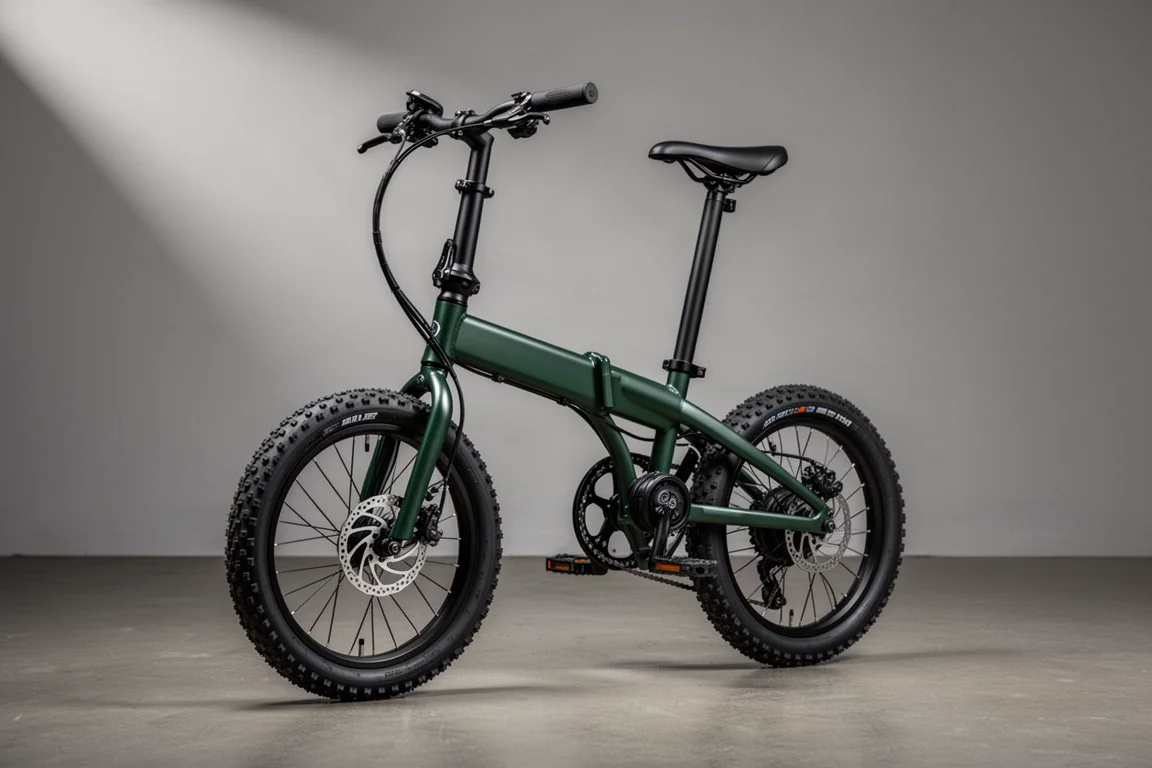
The Kinetics conversion kit is what happens when someone decides those fundamentals should move. It is a complete hardware package that lets you rebuild a Brompton around much larger wheels, knobbly tyres, disc brakes and a completely different drivetrain. The result is a folding bike that looks like a Brompton but behaves like something else entirely.
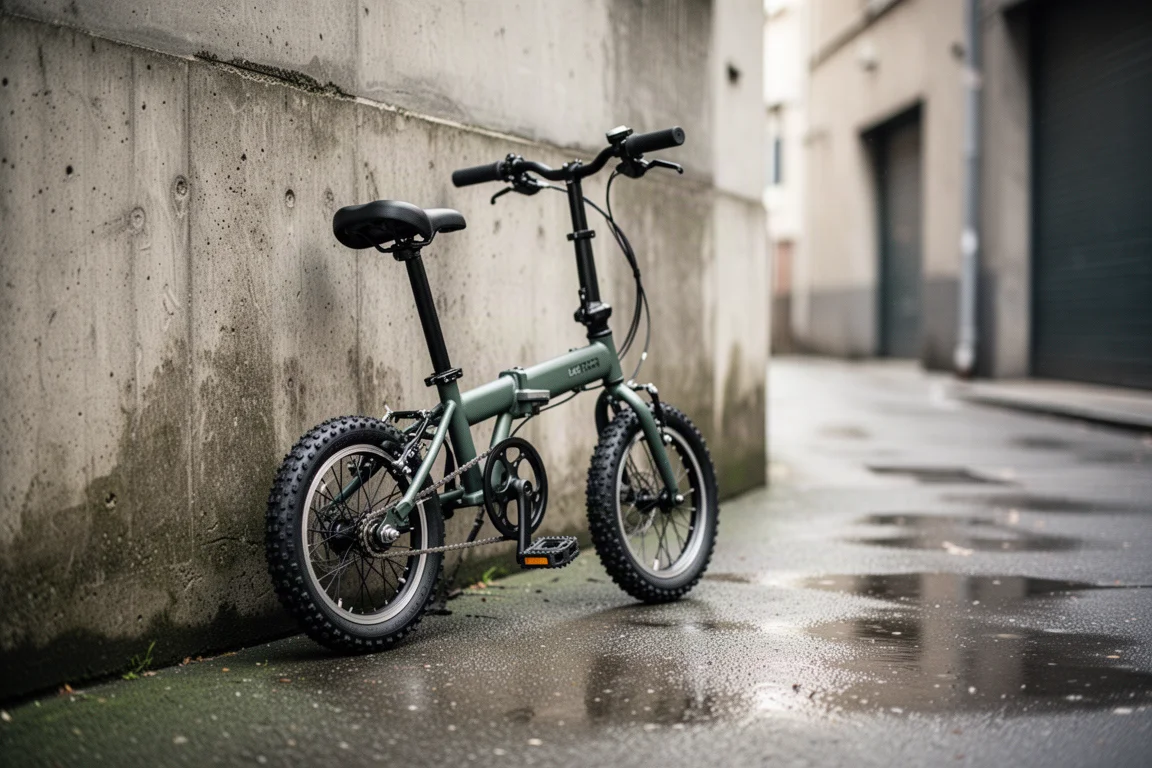
In practice, fitting the kit transforms a bike that was engineered for smooth city surfaces into something you can point at gravel tracks and wooded trails. It is a genuinely unusual proposition, and it comes with a set of compromises that are just as interesting as the gains.
What the Kinetics Conversion Kit Changes
The kit is not a small cosmetic tweak. It replaces the parts that define how a Brompton puts power down and stops.
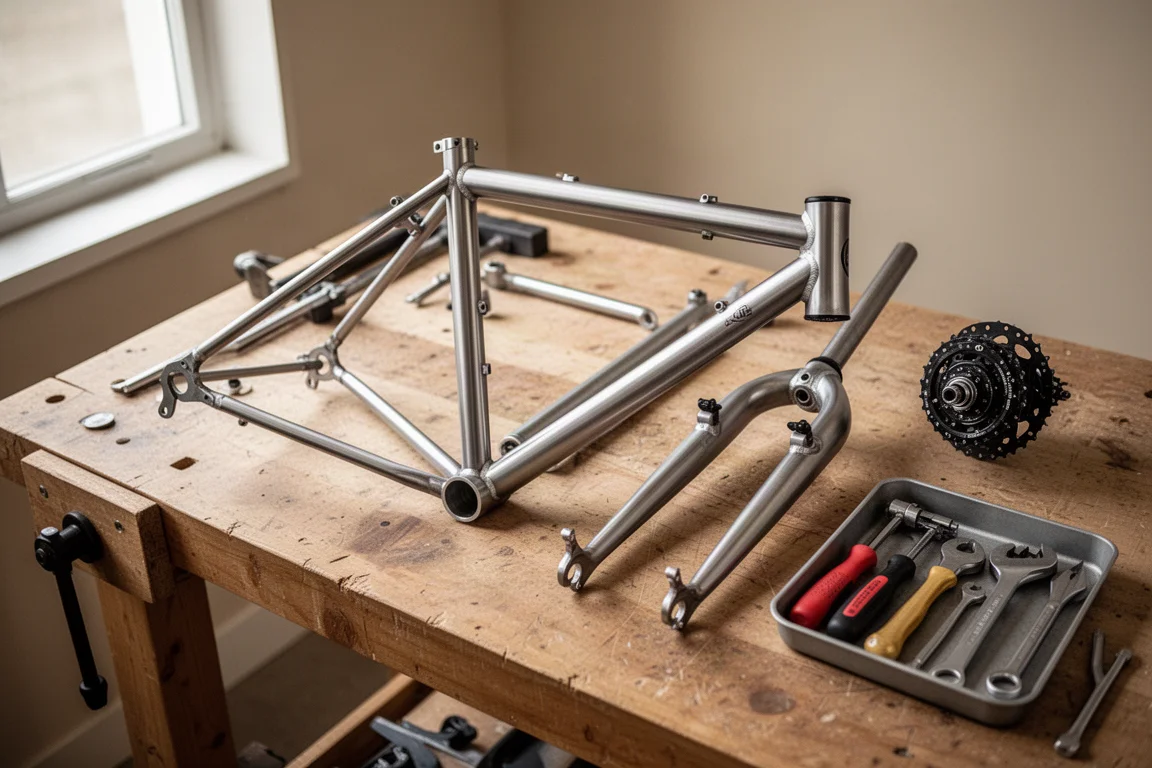
The headline change is wheel size. The standard 16-inch wheels are swapped out for 20-inch wheels, which opens up the space needed for proper off-road rubber and gives the bike noticeably more ground clearance and roll-over ability.
That taller wheel requirement cascades into the frame. A new rear triangle and a new front fork are part of the package, and both are built to accept disc brakes rather than the original rim brake arrangement. Stopping power is stronger and far less dependent on rim wear or wet weather.
Drive comes from an 11-speed internal gear hub at the rear, a sealed unit that keeps the drivetrain tidy and sheltered from mud. It is a neat solution for a bike that is expected to get dirty, and it suits a single-chainring, low-maintenance setup.
The kit does strip some equipment away in the process. Mudguards and lights come off, and the bike no longer folds to quite the same compact size.
Who This Kit Is For
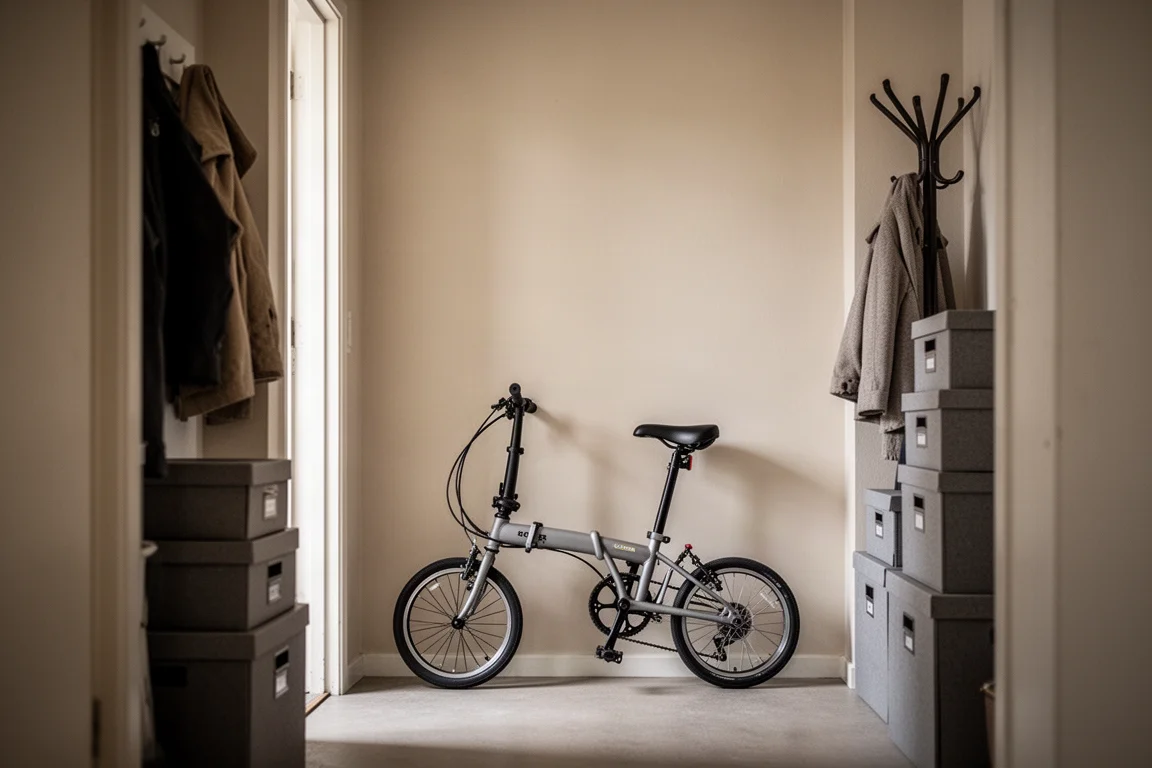
The obvious use case is a rider who wants off-road capability without giving up the convenience of a folding bike. Folding bikes earn their place for travel and for anyone short on space at home, particularly people who cannot store several bikes.
In that context, the converted bike makes a lot of sense for gentle gravel tracks, towpaths and mellow mixed-surface routes. It is one bike that covers commuting and light trail riding, and it still retains the direct, agile, slightly twitchy feel that anyone who has ridden a Brompton will recognise instantly.
It is not a replacement for a mountain bike. On steep, muddy and rocky descents with a converted Brompton, the speed is low and the risk feels disproportionately high. That sensation is the classic example of under-biking: the bike simply is not designed for that terrain, and the rider has to make up the difference.
Where the kit fits best is at the milder end of off-road riding, on surfaces that would rattle a standard small-wheel folder but that do not demand suspension or heavy-duty geometry.
Main Strengths: Bigger Wheels and True Off-Road Ability
The most immediate benefit is confidence over rough surfaces. On the original 16-inch wheels, a pothole is a genuine anxiety, because a small wheel can drop into a hole that a larger wheel would simply roll across. With 20-inch wheels fitted, that fear largely disappears. Potholes stop being a threat and start being a feature of the road.
Traction is the other clear gain. The knobbly tyres bite into wet rock and loose dirt in a way that a standard Brompton tyre cannot, and that extra grip shows up most obviously on damp, technical surfaces.
The bike also rolls over obstacles far better than its size suggests. Roots, embedded stones and uneven trail furniture that would deflect a small wheel are absorbed with surprising composure. It does not feel like a compromised machine on that kind of terrain. It feels like it has been set free.
Through all of this, the bike still feels like a Brompton. The geometry and the responsive steering are unchanged, so the character that made the original so appealing is still present. The upgrade changes what the bike can do without erasing what it is.
How It Rides: Trail Confidence and Road Compromises
There is a trade-off, and it appears as soon as the surface smooths out.
On tarmac, the conversion works against the bike rather than for it. The off-road tyres add rolling resistance, and the whole build is noticeably harder work to keep moving at speed. Ridden alongside a conventional road or gravel bike, the converted Brompton is slower and demands more effort.
A flat-out speed test on a descending gravel surface produced 34 km/h, with one gear still in reserve. That number is respectable for the platform and hints at more potential on smoother, faster terrain. It also came with a clear caveat: at that speed the bike felt twitchy, and the rider was explicit that it did not feel entirely safe.
Handling on technical ground is limited by the cockpit rather than the wheels. The handlebars are narrow, and a wider bar would give noticeably more leverage and torque for steering through rough, awkward sections. It is the first change most riders would want to make after the kit itself.
There is also a gearing consideration on steeper climbs. The internal hub’s lowest gear is not especially easy for mountain bike gradients, so sustained steep ascents ask a lot of the rider. If you can clean a climb like that on this bike, you can probably get up most things.
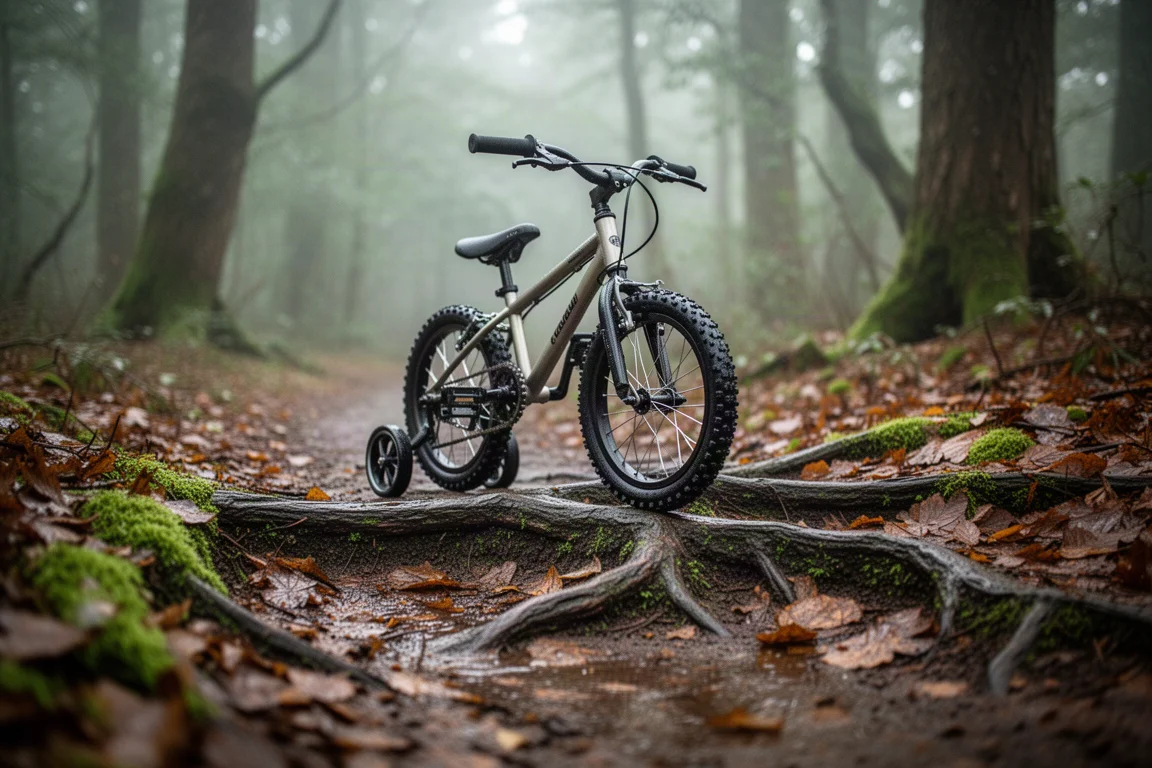
Put together, the picture is a bike that thrives on mellow gravel and mixed surfaces, manages moderate trail riding with skill, and struggles on genuinely technical descents.
Things to Consider Before Buying
The kit undoes several of the things that make a Brompton so practical for city use, and that matters if the converted bike is going to be your only bike.
It no longer folds as small. The larger wheels and new frame parts mean the folded package is bulkier, which weakens the travel case and the tuck-it-under-a-desk argument that sells so many standard Bromptons.
Mudguards are gone. On a wet commute that is close to a deal breaker, and it is the single biggest reason a converted bike works better as a second, fair-weather machine than as a year-round city bike.
Lights are removed too, so any rider planning to use the bike on the road in low light will need to add their own.
Then there is the price. The kit is a serious investment, and it sits on top of the cost of the Brompton you are converting. A completed build ends up in the region of a three-thousand-pound bike, which places it firmly in premium territory for a small-wheeled folder.
Buying Advice
The value case rests on what you are replacing. If you already own a Brompton and want to add genuine off-road capability without buying a second bike, the kit is a coherent way to do it. If you have limited storage space and want one machine that handles gentle gravel and everyday errands, the conversion covers both reasonably well.
It also matters that the kit is handmade, designed and manufactured by a single person, which is part of the explanation for the price and part of the appeal for riders who value that kind of small-scale production.
Buy it with realistic expectations. This is not a mountain bike and it is not a fully weatherproof commuter any more. It is a Brompton with a broader appetite for surfaces, and it earns its place when that specific combination is what you want.
If you want mudguards, lights and a compact fold, the standard bike remains the better answer. If you want a folding bike that will happily roll over a gravel track on a Sunday, the kit does exactly that.
Conclusion
The Kinetics conversion kit does not improve a Brompton at the job a Brompton was designed for. It makes the fold bigger, removes the mudguards and lights, and slows the bike down on tarmac.
What it does instead is add a capability the standard bike never had. Twenty-inch wheels, knobbly tyres, disc brakes and an 11-speed hub give a folding bike real off-road manners, and the underlying Brompton character survives the surgery intact.
It is a niche product with a niche price, and it suits a specific rider: someone short on storage space who wants one bike that can handle gentle gravel as well as the everyday ride. For that rider, it is a genuinely clever solution.
Product link
View more details for Kinetics Brompton Conversion Kit
This product is mentioned in the review. Check the specifications, options, and compatibility before buying.
View more details for Kinetics Brompton Conversion KitFurther reading
Related Reviews
Cycling Power Meters
Assioma Pro MX-2 Review: Dual-Sided Off-Road Power Meter Pedals
A light dual-sided off-road power meter pedal with a claimed 191 g weight, plus or minus 1% accuracy and a 60-hour battery.
Folding Bikes
Brompton G Line and G Line Electric: Two Folding Bikes Take On a 66 km Gravel Event
A hand-brazed steel folder and its electric sibling ride 66 km of forest gravel, and both finish with their reputations improved.
Folding Bikes
Brompton G Line and G Line Electric Review: Two Folding Bikes Tested on a 66 km Gravel Event
A practical look at the Brompton G Line and G Line Electric after both were ridden through a full 66 km gravel event, plus who each one actually suits.