Cycling Power Meters
Assioma Pro MX-2 Review: Dual-Sided Off-Road Power Meter Pedals
A light dual-sided off-road power meter pedal with a claimed 191 g weight, plus or minus 1% accuracy and a 60-hour battery.
Introduction
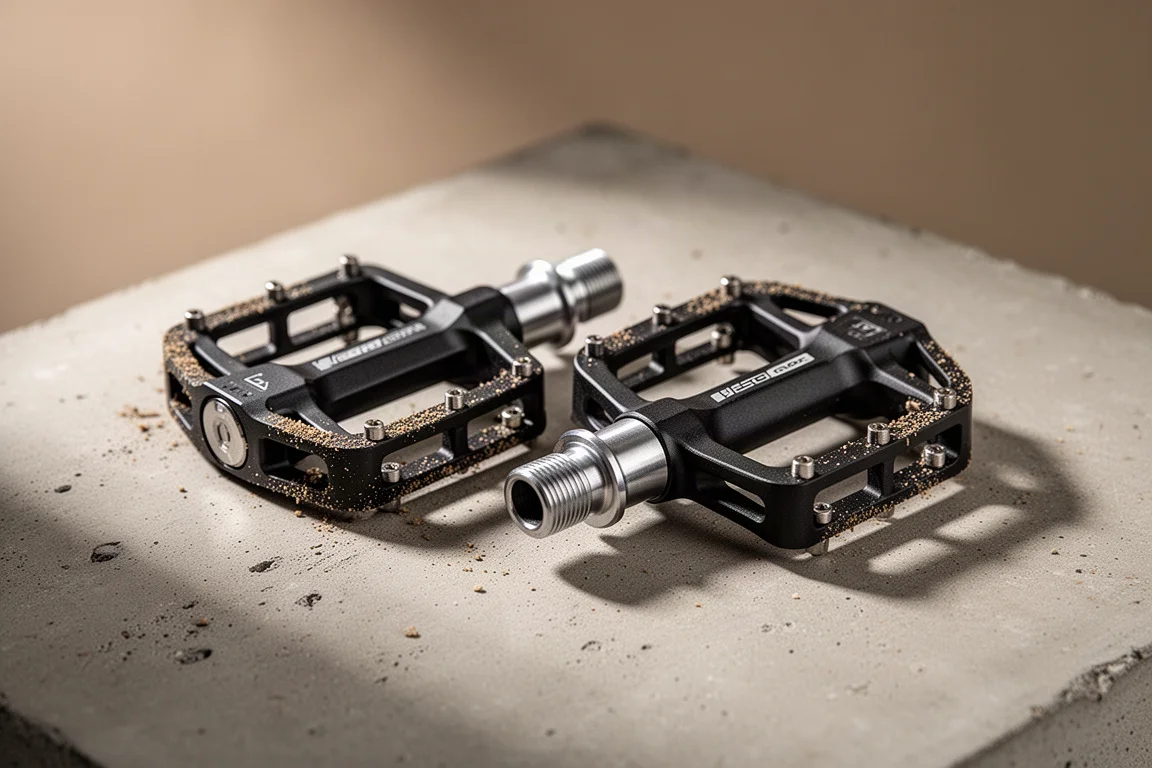
Pedal-based power meters appeal to riders who own more than one bike, because the measurement travels with your shoes rather than staying fixed to a frame. The Assioma Pro MX-2 applies that idea to off-road riding in a dual-sided design that the manufacturer describes as the lightest off-road power meter pedal available, at a claimed weight of 191 g.
Off-road riding is a different problem from road riding. Power output swings hard, traction limits how much you can apply, and the terrain itself punishes equipment. A pedal that copes with mud, roots and rock strikes while still reporting dependable numbers is a genuinely useful tool for anyone who wants to train or pace rides with data.
This review covers what the MX-2 measures, how it handles battery life, how easily it moves between bikes, and the points worth checking before you buy.

The pedal set sits at the top of the brand’s off-road range. A single-sided version is available for riders who want the same platform at a lower entry point, with the option to upgrade to dual-sided measurement later.
Who this product is for
The MX-2 makes the most sense for riders who train with power and ride off-road. Gravel riders holding a steady aerobic effort over long distances will find the data straightforward to use, while mountain bikers get a clearer picture of the short, sharp efforts that trail riding demands.
It also suits riders with a small stable of bikes. Because the measurement lives in the pedals, moving it from one bike to another takes only a few minutes, and the pedals auto-calibrate, although one calibration after the initial fitting is worth doing.
Riders who only want a rough sense of effort, or who rarely ride with a head unit, will get less from it. The value here comes from the depth of the data and the ability to compare rides across bikes and seasons.
Main strengths
The headline claim is weight: 191 g, which the manufacturer positions as the lightest off-road power meter pedal on the market. Low weight matters less on a mountain bike than it does on a long road climb, but it also says something about how little the pedal changes the feel of the bike.
Accuracy is rated at plus or minus 1%. The system uses instantaneous angular velocity to account for irregular pedalling, which is relevant when you sprint, climb out of the saddle, or run oval chainrings. Dual-sided measurement means the left and right legs are reported separately, so imbalances show up in the data rather than staying hidden.
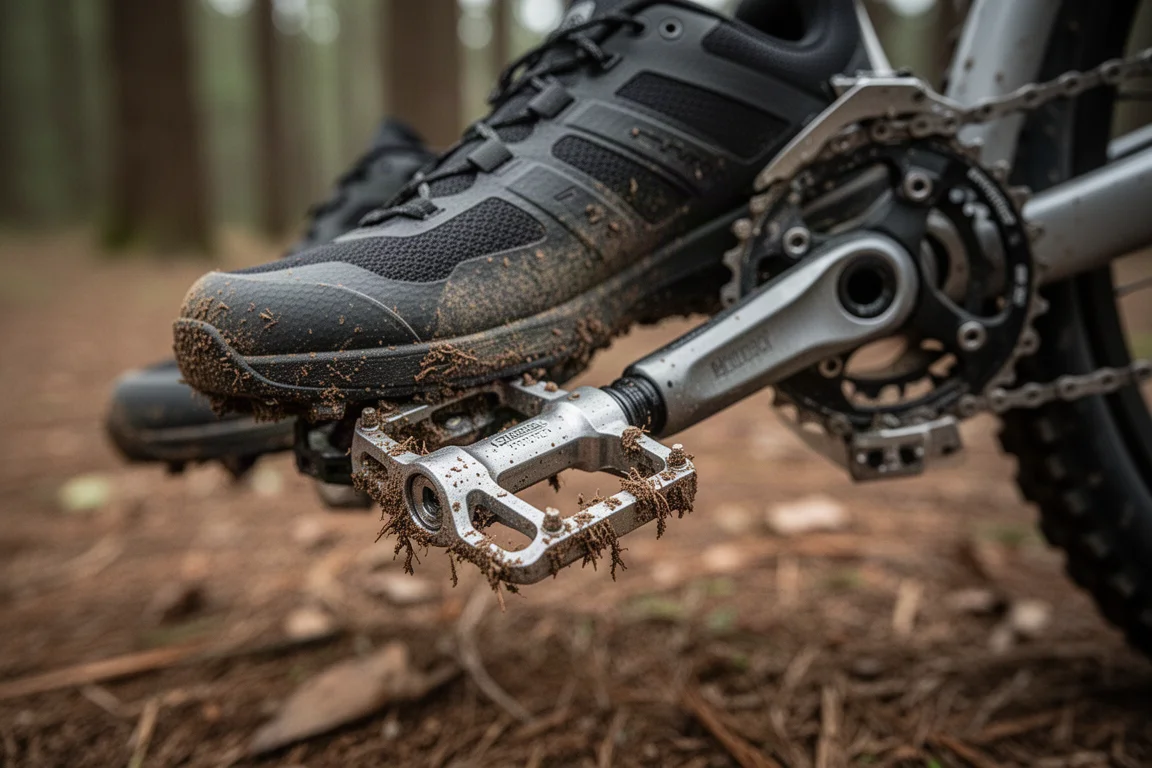
Battery life is quoted at 60 hours, and charging happens through a collar on the axle. That avoids removing the pedals or opening a battery door that could let water and grit in.
Accuracy and Pedaling Data
The MX-2 reports more than raw power. Alongside power and cadence, it captures left and right balance, power phase, torque efficiency, pedal smoothness and platform centre offset. Platform centre offset is often the most practical of these, because it shows where pressure is landing on the pedal and helps you position your cleats more precisely.
A rider positioning feature tracks how much time you spend standing versus seated, which is useful for understanding how a route actually played out.
Data can be sent to a head unit over ANT+ or Bluetooth, or viewed live in the brand’s own app. It is worth knowing that some of the advanced metrics are not supported by every head unit, so checking compatibility with your device before relying on them is sensible.
The company behind the pedals has more than 30 years of experience and manufactures them at its headquarters in Italy.
Battery Life and Bike Swapping
Sixty hours of ride time between charges covers most training blocks comfortably. The charging collar on the axle is a neat detail: you do not need to remove the pedals from the cranks, and there is no separate battery cover to lose or reseal.
Moving the pedals between bikes is quick, which is the strongest argument for pedal-based power over a crank or hub system. Riders who race one bike and train on another can carry the same numbers across both.
Auto-calibration keeps the routine simple, and one manual calibration after the pedals are first fitted is enough to get started.
Things to consider before buying
Price is the main hurdle. The dual-sided version is listed at £599 in the UK and $760, which places it firmly in the premium end of off-road power measurement. The single-sided version costs considerably less and can be upgraded to dual-sided later, so riders who are unsure about the commitment have a sensible way in.
The second consideration is compatibility. Some of the more advanced metrics depend on the head unit you use, so the full feature set is not guaranteed with every device.
Finally, think about how you actually ride. Pedal-based power is most valuable when you are training with structure or pacing long efforts. Riders who mostly chase fun on technical trails may find that the data adds less to their riding than they expect.
Buying advice
For riders who train off-road and want one power source that works across several bikes, the MX-2 is a well-rounded option: light, dual-sided, accurate to plus or minus 1%, and with a battery that lasts long enough to forget about charging for weeks at a time.
If the price is the sticking point, start with the single-sided version and upgrade later. If you already own a compatible head unit and want the deeper pedalling metrics, the dual-sided model is the version that unlocks the full picture.

Whatever you choose, the value comes from consistency. The same pedals on every bike make your training data comparable from ride to ride, which is what turns numbers into decisions.
Conclusion
The Assioma Pro MX-2 covers the practical side of off-road power measurement well. It is light, it moves easily between bikes, it charges without fuss, and it reports the pedalling detail that riders who train seriously tend to use. The trade-offs are price and head unit compatibility, both of which are easy to check before you commit.
For riders who want to understand how they produce power on gravel and trail, it is a credible, well-specified option.
Product link
View more details for Assioma Pro MX-2
This product is mentioned in the review. Check the specifications, options, and compatibility before buying.
View more details for Assioma Pro MX-2Further reading
Related Reviews
Cycling Power Meters
Five Affordable Power Meters for Road and Off-Road Cycling
Five practical power meter options under $500 that deliver reliable power measurement without breaking the budget.
Cycling Power Meters
Best Power Meter Pedals 2026: Seven Systems Compared
A practical comparison of seven power meter pedal systems, covering accuracy, battery life, servicing, weight and price.
Cycling Power Meters
Best Power Meter Pedals: Favero, Garmin, Look, and Wahoo Compared
A practical guide to the main power meter pedal systems, covering cleat compatibility, weight, price, battery life, serviceability, and data accuracy.