Folding Bikes
Brompton G Line and G Line Electric: Two Folding Bikes Take On a 66 km Gravel Event
A hand-brazed steel folder and its electric sibling ride 66 km of forest gravel, and both finish with their reputations improved.
Introduction
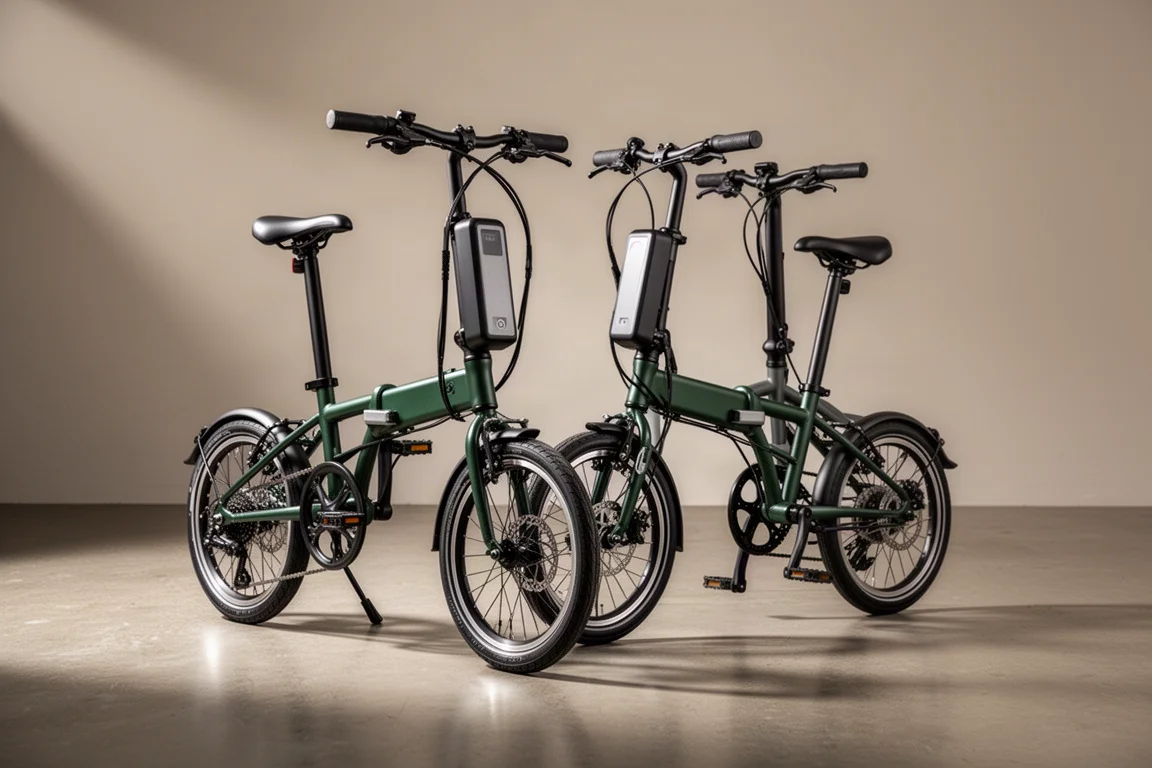
Brompton describes the G Line as the most capable Brompton ever built, which raises an obvious question: capable enough for what? The answer turns out to be broader than most folding bike riders would expect. A standard G Line and a G Line Electric were taken to a 66 km gravel event in Thetford Forest, roughly 40 minutes from Cambridge, run as the Suffolk Gravel X by Glorious Gravel.
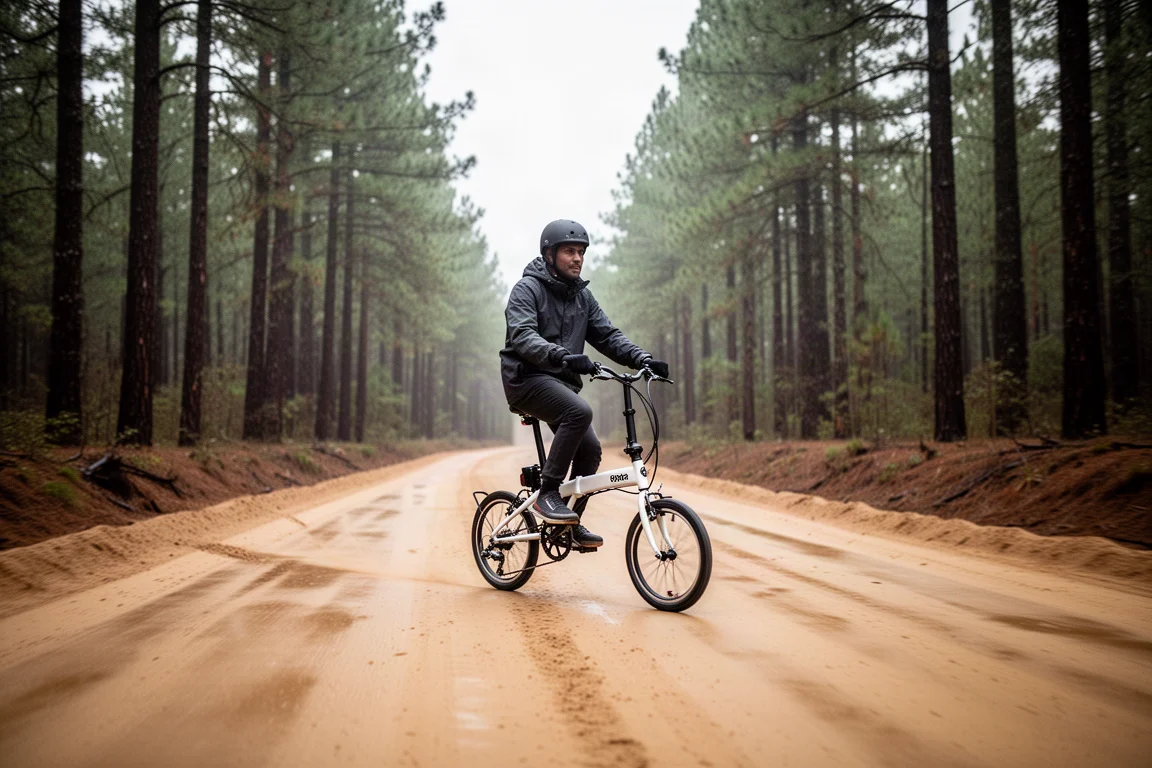
The field included mountain bikes and dedicated gravel bikes alongside the usual mix of riders. The course was mostly fire roads with a modest amount of climbing, and a February start meant wet weather, sand, and loose sections to deal with. The most technical terrain arrived in the final third. Both bikes finished, and the electric version still had charge left afterwards.
That result matters less as a stunt and more as a statement about what a folding bike can cover. If a Brompton can handle loose forest gravel, then crossing a city, a towpath, or a rough lane on the way to work stops looking like a compromise.
Why a Gravel-Ready Brompton Makes Sense
Bromptons have been made and produced in London since 1975, and the company has been widening its line-up with electric and more terrain-focused models. The thinking behind each new version is straightforward: give a different group of riders a reason to choose a bike over a car for getting across a city.
The G Line exists for riders who want the portability of a Brompton but need more capability than a classic small-wheel folder offers. The most common objections to a traditional Brompton are rough road surfaces, an unpaved lane at the end of a commute, or a towpath shortcut that avoids a climb. Larger wheels and wider tires answer those objections directly, which is why the G Line has drawn so much attention.
That is the practical case for the bike, and it is a stronger one than the gravel label suggests. Most buyers are not planning to race off-road. They are planning to ride whatever surface sits between their front door and their destination.
Brompton G Line: Steel Frame and 20-Inch Wheels
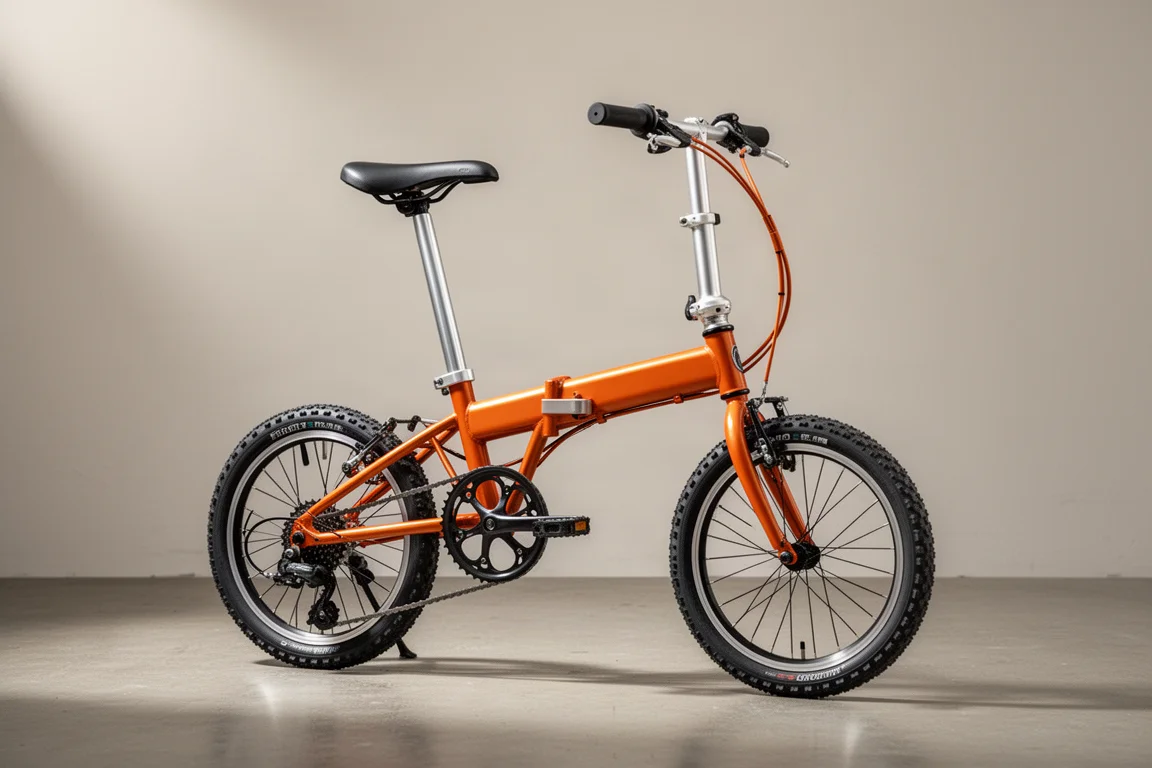
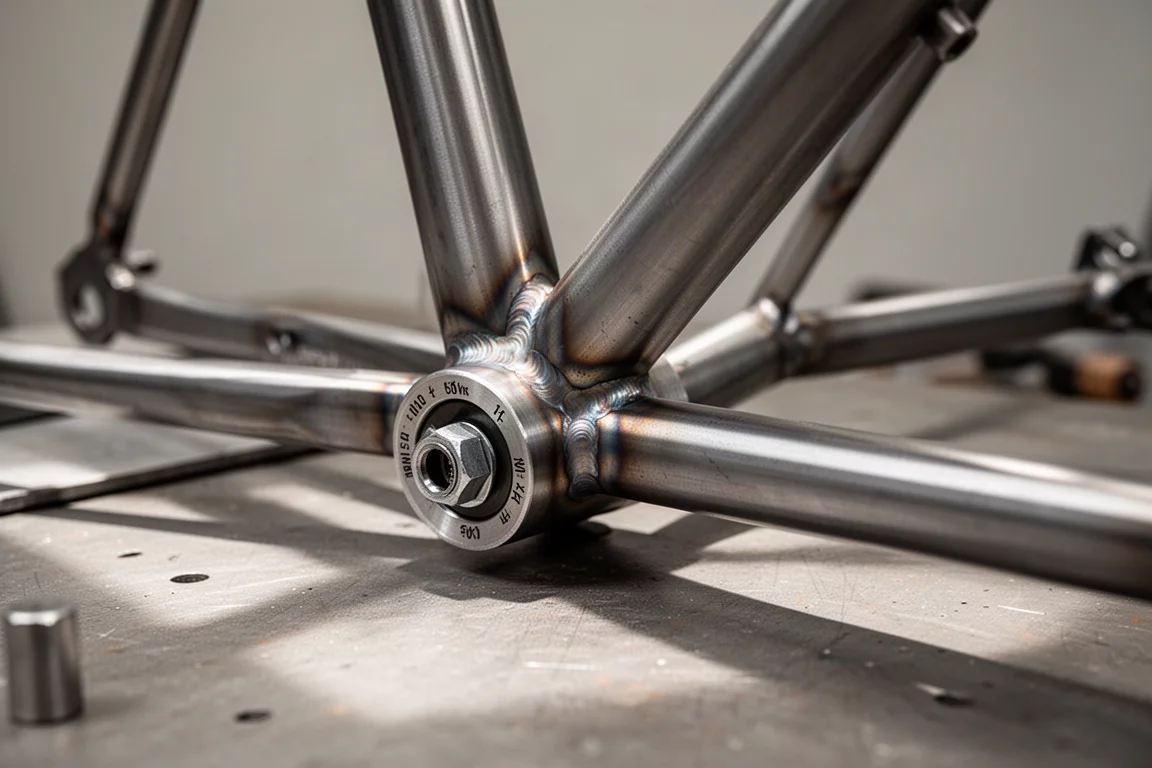
The G Line keeps the elements that make a Brompton a Brompton and changes the parts that limit it. The frame is steel and still hand brazed in London. The fork is aluminium. Wheels grow to 20 inches, and there is more tire clearance than on the smaller-wheel models. Weight comes in at 14.1 kg, which is heavier than the lightest Bromptons but still manageable to lift and carry.
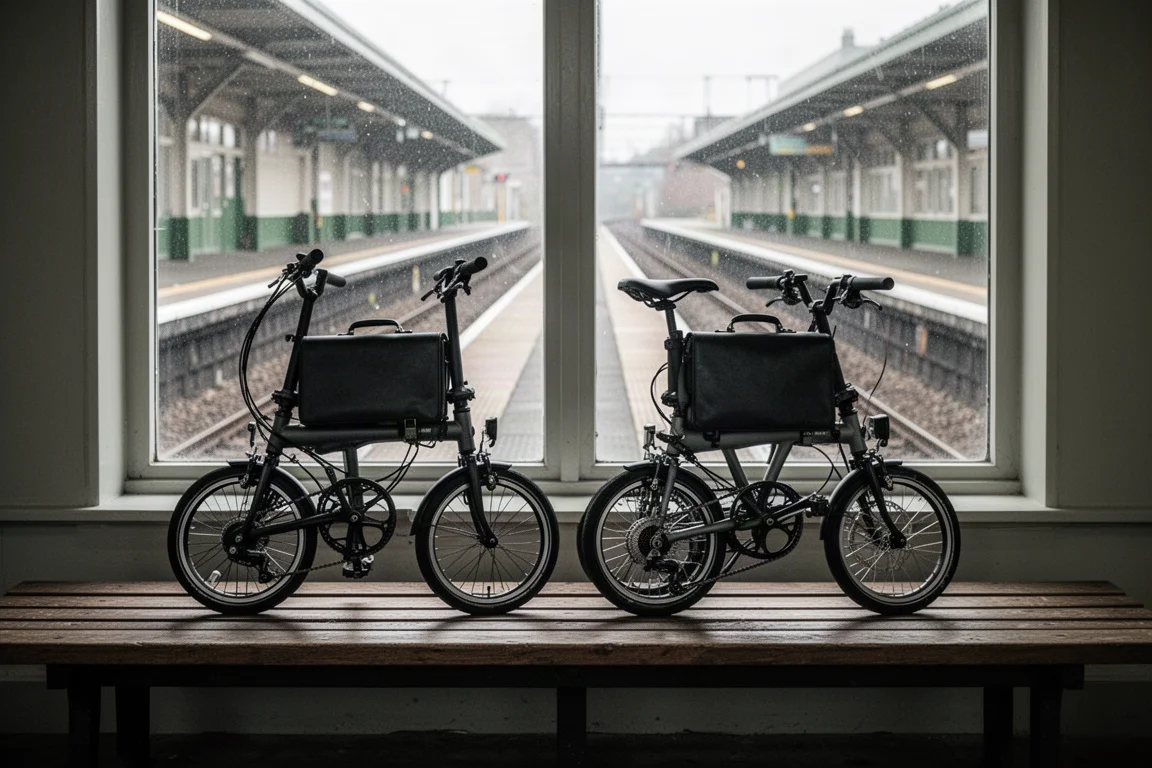
The ride position is worth noting: the saddle sits over the bottom bracket, a layout that helps with pedalling efficiency. Gearing runs to eight speeds with a 50/42 chainring, the same chainring size found on a road race bike. On tarmac the bike rolls along comfortably, and it still folds down to roughly the size of a briefcase, so it can go on a train, into an office, or into the corner of a flat.
Brompton G Line Electric: Battery Assistance for the Hills
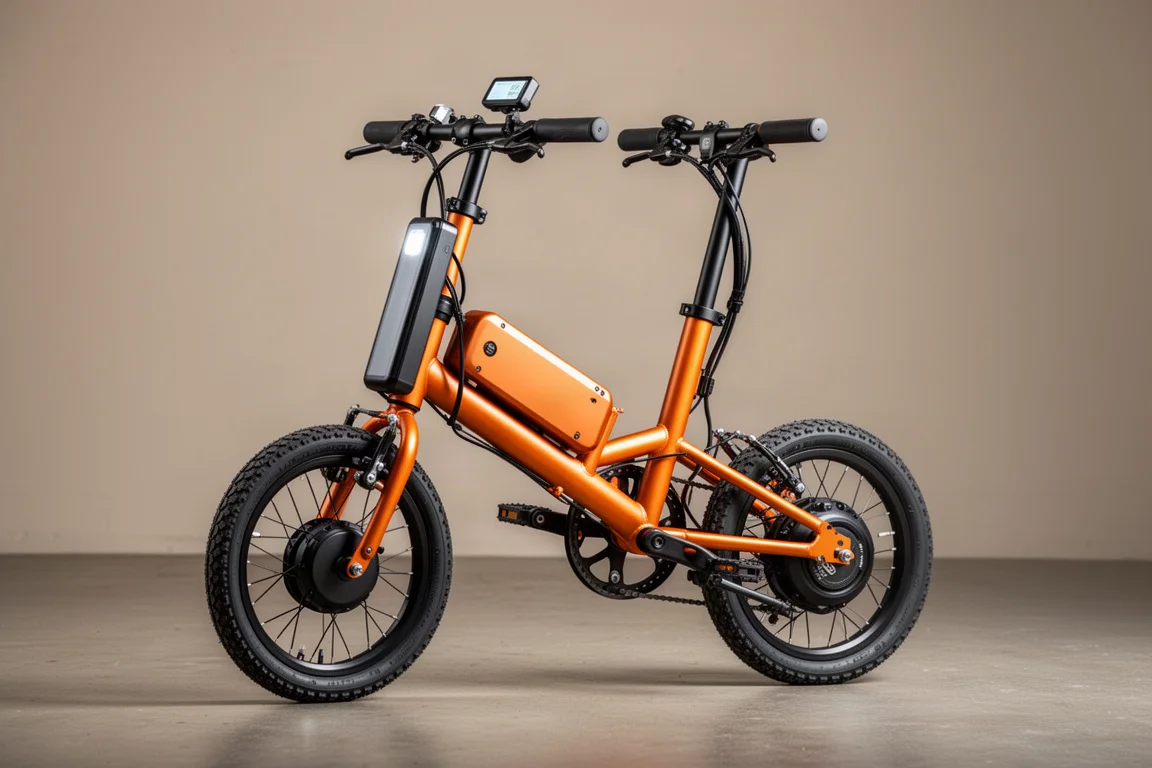
The G Line Electric uses a very similar chassis but adds a rear hub motor delivering 250 watts of assistance, powered by a 345 Wh battery mounted at the front. A full charge takes four hours, and the handlebar LED display shows predicted range. Brompton claims up to 50 miles of range.
The battery is the clever part of the design. It unclips from the bike, so it can be carried inside and charged at a desk, in a kitchen, or anywhere with a socket. Once removed, the housing doubles as a front-mounted bag, which is useful on a bike that has no conventional bottle cage. Assistance is applied at the rider’s discretion rather than continuously, so it works well as an occasional boost on climbs instead of a constant push.
What 66 km of Gravel Revealed
The event covered 66 km of forest tracks with modest climbing, mostly on fire roads but with enough sand, mud, and loose material to test the bikes properly. The weather was wet, and the most technical terrain arrived in the final third, by which point the field had spread out considerably.
Both bikes handled gravel, tarmac, and sand without anything being walked. On tarmac the pace sat around 18 mph. On the rougher sections the ride was less composed than a dedicated gravel bike or a mountain bike would be, and that is worth stating plainly: no one is claiming a folding bike is the ideal tool for a gravel event. What the ride showed is that the G Line can handle surfaces well beyond what a folding bike is normally expected to cope with.
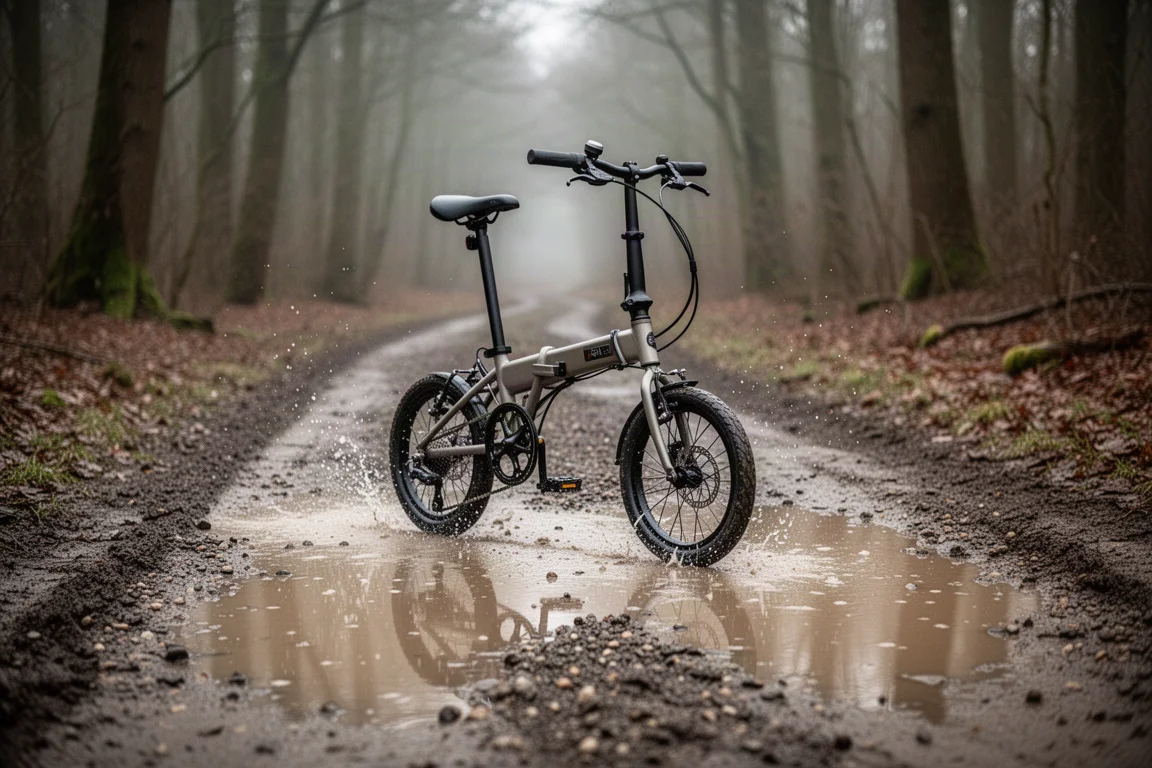
By the finish, riders who had set off earlier in the day were being caught, and the electric G Line still had enough charge remaining to get home afterwards.
Folding Size, Weight, and Daily Carrying
Folding remains the reason to buy any Brompton, and the G Line keeps that advantage intact. It packs down to roughly briefcase size, which is what makes the train, the bus, and the office desk all viable destinations. At 14.1 kg the non-electric version is still light enough to pick up and move around, though the electric model carries the extra weight of the motor and battery.
For commuting, that portability is the whole point. The bike can be folded and taken indoors rather than locked outside, and it can be carried onto public transport. Larger wheels and wider tires do not change that calculation, which is what makes the G Line a genuine option rather than a separate category of bike.
Build Quality and Long-Term Ownership
Brompton’s manufacturing approach is unusually traceable. In the London factory, every bolt is tightened with a torque meter, and each workstation runs a small computer that logs the tightness of every bolt on every bike produced. That record exists for the life of the bike.
The practical benefit shows up years later. Parts for Bromptons built 25 years ago are still available through Brompton, so a well-used bike can be maintained rather than replaced. That contrasts sharply with consumer electronics, where a battery or a sealed component can end a product’s useful life within a couple of years. It also explains why owners tend to keep their Bromptons for a long time and treat them as tools that happen to be enjoyable to use.
Charging, Range, and Everyday Practicality
For the electric version, living with the bike is mostly about the battery. The 345 Wh unit is removable, so charging does not require the bike itself to be near a socket, and four hours restores it to full. Range prediction appears on the handlebar display, which takes some of the guesswork out of planning a longer ride. Brompton’s claim of up to 50 miles is a manufacturer figure, and real-world range will vary with how much assistance is used and how hilly the route is.
Assistance of 250 watts makes a noticeable difference on climbs, particularly when the rider wants to arrive without breaking a sweat. That is the strongest argument for the electric model: not outright speed, but the ability to cover a longer or hillier commute in ordinary clothing.
Which One Should You Choose
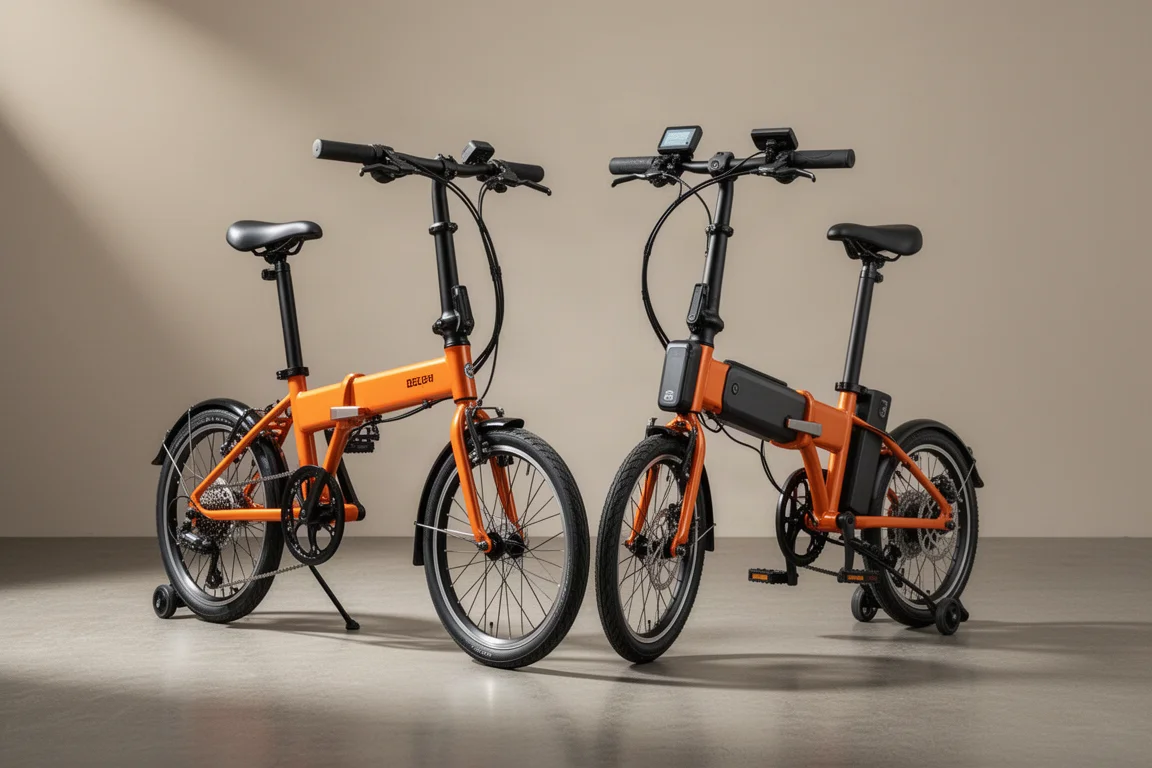
The standard G Line suits riders who want the portability of a Brompton with more capability than the classic small-wheel models, and who are happy to supply all the effort themselves. Eight gears, 20-inch wheels, and a hand-brazed steel frame make it a versatile single bike for commuting, parks, and towpaths. At 14.1 kg it is still practical to carry.
The G Line Electric suits riders whose commute is longer, hillier, or simply sweatier, or anyone who wants to cover distance without arriving tired. The removable battery and its second life as a front bag are genuinely useful details rather than marketing extras. The trade-off is extra weight and a charging routine.
Neither bike is the right choice for someone who wants a dedicated gravel or mountain bike. Both are strong choices for someone who wants one bike that folds, travels, and can still handle whatever the route throws at it.
Conclusion
Taking two folding bikes around a 66 km forest gravel course was never going to produce a race-winning result, and it did not need to. What it produced was evidence that the G Line and G Line Electric can handle gravel, tarmac, and sand, and finish an event that most riders would assume required a different kind of bike. For anyone whose commute includes a rough lane, a towpath, or a stretch of unpaved road, that is a meaningful answer.
Further reading
Related Reviews
Folding Bikes
Brompton G Line and G Line Electric Review: Two Folding Bikes Tested on a 66 km Gravel Event
A practical look at the Brompton G Line and G Line Electric after both were ridden through a full 66 km gravel event, plus who each one actually suits.
Folding Bikes
Brompton G Line Review: A Folding Bike Built for Longer, Rougher Rides
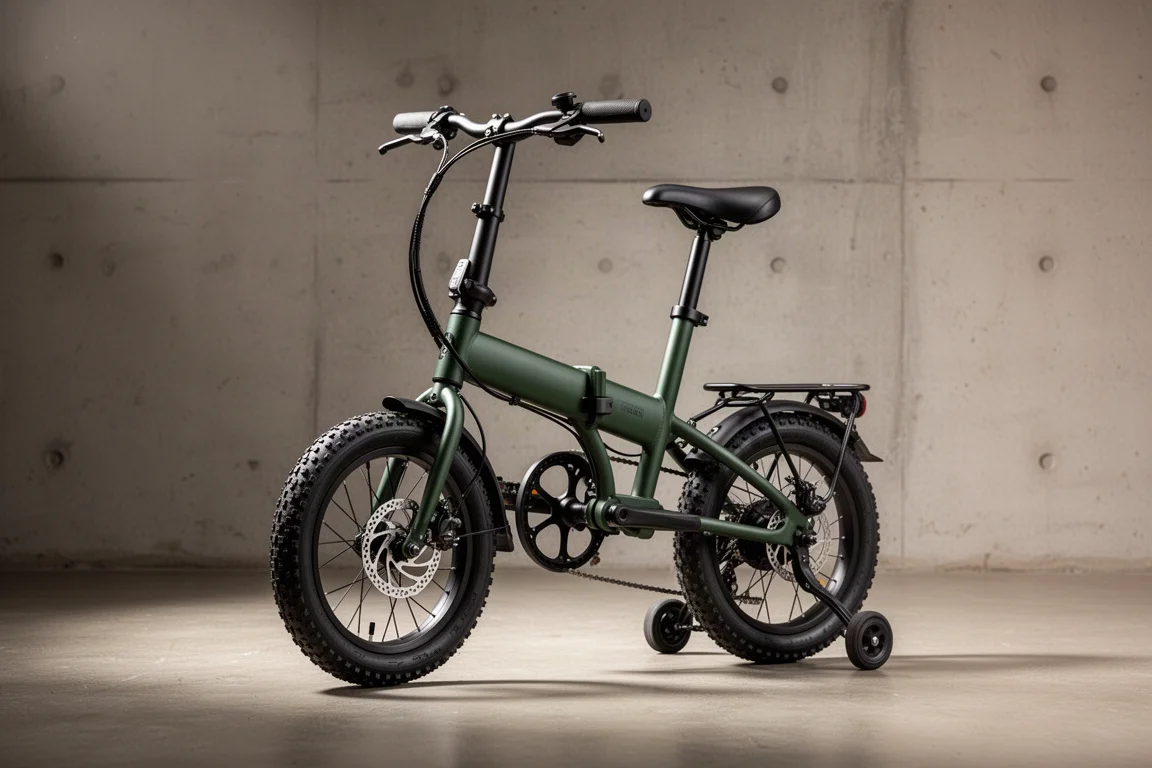
The Brompton G Line keeps the familiar fold but adds 20-inch wheels, wider tyres and disc brakes for riders who want to go beyond the city.
Folding Bikes
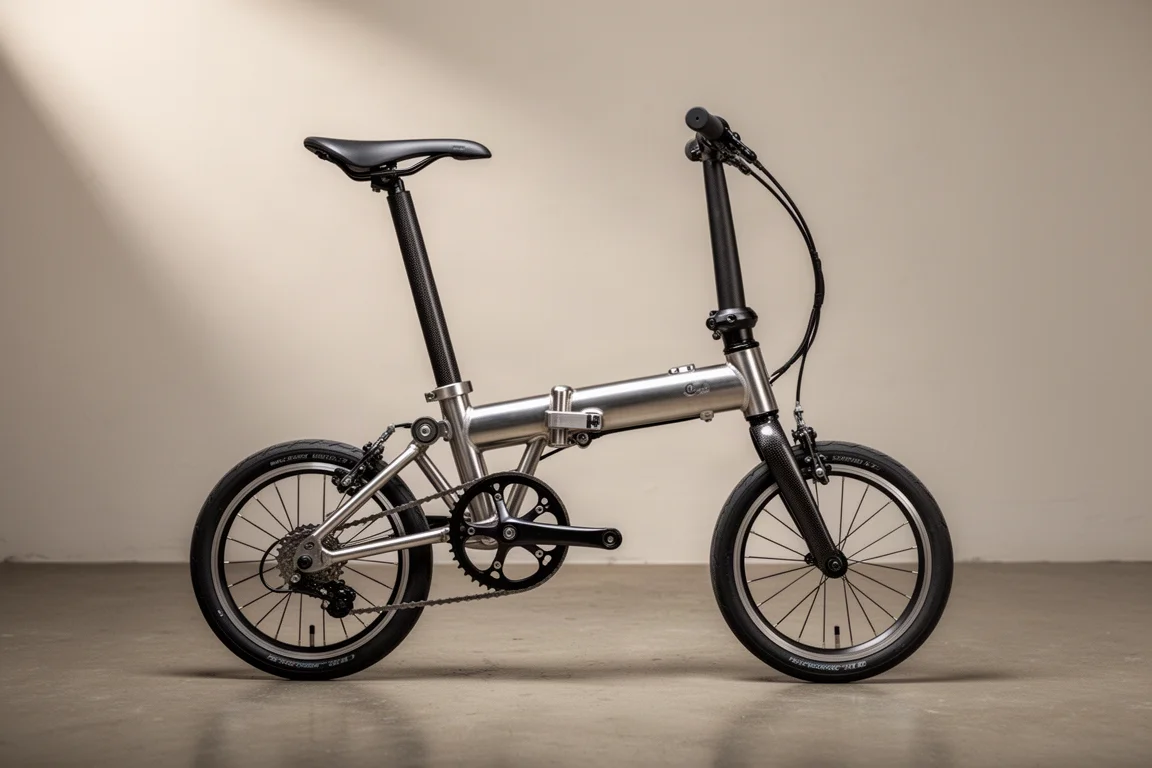
Brompton T Line Review: Titanium, Carbon and the Lightest Brompton Yet
A practical look at the Brompton T Line, the titanium folding bike with carbon components, a redesigned rear triangle, and a price of around £4,000.