Hi-Fi Speakers
Kii Audio Three Review: A Cardioid Active Speaker Built for Real Rooms
A detailed look at the Kii Audio Three, an active three-way speaker with a cardioid radiation pattern, a 28 Hz anechoic low end, and a flexible control system.
Introduction
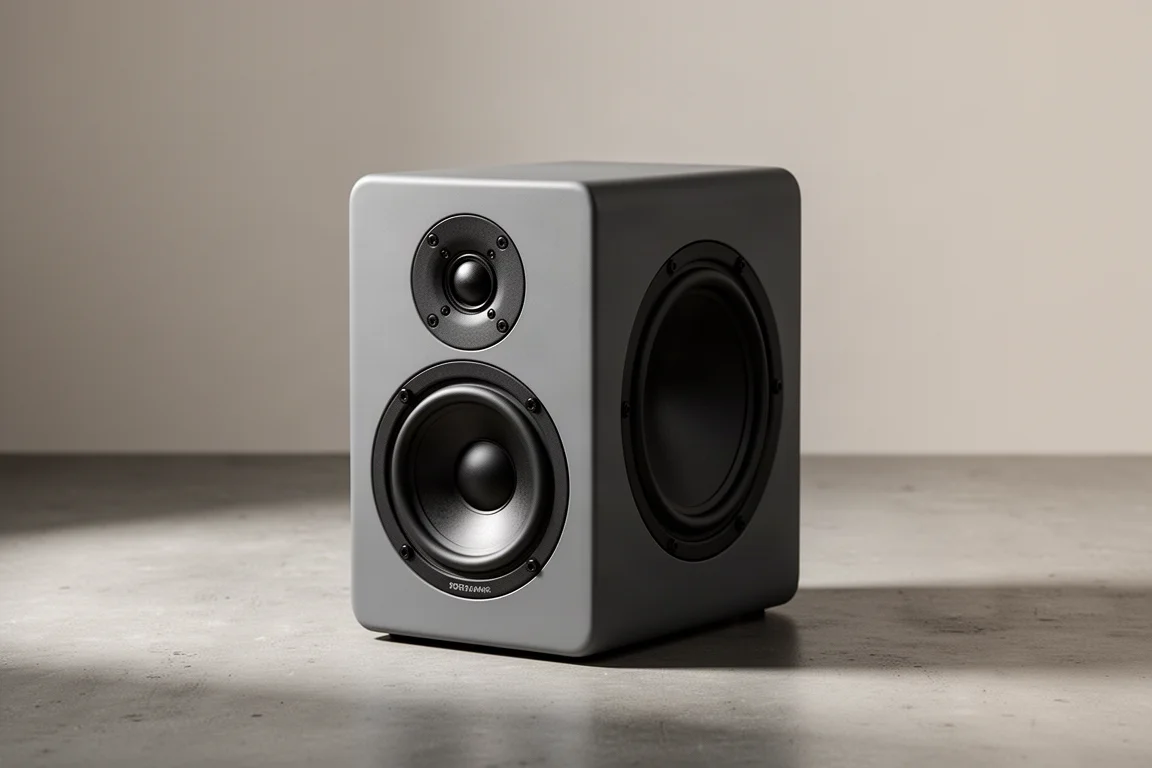
The Kii Audio Three is an active three-way loudspeaker built around a cardioid radiation pattern rather than a conventional box design. A pair retails for roughly 14,000 USD. It is a genuinely full-range design, covering about 20 Hz to 20 kHz, and it packs an unusually large amount of driver surface into a compact cabinet: a tweeter and a roughly 5.25-inch midrange on the front baffle, a 6.5-inch woofer on each side, and two more 6.5-inch woofers on the rear panel.
What makes the Three interesting is not the driver count alone but what that count is used for. The side and rear woofers are not there simply to add bass. They actively cancel low-frequency energy that would otherwise radiate backwards toward the wall behind the speaker, which changes how the speaker behaves in a normal room rather than in an anechoic chamber.
This review focuses on the practical side of that design: what the cardioid pattern actually does for placement and imaging, how linear the speaker measures, what the control options allow, and where the output limits realistically sit. The goal is to help you decide whether the Three matches the way you listen.
Who This Speaker Is For
The Three is aimed squarely at listeners who want a complete, self-powered system rather than a speaker plus separate amplification and room correction. Its natural audience includes mastering engineers and producers working in treated rooms, and dedicated listeners who want very high performance from a compact floorstanding footprint.
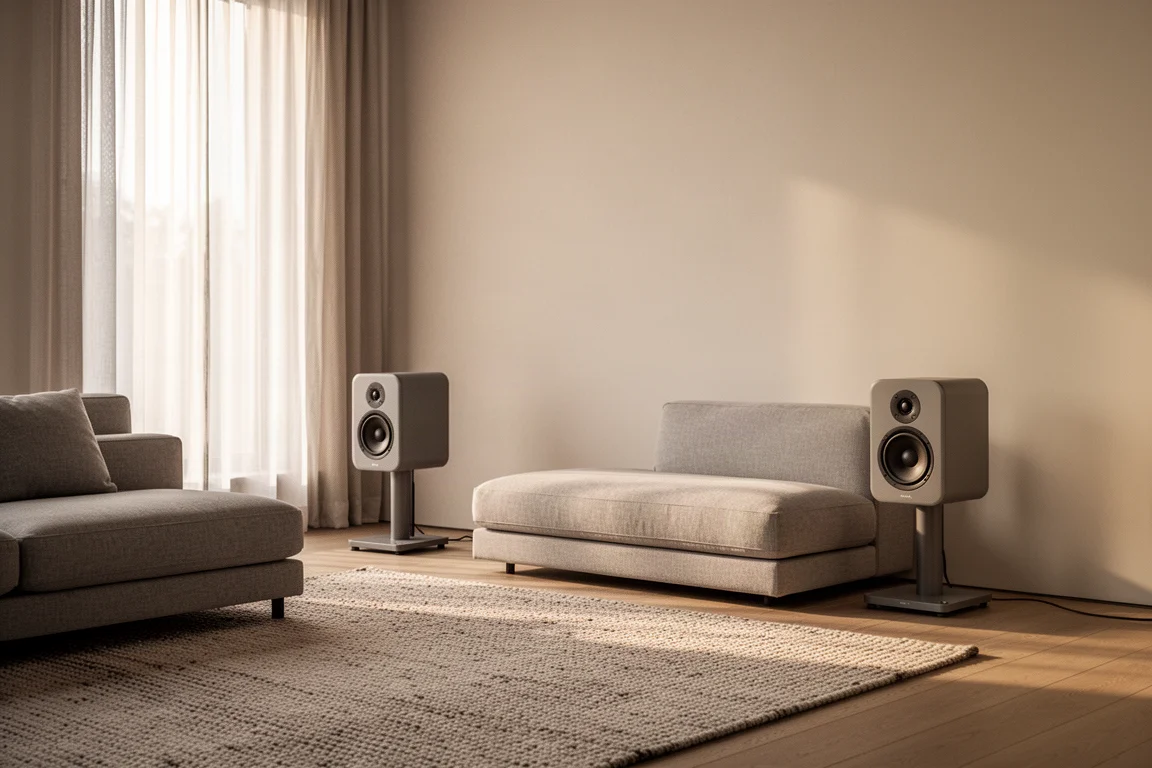
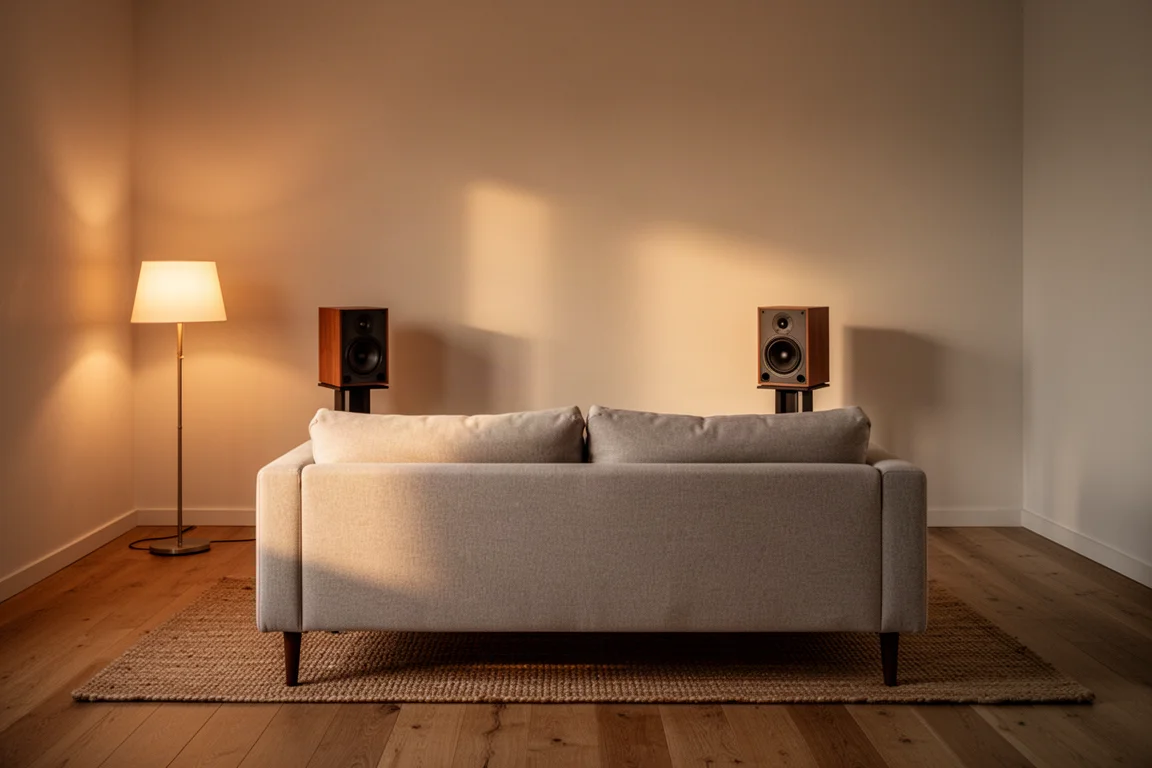
It is also a strong candidate for rooms where the speakers simply have to sit near a front wall. That is normally a compromise, because a conventional speaker placed close to a wall radiates bass in all directions and throws extra reflected energy back at the listener. The cardioid design is built specifically to reduce that problem.
Because the speakers are active and include their own tone and boundary adjustments, they suit people who would rather dial in a system through a control unit than assemble a chain of separate components. Listeners who enjoy tuning and experimenting will get more out of them than those who want a single fixed setting.
Main Strengths
The Three combines a cardioid low-frequency approach, a very linear measured response, and a flexible control system. Each of those areas deserves its own look, because they interact more than you might expect.
Cardioid Design and Room Placement
Most speakers are omnidirectional at low frequencies, which means bass energy spreads in a full 360-degree sphere. The Three does not do that. Its radiation pattern transitions from omnidirectional to front-firing somewhere between roughly 70 Hz and 125 Hz, with the change happening quickly rather than gradually.
The mechanism is worth understanding. The front midrange would normally radiate in all directions below a few hundred hertz, so the side woofers are used to cancel that omnidirectional portion from around 250 Hz upward. The rear woofers then cancel the side woofers from roughly 70 Hz to 250 Hz. The result is a speaker that sends very little energy toward the wall behind it.
That has a direct practical benefit. When the rear woofers sit close to a front wall, they load against it and produce more low-frequency output. In a real room, that measured as roughly 10 dB of extra output between 20 Hz and 40 Hz compared with the 50 to 70 Hz region. The anechoic low-frequency corner sits at about 28 Hz, so what you are hearing is not a small bookshelf roll-off being flattered by the room. It is genuine extension, reinforced rather than muddied by placement.
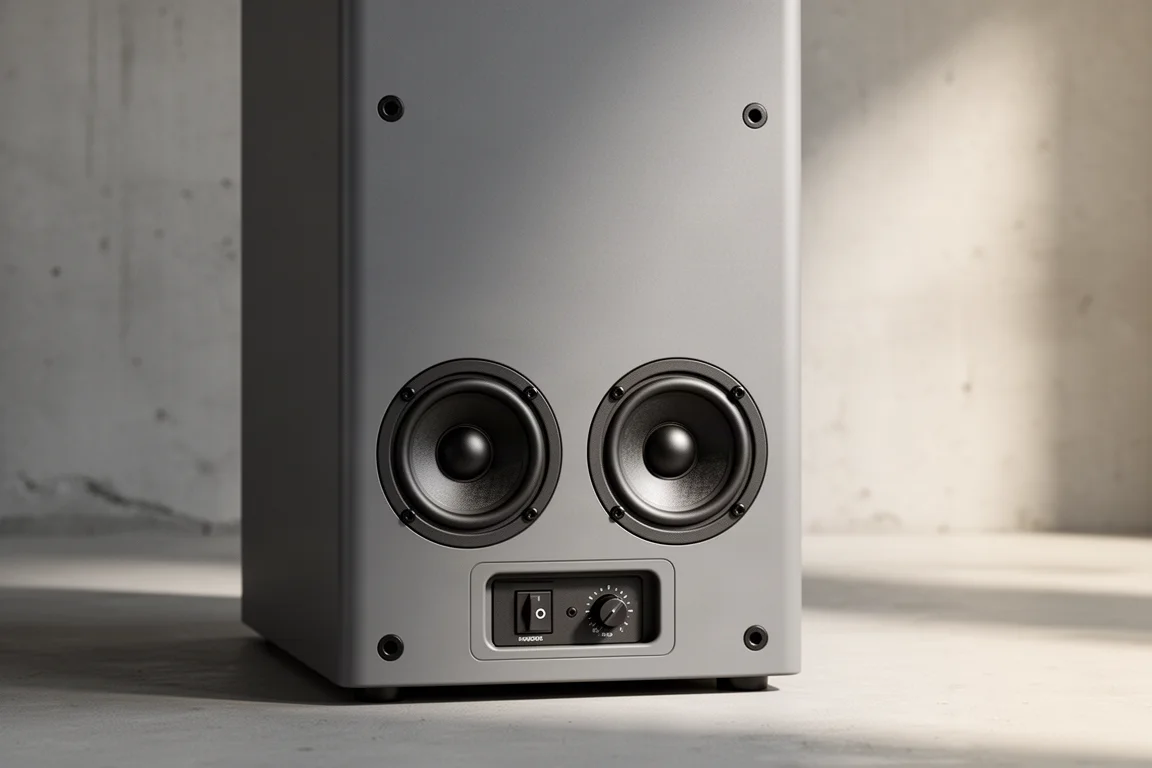
The practical consequence is that you can place the Three closer to a wall than most speakers of this size, gain substantial headroom in the low end, and then trim that output back down if the room needs it. You keep the extension and give away the excess, which is a much better starting point than trying to recover bass that was never there.
Imaging and Soundstage
Wide radiation and precise imaging usually pull in opposite directions. A speaker that throws sound broadly into a room tends to produce a large stage with softer, less defined images inside it. The cardioid pattern breaks that trade-off, because less energy reflects off the front wall and returns to smear the image.
Horizontal dispersion is wide. Coverage holds at roughly plus or minus 70 degrees through the midrange, narrowing to about plus or minus 55 to 60 degrees above 5 kHz. That is a broad pattern, and it is maintained across the range the speaker plays.
The listening impression that follows is an even stage. Images spread across a flat plane from left to right rather than bowing forward at the centre or pulling in at the edges. That symmetry is not something every speaker delivers, and it is easier to appreciate once you have heard a system that lacks it.
Time alignment contributes here as well. The step response is exceptionally clean, with the drivers summing as a single coherent wavefront rather than a staircase of separate arrivals. When every driver hands off in correct time, the result is a more stable image and a more believable sense of depth.
Tone Controls, Inputs, and the Controller
Out of the box the Three measures very linearly, and the listening window response is essentially flat from about 40 Hz to 20 kHz. The one tonal point worth noting is the tweeter, which sits slightly hot at its default level. A reduction of about 2 dB smooths that over and brings the top end into balance with the rest of the range.
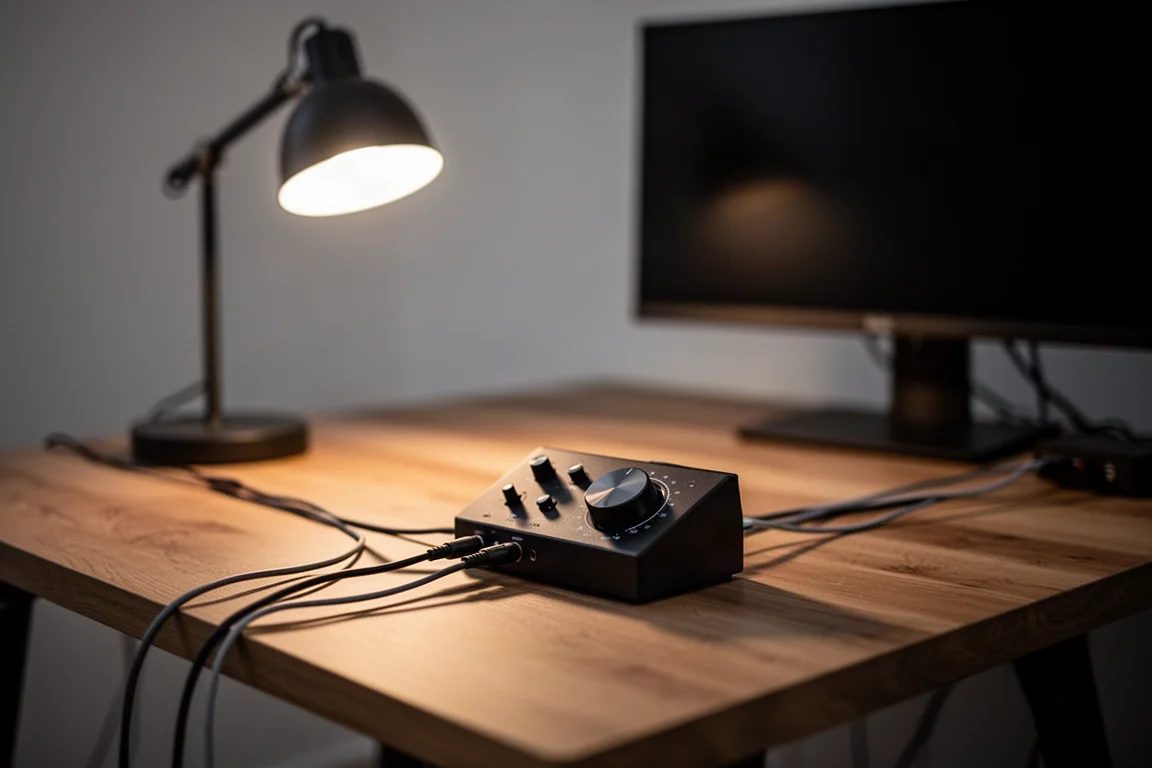
The optional control unit makes that kind of adjustment simple. It offers SPDIF, Toslink, and USB inputs, plus a large rotary dial for volume, and it connects to the speaker through an Ethernet-style cable. The speaker itself accepts either digital AES or analog input, selected with a switch, and it carries its own boundary settings and a small trim knob for tonality.
Bass and treble shelving are both adjustable, including the corner frequencies where those changes begin, with the low-frequency control starting near 300 Hz and the treble control near 3 kHz. There is also parametric EQ available through the control software, which is useful because the estimated in-room response shows a slight downward slope with a small rise in the 4 kHz region. If that region stands out in your room, it can be addressed directly.
Distortion behaviour is worth a note as well. At 86 dB at one metre, total harmonic distortion stays below one percent, and what is present is predominantly second order, which tends to be less objectionable than higher-order products. A limiter watches over the system and prevents it from being driven into genuinely harmful territory.
Latency Modes and Time Alignment
The Three offers two operating modes. Phase exact mode delivers the smoothest step response and the tightest time coherence between drivers, and it is the mode to choose for critical music listening.
The cost is latency. In phase exact mode the signal delay reaches roughly 90 milliseconds, which is long enough to cause lip sync problems when the speakers are used with video. Switching to minimal latency mode brings that delay down to about 2.5 milliseconds, close enough to instantaneous that sync issues disappear. The trade-off is roughly 2 to 3 dB of low-frequency output.
For anyone mixing audio to picture, or simply watching films through the same system, minimal latency mode is the practical choice. Delay correction in an AV receiver can also help, but the mode switch is the simpler solution. It is worth trying both settings on familiar material to hear what the trade-off actually costs you.
Things to Consider Before Buying
The vertical sweet spot is narrower than the horizontal one. Because the front section is effectively a two-way design with a tweeter above a midrange, moving well above or below the listening axis introduces a dip in the 2 to 3 kHz region. Staying on the axis between the tweeter and midrange keeps the response at its best, and a coaxial design would not have this limitation, though it would bring compromises elsewhere.
Output capability is the second consideration. At 96 dB the limiter begins to reduce low-frequency output, and at 102 dB it engages more firmly to protect the system. That is not a problem for nearfield or midfield listening, where the speaker has ample headroom. In a larger room at high levels, the optional BXT bass module, a stack of woofers that sits beneath the Three, adds a substantial amount of low-frequency capability.
Cardioid designs also tend to produce somewhat less overall output than a non-cardioid speaker with the same number of woofers, which is a design trade rather than a flaw. Distortion figures rise above the 86 dB measurement point, and while the dominant second-order character makes this less noticeable than the numbers alone suggest, it is still higher than some competing designs.
Finally, the default tweeter level will not suit everyone. Some listeners will prefer it as delivered, while others will want the small cut described above. Either way, this is an adjustment rather than a limitation, and it can be made from the speaker itself.
Buying Advice
The Three rewards careful setup. Placing it near the front wall is not a compromise to tolerate; it is part of how the speaker is designed to work, and it delivers a substantial low-frequency gain that you can then trim to taste. Start there before deciding the speaker needs more bass.
Spend time with the tonality controls. A modest reduction at the top end, and a small parametric cut in the 4 kHz area if your room calls for it, will get you most of the way to a neutral balance in a normal living space. Set the boundary and trim settings on the speaker first, then fine-tune from the control unit.
Choose your latency mode based on what you actually do. Music listening at a desk or in a chair benefits from phase exact mode. Video work, film watching, and audio-to-picture mixing are better served by minimal latency. If you listen at very high levels in a large room, budget for the BXT module rather than pushing the standalone speaker into its limiter.
Above all, audition the Three where it can be set up properly, close to a wall and with the settings dialled in. The design depends on correct placement, and a hasty demonstration will not show what the speaker can do.
Conclusion
The Kii Audio Three is a state-of-the-art active loudspeaker, and it earns that description through engineering rather than marketing. The cardioid design changes the relationship between the speaker and the room, delivering extension down to about 28 Hz anechoically and roughly 10 dB of extra output in the 20 to 40 Hz region when placed near a wall. Measured linearity is exceptional, the horizontal dispersion is wide, and imaging stays precise despite that width.
The caveats are specific and manageable. The vertical sweet spot is narrow, the limiter caps very high output levels in large rooms, and the phase exact mode introduces enough latency to matter for video. Each has a workaround, whether that is careful listening height, the BXT module, or minimal latency mode.
For listeners who want a compact, fully active, full-range speaker that works with a real wall instead of against it, the Three is a compelling choice. Demo it with proper placement and the settings dialled in, and the strengths of the design become immediately clear.
Product link
View more details for Kii Audio Three
This product is mentioned in the review. Check the specifications, options, and compatibility before buying.
View more details for Kii Audio ThreeFurther reading
Related Reviews
Hi-Fi Speakers
1723 THX Tower vs 1528 Bookshelf: Which Speaker Fits Your Room?
Two speakers at roughly the same price, built very differently. How the 1723 THX tower and the 1528 bookshelf compare on construction, bass, power needs, and sound.
Hi-Fi Speakers
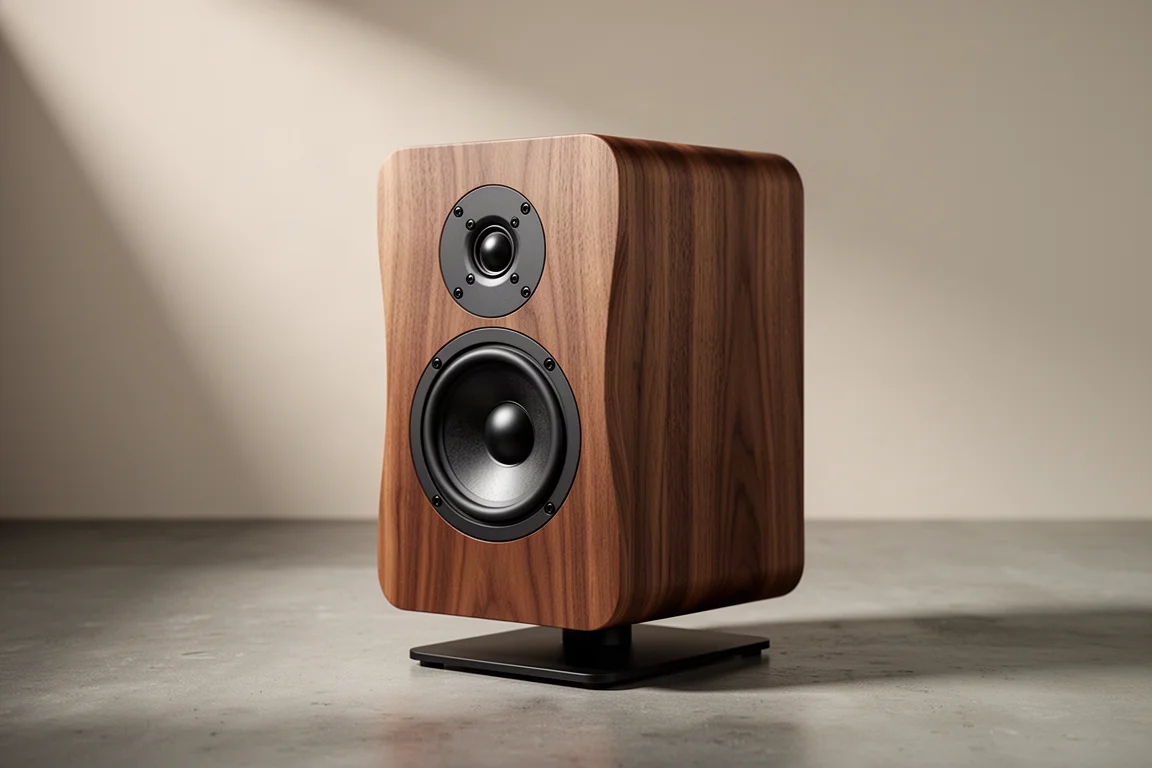
Acoustic Energy AE 300 Review: Deep Bass From a Compact Standmount
A two-way standmount with real wood veneer, surprising low-end weight, and a warm, easygoing character. Here is what to know before buying.
Hi-Fi Speakers
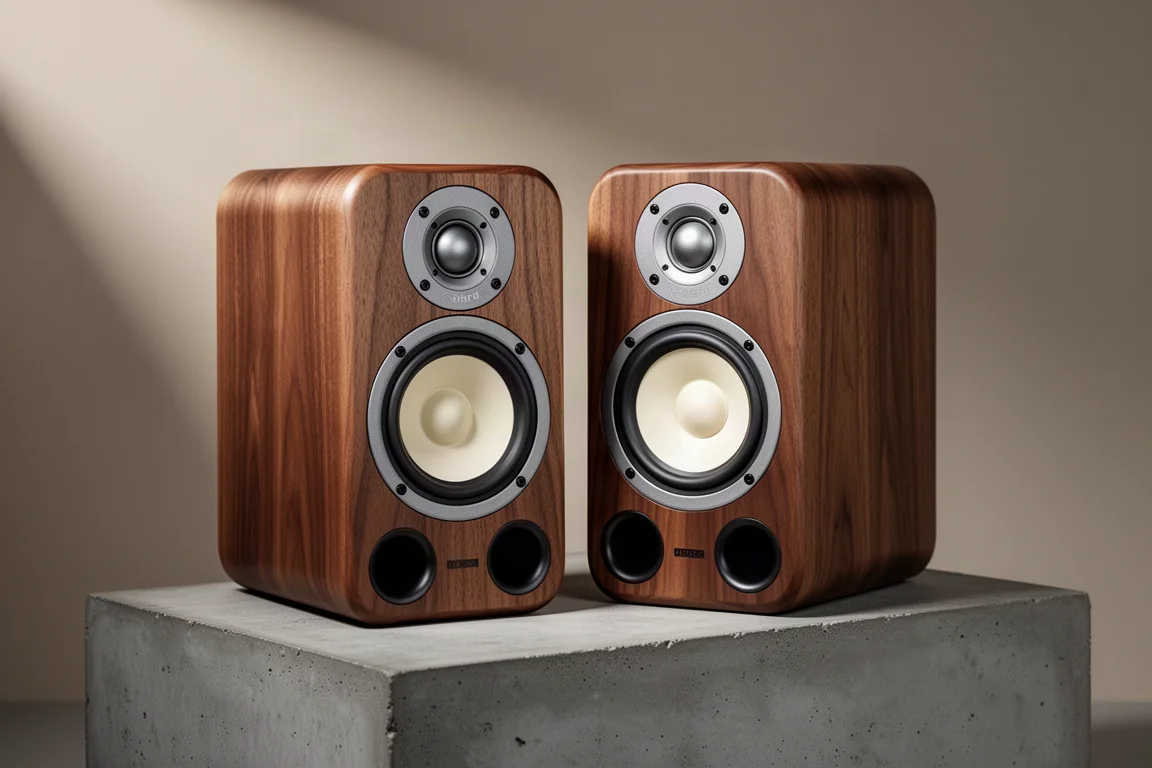
Acoustic Energy AE1 40th Anniversary Review: A Modern Take on a British Classic
A compact standmount that revives a 1980s favorite with all-new parts, a warm mid-centric balance, and a price of £1,499 per pair.