Ski Resorts
Kicking Horse Mountain Resort Review: Steep Terrain, Big Verticals, and a Wild Inbounds Feel
A practical look at Kicking Horse Mountain Resort in Golden, British Columbia: expert terrain, hike-accessed steeps, snow quality, crowds, and what to weigh before you book.
Introduction
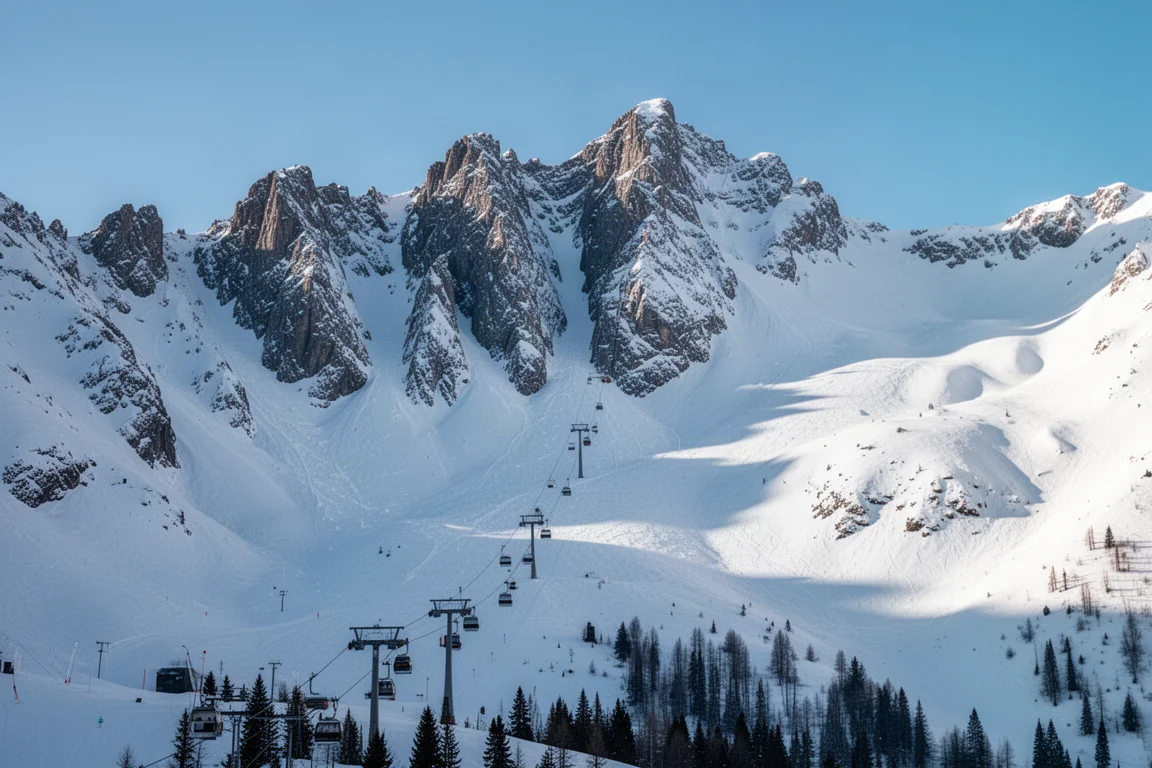
Kicking Horse Mountain Resort sits just outside Golden, British Columbia, and takes its name from the Kicking Horse River and the Kicking Horse Pass. It is about two and a half hours by road from Calgary, a little over four hours from Kelowna, and roughly two hours from Revelstoke, which makes it a natural stop on a Powder Highway itinerary.
The numbers set expectations early: 3,486 acres of terrain and 1,350 meters of vertical drop, the sixth highest in North America. Hike above the lifts at zones such as the Ozone and you can add more on top of that.
The reputation is built on steeps. This is a mountain of marked chutes, cliff drops, and boot packs, and the terrain holds up to the hype.
Who Kicking Horse Is For
This is an expert-leaning mountain. Skiers who love steep, fall-line terrain, chutes, and short hikes will find the most to enjoy here, and the hike-accessed zones reward the effort with lines that are genuinely difficult to find elsewhere within a single resort.
Intermediates are not shut out. There is a good balance on offer. The upper mountain is essentially double black terrain, but it feeds into blue runs lower down that are excellent for carving, so a confident intermediate can put together a full day of linking turns and building speed.
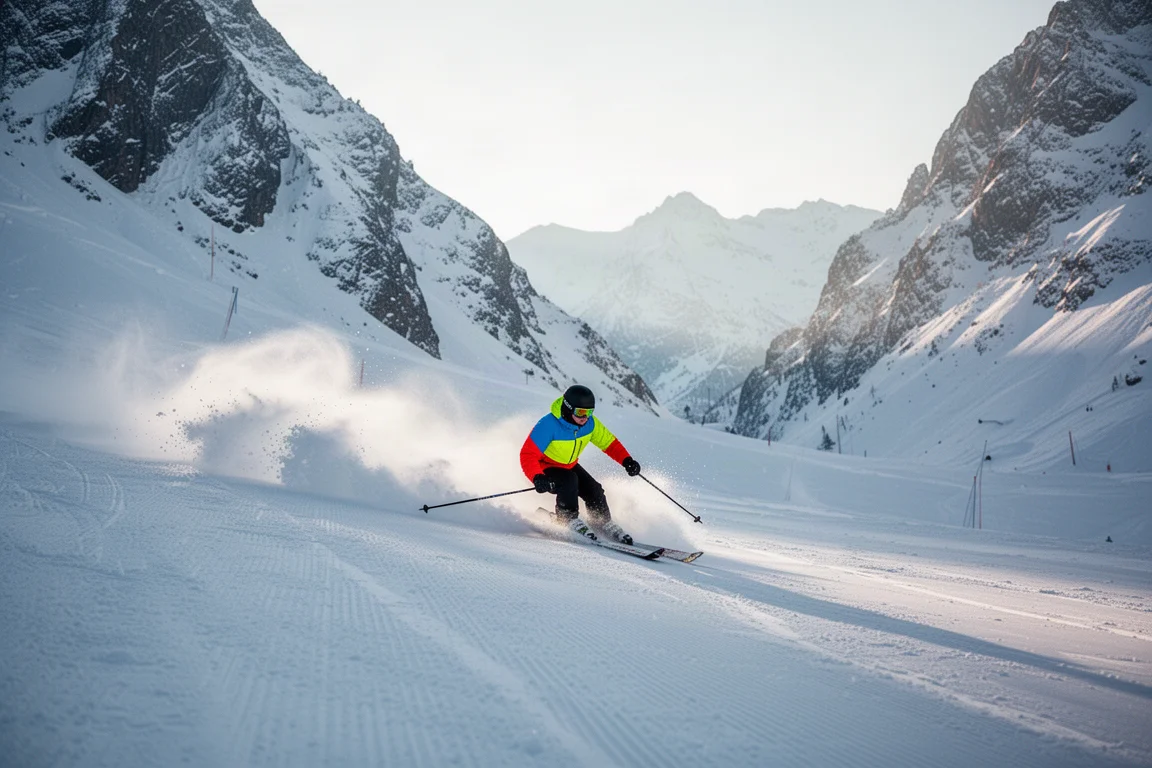
Beginners are the exception. There is effectively no beginner terrain above the gondola, and the traverse at the top demands real confidence. The good news is that anyone who rides up can take the gondola back down without skiing, and the lower mountain has its own chair for those still building skills.
Terrain and Mountain Layout
The top of the mountain is complete alpine: open, rocky, and exposed, with chutes and large terrain features in every direction. Trees begin to appear around mid-mountain in the sub-alpine band, and they get thicker as you descend toward the base. The result is a mountain that reads as intense open alpine up high and as more classic tree skiing lower down.
Navigation is simpler than the terrain suggests. Every run finishes at the bottom of the gondola, so it is difficult to end up somewhere you cannot get back from, though the upper mountain still deserves respect on a first visit.
Steeps, Chutes, and Hike-Accessed Terrain
This is where Kicking Horse separates itself. The resort holds roughly 85 marked chutes, plus cliff drops and lines that would take several seasons to work through. Named options include Truth, Dare, Consequence, Terminator 1, Redemption Ridge, White Wall, and the Ozone. The Freeride World Tour has been hosted here, and standing at the top of the Ozone makes it obvious why.
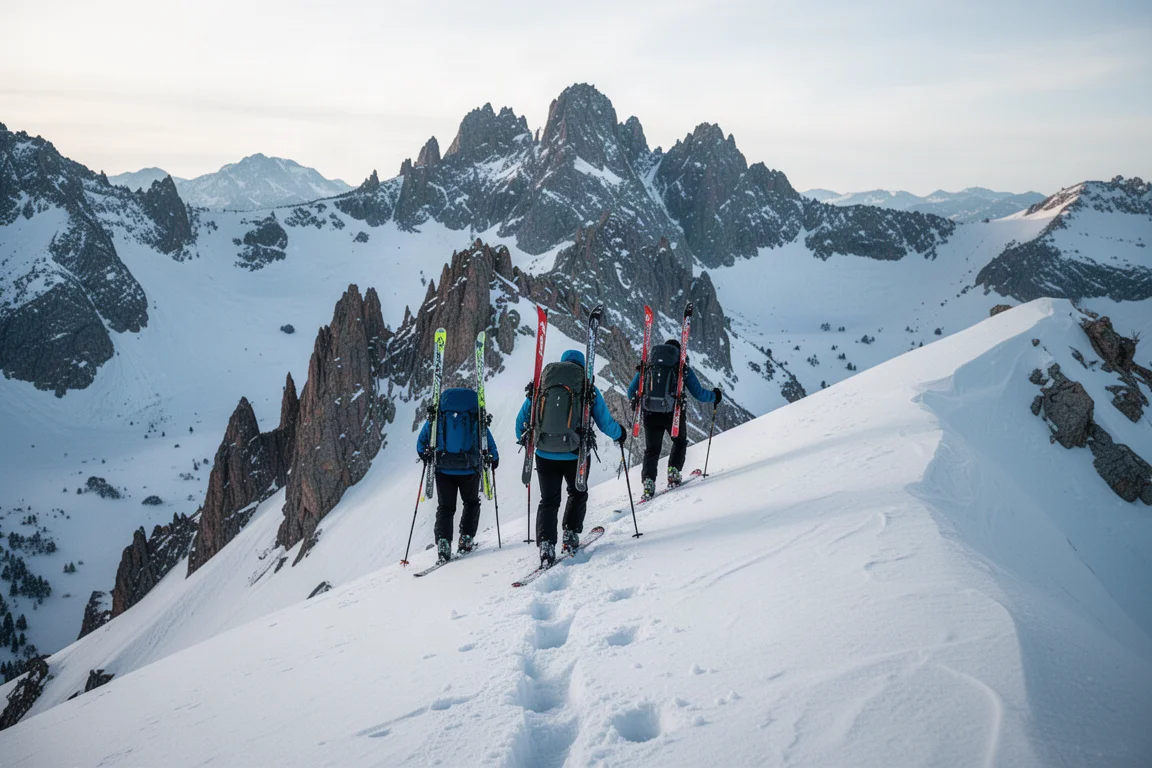
Boot packing is part of the culture. From the top of the gondola you can hike in several directions, including T1, T2, the Ozone, Rudy’s, and White Wall, with Middle Ridge as another option. T1 is the shortest of the hikes and a sensible starting point, even though it is steep. T2 has a spookier approach and a shorter fall-line ski down, but the views and the likelihood of finding untracked snow make it worth the effort. Terrain beyond T3 should not be skied without avalanche gear.
Tree Skiing and Alpine Bowls
Tree skiing is plentiful and starts right off the gondola. CPR Ridge and the south side of Terminator 1 offer alpine-style tree skiing with more space between the trunks. For tighter, more traditional tree runs, the zone below Middle Ridge and the trees around the Pioneer chair are the standouts, with well-spaced lines and natural bumps.
The bowls are the other half of the picture. Kicking Horse is largely a collection of large alpine bowls, and the hike-accessed zones at T1, T2, Ozone, Rudy’s, and HP each funnel into a different one. Skiing the bowls is essentially the point of a visit, and they are the reason so many skiers describe the mountain as a boot packing destination.
Snowfall, Conditions, and Visibility
Average snowfall is 762 centimeters, or about 300 inches. That is less than Whistler or Revelstoke, but it is still a serious amount of snow, and the terrain holds it well. Powder also lasts longer here than at many resorts, which means the mountain can still ski soft days after the last storm.
Visibility matters as much as snow quality. The upper mountain is large and exposed, so clear skies make a real difference when you are learning the layout and picking lines. Bluebird days also show off the scenery, which is a large part of the appeal.
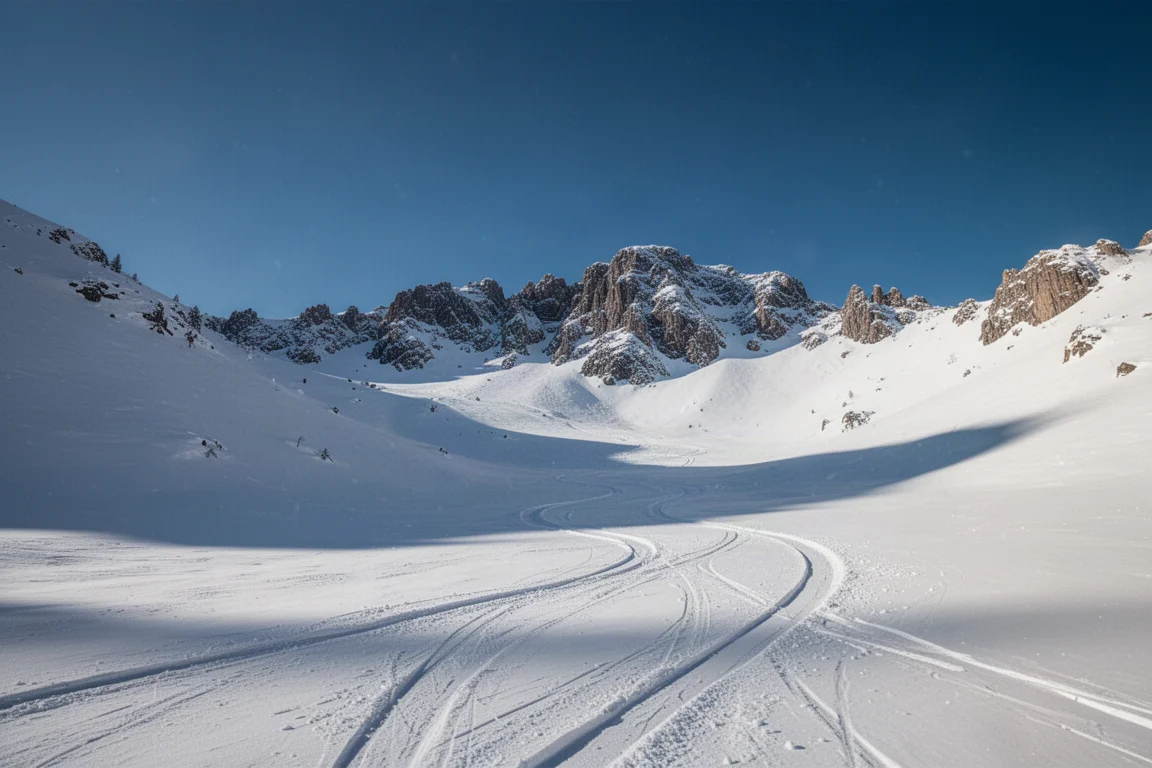
A sunny week in March can still deliver soft snow, which says a lot about how long the snowpack holds up across the mountain.
Crowds, Access, and Backcountry Terrain
Access is not the easiest, and that keeps things quiet. A weekend visit outside a powder day can mean no lift lines at all, ski-on ski-off loading on the gondola, and seven or eight gondola laps in a day. Those laps add up quickly given the vertical. Powder days are busier, but the drive keeps overall numbers below the biggest destinations.
Backcountry and slackcountry access is excellent. The terrain off the back of the Ozone is a well-known slackcountry option that returns to the resort, and there is more beyond it for anyone willing to hike further. Avalanche gear is essential for anything off the resort boundary.
Lifts and Grooming
There are four chairlifts in total. The Golden Eagle Express Gondola, known as the Gauntlet, runs from the base all the way to the summit and gives access to the entire mountain. The Stairway to Heaven quad is a good option for lapping without returning to the base. The Catamount chair serves the lower mountain and suits beginners and intermediates building confidence. The Pioneer chair covers another pocket of the mountain.
Grooming is limited but high quality. Only two groomed runs descend from the upper mountain, so dedicated groomer skiers will repeat those two before branching out to either side. The snow stays cold and the groomers are wide and uncrowded, which makes them excellent for laying the ski over and holding an edge.
Views, Dining, and Practical Details
The views of the Purcells are exceptional, and the sensation is of being dropped into the middle of the Alps. The Eagle Eye restaurant at the top serves food and drinks with a view that is hard to beat, and it is a memorable spot to end a day.
Families should note that every run ends at the bottom of the gondola, which keeps logistics simple. Strong skiing children will do well here. A group of beginners will find the upper mountain intimidating.
A full day at Kicking Horse runs around $170. The resort is on the Epic Pass, which includes seven days of skiing.
Things to Consider Before Buying
- There is no meaningful beginner terrain above the gondola. Beginners and cautious intermediates will spend most of their time on the lower mountain.
- The upper mountain is almost entirely double black terrain, and only two groomed runs come down from it.
- Boot packs are a core part of the experience at the top. If hiking with skis on your back has no appeal, a large share of the best terrain is out of reach.
- Flat light is a genuine challenge on terrain this large and exposed, so clear days are worth planning around.
- Getting there takes a deliberate drive from Calgary, Kelowna, or Revelstoke, and that distance is exactly what keeps the crowds down.
Buying Advice
Kicking Horse makes the most sense for confident skiers who want steep, technical, hike-accessed terrain and are happy to earn some of their turns. Intermediates who enjoy long groomers will still get real value, as long as they accept that the top of the mountain is not built for them.
Beginners should look at the lower mountain honestly before committing to a multi-day trip. The Catamount chair area is friendly, but the resort’s identity lives much higher up, and the gap between the two is wide.
If the goal is one big mountain on a Powder Highway trip and steep skiing is the priority, this is a strong choice. An Epic Pass makes it considerably easier to justify, given the seven included days.
Conclusion
Kicking Horse is a mountain with a wild, almost unsanctioned feel, and that is exactly what makes it memorable. The vertical, the chutes, the boot packs, and the views of the Purcells add up to a resort that is difficult to match for expert terrain in Canada. Go for the steeps, plan for clear skies, and expect to work for the best lines.
Product link
View more details for Kicking Horse Mountain Resort
This product is mentioned in the review. Check the specifications, options, and compatibility before buying.
View more details for Kicking Horse Mountain ResortFurther reading
Related Reviews

Ski Resorts
Alyeska Resort Review: Alaska's Largest Ski Resort, Worth the Journey?
A deep look at Alyeska Resort: heavy snowfall, expert terrain, an Icon Pass connection, and the trade-offs of a near-sea-level mountain in the Last Frontier.

Ski Resorts
Bear Valley Ski Resort Review: Northern California's Quiet Sierra Alternative to Tahoe
A lesser-known Sierra resort with over 1,300 skiable acres, surprisingly strong expert terrain, and crowd levels Tahoe can only dream of. Here is what to know before you go.

Ski Resorts
Colorado Ski Resorts Ranked: The Best Destination Mountains for Overall Experience
A ranked guide to Colorado's destination ski resorts, covering terrain, snow, logistics, crowds, and cost so you can pick the right mountain for your trip.